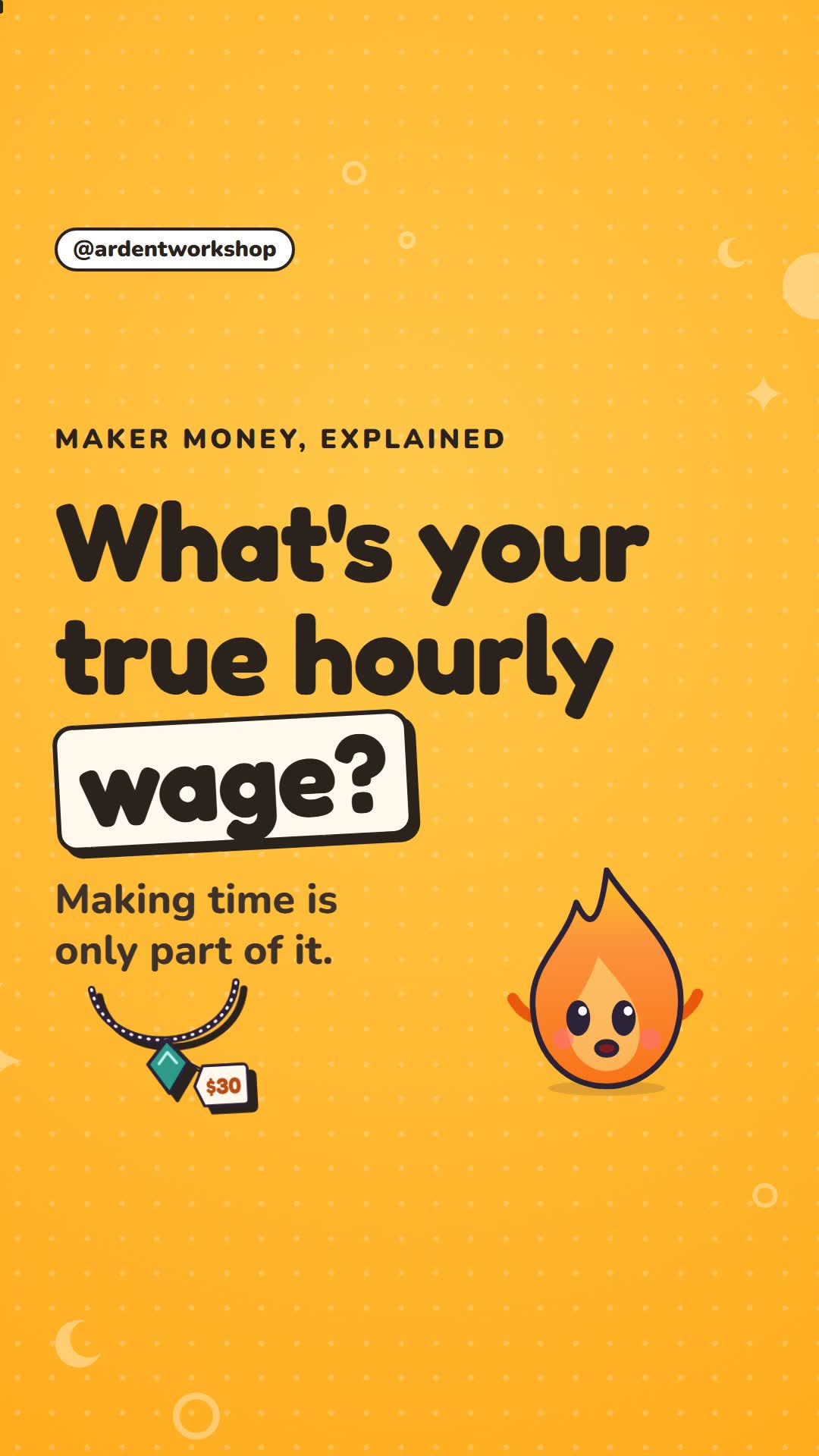
True hourly wage: count every hour you work
True hourly wage: what your business leaves you, divided by every hour it takes. An example jeweler keeps $720 a month: $18 an hour for 40 making hours, $9 before tax for all 80.
One maker-business idea at a time, in under a minute
Each explainer takes one term, rule or process that comes up when you sell what you make (like markup vs margin) and explains it in plain words with a worked example. Many pair with a full definition in the glossary.
True hourly wage: what your business leaves you, divided by every hour it takes. An example jeweler keeps $720 a month: $18 an hour for 40 making hours, $9 before tax for all 80.
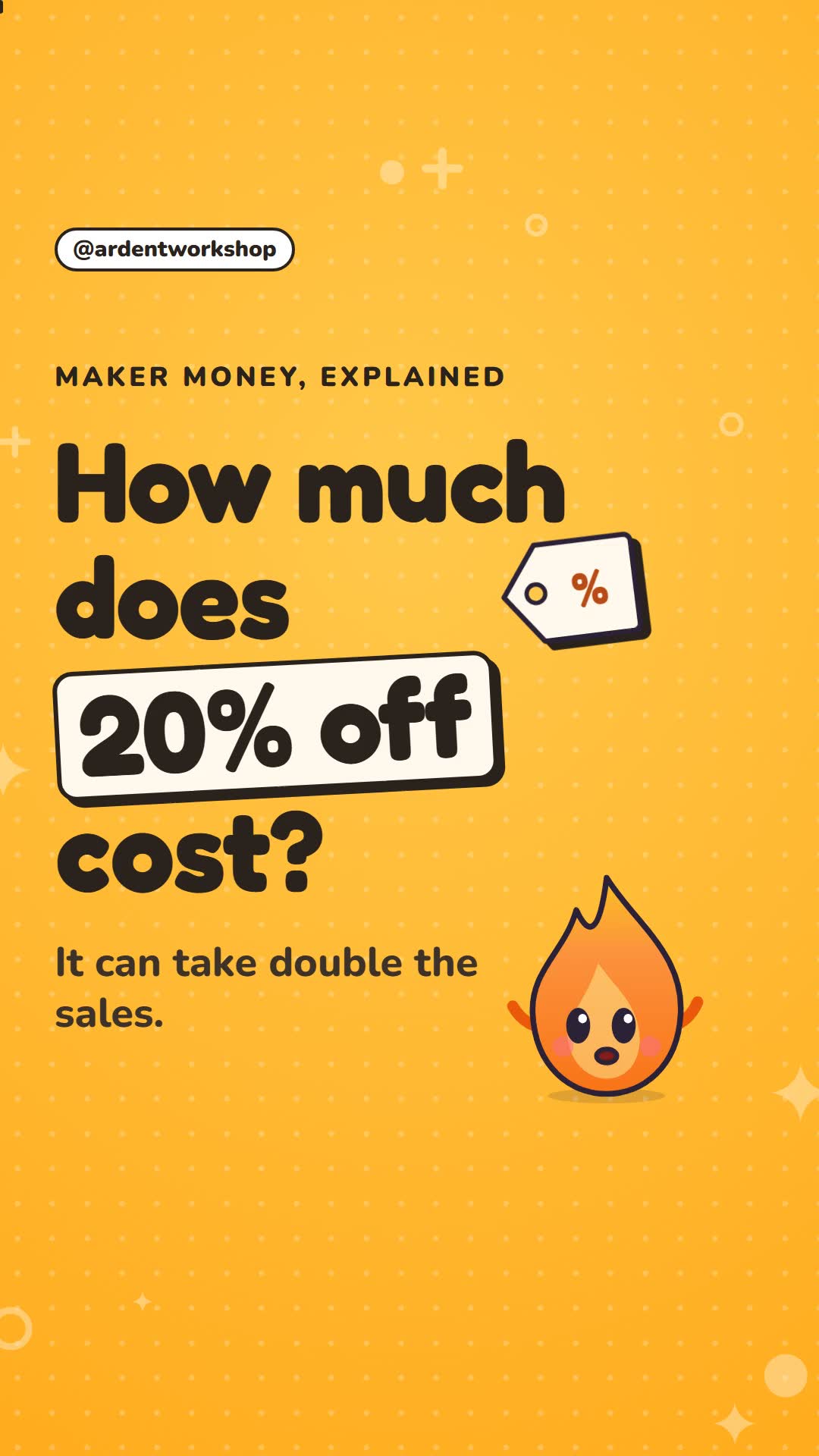
A discount comes off the price but out of your profit. Say a $40 wallet has $16 of profit before fees: it takes 2 sales at 20% off to match 1 at full price, and 4 at 30% off.
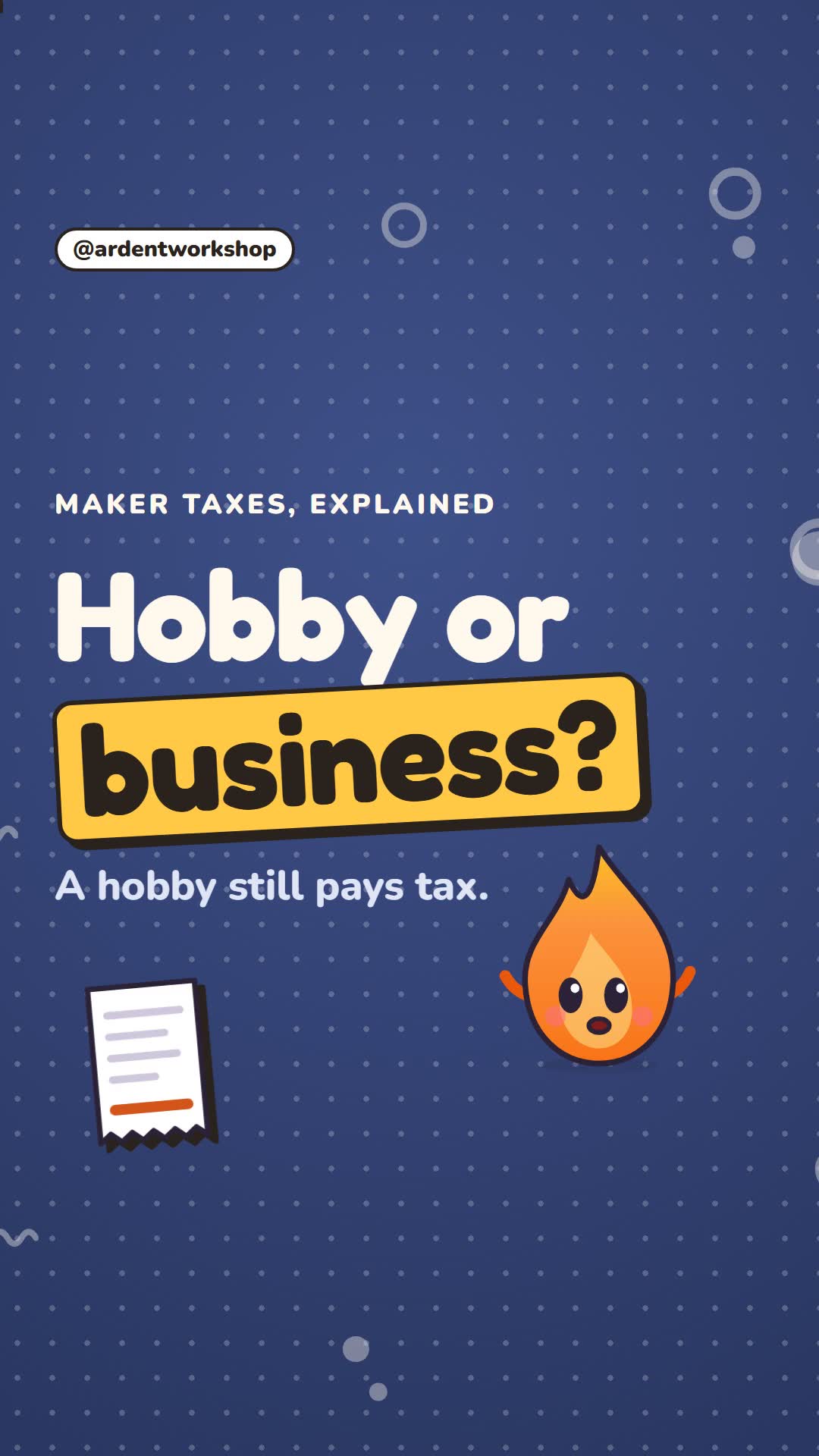
The IRS test: are you really trying to make a profit? A hobby still pays tax on its sales and can subtract only the cost of what it sold, not booth or Etsy fees.
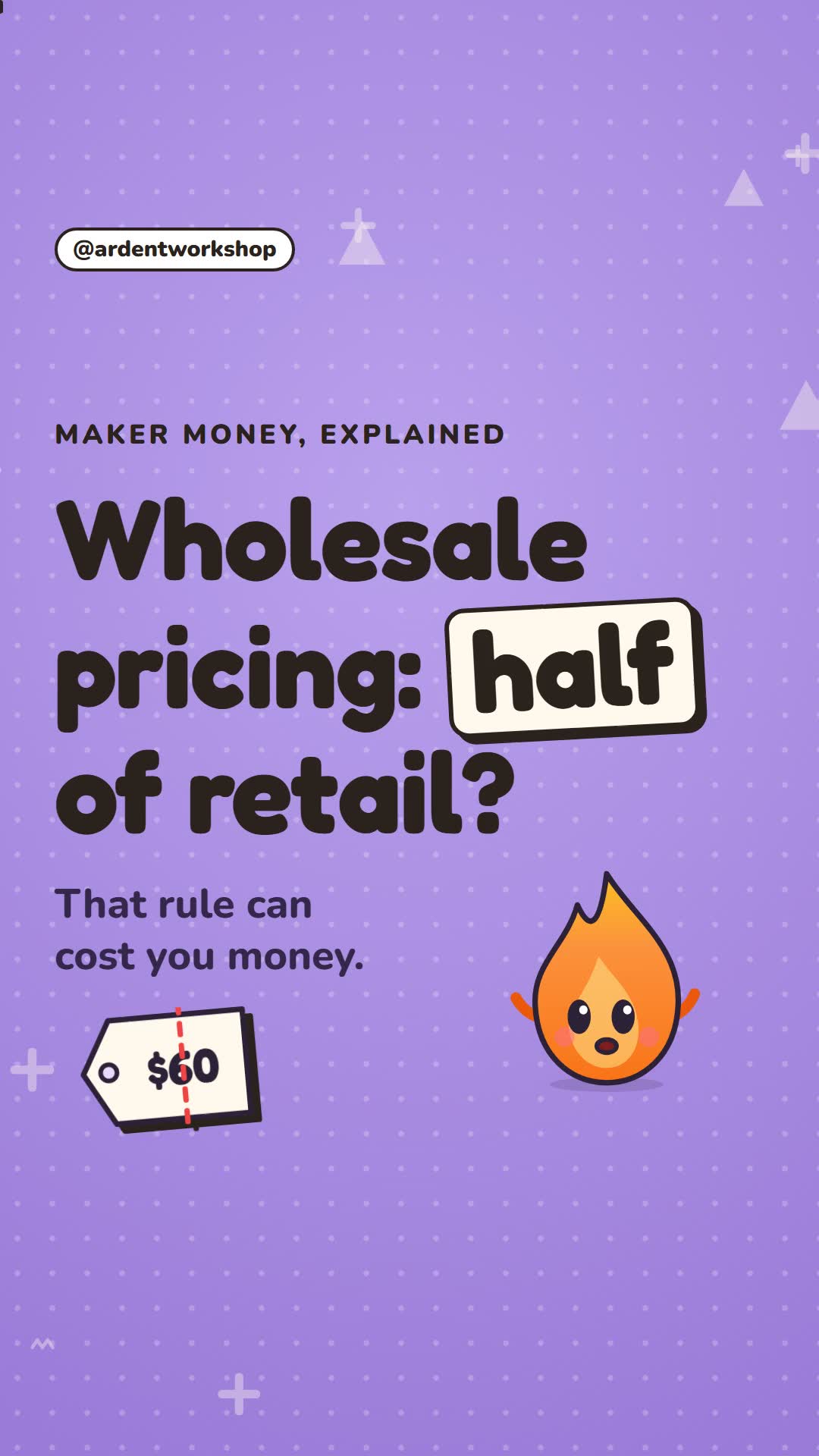
Most shops expect to pay about half your retail price. That works only if your cost is about a third of retail or less. Your wholesale floor: cost ÷ 0.7 keeps 30¢ of every dollar.
Etsy’s 6.5% is only the transaction fee. For a US seller, a $30 sale pays $3.30 in fees, about 11%, once you add the $0.20 listing fee and 3% + $0.25 processing.
COGS, or cost of goods sold, is what the things you sold cost to make. At its simplest: start-of-year inventory, plus materials bought, minus what’s left at year end.
Jerky yield is what you get out of a batch compared with what you put in. Example: 5 lb of beef at $8 a lb dries to 2 lb, a 40% yield, so each pound of jerky holds $20 of beef.
Superfat is oil you leave as oil, by using a little less lye than your oils could turn into soap. Worked through: oils needing 140 g of lye get 133 g at 5%.

Your reorder point is the stock level that says “order now.” Weekly use × lead time in weeks + safety stock, worked through on a jeweler’s silver chain.

Cheesecake is a TCS (time/temperature control for safety) food: it needs the fridge to stay safe, and most cottage food laws cover only shelf-stable foods like cookies.
Your break-even point is the number of sales that covers your costs. Worked through on a $75 market booth and a $20 candle: 7 candles before the day pays you.
Markup divides your profit by your cost; margin divides it by your price. Why a 50% markup leaves only a 33% margin, and the one conversion worth remembering.