Jerky yield: why $8 beef can cost $20 a pound
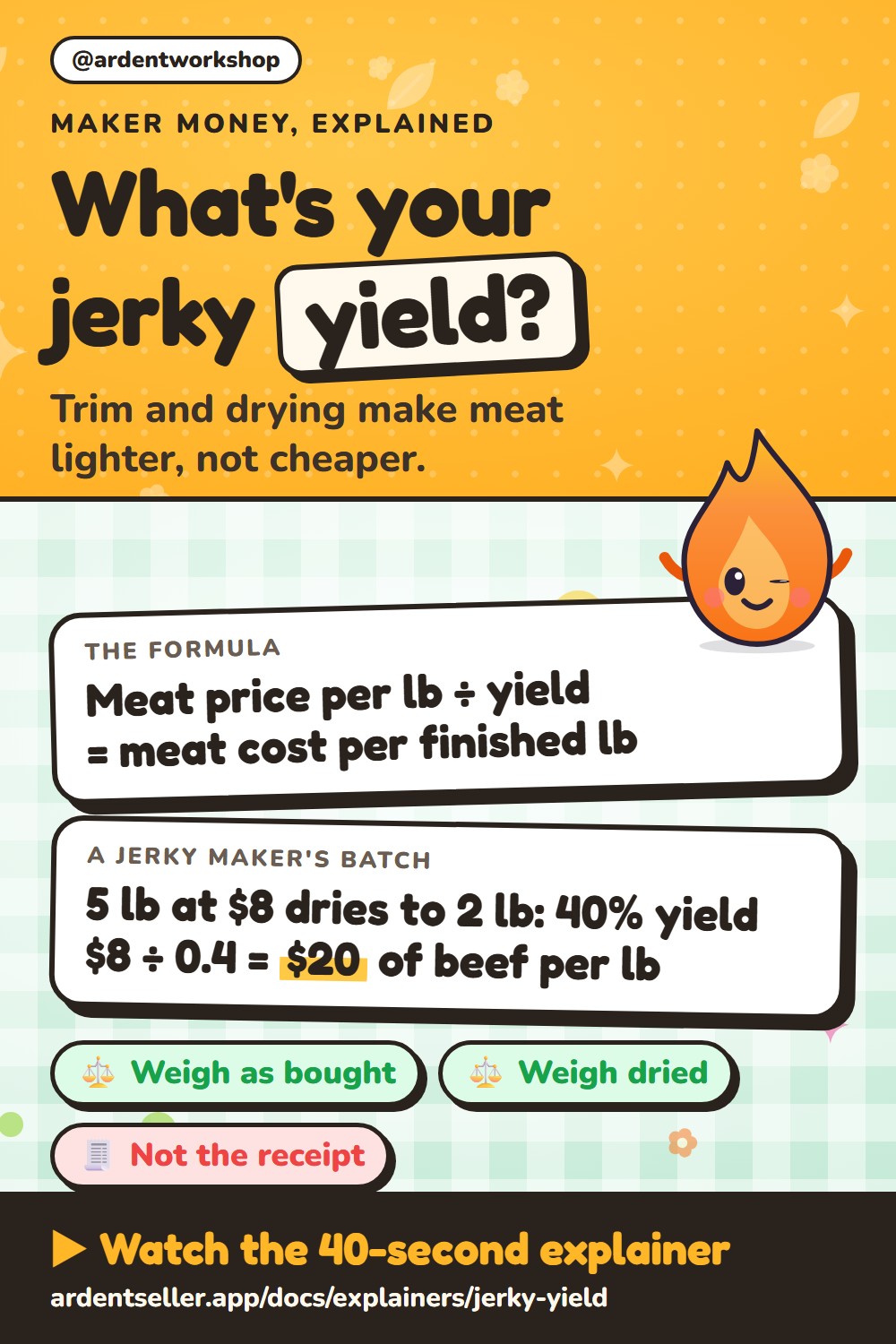
Jerky yield is what you get out of a batch compared with what you put in. Example: 5 lb of beef at $8 a lb dries to 2 lb, a 40% yield, so each pound of jerky holds $20 of beef.
Jerky yield is the dried weight of a batch divided by the weight of the meat as bought. Trim and drying take weight out of a batch, but not cost, so pricing from the per-pound price on the beef receipt understates what the meat in each bag cost you. The fix is one division: the meat’s price per pound divided by your yield is the meat cost of each finished pound. The video works it through on a batch where 5 lb of beef at $8 a pound dries to about 2 lb, a 40% yield, so every pound of jerky holds $20 of beef, not $8. Yields vary with the cut, the trim and how dry you take it, so weigh the meat as bought and again once dried, and price from your own scale.
Watch on YouTube Shorts (opens in new tab)
The whole idea on one card
New explainers drop on our socials
Follow @ardentworkshop for more maker explainers.
Go further
- Glossary: Yield
- Read: Jerky Costing After the Shrink: What a Bag of Jerky Really Costs to Make
- Read: Why Your Coffee Costs More to Roast Than You Charge: A Roast-Yield Diagnostic
- Read: Coffee Roasting at Home: Tracking Green Bean Inventory, Roast Loss, and True Cost Per Bag
- Read: Recipe Costing 101: How to Calculate the True Cost of Every Product You Make
- For Jerky & Dried Meat Makers
- For Coffee Roasters
- Guide: Start a coffee roasting business
Transcript
Hook
What’s your jerky yield? $8 beef. $20 jerky.
Definition
Yield is what you get out of a batch, compared with what you put in. Trim and drying make meat lighter. Not cheaper.
Formula
So divide the meat’s price per pound by your yield. That’s the meat cost of each finished pound.
Example
Say a jerky maker buys 5 pounds of beef at $8 a pound. Dried, it weighs 2 pounds: a 40% yield. $8 divided by 0.4 is $20 of beef in every pound.
Takeaway
Weigh meat as bought, then dried. Price from the scale, not the receipt.
Sources
- Yield (%) = 100 × finished weight ÷ raw weight (USDA’s cooking-yield definition); measured here against the weight as bought, so trim loss is counted too: USDA Agricultural Research Service, USDA Table of Cooking Yields for Meat and Poultry, Release 2 (2014), Equations and Definitions (opens in new tab)
- Yields describe changes in food weight due to moisture loss (evaporation or drip), water absorption (boiling) or fat gains and losses during preparation and cooking: USDA Agricultural Research Service, USDA Table of Cooking Yields for Meat and Poultry, Release 2 (2014), Introduction (opens in new tab)
- Dried meat weighs less than half of its original weight; five pounds of fresh meat should weigh approximately 2 pounds after drying: UC Master Food Preservers of San Diego County (UC Agriculture and Natural Resources), Marinated Jerky (opens in new tab)
- 5 lb at $8/lb = $40; 2 lb ÷ 5 lb = 40% yield; $8 ÷ 0.4 = $20 of beef per finished pound ($40 ÷ 2 lb): Arithmetic on the example’s numbers (opens in new tab)
- Lean raw beef (eye of round, trimmed) is about 73% water and 3% fat by weight, so most of what drying removes is water: USDA FoodData Central, SR Legacy 173999 (opens in new tab)
- Trim and discard all fat from meat before drying jerky: National Center for Home Food Preservation, Drying Jerky (opens in new tab)
Last updated .