Kit, BOM & Cost Software for Miniature & Book Nook Makers
Dollhouse miniatures, book nooks & DIY model kits

Overview
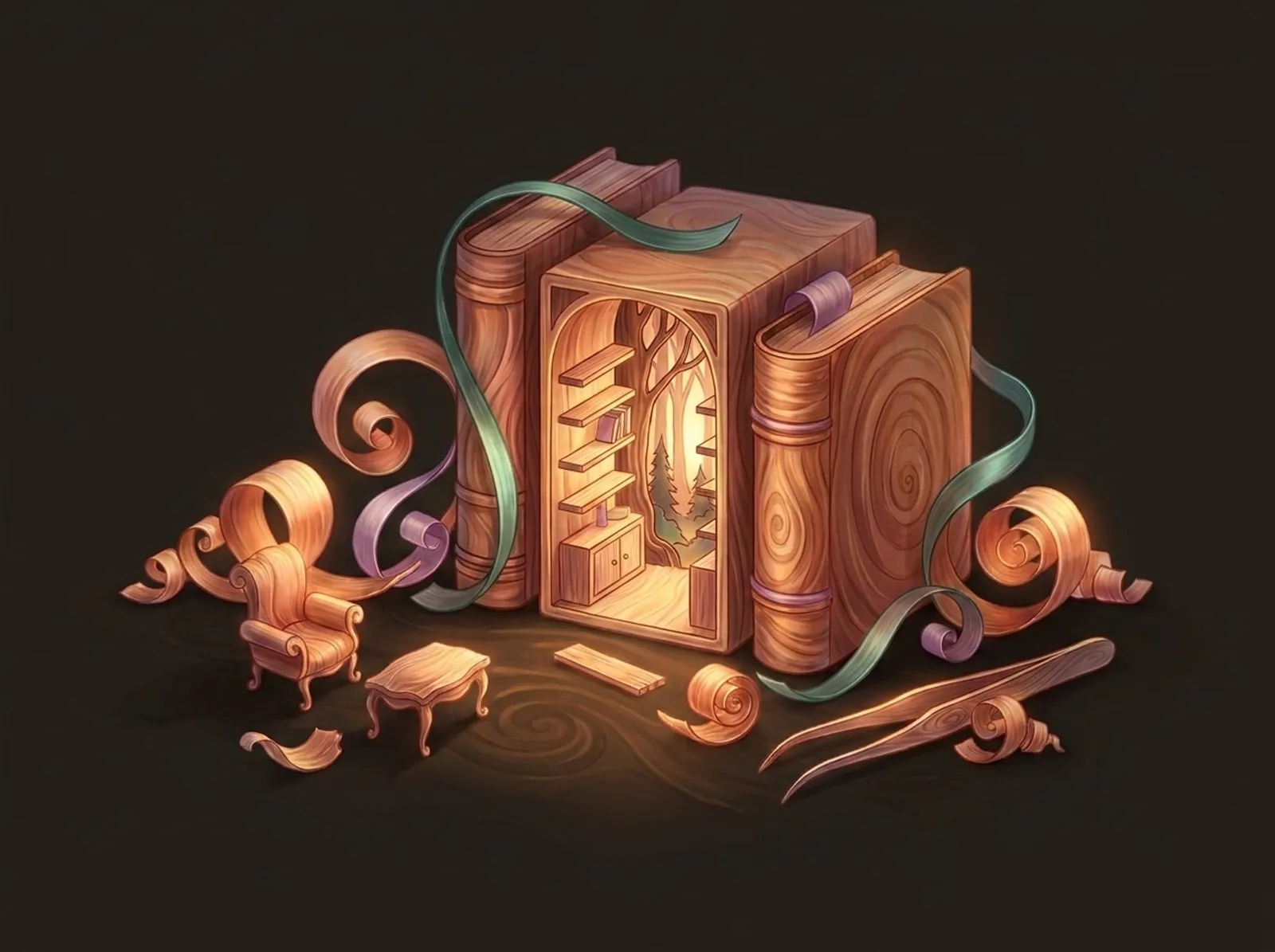
A book nook or miniature kit is dozens of tiny parts pretending to be one product — laser-cut wood and acrylic, LEDs and wiring, mini furniture, paper, paint, and glue — sold either as a finished diorama or as a boxed DIY kit. Either way the cost lives in the parts list and the hours of assembly, and both are nearly impossible to keep straight by hand. Ardent Seller is built for exactly this: track every component as inventory with reorder points so you never stall a build waiting on LEDs, define each design as a bill of materials so assembling a finished piece or packing a kit deducts the right parts automatically, manage themes and sizes as variants, and capture the real assembly time so labor lands in the price. Equipment costing folds in your laser or printer if you cut your own parts, and true-margin reports show which designs are worth the bench time. (Cutting your own MDF and acrylic? Pair this with our Laser Engraving & CNC page.)
Common Challenges
- Tracking dozens of tiny components per design without losing count
- Pricing pieces where assembly labor dwarfs the material cost
- Costing a finished diorama and a boxed DIY kit from the same parts list
- Reordering small parts — LEDs, mini furniture — before a build stalls
- Managing themes and sizes as variants across a growing catalog
- Knowing the true margin on intricate, time-heavy builds
How Ardent Seller Helps
Purpose-built features for miniature & book nook makers.
Bill of Materials
Define each design from its full parts list so building a piece or packing a kit deducts every component automatically.
Component Inventory & Reorder Points
Track every small part with par levels so you reorder LEDs, furniture, and acrylic before a build stalls.
Kits & Finished Goods
Sell the same design as a boxed DIY kit or a finished diorama, each costed correctly from the shared parts list.
Theme & Size Variants
Manage every theme and size as variants of one product instead of a tangle of disconnected SKUs.
Labor Tracking
Capture the real hours of assembly so a time-heavy build is priced for the work, not just the parts.
Equipment Costing
Fold in your laser cutter or 3D printer and its maintenance if you cut your own parts, so machine wear shows up in cost.
Free resources for Miniature & Book Nook Makers
Downloadable guides, checklists, and templates — no email required.
Product Pricing Calculator
A working Excel pricing calculator — materials, labor, packaging, and platform fees in, a defensible retail price out. Plus a batch tab that shows what 50 vs. 10 actually costs.
Maker Hourly-Rate Pricing Calculator
Pick a target hourly rate, enter your materials, hands-on minutes per unit, and platform fees — the calculator returns the minimum price that actually pays you that rate after fees and costs. Maker-business specific, not a "freelance day rate" tool.
Small-Batch Production Planning Playbook
A printable six-page playbook for handmade-goods producers — five planning principles, the demand-driven batch-sizing formula, and four worksheets for sizing, run logging, weekly WIP, and post-run audit.
SKU Naming & Barcode System Starter Kit
A vendor-neutral PDF primer on building a real SKU system — prefix conventions that survive variants and reorders, when barcodes start paying for themselves, free vs. paid barcode options, and a one-page printable cheat sheet for the workbench wall.
Craft Seller Startup Checklist
36 things to set up before — and after — your first sale. Inventory, pricing, and the legal essentials in one place.
Guides for Miniature & Book Nook Makers
In-depth articles to help you get the most out of your business.

Book Nook Pricing: The 40-Hour Diorama That Was Losing Money at $120
One book-nook maker sold a 40-hour lit diorama for $120 and quietly lost money on every sale. We rebuild her numbers layer by layer to find the price — and the process changes — that finally pay her.

The True Hourly Wage of a Maker Business: What Your Hour Is Really Worth
Two times materials is the most expensive pricing decision in the maker community. A worked, calculator-backed walk-through of the cost stack under your hourly rate — and the math that tells you what to actually charge.

What Is a Bill of Materials? A Plain-English Primer for Makers Who Build Things
A bill of materials is just a complete list of everything that goes into one finished product — and for makers, it is one of the most useful documents you are probably not writing down. Here is what it is, what belongs on it, and how to build your first one.

Reorder Points for Makers: How to Stop Running Out (and Stop Overbuying) With Simple Par Level Math
Running out of fragrance oil mid-pour costs a Saturday. Burying $600 in wax you will not touch for eighteen months costs cash flow. The gap between those two failures is called a reorder point, and the math to find yours takes about twenty minutes per product. Here is how to do it.
Laser & CNC Job Costing: A Cost-Stack Teardown for the Hidden Per-Part Math
A line-by-line walkthrough of what it actually costs to make a single laser-engraved or CNC-cut product — material, machine-hour cost, labor, design amortization, consumables, packaging, and platform fees — built around an annotated walnut-sign quote with numbered callouts.
Related use cases
Other businesses with overlapping challenges and tools.
Board game designers, zine makers & indie publishers
Laser engravers, CNC operators & personalized gift makers
3D printing businesses, model makers & prototypers
Woodworkers, furniture makers & custom builders
Explore other use cases
Ready to streamline your business?
Start free — no credit card required. All features on every plan.
Questions? Check out our pricing