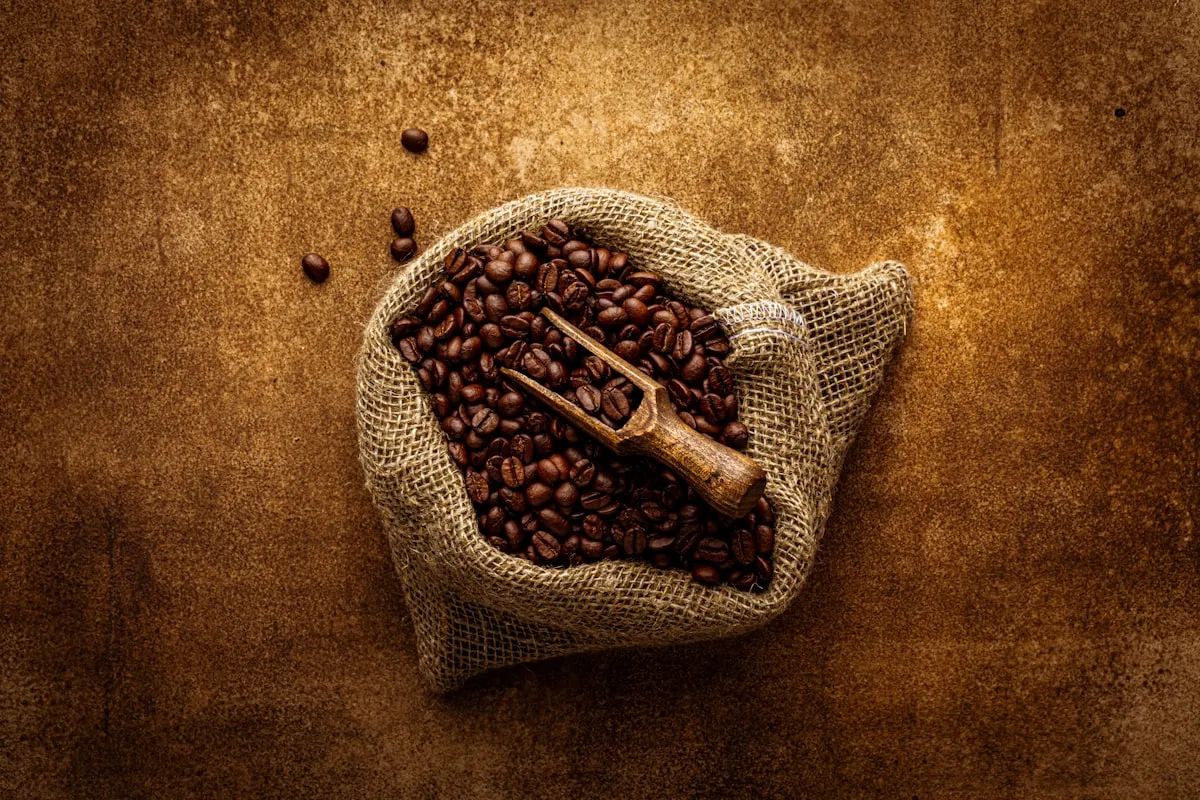
You bought 20 pounds of Ethiopian Yirgacheffe green beans for $7.80 per pound. That is $156 of raw inventory. After roasting, you have roughly 16.5 pounds of roasted coffee — because 17% of the weight evaporated as moisture, chaff, and volatile compounds during the roast. Your cost per pound just went from $7.80 to $9.45. If you are bagging in 12-ounce portions, each bag's bean cost alone is $7.09 — not $5.85, which is what you would calculate if you forgot about roast loss entirely.
That $1.24 gap per bag might look small. Multiply it by 200 bags a month and it is $248 in phantom profit — money you think you made but never actually did. Over a year, that is nearly $3,000 in margin erosion from a single origin lot. Now consider that most small roasters carry 4-8 origins at a time, each with different purchase prices and different loss rates depending on roast profile.
This is the central math problem of small-batch coffee roasting: your raw material literally disappears during production, and the rate at which it disappears varies by origin, roast level, and batch size. Generic inventory tracking — the kind that assumes your input weight equals your output weight — does not work here. You need a system that accounts for shrinkage at the batch level, tracks costs per origin, and produces a true cost-per-bag number you can actually price from.
The Roast Loss Problem: Your Inventory Shrinks Every Time You Roast
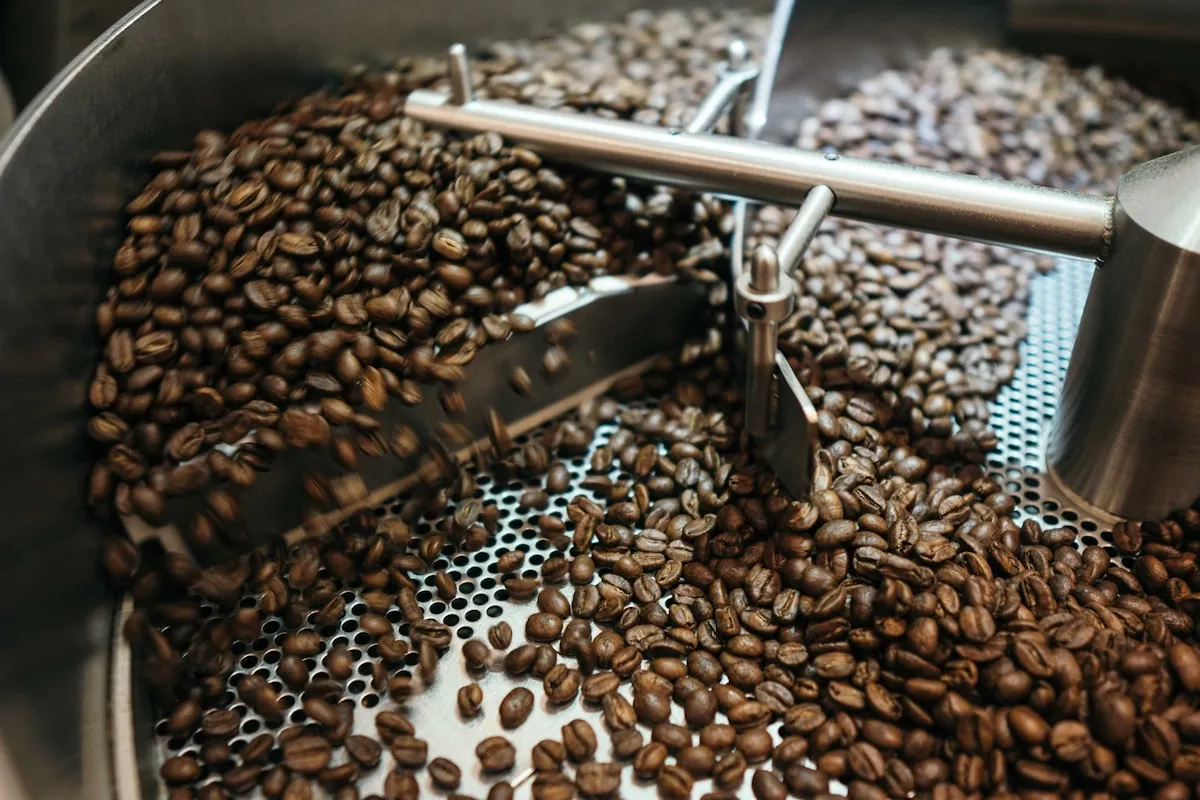
Green coffee beans contain 10-12% moisture by weight, plus organic compounds that break down during the Maillard reaction. When heat transforms green beans into roasted coffee, a significant percentage of that weight is permanently lost. The exact percentage depends on how far you take the roast (Specialty Coffee Association (opens in new tab)).
| Roast Level | Typical Weight Loss | Example: 5 lb Green Input |
|---|---|---|
| Light (City) | 12-14% | 4.30-4.40 lb output |
| Medium (Full City) | 15-17% | 4.15-4.25 lb output |
| Dark (French/Italian) | 18-22% | 3.90-4.10 lb output |
Notice the range within each level. A 3-percentage-point swing in roast loss on a 5-pound batch changes your output by about 2.5 ounces — roughly one-third of a retail bag. That variance matters because it directly shifts your cost per unit.
The problem: Most small roasters track green bean purchases and roasted bag sales, but they do not consistently measure post-roast weight. They estimate loss at a flat percentage — often whatever number they read in a roasting forum — and apply it uniformly. The result is a cost model that is wrong in both directions: it overstates margin on dark roasts (where loss is highest) and understates margin on light roasts (where loss is lowest).
The solution: Weigh every batch before and after roasting. Every single time. Record the green input weight, the roasted output weight, and calculate the actual loss percentage. Over time, you will build a loss profile for each origin at each roast level — and your cost calculations will shift from estimates to data.
A simple batch log looks like this:
| Date | Origin | Green In (lb) | Roasted Out (lb) | Loss % | Roast Level |
|---|---|---|---|---|---|
| 3/10 | Ethiopia Yirgacheffe | 5.00 | 4.18 | 16.4% | Medium |
| 3/10 | Colombia Huila | 5.00 | 4.32 | 13.6% | Light |
| 3/12 | Sumatra Mandheling | 5.00 | 3.95 | 21.0% | Dark |
After 10-15 batches of the same origin at the same roast level, your average loss percentage becomes reliable enough to forecast output from a green bean purchase. That forecast is what drives accurate pricing.
The Origin Lot Problem: Not All Green Beans Cost the Same
Coffee is one of those commodities where price varies enormously by origin, processing method, altitude, harvest year, and lot size. A home roaster's green bean inventory might look like this:
| Origin | Process | Cost/lb | Lbs on Hand | Total Value |
|---|---|---|---|---|
| Ethiopia Yirgacheffe | Washed | $7.80 | 12.0 | $93.60 |
| Colombia Huila | Washed | $6.20 | 18.5 | $114.70 |
| Sumatra Mandheling | Wet-hulled | $6.90 | 8.0 | $55.20 |
| Guatemala Antigua | Washed | $7.10 | 15.0 | $106.50 |
| Kenya AA | Washed | $9.40 | 5.0 | $47.00 |
Five origins, five different costs per pound, five different roast loss profiles. If you sell a 12-ounce bag of your Kenyan single-origin at the same price as your Colombian, you are either overcharging for one or undercharging for the other — unless the cost difference happens to be offset by different loss rates (unlikely).
The problem: Many small roasters average their bean costs across all origins. They add up total green bean spending, divide by total pounds purchased, and use that blended number for pricing. This masks the true profitability of each product. Your $9.40/lb Kenya might be losing money at your current price point while your $6.20/lb Colombia subsidizes it.
The solution: Track inventory and costs per origin lot. When you buy 20 pounds of Ethiopian Yirgacheffe, that is a distinct inventory entry with its own cost basis. When you roast 5 pounds of it, deduct from that specific lot. When you calculate the cost of a bag of Ethiopian single-origin, use the per-pound cost from the actual lot it came from — adjusted for roast loss.
For blends, the math adds one step: calculate the cost contribution of each component proportionally.
Example: "House Blend" — 60% Colombia, 40% Guatemala
| Component | Green Cost/lb | Roast Loss | Roasted Cost/lb | Blend % | Cost Contribution/lb |
|---|---|---|---|---|---|
| Colombia Huila | $6.20 | 13.6% | $7.18 | 60% | $4.31 |
| Guatemala Antigua | $7.10 | 15.2% | $8.37 | 40% | $3.35 |
| Blend total | 100% | $7.66/lb |
Your house blend's roasted bean cost is $7.66 per pound, or $5.75 per 12-ounce bag. That number is specific, traceable, and changes when you swap lot prices or adjust the blend ratio. Compare that to "about $5 a bag in beans" — which is what you get from mental math.
The Hidden Costs Problem: Beans Are Not Your Only Expense
Bean cost after roast loss often accounts for 40-60% of total cost per bag — in the worked example later in this post, it runs 54%. Your ratio will vary with your labor rate, equipment, and packaging choices. The rest comes from expenses that most roasters undercount or ignore.
Packaging materials
Packaging materials add up faster than expected. A typical retail bag setup:
| Item | Cost per Unit | Notes |
|---|---|---|
| Kraft bag with valve | $0.45-$0.80 | One-way degassing valve is non-negotiable for freshness |
| Label (printed) | $0.15-$0.40 | Professional labels vs. home inkjet |
| Tin tie or heat seal | $0.02-$0.05 | Closure method |
| Sticker/tape | $0.03-$0.08 | Brand seal or "roasted on" date |
| Total packaging | $0.65-$1.33 | Per bag |
Energy costs
Energy costs for roasting depend on your equipment. A small drum roaster (1-3 lb capacity) running on propane uses roughly $0.15-$0.30 per batch. An electric sample roaster or air roaster runs $0.05-$0.15 per batch. These are small numbers per batch, but they compound across hundreds of batches per year. If you roast 200 batches annually on propane at $0.25 each, that is $50 — not life-changing, but still a real cost that belongs in your per-bag calculation.
Equipment depreciation
Equipment depreciation is the expense most home roasters forget entirely. A Behmor 2000AB costs around $500 and lasts roughly 3-5 years with regular use. A Huky 500 or Mill City 1kg is $2,000-$4,000 with a 7-10 year lifespan. Spread across the number of bags you produce over that period, depreciation adds $0.10-$0.50 per bag depending on volume and equipment tier.
The problem: Roasters calculate bean cost, add a bag, and call that their "cost." The resulting price leaves margin that looks healthy on paper but slowly erodes as equipment wears out, propane tanks need refilling, and labels run out mid-run.
The solution: Build a per-bag cost model that captures every category:
| Cost Category | Per 12 oz Bag | % of Total |
|---|---|---|
| Roasted beans (after loss) | $5.75 | 54% |
| Packaging | $0.85 | 8% |
| Energy (roasting) | $0.04 | <1% |
| Equipment depreciation | $0.25 | 2% |
| Labels/printing | $0.25 | 2% |
| Shipping materials (if applicable) | $0.60 | 6% |
| Labor (roasting + packaging time) | $2.80 | 26% |
| Total cost per bag | $10.54 | 100% |
At $10.54 true cost, a $16.00 retail price yields a 34% gross margin. A $14.00 price drops that to 25%. Neither number is inherently right or wrong, but you cannot make an informed pricing decision without knowing the $10.54 figure — and most home roasters do not.
The Freshness Problem: Roasted Coffee Is a Depreciating Asset
Green coffee stores well — 6 to 12 months in cool, dry conditions with minimal quality loss. Roasted coffee does not. Peak flavor for most single-origins is generally within a few weeks post-roast — many roasters and customers find the 7–21 day window optimal, though this varies by bean and brew method. After 30 days, noticeable staleness sets in. After 60 days, you are selling a noticeably inferior product.
This creates an inventory management challenge that does not exist for most craft products. A candle maker's inventory does not degrade on a shelf. A soap maker's cured bars are shelf-stable for months. Your roasted coffee is losing value every day it sits unsold.
The problem: Roasting too far ahead of demand means stale bags. Roasting too conservatively means missed sales. Without tracking roast dates alongside inventory quantities, you cannot distinguish "I have 40 bags in stock" from "I have 40 bags, but 15 of them were roasted 25 days ago and need to move this week."
The solution: Track inventory with both quantity and roast date. Every bag or batch should have a roast date attached. Set a maximum shelf window for your business — 21 days and 30 days are common thresholds — and flag inventory approaching that window for discounting, sampling, or personal use.
A simple aging report reveals the health of your roasted inventory at a glance:
| Product | Bags on Hand | Roasted | Days Old | Status |
|---|---|---|---|---|
| Ethiopia Yirgacheffe | 12 | 3/22 | 3 | Fresh |
| Colombia Huila | 8 | 3/18 | 7 | Fresh |
| House Blend | 15 | 3/10 | 15 | Sell soon |
| Sumatra Mandheling | 6 | 3/02 | 23 | Discount or pull |
If your "Sell soon" and "Discount or pull" rows consistently hold a large percentage of your inventory, you are roasting ahead of demand. Adjust batch sizes downward. If you are frequently out of stock on popular origins, scale up. The data tells you which direction to move — but only if you are collecting it.
The Blend Consistency Problem: Ratios Drift Without Records
Single-origin bags are straightforward: one bean, one cost. Blends introduce a compounding variable. Your house blend is "60/40 Colombia/Guatemala" — until the day you are low on Guatemala and eyeball it closer to 50/50. Or you swap in a new lot of Colombia that tastes slightly different. Or you adjust the ratio to account for a customer complaint about bitterness.
Each of these changes shifts your flavor profile, your cost basis, and your customer's expectation — sometimes all in different directions.
The problem: Blend recipes evolve informally. Most small roasters do not document ratio changes, which means they cannot reproduce a blend that customers loved, cannot diagnose what changed when complaints come in, and cannot accurately cost a blend whose composition varies batch to batch.
The solution: Treat every blend like a recipe with versioned formulations. Record the exact ratio, the specific origin lots used, and the date of any change. This is the same principle that food producers, soap makers, and skincare formulators use — it just happens to apply to coffee blending too.
When a blend recipe changes, the per-bag cost changes with it. Tracking both together means your pricing stays accurate even as your blend evolves.
Putting It Together: A Roasting Workflow That Tracks Everything
The individual solutions above converge into a workflow that captures data at each step of the roasting process:
Step 1 — Receive green beans. Log the origin, lot identifier, weight, cost per pound, and supplier. This is your raw material entry.
Step 2 — Roast. Record the origin (or blend recipe), green input weight, roast level, and roasted output weight. Calculate loss percentage. Deduct green beans from the appropriate origin lot.
Step 3 — Bag and label. Record the number of bags produced, bag size, roast date, and any packaging costs. Add finished bags to your roasted inventory.
Step 4 — Sell. Deduct sold bags from roasted inventory. Record sale price, channel (market, online, wholesale), and any transaction fees or shipping costs.
Step 5 — Review. Weekly or monthly, check your aging report for stale inventory, your cost-per-bag calculations for margin health, and your origin lot levels for reorder timing.
This is exactly the kind of multi-step production workflow that tools like Ardent Seller are built for. You track green beans as raw ingredients with per-lot costing, record roasting as a production run that converts input materials to finished goods (accounting for weight loss), and monitor your finished inventory with roast dates. The cost flows through automatically — no spreadsheet formulas to maintain, no manual roast-loss adjustments to remember.
What Accurate Tracking Actually Changes
The difference between "roughly tracking" and precisely tracking coffee roasting costs shows up in three places:
Pricing confidence
Pricing confidence When you know your true cost per bag is $10.54, you can set a $16 price and defend it — to yourself, to customers who ask, and to wholesale accounts negotiating a discount. You know exactly where your floor is.
Product mix decisions
Product mix decisions Per-origin profitability data might reveal that your most popular single-origin (the Ethiopian) is also your lowest-margin product because of high bean cost and above-average roast loss. Meanwhile, your house blend — which outsells everything — carries the best margin because lower-cost components and a medium roast minimize shrinkage. That insight might change which products you promote, which you discount, and which you consider dropping.
Purchasing timing
Purchasing timing Green bean prices fluctuate seasonally. If you know your average monthly consumption per origin, you can buy ahead when prices dip rather than ordering reactively when you run out. A $0.50/lb savings on a 40-pound purchase is $20 — small in isolation, but material when compounded across four or five origins and multiple purchases per year.
None of these decisions are possible when your cost model is "beans cost about six or seven bucks a pound and I sell bags for fifteen." That level of approximation works when coffee is a hobby. The moment you are selling to other people and expecting it to generate income, the math needs to be real.
If you are ready to move beyond spreadsheet estimates, Ardent Seller handles the full roasting workflow — origin-lot inventory with per-pound costing, production runs with automatic weight-loss tracking, and per-bag cost rollups that update as your input costs change. Start tracking for free and see what your coffee actually costs to produce.
Related reading
- Recipe Costing 101 — Yield loss is the foundation idea here — same math applies across every batch-driven product.
- Shelf Life, Spoilage, and Shrinkage — How to count the green beans that go stale before they hit the roaster.
- Batch Tracking for Food Sellers — Lot-tracking your roasts ties customer feedback back to specific origin lots and roast profiles.
Free resources
A few free downloads from the Ardent Workshop library that pair well with this post:
- Coffee Roaster's Batch & Cupping Log — A working Excel workbook built for small-batch roasters: roast profile log (charge temp, first-crack time, drop temp, development-time ratio), SCA-style cupping scores by lot, a four-component blend calculator, and a per-bag costing tab that picks up each lot's actual measured loss percentage via VLOOKUP — so you stop flat-percentaging your way to wrong margin numbers.
- Monthly Inventory Count Sheet — A printable count sheet with raw, finished, and packaging sections — useful for separating green beans, roasted bags, and bag/label inventory at month-end.
- Vendor & Supplier Contact Organizer (Fillable PDF) — Green-coffee importers, sample suppliers, bag and label vendors — a roastery touches more suppliers than the bean count suggests. A four-page fillable directory with a Vendor Record per supplier, an alternate-supplier scoring sheet for the next time a single-origin lot vanishes mid-season, and a master vendor index.
- Craft Seller Startup Checklist — Inventory cataloging, pricing math, and the legal essentials to anchor a small roastery's first year.
This article is provided for educational purposes only and does not constitute financial, tax, or business advice. Cost structures, pricing examples, and margin figures are illustrative and will vary by your specific circumstances. Consult a qualified accountant or small-business advisor before making financial decisions based on this content.