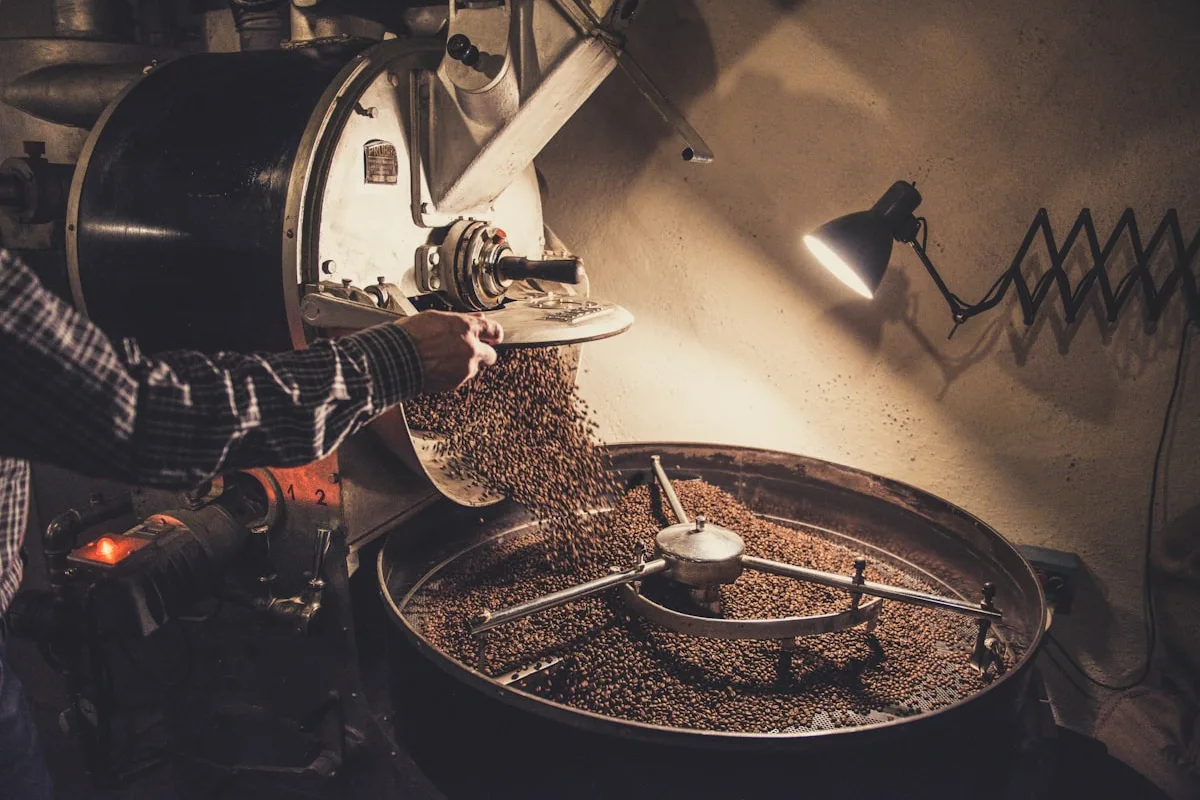
It is the last Sunday of a good month. You moved more bags than you ever have — markets were busy, the online orders kept pinging, you roasted until the cooling tray never got a chance to go cold. Then you open the business account to pay yourself, and the balance is a couple of hundred dollars short of where the math in your head said it would be. Nothing went wrong. No refund, no spoilage, no surprise fee. The money just was not there.
It almost never is, in a roastery, and the reason is hiding in plain sight: you bought green coffee and you sold roasted coffee, and those are not the same weight. The gap between them is small enough to ignore on any single bag and large enough to drain a month when you stack two hundred of them. It is easy to price as if a pound of green becomes a pound of roasted. It does not. Somewhere between a tenth and a fifth of it leaves as steam and chaff every time you pull a batch.
This is not another "track everything" lecture. (If you want the full inventory-and-costing system, there is a guide for that.) This is a diagnostic. In about fifteen minutes and one batch, you can find the exact size of your roast-yield leak, figure out which of three versions of it you have, and decide what to do about it.
The number everyone repeats, and where it actually comes from
Ask around and you will hear that coffee "loses about 15% in the roast." It gets repeated on forums, in supplier blogs, in the comments under every roasting video. Run your business on it and you will be wrong in two directions at once.
Fifteen percent is a midpoint, not a measurement. The ranges you will see cited around the industry put weight loss at roughly 12-14% for a light (City) roast, 15-17% for a medium (Full City), and 18-22% for a dark (French or Italian) roast — the spread driven mostly by green moisture content and how long you develop the roast. Useful as a ballpark, but notice what those are: somebody else's numbers, not yours. A single borrowed figure sits in the middle of all of that and quietly overstates your margin on the dark roasts (where loss is highest) while understating it on the lights.
The skeptic's rule of thumb: any cost input you did not measure on your own scale is a guess wearing a lab coat. "15% loss," "price at 3× green cost," "$15 is the going rate" — none of those came from your roastery, and your roastery is the only one whose numbers have to add up.
The fix for the borrowed number is not a better borrowed number. It is your own. Which is the whole diagnostic.
Run the diagnostic: one batch, one scale, one honest comparison
Here is the entire procedure. You need a scale you trust and the price you currently charge for one bag.
- Weigh in. Put your normal batch of one origin on the scale before you charge the roaster. Write down the green input weight. Say it is 5.00 lb.
- Weigh out. Roast to your usual drop point, cool, and weigh the roasted output on the same scale. Say it is 4.10 lb. Your yield is 4.10 ÷ 5.00 = 82% (an 18% loss). That is a real number from your roaster, not a forum's.
- Find your true bean cost per bag. Your roasted cost per pound is green cost ÷ yield. At $8.00/lb green and 82% yield, that is $8.00 ÷ 0.82 = $9.76 per roasted pound. A 12-oz bag holds 0.75 lb, so the beans in one bag cost $9.76 × 0.75 = $7.32.
- Compare it to the number you priced from. Doing mental math, it is tempting to take the green cost and the bag size: $8.00 × 0.75 = $6.00 a bag in beans. That is the number that felt right. The honest number is $7.32. The difference — $1.32 a bag — is your roast-yield leak, per bag, before you have accounted for a single other cost.
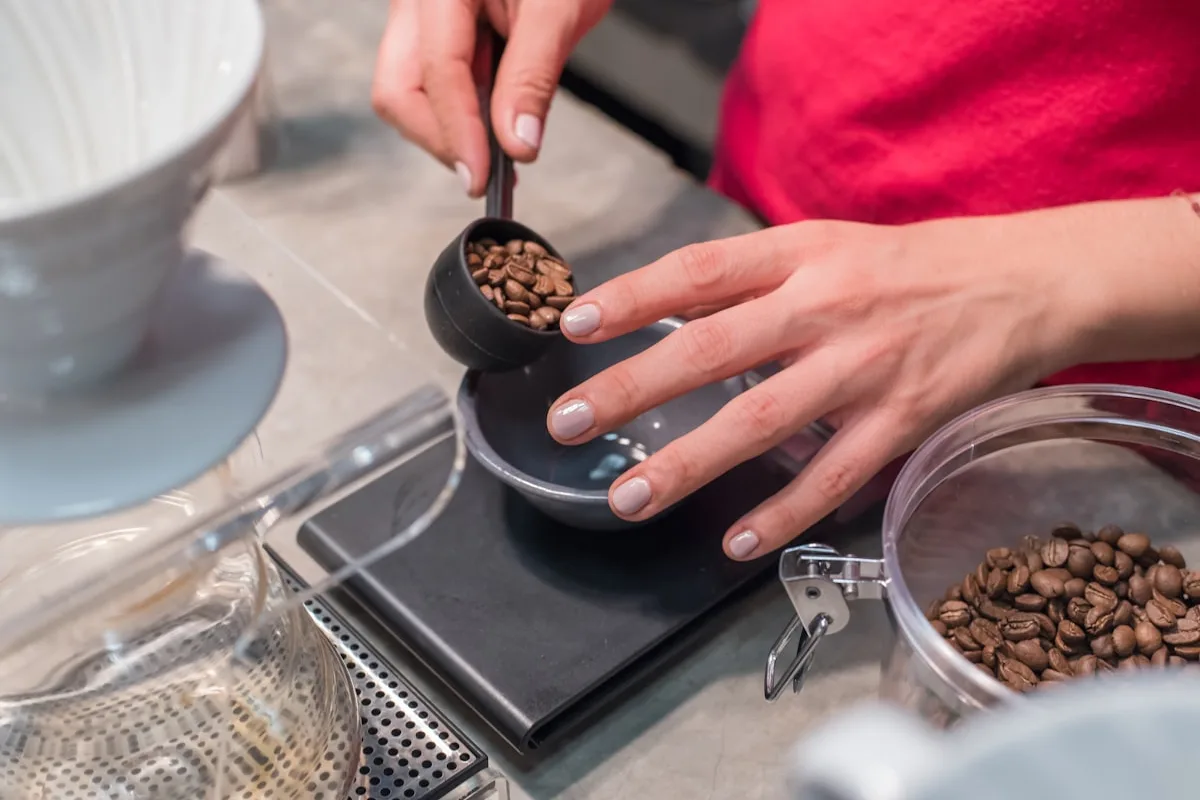
One bag, a dollar thirty-two. Two hundred bags a month, $264. A year, a little over $3,000 — on one origin (illustrative figures; your own move with your volume and green price). Carry five origins at different green prices and different roast levels and you are not looking at one leak, you are looking at five, each a slightly different size.
This is exactly the arithmetic the Coffee Roast Yield & Cost-per-Bag Calculator does in one screen: punch in green weight, roasted weight, and green cost, and it returns your yield, your true cost per roasted pound, and your cost per bag — so you can run the comparison in Step 4 without doing the division by hand.
Diagnose which leak you have
The size of the gap tells you how urgent this is. The shape of it tells you what to fix. Read your Step 4 number against these three patterns.
A working rule of thumb (not an industry standard — just a practical way to read the gap): Gap under ~3% of your bag price? You are basically fine — lock the number in and move on. Gap of 3-10%? You almost certainly have one leak; reprice that product. Gap over 10%? You have stacked leaks; re-cost the line from scratch before you quote another wholesale order.
"Stacked leaks" just means more than one of the three patterns below is true at once — common once a roastery has been pricing on feel for a while. Whichever bucket your gap lands in, read all three to see which ones are yours.
Leak A — Loss-blindness
You priced off green weight and never adjusted. This is the most straightforward to diagnose and fix. The whole gap is roast loss, applied uniformly because you simply never put the roasted weight into the equation. If your Step 4 comparison shows a clean single gap across every product, this is you.
What to do: recompute every bag's bean cost as green ÷ yield, then rebuild the retail price on top of the corrected cost. You are not raising prices to be greedy; you are correcting a number that was wrong. The price might not even change much — but now you can defend it.
Leak B — The flat-percentage trap
You use one loss number for everything. You did account for loss, but you applied a single rate — probably that 15% — across light, medium, and dark. The result: your dark roasts are quietly your least profitable bags per ounce, because they lose the most weight and you priced them as if they lost the average. Sometimes a roaster discovers their best-selling dark is the worst-earning SKU on the shelf.
What to do: measure yield per roast level, not per roastery. Give the dark roast its own (lower) yield and let its true cost rise accordingly. Then make a real decision — nudge its price up, or keep it as a deliberate loss-leader that pulls people to the lights and blends. Either is fine. Not knowing is not.
Leak C — Lot-and-blend drift
Your cost number is stale. You costed this product correctly six months ago, but the green lot turned over at a higher landed price, or you nudged the blend from 60/40 to something closer to 50/50 when you ran low on a component, and the price tag never caught up. The leak here is not roast loss itself — it is that the inputs moved and the price did not. Green coffee is commodity-volatile; last season's landed cost is not this season's.
What to do: re-cost on every new lot and every blend change, not on a calendar. Tie the cost to the lot, so when the lot price moves, the flagged bag price moves with it.
Where the diagnostic stops being a spreadsheet chore
You can run this once with a scale and a calculator — and you should, today. The trouble is that the diagnostic is only true on the day you run it. New lot, new yield, new blend ratio, and you are back to a stale number within a month or two. Doing it by hand every time is the reason many roasters do it once, feel virtuous, and never again.
This is the point where a production tool earns its keep. In Ardent Seller, green coffee lives as a raw material with its own per-lot landed cost, a roast is a production run that converts green into roasted and records the weight loss you actually got, and the per-bag cost rolls up automatically from whichever lot the beans came from. When a green price changes, the bag cost downstream changes with it, and the products that just slipped under your margin floor get flagged instead of silently leaking. The diagnostic stops being a Sunday-night chore and becomes a number that is simply always current.
You do not need software to find the leak. You need a scale and an honest fifteen minutes. You need software to keep it found.
The fifteen-minute version
If you do one thing this week, weigh a single batch in and out, run the four-step comparison, and look at the gap. That number — the quiet difference between the coffee you bought and the coffee you sell — is the most expensive figure in your roastery precisely because you have never written it down. Write it down. Then decide which leak it is, fix that one, and run the next origin next week.
The good month you just had was real. The missing couple of hundred dollars was real too. They are the same coffee, weighed twice. Price the second weighing.
Ready to stop re-running the math by hand? Ardent Seller keeps your true roast-yield and cost per bag current automatically, so the number stays honest long after the first measurement. Start for free and find out what your coffee actually costs to make.
Related reading
- Coffee Roasting: Tracking Green Bean Inventory, Roast Loss, and True Cost Per Bag — Once you have found the leak, this is the full origin-lot inventory and per-bag costing system that keeps it closed.
- Recipe Costing 101 — Roast loss is one species of yield loss; this is the same math applied across every batch-driven product you might add.
- Why Are My Margins Shrinking? — A broader margin-leak diagnostic for when the roast-yield gap is only one of several quiet drains.
Free resources
Free companion downloads if you want to put any of this into practice:
- Coffee Roast Yield & Cost-per-Bag Calculator — Drop in green weight, roasted weight, and green cost; it returns your yield, true cost per roasted pound, and cost per bag — the exact Step 4 comparison without the longhand division.
- Coffee Roaster's Batch & Cupping Log — An Excel workbook that logs roast profile and measured loss per batch, so your yield numbers become an average you can trust instead of a one-time guess.
This article is for educational purposes only and is not financial or business advice. Roast-loss percentages, costs, and margin figures here are illustrative and will vary with your green coffee, equipment, batch size, and roast curve. Green coffee prices are commodity-volatile — always cost against your most recent landed price, and consult a qualified accountant or business advisor before making pricing decisions.