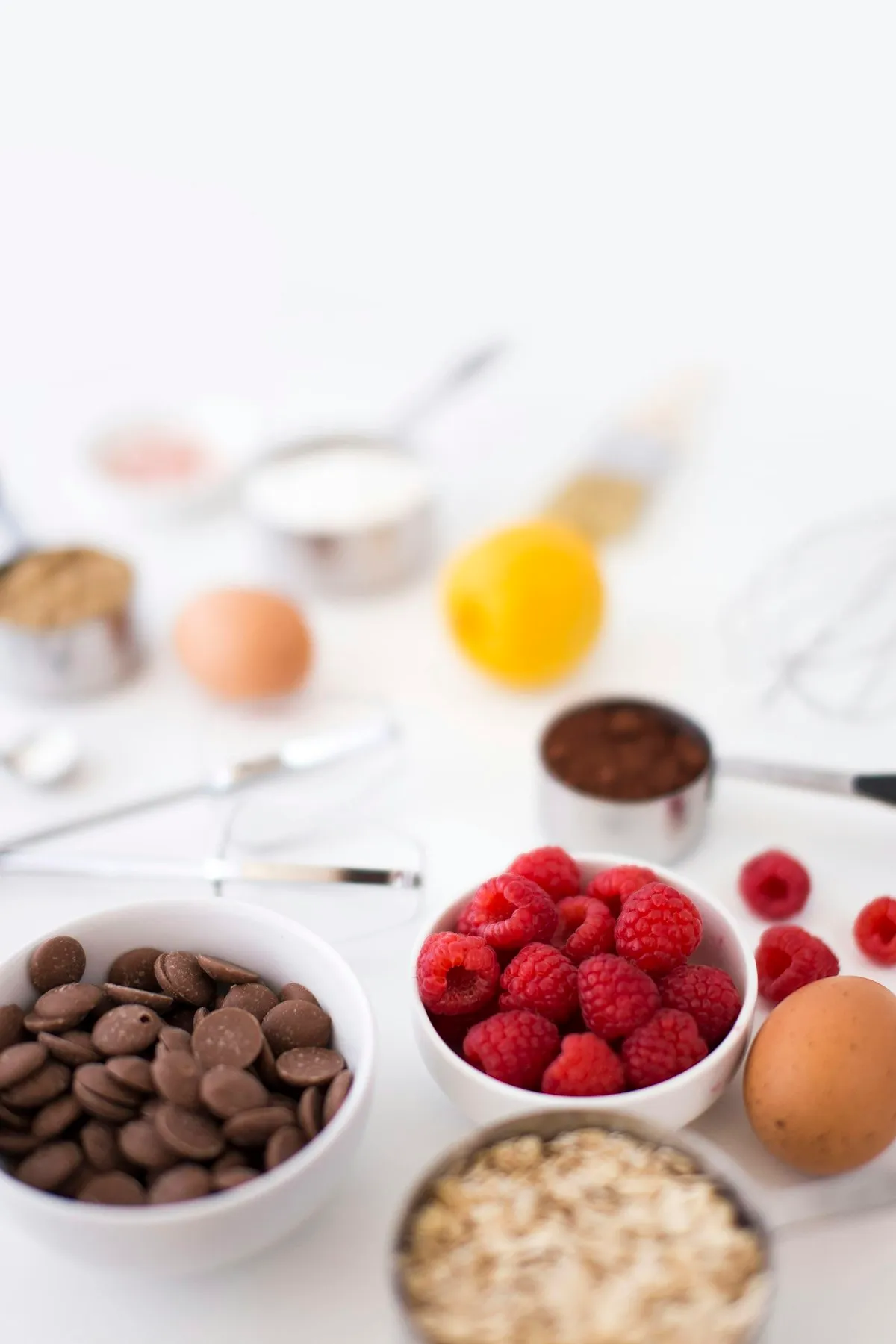
You sold 200 cupcakes last month at $3.50 each. Revenue: $700. You spent about $180 on ingredients. Profit: $520, right?
Not even close.
That $180 only accounts for the flour, sugar, butter, and eggs you bought. It doesn't include the vanilla extract you drizzled in, the cupcake liners, the packaging boxes, the piping bags you tossed after use, the electricity to run your oven for hours, or the six hours you spent baking and decorating. When you add all of that up, your actual cost per cupcake might be $2.80 instead of $0.90 — and suddenly that "healthy" margin is razor-thin.
This is the recipe costing problem, and it trips up makers in every industry. Bakers, soap makers, candle makers, sauce producers, skincare formulators — anyone who transforms raw materials into finished products needs to understand their true cost per unit. Without it, you're pricing blind.
Why Most Makers Get Their Costs Wrong
The mistake almost everyone makes is counting only the ingredients they consciously purchase. This is what accountants call direct materials — the obvious stuff. But a finished product absorbs costs from multiple categories, and ignoring any of them means your prices are based on incomplete data.
Here's what a complete product cost actually includes:
| Cost Category | What It Covers | Often Missed? |
|---|---|---|
| Direct materials | Primary ingredients/components | No |
| Consumables | Packaging, liners, disposable tools, labels | Yes |
| Yield loss | Waste, spillage, failed batches, evaporation | Yes |
| Labor | Your time making, decorating, packaging | Yes |
| Overhead | Utilities, equipment depreciation, workspace, insurance | Yes |
Most makers only track the first row. Some track the second. Almost nobody tracks all five — and that's where profit margins quietly disappear.
Step 1: Calculate Your Raw Material Cost Per Unit
Start with the foundation: what does each ingredient or component cost per unit of your finished product?
The formula is straightforward:
Ingredient cost per unit = (Price paid / Total quantity purchased) x Quantity used per unit
Let's work through a real example. Say you're making a batch of 24 soy candles (8 oz each):
| Ingredient | Purchase Price | Purchase Qty | Used Per Batch | Cost Per Batch | Cost Per Candle |
|---|---|---|---|---|---|
| Soy wax | $25.00 | 10 lbs | 12 lbs | $30.00 | $1.25 |
| Fragrance oil | $12.00 | 16 oz | 12 oz | $9.00 | $0.38 |
| Cotton wicks | $8.00 | 100 ct | 24 ct | $1.92 | $0.08 |
| Dye blocks | $6.00 | 10 ct | 2 ct | $1.20 | $0.05 |
| Total materials | $42.12 | $1.76 |
A few things to watch for:
- Buy in the units you use. If you buy wax by the pound but measure by ounces, convert before calculating. Mismatched units are the #1 source of costing errors.
- Use the price you actually paid, including shipping. A $25 bag of wax that cost $7 to ship is really a $32 bag of wax.
- Track price changes. Fragrance oil that cost $12 last quarter might cost $14 now. Update your recipe costs when supplier prices change, or your margins silently shrink.
Handling Bulk Purchases
Buying in bulk lowers your per-unit cost, but only if you'll actually use it all before it expires or degrades. A 50-pound case of wax at $2.20/lb is a better deal than 10-pound bags at $2.50/lb — unless 15 pounds go unused because you switched fragrances.
Calculate savings honestly: bulk cost per unit vs. small-quantity cost per unit, minus the cost of expected waste.
Step 2: Add Consumables and Packaging
These are the costs that makers most often forget because they feel like "business expenses" rather than product costs. But if every unit you sell requires a box, a label, and tissue paper, those are direct costs of that product.
Common consumables by industry:
Bakers: Cupcake liners, cake boards, bakery boxes, parchment paper, piping bags, food-safe stickers, ribbon, cellophane wrap.
Soap/candle makers: Tins, jars, lids, labels, shrink wrap bands, bubble wrap for shipping, tissue paper, branded stickers.
Sauce/condiment makers: Bottles, caps, tamper-evident seals, labels, shipping boxes, cold packs.
Skincare: Jars, pumps, dropper bottles, labels, outer boxes, cotton pouches.
Add these the same way you added ingredients — price per purchase divided by units per purchase.
For the candle example:
| Consumable | Purchase Price | Purchase Qty | Used Per Candle | Cost Per Candle |
|---|---|---|---|---|
| 8 oz tin + lid | $1.80 | 1 ct | 1 | $1.80 |
| Warning label | $5.00 | 200 ct | 1 | $0.03 |
| Branded label | $15.00 | 100 ct | 1 | $0.15 |
| Shrink band | $8.00 | 500 ct | 1 | $0.02 |
| Total consumables | $2.00 |
Your material cost per candle just went from $1.76 to $3.76. That's more than double — and we haven't touched labor or overhead yet.
Step 3: Account for Yield Loss
Here's the part nobody wants to talk about: not everything you buy ends up in a finished product. Wax sticks to the pot. Batter sticks to the bowl. Soap loaves have uneven ends you trim off. Sauces reduce during cooking. Some batches just fail.
Yield rate = Finished usable output / Total input
If you put 12 lbs of wax into a batch and get 11.5 lbs of poured candles (the rest stays in the pour pot, gets spilled, or hardens in the pitcher), your yield rate is 95.8%.
To adjust your material cost for yield loss:
Adjusted material cost = Material cost / Yield rate
For our candle: $1.76 / 0.958 = $1.84 per candle in adjusted material cost.
That's only an $0.08 difference per candle. But across 1,000 candles a year, that's $80 in unaccounted costs. For bakers dealing with more volatile yield rates (failed batches, overbaking, decorating mistakes), the gap can be much larger.
Typical yield rates by industry:
| Product Type | Typical Yield Rate | Main Loss Sources |
|---|---|---|
| Candles | 93-97% | Pour pot residue, spills, wick centering failures |
| Soap (cold process) | 90-95% | End cuts, failed batches, curing shrinkage |
| Baked goods | 85-95% | Failed batches, breakage, overbaking, decorating errors |
| Sauces/condiments | 88-95% | Reduction, pot residue, spillage, pH test batches |
| Skincare | 92-97% | Container residue, emulsion failures, test batches |
Track your actual yield rate for each product over time. Don't guess — measure. Weigh your inputs and your outputs for a few batches, and you'll have a real number to use.
Step 4: Calculate Your Labor Cost
Your time has value, even if you're not paying yourself a formal wage yet. If you skip this step, you're effectively paying yourself whatever is left over after materials — which might be $3/hour.
Decide on an hourly rate. This should reflect what your time is worth, not the minimum you'd accept. Consider:
- What would you pay someone else to do this work?
- What's the going rate for skilled labor in your craft?
- What's your target annual income divided by your available working hours?
A reasonable starting point for skilled handcraft work is $20–35/hour. For context, BLS reports a May 2024 median annual wage of $56,260 (~$27/hour) for craft and fine artists (BLS OOH: Craft and Fine Artists (opens in new tab)). Use what feels right for your market and experience level. Use what feels right for your market and skill level — just use something.
Track time per batch, then divide:
Labor cost per unit = (Hours per batch x Hourly rate) / Units per batch
For our 24-candle batch, let's say the process takes 3 hours total (melting, adding fragrance, pouring, cooling check, wick trimming, labeling, packaging):
$25/hour x 3 hours / 24 candles = $3.13 per candle
Now let's update our running total:
| Cost Component | Per Candle |
|---|---|
| Raw materials (yield-adjusted) | $1.84 |
| Consumables | $2.00 |
| Labor | $3.13 |
| Running total | $6.97 |
That $1.76 material cost is looking very different now.
Step 5: Allocate Overhead
Overhead covers everything that supports production but isn't tied to a specific product: rent or workspace costs, utilities, equipment, insurance, software subscriptions, market booth fees, website hosting.
There are several ways to allocate overhead. The simplest for small makers:
Monthly overhead / Monthly units produced = Overhead per unit
Add up your monthly business expenses that aren't materials, consumables, or your labor:
| Expense | Monthly Cost |
|---|---|
| Workspace (dedicated room, rent, etc.) | $200 |
| Electricity (production share) | $40 |
| Insurance | $30 |
| Equipment depreciation | $25 |
| Software/tools | $15 |
| Total monthly overhead | $310 |
If you produce 200 candles per month:
$310 / 200 = $1.55 overhead per candle
A Note on Equipment Depreciation
That $300 wax melter won't last forever. If it lasts 3 years and you make 2,400 candles per year, its cost per candle is $300 / 7,200 = about $0.04. Small per unit, but it adds up across all your equipment — melters, molds, ovens, mixers, scales, packaging tools.
The formula: Equipment cost / (Expected lifespan in years x Annual units produced)
Putting It All Together: Your True Cost Per Unit
Here's our complete candle cost:
| Cost Component | Per Candle | % of Total |
|---|---|---|
| Raw materials (yield-adjusted) | $1.84 | 21.6% |
| Consumables & packaging | $2.00 | 23.5% |
| Labor (3 hrs @ $25/hr ÷ 24) | $3.13 | 36.7% |
| Overhead | $1.55 | 18.2% |
| Total cost per candle | $8.52 | 100% |
If you were pricing based on materials alone ($1.76), you'd need to sell at $5.28 just to hit a 3x markup — and you'd still be losing $3.24 on every candle because your true cost is $8.52.
With the real number, you know your floor. A 2x markup puts you at $17.04. A standard retail markup of 2.5x lands at $21.30. Now you can make pricing decisions based on reality instead of vibes.
Building a Recipe Costing System That Scales
Calculating this once is useful. Keeping it updated as prices change, recipes evolve, and your product line grows is what actually protects your margins. Here's how to build a sustainable system:
Track Every Purchase with Actual Costs
When supplies arrive, record the price you paid (including shipping and tax) and the quantity received. This gives you accurate per-unit costs that reflect reality, not the catalog price you saw three months ago.
Build a Standard Recipe for Every Product
Document exactly what goes into each product — quantities, units, and which ingredients. When you need to recalculate costs (because a supplier raised prices or you tweaked a formula), you update the ingredient cost and the recipe cost updates automatically.
Review Costs Quarterly
Supplier prices drift. Your yield rate improves as you get more experienced. Overhead changes seasonally. Set a quarterly reminder to review your top 10 products and update any costs that have shifted.
Use Tools That Do the Math for You
Spreadsheets work for a handful of products, but they get unwieldy fast — especially when one ingredient is used across multiple recipes and its price changes. Purpose-built tools like Ardent Seller let you track ingredient costs, build recipes with automatic cost calculations, and see exactly how price changes ripple through your product line. When your supplier raises the price of soy wax by 10%, you want to know immediately which products are affected and by how much — not find out three months later when your margins have quietly eroded.
Common Costing Mistakes to Avoid
Forgetting shipping costs on supplies. That "cheap" ingredient from an online supplier isn't cheap if shipping doubles the price. Always factor delivered cost.
Using old prices. Ingredient costs change. If you calculated your recipe cost a year ago and haven't updated it, your margins might already be gone.
Ignoring small ingredients. That $4 bottle of vanilla extract or $2 bag of wick stickers doesn't seem worth tracking — until you realize you go through one every two weeks.
Not accounting for failed batches. If 1 in 10 soap batches doesn't set properly, your yield rate isn't 95% — it's 90%. Be honest with yourself about waste.
Pricing before costing. Setting prices based on what competitors charge is backward. Know your costs first, then decide if you can compete profitably at market rates. If you can't, that's critical information — not a reason to sell at a loss.
From Costing to Confidence
Recipe costing isn't about being obsessive with numbers. It's about removing the anxiety of not knowing whether you're actually making money. When you know your true cost per unit, every business decision gets clearer: whether to take that wholesale order, whether a price increase is overdue, whether that new product idea is viable, whether buying in bulk actually saves you money.
The makers who build sustainable businesses aren't the ones with the best products — plenty of talented people burn out or go broke. They're the ones who know their numbers. Recipe costing is where that starts.
Ready to stop guessing and start tracking? Ardent Seller helps craft sellers, bakers, and makers calculate recipe costs, track ingredient prices, and protect their margins — all in one place. Start for free and see what your products really cost.
Related reading
- Should You Track Inventory by Weight or by Unit? — Every cost here divides by a unit. This is how to make sure it is the unit you actually consume, so the per-batch number stops needing a rounded fraction.
- Best Recipe Costing Software for Home Bakers — Once you have done this by hand, the question is which tool keeps it true; seven options compared on the feature that matters most here, sub-recipes that carry a shared frosting's cost into every product.
- Margin vs Markup — Once your cost number is honest, this is the math layer that turns it into a defensible price.
- Equipment Depreciation for Makers — How to capture the kiln-and-mixer overhead that makes recipe costing complete.
- Shelf Life, Spoilage, and Shrinkage — Yield loss is one part of the picture; this is how to track the cost of inventory that never sold.
- How to Validate a Handmade Product Idea — Where an honest cost per unit earns its keep before you commit: sizing a test batch, setting a test price, and reading the result against thresholds you wrote down first.
- Best Food-Safe Packaging Suppliers for Small-Batch Makers — The packaging line in your cost per unit starts with a purchase order. Which suppliers sell food-safe jars, pouches and bags at 250 units, and what a jar really costs once freight and case rounding land on it.
Free resources
A few free downloads from the Ardent Workshop library that pair well with this post:
- Recipe Scaling & Batch Calculator (Excel) — The natural pre-step to pricing: drop your recipe in at base yield, set a target yield, and every ingredient rewrites itself with unit conversions (oz/g/lb/ml/cups) baked in. The per-unit cost it spits out is what feeds the Pricing Calculator below — recipe costing without the manual oz↔lb math.
- Product Pricing Calculator (Excel) — Once your recipe cost is honest, this is where it goes to work. Drop the per-unit cost into the calculator with packaging, shipping supplies, and platform fees, and the suggested retail price falls out — with the platform fee handled correctly so 9.5% Etsy doesn't quietly eat the margin you priced for.
- Should I Raise My Prices? Decision Tool — A live web tool that runs the +10% / +20% / +30% price-hike math on one product — including the volume drop that comes with each — and tells you which scenario clears the most monthly profit.
- Fragrance Load Calculator — For candle and soap recipes specifically, a live web tool that returns the exact fragrance oil weight for any wax or soap base, with the typical and max safe loads — the input that decides how much FO actually goes into your per-unit material cost.
- Craft Seller Startup Checklist — Pricing math, inventory cataloging, and the legal essentials — the natural next step once your recipe costs are honest.
- Small Business Tax Deduction Cheat Sheet — A Schedule C walkthrough including the COGS section that most makers fill out wrong (because they cost their recipes wrong first).
This article is provided for educational purposes only and does not constitute financial, tax, or business advice. Cost structures, pricing examples, and margin figures are illustrative and will vary by your specific circumstances. Consult a qualified accountant or small-business advisor before making financial decisions based on this content.
