How to start a hot sauce business
A practical, step-by-step playbook for turning a great recipe into a real hot sauce brand — from understanding the acidified-foods rules that govern shelf-stable bottling to pricing a bottle that actually leaves a margin.
- Startup cost
- $500 – $3,000
- Time to first sale
- 4 – 12 weeks
- Note: A vinegar-forward, naturally-acidic sauce sold at a local market can move fast; a shelf-stable acidified sauce that needs a process-authority review and a filed scheduled process takes longer.
- Difficulty
- Moderate
Last reviewed · Rates, fees, and regulatory thresholds in this guide can change — verify the linked sources before acting.


The short version
Hot sauce is a beloved, high-demand maker product, but it sits in a tricky regulatory spot most new makers miss: a shelf-stable bottled sauce made from low-acid ingredients (peppers, garlic, carrots, onions) is usually an "acidified food" under FDA rules, which can mean a process-authority review of your recipe, FDA registration, per-batch pH control, and often a state license — because many cottage food laws exclude acidified and canned goods. Vinegar-forward and fresh refrigerated sauces have easier paths (step 1 breaks down the options). Startup cost runs $500–$3,000 and time to first sale is typically 4–12 weeks once recipe testing and any process filing are factored in. The upside: once your process is dialed and documented, hot sauce has long shelf life, healthy margins, and an enthusiast audience that pays craft prices on Etsy, at markets, and in local shops. This guide walks each step in order, with the regulatory anchors and free tools for the per-bottle pricing math.
Good fit if…
- You already make a sauce people ask to buy and want to turn it into a product
- You're willing to spend a few weeks getting the pH, process, and labeling right before selling
- You have $500–$2,000 of starter capital and a kitchen you can dedicate during a production run
- You like the idea of Etsy, farmers markets, hot-sauce expos, and local-shop wholesale — sauce sells on all four
Probably not for you if…
- You assumed hot sauce falls cleanly under cottage food law — most states exclude acidified and canned goods, or require pH testing first
- You won't buy and use a calibrated pH meter — guessing acidity on a low-acid sauce is a genuine botulism risk, not a paperwork formality
- You need income within 30 days — a process-authority review and any state approval add calendar time
- You can't source ingredients with traceable origin documentation — food recalls are public events and lot traceability is the only defense
Tip: The cooking is the easy part. The real gate is food-safety law: most shelf-stable bottled hot sauces are regulated as "acidified foods," which can require a process-authority review, an FDA-filed process, and pH control on every batch. Step 1 routes you through it before you spend money on bottles.
End-to-end timeline for a new hot sauce brand
Most of the calendar variability comes from the regulatory path: a vinegar-forward sauce sold fresh at a market can move fast, while a shelf-stable acidified sauce that needs a process-authority review and a filed process takes longer. The midpoint of the band below is about eight weeks.
- Classify + process review + license2–6 weeks
Determine acidified vs naturally acidic, get a process-authority review and scheduled process if required, register with the FDA, and confirm your state license and kitchen rules.
- Source + set up~1 week
Buy a calibrated pH meter, bottles, caps, labels, and an initial ingredient lot; set up your kitchen or book commissary time.
- Develop + validate recipes2–4 weeks
Test 1–3 recipes for reproducible finished pH, scale, shelf life, and flavor; finalize labels and nutrition info.
- Photograph + list + launch1–2 weeks
Shoot product and food-context photos, set up Etsy or a market booth, price the line, and open for orders.
4–12 weeks to first sale
The 8-step playbook
Run these in order. Skipping ahead is the most common reason new makers ship inconsistent product or under-price their work.
Step 1: Choose your sauce style — and understand the acidified-foods question
The single decision that shapes your whole regulatory path is what kind of sauce you make. A vinegar-forward shelf-stable sauce, a thick acidified pepper-and-fruit sauce, a fermented mash, and a fresh refrigerated salsa-style sauce are almost four different businesses — with different shelf life, different rules, and different equipment.
Sauce styles compared
Vinegar-forward sauces have the gentlest path; acidified and fermented sauces unlock the most flavor but carry the most process work; fresh sauces are the fastest start but stay local. Co-packing trades per-bottle cost for someone else holding the process.
| Option | Shelf stability | Typical regulatory path | Equipment and capital | Best for |
|---|---|---|---|---|
Vinegar-forward, naturally acidic Louisiana-style: peppers, vinegar, salt. | Shelf-stable (room temp) | May qualify as "naturally acidic" — still verify pH and classification | Low–moderate | A fast, classic-style start |
Acidified shelf-stable Thicker, fruit/veg-forward, low-acid base. | Shelf-stable (room temp) | Acidified-foods rules: process authority + filed process + per-batch pH | Moderate | Maximum flavor range, retail shipping |
Fermented mash Lacto-fermented peppers, then bottled. | Shelf-stable when properly acidified | Acidified-foods rules usually apply, plus ferment controls | Moderate | Complex flavor, premium positioning |
Fresh or refrigerated No canning step; sold and stored cold. | Short — refrigerated only | Sidesteps acidified-canning rules; local/refrigerated sales rules apply | Low | Farmers markets, fast feedback, local |
Co-packed A contract manufacturer makes it for you. | Shelf-stable | Co-packer holds the scheduled process and facility registration; confirm your own FDA registration needs | Low capital, higher per-bottle cost | Scaling past home-kitchen capacity |
Regulatory paths are general patterns, not legal advice — classification (acidified vs naturally acidic), cottage-food eligibility, and state licensing vary by state and by recipe. Confirm your specific sauce with a process authority and your state's food-safety agency before bottling for sale. The capital column is a relative ranking; step 5 has the worked per-bottle pricing math.
In the U.S., the rule that governs most bottled hot sauce isn't a "hot sauce law" — it's the acidified foods regulation. The FDA defines acidified foods as low-acid foods (peppers, garlic, carrots, onions, and most vegetables are low-acid) to which acid or acid foods are added to bring the finished equilibrium pH to 4.6 or below. See the FDA's Acidified & Low-Acid Canned Foods guidance & regulatory information (opens in new tab) and the underlying rule, 21 CFR Part 114 (opens in new tab).
Why it matters: at a pH above 4.6, Clostridium botulinum can grow and produce a deadly toxin in a sealed, shelf-stable container. Controlling acidity is the safety control — which is why acidified-food producers are typically expected to have their recipe and process reviewed by a process authority (often a university food-science department), file a scheduled process, register the facility with the FDA, and verify pH on every batch.
The four common ways makers sidestep, reduce, or accept that burden:
- Vinegar-forward, naturally-acidic sauces (classic Louisiana-style — peppers, vinegar, salt). When vinegar dominates the formula, the sauce may qualify as "naturally acidic" rather than "acidified," which can simplify the path. You still must verify the finished pH and confirm your classification — don't assume.
- Acidified shelf-stable sauces (thicker, chunky, fruit- or vegetable-forward sauces with a meaningful low-acid base). These are the textbook acidified food: expect a process-authority review, a filed process, and per-batch pH checks. The most flavor freedom, the most paperwork.
- Fermented mash sauces (peppers lacto-fermented, then blended and bottled). Premium positioning and complex flavor, but fermentation adds its own control steps, and the bottled product is usually still treated as acidified — so the acidified-foods rules generally apply on top of the ferment.
- Fresh / refrigerated sauces (no shelf-stable canning step; sold and stored cold). These sidestep the acidified-canning rules but give up shelf life and shippability, limiting you largely to local refrigerated sales. A fast, low-risk way to start and gather feedback.
There's also a fifth path that removes the in-house process burden entirely: using a co-packer (a contract manufacturer in an inspected facility that already holds the scheduled process). It costs more per bottle and usually wants a minimum run, but it's how many brands scale past kitchen capacity — and a legitimate way to launch a shelf-stable sauce without becoming your own process authority. The comparison table above lays out the trade-offs.
Regulatory notice: Most shelf-stable hot sauces are "acidified foods," not cottage food
Many state cottage food laws exclude acidified, canned, or low-acid bottled goods by definition — so a shelf-stable hot sauce often falls under the acidified-foods program even when bakery items from the same kitchen would be cottage-food-legal. Before you bottle for sale, confirm two things with your state's food-safety or agriculture agency: whether your specific sauce can be made under cottage food at all, and whether you need a process-authority review and FDA facility registration. Don't assume the cottage food cap and venue rules apply to sauce.
Step 2: Get the legal and food-safety setup right
Hot sauce carries a heavier food-safety load than most cottage crafts, but the steps are knowable. Handle the ordinary business setup, then the sauce-specific layer: classify your product, get a process review if you need one, register with the FDA where required, and confirm your state license.
The sauce-specific steps (these are what make hot sauce different from a typical craft):
- Classify your product and get a process review. Determine whether your sauce is "acidified" or "naturally acidic," then — for acidified (and usually fermented) sauces — have a process authority review your recipe and processing steps and establish a scheduled process. Process authorities are often land-grant university food-science departments or qualified private consultants; your state food-safety agency or extension service can point you to one. The review validates that your acidification reliably hits a safe finished pH.
- FDA registration. Facilities that manufacture, process, pack, or hold food for U.S. consumption generally must register with the FDA (and renew biennially), and acidified-food processors have an additional establishment registration and process-filing step, and the operation generally must be supervised by someone who has completed a Better Process Control School course for acidified-food processing. The FDA's establishment registration & process filing page for acidified & low-acid canned foods (opens in new tab) is the starting point — your process authority will tell you exactly what to file (registration is Form FDA 2541, with process filing on Form FDA 2541e).
- State food license and kitchen rules. Many states require a commercial or licensed kitchen for acidified bottling, not a home kitchen — some allow a home processor permit for tested, low-risk recipes. Check your state's rules with its agriculture or health department, and check our cottage food laws by state reference to see whether acidified foods are even eligible where you live.
The ordinary business setup (the same as any small business):
- A business structure. Most makers start as a sole proprietorship or form a single-member LLC for liability separation — worth considering here, because an ingestible product carries real product-liability and recall exposure. See the SBA's guide to choosing a business structure (opens in new tab), and apply for a free EIN from the IRS (opens in new tab).
- A state sales-tax permit in states with sales tax — that's most of them; only Alaska, Delaware, Montana, New Hampshire, and Oregon have no state-level sales tax (see the Tax Foundation's state and local sales-tax rates report (opens in new tab)). If you wholesale to shops, you'll also want a resale certificate.
- Product liability insurance. Important for any food product. FLIP (Food Liability Insurance Program) (opens in new tab), operated by Veracity Insurance, covers many small food producers; get a quote for an acidified-food operation and confirm that shelf-stable bottled hot sauce — and recall-related liability — are explicitly in-scope. Farmers markets and wholesale buyers often list proof of coverage as a vendor-application requirement, so confirm what each venue requires before you apply.
Two things people over-do at this stage: forming an LLC before any sales (start as a sole prop, upgrade later), and trying to self-certify an acidified sauce without a process authority (the review is the part you can't skip). Two things people under-do: confirming whether their state even allows acidified foods under cottage food, and budgeting for the process-review fee.
Regulatory notice: A process-authority review is the step most new makers try to skip
For an acidified or fermented shelf-stable sauce, having a process authority review your recipe and establish a scheduled process is typically a legal prerequisite, not an optional nicety — and FDA food-facility registration plus a process filing usually go with it. Build the review fee and the calendar time into your launch plan, and contact your state food-safety agency or extension service early to find a recognized process authority.
Step 3: Set up your kitchen, equipment, and ingredients
You need less gear than a commercial line implies, but two purchases are non-negotiable for safety and consistency: a calibrated pH meter and a way to hit and document your target acidity. Resist buying a bottling line before you have a tested, validated recipe.
A workable starter kit for small-batch shelf-stable sauce:
- A calibrated digital pH meter (with buffer calibration solutions): the single most important tool. Inexpensive pocket testers drift; a meter you calibrate before each session and that reads to 0.01 pH is worth the upgrade. pH test strips are not adequate for validating a shelf-stable acidified sauce — they're too imprecise for a 4.6 safety line. Budget roughly $50–$200.
- A non-reactive cooking pot (stainless, not aluminum — acid reacts with aluminum), an immersion or countertop blender, and accurate measuring tools.
- A digital scale (gram resolution) — acidification math depends on weights, not volumes.
- Bottles and closures — woozy bottles (the classic 5 oz hot-sauce bottle) with orifice reducers and tamper-evident caps or shrink bands. Buy food-grade and consistent so your fill levels and labels line up.
- A hot-fill setup or a small water-bath canner for the heat step your scheduled process specifies, plus a thermometer to verify fill temperature.
- Labels — oil- and moisture-resistant stock; sauce drips and bottles get wiped down. Plan to print labels only after the recipe and nutrition numbers are final.
- Ingredients — peppers (fresh, dried, or mash), vinegar, salt, and your flavor base. Source from suppliers who can give you lot documentation; pepper supply and Scoville levels swing seasonally, which affects both heat and cost.
Total starter outlay for the equipment and an initial ingredient + packaging buy typically runs $500–$1,500 if you're producing in a kitchen you already have access to. The page-level $3,000 top of range absorbs the process-authority review fee, a licensed-kitchen rental or commissary time if your state requires it, insurance, and any LLC filing — the costs from step 2 that aren't equipment.
What not to buy in month one: an automated filler or labeler (hand-filling with a funnel and a small filling jug is fine to a few hundred bottles per run), a large bottle inventory in a single size before you've confirmed the size sells, or a chest of exotic peppers before a tested recipe tells you what you actually use.
Step 4: Develop sellable recipes — pH, scaling, and labeling
A recipe friends love and a genuinely sellable sauce are different things. Sellable means it hits a safe, documented finished pH every batch, scales to a real production run without changing flavor or acidity, and carries a compliant label.
Five things to validate for every recipe before you sell it:
- Finished equilibrium pH. Measure the pH of the finished, equilibrated sauce (not just the hot mix) at room temperature with a calibrated meter, and confirm it sits safely below your target — for acidified foods that means at or below 4.6, and many makers hold the line at 4.0 or lower for margin. Your process authority sets the validated target; you verify it every batch and log the reading.
- Batch reproducibility. Make the recipe three times across three days. If the pH, heat, or texture wanders, the recipe isn't ready — common culprits are unweighed ingredients, seasonal pepper variation, and inconsistent reduction. Reproducibility matters more here than for most foods because the safety control is a number you have to hit repeatedly.
- Scale. Test at 1x, then at your real batch size. Acidification and reduction don't always scale linearly — a sauce that hits pH 3.8 at one liter can land differently at ten. The Recipe Scaling and Batch Calculator handles the ingredient math; the pH still has to be re-verified at scale.
- Shelf life and seal integrity. Bottle samples and check them over time for separation, color shift, off-flavors, and seal failures. Your scheduled process and pH set the safety baseline; this confirms the quality and the "best by" claim.
- Ingredient sourcing and traceability. Keep supplier invoices and lot numbers for every input so you can trace any finished bottle back to its ingredient lots. See Batch Tracking for Food Sellers for the lot-code system.
Label elements for a retail food product generally include: the product name; net contents (weight or volume); an ingredient list in descending order by weight; an allergen declaration if any major allergens are present; the name and address of the manufacturer or distributor; and, in most cases, a Nutrition Facts panel (very small businesses may qualify for an exemption — verify your eligibility rather than assuming it). A lot code and best-by date round it out for traceability. Confirm the exact requirements with your state agency and the FDA's food-labeling guidance before printing.
Keep a written record for every recipe: ingredient weights, processing steps and times, the validated pH target, the measured pH per batch, yield, and shelf-life notes. That log is both your production recipe and the evidence a regulator or buyer may ask for — exactly the kind of batch record Ardent Seller is built to hold (step 7).
Safety warning: pH is the safety control — measure it, don't guess it
Improperly acidified low-acid foods in a sealed, shelf-stable bottle can grow Clostridium botulinum and produce a deadly toxin. A finished equilibrium pH at or below 4.6 (many makers target 4.0 or lower for margin) is the control that prevents it. Use a calibrated pH meter, not test strips; verify and log the pH of every batch; and follow the validated scheduled process from your process authority. If a batch reads high, do not sell it — reformulate or discard.
Step 5: Price per bottle for a real margin
Hot sauce pricing has four lines new makers undercount: true ingredient cost per bottle (peppers swing seasonally), packaging as a large fraction of a small bottle, labor on a hand-bottled run, and the allocated overhead of the process review, license, and insurance. Build the price from a real cost stack, then apply a markup.
A common craft-pricing starting point — wholesale around 2x true cost, direct retail around 3–4x true cost — applies here too, with hot-sauce-specific care on packaging and overhead. Treat the multiplier as a starting point, not a law, and sanity-check it against what comparable craft sauces actually sell for.
True cost = ingredients + packaging + labor + overhead (incl. process review, license, insurance) + waste allowance
Worked example (illustrative, mid-2026 U.S. costs): a 5 oz woozy bottle of a vinegar-forward pepper sauce.
- Ingredients (peppers, vinegar, salt, aromatics for one bottle's share of a batch): roughly $0.70–$1.30 depending on pepper cost and season — call it $1.00.
- Packaging (bottle, cap, orifice reducer, shrink band, label): roughly $0.90–$1.50 — call it $1.20. On a small bottle, packaging often rivals or exceeds the sauce inside it.
- Labor. A hand-bottled run of, say, 60 bottles taking about 3 hours of active time (cook, fill, cap, label, clean) at a $20/hr self-employed production rate is $60 of labor, or $1.00/bottle. Track your own batch times — early runs take longer.
- Overhead, including compliance. The one-time process-authority review, the annual license and insurance, commissary time if you rent it, and utilities all allocate across the bottles you actually produce in a year. For a small operation a workable planning figure is 15–25% of ingredients + labor; at 20% of ($1.00 + $1.00) that's ~$0.40/bottle — but if you produce very few bottles in year one, the fixed compliance costs can push this far higher per bottle, which is an argument for batching enough volume to amortize them.
- Waste allowance (off-spec batches, fill spillage, samples): a conservative 8–12% of ingredients + labor; at 10% of $2.00 that's ~$0.20/bottle.
Total true cost in this illustrative example is roughly $3.80/bottle. A 3x direct-only retail price lands near $11–$12; a 4x wholesale-ready price lands near $15, with the wholesale price to a shop around $7–$8. Those margins leave meaningful room for the compliance costs built into the overhead line — and they're why dialing the recipe to a repeatable, efficient batch matters: in a run like this, labor and packaging, not the peppers, are often the biggest controllable costs (a specialty-pepper line shifts that balance).
The numbers above are illustrative mid-range estimates for a U.S. metro market as of mid-2026; your pepper cost, bottle source, batch size, and state compliance costs will move them. The pricing calculators below run this stack for you using your own inputs.
Step 6: Choose where to sell
Shelf-stable sauce ships well and suits marketplaces; fresh refrigerated sauce stays local. Match the channel to your product, and watch the multi-state question once you ship nationally.
The common channels for hot sauce makers:
- Etsy — a strong fit for shelf-stable, shippable sauces and gift sets, with built-in search traffic for "hot sauce gift," "craft hot sauce," and themed packs. Be aware of the stacked fees — listing, transaction, payment processing, and optional Offsite Ads; verify current rates in Etsy's Fees and Payments Policy (opens in new tab) and see the breakdown in the Etsy shop guide.
- Farmers markets and hot-sauce expos — direct sales, instant feedback, and the chance to let buyers taste before they buy, which is a real advantage for a flavor-driven product. Booth fees and weekend time are the cost; bring a sampling setup and follow your market's sampling rules.
- Wholesale to local shops, butchers, breweries, and specialty grocers — predictable repeat orders at wholesale price. A low-price-point sauce can be a good counter or register add-on — worth proposing that placement when you pitch a shop. Build a line sheet with photos, wholesale price, case pack, MOQ, and lead time.
- Your own Shopify / Squarespace store — full margin and control, and the natural home for a hot-sauce club or subscription (a recurring "sauce of the month" matches how enthusiasts buy). You drive the traffic, so usually a phase-2 channel.
- Local refrigerated sales — the right channel if you make a fresh, non-shelf-stable sauce; restaurants, refrigerated retail cases, and markets, all local.
A common opening combination is Etsy plus local markets — Etsy brings built-in traffic while markets give taste-driven direct sales and feedback. One caution as you scale online: shipping a food product nationwide can bring additional state-level requirements into play, and some platforms or states have specific rules for shipping food — confirm before you list nationally. Whatever the mix, you'll need to track inventory and lot codes across every channel, which is the next step.
Step 7: Track batches, lot codes, and taxes from day one
Once you have a validated recipe and a place to sell it, the operational reality kicks in — which pepper lot went into batch 12, what each bottle truly costs as ingredient prices move, which orders haven't shipped, and whether you could pull a specific batch if a supplier issued a recall.
For the first 20–30 batches a notebook or spreadsheet is genuinely fine. Past that, the math gets brittle:
- You buy peppers and vinegar in bulk but recipes call for grams — manual unit conversion drifts.
- A pepper crop fails or a vinegar supplier raises prices, and your bottle price doesn't move because nobody recalculated COGS.
- An Etsy order ships but inventory isn't deducted, and you oversell next week.
- A supplier issues a recall on a specific lot and you can't tell which finished bottles contain it.
- One sauce becomes several SKUs (heat levels, sizes, gift packs) and the spreadsheet stops tracking what's actually in stock.
- Tax time arrives and you can't tell the IRS what the bottles you sold cost to make.
A rough heuristic: once you're past roughly 20–30 SKUs or shipping on more than one channel, dedicated software starts to pay for itself. Ardent Seller fits this directly — track peppers, vinegar, bottles, and labels as inventory with lot and expiration data; record the validated pH and batch details per production run; manage Etsy orders with batch-to-order lot traceability (more marketplace channels are in development); and see true cost per bottle as ingredient prices move. The Tools section below covers the range from free spreadsheets up.
Two record-keeping habits to start today, even on paper: put a date-based lot code on every batch (for example, a YYYY-MM-DD-batch format like 2026-03-14-A) so any bottle traces back to its ingredient lots, and keep supplier invoices in one place. On taxes, keep sales tax (collection rules vary by channel and state) separate from income tax (sauce profit goes on Schedule C; quarterly estimated taxes (opens in new tab) via Form 1040-ES apply once you expect to owe $1,000+ for the year — verify the current threshold with the IRS).
Step 8: Market your hot sauce brand
Hot sauce is a flavor-and-story product — buyers fall for heat level, origin, and personality. You don't need a daily content grind; you need a clear flavor identity, sampling wherever you can, and at least one channel where fans can talk to you.
What moves hot sauce, in rough order of leverage for a new brand:
- Sampling. For a flavor-driven product, letting someone taste before they buy is often the highest-leverage tactic — once someone has tried the sauce, it tends to sell itself. Markets, in-store demos, and "free sample with a bottle" all create that moment. Follow each venue's sampling rules.
- A clear heat-and-flavor identity. A buyer should know in one line what your sauce is — the pepper, the heat level, the use (wings, tacos, eggs). A simple Scoville or mild-to-hot indicator on the label and listing helps people self-select.
- Strong product photography. Natural light, the bottle plus the food it belongs on, and a shot that conveys heat level. Show the sauce on food — wings, tacos, eggs — so the photo communicates heat level and use in a way a bare bottle can't.
- A repeat-customer ritual. Hot sauce is a consumable people re-buy. A simple email or text list, a "sauce club" subscription, and a thank-you note with the first order turn one bottle into a habit. Model your own conversion from the first few sends rather than assuming a benchmark.
Two things to treat cautiously in the first six months: paid ads (at a roughly $11 bottle on the ~$3.80 true cost from step 5, the margin left after marketplace and payment fees is modest — model your cost-per-conversion net of fees before spending), and national wholesale or distributor outreach (big retailers want volumes, inspected facilities, and food-safety audits a home or small-commissary producer doesn't yet have; local shops are the right wholesale tier in year one). Start with sampling, a clear identity, photography, and repeat-customer follow-up — they compound and cost almost nothing.
The tools section
Tools to consider
A short, honest list — Ardent Seller alongside the other tools most hot sauce business owners end up using.
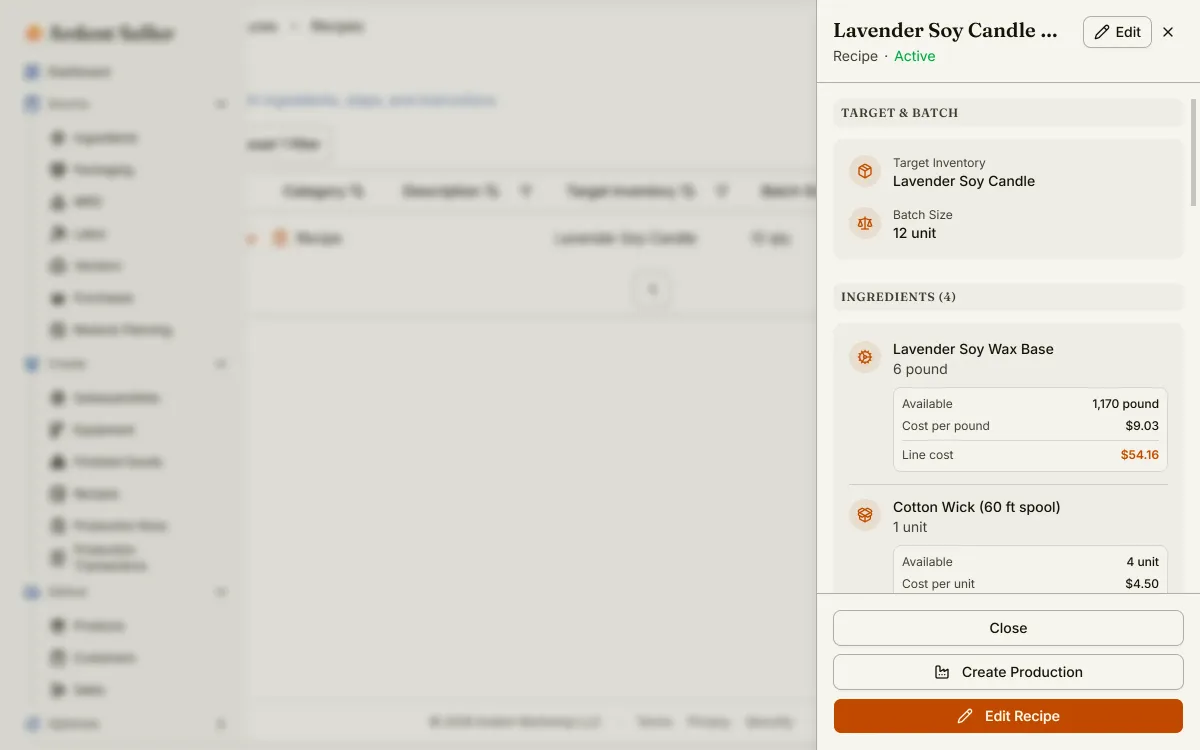
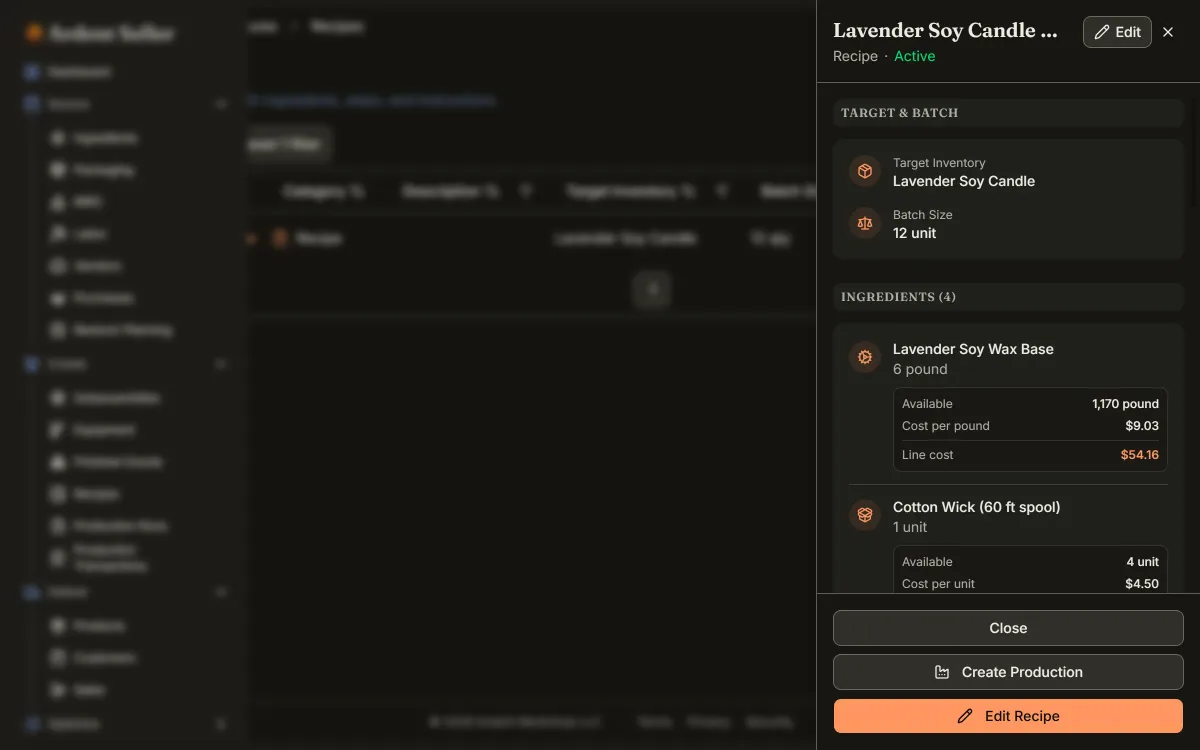
Built for small-batch food makers. Track peppers, vinegar, bottles, and labels as inventory with lot and expiration data; scale recipes between batch sizes; record validated pH and batch details per production run; manage Etsy orders with batch-to-order lot traceability; and see true cost per bottle as ingredient prices move. Free plan covers a small line; paid plans add Etsy sync (more marketplace channels in development) and deeper reporting.
The federal starting point for understanding whether your sauce is an acidified food, what a scheduled process is, and what registration and filing obligations apply. Free.
A common first channel for shelf-stable, shippable sauces and gift sets — built-in marketplace search surfaces a new shop quickly. Be aware of the stacked fee load (listing + transaction + payment processing, plus optional Offsite Ads).
Insurance program operated by Veracity Insurance covering many small food producers. Confirm hot sauce / acidified foods are explicitly in-scope on the quote. Pricing varies by state and coverage limit — get an actual quote.
Free POS app for in-person sales at markets and expos, plus Square Online for a simple direct-order or subscription page. Handles card payments and email-receipt capture for list-building.
Tracks income and expenses for tax purposes and exports a Schedule C summary at year-end. Pricing changes — see Intuit's pricing page for current rates.
Common mistakes to avoid
The patterns that show up over and over in the first year.
Assuming hot sauce falls under cottage food law
Most state cottage food laws exclude acidified, canned, or low-acid bottled goods — so a shelf-stable sauce usually falls under the acidified-foods program even when bakery items from the same kitchen would be cottage-food-legal. Confirm with your state food-safety agency whether your specific sauce qualifies, and whether you need a process review and FDA registration, before bottling for sale (steps 1 and 2).
Guessing pH instead of measuring it
The finished equilibrium pH is the safety control that prevents botulism in a sealed shelf-stable bottle. Use a calibrated pH meter (not test strips), verify and log every batch, and follow your process authority's validated target — at or below 4.6, with many makers holding 4.0 or lower. If a batch reads high, reformulate or discard; never sell it (step 4).
Skipping the process-authority review
For an acidified or fermented shelf-stable sauce, a process-authority review and scheduled process is typically a legal prerequisite. Trying to self-certify is the most common way new sauce makers end up out of compliance. Budget the review fee and the calendar time, and contact your state agency or extension service early to find a recognized authority (step 2).
Under-pricing because the bottle seems small
On a 5 oz bottle, packaging and labor often cost more than the sauce inside. Pricing off ingredient cost alone leaves margin on the table. Build the price from the full stack — ingredients, packaging, labor, compliance overhead, and waste — then apply the markup (step 5).
Shipping nationwide without checking the rules
Selling a food product to buyers in other states can bring additional state requirements into play, and some platforms have specific rules for shipping food. Confirm what applies before you list nationally, rather than discovering it after orders arrive (step 6).
Skipping lot codes
A simple date-based lot code on every bottle (for example, a YYYY-MM-DD-batch format like 2026-03-14-A) costs nothing and is the single most important traceability habit. When a supplier recall hits or a customer reports a problem, the lot code is what lets you pull specific batches and contact specific buyers — instead of recalling everything you've ever shipped (step 7).
Frequently asked questions
The questions new makers ask most often.
Do I need a license to sell hot sauce?
In most cases, yes — and more than one. A shelf-stable bottled hot sauce is usually regulated as an "acidified food," which typically means a process-authority review of your recipe, FDA food-facility registration, and a state food license (many states require a commercial or licensed kitchen rather than a home kitchen for acidified bottling). You'll also need the ordinary business setup: a business registration, a sales-tax permit if your state has sales tax, and product liability insurance for markets and wholesale. The exact mix depends on your state and your sauce type, so confirm with your state food-safety or agriculture agency before selling.
Is hot sauce covered by cottage food laws?
Usually not, if it's shelf-stable and bottled. Most state cottage food laws exclude acidified, canned, and low-acid foods by definition, so a typical bottled hot sauce falls under the acidified-foods program instead. Some states allow certain pH-tested, naturally-acidic sauces under a cottage food or home-processor permit, and fresh refrigerated sauces follow different rules again. Check your state's specific list and verify with your state food-safety agency before assuming a cottage-food path applies.
What is an "acidified food" and why does it matter?
An acidified food is a low-acid food — peppers, garlic, carrots, onions, and most vegetables are low-acid — to which acid or an acid food (like vinegar) is added to bring the finished equilibrium pH to 4.6 or below. It matters because at a pH above 4.6, Clostridium botulinum can grow and produce a deadly toxin in a sealed, shelf-stable container. Controlling acidity is the safety control, which is why acidified-food producers are generally expected to have a process authority validate the recipe, file a scheduled process, register with the FDA, and verify the pH of every batch. The FDA's Acidified & Low-Acid Canned Foods pages and 21 CFR Part 114 are the authoritative references.
How much does it cost to start a hot sauce business?
A realistic range is $500 to $3,000. Equipment and an initial ingredient and packaging buy — a calibrated pH meter, a non-reactive pot, a blender, a scale, bottles, caps, labels, and peppers — typically run $500–$1,500 if you're using a kitchen you already have access to. The upper end of the range absorbs the process-authority review fee, licensed-kitchen or commissary rental if your state requires it, product liability insurance, and any LLC filing. Using a co-packer changes the math — lower upfront capital but a higher per-bottle cost and a minimum run.
Do I really need a pH meter? Can I use test strips?
You need a calibrated digital pH meter, and test strips are not adequate for a shelf-stable acidified sauce. The safety line sits at a finished equilibrium pH of 4.6 (most makers target 4.0 or lower), and strips are too imprecise to confirm you're safely under it. A meter you calibrate with buffer solutions before each session and that reads to 0.01 pH is the right tool. Measure the finished, equilibrated sauce at room temperature, verify it hits your validated target, and log the reading for every batch.
How do I price a bottle of hot sauce?
Build the price from a cost stack, then apply a markup. Add up ingredients, packaging (which on a small bottle often rivals the sauce inside), labor at a real hourly rate, allocated overhead including your compliance costs, and a waste allowance — then price wholesale around 2x that true cost and direct retail around 3–4x. A worked example in step 5 lands a 5 oz vinegar-forward sauce near $3.80 true cost, roughly $11–$12 at direct retail and about $15 wholesale-ready (with a ~$7–$8 wholesale price to shops). Your pepper cost, bottle source, and batch size will move the numbers; the pricing calculators linked in step 5 run the stack on your own inputs.
Can I make hot sauce at home or do I need a commercial kitchen?
It depends on your state and your sauce. Many states require a commercial or licensed kitchen (or commissary time) for acidified bottling rather than a home kitchen, while some allow a home-processor permit for tested, low-risk recipes, and fresh refrigerated sauces follow different rules. The process-authority review and FDA registration obligations generally apply regardless of where you cook. Confirm the kitchen rules with your state food-safety agency before you start — it's one of the biggest cost and timeline variables in launching a sauce.
How long does it take to start selling hot sauce?
Plan on four to twelve weeks. A vinegar-forward sauce sold fresh at a local market can move quickly; a shelf-stable acidified sauce that needs a process-authority review, a filed scheduled process, and any state approval takes longer, because that review and filing add calendar time you can't compress. The rest of the timeline goes to sourcing, validating the recipe for reproducible pH and shelf life, finalizing labels, and shooting photos. Using a co-packer can shorten in-house process work but adds its own onboarding and minimum-run lead time.
Free resources
Hand-picked calculators, checklists, and templates that map directly to the steps above.
Enter a measured finished pH; the tool classifies it against FDA 21 CFR Part 114 acidified-foods thresholds and lists the regulatory next steps. Educational only — not a Process Authority filing.
A working Excel recipe scaler — enter a base recipe, set a target yield, and every ingredient auto-scales with unit conversions (oz/g/lb/ml/cups). Plus a batch-cost tab and a unit-conversion reference.
A printable six-page playbook for handmade-goods producers — five planning principles, the demand-driven batch-sizing formula, and four worksheets for sizing, run logging, weekly WIP, and post-run audit.
Live web version of our Excel pricing calculator. Materials + labor + packaging + platform fees → defensible retail at your target margin, with batch-pricing tiers.
Pick a target hourly rate, enter your materials, hands-on minutes per unit, and platform fees — the calculator returns the minimum price that actually pays you that rate after fees and costs. Maker-business specific, not a "freelance day rate" tool.
A live web tool that runs the +10% / +20% / +30% price-hike math for one product — including the volume drop that comes with each — and tells you which scenario clears the most monthly profit.
Revenue caps, sales venues, registration rules, and the most common restrictions for all 50 states and DC — in one place, in plain English.
36 things to set up before — and after — your first sale. Inventory, pricing, and the legal essentials in one place.
A working Excel inventory tracker for makers — raw materials, finished goods, packaging, and a purchase log. Reorder thresholds and a status column do the math; conditional formatting flashes red when you are below the line.
A four-page fillable PDF for tracking suppliers — vendor records, an alternate-supplier scoring sheet, and a one-row-per-vendor master index. Type into it in your PDF reader, or print blank copies for the clipboard.
A free, scoped-for-small-sellers economic-nexus checker. Enter your trailing 12-month sales and transactions per state, and the tool flags every state where you have probably crossed the post-Wayfair economic-nexus threshold — without pushing you into a filing product.
Walk through the nine factors of Treasury Regulation §1.183-2(b) and find out whether your side activity qualifies as a for-profit business or a hobby for federal tax purposes — and where to focus to strengthen the business case.
Live Etsy fee calculator updated for 2026. Enter item price, shipping, country, COGS, and ad spend — see listing, transaction, payment processing, Offsite Ads, and regulatory operating fees broken out line by line, plus your true net profit per sale.
A working Excel line sheet for handmade wholesale — buyer-ready front sheet, per-SKU pricing math behind it, and the formulas already wired in.
A working Excel worksheet for sellers reconciling Etsy + Shopify + in-person sales against bank deposits — surfaces fee shortfalls, refund mis-postings, and a per-channel monthly P&L.
When a spreadsheet is enough, when it stops working, and how to tell the difference before it costs you.
A working Excel worksheet for self-employed makers — log income, set filing status, and the four quarterly estimated-tax payments calculate themselves. SE tax (15.3%) plus federal income tax math built in, with a safe-harbor escape hatch on its own tab.
A working Excel expense tracker organized by IRS Schedule C category. Drop-down picker on every row, a Monthly Summary that builds itself, a year-end Schedule C view, and a mileage log with the deduction calculated for you.
Read next
Deeper dives on the topics that come up in the guide.
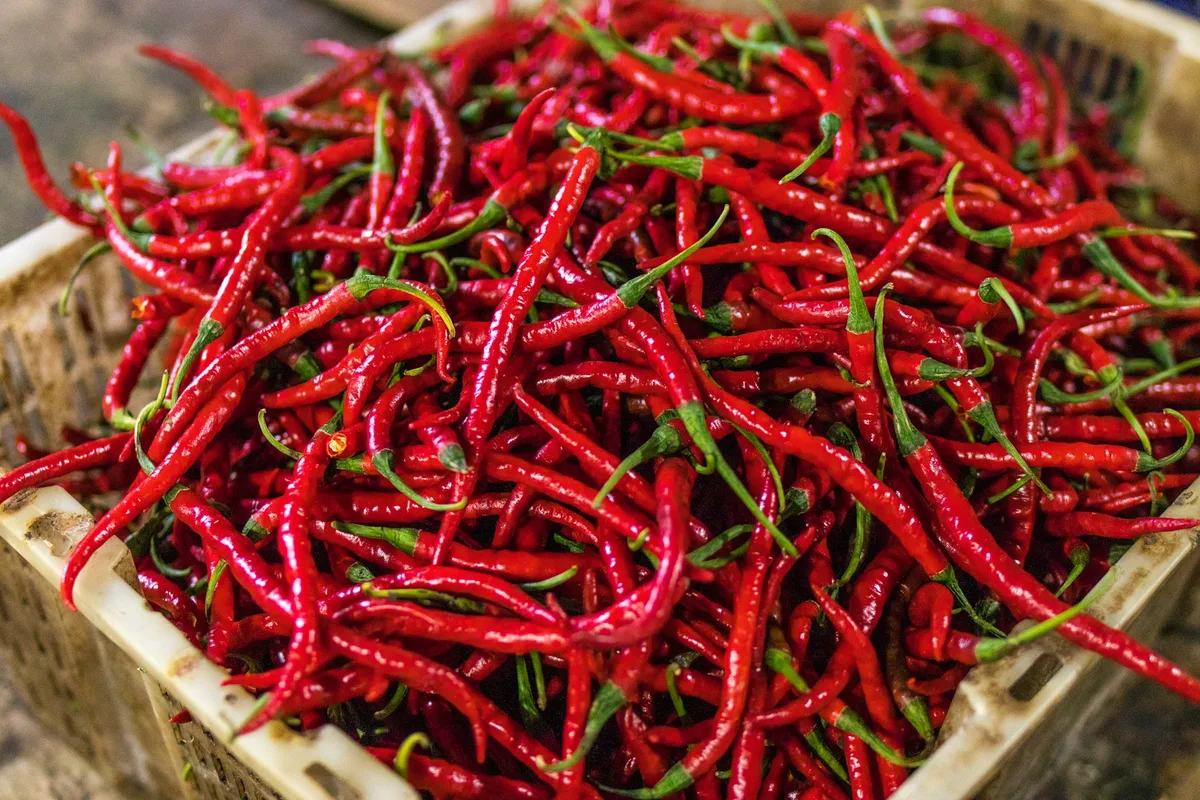
Hot sauce sits in a regulatory gray zone most makers never read the fine print on. It is not a cottage food in most states, it is not exempt because you are small, and the difference between legal and illegal comes down to pH, paperwork, and a training course you probably have not taken. Here is what the rules actually say and what every bottle needs behind it before it leaves your kitchen.
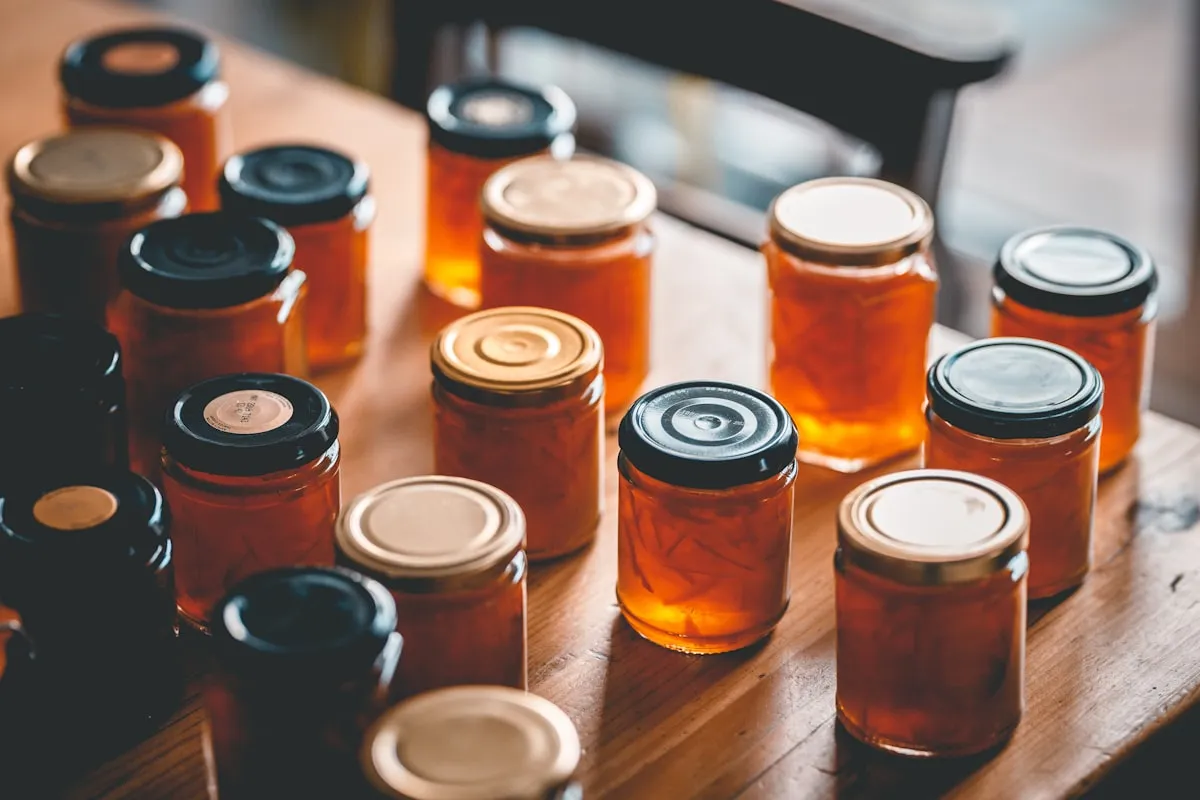
Batch tracking protects your food business from recall disasters, builds customer trust, and keeps you ahead of tightening regulations. Learn how to set up a simple lot tracking system that works.

Learn how to calculate the real cost of every product you make — from raw ingredients to labor and overhead — so you can price with confidence and protect your profit margins.

COGS is the single number that quietly decides whether your maker business is profitable, what your taxes look like, and which products are worth keeping in the catalog. Here is what it actually means, what goes in (and what stays out), and how to start tracking it this week — without an accounting degree.

Direct answers to the 42 questions Etsy sellers Google most — fee math, inventory tracking, monthly reconciliation, sales tax, 1099-K thresholds, and bookkeeping setup. Most-asked first; edge cases at the bottom.
Once you're selling, you'll need to track it
Tracking inventory, costs, and taxes across every batch and every channel is the operational reality once sales start. Ardent Seller is purpose-built for this.
Hot sauce, salsa & savory condiment makers
Ready to start?
Track every batch, recipe, and sale from day one of your hot sauce business. Free plan, no credit card.