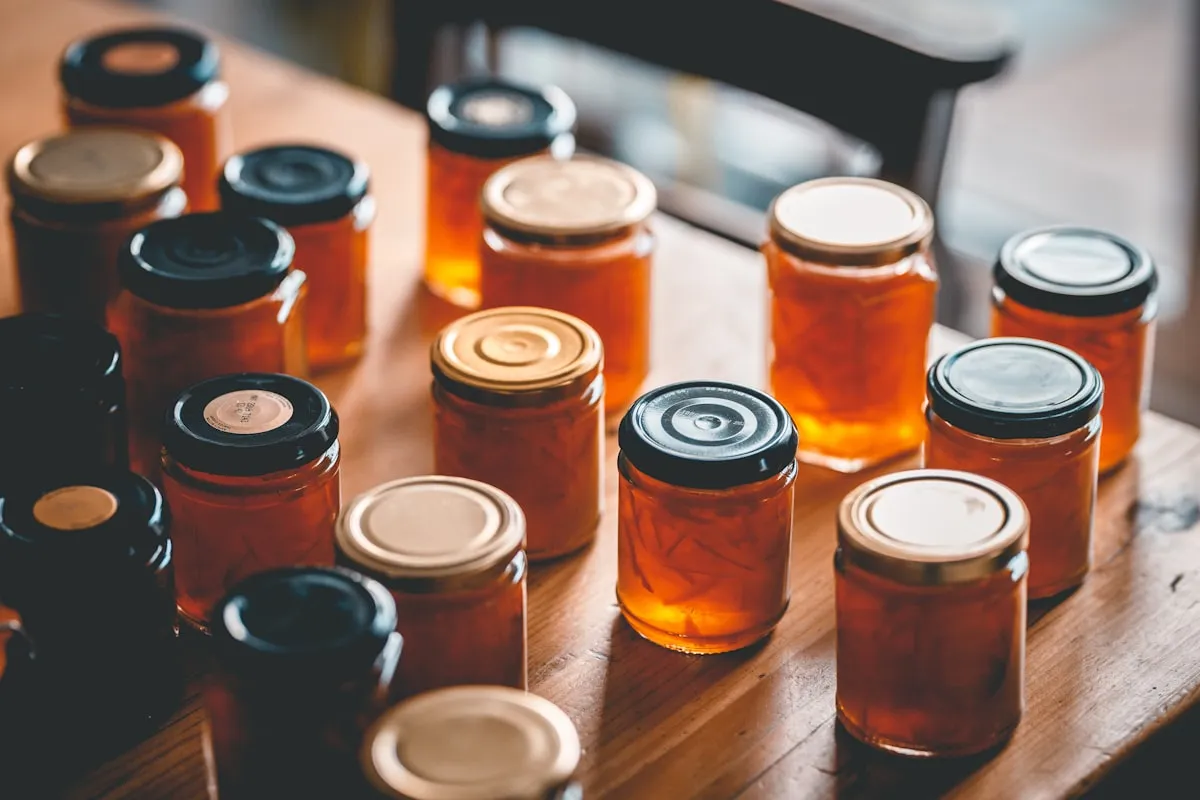
A customer messages you on a Saturday morning: "I bought your strawberry jam at the market last week and it tastes off. Did something change?"
If you're like most cottage food sellers, your stomach drops — not because you think something is actually wrong, but because you have no way to answer confidently. Which batch was it? What strawberries did you use? When were they cooked? Did any other jars from that batch get sold? Are there more sitting on your shelf right now?
Without batch tracking, a single customer complaint turns into a guessing game that can spiral into panic. With it, you pull up the batch number, check your records, and respond in minutes: "That was batch 2026-03-04-SJ. I used the berries from Valley Farm, cooked on March 4th. Let me check the rest of that batch and I'll replace your jar."
That's the difference batch tracking makes. Not someday, when you're "big enough." Right now, at every scale.
What Batch Tracking Actually Is (and Isn't)
Batch tracking — also called lot tracking or lot tracing — is simply the practice of assigning a unique identifier to a group of products made together under the same conditions. Every jar of jam from Tuesday's cook gets the same batch number. Every bag of granola from Thursday's run gets its own.
It's not a complex warehouse system. It's not barcodes and scanners (though those help as you grow). At its core, it's a label and a record.
What a batch record captures:
- Batch/lot number — a unique identifier (e.g.,
SJ-20260304-A) - Production date — when the batch was made
- Ingredients used — specific suppliers, purchase dates, and quantities
- Quantity produced — how many units came out of the batch
- Equipment used — which pots, mixers, or ovens were involved
- Who made it — relevant if you have helpers or employees
- Where it went — which markets, stores, or customers received units from this batch
That's it. Every piece of information you'd need if something went wrong — or if something went incredibly right and you want to replicate it exactly.
Why It Matters More Than You Think
Most small food sellers assume batch tracking is something for factories. It's actually more important when you're small, because you have fewer resources to absorb the consequences when things go wrong.
Recall Protection
The FDA's food recall process doesn't exempt small producers. If a supplier issues a recall on an ingredient you used — contaminated flour, tainted nuts, mislabeled allergens — you need to know exactly which of your products are affected. Without batch records, your only safe option is to recall everything, which could mean pulling weeks or months of product off shelves and out of customers' hands.
With batch tracking, you narrow the scope to the specific batches that used the affected ingredient. Instead of recalling 500 jars, you recall 40. That's the difference between a bad week and a business-ending catastrophe.
Allergen Traceability
Allergen cross-contact is among the most serious liability risks for small food producers. If a customer has a reaction and traces it to your product, the first question any health authority will ask is: "Can you show us exactly what went into this product and where those ingredients came from?"
Batch records give you a documented chain of custody from ingredient to finished product. This isn't just about legal protection — it's about knowing, with certainty, whether your product could have caused the issue.
Regulatory Compliance
Cottage food laws are tightening across the US. While requirements vary by state, the trend is unmistakable:
| Trend | What's Changing |
|---|---|
| Labeling requirements | More states requiring batch/lot numbers on labels |
| Record-keeping mandates | Production logs, ingredient sourcing records, and sales logs increasingly required |
| Sales cap increases with conditions | Higher revenue limits tied to stricter traceability requirements |
| Allergen disclosure | Expanding from the Big 8 to the Big 9 (sesame added in 2023 (FDA FASTER Act (opens in new tab))) with documentation expectations |
Getting ahead of these requirements now means you won't be scrambling to retrofit your entire operation when your state updates its rules. Sellers who already have batch tracking in place simply continue what they're doing.
Quality Consistency
Here's the upside people overlook: batch tracking isn't just about preventing disasters. It's your best tool for replicating success.
When a customer says "this is the best batch of hot sauce you've ever made," you can look up exactly what went into it. Which peppers, from which supplier, at what ripeness. What the cooking time and temperature were. You don't just say "thanks" — you reproduce it.
Conversely, when a batch doesn't turn out right, you can trace back to the variable that changed. New supplier? Different oven? Ingredient substitution? Batch records turn quality control from guesswork into detective work.

How to Set Up Batch Tracking (Without Overcomplicating It)
The best batch tracking system is one you'll actually use. Start simple, build the habit, then add sophistication as your business grows.
Step 1: Choose a Batch Numbering Format
Your batch number should be instantly readable — no lookup table needed. Here are three formats that work well:
Date-based (recommended for most sellers):
[Product Code]-[Date]-[Sequence]
SJ-20260304-A    → Strawberry Jam, March 4, 2026, first batch of the day
HS-20260304-B    → Hot Sauce, March 4, 2026, second batch of the day
Sequential (simpler but less informative):
SJ-0042 → Strawberry Jam, 42nd batch ever
Hybrid (good for multi-product operations):
2026-0304-SJ-01 → Year-MonthDay-Product-Sequence
Pick one format and stick with it. Consistency matters more than perfection.
Step 2: Record Ingredients at the Batch Level
Every time you start a batch, log which specific ingredients you're using — not just "strawberries" but where they came from and when you bought them.
Minimum information per ingredient:
- Ingredient name
- Supplier/source (e.g., "Valley Farm" or "Costco, Main St location")
- Purchase date or supplier lot number (if available)
- Quantity used
This is the link in the chain that makes traceability work. If a supplier recalls their flour, you search your records for every batch that used flour from that supplier during that date range.
Step 3: Track What You Produce
For each batch, record:
- Total quantity produced (units, jars, bags, etc.)
- Any units discarded or set aside for quality issues
- Net quantity available for sale
This gives you yield data over time, which is invaluable for production planning and costing.
Step 4: Label Everything
Every unit that leaves your kitchen needs its batch number visible. How you do this depends on your scale:
| Method | Best For | Cost |
|---|---|---|
| Handwritten on label | Very small batches, farmers market only | Free |
| Printed labels with batch field | Regular production, retail placement | $0.02-0.10/label |
| Labels with scannable codes | Growing operations, wholesale accounts | $0.05-0.15/label |
Even if your state doesn't require lot numbers on labels, put them there anyway. It's the only way to connect a product in a customer's hand back to your production records.
Step 5: Record Where Each Batch Goes
When you sell or distribute products, note which batch numbers went where:
- "Batch SJ-20260304-A: 24 jars to Saturday farmers market, 12 jars to Good Earth Co-op"
- "Batch HS-20260301-A: 6 bottles to online order #1847, 30 bottles to weekend market"
This is your forward traceability — the ability to find every customer or location that received a specific batch. It's what turns a potential full recall into a targeted, manageable notification.
Connecting Batch Tracking to Your Ingredient Purchases
The real power of batch tracking kicks in when you link it backward to your ingredient purchases, not just forward to your sales.
Here's what that looks like in practice:
The trail:
Customer complaint about Jar #SJ-20260304-A-017
    ↓
Batch SJ-20260304-A — produced March 4, 2026
    ↓
Used: 8 lbs strawberries (Valley Farm, purchased 3/2)
      4 lbs sugar (Costco, purchased 2/15)
      2 oz pectin (Amazon, lot #PKT-99281)
      1 oz lemon juice (Costco, purchased 2/15)
    ↓
Valley Farm issues strawberry recall on March 10 affecting berries sold 2/28-3/5
    ↓
Affected batches: SJ-20260304-A, SJ-20260305-A
Not affected: SJ-20260310-A (used different supplier)
Without this chain, you'd be recalling every jar of strawberry jam you've made in the past month. With it, you pull exactly two batches — 60 jars instead of 200.
This is where a tool like Ardent Seller becomes genuinely useful. It links your ingredient purchases to your production batches automatically, so when you need to trace backward from a finished product to its raw materials — or forward from a recalled ingredient to every affected product — the data is already connected. No spreadsheet archaeology required.
Common Batch Tracking Mistakes to Avoid
Even sellers who start batch tracking sometimes undermine it with these mistakes:
Reusing batch numbers. Every batch must have a unique identifier, forever. If you make strawberry jam on March 4 and again on March 18, those are different batches with different numbers, even if the recipe is identical.
Tracking products but not ingredients. A batch number is only useful if it connects to input records. "Batch 42 used strawberries" doesn't help. "Batch 42 used 8 lbs strawberries from Valley Farm, purchased 3/2/2026" does.
Waiting until you're "big enough." The hardest part of batch tracking is building the habit. Starting when you make 20 jars a week is easy. Trying to retrofit it when you're making 200 jars a week for three retail accounts is painful. Start now while the stakes are low and the volume is manageable.
Making it too complicated. If your system requires 15 minutes of paperwork per batch, you'll abandon it within a month. Aim for a system that takes 2-3 minutes per batch to record. You can always add detail later.
Not recording failed batches. A batch that went into the trash still used ingredients. Track it so your inventory and cost numbers stay accurate, and so you can identify patterns in what's going wrong.
Scaling Up: When Spreadsheets Stop Working
A notebook or spreadsheet works fine when you're producing a few batches per week of one or two products. But there's a tipping point — usually around the time you're juggling multiple products, several ingredient suppliers, and regular wholesale accounts — where manual tracking becomes a bottleneck.
Signs you've outgrown manual batch tracking:
- You spend more than 15 minutes per production day on record-keeping
- You've had a close call where you couldn't quickly trace a batch
- You're managing more than 3-4 product lines with regular production
- Retail accounts or co-packers are asking for lot tracking documentation
- You're losing track of which ingredient lots are in which finished products
This is the point where purpose-built tools pay for themselves. Ardent Seller was built for exactly this transition — it handles batch-to-ingredient linking, production run tracking, and forward/backward traceability without requiring you to build and maintain a spreadsheet system that grows more fragile as your business grows more complex.
A Simple System Beats a Perfect System
Batch tracking doesn't need to be sophisticated to be effective. A cottage food baker with a notebook and a consistent numbering system has better traceability than a mid-size producer with a disorganized ERP system.
What matters is the chain: ingredients in → batch number → products out → where they went. If you can trace that chain in both directions for every product you sell, you have functional batch tracking. Everything else — barcodes, software, automated lot linking — is optimization on top of a solid foundation.
Start with your next batch. Write down what goes in, label what comes out, and note where it goes. That's the whole system. Refine it as you learn what information you actually reach for when questions come up.
Your future self — the one handling a supplier recall at 7 AM or answering a health inspector's questions — will be grateful you started today.
Ready to connect your ingredients, production, and sales into a traceable system? Start tracking with Ardent Seller — batch linking and traceability are built in from day one.
Related reading
- Hot Sauce Compliance — pH testing, scheduled-process filings, and BPCS training — the regulatory layer above batch tracking for any acidified product.
- Shelf Life, Spoilage, and Shrinkage — How to count and cost the jars that never reach a customer — the natural counterpart to forward batch tracking.
- Recipe Costing 101 — Once your batches are documented, this walks through turning them into honest per-unit cost numbers.
- Co-Packer vs. Shared Kitchen — What happens to batch records when production leaves your kitchen: the two ways out of a home operation, with published rates and real minimum run sizes.
- Do You Need AAFCO Approval to Sell Dog Treats? — If any of your batches are for animals rather than people, they sit in a different regime entirely: commercial feed, registered per product with the state, with the lot code above a hard requirement in states like Colorado.
Free resources
If you'd like to take this off-screen, these free downloads pair well with the batch-tracking habit:
- Cottage Food Laws by State: The 50-State + DC Quick Reference — Labeling rules and lot-code requirements vary by state, and Texas already requires lot codes on cottage food (Texas DSHS Cottage Food Operations (opens in new tab)). This reference tells you what your state expects on every jar.
- Recipe Scaling & Batch Calculator (Excel) — A working scaler that takes a base recipe and a target yield and rewrites every ingredient with unit conversions baked in. The Batch Cost & Yield tab shows what scaling from 24 jars to 250 actually costs per jar — useful for sizing a wholesale order before you commit to the brew.
- Monthly Inventory Count Sheet — A printable count sheet for raw ingredients, finished jars, and packaging — useful when reconciling what your batch records say with what's actually on the shelf.
- Small-Batch Production Planning Playbook — A six-page PDF with five planning principles, the demand-driven sizing formula, and four printable worksheets (Batch Sizing, Run Log, Weekly WIP, Post-Run Audit). The Run Log captures the batch lot, ingredient draw, and yield variance described above — the day-of companion to the batch-tracking habit.
This article is provided for educational purposes only and does not constitute legal, regulatory, food-safety, or health advice. Labeling, compliance, and safety requirements vary by jurisdiction and product, and change frequently. Consult your state agriculture or health department, a qualified compliance consultant, or an attorney before making compliance or safety decisions.