Hot Sauce pH & Acidified Foods Safety Check
Enter the measured finished pH of your hot sauce. The tool classifies it against the FDA 21 CFR Part 114 acidified-foods thresholds, flags botulism risk, and lists the regulatory steps that follow at your category. Educational only — not a substitute for a Process Authority scheduled process.
Hot sauce pH safety check
Your sauce
Tell us the recipe context and the measured finished pH (24–48 hours after bottling and at thermal equilibrium).
Measure 24–48 hours after bottling, at room temperature, with a calibrated pH meter (not litmus paper — litmus is too imprecise at this range). Calibrate the meter against pH 4.01 and 7.00 buffers immediately before measuring.
Why does FDA care about pH 4.6?
Clostridium botulinum is an anaerobic bacterium whose spores can survive boiling temperatures. In sealed, anaerobic packaging (a bottle, a jar), the spores can germinate and produce botulinum toxin — a lethal neurotoxin — if the food's pH is greater than 4.6. At pH ≤ 4.6 the spores cannot germinate, which is why FDA draws the regulatory line at exactly that value. The 0.4 unit margin of safety (target pH < 4.2) is industry practice on top of the legal threshold to handle batch and measurement variation.
Safety check
Enter your measured equilibrium pH on the left to get a safety check.
The acidified-foods rule, in plain English
The Food and Drug Administration regulates two categories of canned/sealed foods because both carry a botulism risk under the wrong conditions: low-acid canned foods (21 CFR 113) and acidified foods (21 CFR 114). A "low-acid food" is anything with a finished pH greater than 4.6. An "acidified food" is a low-acid food to which vinegar, citric acid, acetic acid, lactic acid, or another acidulant has been added to bring the finished pH down to 4.6 or below. Hot sauce made from peppers (a low-acid food) plus vinegar is almost always an acidified food under this definition.
The 4.6 threshold is not arbitrary. Clostridium botulinum, the spore-forming bacterium that produces botulinum toxin, cannot germinate in anaerobic packaging when the food's pH is ≤ 4.6. Above that line — in a sealed bottle, with no oxygen — spores can germinate and produce toxin even though the food looks, smells, and tastes fine. Botulinum toxin is one of the most lethal substances known; the regulatory caution is proportional to the risk.
Commercial producers of acidified foods must (1) work with a Process Authority — a recognized food scientist — to design and file a scheduled process for the recipe, (2) send at least one supervisor through Better Process Control School (BPCS), (3) register the facility with FDA under 21 CFR 108.25 within 10 days of starting production, and (4) maintain per-batch pH and process records for at least three years. Most state cottage food laws specifically exclude acidified foods — you almost always need a commercial kitchen.
Industry practice is to target a finished equilibrium pH below 4.2, leaving 0.4 pH units of margin below the legal threshold for batch variation and measurement drift. This is a recommendation, not a regulation — but every recipe consultant and Process Authority will push you toward the lower target.
Reference: pH thresholds
| Finished pH | Classification | What it means |
|---|---|---|
| < 3.5 | Strongly acidic | Well below all thresholds. The sauce will read sharper on the tongue at this pH. |
| 3.5 – 4.2 | Safely acidic | Below the recommended margin of safety. Most commercial hot sauces target this band. |
| 4.2 – 4.6 | Borderline | Inside FDA's recommended margin of safety. Legal but no buffer if a batch measures slightly high. |
| > 4.6 | Unsafe (low-acid) | Botulism risk in sealed packaging. Requires a Process Authority thermal process, refrigeration, or recipe change. |
Authoritative references
- 21 CFR Part 114 — Acidified Foods. The federal regulation that defines acidified foods, pH measurement, scheduled processes, and recordkeeping.
- 21 CFR Part 108.25 — Acidified Foods Registration. The FCE / SID registration rule. Producers must register their facility and file scheduled processes within 10 days of starting commercial production.
- 21 CFR Part 113 — Thermally Processed Low-Acid Foods. Sister regulation for low-acid foods (pH > 4.6) that are sterilized rather than acidified. Most home-style hot sauces fall under 114, not 113.
- FDA Guidance for Industry: Acidified Foods (Sept 2010). FDA's compliance guidance, including pH measurement protocols and equilibrium-pH definitions.
- Cornell Food Venture Center, UC Davis FST, Rutgers FIC, and many state extension offices serve as Process Authorities and offer BPCS courses.
Frequently asked questions
What pH does hot sauce need to be?
For commercial shelf-stable production, the finished equilibrium pH of a hot sauce must be 4.6 or below per FDA 21 CFR Part 114. Industry practice is to target a finished pH below 4.2, leaving 0.4 pH units of margin below the legal threshold. Most commercial vinegar-based hot sauces sit at pH 3.0–3.8.
Is my hot sauce an "acidified food"?
If you start with low-acid ingredients (peppers, garlic, onions, carrots, tomatoes) and add vinegar, citric acid, or another acidulant to bring the pH below 4.6, yes — your hot sauce is an "acidified food" under 21 CFR 114. The only common exceptions are sauces whose acid comes entirely from naturally-acidic ingredients (some citrus-based hot sauces, some tomato-based hot sauces) and lacto-fermented hot sauces where the acid is produced by fermentation rather than added.
Do I need to register with FDA to sell hot sauce?
Yes, in two separate filings. (1) Food Facility Registration under FSMA / 21 CFR Part 1 Subpart H — every commercial food facility files this, then renews every two years during the biennial renewal window (October–December of even-numbered years). (2) FCE (Food Canning Establishment) registration and scheduled-process (SID) filings under 21 CFR 108.25 — acidified-foods producers add this on top of the FSMA registration. FCE/SID is a one-time filing per facility plus a separate SID per scheduled process, updated only when the process, formulation, or packaging changes (not biennial). Failing to file either registration makes commercial distribution illegal.
Can I make hot sauce under a state cottage food law?
Almost never. Most state cottage food laws specifically exclude acidified foods because the regulatory complexity (Process Authority, BPCS, scheduled-process filing, FDA registration) is federal and supersedes the state cottage-food exemption. A few states allow specific exceptions (some allow pickles or salsas with a pH attestation), but vinegar-based hot sauces almost always require a commercial kitchen and federal compliance. Check your state department of agriculture for the current rule.
What is a Process Authority and why do I need one?
A Process Authority is a recognized food scientist (typically PhD or MS in Food Science with industry experience) authorized by FDA to issue scheduled-process letters for acidified foods. For each hot sauce recipe, you submit the formulation, processing method, packaging, and target pH to a Process Authority who reviews the recipe and issues a scheduled-process letter specifying the time-temperature-pH conditions the product must meet. Cornell Food Venture Center, UC Davis FST, Rutgers FIC, NC State, and several state extension offices serve as Process Authorities — contact them for current fee schedules, which vary by institution and recipe complexity.
Does fermented hot sauce need a scheduled process?
Maybe — it depends on whether the finished product's acidity comes from fermentation alone or from added acid. A pure lacto-fermented hot sauce (no vinegar added at any stage) where lactic-acid fermentation brings the pH below 4.6 is classified as "naturally acidic" rather than "acidified" and is not subject to 21 CFR 114. But adding vinegar at the end shifts the classification to acidified. State regulators interpret this differently; confirm in writing with your state department of agriculture before commercial production.
How accurate does my pH meter need to be?
A pH meter accurate to ± 0.01 pH units calibrated daily against pH 4.01 and pH 7.00 buffers is the industry minimum. Litmus paper and color-strip indicators are too imprecise — the difference between pH 4.5 (legal) and pH 4.7 (illegal under 114) is invisible on a color strip. Most US Process Authorities specify a glass-electrode benchtop meter with automatic temperature compensation, available from lab-supply retailers (Thomas Scientific, Cole-Parmer, Hanna Instruments). Confirm the specific model your Process Authority accepts before purchase.
pH log and batch records — automated
21 CFR 114 requires you to retain per-batch pH and process records for three years. Most hot sauce makers do this in a paper notebook and lose it within two. Ardent Seller turns every batch into a production run with pH, temperature, batch lot, and ingredient traceability captured automatically — the kind of recordkeeping a Process Authority and an FDA inspector both want to see.
Batch records (3-year retention)
Every production run captures the recipe, ingredients used, batch lot, finished pH, and processing temperature — searchable for the full 21 CFR 114 retention window.
Ingredient traceability
Trace any finished bottle back to the pepper lot, the vinegar lot, and the supplier — the requirement that turns a recall into a single SQL query instead of a paper hunt.
Related resources
Cottage Food Laws by State: The 50-State + DC Quick Reference
Revenue caps, sales venues, registration rules, and the most common restrictions for all 50 states and DC — in one place, in plain English.
Cottage Food Revenue Cap Tracker
Pick your state, enter year-to-date gross sales, and see in real time how close you are to the cap that turns a cottage food operation into a regulated food business. Covers all 50 states + DC.
Craft Seller Startup Checklist
36 things to set up before — and after — your first sale. Inventory, pricing, and the legal essentials in one place.
Recipe Scaling & Batch Calculator
A working Excel recipe scaler — enter a base recipe, set a target yield, and every ingredient auto-scales with unit conversions (oz/g/lb/ml/cups). Plus a batch-cost tab and a unit-conversion reference.
Small-Batch Production Planning Playbook
A printable six-page playbook for handmade-goods producers — five planning principles, the demand-driven batch-sizing formula, and four worksheets for sizing, run logging, weekly WIP, and post-run audit.
Product Pricing Calculator
A working Excel pricing calculator — materials, labor, packaging, and platform fees in, a defensible retail price out. Plus a batch tab that shows what 50 vs. 10 actually costs.
Vendor & Supplier Contact Organizer
A four-page fillable PDF for tracking suppliers — vendor records, an alternate-supplier scoring sheet, and a one-row-per-vendor master index. Type into it in your PDF reader, or print blank copies for the clipboard.
From the blog
Articles that dig deeper into the topics this tool covers.

Hot Sauce Compliance: What Every Small-Batch Maker Must Test, Document, and Acidify Before Legally Selling a Bottle
Hot sauce sits in a regulatory gray zone most makers never read the fine print on. It is not a cottage food in most states, it is not exempt because you are small, and the difference between legal and illegal comes down to pH, paperwork, and a training course you probably have not taken. Here is what the rules actually say and what every bottle needs behind it before it leaves your kitchen.
Co-Packer or Shared Commercial Kitchen? How Small Food Makers Scale Out of the Home Kitchen
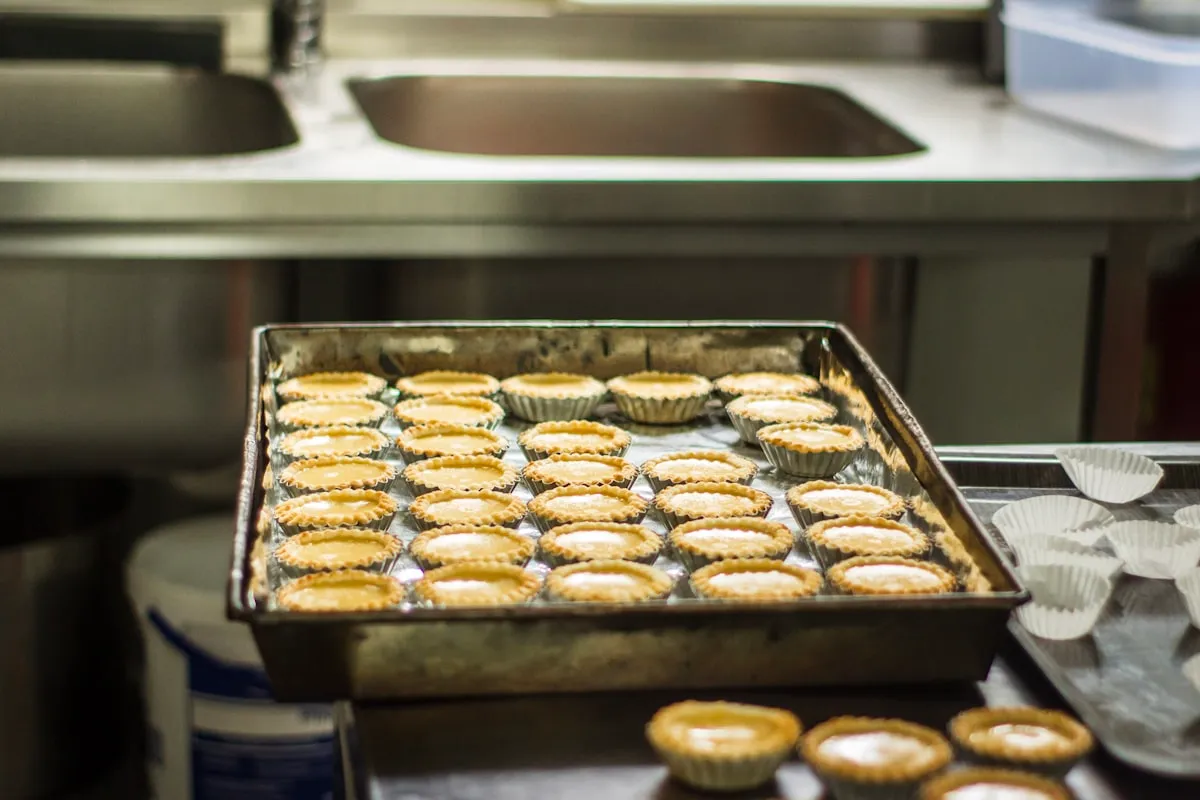
You have outgrown the home kitchen and the next order will not fit in your oven. This is the buyer's guide to the two real exits — renting shared commercial kitchen time or handing production to a co-packer — with published rates, real minimum order quantities, and the four questions that decide which one you can actually afford.

North Carolina Cottage Food Law: The State That Doesn't Have One, the Home Processor Inspection Exemption That Replaced It, and Why It Quietly Beats Most State Frameworks
North Carolina is one of a handful of US states without a formal cottage food law. It also has — quietly, and without ever calling it that — one of the most permissive home-food regimes in the country: no revenue cap, sales to retail stores, restaurants, and distributors all on the table, and no application or inspection fee listed. The catch is the front-end inspection, the pet rule, and a framework that lives entirely at the agency's discretion. This guide explains what the Home Processor Inspection Exemption actually is, how it differs from the cottage food laws every other state passed, and the day-to-day reality of operating under it.
Batch Tracking for Food Sellers: Why Every Jar, Bag, and Box Needs a Paper Trail
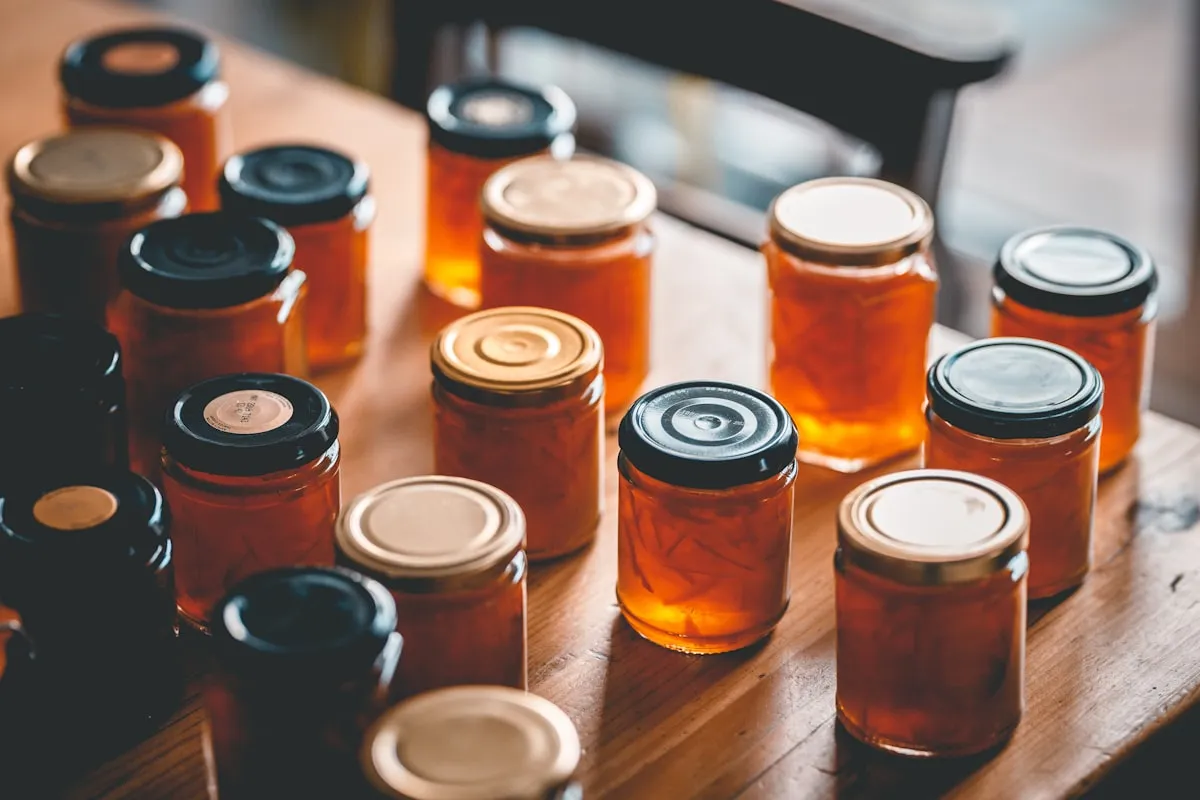
Batch tracking protects your food business from recall disasters, builds customer trust, and keeps you ahead of tightening regulations. Learn how to set up a simple lot tracking system that works.