Hobby vs Business: IRS 9-Factor Test
The IRS uses nine factors to decide whether your side activity is a for-profit business (deduct losses, claim home-office, write off equipment) or a hobby (income is taxable; losses are not deductible after the 2017 TCJA). Walk through all nine, get a weighted verdict, and see what to fix.
No single factor is determinative. The IRS weighs all of them together against the facts and circumstances. This tool runs the same weighing exercise an IRS agent would.
Educational tool only — not tax or legal advice. The 9-factor test is a fact-intensive analysis and individual circumstances vary widely. Consult a qualified CPA or tax attorney before taking a position on a tax return.
9-Factor Test Quiz
Do you run the activity in a businesslike manner?
Manner in which the taxpayer carries on the activity
Separate books, business bank account, written records, marketing plan, branding — concrete evidence you treat this as a business rather than a casual pursuit.
Why hobby-vs-business classification matters
The Tax Cuts and Jobs Act of 2017 made this question much more expensive. Before TCJA, hobby expenses were deductible as miscellaneous itemized deductions (subject to the 2%-of-AGI floor). Since 2018 — and now permanently under the One Big Beautiful Bill Act (H.R. 1, July 2025) (opens in new tab) — hobby losses are not deductible at all: hobby income is fully taxable, but no offsetting expenses come through. A cottage baker selling $8,000 of cookies who spent $5,000 on flour, packaging, and an oven would owe federal income tax (and self-employment tax if classified as business) on the full $8,000 if classified as hobby — versus paying tax on only the $3,000 profit if classified as business.
Business classification also opens up the home-office deduction, vehicle mileage deductions, Section 179 equipment write-offs, the qualified business income (QBI) deduction, and the ability to deduct net operating losses against other income. None of these are available for hobbies. The flip side: business classification also brings self-employment tax (an additional 15.3% on net earnings) and the requirement to file Schedule C and Schedule SE.
The classification is not a one-time election. The IRS may reclassify an activity year by year based on the facts. A side hustle that ran as a loss-making hobby for three years can become a business the year it shows profit; conversely, a business that has lost money for five years with no improvement may be reclassified as a hobby and have its prior-year loss deductions disallowed (with interest and penalties).
How to strengthen the business case
Most of the nine factors are something you can actively improve. The cheapest, fastest fixes:
- Separate business bank account and accounting tool. The single most powerful signal of business intent. Mixing business and personal accounts is the strongest hobby signal.
- Register a DBA or LLC. Public registration as an entity, even an unincorporated DBA, is concrete evidence you treat this as a business.
- Written business plan. Does not need to be formal — a one-page memo describing the offering, pricing, target market, and 12-month sales goals is enough to demonstrate planning.
- Marketing. Active promotion (a website, an Etsy shop, regular social posts) shows you are trying to attract customers. A passive "I sell when asked" pattern looks like a hobby.
- Pricing for profit, not just for materials. A pricing model that includes labor and overhead — not just material cost recovery — shows you are running this for profit.
- Track time. A simple time log (date + hours + what you worked on) helps establish factor 3 (time and effort) and supports the case if the IRS asks.
- Continued education. Industry classes, certification, or paid consultations support factor 2 (expertise). Costs are deductible too.
The hardest factors to change quickly are profit history (takes years to build) and personal pleasure (you cannot fake disliking your work). Everything else is operational hygiene that doubles as evidence of business intent.
Frequently asked questions
What is the IRS 9-factor test?
The IRS uses nine factors from Treasury Regulation §1.183-2(b) to determine whether an activity is engaged in for profit (a business) or as a hobby. The factors include manner of operation, expertise, time and effort, asset appreciation, prior business success, profit/loss history, magnitude of occasional profits, taxpayer's financial status, and personal pleasure. No single factor is determinative — all are weighed together against the facts and circumstances.
What is the 3-of-5 safe harbor rule?
Under IRC §183(d), if your activity earned a profit in 3 of the last 5 consecutive tax years, the IRS presumes it is a for-profit business and the burden shifts to the IRS to prove otherwise. For horse-related activities, the rule is 2 of 7 years. The presumption is rebuttable but it makes the IRS's case much harder. Failing the 3-of-5 test does NOT automatically make the activity a hobby — it just removes the safe harbor and triggers the 9-factor analysis.
Why does hobby vs business classification matter for taxes?
Business income is reported on Schedule C with offsetting deductions for expenses, home office, vehicle use, equipment depreciation, and the QBI deduction. Hobby income is reported on Schedule 1 with NO offsetting deductions (the 2017 Tax Cuts and Jobs Act eliminated miscellaneous itemized deductions, and the One Big Beautiful Bill Act made this permanent in July 2025). A $10,000 cottage baking activity with $7,000 of expenses owes tax on $3,000 as a business but on the full $10,000 as a hobby.
Can the IRS reclassify a business as a hobby?
Yes. If an activity reports losses year after year with no indication of moving toward profit and no business-like operations, the IRS may reclassify it as a hobby, disallow prior-year loss deductions, and assess back taxes, interest, and accuracy-related penalties (typically 20% of the underpayment). The risk is highest for activities with high personal-pleasure factor (horse boarding, photography, art, vintage car restoration) that consistently lose money.
Do I have to register an LLC to be classified as a business?
No. The IRS classification is based on facts and circumstances, not legal entity. A sole proprietorship operating under your own name with a registered DBA can absolutely be a business under the 9-factor test. LLC or corporation registration is one piece of evidence of business intent (factor 1: businesslike manner) but it is neither necessary nor sufficient.
How long can I lose money before the IRS considers it a hobby?
There is no fixed number of years. The 3-of-5 safe harbor (profit in 3 of any 5 consecutive years) is the safest position. Outside the safe harbor, the IRS looks at trend: are losses decreasing year over year? Are you actively changing the business to address losses? Continuous identical losses for 5+ years with no operational changes is a serious red flag. Decreasing losses or one-time setbacks (pandemic, supply chain) are more defensible.
If I enjoy my work, does that make it a hobby?
No, by itself. Plenty of business owners love what they do. The personal-pleasure factor (factor 9) asks whether the activity is "primarily" recreational. An activity that has substantial business elements (operations, marketing, customer service, accounting) and produces income alongside enjoyment is still a business. Pure personal enjoyment with sporadic sales (a weekend painter who occasionally sells a piece to a friend) is more likely a hobby.
Build the paper trail an IRS agent expects to see
Factor 1 of the test asks whether you run the activity in a businesslike manner. The fastest way to look like one is to track every sale, every expense, every batch, and every customer in one system — and produce reports on demand. Ardent Seller is built to give cottage bakers, makers, and Etsy sellers that paper trail without learning QuickBooks.
Sources & verification
- IRS Fact Sheet FS-2008-23 — Is Your Hobby a For-Profit Endeavor? (opens in new tab)
- IRS Publication 5558 — Activities Not Engaged in for Profit (opens in new tab)
- IRS Newsroom — How to tell the difference between a hobby and a business for tax purposes (opens in new tab)
- 26 CFR §1.183-2 — Activity not engaged in for profit defined (Cornell LII) (opens in new tab)
- One Big Beautiful Bill Act (H.R. 1, 119th Congress, July 2025) (opens in new tab) — made permanent the TCJA suspension of miscellaneous itemized deductions (including hobby losses)
- The Tax Adviser — Nine Factors That Determine Whether an Activity Is a Hobby (opens in new tab)
This tool is educational only — not tax or legal advice. The 9-factor test is a fact-intensive analysis and individual circumstances vary widely. Consult a qualified CPA or tax attorney before taking a position on a tax return. Data current as of 2026-05-17.
Related resources
1099-K Threshold Tracker (2026)
A multi-platform tracker that tells you which payment processors will send you a 1099-K this year under the post-OBBBA 2026 rules. Federal $20K + 200 transactions; nine states and DC trigger earlier.
Schedule C Tax Expense Tracker
A working Excel expense tracker organized by IRS Schedule C category. Drop-down picker on every row, a Monthly Summary that builds itself, a year-end Schedule C view, and a mileage log with the deduction calculated for you.
Quarterly Estimated Tax Worksheet
A working Excel worksheet for self-employed makers — log income, set filing status, and the four quarterly estimated-tax payments calculate themselves. SE tax (15.3%) plus federal income tax math built in, with a safe-harbor escape hatch on its own tab.
Small Business Tax Deduction Cheat Sheet
Every Schedule C line that matters to a maker — what belongs, what doesn't, and the mistakes that cost money.
Craft Seller Startup Checklist
36 things to set up before — and after — your first sale. Inventory, pricing, and the legal essentials in one place.
Cottage Food Revenue Cap Tracker
Pick your state, enter year-to-date gross sales, and see in real time how close you are to the cap that turns a cottage food operation into a regulated food business. Covers all 50 states + DC.
From the blog
Articles that dig deeper into the topics this tool covers.

When Your Hobby Becomes a Business: The Tax and Record-Keeping Tipping Point
The IRS draws a hard line between hobbies and businesses — and being on the wrong side of it can cost you thousands. Learn how to recognize the tipping point and what records to keep from day one.
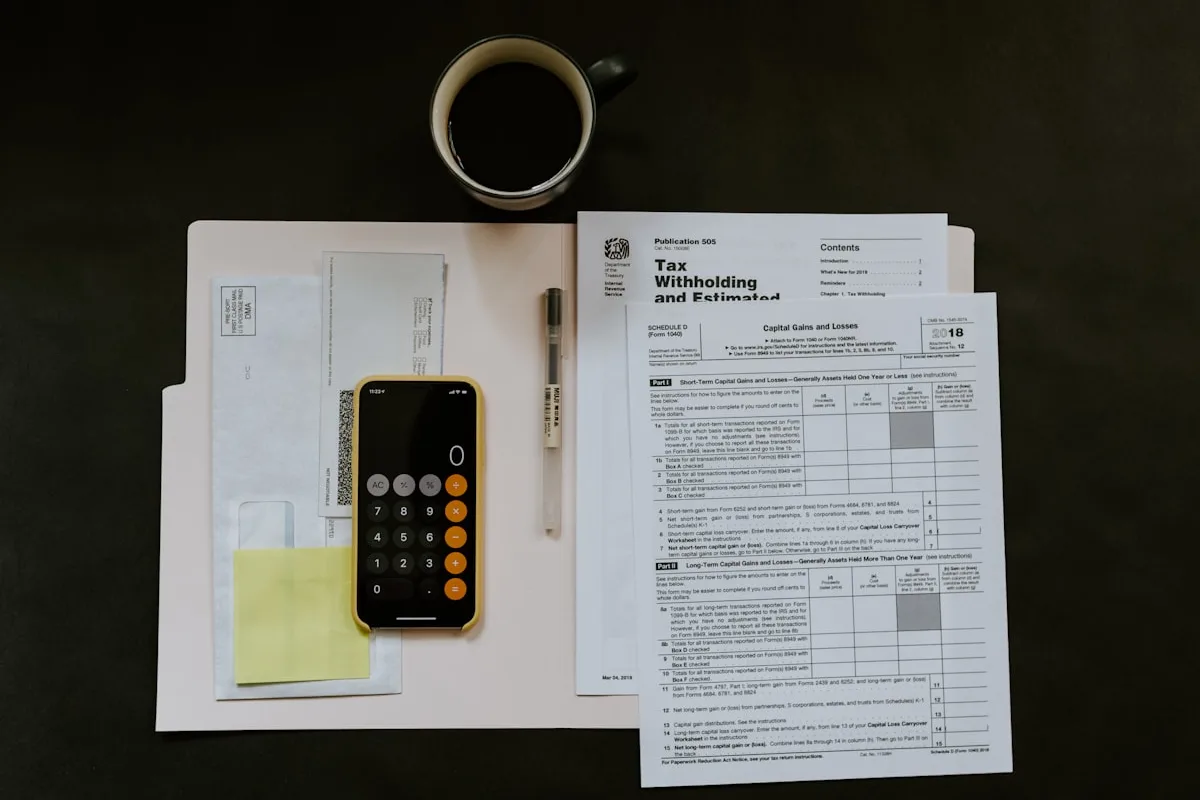
Do You Need an LLC for Your Handmade Business? Probably Not Yet
Every maker group answers "form an LLC" before asking a single question about the business. But an LLC does not change your taxes by default, does not stop a customer from suing you personally for something you made, and in some states costs $800 a year forever. Here is what the shield actually covers, what it costs, and the four situations where filing genuinely earns its keep.

Home Office Deduction for a Craft Business: What Square Footage Actually Counts
Most makers rule themselves out of the home office deduction because they picture a dedicated room with a door. The IRS rules are narrower than that in one direction and considerably wider in another — and the space that qualifies is often not the one you assumed. Four studio layouts, measured against the actual tests.
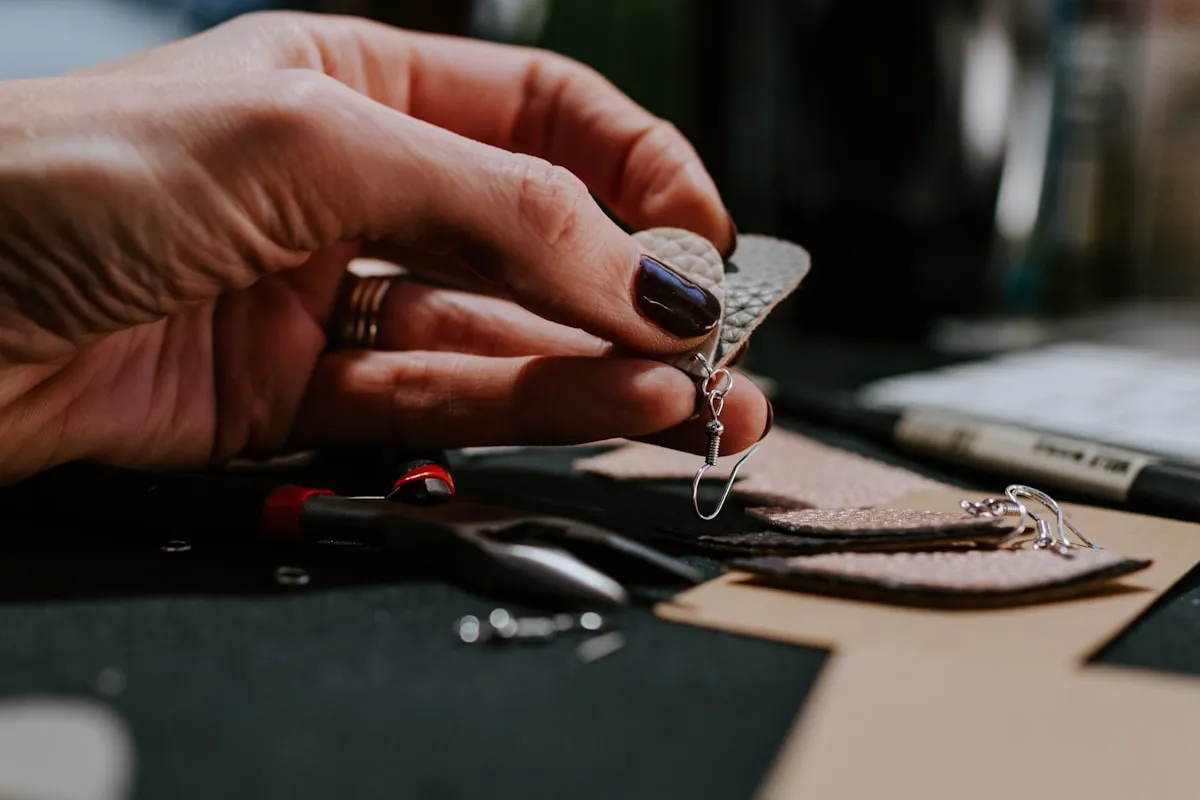
What Is Cost of Goods Sold? A Plain-English COGS Primer for Maker Businesses
COGS is the single number that quietly decides whether your maker business is profitable, what your taxes look like, and which products are worth keeping in the catalog. Here is what it actually means, what goes in (and what stays out), and how to start tracking it this week — without an accounting degree.