
The retailer who ordered a case of your ghost pepper sauce last month just called. A customer returned a bottle that separated, fermented, and pushed the cap off in their pantry. The retailer wants to know your facility registration number, your pH logs for that batch, and the name of the process authority who reviewed your recipe. You have none of those things. You have a recipe in a notebook and a shelf of empty bottles in the garage.
This is the moment most hot sauce makers learn that the rules they assumed applied to them do not. That their state's cottage food law does not cover acidified products. That "small batch" and "homemade" are marketing terms, not regulatory categories. And that the gap between what they have been doing and what the law actually requires is wider than they realized.
Hot sauce is one of the most heavily regulated food products a small maker can sell. It is also one of the most commonly sold without the required paperwork. The disconnect is not malicious. It is that every generic "how to start a food business" guide treats hot sauce like jam or salsa, and it is legally neither. The rules are different, the testing is different, and the consequences of getting it wrong range from a retailer pulling your product to a recall that ends your business.
This guide walks through the most common misconceptions, what the reality actually looks like, and what every bottle on your shelf should have behind it before it ships.
A note before we start: This article is a plain-language summary of how FDA acidified food rules typically apply to hot sauce. It is not legal advice, and state rules vary. Before you sell, confirm your specifics with your state department of agriculture or public health and a qualified process authority.
Why hot sauce is in a category of its own
The FDA defines an acidified food as a low-acid food with a pH of 4.6 or below that has been acidified by adding an acid or acid food (like vinegar). Almost every hot sauce on the market meets that definition. Peppers, onions, garlic, and fruits are all low-acid on their own. You add vinegar or citric acid to lower the pH and make the product shelf-stable. The moment you do that, you are manufacturing an acidified food, and your product falls under 21 CFR Part 114 — the federal regulation that governs acidified food production (21 CFR Part 114 (opens in new tab)).
Part 114 is not a suggestion. It specifies how you measure pH, how long you hold products before testing, what records you keep, what training operators must complete, and what filings you make with the FDA before you sell a single bottle. The rule exists because acidified foods that are incorrectly processed can harbor Clostridium botulinum, the bacterium that produces botulinum toxin. The FDA does not trust taste, smell, or maker intuition to keep consumers safe. It trusts measured pH, validated processes, and documented batch records.
With that context, here are the myths that get small producers into trouble.
Myth 1: "My state's cottage food law covers hot sauce"
Reality: In most states, it does not. Cottage food laws typically allow home production of "non-hazardous" foods — baked goods, jams, jellies, dry mixes, honey, and similar products that do not require time and temperature control for safety. Acidified foods are almost universally excluded, even when they seem similar to allowed categories.
A few specifics to check:
- Texas allows certain acidified products under its cottage food law but requires the producer to complete a food handler course and includes restrictions on pH and packaging.
- California's Cottage Food Operations (CFO) list explicitly excludes acidified foods from the allowed product categories. Hot sauce is not a CFO product.
- Florida allows some acidified products only if the producer registers and tests. Straight cottage food exemption does not apply.
- New York, New Jersey, Massachusetts, and most of the northeast require a separate 20-C processor license for any acidified food production, cottage or otherwise (NY Ag & Markets Article 20-C (opens in new tab)).
Even in permissive states, "cottage food" rarely means "no rules." It usually means you can produce in a home kitchen, but you still need a process authority review, labeling that meets state standards, and sales limits that often top out at $50,000 or intrastate sales only. If you plan to sell online, to retailers outside your state, or through a marketplace like Amazon, cottage food exemptions generally do not apply even where they exist.
What to do: Call your state department of agriculture and ask specifically about acidified foods. Do not ask about "cottage food" or "hot sauce" without context. The person answering the phone may not know hot sauce is acidified unless you use the regulatory term.
Myth 2: "I add vinegar, so my pH is safe"
Reality: Adding vinegar does not guarantee a pH below 4.6. Peppers, carrots, onions, garlic, and fruit all buffer acidity. A recipe that calls for 50% vinegar by volume can still test at pH 4.8 or higher depending on the produce load, the vinegar's strength, and how finely everything is blended. You cannot calculate pH from a recipe. You have to measure it.
The stakes on this one are not theoretical. A sauce at pH 4.8 that looks, smells, and tastes fine can still support C. botulinum spore germination. Once it does, there is no visible indicator. The sauce does not bubble, discolor, or smell off. It just poisons whoever eats it.
What to do: Test every batch with a calibrated pH meter after the sauce has reached equilibrium (usually 24 hours, but your process authority will specify the exact hold time for your formula). Record the reading. If it is above 4.6, reprocess or discard. Do not ship it. Do not assume a little above is close enough. 4.6 is not a soft target.
Myth 3: "If it tastes sharp and acidic, it is safe"
Reality: Taste is a terrible indicator of pH. Human perception of sourness is affected by sugar, salt, heat, and the specific acids used. A sauce can taste aggressively tart at pH 5.0 because it is loaded with citric acid (which tastes sharper than acetic) and still be in the danger zone. Another sauce can taste mild at pH 4.2 because the capsaicin and sugar mask the acidity.
There is no shortcut here. The only way to know if your sauce is safe is to measure it with an instrument that returns a number. Your tongue is not that instrument.
Myth 4: "pH strips are fine for documentation"
Reality: Test strips are acceptable for rough in-process checks. They are not acceptable for regulatory documentation. FDA 21 CFR 114.90 requires pH measurement with a potentiometric pH meter for finished product testing (21 CFR 114.90 (opens in new tab)). A meter that reads to 0.01 units, is calibrated daily against two buffer solutions (pH 4.0 and 7.0 at minimum), and is operated by a trained person.
Strips typically read in 0.5-unit increments. A strip that tells you "about 4.5" could actually be 4.8. That is the difference between a shelf-stable product and one that should never leave your kitchen.
Meters are not expensive. A serviceable commercial pH meter for food production costs $150 to $400. Buffer solutions are roughly $10 per bottle and last months. The total cost of doing this correctly is less than one recall.
What to do: Buy a meter with automatic temperature compensation (ATC), a food-grade probe, and a stand. Calibrate it every day you use it. Record the calibration in a logbook. When you test a finished batch, record the reading, the batch number, the temperature, and who did the testing. If a state inspector or FDA auditor ever asks, this logbook is your evidence that you are operating under control.
Myth 5: "I'm too small for the FDA to care"
Reality: Size is not an exemption. 21 CFR Part 108 and Part 114 apply to any facility producing acidified foods for commercial distribution, regardless of volume (21 CFR Part 108 (opens in new tab)). There is no "small producer" carveout at the federal level. There is, however, a very real pattern of small producers operating under the assumption that they are below the FDA's radar — until a customer complaint, a retailer audit, or a competitor's tip brings them to the agency's attention.
The FDA's enforcement pyramid works from the bottom up. The agency does not send inspectors to every small kitchen. It does respond to complaints, and a single adverse event — someone getting sick, a bottle pressurizing in a customer's cabinet, a retailer discovering their supplier is unregistered — can trigger an inspection that ends with a warning letter, a recall, or facility closure.
The other angle: even if the FDA never knocks, retailers and marketplaces increasingly audit their suppliers. Whole Foods, Market Basket, Amazon, and many regional chains now require a copy of your FDA food facility registration, your process authority letter, and your liability insurance before they will carry your product. "Too small to bother with" is not a business strategy; it is a ceiling that prevents you from scaling past the farmers market.
What to do: Register your food facility with the FDA (Form 2541, no fee, done online through the FDA Industry Systems portal) (FDA Acidified & Low-Acid Canned Foods registration (opens in new tab)). Then register your specific acidified food process (Form 2541e) with a process authority's scheduled process attached. Both registrations are required before you sell interstate, and both are requested by serious retailers before they open an account.
Myth 6: "I took a food safety course — I'm covered"
Reality: Most food safety certifications (ServSafe, local health department food handler cards, HACCP intro courses) do not cover acidified food production. 21 CFR 114.10 requires that operations be supervised by someone who has completed a Better Process Control School (BPCS) — specifically, the acidified foods track (21 CFR 114.10 (opens in new tab)). BPCS is a 3-to-4-day course offered by university food science departments (North Carolina State, UC Davis, Cornell, University of Florida, and several others run sessions throughout the year).
The course is not optional if you are manufacturing acidified foods. It typically runs $700 to $1,500 plus travel depending on the institution and session format, and the person who completes it becomes the "qualified person" on your facility's records. That person does not have to be the owner, but someone in the company has to hold the certificate, and every batch has to be produced under their supervision.
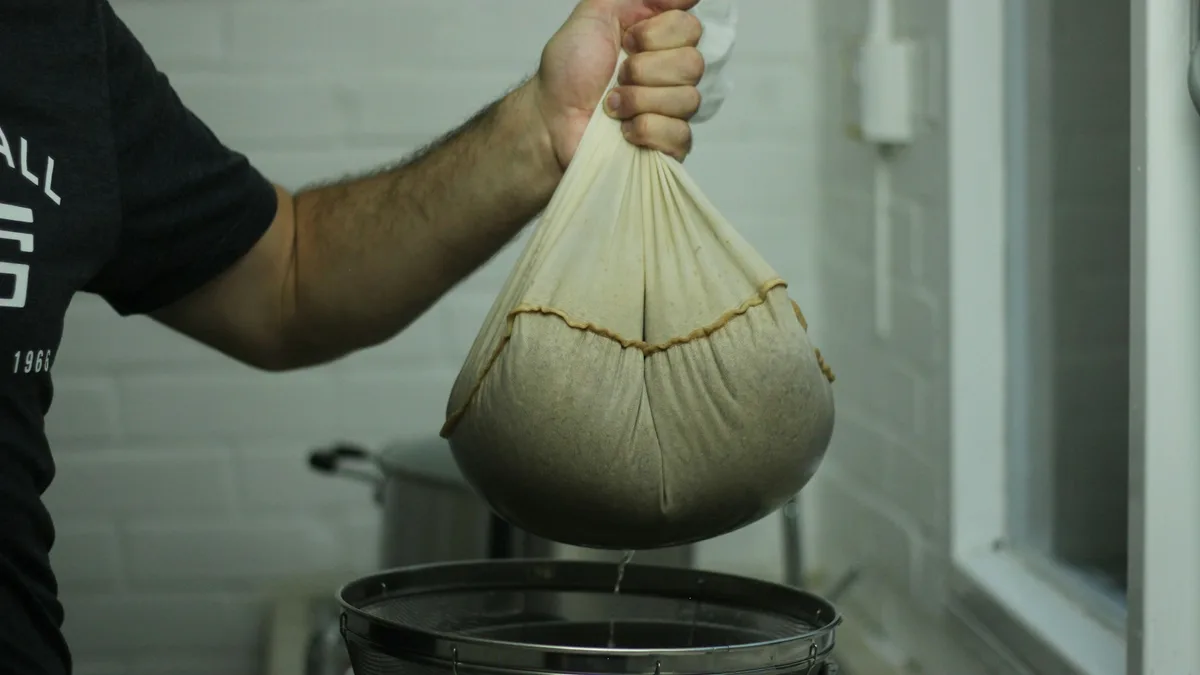
What to do: Budget for BPCS early. If you are pre-launch, take it before you start selling. If you are already selling and have not taken it, enroll in the next available session. The course also gives you the technical vocabulary to talk to a process authority, which will save you months of back-and-forth when you file your scheduled process.
Myth 7: "Scheduled process filing is only for canned goods"
Reality: The scheduled process requirement applies to any acidified food in a hermetically sealed container — which includes glass bottles with lug caps, swing-top bottles, plastic bottles with induction seals, and just about any other commercial hot sauce packaging. "Hermetically sealed" in regulatory language means the container is designed to be impervious to gas and microorganisms; it does not mean "canned" in the everyday sense.
Before you sell a bottle interstate, a process authority — usually a food scientist at a university extension service or a private consulting firm — must review your recipe, your process, and your packaging, and file a scheduled process with the FDA on your behalf. The process authority specifies things like: equilibrium pH target, hold time before testing, cooking temperature and time (if thermally processed), container type, and fill temperature. You cannot deviate from that scheduled process without filing an amendment.
Process authority fees run $300 to $1,500 per product, depending on complexity. Most will review two or three related recipes together (e.g., a mild, medium, and hot version of the same base) for a reduced combined fee.
What to do: Do not try to do this yourself by reading the CFR. The scheduled process filing is technical, and errors delay your launch by months. Hire a process authority early — ideally before you finalize packaging — so their recommendations are baked into your production setup instead of forcing expensive retrofits later.
Myth 8: "Refrigerated hot sauce skips all of this"
Reality: Refrigerated, non-shelf-stable hot sauce does sit outside the acidified food rules (since it does not rely on pH for safety), but it picks up a different set of requirements instead. You still need state licensing as a food processor. You still need a commercial kitchen in most states (home kitchens are often not permitted for refrigerated products). You still need lot tracking, allergen labeling, and nutrition facts panels if your revenue exceeds the small-business threshold. And your product's shelf life drops from 18-24 months to 30-60 days, which changes every assumption about distribution and returns.
"Refrigerated" is a legitimate product category, but it is not a shortcut around regulation. It is a different regulatory path with its own costs.
What you actually need to keep on file
For every batch of shelf-stable hot sauce you produce and sell, you should have:
- Batch number that links the bottle on the shelf to the production run
- Production date and time
- Recipe version (with a change log if you have iterated)
- Ingredient lot numbers for every input — peppers, vinegar, salt, preservatives
- Equilibrium pH reading taken after the required hold time, with the meter's calibration log for that day
- Water activity reading if your scheduled process requires it
- Fill temperature and container lot if thermally processed
- Any process deviations and how they were corrected or the batch held/destroyed
- Operator initials for each step, confirming the qualified person supervised
These records must be retained for at least one year past the product's shelf life (typically 2-3 years for shelf-stable sauces). They must be legible, organized, and available to an inspector within 24 hours of request.
A paper notebook technically satisfies the rule, but it collapses the moment you scale past a few dozen batches a year. A single spilled coffee can wipe out a year of compliance documentation. This is where a purpose-built inventory and production system earns its cost many times over. Ardent Seller is designed for exactly this kind of record-keeping — batch tracking with lot numbers, recipe versions with change history, per-batch production logs that capture pH readings and deviations, ingredient traceability from supplier lot all the way to the bottle on a retailer's shelf. When a retailer calls asking about a specific case, you pull up the batch record in seconds instead of flipping through notebooks.
The realistic path to compliance
If you are starting from zero and want to sell shelf-stable hot sauce legally, here is the order of operations:
- Confirm your product is acidified by calling your state department of agriculture. Get the answer in writing if you can.
- Take Better Process Control School (BPCS), acidified foods track. Book the next session that fits your timeline.
- Hire a process authority to review your recipes and file your scheduled process with the FDA. Expect 4-8 weeks from first contact to filed process.
- Register your food facility with the FDA (Form 2541). Free, online, same-day confirmation.
- Get state licensing as a food processor or acidified food manufacturer. Requirements vary; some states require a separate facility inspection.
- Set up your documentation system before your first production batch, not after. Batch numbers, pH logs, ingredient lot tracking.
- Buy a calibrated pH meter and buffer solutions. Train every production operator on calibration.
- Run a test batch under your scheduled process. Verify your equilibrium pH hits target. Fix anything that does not.
- Get product liability insurance (early-stage producers with limited distribution can usually find $1M to $2M of coverage in the $400 to $1,500 annual premium range; higher revenue, broader retail distribution, and prior claims push it up). Retailers will ask. Some states require it.
- Sell. And keep every record.
That list takes three to six months to work through if you start today. It is slower and more expensive than "cook a batch on Sunday, print a label, and list it on Etsy" — but the alternative is selling a product that could poison a customer and a paper trail that cannot defend you when it does.
The real cost of skipping the work
The makers who get this right do not do it because they love paperwork. They do it because they have seen what happens when it goes wrong: the retailer who drops a whole line because one supplier's recall splashed on everyone adjacent; the maker who had to destroy thousands of dollars of finished product when an inspection revealed an unfiled process; the insurance claim denied because "product not produced under documented scheduled process" voided the policy.
Compliance is a moat. It keeps you out until you do the work, and it keeps competitors out after you have done it. The small producer who takes BPCS, files a scheduled process, and logs every batch looks identical on the shelf to the one who does not — until the day something goes wrong. On that day, one business survives and the other does not.
If you are already selling and realize you are behind, do not panic and do not keep selling while you hope nobody notices. Pause production, enroll in the next BPCS session, call a process authority, and work through the list above. Most state agencies would rather help a maker come into compliance than shut one down; very few will be forgiving after the fact.
Make the sauce worth the bottle. Then make the paperwork worth the sauce.
Ready to set up batch tracking, pH logs, and ingredient traceability before your next production run? Start a free Ardent Seller account — or see how food businesses use it in the Hot Sauce & Condiments use case guide.
Related reading
- Batch Tracking for Food Sellers — The recordkeeping discipline behind every pH log — lot numbers, ingredient sources, and forward traceability.
- Infused Oil & Flavored Vinegar Costs — The same acidified-foods framework applied to garlic oils and shelf-stable vinegars, with the per-bottle cost of doing it safely.
- Herbal Product Shelf Life — Tinctures and infused oils are a parallel category with their own shelf-life and labeling rules.
- Pet Treat Business Costs — Pet products sit in a different regulatory regime — same documentation rigor, different agency.
- Co-Packer vs. Shared Kitchen — Where the scheduled process actually gets filed once you scale: renting licensed kitchen time versus handing the sauce to a co-packer, with the cost of each.
Free resources
A few free downloads from the Ardent Workshop library that pair well with this post:
- Cottage Food Laws by State (live reference) — Interactive 51-state hub with an "Acidified foods OK" filter — toggle it on to see only the states where pH-tested sauces, salsas, and ferments are permitted under cottage food (the rest require a Process Authority approval and a commercial license). Click into any state for the full venue, registration, and label rules.
- Cottage Food Laws by State: The 50-State + DC Quick Reference (PDF) — Printable take-it-with-you version of the same dataset for offline reference.
- Craft Seller Startup Checklist — Inventory, pricing, and the legal essentials (entity, sales tax, product liability insurance) for a hot sauce maker building a real food business behind a real label.
This article is provided for educational purposes only and does not constitute legal, regulatory, food-safety, or health advice. Acidified-food regulations, pH-testing protocols, FDA and state compliance requirements, and labeling rules vary by jurisdiction and change frequently. Consult a Process Authority, your state agriculture or health department, a qualified compliance consultant, or an attorney before making compliance or safety decisions.