How to start an Etsy business
A practical, step-by-step playbook for opening an Etsy shop, listing your first products, and getting found in search — without getting blindsided by the fee stack, the handmade policy, or Offsite Ads.
- Startup cost
- $100 – $1,500
- Time to first sale
- 1 – 6 weeks
- Note: Opening a shop takes under an hour; first-sale timeline is niche- and listing-SEO-dependent
- Difficulty
- Beginner-friendly
Last reviewed · Rates, fees, and regulatory thresholds in this guide can change — verify the linked sources before acting.


The short version
Etsy is one of the lowest-friction starting points for a handmade business — a $0.20 listing fee, no monthly subscription, and a built-in audience of buyers who came looking for handmade. (Etsy reserves the right to charge a one-time shop setup fee for some accounts; the amount, if any, displays before you finalize setup.) The trade-off is a stacked fee load that lands around ~14% of a typical order once you add the listing fee, 6.5% transaction fee, ~3% + $0.25 payment processing, and a country-specific regulatory operating fee — and crosses 30% of the item sale price on Offsite-Ads-attributed orders. Three problems catch many new Etsy shops off guard: under-pricing because they only modeled the headline 6.5%, listing items Etsy doesn't allow (mass-produced resale, trademarked names, AI-generated work passed off as handmade), or treating Offsite Ads as free traffic when shops under $10K in trailing sales can opt out. This guide walks each step in order with current rates and free tools that handle the math.
Good fit if…
- You have a product you can make, design, or curate (handmade, vintage 20+ years, or craft supplies)
- You're willing to spend 1–2 weeks on photos, titles, tags, and pricing before you expect traffic
- You can ship orders within Etsy's "ship-by" date most of the time
- You want a built-in marketplace audience instead of building your own store from scratch
Probably not for you if…
- You want to resell mass-produced goods — Etsy's handmade policy will eventually catch up
- Your product depends on a trademarked name or copyrighted IP (sports teams, Disney, song lyrics)
- You need every order to net 90%+ of the sale price — Etsy's fee load makes that math hard
- You're unwilling to learn basic listing SEO (titles, tags, attributes)
Tip: Etsy's onboarding is the easy part — you can open a shop and list your first product in under an hour. The hard parts are pricing through the full fee stack, staying on the right side of the handmade and IP policies, and getting found in search once the listing is live. This guide focuses on those.
End-to-end timeline for a new Etsy shop
Opening a shop takes under an hour; producing or sourcing the first listings, photographing them, and dialing in titles and tags is what fills the calendar. First-sale timing is a function of niche competition, photo quality, and listing SEO — not the platform itself.
- Source or produce1–3 weeks
Inventory ready, product photographed. Time depends heavily on what you sell — see the candle/soap guides if applicable.
- Open shop + set up~1 day
Etsy Payments enrollment, shop policies, About section, shipping profiles, sales-tax permit confirmation.
- List + optimize1–2 weeks
Photos shot, titles and tags drafted, attributes filled, prices set against the full fee stack.
- Search ramp + first orders1–4 weeks
Etsy SEO surfaces listings; first views, favorites, and conversions arrive. Heavily niche-dependent.
1–6 weeks to first sale
The 9-step playbook
Run these in order. Skipping ahead is the most common reason new makers ship inconsistent product or under-price their work.
Step 1: Pick what to sell — and check Etsy allows it
Etsy isn't a general marketplace — it has explicit rules about what you can list. Before you invest in inventory or photography, confirm your product fits one of the three allowed categories and isn't about to trip an IP or AI-content rule.
Etsy categories compared
Each Etsy category has a different rulebook, listing pattern, and audience. Pick the one that fits the product you actually have — switching categories later means relisting everything.
| Option | Eligibility test | Typical listing examples | Common pitfalls | Inventory model |
|---|---|---|---|---|
Handmade The Etsy default — you made or designed it. | You (or a disclosed production partner) made or designed the item | Soap, candles, jewelry, prints, ceramics, woodwork, sewn goods, custom apparel | Resold mass-market goods relabeled as handmade; undisclosed dropshipping; AI-generated work not described as such | Make-to-order or batch-produced; cost driven by materials + labor |
Vintage Sourced and curated, 20+ years old. | Item is at least 20 years old; Etsy can require proof on request | Mid-century glassware, 1980s graphic tees, vintage jewelry, old advertising | Listing newer items as "vintage style"; reproductions; undocumented age claims | One-of-one or small lots; cost driven by sourcing and authentication time |
Craft supplies Materials for someone else's craft. | Used to make something else — beads, fabric, yarn, candle wicks, kits, patterns | Bead kits, soap base, candle vessels, printable craft patterns, fabric scraps | Listing finished goods as "supplies"; reselling without supplier permission | Bulk inventory; cost driven by wholesale sourcing and shipping economics |
A single shop can list across all three categories — many do — but each listing must accurately self-identify. Mislabeled listings are the most common reason new shops get flagged.
Per the Etsy Seller Policy (opens in new tab), every item you list must fit one of three categories:
- Handmade — you (or a production partner you disclose) made or designed the item. Etsy's handmade policy (opens in new tab) requires the designer/maker to be identified on the listing and prohibits passing off resold mass-market goods as handmade. Per Etsy's current creativity guidance, AI-generated work passed off as "made by hand" violates the policy — AI is allowed as a tool (e.g., in pattern design) but the listing must accurately describe the human role. Verify the current rules in the handmade policy linked above before listing AI-assisted work.
- Vintage — at least 20 years old. The age threshold is strict; Etsy can request proof. "Vintage style" or "retro reproductions" do not qualify and belong under handmade or craft supplies depending on how they were made.
- Craft supplies — tools, ingredients, or materials used to make something else (beads, fabric, yarn, candle wicks, soap base). Can be commercial or handmade. This is the only category where resale of factory-made goods is explicitly allowed.
The category you choose drives everything downstream: photography style, listing attributes, the audience that finds you in search, and the IP risks you need to watch. Pick deliberately before sourcing.
Trademark and copyright traps to know about up front. Etsy responds to DMCA takedowns and trademark complaints by removing listings and, on repeat offenses, suspending shops. Common landmines:
- Sports team names and logos (NFL, NBA, MLB, NCAA team marks) — licensed only
- Entertainment IP — Disney, Marvel, Star Wars, Harry Potter, Pixar, anime studio characters
- Olympic marks — the rings, "Olympic," and host-city marks are protected by federal statute
- Song lyrics and band names — copyrighted; "inspired by" is not a defense
- Common-word trademarks — surprising names like "Comfort Colors" (a t-shirt brand), "Stanley" (tumblers), or "Anthropologie" (retailer) are registered
Search the USPTO trademark database (opens in new tab) before building a listing around a name you didn't invent. A free 5-minute search can save a suspended shop later.
If you're picking between making your own products (handmade) and curating vintage finds, the comparison table above summarizes the trade-offs.
Regulatory notice: AI-generated work has its own disclosure rules
Etsy's current creativity guidance clarifies that AI is permissible as a tool but the listing must accurately describe the human role. Listing a fully AI-generated print under the handmade category without disclosure violates the policy and is grounds for listing removal or shop suspension. If AI is part of your process, describe it honestly in the listing description and tag the work accurately — verify the current rules in Etsy's handmade policy before publishing.
Step 2: Set up the legal & business basics
Etsy doesn't care if you're a hobbyist or a business — but the IRS does, and so do your state tax authority and (eventually) your insurance carrier. The basics here are cheap and prevent expensive surprises in year two.
Etsy itself imposes very few legal prerequisites — you can open a shop with a US bank account, a valid ID, and a billing card. The legal setup matters for tax compliance, liability separation, and being able to grow off Etsy later. What you need:
- A business structure. Most Etsy sellers start as a sole proprietorship (no filing required in most states) or form a single-member LLC for liability separation. LLC filing fees vary by state (often a low-hundreds one-time fee — check your Secretary of State for the exact number). The SBA's guide to choosing a business structure (opens in new tab) is a useful starting point.
- An EIN (Employer Identification Number). Free from the IRS via the EIN application page (opens in new tab), completed online in a few minutes. Required if you form an LLC, sell wholesale, or want to keep your SSN off W-9s.
- A state sales-tax permit. Etsy acts as a marketplace facilitator and collects and remits sales tax on your behalf in most US states. Even so, most states still require you to register as a business and hold a sales-tax permit to operate — the marketplace-facilitator collection is on top of, not instead of, your business registration. See the Tax Foundation's state and local sales-tax rates report (opens in new tab) for the five states without a state-level sales tax (Alaska, Delaware, Montana, New Hampshire, Oregon — Alaska localities can still impose local sales tax). Verify your own state's marketplace-facilitator rules before relying on Etsy's collection.
- Product liability insurance — recommended once sales are real. Skip on day one if cash is tight, but pick it up as soon as your products are in customers' homes. Skin reactions to a soap, a candle that overheats, a sharp edge on a metal piece — these claims are uncommon but expensive when they happen. ACT Insurance (opens in new tab) and Indie Business Network (opens in new tab) are two maker-focused programs to compare. Quotes vary widely by coverage limits, state, and carrier, so get an actual quote before budgeting.
- 1099-K awareness. Etsy issues a Form 1099-K for sellers above the federal threshold (and stricter thresholds in some states). The federal threshold has changed repeatedly over the past few years — the IRS 1099-K overview (opens in new tab) is the authoritative reference for the current year's threshold. The 1099-K reports your gross Etsy sales — including the cuts Etsy keeps for fees and shipping — so the figure on the form is meaningfully higher than what hit your bank account. The 1099-K Threshold Tracker linked below is the fastest way to model your current-year position.
- Hobby vs. business. Under IRC § 183 (opens in new tab), an activity that is profitable in 3 of any 5 consecutive years is presumed to be a business; outside that pattern, the IRS can challenge a shop as a hobby — which disallows most expense deductions. The Hobby vs. Business IRS Test resource linked below walks through the nine-factor test the IRS uses when the safe-harbor presumption does not apply.
Two things people often over-do at this stage: forming an LLC before having any sales (start as a sole prop, upgrade later), and buying business-credit-card or accounting software before $500 in revenue. A separate checking account on day one is enough.
Step 3: Open your Etsy shop and set up payments
The technical part of starting a shop is the fastest step in this guide. Most of the time goes into the shop preferences, policies, and payments setup that buyers actually read.
Etsy's "Sell on Etsy" (opens in new tab) onboarding walks through the technical setup. The mechanics are simple; the decisions worth making deliberately are:
- Shop name. Etsy currently allows letters and numbers only with a short character limit, no spaces. Shop renames are limited once the shop is active — search the Etsy Help Center (opens in new tab) for "change shop name" to confirm the current policy before locking in a name. Pick a name that fits the niche you chose in step 1 — not your full legal name, and not a copyrighted brand. Search the USPTO trademark database (opens in new tab) for the name first; reusing a registered trademark in a related class is a fast path to a shop name dispute later.
- Currency, country, and language. Pick your operating country carefully — it sets the payment processing rate (US ~3% + $0.25; UK, Canada, Germany, etc. have their own rates) and the regulatory operating fee that applies to your sales. The current rate table lives in Etsy's Fees and Payments Policy (opens in new tab).
- Etsy Payments enrollment. Etsy Payments is required to sell in most countries (verify your country's rules in Etsy's Seller Policy (opens in new tab)) — buyers can pay with credit card, debit, Apple Pay, Google Pay, Klarna, and (in supported countries) PayPal. The signup requires your government ID, bank account info, and (for US sellers) SSN or EIN for 1099-K reporting. Have these ready before starting onboarding.
- Shop policies. Etsy publishes default policy templates, but a copy-paste default reads like one — and the policies are the second-most-read section of your shop after the listings. Write specific policies for processing time (how many days before you ship), shipping (carriers used, holiday cutoffs), returns (which items are returnable, who pays return shipping), and custom orders (whether you accept them, lead time, deposit policy). Specific policies prevent a meaningful share of buyer messages and dispute escalations.
- About section and shop announcement. The About section is where most buyers decide whether a new shop is worth ordering from — photos of your workspace, a short founder story (no fictionalized voice — buyers can tell), and a clear statement of what you make and why are higher-leverage than a polished logo. Etsy's Seller Handbook (opens in new tab) covers the About section in depth.
The first listing costs $0.20. Etsy gives some new sellers a "40 free listings" promo via a referral link — but expiring promo bonuses come and go, and at $0.20 per listing the budget impact of paying full price is small. Don't optimize for the referral credit; optimize for getting good photos and titles up.
From shop open to first product live is typically a same-day exercise once your photos, titles, and policies are ready. The slow part — covered in the next two steps — is making the product and the listing good enough that someone buys it.
Step 4: Source or make your products and shoot photos that rank
Photos are the single highest-leverage lever a new Etsy shop has. Etsy is a visual-first marketplace and the lead photo is what stops the scroll in a search result. The cost to shoot a great photo is mostly time, not money — but the time has to actually go in.
Inventory you'll likely need before listing
- Product to sell. Either ready inventory (vintage, craft supplies, finished handmade stock) or the materials and equipment to make-to-order. Cost is heavily category-dependent — see the relevant pillar guide for soap, candles, or other craft niches.
- Branding basics. A shop logo, a banner, and a 1-color color palette. Canva's free plan (opens in new tab) handles all three with templates.
- Shipping supplies. Poly mailers, boxes, packing material, label printer (a basic thermal label printer for ~$150–$200 pays for itself in saved label-paper and tape costs within a few hundred orders), and tape. Start with a small assortment and reorder as you learn what fits.
- A camera you already own. A modern smartphone is sufficient for a starting Etsy shop. Sellers don't need a DSLR — they need natural light, a clean surface, and basic editing.
What works for Etsy product photography
- Natural light from a window — never overhead kitchen lighting, which casts unflattering shadows and shifts colors
- A neutral surface (linen, wood, raw concrete, white foam board) — not the kitchen counter
- A scale prop (a hand, a coffee cup) so buyers understand the actual size — size mismatches are a common trigger for "not as described" messages on handmade items
- One lifestyle shot showing the product in context (a bedside table, a bathroom shelf, a desk) — the buyer's brain needs to picture the product in their home
- Multiple angles — Etsy allows up to 10 photos per listing; use at least 5 (lead, scale, lifestyle, detail, packaging)
- Square 1:1 crops — Etsy's search grid is square, so anything important must survive a square crop on every photo, especially the lead
Etsy's own Seller Handbook photography category (opens in new tab) maintains an entire library on this for a reason — the lead photo is what stops the scroll on a search results page. Read through three or four of the Seller Handbook photography guides before your first photoshoot; the production-quality lift from those reads is bigger than from any paid course.
Branding-level investment is "phase 2." Custom logos from designers ($200–$1,000), professional product photography ($500+ per session), and packaging inserts can wait until you have a clear top-seller mix worth investing behind. For the first 50 orders, focus on photography craft over photography cost.
Note for handmade sellers: this step is also where you'd lock in your recipe, prototype variants, and figure out batch economics. The candle and soap pillar guides cross-linked at the bottom of this page cover those production workflows in detail.
Step 5: Build listings that get found and convert
Two listings with the same photo and the same price can rank a hundred positions apart on Etsy search. Listing SEO — title, tags, attributes, materials, category — is what determines whether your shop is found at all.
Etsy search ranking depends on a mix of relevance signals (do your title, tags, attributes, and category match what the buyer typed?) and quality signals (click-through rate, conversion rate, recent sales, shop quality score). You can directly influence the relevance signals; quality signals build over time. Get the relevance ones right first.
Title. Etsy gives you 140 characters and reads them left-to-right with descending weight. Lead with the most important search phrase, follow with secondary keywords, separate sections with commas or pipes. "Personalized Leather Wallet, Mens Bifold Wallet, Engraved Anniversary Gift for Husband, Handmade Slim Wallet" works; "Wallet :)" doesn't. Avoid: emojis, ALL CAPS sections, repeated keywords, and trademarked names you don't own (step 1).
Tags. 13 tags, up to 20 characters each, multi-word phrases preferred over single words. Write tags as the phrases buyers would actually type — "boho wall hanging," not "boho" and "wall" and "hanging" as three separate tags (Etsy already breaks multi-word tags into their component words for search; the multi-word phrase ALSO matches the literal query). Don't waste tags repeating words from the title; tags multiply your reach when they cover phrases the title doesn't.
Attributes. Etsy uses category-specific attributes — structured metadata fields like color, primary material, size, occasion, recipient, and style — as filters in search. Fill them all in honestly — leaving them blank is the same as opting out of every filter buyer who uses them. Don't lie about color or material to appear in a popular filter; Etsy's policy team flags this and buyers leave bad reviews.
Materials. List actual materials in the materials field (separate from tags). For handmade items, this also helps with the FTC Fair Packaging and Labeling Act (opens in new tab) and (for cosmetics like soap) the FDA's INCI (International Nomenclature of Cosmetic Ingredients) ingredient-list requirements.
Variations and inventory. If you offer size, color, or other variants, set them up as listing variations inside the Etsy listing editor — one parent listing with size/color dropdowns — rather than as separate listings per variant. Etsy's search and analytics treat the parent listing as the unit of reach, so variations consolidate review count, search rank, and conversion signals into one place. Use the variant-level inventory tracking so a sold-out color doesn't take the whole listing down.
Listing duration and auto-renew. Listings run for 4 months or until the item sells. Auto-renew is on by default; each renewal is another $0.20 listing fee. Leaving it on is typically the practical choice — the friction of manually renewing dozens of listings outweighs the small fee — but check the renewal setting on listings that aren't moving. Paying $0.20 every 4 months for a listing that hasn't sold in a year is silent margin loss.
Once a listing is live, Etsy's Shop Stats (in your shop dashboard once you're logged in — see the Seller Handbook (opens in new tab) for a walkthrough) shows views, favorites, and the search terms that surfaced your listing. After your first 30 orders, the Stats data starts to tell you which terms convert and which only generate views — feed the converting terms back into titles and tags of your next listings.
Regulatory notice: Handmade designation = you must be the designer or maker
Etsy's handmade policy requires every handmade-category listing to identify the designer or maker (you, or a disclosed production partner). Listing factory-made goods or undisclosed dropshipped inventory under the handmade category is the most common reason new shops get suspended. If a production partner makes physical items to your designs, declare them on the shop's "Production Partners" page; if you didn't design or make it, list it under vintage or craft supplies — or not at all.
Step 6: Price for the full fee stack — not just the headline 6.5%
Etsy quotes a "6.5% transaction fee" prominently. The number you actually need to plan around is closer to ~14% of the order total once you stack the listing fee, payment processing, and regulatory operating fee — and crosses 30% of the item sale price on Offsite-Ads-attributed orders. New sellers who price against the headline 6.5% silently lose 7–10 points of margin on every sale.
The most time-sensitive decision in this step: if your shop has under $10,000 in trailing 365-day sales, opt out of Offsite Ads in your first week. The opt-out lives in Shop Manager → Settings → Marketing → Offsite Ads. The fee math in this step explains why — at sub-$20 price points, a single Offsite-Ads-attributed sale can wipe out the margin on several normal orders.
Per Etsy's Fees and Payments Policy (opens in new tab) (verify current rates before relying on these numbers), an Etsy sale stacks five separate fees:
- Listing fee — $0.20 per listing, charged when you list and again at every 4-month auto-renewal or when the item sells.
- Transaction fee — 6.5% of the sale price plus shipping (the fee applies to the buyer's full order total, not just the item price). This is the fee Etsy quotes most prominently.
- Payment processing fee — varies by country. US shops pay roughly 3% + $0.25 per order; UK, Canadian, German, French, Italian, Spanish, and Australian rates differ. The current per-country table is in Etsy's fee policy linked above.
- Regulatory operating fee — a small percentage of the order total that Etsy passes through to cover its own regulatory compliance costs (financial services and VAT obligations) in markets where those rules apply. The exact percentage varies by country and Etsy adjusts it periodically — verify the current rate for your country in Etsy's fee policy linked above.
- Offsite Ads fee — applies only to sales Etsy attributes to its own off-site ad placements across search and social channels (the current channel list is in Etsy's fee policy linked above). Shops with over $10,000 in trailing 365-day sales are enrolled mandatorily at 12% of the order total on those attributed conversions, capped at $100 per order. Shops below $10,000 are enrolled by default at 15% and can opt out entirely in Settings → Marketing → Offsite Ads.
Worked example — $24 sale with $6 shipping (order total $30), US shop, no Offsite Ads attribution. Listing + transaction + payment processing stack to roughly $3.30; the country-specific regulatory operating fee adds a small percentage on top — total effective fees land around 14% of the $24 sale price. The line-by-line breakdown:
- Listing fee: $0.20
- Transaction fee: 6.5% × $30 = $1.95
- Payment processing: 3% × $30 + $0.25 = $1.15
- Regulatory operating: small percentage of $30 — verify your country's rate in Etsy's fee policy above
If the same sale is attributed to Offsite Ads (smaller shop at 15%), Etsy's cut jumps by another $4.50 (15% × $30) to roughly $7.80 before the regulatory operating fee — about a third of the $24 sale. A single attributed conversion at that ratio can wipe out the margin on three normal sales.
Our Etsy Fee Calculator handles the per-country processing rates automatically — pop your item price, shipping, and country in and see the line-by-line breakdown plus your net deposit.
Pricing framework that survives the fee stack. A widely-cited maker-pricing framework — wholesale at 2× cost, direct retail at 3–4× cost — appears in CandleScience's candle-pricing guide (opens in new tab), and the Handcrafted Soap & Cosmetic Guild's free price calculator (opens in new tab) uses cost-plus markup math from the same school. At Etsy's typical ~14% effective fee, the 4× upper end is still a workable starting point — it leaves enough margin for a wholesale buyer to mark you up to your direct price later without compressing their margin:
- Wholesale price = (materials + labor + overhead) × 2
- Etsy retail price = wholesale × 2 (≈ 4× cost)
If you only ever sell direct on Etsy and never wholesale to boutiques, you can land at the 3× direct end of CandleScience's range — but plan ahead: moving a 3× direct-only price up to the 4× wholesale-ready end is roughly a 33% per-unit increase (and more if the original price was set even more aggressively), and re-pricing 80 listings the first time a wholesale buyer reaches out is one of the most-deferred chores in the indie-seller life.
The pricing calculators linked below run the materials + labor + overhead math; the Etsy fee calculator stacks the marketplace cut on top. The companion ROAS (return on ad spend) calculator is the right tool once you start modeling whether Etsy Ads or Offsite Ads spend can ever return at your margin. Use them together to confirm your retail price clears your true cost and the fee stack with margin to spare.
Regulatory notice: Offsite Ads opt-out window — for shops under $10K in trailing sales
Shops with under $10,000 in sales over the past 365 days are enrolled in Offsite Ads at 15% by default but can opt out entirely. The opt-out lives in Shop Manager → Settings → Marketing → Offsite Ads. Above $10,000 the program is mandatory and the fee drops to 12% (capped at $100 per order). Decide deliberately in your first week — Offsite Ads can be valuable for higher-margin products but the math is brutal at sub-$20 price points.
Step 7: Set up shipping and processing time
Etsy's shop quality score weights on-time shipping heavily, and the platform itself imposes mechanics — shipping profiles, processing-time deadlines, and a label-discount program — that other channels leave up to you. Make these decisions deliberately before your first order ships.
Three shipping decisions worth making before your first order arrives:
- Processing time. Set realistic processing time on every listing (1–3 days for ready-to-ship, 1–2 weeks for made-to-order). Etsy uses this to set the buyer's expected delivery window — a missed "ship-by" date hurts your shop quality score more than slow advertised processing ever does. The safer habit is to advertise a conservative processing time and beat it, rather than promising fast shipping and missing it.
- Shipping rate strategy. Calculated shipping (Etsy calculates based on weight + dimensions + buyer location) is fairer to buyers and protects you on heavy or oversized items; fixed/flat rate is simpler for ultralight goods. "Free shipping" is shipping cost baked into the item price — only do it if you've actually built the shipping cost into the item price. Etsy's search ranking signals around shipping have changed over the years; check the current guidance in the Seller Handbook (opens in new tab) before building your pricing strategy around free shipping. Use Etsy's shipping profiles to set rules once and reuse them across listings.
- Label printing. Etsy's bundled shipping labels are discounted versus retail USPS rates (commercial pricing) — confirm the current rate comparison against your actual carrier rates before locking in a label workflow. For the first 50 orders, Etsy labels are fine; once you're shipping 5+ orders a day, look at Pirate Ship (opens in new tab) (USPS + UPS) or Shippo (opens in new tab) (multi-carrier including DHL) for batch label printing and potentially lower rates. A thermal label printer (~$150–$200) eliminates per-order label paper and tape costs and pays for itself within a few hundred orders.
Once shipping is configured, the remaining operational discipline is tracking what comes in (inventory, fees, taxes) — the next step covers that.
Step 8: Track inventory, fees, and quarterly taxes from day one
Once orders start arriving, two operational habits make or break the next 12 months: tracking inventory and fees per order so margin doesn't drift, and capturing what you owe in quarterly taxes before April surprises you.
Inventory and fee tracking
For the first 30–50 orders a notebook or spreadsheet works. Past that, the operational math becomes brittle. Common breakdowns:
- An order ships, but you forget to deduct the materials cost from your inventory — and oversell or run out next week.
- You bundle a sale and a refund in the same week; the spreadsheet shows the gross sale but not the refunded fees Etsy proportionally credits back, so your margin numbers drift.
- You're running Etsy plus markets plus your own site; the same SKU (stock-keeping unit) exists in three places and overselling is a question of when, not if.
- Etsy fees on each order need to land in their own line item for Schedule C — collapsing them into a single "platform fees" lump masks which products are quietly losing money to Offsite Ads.
- An Etsy listing's COGS (cost of goods sold) shifts (your fragrance oil supplier raised prices) and the listing price doesn't move because nobody recalculated.
This is the inflection point where a dedicated tool starts to pay for itself — typically once a shop is past 30–50 orders a month or running Etsy alongside another sales channel. The Tools to consider section below covers the options across price tiers, from free spreadsheets to dedicated software.
Taxes
Two distinct tax things to track on Etsy:
- Sales tax. Etsy collects and remits sales tax for buyers in most US states as a marketplace facilitator. You typically don't need to remit Etsy sales tax yourself, but you do need to report the gross sales on your state filing (state-specific) and you still need to hold a sales-tax permit per step 2. Verify your own state's rules.
- Income tax. Etsy income goes on Schedule C (sole prop) or Schedule C/equivalent for an LLC. Quarterly estimated taxes (Form 1040-ES) are required if you expect to owe $1,000+ for the year — many active sellers cross that threshold once monthly revenue stabilizes, so the Quarterly Estimated Tax Worksheet linked below is worth checking against your own numbers before April surprises you.
Step 9: Drive traffic without burning out
Etsy SEO and a small email list will carry a new shop for the first year. Many of the higher-cost marketing options pitched to new Etsy sellers — paid Etsy Ads, influencer outreach, daily TikToks — tend to return less than the time they take in months 1–6 for shops that haven't yet dialed in listing SEO and a converting bestseller mix.
Etsy SEO is the highest-leverage free activity in your first six months. The 30 minutes you spend optimizing titles, tags, attributes, and materials on each listing (step 5) pays out forever — every search query that ever matches a listing in the next five years rides on those signals. Listing-level SEO compounds in a way short-burst marketing pushes rarely match.
Email list. Etsy does not share buyer email addresses with sellers, and Etsy's terms restrict using buyer contact information for unsolicited marketing outside the platform — buyers contact the shop through Etsy Conversations, not direct email. The compliant alternative: a thank-you insert in each shipped order with a discount code for direct purchases on a future channel (your own Shopify store, an off-Etsy newsletter), opted in by the buyer signing up themselves. Consumable products like soap and candles lend themselves naturally to email re-engagement — a buyer who liked a scent will likely reorder within weeks. Low-frequency products (wedding stationery, custom portraits) have a different dynamic; referrals and social proof tend to drive the next sale rather than email.
Repeat customer focus. A hand-written thank-you note in each order, paired with a simple "what should I make next?" question, is a low-cost habit that's hard to mess up — the downside risk is near zero, and qualitative feedback from buyers comes back disproportionately well.
Three activities worth treating cautiously in the first six months
- Etsy Ads (paid). Etsy's on-platform ad product charges per click; conversion rates vary by category, listing photo quality, and competition. New shops without an established conversion baseline frequently spend several weeks of small daily budgets before identifying which listings convert — and continuing past that on listings that turn out not to is a slow leak that is easy to miss. Run the Etsy Ads ROAS Calculator against your actual margin (step 6) before committing budget; many new sellers find the spend doesn't return until their bestseller mix is already working.
- TikTok and Instagram content. Some Etsy sellers see real conversion from short-form video — especially for visual products (cut soap, ring poured into mold, painting reveal). But the production-time investment is large, and most first-month attempts cost more time than the equivalent hours spent improving listings. Treat as "phase 2" unless you genuinely enjoy making content.
- Influencer outreach. At Etsy-typical price points ($15–$40 per item) and margins, paid placements rarely return. Worth revisiting once you have an established product line and a clear bestseller mix.
Start with the SEO, the email-list capture, and the hand-written thank-you habit. They have near-zero downside risk and compound over time. The paid channels are expensive ways to learn marketing in month one — and the math gets better once your listings already convert organically.
The tools section
Tools to consider
A short, honest list — Ardent Seller alongside the other tools most Etsy shop owners end up using.
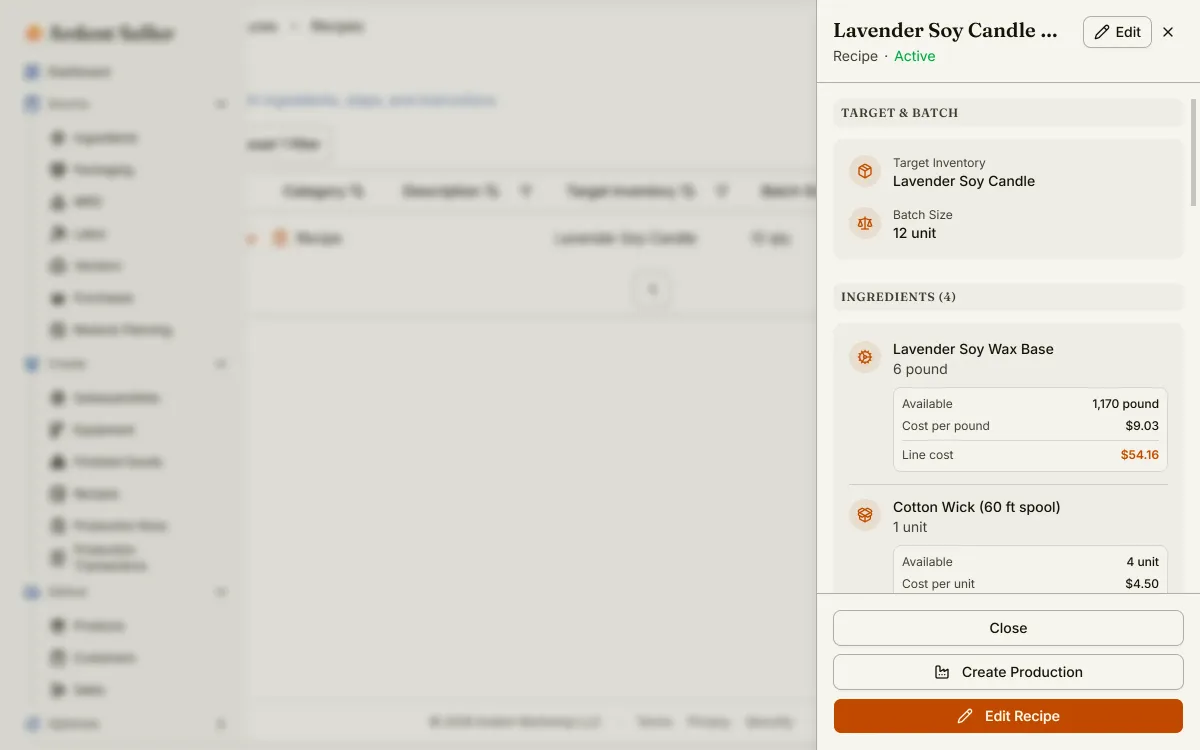
Built for makers selling on Etsy. Native Etsy connector imports every order with the full fee breakdown (listing, transaction, payment processing, Offsite Ads, regulatory) as separate ledger entries, pushes inventory back to Etsy on every stock movement, and shows true per-listing profit after every fee. Free plan covers a small shop; paid plans add deeper reporting and multi-channel features.
Etsy's own seller education library. Free, regularly updated, and covers photography, SEO, pricing, and policy in more depth than most paid courses. The single best non-Ardent resource for new sellers.
Free design tool for shop banners, listing graphics, thank-you inserts, and packaging design. Etsy-shaped templates included.
Discounted USPS and UPS shipping labels with no monthly fee. Worth comparing against Etsy's bundled labels once you're shipping 5+ orders a day. Batch printing supports thermal label printers. For DHL coverage, look at Shippo instead.
Standard for tracking income and expenses for tax purposes. Categorizes Etsy deposits and exports a Schedule C summary at year-end. Pricing changes — see Intuit's pricing page for current rates.
Paid Etsy SEO and keyword research tool. Useful once you have a baseline of listings and want to identify high-volume, low-competition phrases. Don't buy on day one; revisit at the 50-listing mark.
Common mistakes to avoid
The patterns that show up over and over in the first year.
Pricing against the headline 6.5% — not the full fee stack
The 6.5% Etsy quotes is the transaction fee. The full stack (listing + transaction + payment processing + regulatory operating + any Offsite Ads conversion) lands at ~14% of an order on average, and over 30% of the item sale price on Offsite-Ads-attributed orders below the $10K threshold. Run the calculator in step 6 against the actual fee load, not the marketing number.
Listing items Etsy doesn't allow
Mass-produced resale (unless craft supplies), trademarked names you don't own, copyrighted lyrics, Olympic marks, and AI-generated work presented as handmade without disclosure all eventually trigger removals or suspensions. The fastest path to a closed shop is building a brand around a name that someone else owns — search USPTO before you commit to a shop name or product line.
Forgetting to opt out of Offsite Ads
Shops below $10K in trailing 365-day sales are enrolled at 15% by default — and at sub-$20 price points the math is brutal. Decide deliberately in your first week. The opt-out is in Shop Manager → Settings → Marketing → Offsite Ads.
Slow shipping — or unrealistically fast advertised processing
Etsy's shop quality score weights on-time shipping heavily. Advertise a realistic processing time (1–3 days for ready stock, 1–2 weeks for made-to-order) and beat it. Promising 1-day processing and missing it hurts your search ranking more than a longer, accurate processing window.
Trying to grow through paid ads before listings convert organically
Etsy Ads against a low-converting listing wastes the budget and tells Etsy's algorithm the listing isn't working — which suppresses the organic reach you would have gotten. Get the photos and titles right first, see what converts in Shop Stats, then run ads against the listings that already work.
Mixing personal and business money
Open a separate checking account on day one — even before you form an LLC. At tax time the difference between five minutes and five hours of bookkeeping is whether the Etsy deposits and material purchases sit in their own account.
Frequently asked questions
The questions new makers ask most often.
Do I need a business license to sell on Etsy?
Etsy itself does not require a business license to open a shop — a valid ID and a US bank account are enough. Your state, county, or city may require a business license or registration, and most US states require a sales-tax permit if you make taxable sales (Etsy collects sales tax on your behalf as a marketplace facilitator in most states, but you still typically need the permit to operate as a business). Verify with your Secretary of State and local tax authority.
How much does it cost to start an Etsy shop?
Etsy charges $0.20 per listing and no monthly subscription; Etsy also reserves the right to charge a one-time shop setup fee for some accounts (the amount, if any, displays before you finalize setup). The real startup cost is product inventory, photography setup, and basic branding. A realistic range is $100–$1,500: as little as $100 if you already have a product to sell, a smartphone for photos, and a free Canva account for branding; up to $1,500 if you're also buying production supplies, a thermal label printer, and an LLC filing fee.
How long does it take to make my first sale on Etsy?
Following the steps in this guide, plan on 1–6 weeks from shop open to first sale. Opening the shop and getting the first listing live takes under a day; producing/sourcing the product and shooting good photos takes 1–3 weeks; first sales arrive over the following 1–4 weeks as Etsy's search algorithm starts surfacing your listings. The first-sale timeline is heavily niche-dependent — a category with low competition can convert in week 1, while a saturated niche may take several months and active SEO refinement.
Can I sell items I bought wholesale on Etsy?
Generally no, under the handmade category — Etsy's handmade policy requires you to be the designer or maker (or to disclose a production partner). Bulk-purchased mass-market goods relabeled as handmade are one of the most common reasons new shops get flagged. The exception is the craft supplies category, where commercial/factory-made materials are explicitly allowed. Vintage items (20+ years old) are also a separate category with their own rules.
What's the difference between the listing fee and the transaction fee?
The listing fee ($0.20) is what you pay to put an item up for sale — charged once when you list and again at every 4-month auto-renewal or when the item sells. The transaction fee (6.5%) is what Etsy takes when an item sells, applied to the buyer's order total including shipping. Both apply to the same sale: a $24 item with $6 shipping pays $0.20 + 6.5% × $30 = $2.15 in listing + transaction fees, plus payment processing and any other applicable fees on top. See step 6 for the full worked example.
Do I get a 1099-K from Etsy?
Etsy issues a Form 1099-K to sellers who cross the federal reporting threshold (and stricter thresholds in some states). The federal threshold has changed several times in recent years — the IRS 1099-K overview page is the authoritative reference for the current year's threshold. The 1099-K reports your gross Etsy sales (before Etsy's fees and shipping cuts), so the dollar figure on the form is higher than what hit your bank account. Even if you don't receive a 1099-K, you still owe income tax on net Etsy profit — the form is a reporting mechanism, not a threshold for taxability. The 1099-K Threshold Tracker linked in the resources section is the fastest way to model your current-year position.
Do I have to opt into Offsite Ads?
It depends on your trailing 12-month sales. Shops with over $10,000 in sales over the past 365 days are enrolled mandatorily at 12% on Offsite-Ads-attributed conversions (capped at $100 per order). Shops below $10,000 are enrolled by default at 15% on attributed conversions and can opt out entirely in Shop Manager → Settings → Marketing → Offsite Ads. For sub-$20 price points the math is brutal — a 15% Offsite Ads conversion on top of the standard ~14% fee stack can push total fees past 30% of the item sale price. Decide deliberately in your first week.
Is Etsy worth it given all the fees?
For most new handmade sellers, yes — but the math has to be honest. The Etsy bet is: pay platform fees for built-in marketplace traffic. Whether Etsy is "cheaper" than running your own Shopify or Squarespace store depends entirely on your traffic model — a Shopify store charges a monthly subscription, transaction fees if you use a third-party payment gateway (Shopify Payments waives them), and you typically pay for ads or SEO to acquire each buyer. A Shopify store with strong organic SEO and no ad spend can be far cheaper than Etsy; one that depends on paid traffic to convert can be more expensive. The pivot off Etsy makes sense once your email list and repeat-customer base can drive traffic to your own store without buying it — typically a "phase 2" decision once you're manually re-inviting the same buyers to each launch.
Free resources
Hand-picked calculators, checklists, and templates that map directly to the steps above.
Live Etsy fee calculator updated for 2026. Enter item price, shipping, country, COGS, and ad spend — see listing, transaction, payment processing, Offsite Ads, and regulatory operating fees broken out line by line, plus your true net profit per sale.
A free Etsy Ads break-even calculator. Enter item price, costs, conversion rate, and Etsy fees — and get the maximum average CPC your campaign can sustain and the break-even ROAS for your listing. Pairs with the Etsy fee calculator.
A 18-page narrative guide to Etsy's fee structure, fee-aware pricing, multi-channel inventory, returns, and the signal that says it is time to add a second sales channel.
A multi-platform tracker that tells you which payment processors will send you a 1099-K this year under the post-OBBBA 2026 rules. Federal $20K + 200 transactions; nine states and DC trigger earlier.
A free, scoped-for-small-sellers economic-nexus checker. Enter your trailing 12-month sales and transactions per state, and the tool flags every state where you have probably crossed the post-Wayfair economic-nexus threshold — without pushing you into a filing product.
Walk through the nine factors of Treasury Regulation §1.183-2(b) and find out whether your side activity qualifies as a for-profit business or a hobby for federal tax purposes — and where to focus to strengthen the business case.
Live web version of our Excel pricing calculator. Materials + labor + packaging + platform fees → defensible retail at your target margin, with batch-pricing tiers.
A working Excel worksheet for sellers reconciling Etsy + Shopify + in-person sales against bank deposits — surfaces fee shortfalls, refund mis-postings, and a per-channel monthly P&L.
36 things to set up before — and after — your first sale. Inventory, pricing, and the legal essentials in one place.
A working Excel inventory tracker for makers — raw materials, finished goods, packaging, and a purchase log. Reorder thresholds and a status column do the math; conditional formatting flashes red when you are below the line.
When a spreadsheet is enough, when it stops working, and how to tell the difference before it costs you.
Pick a target hourly rate, enter your materials, hands-on minutes per unit, and platform fees — the calculator returns the minimum price that actually pays you that rate after fees and costs. Maker-business specific, not a "freelance day rate" tool.
Read next
Deeper dives on the topics that come up in the guide.

Direct answers to the 42 questions Etsy sellers Google most — fee math, inventory tracking, monthly reconciliation, sales tax, 1099-K thresholds, and bookkeeping setup. Most-asked first; edge cases at the bottom.

A buyer's guide to the inventory apps Etsy sellers actually evaluate in 2026 — Ardent Seller, Craftybase, Inventora, Sortly, and Zoho Inventory — with the five questions that decide which one is right for your shop, a side-by-side comparison, and the case where the right answer is "none of these."

A 2026 trend report on the six platform shifts actually reshaping handmade selling — Etsy's seller filter and Creativity Standards AI-disclosure rule, AI-search product discovery, Faire's wholesale consolidation, TikTok Shop's $15.1B US run, the 1099-K threshold reversal, and the USPS Ground Advantage restructure — anchored to primary sources and each paired with one thing a maker should actually do about it.
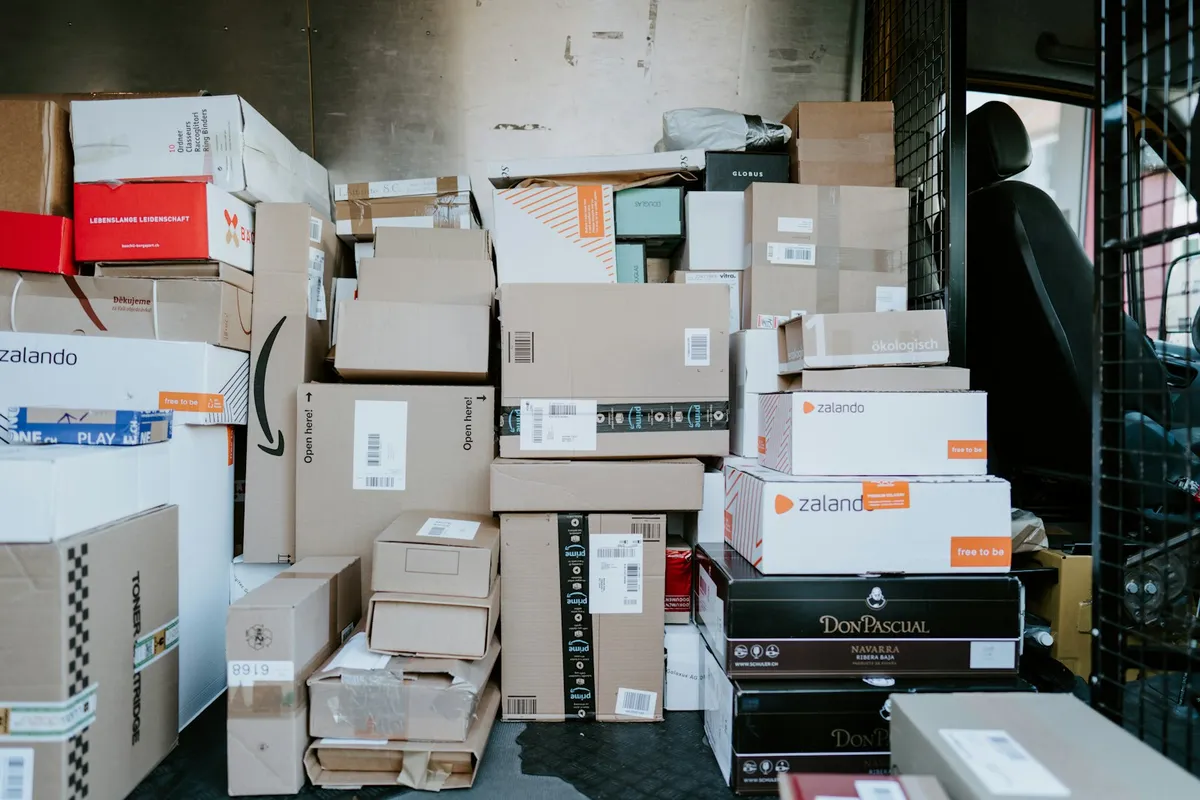
The postage label is the cheap part. Dimensional weight, packaging, label software, free-shipping subsidies, and processor fees on the freight charge all quietly stack up on every order you send. Here is the full cost anatomy of a shipped package, and the tables that show where your margin actually goes.
Once you're selling, you'll need to track it
Tracking inventory, costs, and taxes across every batch and every channel is the operational reality once sales start. Ardent Seller is purpose-built for this.
Multi-channel makers selling on Etsy
Ready to start?
Track every batch, recipe, and sale from day one of your Etsy shop. Free plan, no credit card.