How to start a crochet business
A practical, step-by-step playbook for turning crochet into a real business — from choosing what to make to landing repeat orders, with the honest labor-pricing, pattern-selling, and labeling details that decide whether the numbers actually work.
- Startup cost
- $50 – $500
- Time to first sale
- 1 – 4 weeks
- Note: Small items like hats and amigurumi can be made and listed in days; blankets and sweaters take far longer to make — and to sell at a price that covers the hours.
- Difficulty
- Beginner-friendly
Last reviewed · Rates, fees, and regulatory thresholds in this guide can change — verify the linked sources before acting.
The short version
Crochet is the easiest maker business to start and the easiest to run at a loss, for one reason: a finished piece is mostly labor, not materials. A $6 ball of yarn becomes a hat that took three hours or a blanket that took thirty, and new sellers routinely price the yarn plus a few dollars while giving away the time — which is the entire cost. So your first real decision is the business model, because it determines whether your hours ever get paid: selling finished goods (made-to-order or ready-to-ship stock) trades your time directly and caps your income at how fast your hands move, while selling digital patterns lets you do the design work once and sell it many times, which is how a lot of crochet businesses actually scale. The craft itself rewards a standardized, written pattern, a consistent gauge, and a clear size range; the economics turn on costing yarn and notions, then pricing your real hours honestly and choosing products and channels where the market will actually pay for them. Add the parts beginners miss — fiber-content and care labeling on wearables, toy-safety rules for amigurumi and baby items, and the copyright limits on selling finished items made from someone else's pattern — and the path is: pick a model, handle the light legal setup, stock smart, standardize a repeatable pattern, price the labor, then sell where fiber goods and patterns move. This guide walks each step with rough cost ranges and free tools for the pricing math.
Good fit if…
- You can crochet consistent, well-finished work and enjoy refining a repeatable pattern
- You have a small budget for yarn, hooks, and notions — this is a low-startup-cost craft
- You're willing to price your time, or to sell patterns so the design work pays more than once
- You like either making finished goods, designing patterns to sell, or both
Probably not for you if…
- You won't price your hours — crochet dies faster than any craft on under-charged labor
- You only want to make time-heavy pieces (blankets, sweaters) and sell them at material cost
- You expect to compete on price with mass-produced knitwear — handmade can't, and shouldn't try
- You plan to sell finished items from patterns without checking the designer's commercial-use terms
Tip: Crochet is one of the cheapest crafts to start — yarn, a few hooks, and you can make and list a hat in a day. And because crochet has never been fully mechanized at commercial scale the way knitting has, every piece is genuinely handmade. The real gate isn't equipment or paperwork; it's pricing your time so the hours actually get paid.
End-to-end timeline for a crochet launch
Crochet is one of the fastest crafts to bring to market — small finished items can be made and listed in days. The midpoint of the band below is about two weeks; time-heavy pieces like blankets and sweaters push it longer.
- Set up + stock2–5 days
Register the business, buy yarn, hooks, and notions for your first products, and choose your launch items.
- Standardize + make3–10 days
Write and standardize a pattern, swatch for gauge, and make a first run of finished goods (or finalize a pattern to sell).
- Label + cost + photograph2–4 days
Add fiber-content and care labels, cost each piece including real labor, and shoot product photos.
- List + first orders3–14 days
Open listings on Etsy and Ravelry or work a local market; commissions and pattern sales build as your audience grows.
1–4 weeks to first sale
The 7-step playbook
Run these in order. Skipping ahead is the most common reason new makers ship inconsistent product or under-price their work.
Step 1: Choose what you'll make and your business model
The single decision that decides whether your hours get paid: what you make, and how you sell it. Finished goods, ready-to-ship stock, digital patterns, and teaching are almost different businesses — with very different margins and scalability.
Business models compared
Finished goods trade your time directly and cap income at your speed; digital patterns do the work once and sell many times. Most fiber businesses blend them.
| Option | Margin profile | Scalability | Time per sale | Best channels |
|---|---|---|---|---|
Finished goods (made to order) Make each piece after it sells. | Labor-bound — low if underpriced | Low — capped by your speed | High — every piece by hand | Etsy, social, custom requests |
Ready-to-ship stock Build inventory, ship fast. | Labor-bound, plus stock risk | Low–medium — batch popular items | High up front, fast to ship | Markets, Etsy, gift seasons |
Digital patterns Design once, sell many times. | High — near-zero marginal cost | High — no per-sale labor | Low — automated delivery | Etsy, Ravelry, your own site |
Teaching & kits Classes, workshops, curated kits. | Medium — service + materials | Medium — scheduled or kit runs | Medium — scheduled time | Local, live video, Etsy kits |
Margin, scalability, and time are relative comparisons, not dollar figures. Most crochet businesses blend models — finished goods for cash flow now, patterns for scalable income later — and the table is meant to clarify the trade-offs of a primary focus.
Crochet businesses fall into a few models, and the right one depends on how fast you work, whether you like designing, and how you want your time to pay:
- Finished goods, made to order — you make each piece after it sells. No stock risk and great for custom and personalized work, but your income is capped at how fast your hands move, and time-heavy pieces are hard to price for the market.
- Ready-to-ship stock — you build inventory of popular items (hats, bags, amigurumi) and ship immediately. Faster fulfillment and better for markets and gift seasons, but you carry unsold stock and tie up yarn money.
- Digital patterns — you design a pattern once and sell the PDF many times. The only crochet model that truly scales, with near-zero marginal cost and no shipping, but it's a design-and-marketing business: you need original, well-tested, clearly-written patterns and an audience to sell them to.
- Teaching & kits — classes, workshops, and curated yarn-plus-pattern kits. Steady local income and a way to monetize beginners, layered on top of making or designing.
Many crocheters start by selling finished goods for cash flow, then add patterns once they have designs worth selling — because patterns are how you stop trading hours one-for-one. The model comparison breaks down the trade-offs in margin, scalability, and how each one sells.
Step 2: Set up the legal basics, labeling, and pattern copyright
Crochet carries a light business-registration load and no physical-safety hazard, but three things trip up new sellers: labeling rules on wearables, toy-safety rules on amigurumi and baby items, and the copyright limits on selling items made from someone else's pattern.
The ordinary business setup is straightforward:
- A business structure. Most crocheters start as a sole proprietorship or form a single-member LLC for liability separation. See the SBA's guide to choosing a business structure (opens in new tab), and apply for a free EIN from the IRS (opens in new tab).
- A state sales-tax permit in states with sales tax (most have one). If you sell wholesale to boutiques, you'll also want a resale certificate.
Then the three crochet-specific rules to know:
- Labeling on wearables. Clothing and textile wearables sold in the U.S. generally must carry fiber content, country of origin, and care instructions under the FTC's textile and wool labeling rules (opens in new tab) and Care Labeling Rule. A hand-crocheted sweater or hat is a textile product — a simple sewn-in or attached label with fiber percentages (e.g. "100% cotton"), origin, and washing instructions keeps you compliant and looks professional.
- Toy and baby-item safety. Amigurumi and items for children 12 and under fall under the Consumer Product Safety Improvement Act (CPSIA) (opens in new tab) and toy-safety standards, which can require testing, tracking labels, and avoiding choking hazards — though CPSIA's small-batch manufacturer exemption (opens in new tab) may relieve low-volume makers of some third-party testing, so check whether you qualify before paying for it. Many sellers use embroidered eyes instead of plastic safety eyes on toys for infants, and clearly label small-parts age guidance.
- Pattern copyright. A crochet pattern is copyrighted by its designer. You can't copy, share, or resell someone else's pattern, and selling finished items made from another designer's pattern is only allowed if that designer's terms permit it — many do (sometimes with an attribution or small-business limit), some don't. Read each pattern's commercial-use terms, or design your own patterns to sell finished goods freely. The callout below covers this.
Regulatory notice: Selling items from a pattern? Check the designer's terms
A crochet pattern is copyrighted. You may never copy, share, or resell the pattern itself. Selling finished items you made from someone else's pattern is allowed only if that designer's commercial-use terms permit it — terms vary widely, and some prohibit it or cap the number you can sell. Read each pattern's license, keep proof of permission, or design and use your own patterns to sell finished goods without restriction.
Regulatory notice: Wearables and toys carry labeling and safety rules
Crocheted clothing generally needs fiber-content, country-of-origin, and care labeling under FTC textile rules. Amigurumi and items for children 12 and under fall under CPSIA and toy-safety standards, which address choking hazards, testing, and tracking labels — though a small-batch manufacturer exemption may relieve low-volume makers of some third-party testing. For infant toys, consider embroidered eyes over plastic safety eyes and label small-parts age guidance.
Step 3: Stock smart: yarn, hooks, and notions
Crochet needs very little to start — yarn, a few hooks, and basic notions. The decisions that matter are which fibers fit your products and buying enough of one dye lot so a project's color stays consistent.
Common yarn fibers compared
Fiber choice drives cost, care, and what the piece is good for. Most sellers start with acrylic or cotton and add wool and specialty fibers as their prices and audience grow.
| Option | Relative cost | Care | Best for |
|---|---|---|---|
Acrylic Synthetic, everyday workhorse. | Low | Machine wash & dry | Blankets, toys, beginners, gifts |
Cotton Breathable plant fiber. | Low–medium | Machine wash, sturdy | Bags, dishcloths, summer wear |
Wool & animal fibers Warm, premium, natural. | Medium–high | Often hand-wash / careful | Garments, premium pieces, higher prices |
Specialty & blends Alpaca, silk, novelty, hand-dyed. | High | Varies — read the label | Statement pieces, luxury, designers |
Cost and care are relative comparisons that vary widely by brand and source. The fiber you choose affects both your material cost and the price the finished piece can command — premium fibers support premium pricing.
A workable starter kit costs very little:
- Yarn in the weights your products need. Yarn is graded by weight — from lace and fingering up through DK, worsted, aran, and bulky — and your hook size and pattern follow from it. Start with one or two weights for your launch products rather than stockpiling.
- Crochet hooks in a range of sizes (ergonomic handles are worth it if you'll crochet for hours), plus knitting needles if you knit too.
- Notions — stitch markers, tapestry needles, scissors, a gauge ruler or tape, and a row counter.
- Project-specific extras — buttons, zippers, safety eyes and stuffing for amigurumi (or embroidery floss for infant-safe eyes), and labels for wearables.
Buy by the dye lot. Yarn is dyed in batches, and the same color can vary subtly between dye lots. For any single project, buy enough skeins of the same dye lot up front — running short mid-blanket and buying a new lot can leave a visible color line. This is the single most common materials mistake in fiber crafts, and a reason to track dye lots as part of your stash (step 7).
Choosing fiber matters for both cost and the finished product — the fiber comparison table in this step lays out the common options. Acrylic is cheap, washable, and forgiving (great for blankets, toys, and beginners); cotton is breathable and sturdy (good for bags, dishcloths, summer wear); wool and animal fibers are warm and premium (and command higher prices) but need careful washing and cost more. A realistic starter outlay runs roughly $50–$500 depending on how much yarn you lay in and whether you buy ergonomic hooks and a full notion set.
Step 4: Standardize a repeatable pattern, gauge, and sizing
A business needs the same hat to come out the same way every time. Standardize a written pattern, a consistent gauge, and a clear size range before you build a catalog or take orders — and track how much yarn each item actually uses.
The leap from hobby to business is consistency. A one-off that turns out perfectly is a hobby; a hat you can make to the same size, fit, and yarn cost fifty times is a product.
Make it repeatable
- Write down your pattern. Hook size, yarn weight, stitch counts, and row-by-row steps — so the same item comes out the same way, and so you (or a helper) can reproduce it. This is also the basis for selling the pattern later.
- Swatch for gauge. Gauge — stitches and rows per inch — is what makes a "medium" actually fit. Different hooks, yarns, and tension change gauge, so swatch and note the gauge your pattern assumes; a hat that's two stitches off per inch comes out the wrong size.
- Define a size range. Decide the sizes you offer (e.g. baby / child / adult, or S/M/L) and write the stitch counts for each. Made-to-order buyers will ask, and a defined range keeps custom orders from becoming one-off guesswork.
Track yarn per item
- Measure real yardage. Weigh or measure how much yarn each finished item actually uses (weighing the item and converting by the yarn's grams-per-yard is the easy way). That number is the foundation of accurate costing (step 5) and reorder planning.
- Log it. Keep a short record per product: yarn weight and yardage, hook size, notions, size range, and your minutes to make it. That log is your repeatable recipe and the raw data for honest pricing — exactly the kind of bill-of-materials and labor record Ardent Seller is built to hold (step 7).
Step 5: Price yarn plus labor — and actually charge for the hours
This is where crochet businesses live or die. Yarn is cheap and easy to count; your time is the real cost and the one beginners give away. Price the hours — and when the market won't pay them on a given item, change the item or the model, not the price.
Build your price from a real cost stack, then apply a markup — don't price the yarn and tack on a few dollars.
What a piece actually costs
- Yarn and notions. Yardage used times your cost per yard, plus buttons, safety eyes, stuffing, zippers, and a label. Real, but usually the small part.
- Your time at a real hourly rate. This is the cost. Track your minutes per item and pay yourself a genuine rate — a $4-of-materials hat with 2.5 hours of work carries far more labor than material, and a thirty-hour blanket is almost entirely labor.
- Design amortization (for patterns). If you designed the pattern, the hours you spent designing and testing it are a real cost — spread across copies sold for digital patterns, or built into the price of finished goods.
Worked example: a crocheted beanie
Say a beanie uses about $3 of yarn and $1 of notions and label — $4 in materials. Add 2.5 hours to make it at a $20/hr rate, and labor is $50. Total cost is about $54, and labor is more than 90% of it. That single fact — that your work, not the yarn, is the product — is the whole of crochet pricing.
Now the hard part: the market often won't pay a full multiplier on labor-heavy fiber goods. Multiplying that $54 beanie by the common maker rule of thumb — 2x cost for wholesale, 3–4x for retail — gives prices no marketplace beanie will hit. The maker multiplier rule assumes a material-dominated product; crochet is the opposite. So the answer usually isn't a lower price that erases your wage — it's a smarter model:
- Pick higher-value-per-hour items. Some products (custom pieces, statement garments, premium-fiber goods) support a price that pays your time; pure time-sinks sold at market price don't.
- Sell patterns. Design the beanie once and sell the pattern many times — the labor is paid across every copy instead of every hat.
- Batch and streamline. Faster, repeatable small items protect margin where speed is the lever.
The pricing and hourly-rate calculators below help you turn this cost stack into a defensible price using your own yarn cost, real hours, target wage, and margin — and show you, item by item, which products actually pay.
Step 6: Choose where to sell finished goods and patterns
Where you sell follows from what you make. Finished goods suit marketplaces, markets, and social selling; patterns add a scalable digital channel with no shipping. Match the channel to the product.
The common channels, by what they fit:
- Etsy — a strong fit for both finished fiber goods and digital patterns, with built-in search traffic. Be aware of the stacked fees — listing, transaction, payment processing, and optional Offsite Ads — which change over time; see Etsy's fee schedule (opens in new tab) and the Etsy shop guide. Patterns are delivered automatically as digital downloads, with no shipping.
- Ravelry (opens in new tab) — the established fiber-community platform, especially strong for selling knitting and crochet patterns to an audience that's already there to buy them.
- Local markets and craft fairs — direct sales, instant feedback, no shipping, and great for seasonal finished goods (hats, scarves, amigurumi) around gift-giving times. Booth fees and weekend time are the cost.
- Instagram, TikTok & Facebook — fiber content performs well visually, and many crocheters build a following that drives both finished-good orders and pattern sales. A common engine for custom commissions.
- Wholesale to boutiques and yarn shops — repeat orders of finished goods at wholesale price. Build a line sheet with photos, wholesale pricing, minimum order, and lead time, and make sure your pricing survives the discount — hard for labor-heavy goods, so reserve it for items that make the math work.
- Teaching & kits — for the fourth model from step 1: local community centers, craft stores, and social or live video host classes and workshops, while your own site, Etsy, or pattern bundles sell curated kits. A way to monetize beginners alongside making or designing.
A common opening combination is Etsy plus local markets for finished goods (cash flow now), with patterns on Etsy and Ravelry layered in as you build designs and an audience (scalable income later). Whatever the mix, you'll need to track yarn, notions, labor, and sales across all of it — the next step.
Step 7: Track your stash, costs, and taxes from day one
Crochet creates a specific tracking problem: a yarn stash worth more than you think across colorways and dye lots, products that are mostly labor, and a mix of made-to-order, stock, and pattern sales. Knowing your true cost per piece is the operational reality once orders start.
For a handful of products a spreadsheet works. Past that, the math gets brittle:
- Your stash spans colorways, weights, and dye lots that a notebook can't keep straight — and it represents real money tied up in yarn.
- Each product's true cost is dominated by labor, which a materials-only sheet never captures.
- Made-to-order commissions, ready-to-ship stock, and digital patterns all need tracking at once, across more than one channel.
- Yarn prices change between buys, and your true cost quietly moves with them.
- Tax time arrives and you can't tell the IRS what the pieces you sold cost to make.
A rough heuristic: once you're carrying a real stash, running commissions alongside stock, selling patterns, or selling on more than one channel, dedicated software starts to pay for itself. Ardent Seller fits this directly — track your yarn stash by weight, colorway, and dye lot, build each pattern from a bill of materials so making or selling a piece deducts the right yarn, capture real labor hours so finished goods are priced for the time, and see true cost and margin per product across finished goods and patterns. The Tools section below covers the range from free spreadsheets up.
Two tax items to keep separate: sales tax (collection rules vary by channel and state) and income tax (crochet profit goes on Schedule C; quarterly estimated taxes (opens in new tab) via Form 1040-ES are required once you expect to owe $1,000+ for the year). Even a low-equipment business should track expenses and inventory properly from the start.
The tools section
Tools to consider
A short, honest list — Ardent Seller alongside the other tools most crochet business owners end up using.
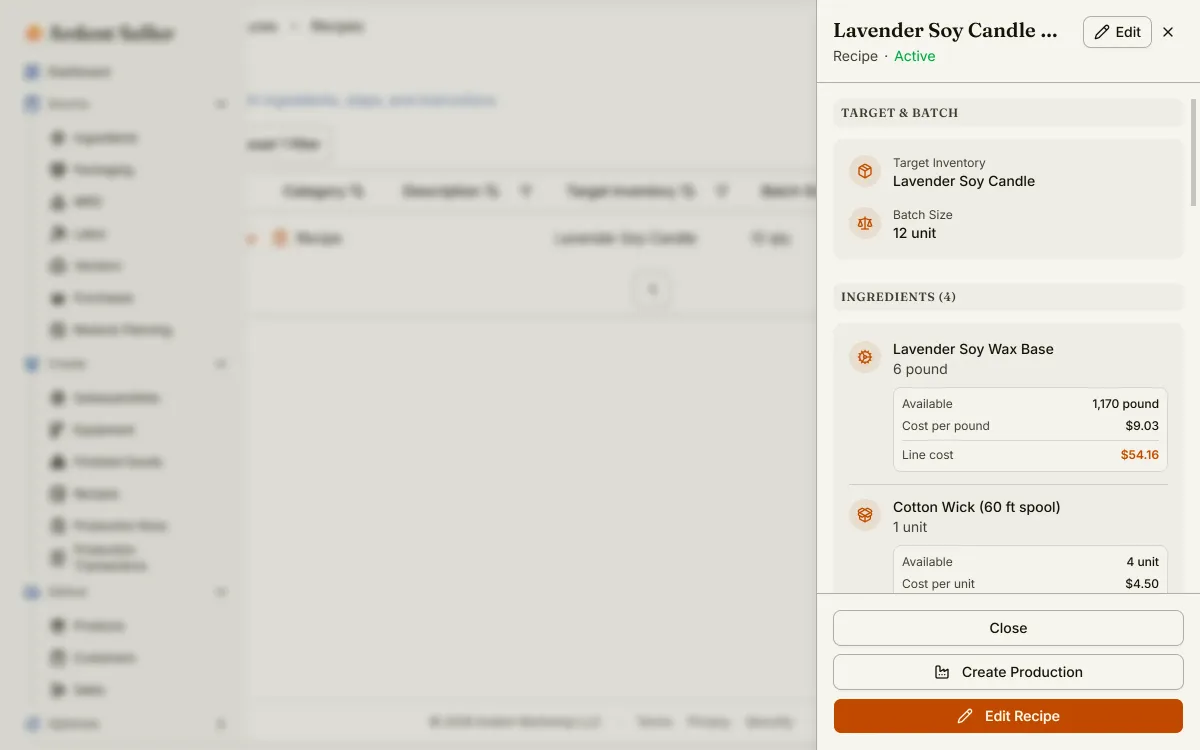
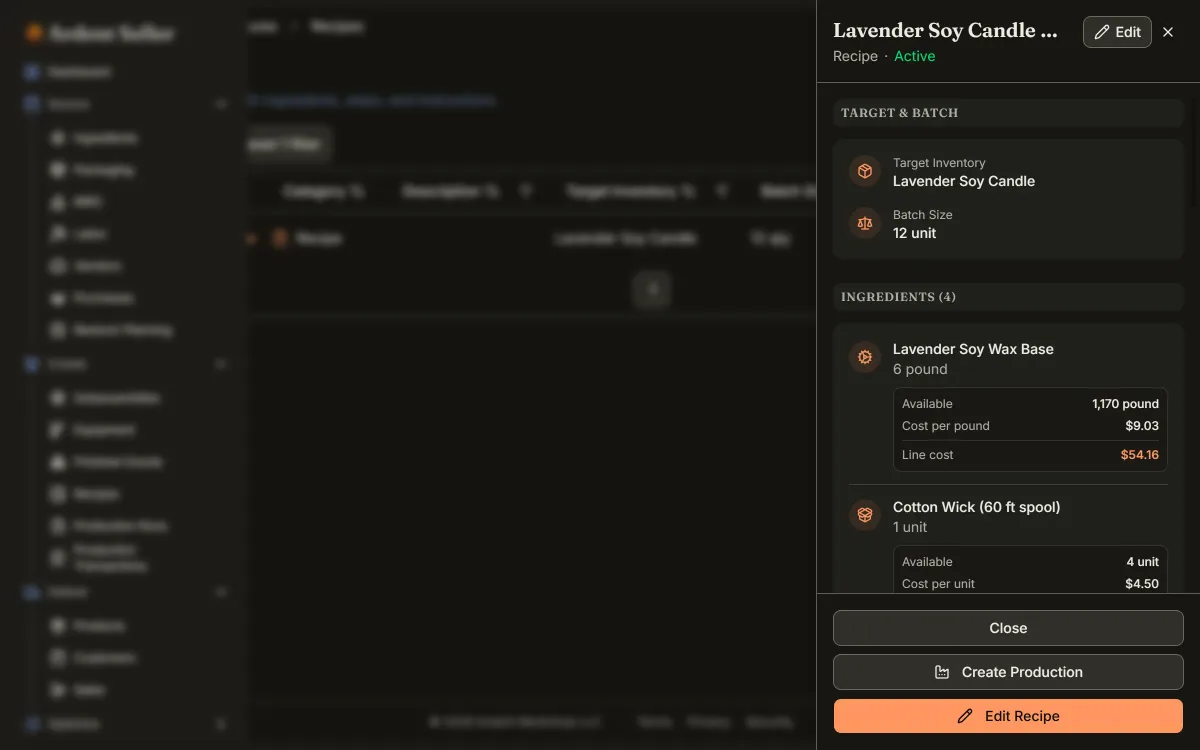
Track your yarn stash by weight, colorway, and dye lot; build each pattern from a bill of materials so making or selling a piece deducts the right yarn; capture real labor hours so finished goods are priced for the time, not just the fiber; and see true cost and margin per product across finished goods and patterns. Free plan covers a small catalog; paid plans add Etsy sync (more marketplace channels in development) and deeper reporting.
The established knitting and crochet community and marketplace — the natural home for selling digital patterns to fiber crafters who are already there to buy them, and a deep reference for yarns and patterns. Free to join; pattern sales incur a fee — verify the current rate on Ravelry.
A common first channel for both finished fiber goods and digital patterns — built-in marketplace search surfaces a new shop quickly, and patterns deliver automatically with no shipping. Be aware of the stacked fee load (listing + transaction + payment processing, plus optional Offsite Ads).
Card reader and point-of-sale for selling at markets, craft fairs, and shows. Free app; pay per-transaction processing on in-person sales.
Tracks income and expenses for tax purposes and exports a Schedule C summary at year-end. Pricing changes — see Intuit's pricing page for current rates.
Common mistakes to avoid
The patterns that show up over and over in the first year.
Pricing the yarn and giving away the hours
The defining crochet mistake. A finished piece is mostly labor, so pricing off yarn plus a few dollars means working for free. Track your minutes per item, pay yourself a real hourly rate, and build it into every price — and if the market won't bear it on a given item, change the item or sell the pattern, don't erase your wage (step 5).
Only making time-sink items
Blankets and sweaters are beautiful and almost impossible to sell profitably at market prices because they're thirty-plus hours of labor. Lead with higher-value-per-hour items, reserve big pieces for buyers who'll pay for the time, and consider selling those designs as patterns instead of making each one by hand (steps 1 and 5).
Ignoring dye lots
Buying too little yarn for a project and grabbing a new dye lot later can leave a visible color line down a finished piece — an unsellable mistake. Buy enough of one dye lot up front for each project, and track dye lots as part of your stash (steps 3 and 7).
Selling finished items from a pattern without checking the license
A pattern is copyrighted, and selling items made from someone else's pattern is only allowed if their terms permit it. Read each pattern's commercial-use license, keep proof, or design your own patterns so you can sell finished goods freely. Never copy or resell the pattern itself (step 2).
Skipping labels on wearables and safety on toys
Clothing generally needs fiber-content and care labeling, and amigurumi or baby items fall under toy-safety rules. Skipping a simple care label looks unprofessional and can break FTC rules; skipping toy safety (like using loose plastic eyes on infant toys) is a real hazard. Add labels and use infant-safe construction from the start (step 2).
Not tracking the stash
A yarn stash worth hundreds or thousands of dollars, spread across colorways and dye lots, is impossible to manage from memory — you over-buy colors you have and run short on a project mid-piece. Track yarn by weight, colorway, and dye lot so you know what you own and what to reorder (step 7).
Frequently asked questions
The questions new makers ask most often.
Do I need a license to start a crochet business?
In most U.S. states there's no crochet-specific license — it isn't a regulated product category like food or cosmetics. You'll typically need a general business registration with your state or city and a sales-tax permit if your state has sales tax. The rules that actually apply are about the products: wearables generally need fiber-content, country-of-origin, and care labeling under FTC textile rules; amigurumi and items for children 12 and under fall under CPSIA and toy-safety standards (though a small-batch manufacturer exemption may relieve low-volume makers of some third-party testing); and selling finished items made from another designer's pattern is only allowed if that pattern's commercial-use terms permit it.
How much does it cost to start a crochet business?
Crochet is one of the cheapest crafts to start — a realistic range is $50 to $500. At the low end, a set of hooks, a few skeins of yarn, and basic notions get you making sellable items for well under $100. Toward the higher end you're laying in more yarn across weights and colors, buying ergonomic hooks for long sessions, and adding labels and packaging. Because the craft is so cheap to start, the real investment is your time — which is exactly why pricing your labor correctly matters more here than in almost any other craft.
How do I price crochet items so I actually make money?
Build the price from a cost stack: yarn and notions used, plus — critically — your real hours at a genuine hourly rate, since a finished piece is mostly labor. Track your minutes per item and add them in; a hat with $4 in materials and 2.5 hours of work is mostly a labor cost. The usual maker heuristic of 2x cost wholesale and 3–4x retail assumes a material-dominated product and overshoots on labor-heavy fiber goods, so the better move is often to choose higher-value-per-hour items, batch small items for speed, or sell the pattern so the design work is paid across many copies instead of every piece.
Can I sell items I make from someone else's crochet pattern?
Only if that designer's terms allow it. A pattern is copyrighted, so you can never copy, share, or resell the pattern itself — but selling finished items you crocheted from it is a separate question governed by the designer's commercial-use license. Many designers allow small-business sales of finished items, sometimes with conditions like crediting the designer or limiting quantities; some prohibit it. Read each pattern's terms and keep proof of permission, or design and use your own patterns so you can sell finished goods without restriction.
Is it better to sell finished items or crochet patterns?
They're different businesses, and many crocheters do both. Selling finished items trades your time directly — there's no stock risk on made-to-order, but your income is capped by how fast you crochet, and time-heavy pieces are hard to price for the market. Selling digital patterns means designing once and selling the PDF many times with near-zero marginal cost and no shipping, which is the only crochet model that truly scales — but it requires original, well-tested, clearly-written patterns and an audience to sell them to. A common path is finished goods for cash flow first, patterns added as you build designs worth selling.
How long does it take to start selling crochet?
Plan on one to four weeks, which makes crochet one of the fastest crafts to bring to market. Small finished items like hats, scarves, and amigurumi can be made and listed within days of deciding to start — set up the business, stock yarn and hooks, standardize a pattern, label and cost the pieces, photograph them, and open your listings. Time-heavy items like blankets and sweaters push the timeline out because they take far longer to make, and digital patterns take time to design, test, and write clearly. Starting with quick, repeatable small goods is the fastest route to a first sale.
Free resources
Hand-picked calculators, checklists, and templates that map directly to the steps above.
A free print-and-use yarn stash log so you can shop your stash first (and protect the dye lot), plus a project cost worksheet so you finally know what a hand-made piece costs you. The record-keeping pages every knit & crochet seller needs — free and ungated.
Live web version of our Excel pricing calculator. Materials + labor + packaging + platform fees → defensible retail at your target margin, with batch-pricing tiers.
Pick a target hourly rate, enter your materials, hands-on minutes per unit, and platform fees — the calculator returns the minimum price that actually pays you that rate after fees and costs. Maker-business specific, not a "freelance day rate" tool.
A live web tool that runs the +10% / +20% / +30% price-hike math for one product — including the volume drop that comes with each — and tells you which scenario clears the most monthly profit.
Pre-show break-even math, a packing and booth-setup checklist, in-show data to track, and a post-show reconciliation page — one printable per event.
36 things to set up before — and after — your first sale. Inventory, pricing, and the legal essentials in one place.
A working Excel inventory tracker for makers — raw materials, finished goods, packaging, and a purchase log. Reorder thresholds and a status column do the math; conditional formatting flashes red when you are below the line.
A four-page fillable PDF for tracking suppliers — vendor records, an alternate-supplier scoring sheet, and a one-row-per-vendor master index. Type into it in your PDF reader, or print blank copies for the clipboard.
A working Excel line sheet for handmade wholesale — buyer-ready front sheet, per-SKU pricing math behind it, and the formulas already wired in.
A free, scoped-for-small-sellers economic-nexus checker. Enter your trailing 12-month sales and transactions per state, and the tool flags every state where you have probably crossed the post-Wayfair economic-nexus threshold — without pushing you into a filing product.
Walk through the nine factors of Treasury Regulation §1.183-2(b) and find out whether your side activity qualifies as a for-profit business or a hobby for federal tax purposes — and where to focus to strengthen the business case.
When a spreadsheet is enough, when it stops working, and how to tell the difference before it costs you.
A working Excel worksheet for sellers reconciling Etsy + Shopify + in-person sales against bank deposits — surfaces fee shortfalls, refund mis-postings, and a per-channel monthly P&L.
Read next
Deeper dives on the topics that come up in the guide.
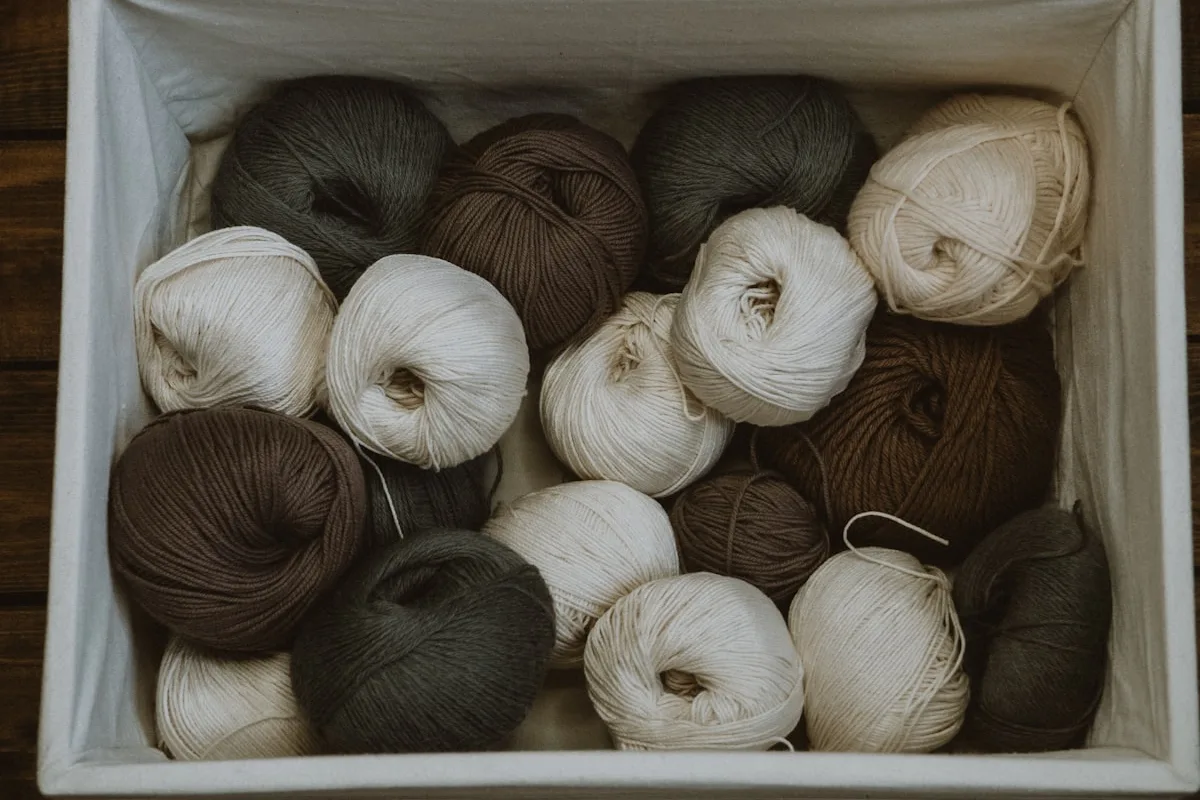
You cannot know what a finished shawl costs you if you do not know what the yarn cost — and a stash easily drifts into a fog of sale skeins, missing ball bands, and dye lots you can no longer match. Here is how to turn a years-deep yarn stash into a costed inventory you can actually price a project from, using a free stash log and cost worksheet.
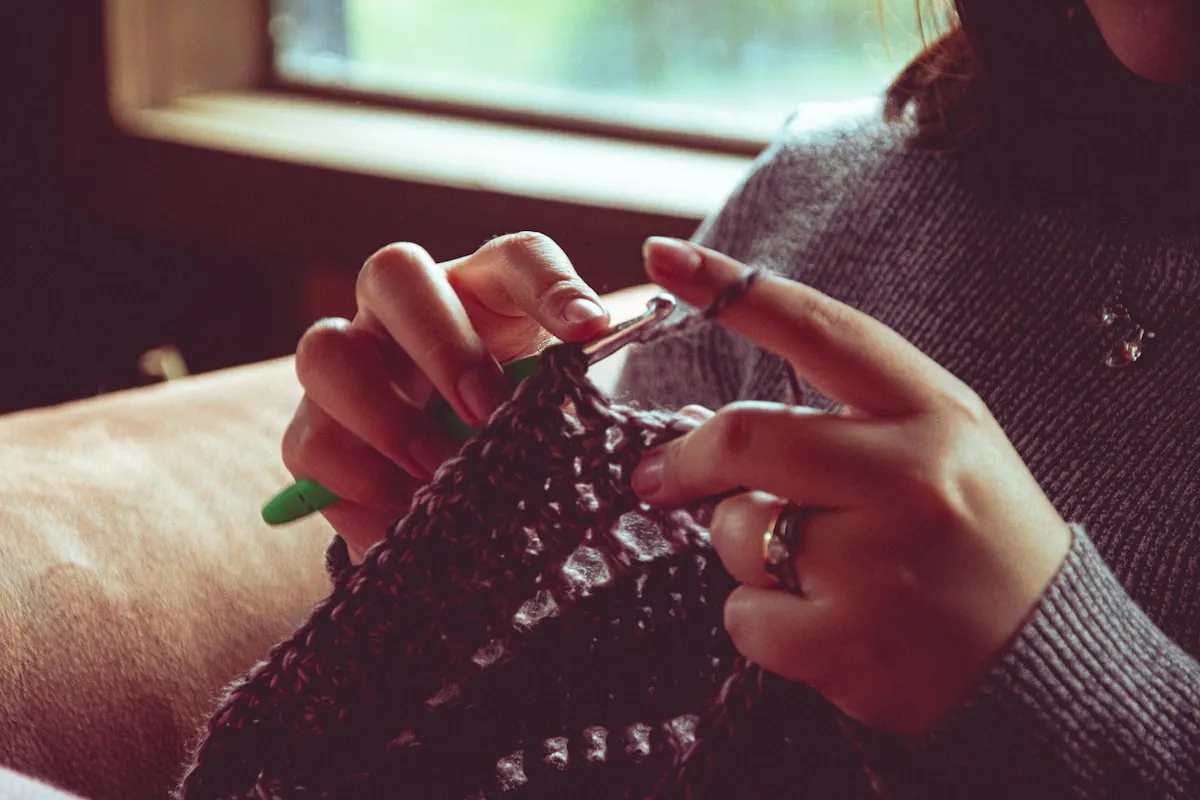
A hand-knit hat costs $25 in yarn, six hours of labor, and lists on Etsy at $42 — which means the maker is paying themselves $2.83 an hour to lose money. The reason most fiber artists never make minimum wage is not pricing. It is that they are answering the wrong pricing question. Here are six myths quietly breaking knitting and crochet businesses, and what to do instead.
Two times materials is the most expensive pricing decision in the maker community. A worked, calculator-backed walk-through of the cost stack under your hourly rate — and the math that tells you what to actually charge.
COGS is the single number that quietly decides whether your maker business is profitable, what your taxes look like, and which products are worth keeping in the catalog. Here is what it actually means, what goes in (and what stays out), and how to start tracking it this week — without an accounting degree.
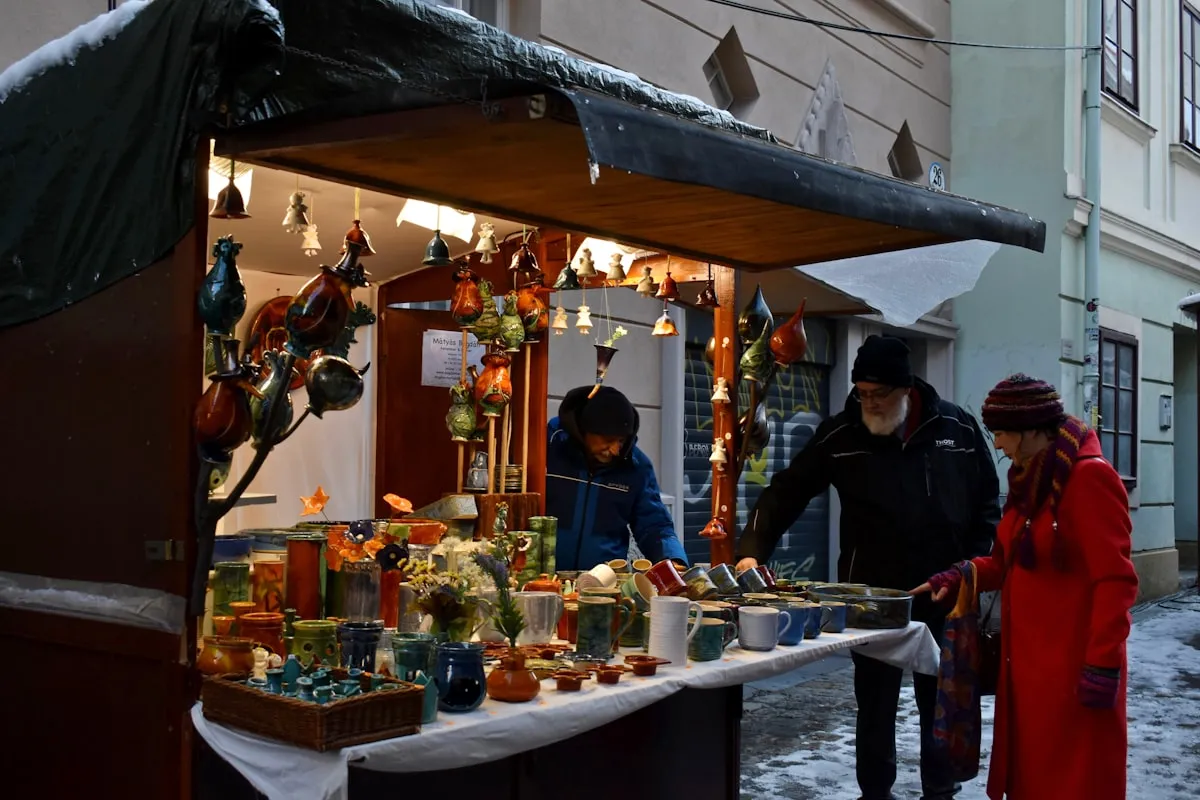
Juried craft shows are not bigger farmers markets. The booth fee is five times higher, the customer is different, and the break-even math has to be done before you mail the application — not after the truck is unloaded. Here is the real walkthrough: applying, pricing for the venue, booth setup, running the weekend, and the post-show step almost everyone skips.
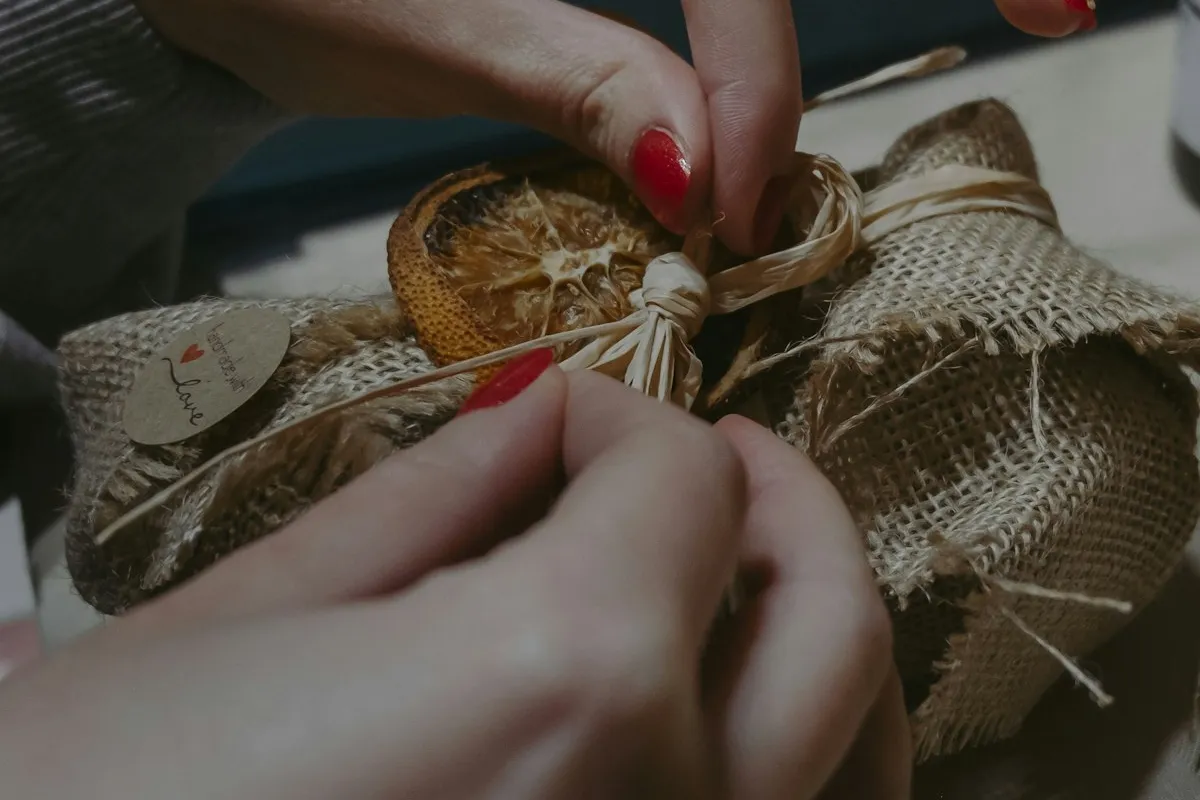
A six-gate decision framework for makers staring at an email from a boutique buyer. Margin cushion, production headroom, retail price firewall, terms creep tolerance, packaging fit, and fulfillment cadence — the six conditions that separate the wholesale yes that builds a business from the wholesale yes that eats a year.
Once you're selling, you'll need to track it
Tracking inventory, costs, and taxes across every batch and every channel is the operational reality once sales start. Ardent Seller is purpose-built for this.
Knitting, crochet & handmade fiber goods
Ready to start?
Track every batch, recipe, and sale from day one of your crochet business. Free plan, no credit card.