How to start a jewelry business
A practical, step-by-step playbook for turning jewelry making into a side income or full business — from picking a technique to your first sale, with the precious-metals math and FTC stamping rules most beginner tutorials skip.
- Startup cost
- $200 – $3,000
- Time to first sale
- 2 – 6 weeks
- Note: Beaded and wire-wrap can ship in a week; metalsmithing 3–6 weeks; lost-wax casting 8+ weeks
- Difficulty
- Moderate
Last reviewed · Rates, fees, and regulatory thresholds in this guide can change — verify the linked sources before acting.
The short version
Jewelry is among the most materials-dominant maker crafts — a single pair of sterling earrings can carry $10–$15 of metal and stones before labor, and silver and gold prices move daily. The legal and regulatory bar is lower than soap or food (no FDA, no cottage food law) but the FTC's Jewelry Guides at 16 CFR Part 23 set real rules on what you can stamp "sterling," "gold-filled," or "vermeil," and California Prop 65 catches lead and cadmium in plated and cast pieces. Startup cost runs $200–$3,000 depending on the technique you pick (beaded and wire-wrap at the low end, soldering and casting at the higher end) and time to first sale runs 2–6 weeks for the entry techniques. The hardest math sits in pricing: tracking metal by the gram and stones per lot rather than averaging, building findings loss into per-piece cost, and pricing high enough that a wholesale buyer can still mark up. This guide walks each step in order with rough cost ranges, free tools for the math, and the FTC labeling details that catch new makers.
Good fit if…
- You enjoy small-scale, precise work and don't mind weighing in grams and tracking purchase lots
- You have $300–$1,500 of starter capital and a dedicated bench or workspace
- You are comfortable with the reality that handmade pieces take longer than they look — filing, bending, and stone-setting often run meaningfully longer than a beginner expects (see step 4 for illustrative labor-time estimates per technique), and the labor line in pricing has to reflect that
- You like the idea of selling at craft shows, on Etsy, on consignment at boutiques, or wholesale to galleries
Probably not for you if…
- You expect material costs to stay stable — sterling silver and gold spot prices can swing substantially within a quarter, and every price change ripples through every piece you've already priced and listed
- You want to stamp "sterling" or "14k" without keeping documentation that proves the metal content
- You're not willing to track findings inventory (jump rings, ear wires, headpins) at unit-level — undercounting them silently undercuts every piece
- You're looking for a passive-income product line — handmade jewelry is labor-intensive whether the piece is $25 or $2,500
Tip: Beaded and wire-wrap jewelry can produce a sellable piece in a weekend with no metalworking and no torch. Soldering, stone-setting, and casting take longer to learn but unlock the highest price ceilings. Step 1 compares the four most common techniques so you can pick deliberately.
End-to-end timeline for a starter jewelry line
Jewelry has no cure step like soap, so the calendar is shorter — but a deliberate sample-and-photograph phase before any first sale separates a clean Etsy debut from a returns problem. The midpoint of the band below is roughly four weeks.
- Source + set up~1 week
Order findings, wire/sheet, stones (and a torch + bench if you're going metalsmithing). Set up the workspace.
- Build sample pieces1–2 weeks
6–12 sample pieces across 2–4 designs. Weigh metals, log labor minutes, record purchase lots in the recipe book.
- Photograph + list1–2 weeks
Shoot product + on-model photos for every piece, write listings with stamping documentation, finalize pricing and SKUs. Budget 2–4 hours per piece for photography; new makers consistently under-allocate this stage.
- First sale windowWeek 4–6
Launch on Etsy or at the first show. Track sell-through to inform the next purchase order.
2–6 weeks to first sale
The 8-step playbook
Run these in order. Skipping ahead is the most common reason new makers ship inconsistent product or under-price their work.
Step 1: Pick a technique — beaded, wire-wrap, metalsmithing, or casting
The technique you choose drives everything else: the equipment list, the learning curve, the price ceiling, and the per-piece labor minutes you bill against. Pick deliberately, not by accident.
Techniques compared: beaded, wire-wrap, metalsmithing, casting
Beaded is the fastest path to a first sale; metalsmithing and casting have the highest price ceilings. Pick deliberately — the choice cascades into equipment cost, skill investment, and the retail price point you can actually sustain.
| Option | Startup cost | Skill curve | Time to first sale | Price ceiling |
|---|---|---|---|---|
Beaded Lowest cost, fastest start. | Lowest | Gentle | 1–2 weeks | Low–Mid |
Wire-wrap No torch, moderate skill. | Low | Moderate | 2–3 weeks | Mid |
Metalsmithing Soldered, fabricated, stone-set. | Mid–High | Steep | 3–6 weeks | High |
Lost-wax casting Phase-2 growth path, not a starter. | Highest | Steepest | 8+ weeks | Highest |
Columns above are relative rankings, not dollar values — step 3 has equipment-list dollar ranges and step 5 has the worked pricing math. Precious-metal price exposure rises with the technique (beaded can avoid it entirely; casting is fully exposed) — step 4 ("Build sample pieces") includes the per-lot tracking workflow for handling it.
Four techniques dominate the indie jewelry market. Each has a different startup cost, skill curve, and margin ceiling. Many established makers run two of these in parallel — typically a quick "everyday" line (beaded or wire-wrap) alongside a signature line (metalsmithing or cast).
- Beaded jewelry — stringing beads onto wire or thread, sometimes with a few wire loops or crimp closures. Lowest startup cost, gentlest learning curve, fastest first sale. The price ceiling is also the lowest — beaded pieces on U.S. craft marketplaces typically sell in the $20–$60 range, with only specialty work (Czech glass, freshwater pearls, gemstone beads strung on knotted silk) clearing $100; your specific market and buyer segment may differ.
- Wire-wrap — forming and wrapping wire (sterling, gold-fill, copper) around stones, beads, or other findings. No torch required; the technique is purely mechanical. Moderate startup cost (a few pliers, a hammer, a bench block, sheet wire), moderate skill curve. A wire-wrapped sterling pendant with a cabochon commonly retails in the $60–$200 range on indie marketplaces — regional and segment variation applies.
- Metalsmithing — soldering, sawing, forming, riveting, and stone-setting fabricated pieces from sterling or gold sheet and wire. Highest startup cost among the three "fabrication" approaches (torch, anvil, pickle pot, third hand, files, saw frame, mandrels), and the steepest sustained learning curve. Price ceiling is far higher — fabricated sterling work routinely retails in the $150–$500 range on indie marketplaces; gold pieces and bridal work can clear $1,500+ in the right market.
- Lost-wax casting — carving or 3D-printing wax models, investing them in plaster, burning out the wax, and casting molten metal into the cavity. Highest startup cost (centrifugal caster or vacuum table, kiln, investment, sprues, crucible, casting metal) and the longest learning curve, but the only technique that scales to repeat-production runs of complex shapes. Realistic only as a phase-2 technique built on a metalsmithing foundation — if casting is your end goal, your real step-1 decision is which fabrication technique to learn first.
How most makers choose between them. Beaded and wire-wrap if you want to test the market in a weekend before committing to a torch. Metalsmithing if you want a signature line with a real price ceiling and you're willing to invest 6–12 months in the technique. Casting after metalsmithing, once a fabrication base is in place and you're planning repeat-production runs for wholesale.
The education ecosystem for jewelry is mature and largely free. Spend a week reading before buying anything — Ganoksin (opens in new tab) is the long-standing jeweler's reference (technique articles, tool reviews, business pieces); Rio Grande (opens in new tab) publishes technique tutorials and videos alongside its supplier catalog; The Society of North American Goldsmiths (SNAG) (opens in new tab) hosts conferences, the long-running Metalsmith magazine, and a member directory. Studio classes at local art centers and community colleges are the fastest path from book knowledge to physical skill — most metro areas have at least one program teaching sawing, soldering, and basic stone-setting.
Step 2: Set up the legal & business basics
Jewelry doesn't require an FDA registration like soap or a cottage food permit like a bakery, but the FTC's Jewelry Guides set real labeling rules on metal stamping and material claims, and California Prop 65 catches lead and cadmium in plated and cast pieces. Knowing the rules before you stamp your first "sterling" mark is the difference between a clean business and an FTC complaint with corrective-advertising and potential civil-penalty exposure.
FTC Jewelry Guides. The Federal Trade Commission's Guides for the Jewelry, Precious Metals, and Pewter Industries (opens in new tab) (16 CFR Part 23) define what you can legally claim about a piece's materials. The most-violated provisions for indie makers:
- "Sterling" or ".925" stamp. Requires at least 92.5% silver content by weight. Stamping a copper-base alloy as "sterling" — even by mistake on a misordered wire spool — is a textbook FTC violation.
- Gold karat marks (10k, 14k, 18k, 22k, 24k). Requires the marked karat content with a 0.003 fineness tolerance. A "14k" stamp on 12k metal is a violation regardless of intent.
- "Gold-filled" vs "gold-plated" vs "vermeil." Each has a specific definition. "Gold-filled" requires 1/20 (5%) of the total weight in karat gold mechanically bonded to a base. "Vermeil" requires a sterling base coated or plated on all significant surfaces with karat gold (10k minimum) at a minimum thickness of 2.5 micrometers. "Gold-plated" is anything thinner. Calling a plated piece "gold-filled" is a common indie violation.
- "Hypoallergenic," "nickel-free," "lead-free." Material claims that need supplier documentation to substantiate. The EU's REACH regulation (Annex XVII, Entry 27 — see ECHA's restricted-substances list (opens in new tab)) sets a nickel release limit for skin-contact items (0.5 µg/cm²/week) that's widely cited as the international "nickel-free" benchmark; the U.S. has no equivalent federal limit, so the claim defaults to the FTC's general truth-in-advertising standard. Keep your supplier's SDS or material spec sheet on file.
The fix is procedural: never stamp a piece with content you can't document. Keep a supplier invoice and material spec sheet for every metal lot, and only use stamps that match the documented content. The free Jewelry Maker's Cost-Per-Piece Calculator (linked from step 1 above and from step 4 below) gives you a place to record purchase lot and per-gram cost alongside the piece recipe — the same record proves the FTC claim and your costing math at once.
California Prop 65. Lead and cadmium are common in inexpensive cast costume jewelry and in some plated findings. California's Proposition 65 (administered by OEHHA (opens in new tab); see the lead fact sheet (opens in new tab) for the most jewelry-relevant chemical) requires a warning on any piece sold to a California consumer that contains lead, cadmium, or other listed chemicals above the safe-harbor threshold. Sterling, fine silver, and karat gold from reputable suppliers virtually never trigger Prop 65; the risk lives in imported castings, cheap plated findings, and some pewter-based components. If you sell to California (and as an online seller, you almost certainly do), source from suppliers who publish Prop 65 status on their products, and add the warning when in doubt.
Beyond the jewelry-specific rules, the standard business setup applies:
- A business structure. Most jewelry makers start as a sole proprietorship (no filing required in most states) or form a single-member LLC for liability separation. LLC filing fees vary widely by state — roughly $50–$100 in the cheapest states and $300–$500+ in the most expensive ones; check your Secretary of State's website for the exact figure where you'll file. The SBA's guide to choosing a business structure (opens in new tab) is a useful starting point — an LLC is the right upgrade once sales become regular, especially if you start carrying meaningful precious-metal inventory.
- An EIN (Employer Identification Number). Free from the IRS via the EIN application page (opens in new tab), completed online in a few minutes. Required if you form an LLC, sell wholesale, or want to keep your SSN off W-9s and consignment vendor applications.
- A state sales-tax permit. Required in every U.S. state that has a state sales tax — that's most of them; only Alaska, Delaware, Montana, New Hampshire, and Oregon do not levy a state-level sales tax (see the Tax Foundation's state and local sales-tax rates report (opens in new tab); Alaska localities can still impose local sales tax). Etsy acts as a marketplace facilitator and collects and remits sales tax in most marketplace-facilitator states; a state permit is still typically required to operate as a business — verify your own state's marketplace-facilitator rules.
- Product liability insurance — and high-value inventory coverage. Jewelry carries two distinct insurance needs: liability (skin reactions, broken pieces, choking hazards on small components) and property (your on-bench precious-metal inventory). ACT Insurance (opens in new tab) and Jewelers Mutual (opens in new tab) are two maker-focused options to compare; quotes vary widely by coverage limits, state, and how much metal you carry, so get an actual quote before budgeting. Important: many general crafter-focused liability policies include only a low business-personal-property sub-limit for on-premises inventory (in some plans as little as $1,000–$5,000) that may not cover even a modest sterling stockpile, let alone gold. Review your policy's declarations page for the actual inventory sub-limit before assuming it covers your stock; if your stock value exceeds it, a dedicated jeweler's policy is usually the right answer.
- Required labels. Federal law (the Fair Packaging and Labeling Act (opens in new tab)) requires packaged consumer products to display the manufacturer/distributor name and address and the net quantity of contents. For loose jewelry sold on a hang-tag rather than in a sealed package, the FTC Jewelry Guides are the dominant labeling regime — quality marks must be accurate, and under the National Stamping Act (15 U.S.C. 297) (opens in new tab) any piece stamped with a quality mark indicating gold or silver content must also carry the maker's registered trademark or name (USPTO trademark registration is not required — the statute accepts an unregistered business name).
Two things people often over-do at this stage: forming an LLC before having any sales (start as a sole prop, upgrade later), and buying display cases and travel cases before knowing what shows you'll attend (a folding table and a velvet pad is enough for the first two markets).
Regulatory notice: FTC Jewelry Guides apply to every quality mark and material claim
The FTC Jewelry Guides at 16 CFR Part 23 define what you can stamp or claim about a piece — "sterling" requires 92.5% silver, "14k" requires the marked karat content, "gold-filled" requires 1/20 karat gold by weight, "vermeil" requires sterling plus 2.5 µm of karat gold. Calling a plated piece "gold-filled" or stamping "sterling" without supplier documentation is a textbook FTC violation. Keep a supplier invoice and spec sheet for every metal lot, and only stamp pieces with content you can prove.
Step 3: Buy starter equipment & supplies
The equipment list depends heavily on the technique you chose in step 1. Beaded and wire-wrap kits are short and finite — typically $200–$500 with materials. Metalsmithing adds a torch setup and bench tools; casting adds a kiln and a caster. Buy for the technique you're actually committing to first, not for every technique you might try someday.
Technique note: the lists below are sized to produce roughly 12–24 sample pieces for testing, photographing, and starter inventory. If you chose beaded jewelry in step 1, you're working from the first list only. Wire-wrap adds the wire-tools sub-list. Metalsmithing adds the bench and torch sub-list. Casting adds the casting sub-list on top of metalsmithing.
The base kit — required for every technique:
- Digital scale (0.1 g resolution, >500 g capacity, with troy-ounce and gram modes): $25–$50. The single most important tool — precious-metal cost is by weight, and missing a 0.3 g difference per piece across a year of production loses real money (the troy-ounce trap below). A jeweler's scale at 0.01 g resolution is a useful upgrade for small findings work but not required day one.
- Calipers (digital, 0–150 mm): $15–$40. Standard for measuring ring sizes, stone diameters, and chain links.
- Basic pliers set (chain-nose, round-nose, flat-nose, flush cutters — all dedicated to jewelry work, not from a household toolbox): $40–$80.
- Bead board or layout surface: $10–$25. For arranging designs before committing.
- Findings starter assortment (sterling or gold-fill if your line uses them; otherwise plated): jump rings (multiple sizes), ear wires, lobster clasps, head and eye pins, crimp tubes, end caps. $40–$120 depending on metal.
- Storage — small parts organizer (compartmented box with secure lids; lost findings are the most expensive small-part loss in any craft): $20–$40.
- Polishing cloth (sterling-specific impregnated polish cloth): $10–$15. Required for finishing sterling work.
- Labels and packaging — small kraft gift boxes, hang tags, polishing-cloth inclusions: $50–$120 for a starter assortment.
Beaded add-ons: beading wire (Soft Touch, Beadalon, or equivalent — multiple gauges), crimp tools, beading needle and silk if you do knotted pearl work, and bead inventory (Czech glass, freshwater pearls, semi-precious as your line dictates). $80–$300.
Wire-wrap add-ons: sterling and/or gold-fill wire in dead-soft and half-hard tempers (20, 22, 24 gauge minimum), nylon-jaw pliers (won't mar wire), wire jig or mandrels, bench block, chasing hammer. $120–$280.
Metalsmithing add-ons (the largest single expansion):
- Torch system. Butane micro-torch ($30–$80) for small joins; full Smith Little Torch or equivalent with acetylene/oxy or propane/oxy ($200–$450) for fabricated work; full benchtop or floor-standing setups go higher. A Smith Little Torch is the workhorse for most sterling-and-gold fabrication.
- Soldering surface and pickle pot — charcoal block, ceramic firing pan, third-hand, pickle pot or slow cooker (dedicated, never used for food again), copper tongs (steel reacts with pickle): $80–$200.
- Sawing setup — jeweler's saw frame, blade assortment (sizes 0–6 to start), beeswax for blade lubrication, bench pin: $40–$80.
- Files — needle file set, half-round file, equaling file: $30–$60.
- Mandrels and forming tools — ring mandrel, bracelet mandrel, dapping block and punches: $80–$180.
- Flex shaft / rotary tool (Foredom or Dremel-grade): $150–$500. Used for drilling, polishing, setting, and finishing.
- Sheet and wire stock — sterling sheet (16–22 gauge to start) and wire (10–22 gauge) in multiple sizes; gold-fill sheet and wire if your line uses gold. $200–$600.
- Solder (sterling solder in easy, medium, hard; gold solder if you fabricate in gold): $40–$120. Buy paste form for first batches — easier to control than wire solder.
Casting add-ons (only when you're ready for it): centrifugal or vacuum caster, kiln (with burnout-temperature controller), investment, sprues, crucibles, casting flask assortment, casting metal (sterling casting grain or 14k casting alloy). Typically $1,500–$4,000+ for a workable setup, plus the metal inventory. Most makers reach this stage after a year of fabrication work — listed here for completeness, not as a starter purchase.
Total starter outlay — beaded: ~$200–$450; wire-wrap: ~$350–$700; metalsmithing: ~$900–$2,200; casting (add to metalsmithing): an additional ~$1,500–$4,000+.
Set up a dedicated bench or workspace before starting fabrication work — soldering with a torch in a kitchen is unsafe (flux fumes, fire risk, propane near food prep). A dedicated corner of a basement or garage, a leased bench in a shared maker studio, or a converted spare room are all common workable setups.
Safety warning: Soldering and pickle solution need ventilation and PPE
Soldering flux generates fumes that should not be inhaled — work under a fume extractor or near an open window with cross-ventilation. Pickle (sodium bisulfate) is mildly acidic — wear chemical-resistant gloves and safety glasses, never use steel tongs in pickle (the iron contaminates the solution and copper-plates anything in it), and don't pour pickle down a household drain without confirming local wastewater rules. Always have a fire extinguisher within reach when torch is lit, never solder on a flammable surface, and never solder over closed shoes you would mind ruining.
Step 4: Build sample pieces — and weigh every gram
Jewelry making has a precision problem no other craft shares. A baker measures flour in cups; a soap maker measures oils in ounces. You measure in grams, carats, and millimeters — units small enough that rounding errors compound into real money. From sample piece one, weigh the materials and log them.
Five things to test and document for every design before selling it:
- Per-piece material weights. Weigh the finished piece, then weigh each significant component separately during build: wire, sheet, sprue (for cast), each stone or bead, each finding. The Jewelry Maker's Cost-Per-Piece Calculator (linked at the bottom of this step) is a working spreadsheet for this — log purchase lot, per-gram cost (metals), per-piece cost (stones, findings), and minutes-per-piece labor as you build, not after.
- Labor minutes per piece. Use a phone stopwatch on your first few of each design. New makers routinely underestimate their true labor time — design discovery, finishing, and packaging often take longer than expected, and that gap quietly defines a price floor you can't recover later. As illustrative starting estimates only — your actual times will vary substantially with technique proficiency and design complexity — a pair of wire-wrapped sterling earrings can run 45–75 minutes start-to-finish including final polish, a soldered and stone-set pendant 2–4 hours, and a fabricated ring with bezel-set stone 4–8 hours. Track yours; don't assume.
- Findings loss rate. Findings — jump rings, ear wires, head and eye pins, crimps, bead caps, chain — are the materials jewelers track worst. In practice, a bag of 200 small findings tends to yield somewhat fewer usable pieces than the count on the package once you account for drops, wrong compartments, and assembly damage. Track your actual yield over your first few orders and build it into cost per piece: if a 200-pack of jump rings costs $6 and you realistically get 170, your cost is $0.035 per ring, not $0.030 — a difference that compounds across every finding category. The blog post Jewelry Making Math: Tracking Precious Metals, Gemstones, and Findings by the Gram covers the tracking workflow in depth.
- Scrap accounting. Every fabrication run generates wire offcuts, sheet trim, filing dust, and failed pieces. For precious metals, that's not waste — it's money. Track scrap in a separate inventory bucket; weigh it monthly; send to a refiner when you cross the minimum (typically 1–5 troy ounces for silver, any quantity for gold). The return is modest in absolute dollars but the more important signal is your scrap rate — if you're generating 15% scrap on wire work, your material cost per piece needs to include that 15% rather than assuming 100% utilization you never achieve.
- Stamp-to-content match. For every fabricated or cast piece you stamp "sterling," "14k," or "gold-filled," confirm the metal lot matches the stamp before stamping. The supplier invoice + spec sheet for the metal lot is the documentation a future FTC inquiry would ask for. Log the lot ID alongside the piece in your build record.
The troy ounce trap. Precious metals are sold by the troy ounce (31.1 grams), not the standard ounce (28.35 grams). If you convert purchase prices using regular ounces, every calculation is off by about 10% — and that error flows into every piece you price. Always convert your purchase price to cost per gram immediately: sterling silver at $32.50/troy oz is $1.05/g; 14k gold at $1,450/troy oz is $46.63/g (these are illustrative reference points only — verify current spot against your actual lot purchase before plugging numbers into your cost model). Work in grams from that point forward.
Per-lot purchase tracking. Silver and gold spot prices move daily; the lot you bought last month at $1.05/g may be replaced by a $1.12/g lot next month. Track per-lot cost rather than a running average — two failed alternatives are "averaging it out" (you sell during dips at last quarter's highs and become uncompetitive) and "I'll just absorb it" (you set prices once and gamble that swings cancel — they trend directionally for months, not weeks). The Jewelry Maker's Cost-Per-Piece Calculator linked at the bottom of this step handles the per-gram unit math; lot-level tracking is the workflow on top.
Keep a paper or digital recipe book. For every design log: each material with purchase lot and per-unit cost, labor minutes per piece, finished weight, suggested wholesale and retail price, and a photograph. This becomes your working recipe library — and the record you'll reach for when an order comes in or a wholesale buyer asks for a line sheet.
Step 5: Price your work — including the metals math most makers skip
Jewelry pricing has three sources of structural undercount that bite new makers harder than any other craft: troy-ounce conversion errors, findings loss, and labor on technique-heavy pieces. The framework below makes all three explicit so you can set a price that survives a silver-spot move and still leaves room for wholesale.
For jewelry, the direct-retail multiplier is typically 2.5× true cost if you sell direct only, or 3.5–4× true cost if you plan to wholesale — both lower than the 4× figure used in candle and soap guides, because materials run a larger fraction of true cost in jewelry. At typical 4× math on a $25 materials-heavy piece, the retail price would be $100, which the market often won't bear at the entry tier. If you plan to wholesale (most jewelry makers eventually do), aim for the 3.5–4× band so a wholesale buyer's markup still works; if you'll only ever sell direct, 2.5× is workable.
True cost = materials + labor + overhead + scrap allowance
The blog post Wholesale Pricing for Handmade Products covers the multi-channel framework in depth, including the editorial guidance that successful handmade-jewelry wholesale often lands at wholesale prices closer to 55–65% of retail rather than a clean 50%, because a straight 50% haircut on a materials-heavy piece can sell at or below cost.
What "materials" actually includes for a single pair of sterling silver earrings with amethyst drops (illustrative):
- Sterling wire — 4.2 g at $1.05/g (example lot ID "SS-0404"): ~$4.41
- Ear wires (sterling) — 2 at $0.28 each: ~$0.56
- Head pins — 2 at $0.03 each (illustrative ~15% findings loss allowance — track your own yield to calibrate): ~$0.06
- Jump rings — 4 at $0.035 each (same illustrative ~15% findings loss allowance): ~$0.14
- Amethyst drops — 2 at $4.50 each (example lot ID "AM-0312"): ~$9.00
- Packaging (gift box + polishing cloth + hang tag): ~$1.85
- True material cost (illustrative): ~$16.02
The numbers above are illustrative mid-range estimates for a typical sterling-and-semi-precious pair of earrings — the same design in gold-fill would run roughly 1.5–2× the metal cost; in 14k gold, 8–12× the metal cost. Use the per-piece calculator linked below with your own purchase lots and supplier prices.
Scrap allowance — the jewelry-specific add. Fabrication generates wire offcuts, sheet trim, filing dust, and failed pieces. If you're sweeping bench scraps into the trash, you're losing real money on precious metals; if you're sending them to a refiner (common minimums for silver range from 1–5 troy ounces depending on the refiner — confirm with your specific vendor; gold is typically accepted in smaller quantities), you recover some — but the per-piece material allocation still needs to account for the metal that goes in and doesn't come out as the finished piece. A workable starting heuristic is 8–15% of metal cost as a scrap allowance, refined to your actual rate after the first few months of bench work. For the earring example: ~12% × $4.97 metal ≈ $0.60.
What "labor" includes: time at the bench (cutting, shaping, soldering, polishing) plus finishing time (cleaning, anti-tarnish coating, photographing, tagging, packaging). For the earring example, 30 minutes of bench work + 10 minutes of finishing at $32/hr — a self-employment-adjusted rate that accounts for self-employment taxes (~15%) and the absence of employer benefits — adds ~$21.33 per pair. For reference: the BLS Occupational Employment and Wage Statistics (opens in new tab) table for "Craft Artists" (SOC 27-1012) reports a median hourly wage that tracked in the mid-$20s in recent releases (verify against the current OES release at the link), but the OES survey covers wage-and-salary workers only, so the self-employed equivalent typically lands meaningfully higher once taxes and missing benefits are added back. For technique-intensive work (stone-setting, hand-engraving, gold fabrication), once you can reliably deliver the technique your realized hourly rate can rise substantially — derive a defensible number from your own cost structure and target income with the Hourly Rate Pricing Calculator linked below rather than adopting a generic band as a benchmark.
Scrap allowance basis: the ~12% scrap rate above applies only to the sterling-metal subset of materials ($4.41 wire + $0.56 ear wires = $4.97), not to stones, findings, or packaging — there's no scrap to send to a refiner from those. 12% × $4.97 ≈ $0.60.
Overhead: electricity, workspace, insurance (including any high-value-inventory rider from step 2), packaging materials not in the per-unit cost, allocated bench depreciation. A workable starting heuristic is 12–18% of materials + labor when you don't yet have actual overhead figures — refine the number once you have a few months of real expense data. For the earring example: ~15% × ($16.02 + $21.33) ≈ $5.60. Platform fees (Etsy listing/transaction/Offsite Ads, Shopify monthly, etc.) are not in the overhead line above — they are channel-specific and are modeled separately as a deduction from the sale price in step 6, so you don't double-count them.
Applying the framework to the earring example: $16.02 materials + $21.33 labor + $5.60 overhead + $0.60 scrap = roughly $43.55 true cost. A 2.5× direct-only retail price lands around $109; a 3.5–4× wholesale-ready price lands around $152–$174. If you plan to wholesale, anchor at the 3.5× end (a $152 retail price yields a ~$76 wholesale keystone for the buyer, which still clears the $43.55 cost with workable margin); push toward the 4× end ($174) only when the market actually supports it. Many makers initially balk at these numbers because the going farmers-market price for handmade sterling earrings can look lower — but that's the point of running the math. If your market won't bear the full-cost price, the answer is usually different materials (gold-fill instead of sterling, or a lighter design), a faster build process (lower labor minutes), or a higher-margin technique — not silently absorbing under-priced sales.
The repricing rule. Set a threshold and act on it: when materials cost for a design shifts more than 8–10% from the price it was last set at, reprice. Below that, margins absorb the noise; above that, you're either leaving money on the table (during a silver dip) or selling at a loss (during a spike). With accurate cost-per-piece data, the check takes seconds; without it, the check never happens.
The pricing calculators below run this math for you — pick the jewelry-specific one if you want metals-by-the-gram and stones-by-the-lot baked in from the start.
Step 6: Choose where to sell — including consignment
Jewelry has more channel options than any other maker craft — Etsy, craft shows, consignment at boutiques and galleries, wholesale to retailers, and your own store all work for indie jewelry, sometimes in parallel. Each comes with distinct trade-offs in fees, foot traffic, payment timing, and how much hand-holding the buyer needs.
The five most common starting channels for jewelry makers:
- Etsy — large built-in audience and the dominant online marketplace for handmade jewelry among U.S. indie sellers by buyer recognition. Several fee layers stack against the sale. Per Etsy's Fees and Payments Policy (opens in new tab) (verify current rates before relying on these numbers): a $0.20 listing fee per item, a 6.5% transaction fee on the sale + shipping, plus US payment-processing of ~3% + $0.25 per order, plus an Offsite Ads fee that applies only to sales Etsy attributes to its own off-site ad placements (shops with over $10K USD in sales in the past 365 days are enrolled mandatorily and pay 12% on those Offsite Ads conversions; smaller shops are enrolled by default at 15% on those conversions but can opt out of the program entirely). For a worked example: on a $109 earring sale with $6 shipping, a non-Offsite-Ads sale runs roughly $0.20 listing + 6.5% × $115 = $7.48 transaction + ~3% × $115 + $0.25 ≈ $3.70 processing = ~$11.38, or ~10.4% of the $109 sale; if Offsite-Ads applies on the same sale (12% × $115 = $13.80 added at the mandatory tier, 15% × $115 = $17.25 at the opt-in tier), the fee load rises to roughly $25–$29 total (23–26% of the $109 sale), which materially erodes the step-5 per-pair margin — model your own break-even on the Offsite-Ads track before relying on it as a primary channel. The full worked breakdown lives in our Etsy fees FAQ. Etsy is a visual-first marketplace; product photography quality is the single biggest competitive lever for new jewelry shops (step 8 covers this in detail).
- Craft shows & jewelry shows — high margin (no platform cut), face-to-face feedback, and the buyer can try on the piece. Jewelry-friendly venues range from local farmers markets and craft fairs to juried shows specifically for jewelry and metalwork — the American Craft Council (opens in new tab) shows and the Smithsonian Craft Show are two long-running national examples; check the ACC events calendar for current regional shows. Booth fees vary widely — small local markets often run under $100/day while juried regional and national shows can run $400–$1,500+ — confirm with the organizer and model break-even against your own booth cost. The Craft Show Prep & Profit Tracker resource below covers the show-night math. For illustration only: at a $109 retail price and the step-5 ~$65 contribution margin per pair ($109 retail minus ~$44 true cost), a $200 booth gross-breaks at roughly 2 pieces sold — but plan on 5–8 to clear actual profit after travel, lodging, and the time invested.
- Consignment at boutiques & galleries — distinct from wholesale. You supply pieces, the retailer displays them, and you only get paid when (and if) the piece sells; they bear no inventory risk and you bear all of it. As an editorial rule of thumb for indie jewelry, a 60/40 split in your favor is a reasonable starting position; expect 50/50 at larger galleries with stronger foot traffic, and treat anything worse than 50/50 as a bad deal. Consignment is most useful when breaking into a new market with a high-traffic venue, or for high-end pieces that need a vetted retail context to sell well. Always sign a written agreement covering: piece-by-piece consignment list, retail price, your split, damage and loss responsibility, return timeline if pieces don't sell, and insurance coverage on the retailer's premises. The blog post First Wholesale Account Decision Tree covers the wholesale-vs-consignment decision in depth.
- Wholesale to retailers — predictable repeat orders, lower per-unit revenue (you make wholesale price, the shop makes retail). Build a wholesale line sheet (a single-page or two-page reference with photos, suggested retail prices, wholesale prices, minimum opening order, reorder minimums, lead time, payment terms, and shipping policy) — the template linked below has the structure. Wholesale buyers commonly request Net-30 payment terms once a relationship is established. For a first order with a new shop, protect yourself by requiring payment on delivery or a 50% deposit until trust is built. Late payment is the silent killer of small wholesale — fire any account that pays late three times.
- Your own Shopify / Squarespace store — no platform cut, full design control, but you have to drive every visitor yourself. Typically a "phase 2" channel after Etsy or shows have built up a base of repeat customers and an email list large enough to drive recurring traffic on its own — a practical trigger is when you're manually re-inviting the same buyers to each new collection launch, which is the signal you have a real repeat-purchase audience.
A common opening combination for jewelry is Etsy plus one in-person channel — Etsy brings built-in marketplace traffic, and shows or consignment give the in-person try-on that converts much better for jewelry than for any other craft (the weight, drape, and color of a piece against skin matter, and a photo can't fully convey those). Pick one online and one in-person to start, ship for 4–8 weeks, then evaluate before adding the third.
Whichever channels you choose, you'll need to track inventory across all of them so you don't oversell a one-of-a-kind piece or run out of a popular variant. That's the operational problem step 7 solves — and jewelry's combinatorial variant matrix (size × metal × stone × style) makes the operational pain bite earlier than for other crafts.
Step 7: Track inventory, SKUs, and consignment from day one
Once you have a working line and a place to sell it, the operational reality kicks in — what metal lot you're currently pulling from, which sizes and stone combinations are in stock, which pieces are out on consignment at which gallery, what you owe in quarterly taxes, and which orders haven't shipped. Jewelry's combinatorial variant matrix makes this bite earlier than for any other maker craft.
For the first 10–15 designs across one or two channels a notebook or spreadsheet is genuinely fine — the volume is low and you remember everything.
Past that point the math becomes brittle. Common breakdowns:
- You sell a "ring, size 7, sterling, amethyst" on Etsy and a "ring, size 7, sterling, peridot" at a craft show in the same week; both pulled from the same sterling lot but you can't cleanly tell what's left.
- Silver spot moves up 9% in a month and your prices don't move because nobody pulls every recipe's materials line and recalculates.
- A pair of earrings ships, but you forget to deduct the wire, head pins, ear wires, and stones from inventory — and oversell at the next show.
- You have 12 pieces out on consignment across three galleries and can't quickly answer "what's actually still in inventory and what's placed?"
- Tax time arrives and you can't tell the IRS what you paid for the metal that went into the pieces you sold.
- A customer asks whether a ring you sold them three months ago was actual sterling — and you can't trace the lot from the piece.
- 4 designs × 3 metals × 5 ring sizes is already 60 SKUs — and that's before stone variants — so the spreadsheet stops being readable faster than most makers expect.
A rough heuristic: once you're running more than ~40–60 active SKUs — the variant matrix multiplies fast for jewelry, so a modest line of 4 designs across 3 metals and 5 sizes already lands at 60 — or you have pieces placed on consignment at more than one venue, spreadsheet workflows tend to become error-prone. That's typically when a dedicated tool starts to pay for itself. The Tools to consider section below covers what works at different stages of the business — from free spreadsheets to dedicated software.
SKU naming that survives growth. Build a structured SKU from day one — encode the attributes that matter (style, metal, size, stone) into the SKU itself rather than as a separate spreadsheet column. A SKU like RING-GLD-7-AME tells you at a glance that it's a ring, gold (vs sterling), size 7, with amethyst — without opening a record. The blog post Jewelry Making Math: Tracking Precious Metals, Gemstones, and Findings by the Gram covers the full tracking workflow.
Consignment ledger. Keep a separate ledger for pieces placed at galleries and boutiques: piece ID, retail price, your split, date placed, gallery, expected return date (if pieces don't sell), and current status (placed / sold / returned / damaged). A simple spreadsheet works for the first 20–30 consigned pieces; past that, a dedicated tool is worth it.
Step 8: Market without burning out
You don't need a daily Instagram strategy to sell jewelry. You need photos that show scale and the way light catches the metal, a story about why the work is yours, and a way for happy customers to come back.
Strong photography is more important for jewelry than for any other maker craft. Etsy is visual-first, and jewelry's value-density (a $200 pair of earrings can fit in a 2-inch frame) means the photo is the entire purchase decision for most buyers — they can't feel the weight or try the piece on, so the photograph stands in for both. Etsy's own Seller Handbook photography category (opens in new tab) publishes detailed guides; for jewelry specifically:
- Natural light from a window, ideally indirect (direct sun creates harsh hotspots on shiny metal) — never overhead kitchen lighting
- A neutral background (linen, light wood, raw concrete, marble) — not the kitchen counter
- A scale prop — a hand wearing the piece, a coin, or a measured ruler — so buyers understand actual size. Size misjudgment is a commonly cited reason for returns on online jewelry, and a scale prop is the cheapest way to reduce that gap
- One on-model shot per piece — earrings on an ear, rings on a finger, necklaces on a neck. Even a phone-camera shot on yourself is dramatically better than no on-model image at all
- A close-up that shows the maker mark / hallmark / texture detail — proves authenticity for sterling and gold work, and shows craftsmanship
- For colored stones, a shot in slightly different lighting (window-side and shade) so the buyer sees how the color shifts — color is the most-asked-about quality for gemstone pieces
- Avoid: dim phone photos with cluttered backgrounds, overhead-only flat-lays with no scale reference, over-edited photos that misrepresent metal color or stone tone
Beyond photos, the two highest-leverage marketing activities are:
- Email list. Capture emails at every show with a simple "10% off your next order" card. Jewelry isn't a fast-consumable like soap, but it is a frequent-gift category — birthdays, anniversaries, holidays, and "treat yourself" purchases drive multi-year repeat patterns. An email list built at shows and through Etsy purchase follow-ups produces predictable launch-week revenue with no additional ad spend. Actual conversion varies heavily by list quality, offer, and product mix, so model your own from the first few sends rather than working off a generic benchmark.
- Repeat customer focus. The cheapest sale to make is the second one to someone who already bought. A hand-written thank-you note with the first delivery, paired with a simple "is this a gift?" follow-up question, is a low-cost habit that's hard to mess up — and the qualitative feedback from buyers (what occasion they bought for, what they're thinking about next) compounds into a real customer roster over a year.
Three activities are worth treating cautiously in the first six months — not "never," just "wait for the right signal":
- Paid Etsy ads — cost-per-click varies by category, season, and competition (Etsy publishes current ad mechanics in its advertising help articles — verify before budgeting). At entry-tier jewelry prices and the per-piece margin shown in step 5, the conversion math is worth modeling with your own click-cost and conversion-rate data before committing budget. Revisit when two conditions are met, in order: (a) your best-performing listings already convert organically (a useful signal is 20+ reviews and a 4.8+ star average — the social-proof gate), and (b) a break-even model against your actual click-cost and conversion rate clears your per-piece margin (the financial gate). Don't fund ads before condition (a); don't scale them before condition (b).
- TikTok and Instagram Reels — jewelry performs well on visual platforms when a video shows the piece moving against skin or in light (the sparkle effect on stones, the drape of a chain, the weight of a stamped cuff). The production-time investment to post consistently is large, though. Revisit when you have 10+ polished listing photos and a repeatable production workflow so video production doesn't compete with bench time.
- Influencer outreach — micro-influencer placements work for some jewelry brands but at indie price points the conversion math is hard to deliver without an established brand. Revisit when you have a repeat-customer base and at least one signature design you can supply consistently to a creator who features it.
Start with the photograph habit, the email list, and the personal follow-up at every show. They have near-zero downside risk and compound over time. The paid channels can become useful later; they're just expensive ways to learn marketing in month one.
The tools section
Tools to consider
A short, honest list — Ardent Seller alongside the other tools most jewelry business owners end up using.
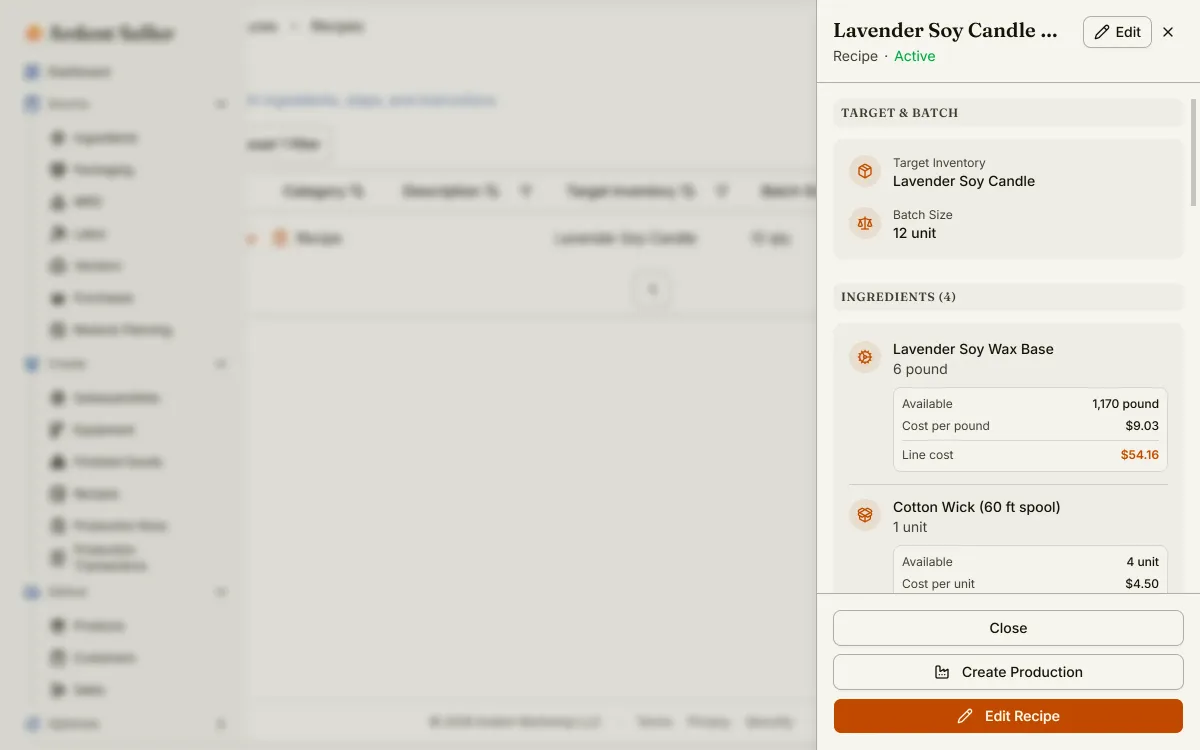
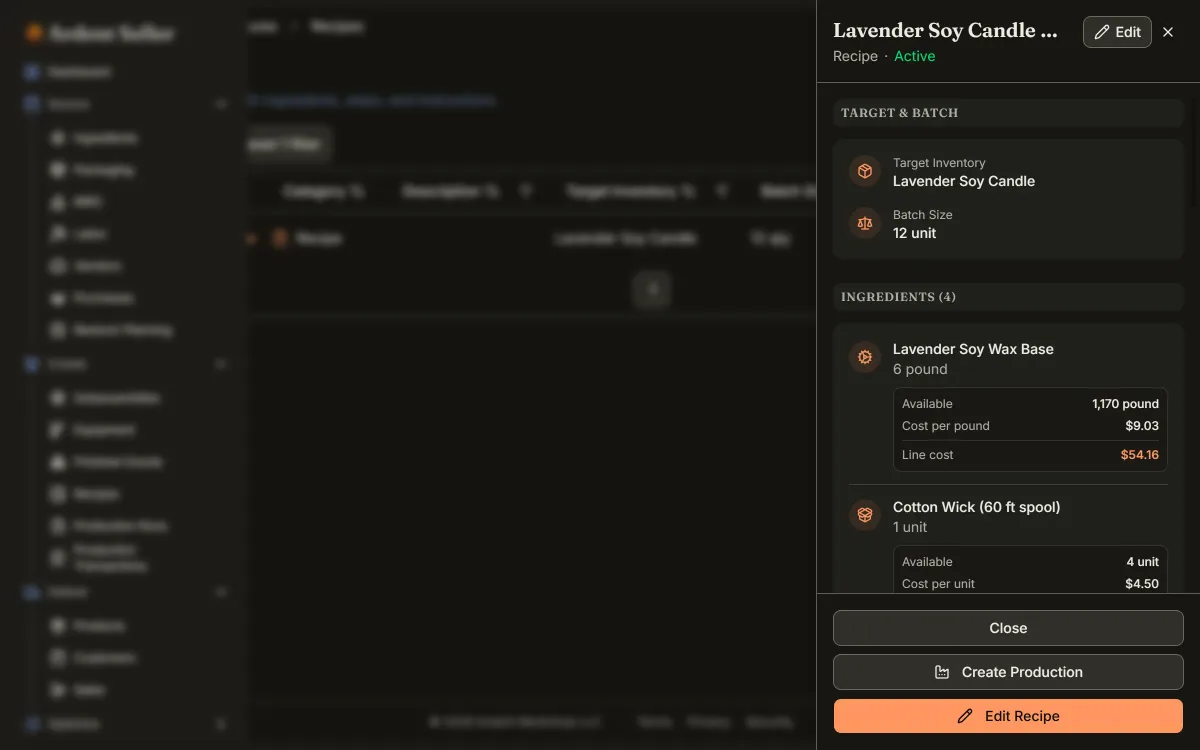
Track every gram of metal, every loose stone, every individual finding as live inventory with batch-level cost lots — so when silver spot moves, every ring, pair of earrings, and necklace reprices itself. Auto-generate structured SKUs across size/metal/stone variants. Place pieces on consignment with a live ledger of what's where, what's sold, and what's owed. Free plan covers a small line; paid plans add Etsy sync and reporting.
The long-standing jeweler's reference — technique articles, tool reviews, business pieces, and an active forum. The fastest source for "how do I solder a bezel onto a textured back plate" and similar searchable craft questions. Free.
Major U.S. jewelry-supply company that publishes free technique tutorials and a video library alongside their supplier catalog. Useful as a cross-reference for new techniques and a source for accurate per-product specs on metals, findings, and stones.
Jewelry-specific insurance for both maker liability and high-value inventory coverage. Important if you carry meaningful precious-metal stock on premises (most general crafter policies cap inventory at $1,000–$5,000). Pricing varies widely by state, coverage limit, and on-premises inventory value — get an actual quote.
Standard for tracking income and expenses for tax purposes. Categorizes metal and findings purchases automatically and exports a Schedule C summary at year-end. Pricing changes — see Intuit's pricing page for current rates.
Free design tool for hang tags, line sheets, market signage, and Etsy listing graphics. Has product-photography overlay templates and price-list templates that work for indie jewelry.
Free POS app for in-person sales at craft shows and gallery events. Handles card payments, basic inventory, and email-receipt capture for building your list. If you're already on Etsy, check whether Etsy's native in-person POS option fits your workflow before maintaining two separate POS systems.
Common starting marketplace for indie jewelry — the built-in search audience is among the most established for handmade jewelry. Be aware of the stacked fee load (listing + transaction + payment processing, plus optional Offsite Ads — see Etsy's Fees and Payments Policy) and the Offsite Ads opt-out rules.
Common mistakes to avoid
The patterns that show up over and over in the first year.
Pricing at 2× materials only
A pair of sterling earrings with $16 of materials priced at $32 looks like a 100% margin until you add labor (often $15–$25 for 30–60 minutes of bench time), overhead, scrap, and packaging — at which point true cost is in the high $30s and you're losing money on every pair. The step-5 framework adds labor, overhead, and scrap explicitly; running the math is the single highest-leverage activity in the first month.
The troy ounce trap
Precious metals are sold by the troy ounce (31.1 grams), not the standard ounce (28.35 grams). Converting purchase prices using regular ounces makes every calculation off by about 10%, and that error flows into every piece you price. Always convert to cost per gram immediately and denominate the entire cost model in grams from that point forward.
Stamping "sterling" without supplier documentation
The FTC Jewelry Guides at 16 CFR Part 23 require quality marks to match the actual material content within tight tolerances. A "sterling" stamp on a misordered base-alloy wire spool, or a "14k" stamp on 12k metal, is a violation regardless of intent. The fix is procedural: never stamp content you can't document with a supplier invoice and spec sheet, and log the lot ID alongside the piece in your build record.
Ignoring findings loss
Small findings tend to yield somewhat fewer usable pieces than the count on the package — between drops, wrong compartments, and assembly damage. New makers price as if every piece in the bag becomes a piece in the work, which produces a silent margin leak across every finding category, every piece, all year. Track your actual yield over the first few production runs and build the loss rate into per-piece cost from the start.
Going 50/50 (or worse) on consignment
Consignment puts all inventory risk on you — you bear the cost of the piece sitting in someone else's case, possibly for months, possibly until it's damaged or stolen, with no guaranteed sale at the end. A 60/40 split in your favor is the floor; anything 50/50 or worse is a bad deal unless the venue is exceptional and breaking-in value is high. Always require a written agreement covering damage, loss, return timelines, and insurance.
Carrying high-value inventory uninsured
A modest sterling-and-stone inventory can hit $3,000–$8,000 in materials surprisingly fast, and gold pushes that an order of magnitude higher. Most crafter-focused liability policies cap on-premises inventory coverage at $1,000–$5,000 — a single bench fire or theft can erase the business overnight if the cap doesn't cover the actual stock. Jewelers Mutual and similar dedicated programs cost more but match the risk.
Precious-metal purchases without a paper trail
Metal by the troy ounce, stone lots, and findings all belong to COGS at tax time — but only if you can document them. Mixed personal-and-business spending means you're reconstructing purchase records from memory and bank statements, and you'll miss items. A dedicated business checking account on day one — paired with the purchase-lot ledger you already need for FTC documentation — serves both purposes at once.
Frequently asked questions
The questions new makers ask most often.
Do I need a license to sell jewelry?
In most U.S. states, no specific jewelry-making license is required. You will typically need a general business registration (sole prop or LLC), a sales-tax permit if your state has sales tax, and product liability insurance to sell at most craft shows or to wholesale buyers. The bigger regulatory bar is federal — the FTC's Jewelry Guides at 16 CFR Part 23 set rules for what you can stamp or claim about a piece's materials ("sterling" requires 92.5% silver, "14k" requires the marked karat, "gold-filled" requires 1/20 karat gold by weight). Stamping a piece without supplier documentation to back the claim is a textbook FTC violation. California sellers should also check Proposition 65 for lead and cadmium in cast or plated pieces.
How much does it cost to start a jewelry business?
A realistic starter outlay is $200–$3,000, with the wide range driven by which technique you pick. Beaded jewelry: ~$200–$450 in tools and starter findings. Wire-wrap: ~$350–$700. Metalsmithing (torch, bench tools, sterling and stones): ~$900–$2,200. Lost-wax casting (kiln, caster, investment, sprues): an additional ~$1,500–$4,000+ on top of metalsmithing. Add a state sales-tax permit (usually free), an LLC filing fee if you form one (varies by state), and insurance (varies by carrier and on-premises inventory — get an actual quote). Many makers start lean at $300–$700 with a beaded or wire-wrap line and reinvest revenue into a torch setup in month three or four.
How long does it take to start selling jewelry?
For beaded and wire-wrap, plan on 2–4 weeks: a week to source materials and set up, 1–2 weeks to build sample pieces and photograph them, and a few days to finalize listings or pack a show table. For metalsmithing, plan on 3–6 weeks because the skill curve is steeper and the sample phase typically requires more iteration. For lost-wax casting, plan on 8+ weeks — the technique takes meaningful practice before any cast piece is sale-ready. Most new makers under-budget the photograph step; allocate at least 2–4 hours per piece for a basic listing photo set.
How do I track precious metal costs when prices shift daily?
Track your metal cost per purchase lot and calculate material cost per piece based on the actual lot you're pulling from. When you buy 100g of sterling silver wire at $1.05/g, label that batch with an example lot ID like "SS-0404"; a pair of earrings using 4.2g from that lot costs $4.41 in wire. When that lot runs out and the next is $1.12/g, the same earring design now costs $4.70 in wire — your pricing should reflect that. Two failed alternatives: "averaging it out" (you sell during dips at last quarter's highs and become uncompetitive) and "I'll just absorb it" (you set prices once and gamble the swings cancel — they trend directionally for months). A repricing rule of "reprice when materials shift more than 8–10% from the price the design was last set at" is a workable starting point.
What are the FTC Jewelry Guides and do they apply to me?
Yes — the FTC's Guides for the Jewelry, Precious Metals, and Pewter Industries at 16 CFR Part 23 apply to every seller of jewelry in U.S. commerce, including indie makers selling on Etsy and at craft shows. They define what you can stamp or claim about a piece's materials — "sterling" requires at least 92.5% silver by weight, gold karat marks (10k/14k/18k/22k/24k) require the marked karat with a 0.003 fineness tolerance, "gold-filled" requires 1/20 of the total weight in karat gold mechanically bonded to a base, and "vermeil" requires sterling base plus at least 2.5 µm of karat gold coating or plate. Stamping a piece with content you can't document with a supplier invoice and spec sheet is a violation regardless of intent. Keep documentation for every metal lot you use.
Is consignment the same as wholesale?
No. With consignment, you supply the piece, the retailer displays it, and you only get paid when (and if) it sells — they bear zero inventory risk and you bear all of it. With wholesale, the retailer pays you up front (or on Net-30 terms) and then resells at retail margin. Consignment is acceptable when breaking into a new market with a high-traffic venue, the split is at least 60/40 in your favor, and you have a written agreement covering damage, loss, return timelines, and insurance on the retailer's premises. Anything 50/50 or worse is usually a bad deal. The First Wholesale Account Decision Tree blog post linked in step 6 covers the trade-offs in depth.
Can I sell jewelry on Etsy?
Yes — Etsy is the dominant online marketplace for handmade jewelry among U.S. indie sellers by buyer recognition. Be aware of the stacked fee load: $0.20 listing fee per item, 6.5% transaction fee on the sale + shipping, US payment processing of ~3% + $0.25 per order, plus an Offsite Ads fee that applies only to sales Etsy attributes to its own off-site ad placements (12% mandatory above $10K USD/365 days in sales, 15% opt-in below). On a $109 earring sale with $6 shipping, the non-Offsite-Ads case runs roughly $11 in total Etsy fees (~10% of the sale); with Offsite Ads applied, total fees climb to ~23–26% of the sale, which materially erodes per-pair margin. The full worked breakdown lives in the Etsy fees FAQ linked from step 6. Verify current rates against Etsy's Fees and Payments Policy before relying on the numbers.
Do I need insurance to sell jewelry?
Almost always yes — most craft shows require proof of product liability insurance on the vendor application, with a vendor-specific per-occurrence minimum named on the certificate (the figure varies by show — check each show's vendor packet for the exact number). Jewelry has two distinct insurance needs: liability (skin reactions, broken pieces, choking hazards on small components) and property (your on-premises precious-metal inventory). Most general crafter policies cap on-premises inventory at $1,000–$5,000, which often isn't enough once you're carrying sterling and gold stock. Jewelers Mutual and similar jewelry-specific programs cost more but match the risk. Operating uninsured with meaningful precious-metal inventory is a meaningful personal-finance risk.
How should I handle custom orders and deposits?
Custom work is one of the highest-margin channels in jewelry — and one of the highest-risk if you start production before the financial commitment is in place. A workable starting protocol: collect a 50% deposit before ordering any custom-only materials, confirm materials and design in writing (a simple emailed spec sheet works), set an explicit lead time that includes buffer for materials backorder, and add a metal-spot-price caveat for commissions that span more than a few weeks (precious-metal prices can move several percent between quote and delivery — either lock the metal cost when the deposit lands or include a price-adjustment clause). Never start production without the deposit. For bridal and other long-lead custom work, milestone payments (deposit at booking, balance at design approval, final at delivery) reduce financial exposure on both sides.
Should I price the same piece differently for direct retail vs. wholesale?
Yes — wholesale buyers need room to mark up to retail. The standard framework is wholesale at roughly 2× true cost and direct retail at 2× wholesale (≈ 4× cost), but jewelry's higher materials-cost ratio often constrains this to 3.5× rather than a clean 4×. If you only ever sell direct, you can land closer to 2.5× cost — but as soon as a wholesale buyer enters the picture, the math has to support their markup to your direct retail price. The wholesale-pricing-handmade-products blog post linked in step 5 covers the multi-channel math in depth, including the editorial recommendation that successful handmade-jewelry wholesale often lands closer to 55–65% of retail than a clean 50%, because straight keystone pricing on a materials-heavy piece can sell at or below cost.
Free resources
Hand-picked calculators, checklists, and templates that map directly to the steps above.
A working Excel cost-per-piece calculator for handcrafted jewelry — metals by the gram, gemstones by the piece or carat, findings, chain, labor in minutes, and gift-wrap in; per-piece fully-loaded cost plus suggested retail and wholesale out. Defaults stamped with a date so metals-price staleness is visible.
A vendor-neutral PDF primer on building a real SKU system — prefix conventions that survive variants and reorders, when barcodes start paying for themselves, free vs. paid barcode options, and a one-page printable cheat sheet for the workbench wall.
A working Excel line sheet for handmade wholesale — buyer-ready front sheet, per-SKU pricing math behind it, and the formulas already wired in.
Pre-show break-even math, a packing and booth-setup checklist, in-show data to track, and a post-show reconciliation page — one printable per event.
Pick a target hourly rate, enter your materials, hands-on minutes per unit, and platform fees — the calculator returns the minimum price that actually pays you that rate after fees and costs. Maker-business specific, not a "freelance day rate" tool.
Live web version of our Excel pricing calculator. Materials + labor + packaging + platform fees → defensible retail at your target margin, with batch-pricing tiers.
A live web tool that runs the +10% / +20% / +30% price-hike math for one product — including the volume drop that comes with each — and tells you which scenario clears the most monthly profit.
36 things to set up before — and after — your first sale. Inventory, pricing, and the legal essentials in one place.
A working Excel inventory tracker for makers — raw materials, finished goods, packaging, and a purchase log. Reorder thresholds and a status column do the math; conditional formatting flashes red when you are below the line.
When a spreadsheet is enough, when it stops working, and how to tell the difference before it costs you.
A free, scoped-for-small-sellers economic-nexus checker. Enter your trailing 12-month sales and transactions per state, and the tool flags every state where you have probably crossed the post-Wayfair economic-nexus threshold — without pushing you into a filing product.
Walk through the nine factors of Treasury Regulation §1.183-2(b) and find out whether your side activity qualifies as a for-profit business or a hobby for federal tax purposes — and where to focus to strengthen the business case.
Read next
Deeper dives on the topics that come up in the guide.
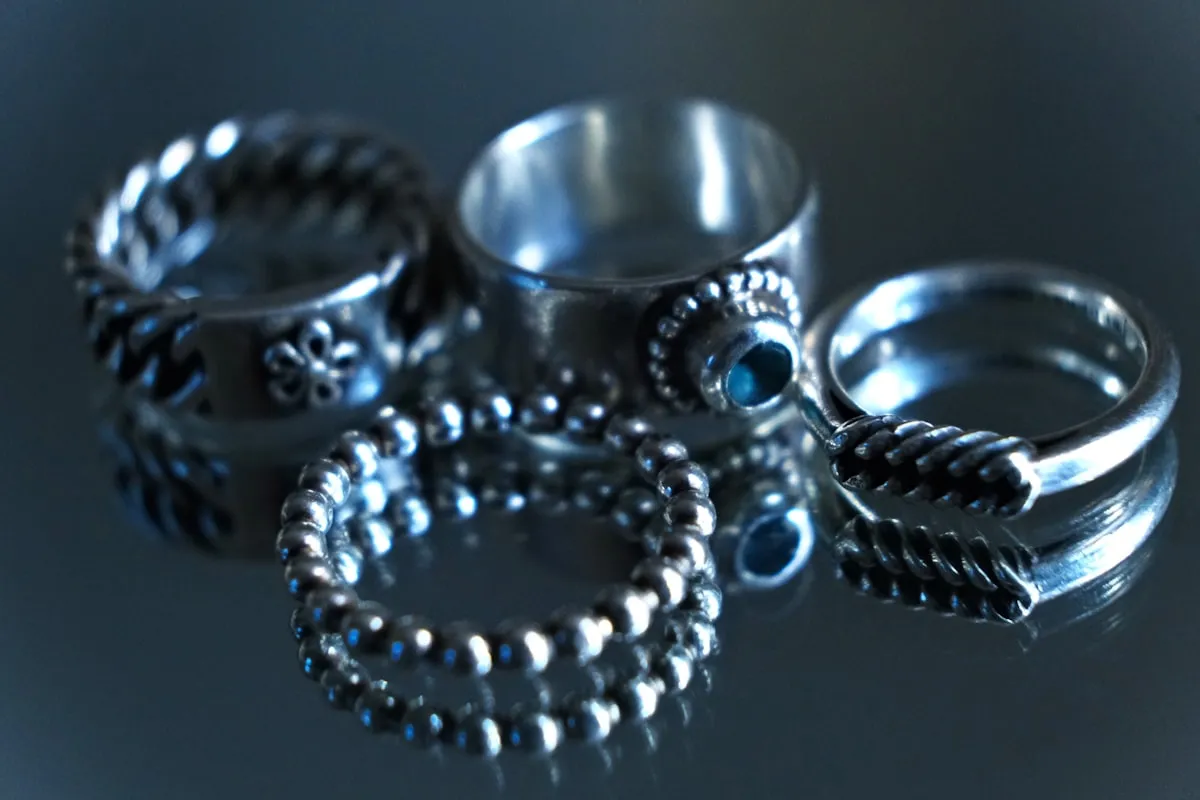
Gold and silver prices shift daily, gemstones are priced per carat, and findings come in bulk bags where a third vanish into the carpet. Jewelry costing demands gram-level precision that most inventory guides skip entirely. Here is how to track every component and price your pieces for real profit.
A boutique owner wants to carry your products. You have no idea what to charge. Most makers default to 50% off retail and hope the volume makes up for it. It usually does not. Here is how to set wholesale prices, minimum orders, and terms that grow your business without gutting your margins.
A six-gate decision framework for makers staring at an email from a boutique buyer. Margin cushion, production headroom, retail price firewall, terms creep tolerance, packaging fit, and fulfillment cadence — the six conditions that separate the wholesale yes that builds a business from the wholesale yes that eats a year.
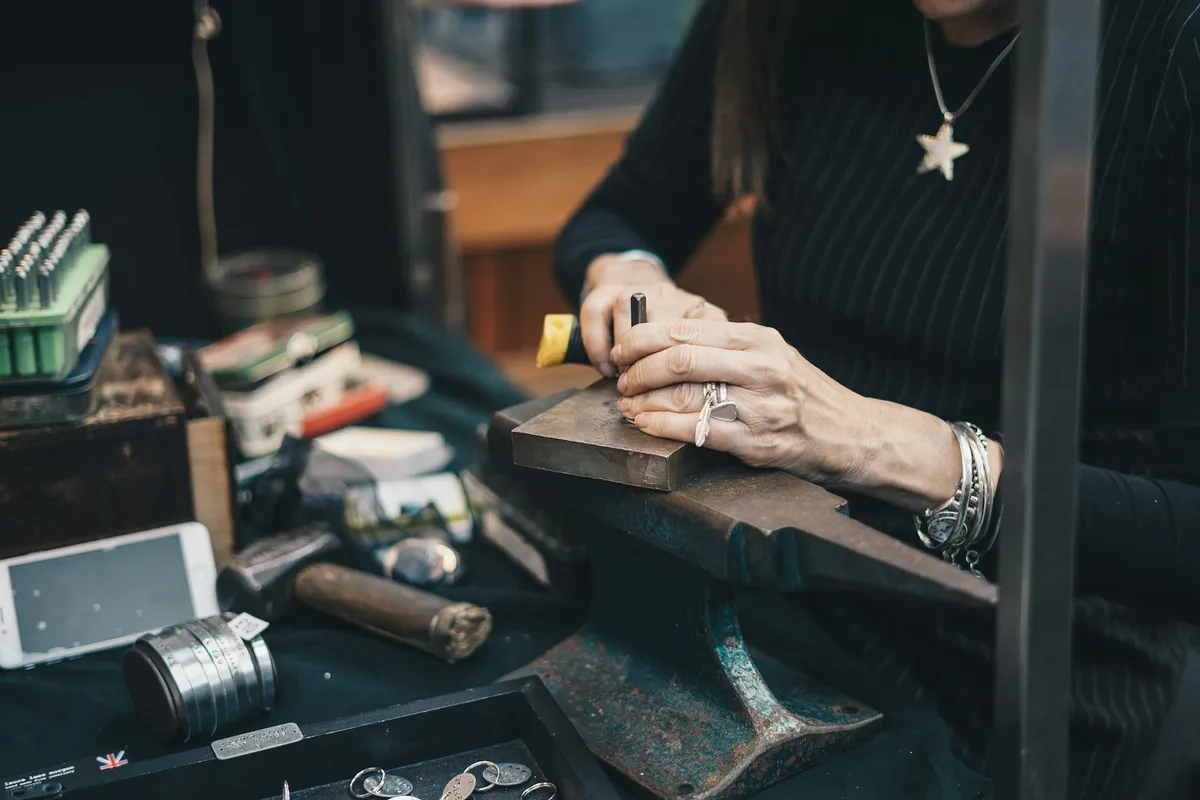
Two times materials is the most expensive pricing decision in the maker community. A worked, calculator-backed walk-through of the cost stack under your hourly rate — and the math that tells you what to actually charge.

A buyer's guide to the inventory apps Etsy sellers actually evaluate in 2026 — Ardent Seller, Craftybase, Inventora, Sortly, and Zoho Inventory — with the five questions that decide which one is right for your shop, a side-by-side comparison, and the case where the right answer is "none of these."
Once you're selling, you'll need to track it
Tracking inventory, costs, and taxes across every batch and every channel is the operational reality once sales start. Ardent Seller is purpose-built for this.
Fine jewelry, metalsmithing & gemstone setting
Ready to start?
Track every batch, recipe, and sale from day one of your jewelry business. Free plan, no credit card.