Jewelry Maker's Cost-Per-Piece Calculator
This free jewelry cost calculator is an Excel workbook built for handcrafted-jewelry makers who need the true cost of every piece — not just the silver weight. The cost of a handcrafted piece of jewelry is the total of its metals (priced by the gram, with troy-ounce, pennyweight, and kilogram conversions built in), its gemstones (by piece or carat, with carat-to-gram conversion), its findings and chain (by piece or inch, with foot and centimeter conversions), its packaging and gift-wrap, and its labor (minutes per piece × hourly rate ÷ 60) — plus a fair share of any setup labor when you make a run of identical pieces. Silver and gold spot prices move every business day; pricing off last quarter's metals quote silently erodes margin without anyone touching the spreadsheet. This cost-per-piece calculator for jewelry handles the unit-conversion math, calls out metals-price staleness on every tab, applies a run-rate efficiency curve to batch labor, and rolls up a fully-loaded per-piece cost — with a suggested retail (2.5× cost) and wholesale (1.6× cost) at the bottom of the Piece Recipe tab.
A five-tab Excel workbook hyper-specific to handcrafted-jewelry makers who want to know what every piece actually costs — not just what the silver weight on the recipe card adds up to. The Piece Recipe tab takes metals by the gram (with auto-conversion to and from troy ounces, pennyweight, kilograms), gemstones and beads by piece or carat (with auto-conversion between carats and grams), findings and chain by piece or inch (with foot and cm conversions), packaging and gift-wrap one row at a time, and labor in minutes per piece — and rolls everything into a fully-loaded per-piece cost with a 2.5× suggested retail and 1.6× suggested wholesale at the bottom. The Piece Comparison tab shows your built-in piece plus three open slots side-by-side. The Batch Scaling tab spreads setup labor across 1 / 2 / 5 / 10 / 25 / 50 quantities and applies a run-rate efficiency curve (the second drop earring is faster than the first; the 25th is faster still) to surface where scaling stops paying. The Reference tab carries metals pricing defaults for 18 metals, gemstone pricing typicals for 20 stones, findings and packaging typicals for 18 items, all the unit conversions, and the common-pitfalls list every jewelry maker has run into at least once.
- A Piece Recipe tab with metals by the gram, gemstones by piece or carat, findings and chain by piece or inch, packaging, and minutes-per-piece labor — with per-piece fully-loaded cost, suggested retail (2.5× cost), and suggested wholesale (1.6× cost) rolling up automatically
- Cross-unit conversions baked into the formulas: grams ↔ troy ounces ↔ pennyweight ↔ kilograms for metals, carats ↔ grams for gemstones, inches ↔ feet ↔ centimeters for chain — type the unit you actually buy in, the math handles the rest
- Metals pricing defaults for 18 metals on the Reference tab — fine silver, sterling, silver-filled, Argentium, gold-fill (12/20 and 14/20), vermeil, rose gold-fill, 14k yellow/white/rose, 18k, 22k, platinum, copper, brass, bronze, aluminum — illustrative 12-month averages, dated, with the daily-volatility warning called out in red on every tab
- Gemstone pricing typicals for 20 stones — mined and lab-grown diamond, sapphire, emerald, ruby, amethyst, citrine, peridot, garnet, aquamarine, tourmaline, opal, turquoise, labradorite, moonstone, lapis, onyx, CZ, glass pearl — with carat and per-piece pricing ranges
- Findings, beads, and packaging typicals for 18 items — sterling and gold-fill jump rings, lobster and toggle clasps, French ear hooks, head and eye pins, crimp tubes, chain inches, Czech glass, Swarovski, freshwater pearls, seed beads, kraft gift boxes, velvet pouches, polishing cloths, hang tags, bubble mailers
- A Piece Comparison tab — your built-in piece plus three open slots side-by-side, with per-piece fully-loaded cost and suggested retail / wholesale prices for each
- A Batch Scaling tab — per-piece cost at 1 / 2 / 5 / 10 / 25 / 50 quantities with run-rate efficiency built in (92% at qty=2, 85% at qty=5, 78% at qty=10, 72% at qty=25, 70% at qty=50) and a "worth it?" verdict at each step
- Sample piece wired in: a pair of sterling labradorite drop earrings (1.8g sterling wire, 2 cabochons, 4 Czech glass spacers, 2 ear hooks, 4 jump rings, 2 head pins, 18 minutes labor at $25/hour) — at $21.73 fully-loaded, $54.33 retail, $34.77 wholesale — replace it with your own piece in a few minutes
Educational tool only — not financial, tax, legal, or appraisal advice. Metals prices (silver, gold, platinum, vermeil, gold-fill) and gemstone reference prices in this workbook are 12-month-average illustrative defaults dated to the workbook's publication, NOT a live spot quote — always verify against your supplier's current invoice before quoting a custom piece or repricing a wholesale line. Gemstone valuations vary dramatically by cut, color, clarity, origin, and treatment; the Reference table is a starting point, not an appraisal. FTC Jewelry Guides require disclosure of treatments (heat, irradiation, fracture-filling), lab-grown stones, simulants (CZ, glass pearl), and metal content for products sold in the US — this workbook tracks costs only and does not audit listing compliance. Use the cost outputs as estimates; actual material draw and labor will vary piece to piece.
How cost-per-piece is actually calculated for handcrafted jewelry
Total piece cost = metals + gemstones / beads + findings + chain + packaging + labor. Metals are priced by the gram (the trade unit is the troy ounce at ~31.1 g/oz t, but jewelry is made in grams). Gemstones are priced by the carat for faceted stones (1 ct = 0.2 g) and by the piece for cabochons and pre-cut pieces. Findings (clasps, jump rings, earring hooks, head pins, crimp tubes) are priced one at a time at the per-piece cost from your supplier — bought 100-pack at $0.18/each, not $18/pack.
The Piece Recipe tab uses one row per material and computes the cost line at a time. Labor is granular by design — minutes per piece, not hours per batch. A pair of wire-wrapped drops at 18 minutes × $25/hour effective rate = $7.50 of labor; a soldered bezel-set pendant at 60 minutes is $25.00. Then per-piece fully-loaded cost × 2.5 gives a defensible retail starting point, and × 1.6 gives a wholesale floor that lets boutique buyers keystone profitably.
Why metals-price volatility matters more than most pricing tutorials say
Silver and gold spot prices move every business day and can shift materially within a single quarter — verify against your supplier invoice or a spot reference (Kitco, Metals Daily, the LBMA price benchmark) before any custom commission or wholesale repricing. A wholesale line sheet you sent in February with sterling priced at $1.05/g can drift out of margin by May without anyone touching the spreadsheet. The workbook stamps an 'as of' date on every metals price and warns loudly on the Reference tab — but it does not auto-refresh, and the per-piece numbers will drift unless you re-enter the cost basis when your supplier invoice changes.
For custom commissions and wholesale repricing, the workflow is: open the Piece Recipe tab, look at the metals cost-basis column, compare it against your latest supplier invoice (or Kitco / Metals Daily spot + your supplier's markup), and update the cost-basis cells before quoting. Resources that promise live spot prices in a spreadsheet either break weekly when the data feed moves or phish for credentials. This workbook is deliberately offline.
How findings, chain, and packaging quietly add 15-30% to cost on low-stone pieces
On the pair of sterling drop earrings the sample piece in this workbook lands at $21.73 fully-loaded. Of that, $1.89 is sterling silver, $9.32 is stones, $1.70 is findings (ear hooks + jump rings + head pins), $1.32 is gift-wrap, and $7.50 is labor. Findings + packaging is $3.02 — about 14% of the piece. On a simpler wire-wrap cuff with no stones — say 2.2g sterling wire ($2.31) + zero stones + a clasp and a few jump rings ($1.85 in findings) + a $1.20 gift box + 20 minutes of bench time at $25/hour ($8.33 labor) — the piece lands at $13.69 fully-loaded, and findings + packaging is $3.05, or about 22% of cost. Drop the labor rate, shorten the bench time, or buy findings retail instead of bulk and the same line can push past 30% of cost. New jewelers price findings as 'free' and lose margin one jump ring at a time.
The Piece Recipe tab forces a row per finding so the totals are visible. The Batch Scaling tab shows how amortizing the gift-box across the same run helps less than amortizing setup labor — bumping run quantity from 1 to 25 drops per-piece labor by ~28% but only drops per-piece packaging by 0% because every box is still individually packed.
How batch run-rate efficiency affects per-piece cost on a jewelry recipe
Setup labor on a jewelry production run — sketching the design, sanitizing the bench, laying out findings and stones, warming the kiln if soldering, polishing the wire — does not scale with quantity. The workbook defaults to $15.00 of fixed setup per run on the sample piece; spread that across more pieces and each piece gets cheaper. The Batch Scaling tab compares per-piece cost at 1 / 2 / 5 / 10 / 25 / 50 quantities of the same design.
Beyond setup-labor amortization, the workbook applies a starting-point run-rate efficiency curve — 92% of the baseline labor time at quantity 2, 85% at quantity 5, 78% at quantity 10, 72% at quantity 25, and 70% at quantity 50 — reflecting typical jewelry-bench patterns where repeated pieces in the same session are faster than the first. Your actual curve will differ by technique: soldered and kiln-cycle pieces improve faster than pure wire-form work because the kiln warm-up amortizes hard, and wire-wrap pieces with no kiln plateau sooner. Adjust the percentages on the Batch Scaling tab to match your observed bench times.
How to use this resource
Verify metals price basis
Open the Reference tab and compare the dated metals defaults against your supplier's latest invoice. Update the per-gram cost basis on each metals row in the Piece Recipe tab if your supplier price has moved — silver and gold spot can shift materially within a single quarter, so verify against your supplier invoice or a spot reference (Kitco, Metals Daily, the LBMA price benchmark) before repricing.
Fill the metals section by weight
On the Piece Recipe tab, add one row per metal used. Enter the weight in grams (the trade unit) and the cost basis per gram. The workbook auto-converts if you supply troy ounces, pennyweight, or kilograms.
Add gemstones and beads
Pick the unit per row — "piece" for cabochons and pre-cut stones, "carat" for faceted gemstones (carat-to-gram conversion is built in). Enter the quantity and cost basis from your supplier invoice.
List every finding and chain length
Add jump rings, clasps, earring hooks, head pins, crimp tubes, and chain inches one row at a time. Findings are 10-40% of cost on low-stone pieces — skipping them is the most common pricing miss.
Enter packaging and gift-wrap
Add the gift box, pouch, polishing cloth, hang tag, and mailer per piece. The packaging total flows into the per-piece roll-up.
Enter labor in minutes per piece
Type the hands-on minutes the piece takes — not hours per batch — and your effective hourly rate. The workbook converts to per-piece labor cost automatically. Wire-wrapped earrings: 6-12 min; soldered bezel pendant: 30-60 min; bridal piece with multiple settings: 3-8+ hours.
Read the fully-loaded per-piece cost
The output panel rolls metals + stones + findings + packaging + labor into one number, plus a suggested retail (2.5× cost) and wholesale (1.6× cost) at the bottom.
Compare designs and scale batches
Use the Piece Comparison tab to evaluate three of your own designs side-by-side. Use the Batch Scaling tab to see what 25 or 50 pieces of the same design cost per piece — setup labor amortizes and the run-rate efficiency curve drops per-piece labor 22-30% at higher quantities.
Want the full version?
This free calculator costs one piece at a time. The 10-tab Jewelry-Maker Pricing & Materials Workbook costs a whole catalog: one metal price — per troy ounce, pennyweight, gram or kilogram — reprices all 60 rows at once, a component inventory tracks findings, stones and chain by the lot with reorder flags and a drawer value, a batch run-rate costs a wholesale run at what it genuinely takes, and a price ladder shows what retail, wholesale and consignment each pay you per bench hour. Plus custom-order quoting and margin by collection and by channel. Available on the Ardent Workshop storefront.
Get the full Pricing & Materials Workbook (opens in new tab)Or skip the spreadsheet entirely
A spreadsheet prices one piece at a time and assumes your sterling price is the same today as it was the day you typed it in. Ardent Seller stores every gram of sterling, every loose stone, every clasp, every inch of chain, and every kraft gift box as a live inventory item with batch-level cost lots — so when silver spot moves overnight, every ring, every pair of drops, and every necklace reprices itself, and the wholesale-line-sheet PDF flags as out-of-date. Production runs decrement raw materials, stamp a piece-level lot for the consignment ledger, and roll real material draw and bench time into the per-piece cost on your reports.
Recipe costing
Build a jewelry recipe once with metals, stones, findings, chain, and packaging at their current cost — the per-piece number updates automatically when sterling spot moves or a finding supplier raises prices.
Supplier & cost-lot tracking
Store each batch of sterling, gold-fill, gemstones, and findings at the price you paid for it — so a metals-spot move only reprices the inventory you buy from the next invoice forward, not the stock already on your bench.
Pricing tiers (retail & wholesale)
Maintain retail and wholesale prices per piece — and per variant (size, metal, stone) — with one-click margin rules synced to cost, so a metals-spot move reprices both tiers and flags the SKUs that fell below your wholesale margin floor.
Frequently asked questions
How do I calculate the true cost of a handmade piece of jewelry?
Total piece cost = metals (priced by the gram) + gemstones / beads (by piece or carat) + findings (jump rings, clasps, hooks, head pins) + chain (by inch or foot) + packaging (gift box, pouch, polishing cloth, hang tag) + labor (minutes per piece × hourly rate ÷ 60). Add a fair share of setup labor if you're making more than one. This Excel workbook handles all eight categories on the Piece Recipe tab and rolls them into one fully-loaded per-piece number — plus a 2.5× suggested retail and a 1.6× suggested wholesale at the bottom.
What is the cost per gram of sterling silver?
Sterling silver (.925 — 92.5% silver, 7.5% copper) trades at roughly the spot silver price discounted ~5% for the alloy, then marked up 30-100% by your supplier depending on form (wire, sheet, casting grain, findings stock) and order quantity. As of mid-2026 a defensible 12-month-average ballpark is around $1.05/g for sterling wire and sheet bought in 1-ounce quantities. ALWAYS verify against your supplier invoice or a spot reference (Kitco, Metals Daily, the LBMA price benchmark) before quoting — spot silver moves every business day and can shift materially within a single quarter.
Should I price jewelry by carat or by piece for gemstones?
For faceted stones (sapphire, emerald, amethyst, citrine, peridot) the trade unit is the carat (1 ct = 0.2 g) and per-carat pricing is most accurate because the price scales with stone size. For cabochons (labradorite, moonstone, turquoise, opal, lapis), pre-cut stones, and beads, per-piece pricing is faster and what suppliers usually quote. The Piece Recipe tab in this workbook supports both via the Unit column — pick "carat" or "piece" per row, the math handles either.
What is the typical retail markup on handmade jewelry?
Most independent jewelers use 2× to 3× fully-loaded cost as a retail starting point. 2.5× is the modest middle — it leaves room for both a wholesale floor at 1.6× cost (boutique buyers will keystone, doubling to 3.2× cost retail) and your own retail at 2.5× cost. Higher tiers — fine jewelry, designer pieces, statement work — commonly sit at 4-6× cost. Lower than 2× cost rarely covers craft-fair fees, Etsy fees, and the time you didn't put in the labor line.
How do I price for wholesale jewelry accounts?
Wholesale jewelry pricing convention is 1.6× cost as your floor — the buyer doubles to ~3.2× cost retail, which keystones (50% margin for them) profitably. Below 1.6× cost most boutique and gallery accounts can't keystone and your account drops off their line sheet on the next reorder. The Wholesale Line Sheet Template in our resources collection gives you a buyer-ready PDF; this calculator gives you the per-piece number to put on it.
How much labor time should I budget per piece of jewelry?
Wire-wrapped earrings: 6-12 minutes per pair. Wire-wrapped pendant on chain: 10-18 minutes. Beaded bracelet (memory-wire or stretch-cord): 8-15 minutes. Soldered bezel-set pendant: 30-60 minutes. Soldered ring with stone setting: 45-90 minutes. Custom bridal piece with multiple stone settings: 3-8+ hours. Use minutes-per-piece, not hours-per-batch — jewelry granularity is the minute, and hours-per-batch loses the granularity you need to compare designs.
Is this a jewelry cost calculator or a general pricing calculator?
Both, but with different scope. This Jewelry Maker's Cost-Per-Piece Calculator is a jewelry cost calculator — hyper-specific to jewelry: metals by the gram with troy-ounce / pennyweight / kilogram conversions, gemstones by carat or piece with carat-gram conversion, findings and chain by piece or inch with inch / foot / cm conversions, and a Reference tab with 18 metals and 20 gemstones priced. Our separate Product Pricing Calculator is general (candles, soap, baked goods, jewelry, anything) and handles platform-fee math (Etsy, Shopify, Square, Stripe) so the suggested retail clears your target margin after fees. Use this one for the per-piece cost math on a jewelry recipe; use the Product Pricing Calculator if you're solving for fee-after retail across multiple channels.
Does this calculator account for daily metals-price volatility?
Partially. The Reference tab carries 12-month-average defaults dated to the month the workbook was last published, with a loud warning that silver and gold move every business day. The Piece Recipe tab has a cost-basis column you update by hand against your latest supplier invoice. The workbook does NOT auto-refresh from a live spot feed — by design. Spreadsheets that promise live spot pricing either break weekly when the data feed changes or phish for credentials. For custom commission and wholesale-line repricing, the recommended workflow is to update the cost-basis cells whenever a supplier invoice arrives.
Related resources
Product Pricing Calculator
A working Excel pricing calculator — materials, labor, packaging, and platform fees in, a defensible retail price out. Plus a batch tab that shows what 50 vs. 10 actually costs.
Should I Raise My Prices? Decision Tool
A live web tool that runs the +10% / +20% / +30% price-hike math for one product — including the volume drop that comes with each — and tells you which scenario clears the most monthly profit.
Wholesale Line Sheet
A working Excel line sheet for handmade wholesale — buyer-ready front sheet, per-SKU pricing math behind it, and the formulas already wired in.
Craft Show Prep and Profit Tracker
Pre-show break-even math, a packing and booth-setup checklist, in-show data to track, and a post-show reconciliation page — one printable per event.
Inventory Tracker Starter Kit
A working Excel inventory tracker for makers — raw materials, finished goods, packaging, and a purchase log. Reorder thresholds and a status column do the math; conditional formatting flashes red when you are below the line.
Spreadsheet vs Inventory Software: The Decision Guide
When a spreadsheet is enough, when it stops working, and how to tell the difference before it costs you.
From the blog
Articles that dig deeper into the topics this tool covers.
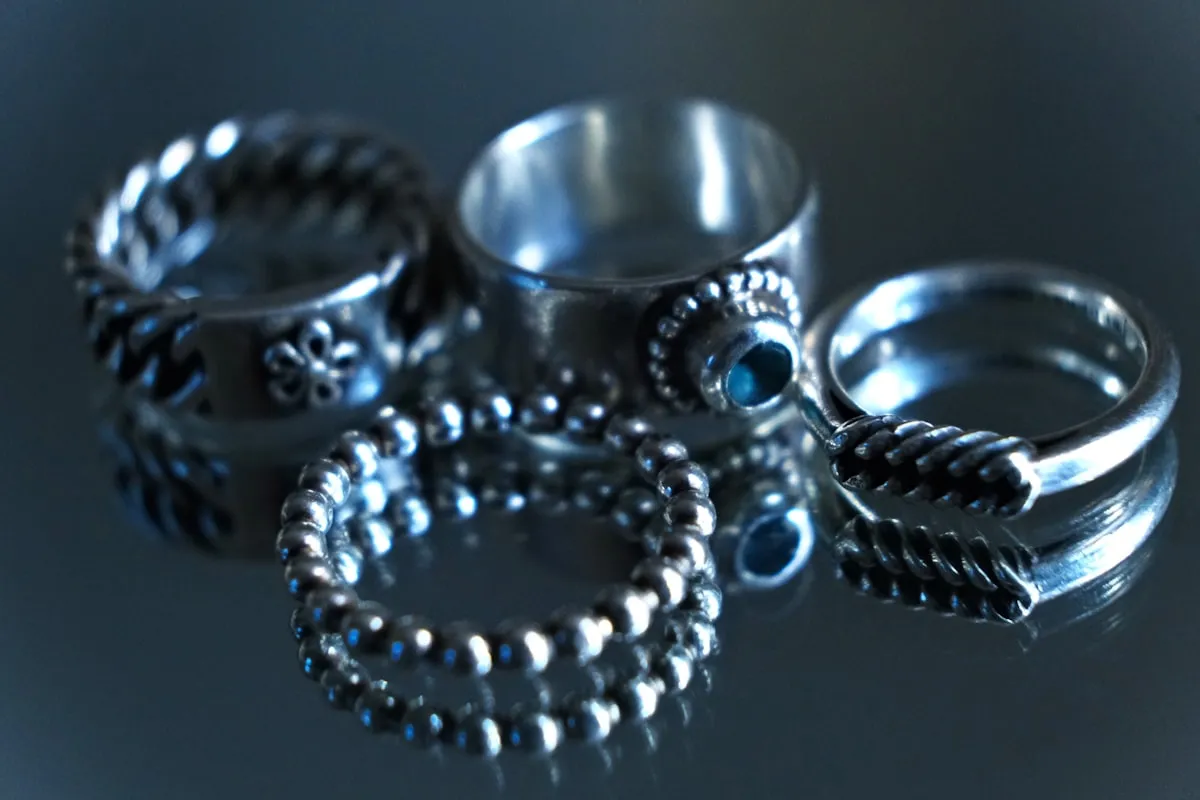
Jewelry Making Math: Tracking Precious Metals, Gemstones, and Findings by the Gram
Gold and silver prices shift daily, gemstones are priced per carat, and findings come in bulk bags where a third vanish into the carpet. Jewelry costing demands gram-level precision that most inventory guides skip entirely. Here is how to track every component and price your pieces for real profit.
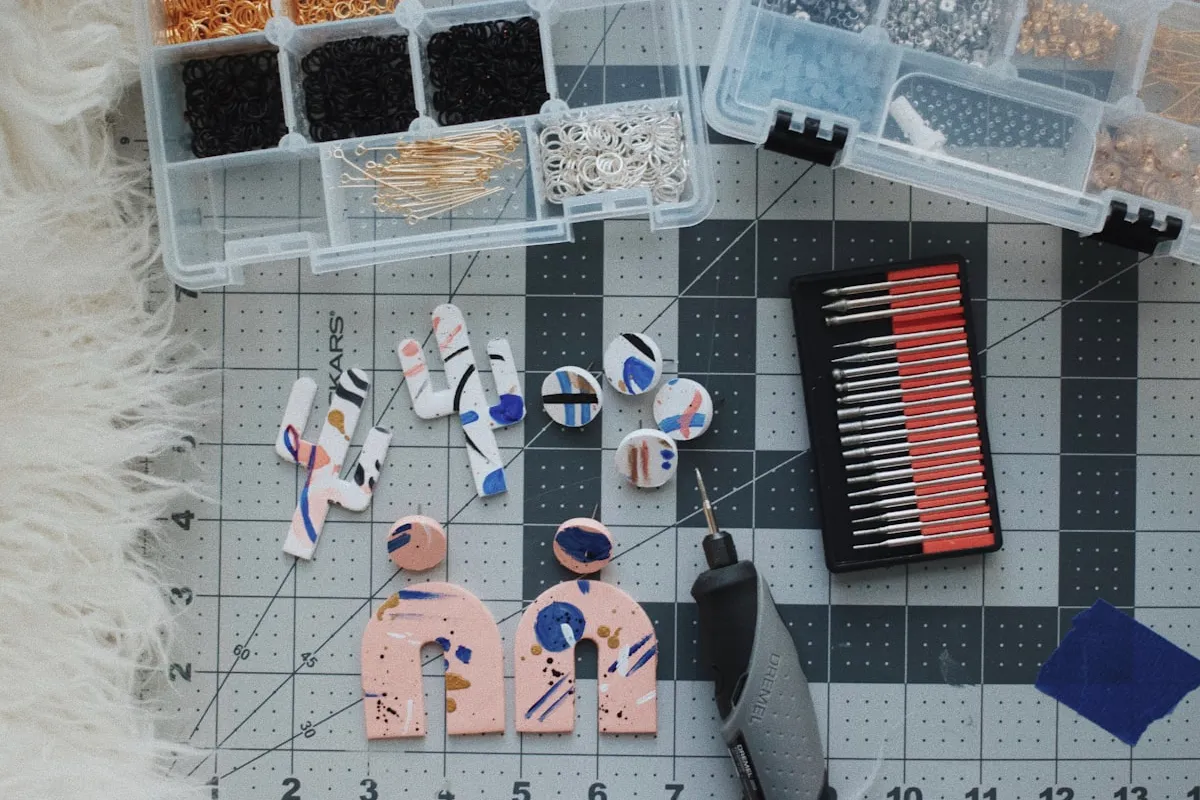
Pricing Polymer Clay Earrings: Why "Cheap to Make" Is the Most Expensive Mistake
A pair of polymer clay earrings uses pennies of clay — which is exactly why so many makers underprice them. Here is the true per-pair cost, worked out line by line, plus the reason a high sticker price can still lose you money.

Margin vs Markup: The Pricing Math Mistake That's Quietly Ruining Your Profit
Half the sellers who say they run a "50% margin" are actually running a 33% margin and subsidizing their own business. Here is the difference between margin and markup, why the confusion costs real money, and the pricing math that separates the sellers who stay open from the ones who quietly close up shop.

Recipe Costing 101: How to Calculate the True Cost of Every Product You Make
Learn how to calculate the real cost of every product you make — from raw ingredients to labor and overhead — so you can price with confidence and protect your profit margins.