How to start a woodworking business
Starting a woodworking business typically costs $500–$5,000 in tools and lumber, and a maker focused on small, shippable goods can reach a first sale in about 2–4 weeks. The two traps that sink new shops are under-charging for shop time and choosing pieces too large to ship affordably. This practical, step-by-step playbook walks each decision — business model, shop safety, lumber costing, board-foot pricing, and where to sell.
- Startup cost
- $500 – $5,000
- Time to first sale
- 2 – 8 weeks
- Note: If you already own core tools and start with small, shippable goods, first sale typically comes in about 2–4 weeks. A custom-furniture commission model runs longer — often 6–8 weeks or more — to land a client and build the first paid piece.
- Difficulty
- Moderate
Last reviewed · Rates, fees, and regulatory thresholds in this guide can change — verify the linked sources before acting.


The short version
Woodworking is one of the most approachable maker businesses on paper — low regulation, tools many people already own, and durable demand from cutting boards to custom furniture — but two traps sink new shops: under-pricing labor and choosing products that are hard to sell or ship. Your first decision is the business model: small repeatable goods (cutting boards, shelves, coasters) are cheap to make, easy to ship, and build a catalog, while custom furniture commands far higher prices but is slow, one-off, and hard to ship. The economics turn on costing lumber by the board foot, adding hardware and finish, and — above all — charging a real rate for shop time, the line most new woodworkers leave out. Add genuine safety (a table saw and fine dust are not hobby risks), and the path is: pick a model, set up a safe shop, dial in a repeatable build, price by board feet plus time, then sell where your product fits.
Good fit if…
- You can produce clean, consistent work and enjoy refining a repeatable build
- You have (or can build to) $500–$5,000 of tools, or already own a core shop
- You have a ventilated space for dust and noise — a garage, basement, or dedicated shop
- You like either building a catalog of smaller goods or taking on custom commissions
Probably not for you if…
- You aren't willing to price your shop time — woodworking dies on under-charged labor
- You have no space that tolerates dust, noise, and finishing fumes
- You want to sell large furniture online — freight on big pieces is expensive and often makes the shipping model unworkable
- You won't take shop safety seriously — table-saw and dust hazards are real, not theoretical
Tip: The real gates in woodworking aren't paperwork — they're shop safety (power tools and dust are genuine hazards), pricing your time honestly, and choosing a product mix you can actually sell and ship. Many makers start with tools they already own.
End-to-end timeline for a small-goods woodworking launch
If you already own core tools and start with small, shippable goods, first sale can come in a few weeks — the early stages below overlap heavily, so a focused maker runs them in parallel and lands near the low end of the 2–8 week band. A custom-furniture model takes longer, because you have to land clients and build the first paid piece, which pushes toward the high end.
- Set up + safetyUnder 1 week
Register the business, set up dust collection and safety gear, and organize the shop around your first products. Often overlaps with sourcing.
- Source + prototype1–2 weeks
Buy a small lumber lot, build prototypes, dial in the finish, and document a repeatable build and cut list.
- Cost + photograph + listUnder 1 week
Cost each piece by board feet plus shop time, shoot product photos, and write listings or a line sheet.
- Launch + first orders1–4 weeks
Open listings or work a market; commissions ramp slower as inquiries turn into quoted, deposited jobs.
2–8 weeks to first sale
The 7-step playbook
Run these in order. Skipping ahead is the most common reason new makers ship inconsistent product or under-price their work.
Step 1: Choose what you'll make and your business model
The single decision that shapes everything downstream: what you build, and how you sell it. Small repeatable goods, custom commissions, and large furniture are almost different businesses — with different tools, pricing, shipping, and marketing.
Business models compared
Small goods are the easiest start — cheap, fast, shippable, and catalog-friendly. Custom and large furniture command higher prices but are slow, lumpy, and hard to ship. These aren't exclusive choices: most shops start with small goods for cash flow and add commissions as their reputation grows.
| Option | Material cost / unit | Time per unit | Typical price / piece | Shipping | Best for |
|---|---|---|---|---|---|
Small repeatable goods Cutting boards, shelves, coasters. | Low | Short — batchable | $15–$120 | Easy and cheap | Building a catalog, Etsy, markets |
Custom furniture commissions Built to a client's order. | Medium–high | Long — one-off | $800–$5,000+ | Local delivery; freight is costly | High ticket, word-of-mouth, local |
Large / live-edge furniture Inventory of big pieces. | High | Long | $800–$6,000+ | Hard — usually local only | High-ticket local sales, showrooms |
Plans, content & templates Sell plans, jigs, or build an audience. | Very low (digital) | Upfront, then scalable | $5–$30 per plan | None (digital) | Scaling reach, secondary income |
Cost, time, and shipping are relative comparisons; the price ranges are rough illustrations that vary widely with species, size, finish, and market. Most shops blend models (small goods for cash flow, commissions for margin); the table is meant to clarify the trade-offs of a primary focus.
Woodworking businesses fall into a few models, and the right one depends on your space, skills, and how you want to sell:
- Small repeatable goods — cutting boards, charcuterie boards, coasters, shelves, trivets, key holders. Low material cost, fast to batch, easy and cheap to ship, and they build a sellable catalog. The most beginner-friendly path and a strong fit for Etsy and markets.
- Custom furniture commissions — tables, desks, cabinets, built-ins. Far higher price per piece and strong word-of-mouth potential, but slow, one-off, and usually local-delivery-only because freight is expensive. Revenue is lumpy and depends on a pipeline of clients.
- Large / live-edge furniture for sale — building inventory of bigger pieces. High ticket, but you carry material and finished-goods cost and shipping is hard; usually local.
- Plans, content, and templates — selling woodworking plans, jigs, or building an audience. Low per-unit cost and scalable, but a different (content/marketing) business than building physical goods, and one this guide — focused on physical products — doesn't cover beyond this mention.
Many woodworkers start with small repeatable goods to build cash flow and a catalog, then layer custom commissions as their reputation grows. The "Business models compared" table above lays out the trade-offs in cost, time, and shipping.
Step 2: Set up the legal basics, insurance, and shop safety
Woodworking carries a light regulatory load but two real liabilities: the work can injure you, and a finished piece can injure a customer. Handle the ordinary business setup, then take insurance and shop safety seriously.
The ordinary business setup is straightforward:
- A business structure. Most woodworkers start as a sole proprietorship or form a single-member LLC for liability separation — worth considering here because furniture and built-ins carry real product-liability exposure. See the SBA's guide to choosing a business structure (opens in new tab), and apply for a free EIN from the IRS (opens in new tab).
- A state sales-tax permit in states with sales tax (most have one). If you sell wholesale to shops, you'll also want a resale certificate.
- Product liability insurance. More relevant here than for many crafts — a table or shelf that fails can cause injury. Many craft fairs and wholesale buyers require proof of coverage on their vendor applications.
Two product-safety rules to know if your line drifts that way:
- Children's items (toys, furniture for children 12 and under) fall under the Consumer Product Safety Improvement Act (CPSIA) (opens in new tab), which can require testing, tracking labels, and compliance — a meaningful step up in obligations. Many small woodworkers simply avoid the children's category for this reason.
- Imported wood can fall under the Lacey Act (opens in new tab)'s import declaration rules — these apply to any imported wood or plant material, not just rare or exotic species, so common imported oak or maple is covered too. Domestic hardwoods aren't subject to the import declaration (no import is involved), though the Lacey Act still prohibits trade in illegally harvested wood regardless of origin.
And the part that's genuinely non-negotiable — shop safety. Table saws cause some of the most severe injuries in any shop, and fine wood dust is both a fire risk and a recognized health hazard — wood dust is classified as an IARC Group 1 human carcinogen (carcinogenic to humans), a classification OSHA references on its wood dust hazards page (opens in new tab), and the National Cancer Institute's page on wood dust and cancer risk (opens in new tab) reports strong, consistent associations with cancers of the nasal cavity and paranasal sinuses. The callout below covers the essentials; treat them as setup costs, not optional extras.
Safety warning: Power tools and dust are real hazards — set up safety before you sell
A table saw can cause some of the most severe injuries in any shop; use a riving knife, blade guard, and push sticks, and never freehand a cut. Fine wood dust is a serious hazard, not just a nuisance — it is a recognized carcinogen (see the OSHA and National Cancer Institute links above), and accumulated dust is also a fire and explosion risk. Run dust collection and wear a properly fitted respirator (at minimum an N95; a P100 is better for fine sanding dust — a paper dust mask is not enough). Some species and finishes are sensitizers or flammable. Treat eye and ear protection, dust control, and ventilation as required setup costs, not extras.
Step 3: Set up your shop: tools and lumber
You need less than the internet implies. A focused tool kit aimed at your chosen model — plus a small, smart lumber buy — produces sellable work without a five-figure shop. Resist the urge to buy every machine before your first sale.
A workable starter shop for small repeatable goods (the most common entry point):
- A way to cut and dimension stock — a contractor table saw or a track saw, plus a miter saw for crosscuts. Often the largest single purchase.
- A random-orbital sander and a range of sandpaper grits — surface quality is most of what separates a $20 board from a $60 one.
- A drill/driver, clamps (you always need more), and basic measuring and marking tools.
- A router for edges and joinery as you progress; a planer and jointer once you're milling rough lumber.
- Dust collection and a fitted respirator — from step 2, these are required, not optional.
- Finishing supplies — food-safe mineral oil and beeswax for cutting boards; a durable film finish (poly, hardwax oil) for furniture.
Lumber. Wood is sold by the board foot (a volume measure: 144 cubic inches — e.g. 1" × 12" × 12"). Hardwoods (maple, walnut, cherry, oak) cost more than softwoods (pine, fir) and behave differently. Buy kiln-dried lumber for indoor goods — green or improperly dried wood moves, cracks, and warps after you build. Start with a small buy of one or two species for your launch products rather than stockpiling.
Total starter outlay runs roughly $500–$1,500 if you already own some tools, up to $5,000 for a fuller kit with a quality saw, sander, router, and dust collection. Buy for your first products, then reinvest revenue into machines that remove a bottleneck.
Step 4: Build a repeatable process and finish
A business needs the same piece to come out the same way every time. Build a repeatable process — jigs, a documented build sequence, and a finish you trust — before you build a catalog or take orders.
The leap from hobby to business is consistency. A one-off that turns out great is a hobby; a board you can build to the same spec, cost, and quality fifty times is a product.
Make it repeatable
- Jigs and templates turn a fiddly cut into a fast, identical one — and they're where a lot of your speed (and margin) comes from.
- Document the build — cut list, board feet of each species, hardware, sandpaper progression, glue-up, and finish steps. This is both your production recipe and the basis for accurate costing (step 5).
- Account for wood movement. Wood expands and contracts with humidity; designs and joinery have to allow for it, or pieces crack and warp after they ship. Build with kiln-dried stock and movement-tolerant joinery.
Get the finish right
- Cutting boards and anything touching food — use a genuinely food-safe finish (food-grade mineral oil, a mineral-oil/beeswax blend, or a finish labeled food-safe once fully cured) and include care instructions (hand-wash, re-oil). Don't market a board as food-safe unless the finish is.
- Furniture and décor — a durable film or hardwax-oil finish that resists wear and moisture. Test your finish schedule on offcuts before applying to a sellable piece.
Keep a short log of species, cut list, finish, and your minutes per piece. That log is your repeatable recipe and the raw data for honest pricing — exactly the kind of production record Ardent Seller is built to hold (step 7).
Step 5: Price by board feet plus shop time
This is where the economics of a woodworking business are won or lost. Lumber and hardware are easy to count; shop time is the cost most new makers leave out — and as the worked example below shows, it is often the biggest line on a piece. Price the hours, not just the wood.
Build your price from a real cost stack, then apply a markup — don't reverse-engineer a price from what feels sellable.
What a piece actually costs
- Lumber by the board foot. Multiply board feet used by your cost per board foot for each species — and include waste (offcuts, defects, and the kerf add up; a 20–30% waste factor is a rough planning figure to start from for rough hardwood, not a fixed rule — your real waste depends on species, board quality, and offcut yield (pre-surfaced S4S stock wastes less), so track a few early projects to calibrate it).
- Hardware and finish — hinges, fasteners, feet, oil, poly, sandpaper consumed.
- Shop time at a real hourly rate. Track your minutes per piece and pay yourself a genuine shop rate. This is the number new woodworkers omit — and as the worked example below shows, a cutting board with roughly $23 of lumber can carry nearly $38 of labor on top.
- Machine and overhead — blade and abrasive wear, power, shop rent or amortized tooling.
Worked example: a walnut cutting board
Say a board uses 1.5 board feet of walnut at about $12/bf (an illustrative figure — retail walnut runs roughly $8–$15/bf depending on your supplier and region, so use your own number). Add a 25% waste factor (1.5 × 1.25 ≈ 1.9 bf), so lumber is roughly $23. Food-safe oil, wax, and sandpaper add about $5. At 1.5 hours of shop time and a $25/hr rate, labor is about $38, plus roughly $4 of blade-and-abrasive wear and overhead — a total cost near $70. Notice that labor, not wood, is the biggest line.
That is exactly why woodworking pricing departs from the simple multiplier rule. A common craft-pricing starting point is wholesale around 2× total cost and retail around 3–4× — but that comes from retail keystoning and assumes a material-dominated product. Multiply a labor-heavy $70 board by 3× and the $210 result won't sell against comparable boards. For labor-heavy pieces, price to recover total cost plus a target margin instead: divide total cost by (1 − target margin), so a $70 board at a 30% gross margin is $70 ÷ 0.70 = $100, and at 40% it's $70 ÷ 0.60 ≈ $117 — a price near $100–$117, not the $210 a flat 3× would produce. (Gross margin is the share of the selling price left after cost; the 3–4× multiplier is a markup on cost, and the two diverge sharply once labor dominates.) Save the 3–4× multiplier for low-labor small goods where material dominates. The economics also differ sharply by model:
- Small goods — price competes on a marketplace, so tight material and time control matters; batching similar pieces is how you protect margin.
- Custom commissions — quote per project from the cost stack plus a design/consultation fee. Take a deposit (often 50%) before buying material; custom work you can't resell is the riskiest to leave unpaid.
The Product Pricing Calculator and Hourly Rate Pricing Calculator in the free resources for this step help you turn this cost stack into a defensible price using your own lumber cost, waste factor, shop rate, and target margin.
Step 6: Choose where to sell
Where you sell follows directly from what you make. Small goods ship and suit marketplaces; furniture is local and relationship-driven. Match the channel to the product rather than forcing every piece onto Etsy.
The common channels, by what they fit:
- Etsy — a strong fit for small, shippable goods (boards, shelves, décor, personalized gifts) with built-in search traffic. Be aware of the stacked fees — listing, transaction, payment processing, and optional Offsite Ads — covered in the Etsy shop guide.
- Local markets and craft fairs — direct sales, instant feedback, and great for both small goods and showcasing larger pieces that are hard to ship. Booth fees and weekend time are the cost.
- Custom commissions via Instagram and word of mouth — the primary channel for furniture. Visual platforms showcase finished work; referrals and a simple inquiry-to-quote process drive the pipeline.
- Your own Shopify / Squarespace store — full margin and control for a catalog of repeatable goods, and the home for commission inquiries. You drive the traffic, so usually a phase-2 channel.
- Wholesale to boutiques, home stores, and galleries — predictable repeat orders for small goods at wholesale price. Build a line sheet with photos, wholesale pricing, minimum order, and lead time.
A common opening combination is Etsy or local markets for small goods (cash flow now) plus an Instagram presence to seed custom-commission inquiries (margin later). Pick the channel that fits your primary product, ship for a few weeks, then layer the second. Whatever the mix, you'll need to track materials and job costs across all of it — the next step.
Step 7: Track materials, job costs, and taxes from day one
Woodworking creates a specific costing problem: you buy lumber by the board foot, consume it across many pieces with real waste, and either batch products or quote one-off jobs. Knowing your true cost per piece is the operational reality once orders start.
For a handful of products a spreadsheet works. Past that, the math gets brittle:
- You buy a board, use part of it across several pieces, and lose a chunk to waste — manual board-foot-to-piece costing drifts fast.
- One product becomes many SKUs (size, species, finish, engraving) and a spreadsheet stops tracking what's actually in stock.
- Custom quotes need a real cost stack — lumber, hardware, finish, and shop hours — and a guessed number either loses the job or loses money on it.
- Hardwood prices change between buys, and your true COGS quietly moves with them.
- Tax time arrives and you can't tell the IRS what the pieces you sold cost to build, or deduct equipment correctly.
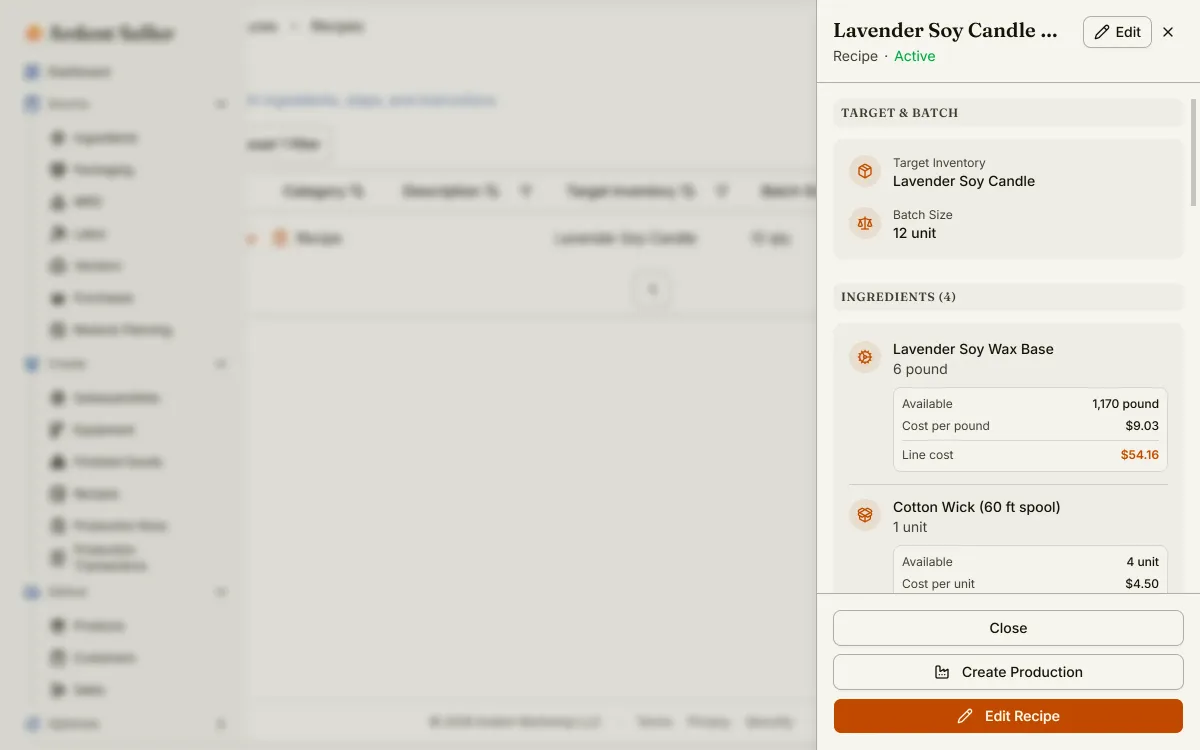
A rough heuristic: once you're past roughly 20–30 SKUs, running custom quotes, or selling on more than one channel, dedicated software starts to pay for itself. Ardent Seller fits this directly — track lumber and hardware as inventory, build each product or commission with its material and shop-time cost, see true cost per piece, and (with equipment depreciation) account for the machines you bought. The "Tools to consider" section below covers the range from free spreadsheets up.
Two tax items to keep separate: sales tax (collection rules vary by channel and state) and income tax (woodworking profit goes on Schedule C; quarterly estimated taxes via Form 1040-ES (opens in new tab) are generally required once you expect to owe $1,000 or more in tax for the year — confirm the current threshold and safe-harbor rules with IRS Publication 505). Larger tools are typically capital purchases you depreciate rather than expense all at once — track them properly.
The tools section
Tools to consider
A short, honest list — Ardent Seller alongside the other tools most woodworking business owners end up using.
Track lumber by board foot and hardware as inventory; build each product or custom commission with its material and shop-time cost to see true cost per piece; generate SKUs across size, species, and finish; and account for the machines you bought with equipment depreciation. Etsy sync is included on every plan — even the Free plan — so a one-shop Etsy seller can sync listings, orders, and inventory at no cost; paid plans add more connected shops, higher limits, and deeper reporting (more marketplace channels in development).
Widely used 3D design tool for furniture and project planning — model a piece, generate a cut list, and show clients a commission before you build it. All general plans are paid (Go, Pro, Studio — covering web, iPad, and desktop modeling); there is no free tier for general users, though K-12 education users can access SketchUp for Schools free with a Google or Microsoft education account. Check current plans and pricing.
A common first channel for small, shippable woodworking goods — built-in marketplace search surfaces a new shop quickly. Be aware of the stacked fee load (listing + transaction + payment processing, plus optional Offsite Ads).
Card reader and point-of-sale for selling at markets, craft fairs, and shows. Free app; pay per-transaction processing on in-person sales.
Tracks income and expenses for tax purposes, handles equipment as capital purchases, and exports a Schedule C summary at year-end. Pricing changes — see Intuit's pricing page for current rates.
Common mistakes to avoid
The patterns that show up over and over in the first year.
Not charging for your shop time
The defining woodworking mistake. Pricing off lumber and hardware while ignoring the hours spent cutting, sanding, assembling, and finishing means selling your labor for free. Track minutes per piece, pay yourself a real shop rate, and build it into every price and quote (step 5).
Buying every machine before the first sale
It's easy to justify a full shop of new tools before earning a dollar. Start with the tools your first products actually need — often ones you already own — validate that the work sells, then reinvest revenue into machines that remove a bottleneck.
Choosing products you can't ship affordably
A beautiful dining table is hard and expensive to ship, which quietly caps a furniture business to local sales. If you want to sell online, lead with small, shippable goods; keep large furniture for local delivery and commissions. Match the product to how you can actually sell it (steps 1 and 6).
Using green or improperly dried lumber
Wood that isn't kiln-dried (or that's built without allowing for movement) cracks, warps, and fails after it reaches the customer — which means a refund, a bad review, or a piece you can't resell. Use kiln-dried stock for indoor goods, design for wood movement, and test your finish on offcuts before a sellable piece (steps 3 and 4).
Taking on unpaid custom risk
Buying material and building a custom piece before any payment means a canceled order leaves you holding work you can't resell. Take a deposit (commonly 50%) before purchasing material, and quote from a real cost stack rather than a hopeful number (step 5).
Treating shop safety as optional
Table-saw injuries and long-term lung damage from fine dust are the real risks of this trade. Riving knife and push sticks, dust collection, a fitted respirator, and eye and ear protection are setup costs, not upgrades — sort them before you start producing volume (step 2).
Frequently asked questions
The questions new makers ask most often.
Do I need a license to start a woodworking business?
In most U.S. states there's no woodworking-specific license — it isn't a regulated product category like food or cosmetics. You'll typically need a general business registration with your state or city and a sales-tax permit if your state has sales tax. Two exceptions to watch: items for children 12 and under (toys, kids' furniture) fall under CPSIA testing and labeling rules, and product liability insurance is worth carrying because furniture can injure if it fails — many craft fairs and wholesale buyers require proof of it.
How much does it cost to start a woodworking business?
A realistic range is $500 to $5,000. At the low end, many woodworkers start with tools they already own plus a small lumber buy and finishing supplies — a few hundred dollars. A fuller starter shop with a quality saw, a random-orbital sander, a router, clamps, dust collection, and a respirator runs toward $5,000. The smart approach is to buy only the tools your first products need, prove the work sells, then reinvest revenue into machines that remove a bottleneck rather than buying everything up front.
How do I price woodworking projects?
Build the price from a cost stack, then apply a markup. Add up lumber by the board foot (including a waste factor — 20–30% is a rough starting point for rough hardwood, to be calibrated against your own offcut yield), hardware and finish, and — critically — your shop time at a real hourly rate, plus machine wear and overhead. A rule of thumb often cited in craft-pricing guides is wholesale around 2x total cost and retail around 3–4x, but the whole point is that "total cost" must include your labor, which is the number most new woodworkers leave out — and labor-heavy pieces price closer to cost plus a defensible margin than to a flat 3–4x (the worked example in step 5 of this guide shows why). For custom work, quote per project from the same stack, add a design fee, and take a deposit before buying material.
What is a board foot and why does it matter?
A board foot is the standard volume measure for lumber: 144 cubic inches, equivalent to a piece 1 inch thick, 12 inches wide, and 12 inches long. Hardwood is usually priced per board foot, so costing a project means calculating the board feet of each species it uses and multiplying by your cost per board foot — then adding a waste factor for offcuts, defects, and kerf — 20–30% is a rough starting point for rough hardwood (pre-surfaced S4S stock wastes less), but your real waste depends on species, board quality, and offcut yield, so track early projects to calibrate it. Getting board-foot costing right is the foundation of pricing a woodworking piece accurately.
Should I sell small goods or custom furniture?
They're almost different businesses. Small repeatable goods — cutting boards, shelves, coasters — have low material cost, are quick to batch, ship cheaply, and build a catalog you can sell on Etsy or at markets, making them the easier start with faster cash flow. Custom furniture commands much higher prices and builds reputation through word of mouth, but it's slow, one-off, lumpy in revenue, and usually local-only because freight on large pieces is expensive. Many woodworkers begin with small goods for cash flow and add commissions as their reputation grows.
What finish is food-safe for cutting boards?
Common food-safe options for cutting and serving boards are food-grade mineral oil, a mineral-oil-and-beeswax blend (board butter), and finishes specifically labeled food-safe once fully cured. Avoid finishes not rated for food contact on any surface that touches food, and always include care instructions — hand-wash, dry, and periodically re-oil. Don't market a board as food-safe unless its finish actually is. Test any finish on an offcut first so you know how it looks and wears before applying it to a piece you'll sell.
How long does it take to start selling woodworking?
If you focus on small, shippable goods and already own core tools, plan on about two to four weeks — most of that time goes to setting up safety and dust collection, prototyping a repeatable build, dialing in a finish, costing each piece, and shooting photos. A custom-furniture model takes longer — often six to eight weeks or more — because you have to land clients and build a first paid piece, and that pipeline ramps gradually as inquiries turn into quoted, deposited jobs. Starting with a catalog of small goods is the fastest route to a first sale.
Free resources
Hand-picked calculators, checklists, and templates that map directly to the steps above.
Live web version of our Excel pricing calculator. Materials + labor + packaging + platform fees → defensible retail at your target margin, with batch-pricing tiers.
Pick a target hourly rate, enter your materials, hands-on minutes per unit, and platform fees — the calculator returns the minimum price that actually pays you that rate after fees and costs. Maker-business specific, not a "freelance day rate" tool.
A live web tool that runs the +10% / +20% / +30% price-hike math for one product — including the volume drop that comes with each — and tells you which scenario clears the most monthly profit.
A working Excel line sheet for handmade wholesale — buyer-ready front sheet, per-SKU pricing math behind it, and the formulas already wired in.
36 things to set up before — and after — your first sale. Inventory, pricing, and the legal essentials in one place.
A working Excel inventory tracker for makers — raw materials, finished goods, packaging, and a purchase log. Reorder thresholds and a status column do the math; conditional formatting flashes red when you are below the line.
A four-page fillable PDF for tracking suppliers — vendor records, an alternate-supplier scoring sheet, and a one-row-per-vendor master index. Type into it in your PDF reader, or print blank copies for the clipboard.
A free, scoped-for-small-sellers economic-nexus checker. Enter your trailing 12-month sales and transactions per state, and the tool flags every state where you have probably crossed the post-Wayfair economic-nexus threshold — without pushing you into a filing product.
Walk through the nine factors of Treasury Regulation §1.183-2(b) and find out whether your side activity qualifies as a for-profit business or a hobby for federal tax purposes — and where to focus to strengthen the business case.
When a spreadsheet is enough, when it stops working, and how to tell the difference before it costs you.
A working Excel worksheet for sellers reconciling Etsy + Shopify + in-person sales against bank deposits — surfaces fee shortfalls, refund mis-postings, and a per-channel monthly P&L.
Read next
Deeper dives on the topics that come up in the guide.
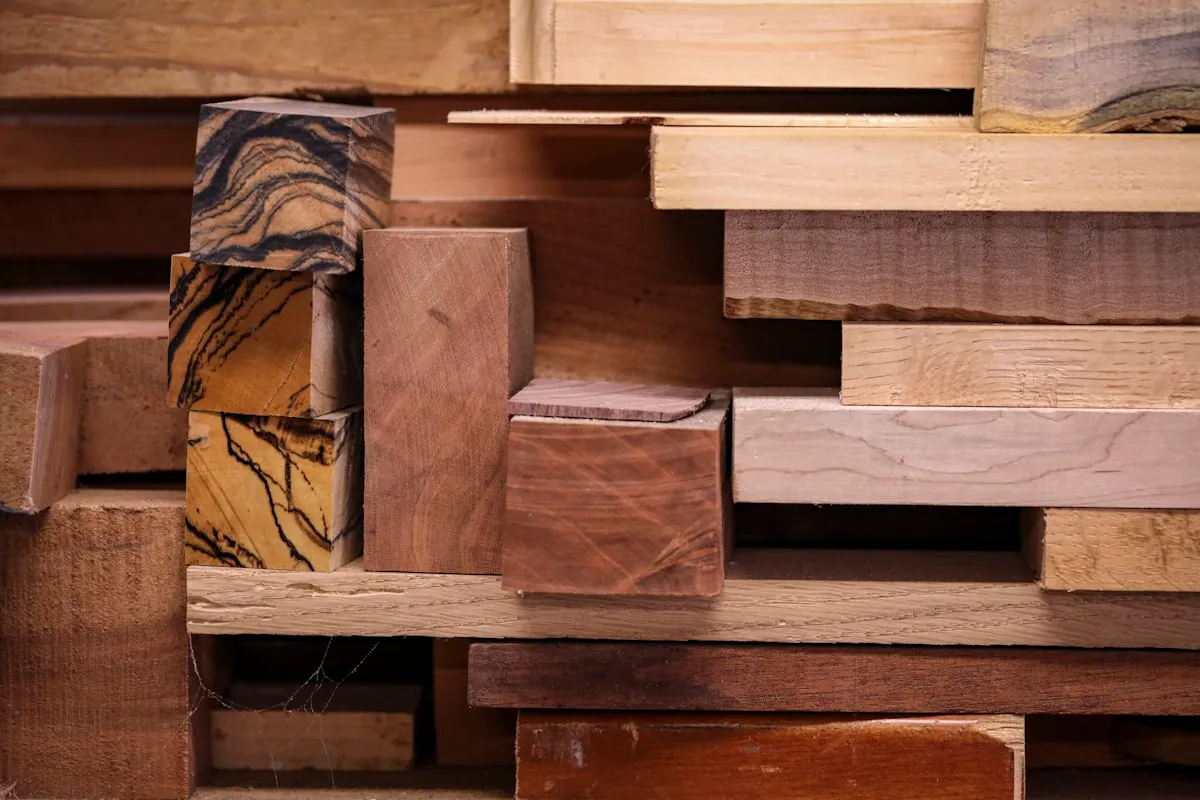
Most woodworkers know what they paid for a board. Very few know what that board cost them per finished piece after cutting waste, planing loss, and the offcuts collecting dust under the bench. Here is how to track lumber costs by the board foot, account for real yield, and price custom builds so every project pays for itself.

Two times materials is the most expensive pricing decision in the maker community. A worked, calculator-backed walk-through of the cost stack under your hourly rate — and the math that tells you what to actually charge.
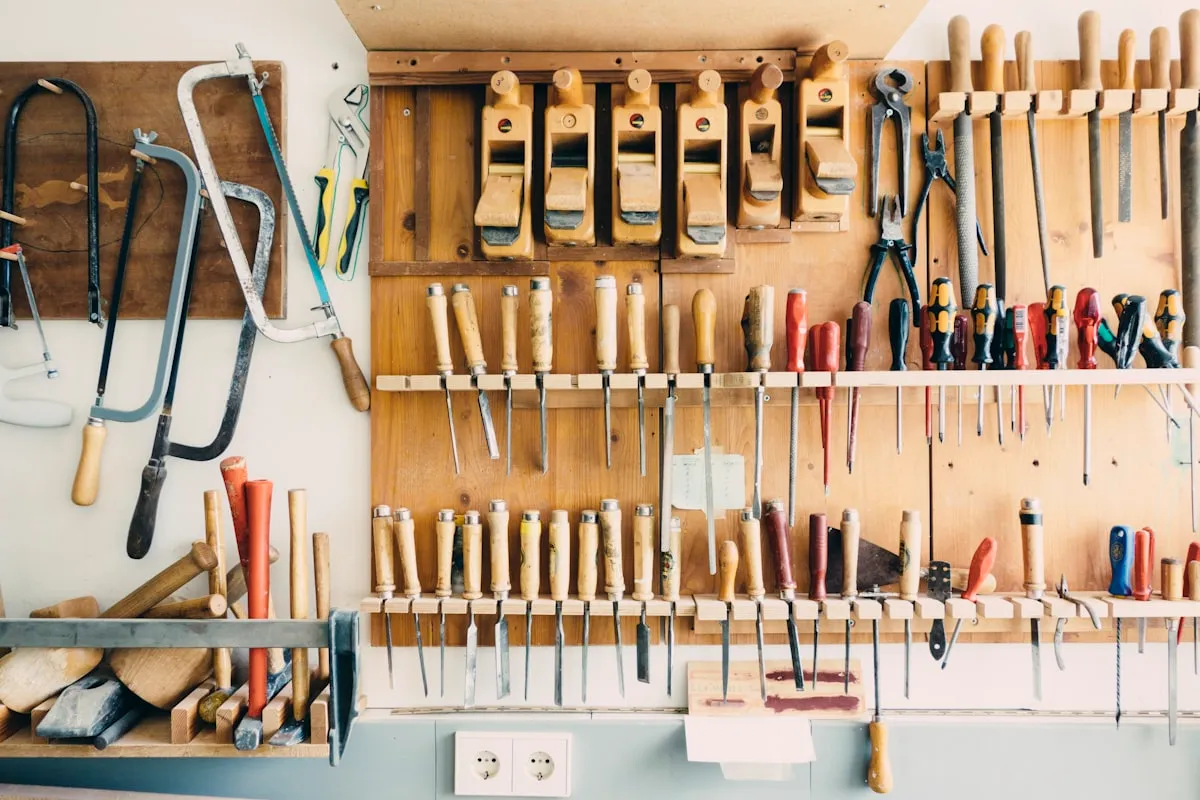
Your oven, kiln, mixer, or 3D printer loses value every year — and if you are not accounting for it, you are underpricing your products and overpaying on taxes. Learn how depreciation works and how to use it.

A six-gate decision framework for makers staring at an email from a boutique buyer. Margin cushion, production headroom, retail price firewall, terms creep tolerance, packaging fit, and fulfillment cadence — the six conditions that separate the wholesale yes that builds a business from the wholesale yes that eats a year.

COGS is the single number that quietly decides whether your maker business is profitable, what your taxes look like, and which products are worth keeping in the catalog. Here is what it actually means, what goes in (and what stays out), and how to start tracking it this week — without an accounting degree.
Once you're selling, you'll need to track it
Tracking inventory, costs, and taxes across every batch and every channel is the operational reality once sales start. Ardent Seller is purpose-built for this.
Woodworkers, furniture makers & custom builders
Ready to start?
Track every batch, recipe, and sale from day one of your woodworking business. Free plan, no credit card.