How to start a skincare business
A practical, step-by-step playbook for turning skincare formulation into a side income or full business — from your first sample batch to your first sale, with the preservative, stability, and FDA cosmetic-labeling details most beginner tutorials gloss over.
- Startup cost
- $400 – $2,500
- Time to first sale
- 8 – 14 weeks
- Note: Anhydrous lines: 2–4 weeks. Water-containing lines: 8–14 weeks (8–12 week stability window is the primary gate)
- Difficulty
- Moderate
Last reviewed · Rates, fees, and regulatory thresholds in this guide can change — verify the linked sources before acting.
The short version
The fastest fork to make is the product type. If you choose an anhydrous line (balms, body butters, facial oils, lip products), you can be selling in 2–4 weeks — no preservative system, no stability window. Water-containing emulsions and toners need a real broad-spectrum preservative plus an 8–12 week accelerated-stability window and formal preservative-efficacy lab testing (called PET) before any first sale; planning for that calendar up front is the single most reliable predictor of whether the line ships safely. Most artisan skincare is regulated as a cosmetic by the FDA, which brings INCI ingredient labeling and MoCRA facility-registration and good-manufacturing-practice obligations — with a small-business exemption for makers averaging under $1M in annual cosmetic sales (adjusted for inflation) over the prior three years. Startup cost runs $400–$2,500 depending on the family you pick. Pricing math leans heavily on packaging — the container, pump, and label commonly run a larger share of unit cost than any single ingredient line. This guide walks each step in order with rough cost ranges, free tools for the math, and the FDA labeling and microbiology details that catch new makers.
Good fit if…
- You're interested in the chemistry of skin care — why emulsifiers work, how pH affects preservation, what actives actually do — not just the craft of making
- You have $400–$2,500 of starter capital and a clean, dedicated workspace (the low end covers a basic anhydrous-only kit — even less if you already own the heat source and mixing tools; a water-containing emulsion line with PET and stability storage runs toward the top of the range)
- You're willing to wait through a real stability window (typically 8–12 weeks for emulsions) before selling water-containing products
- You like the idea of selling at boutiques, on Etsy, at indie-beauty markets, or wholesale to spas
Probably not for you if…
- You need income within 30 days — any water-containing line rules that out
- You're uncomfortable with the idea that a "natural preservative-free" claim is not a safe path for water-containing products
- You expect every batch to be perfect from the start — formulation iteration is the norm
- You're looking for a passive-income product line
Tip: Anhydrous products (balms, body butters, facial oils) skip the preservative-and-water-microbiology problem and can ship in weeks. Water-containing emulsions (lotions, creams, toners) need a real preservative system and a stability test window before any first sale — that's where most of the skincare-specific learning happens.
End-to-end timeline for an emulsion line
Water-containing skincare front-loads weeks of stability and preservative-efficacy testing before any first sale. Anhydrous lines skip those gates and can launch in 2–4 weeks. The stages below overlap meaningfully — PET is submitted to the lab in parallel with the stability shelves rather than after, and the photograph + list sprint typically starts while the final week or two of stability is still running. With those overlaps, the practical band is 8–14 weeks (midpoint ~11 weeks); if every stage runs strictly sequentially with no parallel work, the same stages add up to 12–18 weeks.
- Source + set up~1 week
Order oils, packaging, and labels (plus emulsifier, preservative, pH meter, and homogenizer for water-containing lines). Set up a clean, dedicated workspace.
- Formulate + iterate2–3 weeks
Anhydrous makers: 1–2 weeks of recipe and packaging trials. Emulsion/aqueous makers: 2–4 small formulation iterations to lock in a base; verify pH after every batch.
- Accelerated stability + PET8–12 weeks
Emulsion and aqueous lines only. Samples at 40 °C, room temp, and 4 °C. Check at weeks 2/4/8/12 for separation, color, aroma, texture, and pH drift. Send PET to a microbiology lab in parallel. Anhydrous lines skip this stage.
- Photograph + list1–2 weeks
Shoot product, texture, and on-skin photos. Finalize INCI labels, set up channel listings and pricing.
8–14 weeks to first sale for water-containing lines; anhydrous lines: 2–4 weeks (stages 1, 2, and 4 only, with the photograph/listing work overlapping the final formulation trials)
The 8-step playbook
Run these in order. Skipping ahead is the most common reason new makers ship inconsistent product or under-price their work.
Step 1: Pick a product type — anhydrous, emulsion, or water-based
The product type you choose drives everything else: whether you need a preservative system, how long your stability window runs before any first sale, your equipment list, the labeling rules, and the price point you can sustain. Pick deliberately, not by accident.
Product families compared: anhydrous, emulsion, aqueous
Anhydrous products are the fastest path to a first sale; emulsions are the indie-skincare workhorse with the longest stability window. Pick deliberately — the choice cascades into equipment, preservative requirements, stability time, and the price point you can sustain.
| Option | Contains water | Preservative required | Stability window before first sale | Time to first sale | Equipment complexity | Formulation space |
|---|---|---|---|---|---|---|
Anhydrous (oil-based, no water) Balms, body butters, facial oils, lip products. | No | No (antioxidant useful) | Short — feel and rancidity checks | 2–4 weeks | Low | Narrower — oil-soluble actives only |
Emulsion (water + oil) Lotions, creams, hair masks — the indie workhorse. | Yes | Yes — broad-spectrum required | 8–12 weeks accelerated + preservative-efficacy lab test (PET) | 8–14 weeks | Mid–High | Broadest — water + oil + emulsifier-borne actives |
Aqueous (water-based) Toners, hydrosol mists, gel serums. | Yes | Yes — broad-spectrum required | 8–12 weeks accelerated + PET | 8–14 weeks | Mid | Water-soluble actives only |
The "stability window" column is the accelerated-stability gate itself (typically 8–12 weeks at 40 °C alongside parallel preservative efficacy / challenge testing — PET, the formal lab test of whether a preservative system actually inhibits microbial growth, often run to the USP <51> protocol). The "time to first sale" column (8–14 weeks) is the longer total: it adds the ~1-week sourcing/setup and 2–3-week formulation phases and the 1–2-week photograph/listing sprint on top of that stability window, with some of those phases overlapping. Anhydrous products skip the microbiology gate entirely. Skipping the stability or PET window on a water-containing formula is the single most common pre-launch shortcut new makers regret.
Indie skincare splits into three families along one axis: whether the formula contains water. The water question drives the microbiology problem, the preservative requirement, the stability window, and the equipment list. Pick the family first; the specific product (face cream vs. body lotion vs. lip balm) is a downstream decision.
- Anhydrous products (no water) — body butters, balms, salves, lip products, oil-based serums, facial oils, solid perfumes. Because there is no water, there is no microbial-growth substrate, so no preservative system is required (an antioxidant like vitamin E or rosemary extract is still useful to slow oil rancidity, but it is not a preservative). Time to first sale is the shortest of the three families — formulating, batching, packaging, and a short stability check can complete in 2–4 weeks. The trade-off: anhydrous products generally feel greasier than emulsions and don't deliver water-soluble actives, which constrains the formulation space.
- Water-in-oil and oil-in-water emulsions — lotions, creams, conditioners, hair masks, most "moisturizer" products. The default workhorse of indie skincare. Requires a real broad-spectrum preservative system (covered in step 4) and a meaningful stability window before any first sale — typically 8–12 weeks of accelerated-stability testing at 40 °C (the widely-adopted accelerated condition, drawn informally from the ICH Q1A pharmaceutical-stability framework (opens in new tab) rather than a cosmetics regulatory requirement, sometimes paired with a 45 °C stress sample) plus formal preservative efficacy / challenge testing on the final formula. Skipping either step exposes buyers to contaminated product and the brand to recall risk and serious liability. Emulsions deliver the broadest formulation space (water-soluble actives + oil-soluble actives + emulsifier-borne skin feel) but carry the steepest microbiology learning curve.
- Aqueous products (water-based, no oil phase or minimal oil phase) — toners, hydrosol mists, gel serums, water-based essences. Same preservative requirement as emulsions — the absence of oil does not change the microbiology — and water-based products are arguably more sensitive to preservation because they have no oil phase to slow microbial proliferation. Same 8–12 week stability window as emulsions before any first sale.
How most makers choose: start anhydrous if you want to test the market in a month — lip balms, body butters, and facial oils are the lowest-risk first products. Move into emulsions once you have a real preservative and equipment plan and are willing to wait the stability window before launching. Many indie brands run both — an anhydrous "bridge" line that ships within weeks, and an emulsion signature line that launches a few months later once stability data is in.
The indie-skincare education ecosystem is mature and largely paid for the comprehensive material. Free educational libraries from suppliers are a good starting point — Lotioncrafter's skin-care formulation blog (opens in new tab), the technical articles linked from MakingCosmetics' resources and blog navigation (opens in new tab), and the Society of Cosmetic Chemists (SCC) (opens in new tab) publish technical articles on emulsification, preservatives, and stability testing. Formula Botanica (opens in new tab) publishes a substantial free blog alongside its paid certificate courses, and is one of the more widely-discussed indie-skincare certificate programs for newcomers committing to emulsions. The Handcrafted Soap & Cosmetic Guild (HSCG) (opens in new tab) publishes cosmetic-labeling and small-batch business guidance that applies cleanly to skincare. Spend a week reading before buying anything.
Step 2: Set up the legal & business basics
Skincare is regulated more strictly than candles and more or less the same as soap that's sold as a cosmetic — most artisan skincare is treated as a cosmetic by the FDA, which brings INCI labeling rules and, since MoCRA, registration obligations above a small-business threshold.
FDA regulatory status — almost everything is a cosmetic. The FDA defines a cosmetic in 21 U.S.C. § 321(i) (opens in new tab) as a product "intended to be rubbed, poured, sprinkled, or sprayed on, introduced into, or otherwise applied to the human body … for cleansing, beautifying, promoting attractiveness, or altering the appearance." Almost every skincare product — lotion, serum, cream, balm, toner, mask — meets this definition and falls under FDA cosmetic regulation. The line moves to "drug" the moment the product makes a structural or functional claim ("treats acne," "reduces wrinkles," "heals eczema," "kills bacteria") — at which point you've left the cosmetic framework and entered drug regulation, which requires FDA New Drug Application or OTC monograph compliance. The FDA's own cosmetic-vs-drug guidance page is the canonical reference for this distinction; the FDA's cosmetics subsite has moved more than once in recent years, so search "FDA is it a cosmetic a drug or both" for the current location. Indie skincare brands stay on the right side of this line by writing marketing copy that describes appearance and feel without making medical claims.
MoCRA (Modernization of Cosmetics Regulation Act of 2022). Signed December 29, 2022 (P.L. 117-328), with the core facility-registration and product-listing provisions phased in over the following two years, MoCRA requires cosmetic-facility registration and product listing with the FDA. As of mid-2026, small businesses — those whose average gross annual sales of cosmetic products over the previous three years is under $1,000,000 (a figure the statute specifies is adjusted for inflation) — are exempt from cosmetic Good Manufacturing Practice requirements and from facility registration and product listing under FD&C Act § 612(a) (see 21 U.S.C. § 364h(a) (opens in new tab) for the small-business exemption text and § 364h(b) for the four product-category carve-outs that the exemption does not cover — products contacting the eye's mucous membrane, injectables, products for internal use, and products intended to alter appearance for more than 24 hours where removal is not part of customary use). Serious adverse-event reporting (events resulting in significant harm — death, hospitalization, persistent disability, infection — within 15 business days under FD&C Act § 605(b)(1), 21 U.S.C. § 364a(b)(1) (opens in new tab)) still applies to every cosmetic facility regardless of size. Routine minor complaints (mild irritation, scent dislike) are not reportable under the statute. Thresholds and reporting windows are statutory but the FDA is still issuing implementing guidance — search "FDA MoCRA" for the current overview before relying on the exemption.
"Natural" and "organic" claims are legally meaningful. "Organic" is the strictest — under the USDA National Organic Program (the regulations live at 7 CFR Part 205 (opens in new tab)), "100% organic," "organic," and "made with organic ingredients" each require certification and corresponding minimum organic-ingredient thresholds. Using any of those phrases on a label without certification is a federal labeling violation. "Natural" is not federally defined for cosmetics, but the FTC's truth-in-advertising standard still applies — claiming "all natural" when the formula contains synthetics is actionable. Ecocert COSMOS (opens in new tab) is a widely-adopted third-party framework for "natural and organic" personal-care claims; NSF/ANSI 305 ("Personal Care Products Containing Organic Ingredients") is a narrower standard for products making a "contains organic ingredients" claim (search "NSF/ANSI 305" on nsf.org or the NSF standards portfolio for the current standard page). Certification adds real cost and is rarely justified for a brand-new line.
Beyond FDA, the standard business setup still applies:
- A business structure. Most skincare makers start as a sole proprietorship (no filing required in most states) or form a single-member LLC for liability separation. LLC filing fees vary by state (often a low-hundreds one-time fee — check your Secretary of State for the exact number). The SBA's guide to choosing a business structure (opens in new tab) is a useful starting point — an LLC is the right upgrade once sales become regular, especially given the higher liability profile of leave-on cosmetic products vs. rinse-off soap.
- An EIN (Employer Identification Number). Free from the IRS via the EIN application page (opens in new tab) — the IRS describes it as taking "minutes" online (the session has a 15-minute inactivity timeout, so plan to complete it in one sitting). Required if you form an LLC, sell wholesale, or want to keep your SSN off W-9s.
- A state sales-tax permit. Required in every U.S. state that has a state sales tax — that's most of them; only Alaska, Delaware, Montana, New Hampshire, and Oregon do not levy a state-level sales tax (see the Tax Foundation's state and local sales-tax rates report (opens in new tab); Alaska localities can still impose local sales tax) — if you sell directly to consumers, even at a single boutique market. Etsy acts as a marketplace facilitator and collects and remits sales tax in most marketplace-facilitator states; a state permit is still typically required to operate as a business — verify your own state's marketplace-facilitator rules.
- Product liability insurance. Leave-on skincare carries a meaningfully higher liability profile than rinse-off soap — skin reactions, allergic contact dermatitis, mislabeled allergens, and (in rare but expensive cases) contamination claims happen. The Handcrafted Soap & Cosmetic Guild's insurance program (opens in new tab) is the maker-guild insurance program most directly associated with handmade soap and cosmetics; confirm skincare and leave-on cosmetic coverage is in-scope on the quote before relying on it (the public landing page describes member benefits at a high level — coverage details are in the linked HSCG insurance portal). Quotes vary widely by coverage limits, state, and carrier. Required to sell at most boutique markets and to most wholesale buyers. Many general crafter-focused liability policies exclude leave-on cosmetic products entirely — read the exclusions before you write the check.
- Required labels. Federal law (the Fair Packaging and Labeling Act — see the FTC FPLA page (opens in new tab) or the 15 U.S.C. ch. 39 on Cornell LII (opens in new tab) if the FTC URL is unreachable — and, for cosmetics, the FDA's labeling regulations at 21 CFR Part 701 on Cornell LII (opens in new tab)) requires cosmetics to display: identity statement (what the product is), net weight or fluid measure, manufacturer/distributor name and address, and a full ingredient list in descending order of predominance using each ingredient's "common or usual name." The naming hierarchy at 21 CFR § 701.3(c) designates names from the CTFA Cosmetic Ingredient Dictionary (the original source of INCI (International Nomenclature of Cosmetic Ingredients) names, now maintained by its successor the Personal Care Products Council) as a primary compendium — so INCI names satisfy the requirement and are the overwhelming industry convention. (For internationally harmonized names — including botanical Latin binomials — the FDA's Cosmetic Ingredient Names guidance (opens in new tab) states it does not object to the Latin or international name following the English common name in parentheses; the FDA's own example is "Sweet Almond (Prunus Amygdalus Dulcis) Oil," and the same pattern applies to shea butter as "Shea Butter (Butyrospermum Parkii Butter)." Industry harmonization on the Latin INCI form is widely tolerated in practice.) Ingredients present at 1% or less may be listed in any order after the ingredients above 1%, but must appear after the 1% line. Color additives are listed in any order at the end of the ingredient list. The HSCG publishes a labeling guide with a full INCI lookup table — the fastest reference for converting raw-ingredient names to their INCI form. Most artisan skincare carries the INCI ingredient list verbatim from the supplier's product spec sheet.
Two things people often over-do at this stage: forming an LLC before having any sales (start as a sole prop, upgrade later), and over-investing in label design before the formula is locked (you'll redesign once you finalize the line and packaging sizes).
Regulatory notice: Almost every skincare product is a cosmetic under FDA rules
Lotions, creams, serums, balms, toners, and masks fall under FDA cosmetic regulation — full INCI ingredient list, manufacturer info, net weight, identity statement. Adding any structural or functional claim ("treats acne," "reduces wrinkles," "heals eczema") pulls the product into drug regulation, which is a different and far more expensive framework. The small-business MoCRA exemption (FD&C Act § 612(a) / 21 U.S.C. § 364h(a)) covers Good Manufacturing Practice requirements as well as facility registration and product listing for businesses averaging under $1M in cosmetic sales (adjusted for inflation) over three years — but § 612(b) carves out four product categories the exemption does not cover (eye-area mucous-membrane products, injectables, internal-use products, and products meant to alter appearance for more than 24 hours where removal is not customary). Serious adverse-event reporting (FD&C Act § 605(b)(1)) applies to every cosmetic facility regardless of size. Verify the current MoCRA rules by searching "FDA MoCRA" for the agency overview before relying on the small-business exemption.
Step 3: Buy starter equipment & supplies
The equipment list depends on whether you chose an anhydrous family or a water-containing family in step 1. Anhydrous kits are short and finite; emulsion and aqueous kits add a pH meter, a heat source for the water phase, and proper mixing tools. Buy for the family you're committing to first.
Family note — which list applies to you
The main list below is the anhydrous kit (balms, body butters, facial oils, lip products). If you chose an emulsion or aqueous line in step 1, work through the anhydrous list and then the emulsion / aqueous add-on sub-list at the bottom of this step.
Anhydrous starter kit — sized for 24–48 units per batch
A workable starter kit for an anhydrous line — sized to produce roughly 24–48 small units (lip balms, 1 oz body butter jars, 0.5 oz facial-oil bottles) per batch for testing and gifting:
- Carrier oils and butters (jojoba, fractionated coconut, sweet almond, shea, mango — typically 1 lb each of 3–5 to start): $40–$90. Pick a small palette for a first formula; resist the urge to buy specialty butters until your base formula works.
- Beeswax or vegan wax alternatives (candelilla, carnauba) for balms: $15–$30.
- Vitamin E (tocopherol) as an antioxidant to slow oil rancidity: $10–$20 for a starter bottle. Distinct from a preservative — vitamin E doesn't inhibit microbial growth.
- Essential oils or skin-safe fragrance oils (2–4 to start, 0.5–1 oz each): $20–$60. Confirm each oil is rated for leave-on use at your intended percentage — IFRA (International Fragrance Association) sets per-ingredient, per-product-category max use rates, and leave-on limits are stricter than rinse-off because skin contact lasts hours, not seconds. Verify on the supplier's IFRA certificate or SDS for the specific oil.
- Digital scale (0.01 g resolution preferred, >500 g capacity): $35–$80. The single most important tool — formulation math is by weight to two decimals, and active and preservative dose accuracy depends on it. A 0.1 g scale is workable for early balm and butter work; upgrade to 0.01 g before any preservative-dependent formula.
- Glass or stainless beakers (50 mL, 250 mL, 500 mL — heat-resistant): $20–$40. Do not use aluminum (reacts with some ingredients) or porous plastic for melting.
- Heat source for melting — a small electric hot plate ($30–$80) or a double-boiler setup on the stove. A dedicated countertop induction plate is the cleanest option for a small workspace.
- Stainless mixing tools — small whisks, silicone spatulas, glass stir rods: $20–$40.
- Packaging — jars, bottles with pumps or droppers, lip-balm tubes, label sheets. Packaging often dominates the per-unit cost in small-batch indie skincare — plan on $0.75–$3.00 per unit for the container alone depending on size and material, and see the step 5 worked example for how that compares against ingredients line by line. $80–$200 for a starter assortment.
- Labels (waterproof, oil-resistant, ideally with the supplier's UV-stable inks if the line will sit on a sunlit shelf): $20–$50 for a starter sheet.
- Sanitization supplies — 70% isopropyl alcohol for surface and equipment sanitization, single-use gloves, lint-free wipes: $20–$40.
Total anhydrous starter outlay: the itemised ranges above sum to roughly $310–$730 if you buy everything new, before adding any active ingredients beyond the base oils and waxes. Many home formulators already own the heat source, mixing tools, or beakers, which can trim the floor by $50–$150.
Emulsion and aqueous family — additional equipment
- pH meter (digital, ±0.1 pH accuracy, with calibration buffer solutions at pH 4 and pH 7): $50–$150. Required for water-containing formulas — preservative systems have specific pH ranges in which they're active, and the practical formulation tolerance for leave-on skincare typically lands between 4.5 and 6.5. pH strips are a starting point but not accurate enough for preservative-dose verification.
- Distilled water (1 gallon): $1–$3. Tap water minerals interfere with emulsion stability and preservative efficacy.
- Emulsifier — 4 oz of a starter emulsifier: $10–$25. Common indie options include Olivem 1000 (PEG-free, olive-derived, skin-care focused), BTMS-50 (cationic, primarily a hair-conditioning emulsifier), Polawax (general-purpose self-emulsifying wax — the most-recommended beginner pick for body lotion), and Emulsifying Wax NF. Each has a different skin feel, pH tolerance, and HLB (Hydrophilic-Lipophilic Balance — a number that captures how oil-loving vs. water-loving the emulsifier is; matching HLB to your oil phase is the starting point for a stable emulsion). Pick one and stick with it through stability testing — the choice is recipe-defining and rerunning stability after swapping it is expensive.
- Broad-spectrum preservative — small bottle: $15–$40. Required for any water-containing formula. Common indie-skincare options include Liquid Germall Plus (water-soluble, broad pH tolerance), Optiphen / Optiphen Plus (water-soluble, broad pH), and Geogard ECT (Ecocert-compliant). Step 4 covers the selection criteria (pH range, use rate, incompatibilities) in detail — the bullet here is just to make sure you order the right preservative when you order the rest of the kit. Verify the manufacturer's recommended use rate, pH range, and any incompatibilities before adding to your formula. Do not improvise — "natural preservative-free" water-based formulas are not safe to sell.
- Stick / immersion blender or small homogenizer — dedicated to formulation (never used for food again): $30–$100 for a stick blender, $150–$400 for a small benchtop homogenizer. Hand-mixing alone is insufficient for stable emulsions.
- Two thermometers (instant-read, 50–250 °F): $20–$40. The oil and water phases need to be combined within ~10 °F of each other (typically 70–75 °C / 158–167 °F for hot-process emulsions).
- Stability test storage — a warm-temperature setup capable of holding 40 °C ± 2 °C for the accelerated-stability window (a small lab incubator or a cheap dedicated mini-fridge with a thermostat hack are both common; a kitchen oven is not stable enough to hold the temperature reliably): $50–$200 depending on configuration. A separate room-temperature shelf and a refrigerated shelf round out the stability set.
Total emulsion/aqueous add-on outlay (on top of the anhydrous base): the itemised ranges above sum to roughly $175–$860 (lower end uses a stick blender; upper end uses a benchtop homogenizer). Add PET lab costs (typically in the low-to-mid hundreds per formula — see step 4) into the launch budget even though they aren't equipment, so the full water-containing-line outlay realistically runs $300–$1,000+ when stability-and-PET overhead is included. Biggest variance is the homogenizer choice and the stability storage setup.
Set up a clean, dedicated workspace before formulating — a kitchen used for food and uncleaned countertops are routes for cross-contamination that defeat the whole preservative system. Sanitize beakers, mixing tools, and packaging with 70% isopropyl before every batch.
Once you've tested and have a stable formula, the next supply order should jump in size. Bulk pricing on carrier oils, butters, emulsifiers, and preservatives is substantially better at 1+ kg than at 100 g — compare your supplier's tiered pricing schedule before committing to a cost model, and only buy bulk once the formula has cleared its stability window.
Safety warning: Water-containing formulas without a real preservative are not safe to sell
Water + lipids + skin contact + room temperature is a microbial-growth substrate. Even a clean kitchen will not keep an unpreserved lotion sterile for the weeks or months between batching and customer use. Vitamin E, rosemary extract, and "natural" claims do not preserve a water-containing formula. Use a recognized broad-spectrum preservative system (Liquid Germall Plus, Optiphen, Geogard ECT, or equivalent) at the manufacturer's recommended use rate, in the manufacturer's recommended pH range, and verify with preservative efficacy testing (PET) before launch. Step 4 covers preservative selection criteria (pH range, use rate, incompatibilities) and the PET lab test that verifies the chosen system works in your specific formula — read it before you commit to a preservative.
Step 4: Formulate, preserve, and test — including microbiology and stability
Skincare formulation is the most lab-flavored step in the indie-craft space. This step has six sub-sections in order: formulation math, preservative selection, pH testing, stability testing, preservative-efficacy (PET) lab testing, and fragrance load. The preservative, pH, and PET sections apply only to water-containing formulas — anhydrous makers can skim those and focus on a shorter rancidity-and-feel stability check. For water-containing lines, three things separate a sellable formula from a "this worked at home" recipe: a real preservative system, an accelerated-stability window, and formal preservative-efficacy testing. Cutting any of the three is what turns into customer complaints, recall risk, or worse.
Formulation math is by weight, in percentages
Cosmetic formulas are written as percentages by weight that sum to 100%. A simple example skeleton for a basic lotion:
- Water phase (~70–80%): distilled water + water-soluble humectants (glycerin, sodium PCA)
- Oil phase (~15–25%): carrier oils + emulsifying wax + co-emulsifier
- Cool-down phase (~2–5%): preservative + fragrance/essential oil + heat-sensitive actives
Total: 100% by weight. Resist the urge to "round up" — once a formula is dialed in to two decimals, scaling it to a larger batch is straightforward.
Preservative selection — the most critical formulation decision
A broad-spectrum preservative is required for any product containing water. The widely-used systems in indie skincare include Liquid Germall Plus (water-soluble, broad pH tolerance), Optiphen / Optiphen Plus (water-soluble, broad pH), Geogard ECT (Ecocert-compliant), Leucidal Liquid SF (fermented; marketed as broad-spectrum but with a different mechanism than synthetic preservatives — read its TDS carefully for your formula's pH and challenge organisms), and traditional parabens (highly effective but consumer-disfavored in some segments). Each has a manufacturer-specified use rate (typically 0.5–1.5%), a pH range in which it is active, and a list of known incompatibilities. Do not improvise. Read the supplier's technical specification (TDS) for the preservative you've chosen, verify the use rate, and confirm the formula's pH falls within the preservative's active range. PET (covered below) is what tells you whether the choice actually worked in your specific formula.
"Natural preservative-free" water-based formulas — frequently marketed by hobbyist makers — are not safe to sell. Antioxidants like vitamin E and rosemary extract slow oil rancidity but do not preserve water-containing systems against bacterial, mold, and yeast growth.
pH testing — every batch, for water-containing formulas
The practical pH formulation range for most leave-on skincare lands roughly between 4.5 and 6.5 — broadly aligned with the slightly-acidic surface of healthy skin (the stratum corneum's measured surface pH is typically narrower; the wider 4.5–6.5 figure here is the practical formulation tolerance most preservative systems also operate in), and inside the active range of the broad-spectrum preservatives most commonly used in indie skincare. Verify both with your specific preservative's TDS — they all publish an active pH range. Measure pH after the formula has cooled and the preservative is fully dispersed, calibrate the meter weekly against pH 4 and pH 7 buffer solutions, and adjust with a small amount of lactic acid (to lower pH) or sodium hydroxide solution / triethanolamine (to raise pH) as needed. A pH that has drifted outside the preservative's active range is a finished formula that is not preserved.
Stability testing — accelerated and real-time
A widely-used accelerated-stability protocol for indie cosmetics — adapted from the ICH Q1A pharmaceutical-stability framework (opens in new tab) (find "Q1A(R2)" in the Quality guidelines list on that page) that the cosmetic industry has long borrowed informally — runs samples at three conditions in parallel: 40 °C ± 2 °C (the widely-adopted "hot" condition), room temperature, and 4 °C / 39 °F (refrigerated) for typically 8–12 weeks. Some makers add a separate 45 °C stress sample as a more aggressive screen, but 40 °C is the primary condition. The 40 °C aging is widely used in indie practice as a directional proxy for eventual room-temperature shelf life — but the relationship between accelerated and real-time stability is formula-dependent (and follows the Arrhenius equation rather than a fixed multiplier), so real-time stability is the authoritative answer. Check samples at week 0, week 2, week 4, week 8, and week 12 for:
- Visual stability — phase separation, syneresis (water beading out), color change, crystallization
- Aroma — rancid, off, or "wet cardboard" notes signal oil oxidation
- Texture — thinning, thickening, graininess, or skin-on-the-surface formation
- pH drift — significant drift signals preservative or chelation issues
- Container interaction — discoloration of the packaging, fragrance migration into the container, or formula attacking the lid
An accelerated-stability failure (separation at week 4, off-smell at week 8) does not mean the formula is unsalvageable — it means rework the formulation (different emulsifier, different oil phase, a chelator like sodium phytate, a heat-stable preservative) and start the stability clock again. In practice the stability window is the easiest part of the calendar to under-budget — it sits between "the formula works on the bench" and "the formula is ready to launch," which is exactly the gap a motivated new maker is most tempted to compress. Build it into the calendar explicitly rather than treating it as buffer.
Preservative efficacy / challenge testing (PET) — for any water-containing formula intended for sale
PET (also called challenge testing, antimicrobial effectiveness testing) is the formal lab test that verifies a preservative system actually inhibits microbial growth. The standard protocol is USP <51> Antimicrobial Effectiveness Testing, which inoculates samples with five reference organisms (Staphylococcus aureus, Escherichia coli, Pseudomonas aeruginosa, Candida albicans, Aspergillus brasiliensis) and measures microbial reduction at 7, 14, and 28 days.
PET is performed by third-party microbiology labs. The indie-skincare community works with a mix of national contract labs (Eurofins is one commonly-mentioned option but lab availability and USP <51> capability vary by site — confirm directly) and smaller regional contract labs. Search "USP 51 antimicrobial effectiveness testing lab" to find current options; confirm the lab accepts indie-batch sample sizes and runs the full USP <51> protocol before sending samples. Pricing is typically in the low-hundreds to mid-hundreds of dollars per formula for a single PET, plus a re-test if the formula fails — confirm current pricing directly with the lab because published rates change and labs occasionally offer indie-maker tiers. Treat PET as a hard prerequisite for water-containing products that will ship to customers; brands that skip it carry the contamination risk personally. (Anhydrous formulas do not require PET — they have no water phase to support microbial growth, and the cost is therefore not justified.)
Fragrance load — leave-on limits are stricter than rinse-off
Each fragrance oil and essential oil has a per-product-category maximum usage rate published by the manufacturer, derived from the IFRA Standards library (opens in new tab) (a downloadable library of per-ingredient standard documents rather than a single lookup table — for quick reference, suppliers typically publish per-product IFRA compliance tables on their spec sheets). Leave-on cosmetic limits are typically lower than rinse-off (soap, shampoo) limits because the skin is exposed to the fragrance for hours rather than seconds. Work to the supplier's per-oil, per-category leave-on rate; above the stated maximum, fragrance components can cause skin sensitization and contact dermatitis.
Keep a paper or digital log. For every batch record: each ingredient with weight and percentage, the supplier lot number for each ingredient, the preservative chosen and its use rate, the post-cool-down pH, the batch yield, and ratings against the stability criteria above. This becomes your working formula library and the documentation a recall, complaint, or future-MoCRA inquiry would ask for.
Expect multiple rounds of formulation before a water-containing formula is sale-ready. Stability and PET failures on the first formulation attempt are common enough that supplier educational material — Lotioncrafter, Formula Botanica, and others linked in step 1 — explicitly frames formulation as iterative. Bake the iteration cycle into your timeline rather than treating it as a one-shot exercise.
Safety warning: PET is a hard prerequisite for any water-containing leave-on product
Preservative efficacy testing (PET) — typically per USP <51> — is the only authoritative answer to whether your preservative system actually inhibits microbial growth in the finished formula. A formula that "looks fine" at room temperature for a month can still grow Staph or Pseudomonas under inoculation conditions. PET costs a few hundred dollars per formula and is the single most important pre-launch test for water-containing leave-on skincare. Brands that skip it carry the contamination risk personally.
Step 5: Price your skincare to actually make money
Indie skincare has two cost lines that are easy to undercount in early pricing models: packaging (the container, pump, and outer carton commonly add up to more than any single ingredient line for small-batch indie units — the worked example below shows why) and the preservative + active ingredients that justify the price point in the first place. The framework below makes both explicit so you can price for the production reality, not the wishful Etsy comparison.
The maker-pricing multiplier framework widely used in the craft-seller community — wholesale at 2× cost, direct retail at 2× wholesale (≈ 4× cost) — adapts cleanly to skincare. Indie skincare brands selling exclusively direct sometimes land at 3× cost; the 4× target is what keeps room for wholesale buyers (boutiques, spas) to mark up.
- Wholesale price = (materials + labor + overhead) × 2
- Direct retail price = wholesale × 2 (≈ 4× cost)
The blog post Handmade Skincare Pricing: Cost Per Drop covers the cost-per-drop math for serum and facial-oil products specifically, including the trap of ignoring tiny quantities of expensive actives that dominate the cost line.
What "materials" actually includes for a single 2 oz (~60 mL / 60 g) lotion (illustrative). The numbers below are illustrative mid-range estimates for a basic emulsion with a mid-tier preservative and a single fragrance, as of mid-2026 — your actual figures will vary substantially by supplier, packaging choice, and which active ingredients you include. Plug your own numbers into the per-batch calculator linked below.
- Water phase ingredients (distilled water, glycerin, humectants): ~$0.15
- Oil phase (3–4 carrier oils, emulsifier, co-emulsifier — ~12 g total): ~$1.10
- Active ingredients (1–2 actives at typical leave-on percentages — niacinamide, panthenol, or similar): ~$0.45
- Preservative (broad-spectrum at ~1% use rate): ~$0.20
- Fragrance or essential oil (at IFRA leave-on rate): ~$0.40
- Packaging — 2 oz airless pump bottle + lid + label + outer carton: ~$2.75
- True material cost (illustrative): ~$5.05
The packaging line is bigger than every individual ingredient line — typical for indie skincare. Treatment serums in airless pump packaging can run higher ($3.00–$5.00 per unit just for the container); lip balms in tubes run much lower ($0.20–$0.50). The biggest single-decision lever on materials is the container.
Active ingredients can dominate the cost line on premium formulas. The illustrative ~$0.45 active-ingredients line above assumes a single mid-priced active (e.g., niacinamide at 5%) in a 2 oz unit. A vitamin C serum (15–20% L-ascorbic acid), peptide complex, or high-load retinoid formula can push the actives line to $2–$4 per 2 oz unit on its own — and that's before the higher-grade protective packaging (opaque, airless containers) those oxidation-sensitive formulas typically need to hold their stability on the shelf. Treat actives as their own line item in the per-batch calculator; averaging them into "ingredients" hides the cost driver.
What "labor" includes: measure, heat the water phase, heat the oil phase, combine and homogenize, cool to add cool-down phase, pH test, fill containers, label, and package. As an editorial estimate, not an industry benchmark, a simple-emulsion 24-unit batch often runs 90–150 minutes of active labor once the process is familiar — budget 2–4 hours while you're still finalizing the formula or running multi-active runs. Time your own first few batches before locking the figure in.
For a 24-unit batch at ~120 min and a $24/hr starting reference, labor adds about $2.00 per unit. The $24/hr rate is not a BLS wage figure — the BLS Occupational Employment and Wage Statistics (opens in new tab) median for SOC 27-1012 ("Craft Artists") runs materially lower than $24/hr in recent releases, and that classification covers craft artists broadly rather than skincare formulators. The $24/hr figure here is a self-employment-cost argument: start from a wage-and-salary baseline, then add the 15.3% self-employment tax (Social Security + Medicare; see IRS Self-Employment Tax overview (opens in new tab)), plus the absent employer-paid benefits (health insurance, retirement, paid time off, equipment), and the floor rises substantially above the BLS median. The BLS link goes to the OES landing page where you can drill into SOC 27-1012 (the specific oes271012.htm URL sometimes blocks non-browser user agents — the landing page is more reliably accessible). Treat the BLS figure as a direction-of-magnitude check; adjust to your own market and goals with the Hourly Rate Pricing Calculator linked below. The imperative is to charge yourself a defensible rate rather than implicitly assume you work for free.
Overhead: electricity, workspace, insurance, Etsy or platform fees, packaging materials not in the per-unit cost, and a stability-testing-and-PET allocation that's specific to skincare (lab fees for the periodic PETs you'll run on new formulas, and the carrying cost of the stability shelves). A workable starting heuristic is roughly 15–25% of materials + labor when you don't yet have actual overhead figures — at the higher end of the range vs. candles/soap because skincare's stability-and-PET line is real and recurring. Refine the number once you have a few months of real expense data.
Putting the bridge math together for the illustrative example. Materials ($5.05) + labor ($2.00) = $7.05 in direct cost. At a 15–25% overhead heuristic that adds roughly $1.05–$1.75, the basic-emulsion true cost lands at $8.10–$8.80. A more realistic indie-starter line — one that adds a premium preservative and one or two actives — commonly pushes the true cost into the $9–$11 range, which is where most new makers adding at least one active should anchor their planning. Using $8–$11 as the practical true-cost range across both scenarios:
- 3× direct-only retail: $24–$33 (3 × $8 to 3 × $11)
- 4× wholesale-ready retail: $32–$44 (4 × $8 to 4 × $11)
The combined $24–$44 shelf-price band covers most properly-preserved, stability-tested, packaged 2 oz indie lotions in this model. Many makers who plan to wholesale eventually anchor the practical floor closer to $25–$28 rather than the theoretical 3× minimum of $24, so that an early wholesale order at 50% keystone still clears cost. Any retail price below the true-cost figure above is losing money once labor, packaging, preservatives, and stability overhead are included — even when the going Etsy price for "handmade lotion" looks lower.
Premium positioning — vitamin C serum, peptide complex, high-load retinoid — supports higher prices because the active-ingredient cost line is genuinely higher; the same 3×/4× framework applies but the absolute numbers move. A 1 oz vitamin C serum with true cost in the $14–$18 range (illustrative — your actives, packaging, and PET costs will vary) lands at $42–$54 at 3× direct-only and $56–$72 at 4× wholesale-ready, supporting a roughly $42–$72 shelf-price band depending on positioning and channel (makers who plan to wholesale typically anchor the practical floor nearer $48 than the theoretical 3× minimum of $42, so an early keystone wholesale order still clears cost).
The pricing calculators below run this math for you — use the per-batch and hourly-rate ones together for a 2-input model.
Step 6: Choose where to sell
Skincare has more channel options than soap or candles in some ways and fewer in others. The price-per-unit and giftability profiles support direct-to-consumer channels (own store, indie-beauty markets) earlier than commodity crafts — but the regulatory and stability gating means Etsy and broad national channels need more pre-launch work to clear safely.
The four most common starting channels for indie skincare:
- Etsy — large built-in audience for indie beauty, particularly for body care, lip products, and oil-based serums. Several fee layers stack against the sale. Per Etsy's Fees and Payments Policy (opens in new tab) (rates below are as of mid-2026; verify current numbers before relying on them): a $0.20 listing fee per item, a 6.5% transaction fee on the sale + shipping, plus US payment-processing of ~3% + $0.25 per order, plus an Offsite Ads fee that applies only to sales Etsy attributes to its own off-site ad placements (shops with over $10K USD in sales in the past 365 days are enrolled mandatorily at 12% on those conversions; smaller shops are in the program by default — the 15% fee applies automatically on those conversions unless you actively opt out in Etsy shop settings). For a worked example using a $28 sale price (the upper end of the practical floor discussed in step 5): on a $28 lotion sale with $6 shipping, a non-Offsite-Ads sale runs roughly $0.20 listing + 6.5% × $34 = $2.21 transaction + ~3% × $34 + $0.25 ≈ $1.27 processing = ~$3.68, or ~13% of the $28 sale (a $24-floor sale works out to roughly $3.30 on the same math); if Offsite-Ads applies, add 12–15% of $28 on top. The full worked breakdown lives in our Etsy fees FAQ. Important regulatory note: any cosmetic claims on the Etsy listing have to match the conservative language used elsewhere — Etsy will not protect a brand from FTC truth-in-advertising or FDA drug-claim violations.
- Indie-beauty markets, boutique pop-ups & farmers markets — high margin (no platform cut), face-to-face feedback, and the buyer can smell and feel the product. Skincare demos well in person — texture, scent, and skin-feel can't be conveyed in a photo. Booth fees vary widely with geography, event size, and tier (juried vs. open) — small local markets are often in the low double digits to under $100/day, juried regional indie-beauty and craft shows can run several hundred. Confirm with the organizer and model break-even against your own booth cost. For illustration only — using a step-5 illustrative ~$9 true cost and a $28 retail (your numbers will differ): at a ~$19 per-unit illustrative contribution margin, a $200 booth gross-breaks at roughly 11 units sold ($200 ÷ $19 ≈ 10.5, round up). In this illustration, clearing a real profit after travel, prep time, and the booth shift itself usually means selling closer to 15–20 — model against your own per-unit margin and the specific show's costs.
- Your own Shopify / Squarespace store — no platform cut, full design control, and a brand-controlled environment that skincare benefits from earlier than commodity crafts (premium positioning is harder on Etsy's marketplace grid). Many indie skincare brands launch their own store alongside Etsy from week one rather than treating it as a "phase 2" channel. The trade-off: you have to drive every visitor yourself, which means an email list and a content/social rhythm before the store starts compounding.
- Wholesale to boutiques, spas & clean-beauty retailers — predictable repeat orders, lower per-unit revenue (you make wholesale price, the shop makes retail). Build a wholesale line sheet (a single-page or two-page reference with photos, retail prices, wholesale prices, minimum opening order, reorder minimums, lead time, payment terms, and shipping policy) — the template linked below has the structure. Wholesale buyers commonly request Net-30 payment terms once a relationship is established; protect a first order by requiring payment on delivery or a 50% deposit until trust is built. Spas often request samples and product training as part of the onboarding — bake that into the wholesale workflow.
A common opening combination for indie skincare is an own-store launch + indie-beauty markets + a smaller Etsy presence — the own-store carries the premium positioning, markets drive the in-person discovery (and email-list growth), and Etsy is a fee-aware secondary channel. Pick the combination that fits the product family from step 1 — anhydrous lines (lip balms, body butters) often start on Etsy and markets; emulsion lines (creams, serums) often start with the own-store-plus-markets combination.
Whichever channels you choose, you'll need to track inventory and batch numbers across all of them so you can pull a recall list if a formula ever needs to come off the market. That's the operational problem step 7 solves.
Step 7: Track inventory, batches, and expiration dates from day one
Once you have a working formula and a place to sell it, the operational reality kicks in — what oils and actives are left, which batches are in stability, which preservative is about to expire on the shelf, what you owe in quarterly taxes, and which orders haven't shipped. Skincare's batch traceability needs run earlier and stricter than candles or soap because the regulatory recall path is real.
For the first 5–10 formulas a notebook or spreadsheet is genuinely fine — the volume is low and you remember everything.
Past that point the math becomes brittle. Common breakdowns:
- You buy carrier oils in 1 kg jugs but recipes call for grams — manual unit conversion errors creep in.
- Active ingredient prices move and your formula cost doesn't update because nobody recalculated.
- A boutique reorder ships, but you forget to deduct the carrier oils, preservatives, packaging, and labels from inventory — and over-promise next week.
- A preservative or active ingredient passes its supplier-listed expiration date and you don't realize until you've already batched with it.
- You have 6 batches in accelerated stability and can't quickly answer "what's cleared the 12-week window and is sale-ready next Tuesday?"
- A customer calls about a skin reaction and you can't quickly pull every order they received and the specific batches those orders came from — that's the trace path a recall (or a MoCRA serious adverse-event report) would need.
- Tax time arrives and you can't tell the IRS what you paid for the ingredients that went into the products you sold.
- A wholesale buyer (or, post-MoCRA, the FDA in an adverse-event scenario) asks for batch-and-lot traceability and you can't produce it.
A rough heuristic: once you're juggling 3+ active formulas, multiple ingredient lots with their own expiration dates, and any volume of wholesale or recurring orders, spreadsheet workflows tend to become error-prone. That's typically when a dedicated tool starts to pay for itself. The Tools to consider section below covers what works at different stages of the business — from free spreadsheets to dedicated software.
Expiration-date tracking is the operational discipline most specific to skincare. Ingredients (especially preservatives, actives, and natural extracts) carry supplier-listed expiration or "best by" dates; finished products carry both a PAO (Period After Opening) symbol and a hard "best by" date typically driven by the stability data. Lose track of either and you ship product that's out of spec.
Batch-and-lot traceability for recall readiness is the second discipline. Every batch needs a unique batch code (a simple date-based code in the form YYYY-MM-DD-A works for early production). Record which raw-material lot went into which batch, which orders shipped from which batch, and which customer received which order. The cost is zero with a notebook; the value when an adverse-event call comes in is enormous.
Step 8: Market without burning out
You don't need a daily TikTok strategy to sell skincare. You need photos that show texture and finish, a story that means something, and a way for happy customers to come back for refills.
Strong photography is one of the easiest levers a new skincare maker can pull on. Etsy is a visual-first marketplace, and skincare-specific consumer-research patterns (the buyer wants to picture the product on their bathroom shelf and on their skin) reward photography that shows packaging, texture, and on-skin feel together.
What works for skincare photography:
- Natural light from a window, never overhead kitchen lighting
- A neutral surface (linen, light wood, marble, raw concrete) — not the kitchen counter
- A scale prop (a hand, a coin, or a measured ruler) so buyers understand the bottle's actual size — 1 oz vs. 2 oz vs. 4 oz looks very similar in a single photo
- A texture shot — a swatch of the cream on a finger or on a piece of glass, lit to show how the product spreads and absorbs
- One on-model shot showing application context (a hand applying the lotion, a serum dropper releasing a drop near the face). Even a phone-camera self-shot beats a flat-lay with no human element
- A close-up of the ingredient list / packaging — proves the formulation story and shows the cosmetic-compliant label
- Avoid: dim phone photos with cluttered backgrounds; overhead-only flat-lays with no scale reference; aspirational beach-y prop styling that doesn't reflect what the buyer will actually receive
Beyond photos, the two highest-leverage marketing activities are:
- Email list. Skincare is a consumable — when someone runs out, they need more — which makes repeat-purchase email flows particularly well-suited to the category. Capture emails at every market with a simple "10% off your next order" card. Send order-completion follow-ups that ask "is this still working for you at week 4?" and "ready to reorder?" — and watch your own reorder cadence to dial in the timing. (Rough rule of thumb for daily-use products: a 2 oz lotion lasts roughly 4–8 weeks and a 1 oz serum 6–12 weeks at typical application amounts, but your customers' application habits, viscosity, and packaging dispense rate will all shift the real interval — model it from your own first repeat-order data, not a generic benchmark.) Actual conversion varies heavily by list quality, offer, and product mix.
- Repeat customer focus and ingredient education. Skincare buyers care about why the formula uses the ingredients it does — and that's a free content moat. A short "why we use jojoba instead of mineral oil" or "what niacinamide actually does at 5%" email or product-page section builds expertise authority that the marketplace listings can't match. A hand-written thank-you note with the first order and an honest follow-up question ("did this match your skin type?") is a low-cost habit that's hard to mess up.
Three activities are worth treating cautiously in the first six months:
- Paid Etsy ads — at the indie-skincare price band and the per-unit margin shown in step 5, the conversion math is worth modeling with your own click-cost and conversion-rate data before committing budget. Revisit when (a) your best-performing listings already convert organically — as an editorial signal (not an Etsy-published threshold), having an established review count and a high star average is a reasonable proxy for organic social proof, but use whatever signal your own data actually shows — and (b) a break-even model against your actual click-cost and conversion rate clears your per-unit margin.
- TikTok and Instagram Reels — skincare performs well on these platforms (the satisfying-spread shots, the before/after framings used carefully without medical claims or specific efficacy assertions, the ingredient deep-dives) but the production-time investment to post consistently is large. Revisit when you have 10+ polished listing photos and a repeatable production workflow so video production doesn't compete with formulation time.
- Before/after photography and medical-sounding claims. "Reduces wrinkles by 47%," "clears acne in 14 days," and similar specific clinical claims pull the product into FDA drug regulation and FTC scrutiny. The safe content moat is education and ingredient transparency, not clinical efficacy claims. If you genuinely want to make a claim, it needs clinical substantiation behind it.
Start with the photograph habit, the email list, and the ingredient-education content — they have near-zero downside risk and compound over time. The paid channels and clinical-style claims can come later, once the preservative and stability work is behind you and you have repeat customers to learn from.
The tools section
Tools to consider
A short, honest list — Ardent Seller alongside the other tools most skincare business owners end up using.
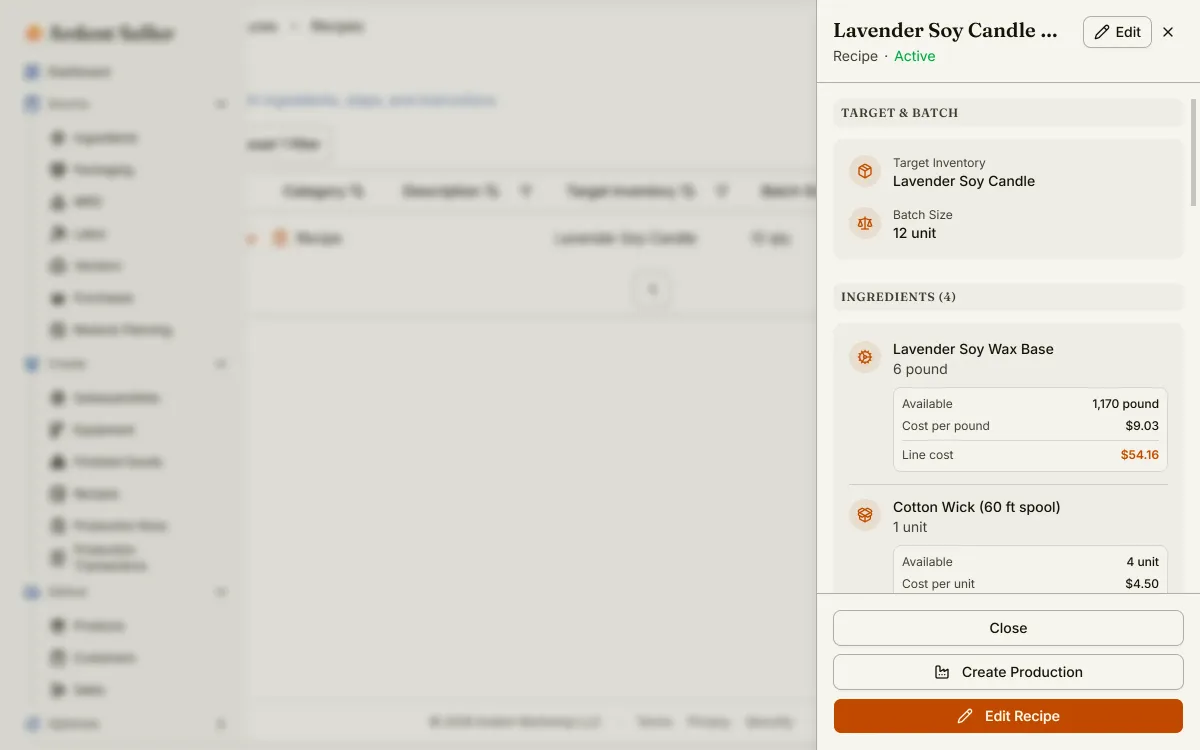
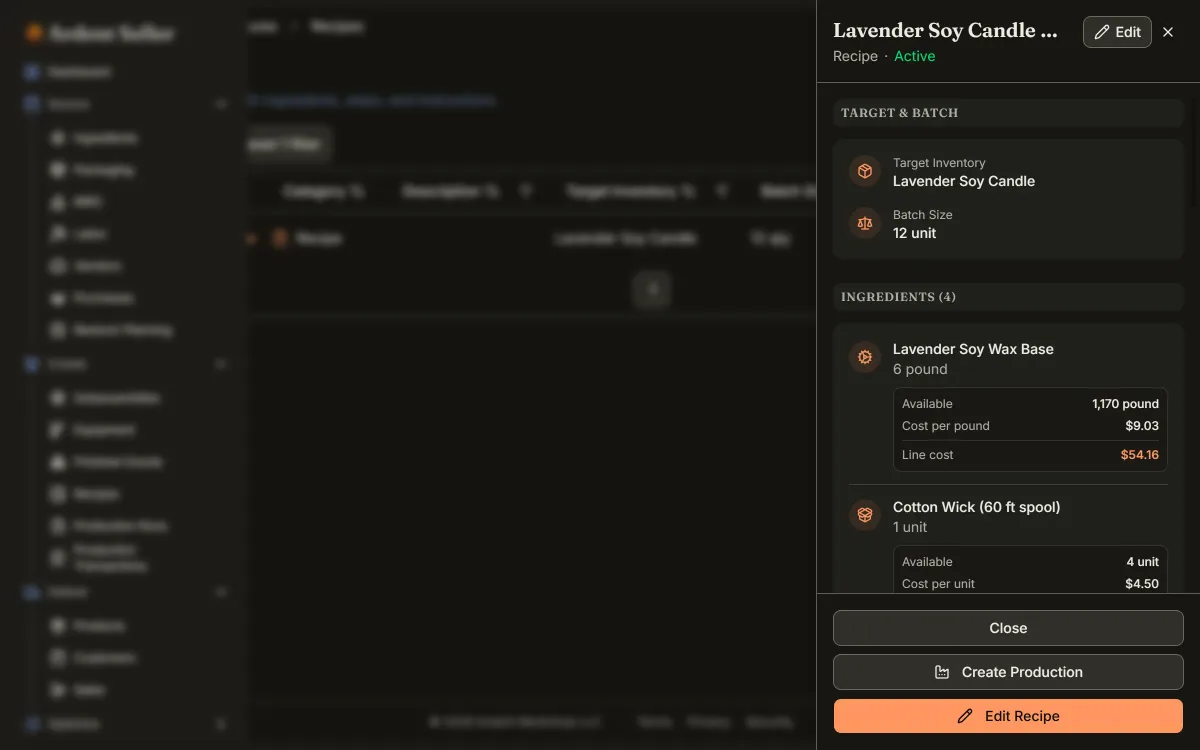
Track every oil, butter, active, preservative, and packaging item as inventory with batch-level cost lots and expiration dates; build skincare formulas as reusable subassemblies; auto-generate variants across formula/size/packaging; see true per-unit cost including labor and packaging. Free plan includes Etsy sync for one connected shop; paid plans add more connected shops and deeper reporting.
Major indie-skincare supplier with a long-running skin-care formulation blog and per-product technical pages covering preservatives, emulsifiers, actives, and stability — tied to their catalog.
Indie-skincare supplier with a free blog and resources library covering formulation basics, ingredient functions, and small-batch process tips alongside their catalog — navigate from the homepage to their Resources or Blog sections.
Indie-focused cosmetic formulation school — paid certificate courses plus a substantial free blog. One of the more widely-discussed paid programs for newcomers committing to emulsions and serums.
Standard for tracking income and expenses for tax purposes. Categorizes ingredient and packaging purchases automatically and exports a Schedule C summary at year-end. Pricing changes — see Intuit's pricing page for current rates.
Free design tool for labels, packaging, and Etsy/Shopify listing graphics. Search its template gallery for cosmetic-label layouts — the template provides the visual design; compliance with 21 CFR Part 701 (INCI ingredient list in descending order, identity statement, net contents, manufacturer info) is your responsibility regardless of the template.
Free POS app for in-person sales at indie-beauty markets and boutique pop-ups. Handles card payments, basic inventory, and email-receipt capture for building your list.
Common starting marketplace for indie skincare — particularly for anhydrous products (balms, body butters, facial oils). Be aware of the stacked fee load (listing + transaction + payment processing, plus optional offsite-ads — see Etsy's Fees and Payments Policy) and the offsite-ads opt-out rules, and ensure cosmetic-claim language matches FDA/FTC standards.
Common mistakes to avoid
The patterns that show up over and over in the first year.
Selling water-containing formulas without a real preservative
"Natural preservative-free" is a frequent indie shortcut that does not produce safe water-containing skincare. Antioxidants like vitamin E and rosemary extract slow oil rancidity but do not preserve a water-containing system against bacterial, mold, and yeast growth. Use a recognized broad-spectrum preservative at the manufacturer's recommended use rate, in the manufacturer's recommended pH range, and validate with preservative efficacy testing (PET, USP <51>) before any first sale.
Skipping the accelerated-stability window
Selling a water-containing emulsion within days of formulating it means the buyer experiences a formula that hasn't cleared its stability check. Phase separation, color drift, off-aromas, and pH drift commonly appear over weeks, not hours. 8–12 weeks at 40 °C / room temp / 4 °C in parallel is the indie standard — bake it into the production calendar, not as an afterthought.
Drug claims that turn a cosmetic into an unapproved drug
"Treats acne," "reduces wrinkles," "heals eczema," "kills bacteria" — these structural and functional claims pull the product out of the cosmetic framework and into FDA drug regulation, which requires full New Drug Application or OTC monograph compliance. Indie brands stay on the right side of the line by describing appearance and feel without medical promises. Verify the FDA "Is it a cosmetic, a drug, or both?" guidance referenced in step 2.
Pricing without packaging
In small-batch indie skincare the container, pump, label, and outer carton commonly add up to more than any single ingredient line in your formula. New makers routinely price as if those costs are an afterthought, which silently undercounts true cost by ~$1.50–$3.00 per unit at starter-batch packaging prices. Pull packaging out as its own line item in the per-batch calculator.
Mislabeling an INCI ingredient list
FDA cosmetic labeling under 21 CFR Part 701 requires a full ingredient list in descending order of predominance using each ingredient's "common or usual name" — drawn from the § 701.3(c) naming hierarchy, which INCI names satisfy and which is the industry convention. Indie brands commonly mislabel by inventing their own names, omitting the order-of-predominance rule, or burying preservatives in a "natural fragrance" bucket. For botanicals the English common name carries the listing and the FDA does not object to the Latin INCI name alongside in parentheses — the FDA's own example is "Sweet Almond (Prunus Amygdalus Dulcis) Oil," and the same pattern applies to any botanical (e.g., "Shea Butter (Butyrospermum Parkii Butter)"). INCI conversion is procedural — every supplier publishes the INCI name on the SDS or product spec sheet. Copy them faithfully.
Mixing personal and business money
Open a separate checking account on day one — even before you form an LLC. Skincare ingredients (carrier oils, actives, preservatives, packaging) sprawl across many suppliers, and at tax time the difference between five minutes and five hours of bookkeeping is whether those purchases sit in their own account.
Frequently asked questions
The questions new makers ask most often.
How do I start a skincare business?
Start by picking a product family: anhydrous lines (balms, body butters, facial oils, lip products) need no preservative and can reach first sale in 2–4 weeks; water-containing lines (lotions, creams, toners) need a broad-spectrum preservative plus an 8–12 week accelerated-stability window and preservative-efficacy (PET) lab testing before they ship. From there the sequence is: set up the business and understand FDA cosmetic regulation (including MoCRA facility registration, with a small-business exemption below $1M in average annual cosmetic sales); buy a starter equipment kit scaled to the family you picked; formulate, pH-test, and run stability for water-containing formulas; price for materials + labor + overhead at roughly 3× cost direct or 4× wholesale-ready; choose channels (own store, indie-beauty markets, Etsy, wholesale to boutiques and spas); track inventory and batch numbers with expiration dates from day one; and market with photography, an email list, and ingredient education rather than clinical claims. The eight steps above (in "The 8-step playbook") walk each one in detail.
Do I need a license to sell skincare?
In most U.S. states, no specific skincare-making license is required. You will typically need a general business registration (sole prop or LLC), a sales-tax permit if your state has sales tax, and product liability insurance to sell at most boutique markets or to wholesale buyers. The bigger regulatory question is federal: almost all skincare products meet the FDA's definition of a cosmetic, which brings INCI ingredient labeling rules under 21 CFR Part 701 and, since MoCRA, facility registration and product listing — with a small-business exemption for makers whose average annual cosmetic sales are under $1M (adjusted for inflation) over the prior three years (as of mid-2026, under FD&C Act § 612(a) / 21 U.S.C. § 364h(a); the exemption does not cover the four product carve-outs at § 612(b) — eye-mucous-membrane products, injectables, internal-use products, and products meant to alter appearance for more than 24 hours where removal is not customary). Serious adverse-event reporting still applies to every cosmetic facility regardless of size. Verify the current FDA MoCRA overview before relying on the small-business exemption.
How long does it take to start selling skincare?
For an anhydrous line (lip balms, body butters, facial oils, salves) plan on 2–4 weeks: a week to source materials and set up, 1–2 weeks to formulate and shoot photos, and a few days to finalize labels and listings. For water-containing emulsions and aqueous products, plan on 8–14 weeks because the stability window (8–12 weeks of accelerated stability at 40 °C / room temp / 4 °C in parallel) and PET (preservative efficacy testing via USP <51> at a third-party lab) are real prerequisites. Most new makers under-budget the stability window — bake it into the calendar before ordering ingredients.
Do I need a preservative in my skincare?
For any product containing water — lotions, creams, serums, toners, masks, hair products — yes, a recognized broad-spectrum preservative is required. Antioxidants like vitamin E and rosemary extract slow oil rancidity but do not inhibit bacterial, mold, and yeast growth in water-containing systems. Common indie-skincare broad-spectrum options include Liquid Germall Plus, Optiphen / Optiphen Plus, Geogard ECT, and Leucidal Liquid SF; each has a manufacturer-specified use rate, an active pH range, and a list of known incompatibilities — read each system's technical data sheet before choosing. Anhydrous products (no water — balms, body butters, facial oils) do not require a preservative, only an antioxidant for the oil phase. "Natural preservative-free" water-based formulas marketed by hobbyist makers are not safe to sell — preservative efficacy testing (PET, USP <51>) is the only authoritative answer to whether a preservative system actually works in your specific formula.
How much does it cost to start a skincare business?
A realistic starter outlay is $400–$2,500 — we round the practical floor to $400 to cover small incidentals and a first insurance payment beyond the bare equipment list. The itemized anhydrous-line minimum (oils, butters, waxes, vitamin E, essential oils, scale, beakers, packaging, all bought new) is around $310–$730, and less if you already own the heat source and mixing tools. Water-containing lines add a pH meter, an emulsifier, a broad-spectrum preservative, a stick blender or small homogenizer, two thermometers, and a stability-test storage setup — roughly an additional $175–$860 in equipment (the upper end uses a benchtop homogenizer). Add a first-year insurance quote (varies by carrier, coverage limits, and state — typically a few hundred dollars for a small line; confirm cosmetic/skincare coverage is in-scope before relying on any quote), an LLC filing fee if you form one, and PET (preservative efficacy testing) costs at a microbiology lab (typically in the low-hundreds to mid-hundreds of dollars per formula — confirm current pricing directly with the lab). Many makers start lean at $500–$900 with an anhydrous line and reinvest revenue into emulsion equipment as the brand grows.
What is preservative efficacy testing (PET) and is it required?
PET (also called challenge testing or antimicrobial effectiveness testing) is a lab test that verifies a preservative system actually inhibits microbial growth in a specific finished formula. The standard protocol is USP <51> Antimicrobial Effectiveness Testing, which inoculates samples with five reference organisms (Staphylococcus aureus, Escherichia coli, Pseudomonas aeruginosa, Candida albicans, Aspergillus brasiliensis) and measures microbial reduction at 7, 14, and 28 days. PET is performed by third-party microbiology labs — Eurofins is one commonly-mentioned option, but USP <51> capability varies by site, so confirm directly; smaller regional contract labs also serve indie-skincare brands (search "USP 51 antimicrobial effectiveness testing lab" for current options). Pricing is typically in the low-to-mid hundreds of dollars per formula for a single PET (confirm current pricing directly with the lab — rates change and labs occasionally offer indie-maker tiers). PET is not legally required for cosmetics in the U.S. but is the standard of care for any water-containing leave-on product — brands that skip it carry the contamination risk personally. Anhydrous formulas do not require PET because they have no water phase to support microbial growth.
What's the difference between a cosmetic and a drug under FDA rules?
A cosmetic is defined as a product intended to cleanse, beautify, promote attractiveness, or alter appearance. A drug is defined as a product intended to diagnose, cure, mitigate, treat, or prevent disease, or to affect the structure or function of the body. Most artisan skincare is regulated as a cosmetic — until the marketing copy adds a structural or functional claim. "Moisturizes skin" is a cosmetic claim; "treats eczema" is a drug claim. "Smooths the appearance of fine lines" is a cosmetic claim; "reduces wrinkles by 47%" is a drug claim with a specific efficacy assertion. Drug status requires either FDA New Drug Application approval or compliance with an OTC monograph — both expensive and lengthy processes that are not realistic for an indie brand. Indie skincare stays on the right side of the line by describing appearance and feel without medical promises. Search "FDA is it a cosmetic a drug or both" for the current guidance before publishing claims.
Do I need insurance to sell skincare?
Strongly recommended. Leave-on skincare carries a meaningfully higher liability profile than rinse-off products — skin reactions, allergic contact dermatitis, mislabeled allergens, and (in rare but expensive cases) contamination claims happen. Most boutique markets and wholesale buyers require proof of product liability insurance, often with a per-occurrence minimum specified on the vendor application — check each market's vendor packet for the exact figure. The Handcrafted Soap & Cosmetic Guild's insurance program is the maker-guild option most directly associated with handmade soap and cosmetics; confirm that skincare and leave-on cosmetic coverage is in-scope on any quote before relying on it. Pricing varies widely by coverage limits, carrier, and state, so get an actual quote before budgeting. Many general crafter-focused liability policies exclude leave-on cosmetic products entirely — read the exclusions. Operating uninsured is a meaningful personal-finance risk for any skincare brand.
What labels do I have to put on a skincare product?
FDA cosmetic-labeling rules under 21 CFR Part 701 require: an identity statement (what the product is — "Body Lotion," "Vitamin C Serum"); net weight or fluid measure; manufacturer or distributor name and address; and a full ingredient list in descending order of predominance using each ingredient's "common or usual name" (the § 701.3(c) naming hierarchy designates the CTFA Cosmetic Ingredient Dictionary — now maintained by its successor the Personal Care Products Council, and the source of INCI names — as a primary compendium, so INCI names satisfy the rule and are the industry convention). Ingredients present at 1% or less may be listed in any order after the ingredients above 1%, but must appear after the 1% line. Color additives are listed in any order at the end of the ingredient list. Most artisan skincare carries the INCI ingredient list verbatim from the supplier's product spec sheet — for botanicals the English common name carries the listing and the FDA does not object to the Latin INCI name alongside in parentheses — the FDA's own example is "Sweet Almond (Prunus Amygdalus Dulcis) Oil," and the same pattern applies to any botanical (e.g., "Shea Butter (Butyrospermum Parkii Butter)"). California sellers should also check Proposition 65 via the OEHHA Prop 65 warnings site (p65warnings.ca.gov) — a warning may be required if a fragrance or active ingredient appears on the OEHHA chemical list above the safe-harbor threshold.
Can I sell skincare on Etsy?
Yes — Etsy permits handmade cosmetic and skincare listings, particularly for anhydrous products (balms, body butters, facial oils) and well-preserved water-containing formulas. Be aware of the stacked fee load: $0.20 listing fee per item, 6.5% transaction fee on the sale + shipping, US payment processing of ~3% + $0.25 per order, plus an Offsite Ads fee that applies only to sales Etsy attributes to its own off-site ad placements (12% mandatory above $10K USD/365 days in sales; below that, 15% applies automatically on those conversions unless you opt out in Etsy shop settings). On a $28 lotion sale with $6 shipping, the non-Offsite-Ads case runs roughly $3.68 in total Etsy fees (~13% of the sale). The full worked breakdown lives in the Etsy fees FAQ linked from step 6. Verify current rates against Etsy's Fees and Payments Policy before relying on the numbers. Etsy also will not protect a brand from FDA or FTC violations — any cosmetic claims in the listing have to match the conservative language used elsewhere.
Free resources
Hand-picked calculators, checklists, and templates that map directly to the steps above.
Pick a wax or soap base, enter your batch size, and get the exact fragrance oil weight — plus the typical and max load for that medium and the cost per unit.
A working Excel recipe scaler — enter a base recipe, set a target yield, and every ingredient auto-scales with unit conversions (oz/g/lb/ml/cups). Plus a batch-cost tab and a unit-conversion reference.
A printable six-page playbook for handmade-goods producers — five planning principles, the demand-driven batch-sizing formula, and four worksheets for sizing, run logging, weekly WIP, and post-run audit.
Pick a target hourly rate, enter your materials, hands-on minutes per unit, and platform fees — the calculator returns the minimum price that actually pays you that rate after fees and costs. Maker-business specific, not a "freelance day rate" tool.
Live web version of our Excel pricing calculator. Materials + labor + packaging + platform fees → defensible retail at your target margin, with batch-pricing tiers.
A live web tool that runs the +10% / +20% / +30% price-hike math for one product — including the volume drop that comes with each — and tells you which scenario clears the most monthly profit.
A working Excel line sheet for handmade wholesale — buyer-ready front sheet, per-SKU pricing math behind it, and the formulas already wired in.
36 things to set up before — and after — your first sale. Inventory, pricing, and the legal essentials in one place.
A working Excel inventory tracker for makers — raw materials, finished goods, packaging, and a purchase log. Reorder thresholds and a status column do the math; conditional formatting flashes red when you are below the line.
When a spreadsheet is enough, when it stops working, and how to tell the difference before it costs you.
A free, scoped-for-small-sellers economic-nexus checker. Enter your trailing 12-month sales and transactions per state, and the tool flags every state where you have probably crossed the post-Wayfair economic-nexus threshold — without pushing you into a filing product.
Walk through the nine factors of Treasury Regulation §1.183-2(b) and find out whether your side activity qualifies as a for-profit business or a hobby for federal tax purposes — and where to focus to strengthen the business case.
Read next
Deeper dives on the topics that come up in the guide.
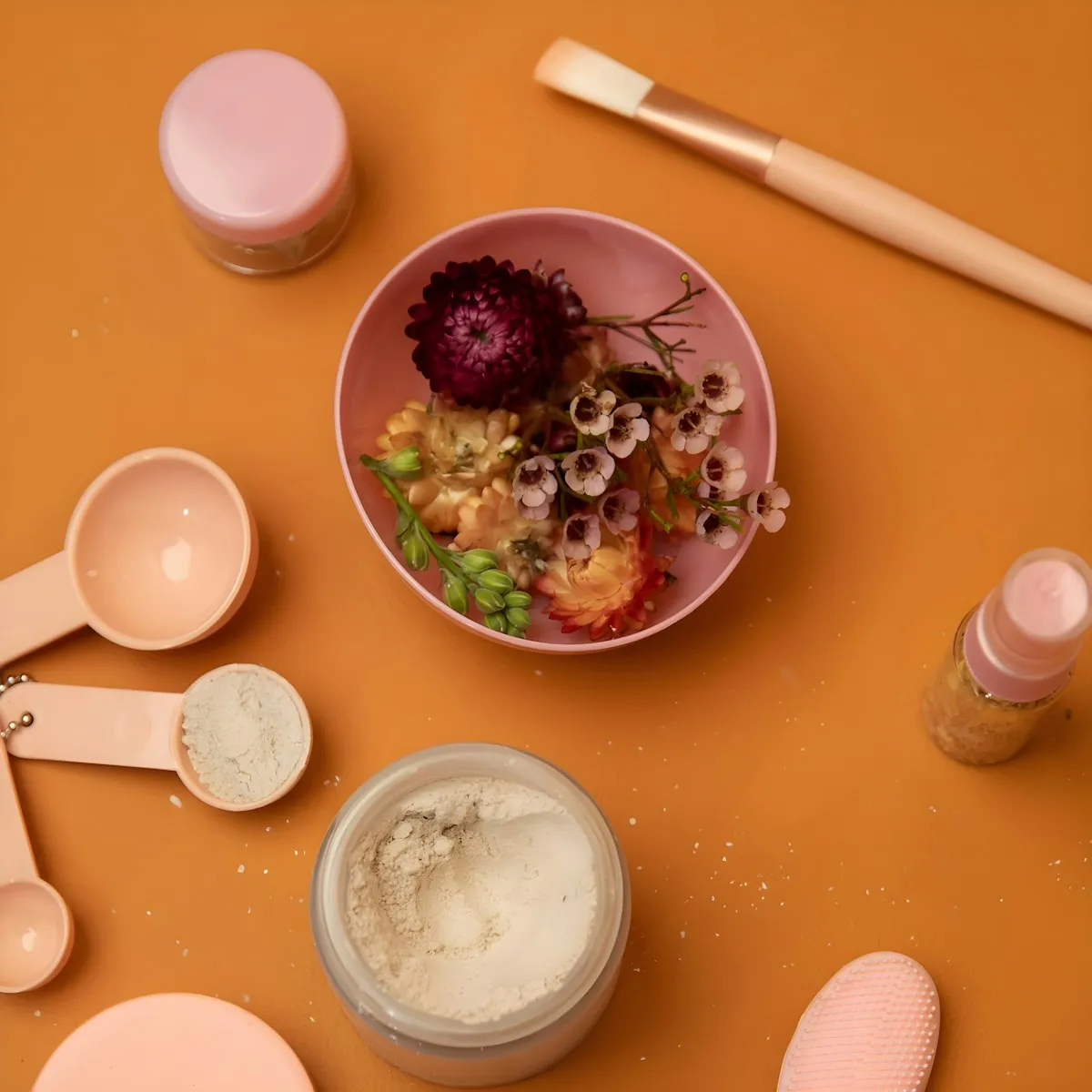
Essential oils cost $40 per ounce, carrier oils come in bulk, and one batch yields 30 bottles. Learn how indie skincare makers can track costs at the gram and milliliter level, handle shared ingredients across product lines, and set prices that actually protect their margins.
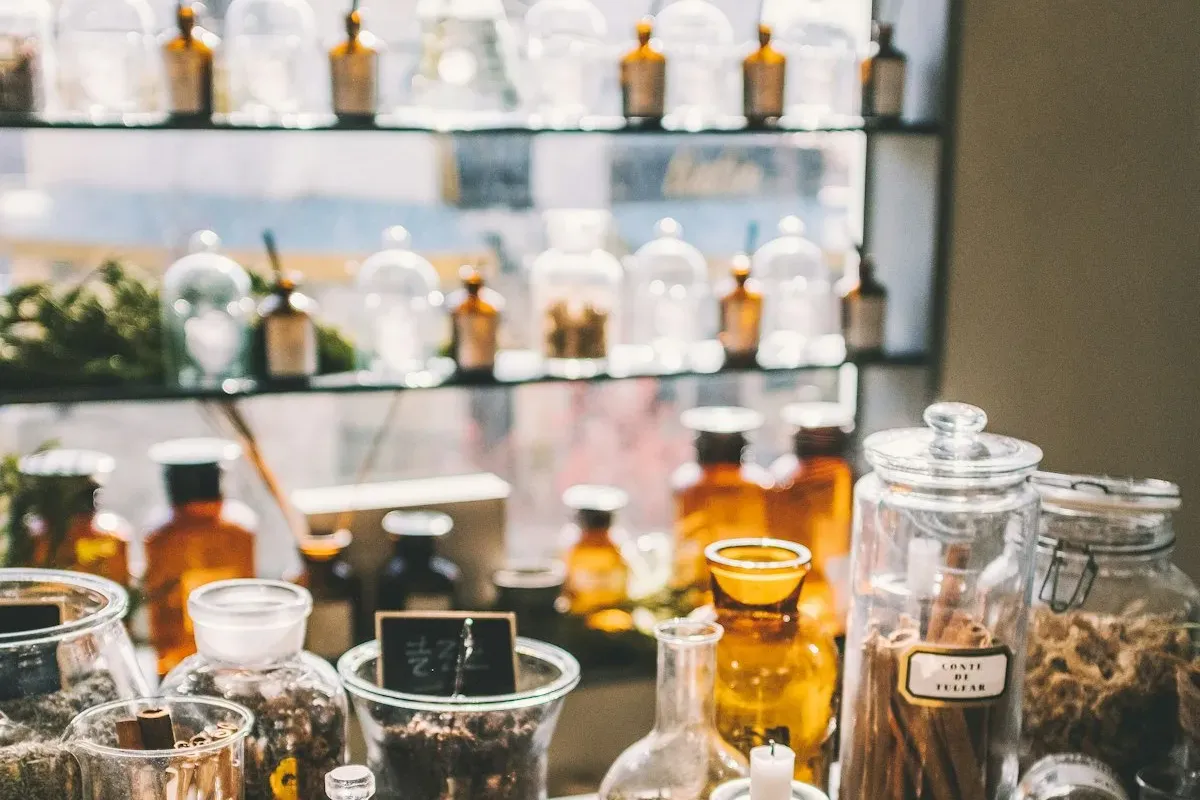
Dried herbs lose potency. Tinctures degrade. Tea blends go stale. If you sell botanical products without tracking shelf life at the batch level, you are one customer complaint away from a reputation problem you cannot fix. Here is what to track, how long things actually last, and the system that keeps your products safe and your records clean.
Learn how to calculate the real cost of every product you make — from raw ingredients to labor and overhead — so you can price with confidence and protect your profit margins.
A boutique owner wants to carry your products. You have no idea what to charge. Most makers default to 50% off retail and hope the volume makes up for it. It usually does not. Here is how to set wholesale prices, minimum orders, and terms that grow your business without gutting your margins.
Once you're selling, you'll need to track it
Tracking inventory, costs, and taxes across every batch and every channel is the operational reality once sales start. Ardent Seller is purpose-built for this.
Indie beauty brands, body care & cosmetics makers
Ready to start?
Track every batch, recipe, and sale from day one of your skincare business. Free plan, no credit card.