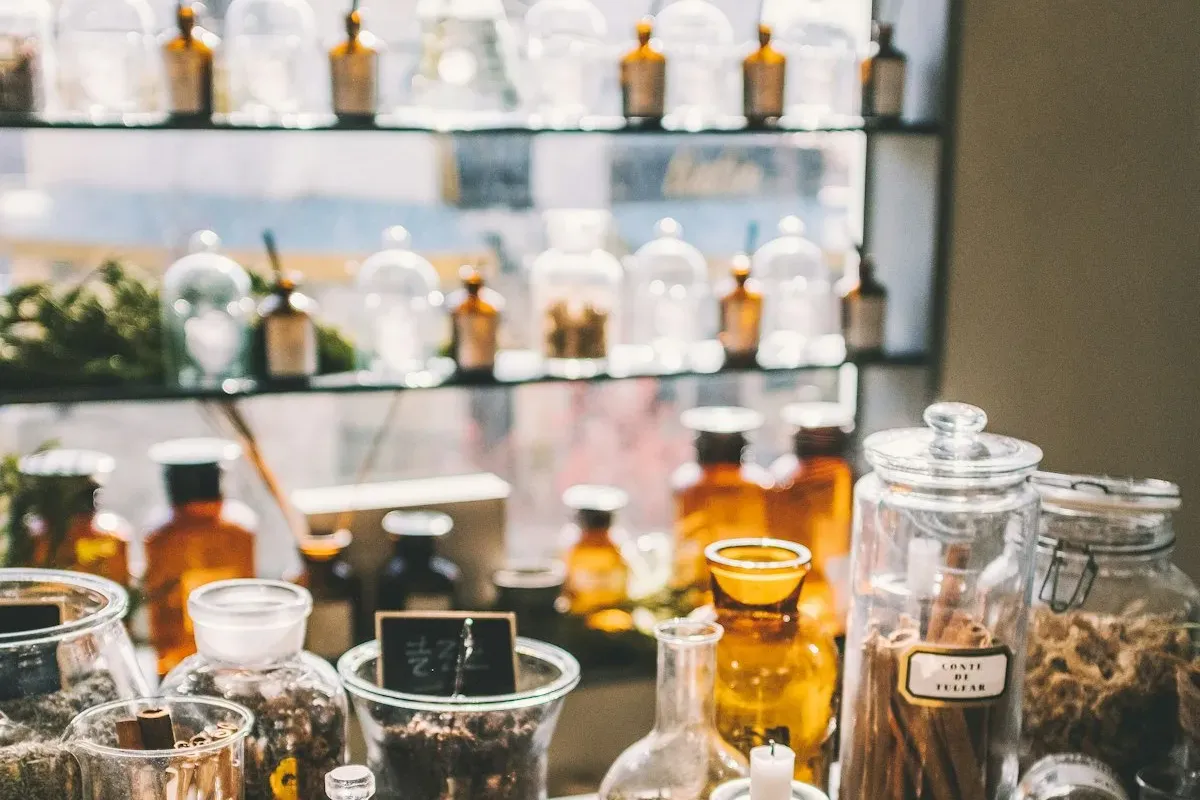
What happens to a jar of dried chamomile after it sits on your shelf for fourteen months?
Nothing visible. It still looks like chamomile. It still smells faintly floral. A customer opens it, brews a cup, and gets a weak, flat, disappointing tea that tastes like hot water with a memory of flowers. They don't complain — they just never buy from you again.
This is the quiet danger of selling herbal products without tracking shelf life. Unlike food that rots or milk that sours, botanicals degrade invisibly. Potency fades. Volatile oils evaporate. Tincture ratios shift. And because nothing looks wrong, most small-batch herbalists don't catch the problem until their repeat purchase rate drops and they can't figure out why.
The fix is not complicated, but it does require a system. Let's build one.
The problem: "best by" dates are guesswork without batch-level data
Most herbal sellers slap a date on their products based on a general rule — "dried herbs last a year," "tinctures last three to five years" — and call it done. Those ranges are real, but they are starting points, not answers. The actual shelf life of your specific product depends on the form, the storage conditions, the ingredient quality, and how long those ingredients sat in your workshop before you blended them.
A dried peppermint leaf harvested in July, stored in a sealed mylar bag with an oxygen absorber, and blended into a tea in September has a very different potency window than the same peppermint purchased in bulk from an online supplier with no harvest date, stored in a paper bag on an open shelf, and blended six months later.
If you don't know when your raw ingredients arrived, how they were stored, and when they went into a finished product, your "best by" date is a guess. And guesses compound — when you blend five herbs together, the blend's true shelf life is only as long as the shortest-lived ingredient in the jar.
The fix: track three dates for every batch
Every batch of finished product needs three dates recorded:
1. Ingredient received date — when each raw ingredient arrived in your workshop. This is the starting clock. If you buy dried lavender from a supplier, the potency timer started when they harvested and dried it — but since you rarely get that information, your received date is the best proxy you have.
2. Production date — when you blended, tinctured, or processed the ingredients into a finished product. This is the date that goes on your internal batch record.
3. Best-by date — the date you put on the label, calculated from the production date using the shelf life window for that product type. This is what the customer sees.
The gap between date one and date two matters more than most herbalists realize. If your dried rosemary sat in your workshop for five months before you blended it into a tea, you've already used five months of its potency window before the customer's clock even starts. Your "best by" date should account for that gap — but it can only account for it if you tracked the received date in the first place.
How long things actually last (and what shortens the window)
These are general potency windows for properly stored botanical products. Your actual shelf life may be shorter depending on storage conditions, ingredient age at time of purchase, and processing methods.
Dried herbs and botanicals:
- Whole dried leaves and flowers: 12-18 months
- Crushed or cut herbs: 8-12 months
- Powdered herbs: 6-9 months (more surface area = faster degradation)
- Dried roots and bark: 18-24 months
- Seeds and berries: 12-18 months
Tinctures and liquid preparations:
- Alcohol-based tinctures (40%+ alcohol): 3-5 years
- Glycerin-based tinctures (glycerites): 1-2 years
- Vinegar-based extracts: 6-12 months
- Infused oils (dried herb in carrier oil): 6-12 months
- Infused oils (fresh herb in carrier oil): 2-4 weeks (moisture = mold risk)
Tea blends:
- Sealed, whole-leaf blends: 12-18 months
- Sealed, cut/sifted blends: 8-12 months
- Opened or repackaged blends: 4-6 months from opening
- Blends with added fruit or flavoring: 6-9 months (fruit pieces degrade faster)
What accelerates degradation: Light, heat, moisture, oxygen, and grinding. Every one of these factors shortens the window above. A tea blend stored in a clear glass jar on a sunny shelf in your market booth is degrading faster than the same blend in an opaque, sealed bag in a cool, dark cabinet. If your products spend hours in direct sunlight at farmers markets, factor that into your shelf life calculation.
Frequently Asked Questions
Do I legally need to put a "best by" date on herbal products?
It depends on your product type and location. In the US, the FDA does not require expiration dates on dried herbs, teas, or dietary supplements — but many states have their own labeling requirements. If your product qualifies as a dietary supplement (tinctures, capsules, concentrated extracts), the FDA encourages best-by or use-by dates as a labeling best practice (FDA dietary supplement labeling guide (opens in new tab)). Tea sold as a food product follows different rules than tea sold as a supplement. Check your state's cottage food laws and the FDA's dietary supplement labeling guide. Even where it is not legally required, putting a date on your products builds customer trust and protects you from selling degraded inventory.
How do I calculate a "best by" date if I don't know when my supplier harvested the herbs?
Use your received date as the starting point and apply a conservative shelf life window. If whole dried chamomile generally lasts 12-18 months from harvest, and you don't know the harvest date, assume the worst case — that it was harvested shortly before your supplier packaged it — and calculate from your received date using the shorter end of the range (12 months). If you use that chamomile in a blend three months after receiving it, your blend's "best by" date should be no more than 9 months from the production date. Ask your suppliers for harvest dates — good suppliers will provide them, and the ones who can't tell you should make you nervous.
Should I track shelf life differently for tinctures versus dried products?
Yes. Tinctures have a much longer shelf life than dried herbs, but they have their own tracking needs. The alcohol percentage matters enormously — a tincture made with 80-proof vodka (40% alcohol) lasts 3-5 years, but one made with 60-proof (30% alcohol) degrades faster because there is less alcohol to act as a preservative. Record the alcohol percentage, the herb-to-solvent ratio (menstruum ratio), and the maceration start and press dates for every tincture batch. Glycerites and vinegar extracts need shorter shelf life windows and should be tracked separately from alcohol-based preparations.
What about tea blends with non-herbal ingredients like dried fruit or honey granules?
The shortest-lived ingredient sets the shelf life for the whole blend. Dried fruit pieces typically last 6-9 months before they harden, lose flavor, or develop off-tastes. Honey granules can absorb moisture and clump. Vanilla bean pieces oxidize. If your 18-month chamomile blend includes dried apple pieces with a 7-month window, the blend's shelf life is 7 months — not 18. This is one of the most common mistakes tea blenders make: calculating shelf life based on the primary herb and ignoring the add-ins that expire first.
How many batches back should I be able to trace?
If a customer contacts you about a product they bought four months ago, you should be able to look up that batch — what ingredients went into it, when it was made, which supplier provided the herbs, and what other products used the same ingredient lot. This matters for two scenarios: a customer reports a quality issue (you need to know if other jars from the same batch are affected) and a supplier issues a recall on a raw ingredient (you need to know every finished product that ingredient touched). A tool like Ardent Seller makes this traceable in seconds — you search a batch number and see the full chain from supplier to finished product. Without a system, you are relying on memory and notebooks, and memory does not scale past a few dozen batches.
Do I need to track storage conditions, or is the date enough?
Dates alone are not enough if your storage is inconsistent. If you store inventory in a temperature-controlled workshop, standard shelf life windows are reasonable. But if you also keep stock in a garage, a market tent, or a non-climate-controlled storage unit, those products are aging faster. At minimum, note where each batch is stored. If products move between locations — workshop to market booth and back — track that movement. A jar of loose-leaf tea that spent every Saturday for three months on a sun-facing market table has had a meaningfully different storage experience than one that stayed in your dark, cool workshop.
I sell at farmers markets. Should I pull products that have been displayed in heat and sunlight?
Yes — or at minimum, rotate them. Direct sunlight and summer heat accelerate the degradation of volatile oils, which is exactly what gives your herbs their flavor and therapeutic value. Bring a limited quantity to each market and replenish from cooler storage rather than displaying your entire inventory in the sun. Products that have been displayed in heat for cumulative hours across multiple market days should be moved to personal use or samples, not sold at full price. This sounds wasteful, but selling a flat, flavorless product is more expensive in the long run — you just pay the cost in lost customers instead of lost inventory.
What records should I keep if I want to sell wholesale to shops?
Wholesale buyers — especially natural food stores and co-ops — will ask for more documentation than direct customers. At minimum, expect requests for: batch number, production date, best-by date, ingredient list with supplier names, storage instructions, and any relevant certifications (organic, non-GMO). Some buyers will ask for Certificates of Analysis (COAs) from your herb suppliers. Start keeping these records from day one, even if you are only selling direct. Building the habit now saves you from scrambling to reconstruct records when your first wholesale opportunity appears.
Building the system before you need it
The best time to set up batch-level tracking is before your product line gets complicated. When you have three blends and one tincture, it takes five minutes per batch to record the dates, ingredients, and supplier info. When you have twenty blends, eight tinctures, and a seasonal product line that rotates quarterly, retrofitting tracking onto an existing operation is painful — and you will cut corners because you are busy filling orders.
Start simple. Every time you make a batch of anything, record:
- Batch number (sequential is fine — BLEND-2026-042 works)
- Product name
- Production date
- Ingredients used (with their received dates and supplier lot numbers if available)
- Quantity produced
- Best-by date (calculated from production date and shortest ingredient window)
- Storage location
That is the minimum viable system. It lives in a spreadsheet, a notebook, or an inventory management tool like Ardent Seller — the format matters less than the consistency. What matters is that six months from now, when a customer asks about the chamomile-lavender blend they bought in October, you can pull up batch BLEND-2026-042 and tell them exactly what was in it and when it was made.
The herbalists who build this habit early are the ones who scale without crises. The ones who don't are the ones who discover, on the day a wholesale buyer asks for batch records, that they have been running a business on memory and good intentions. Memory expires faster than chamomile.
Related reading
- Batch Tracking for Food Sellers — Lot-tracking discipline transfers directly from food production to herbal apothecary work.
- Loose-Leaf Tea Blend Cost Per Ounce — Once the dates are in place, this works out what an ounce of a dried blend actually costs, sifting loss and overfill included.
- Shelf Life, Spoilage, and Shrinkage — How to track and cost the dried herbs that lose potency before they sell.
- Hot Sauce Compliance — A different category, same regulatory mindset — measured-not-estimated safety margins.
Free resources
If you'd like to take this off-screen, these free downloads pair well with batch-level shelf-life tracking:
- Monthly Inventory Count Sheet — A printable count sheet to walk the apothecary shelf with — useful for catching tinctures, dried herbs, and finished blends that have quietly aged past their best-by date.
- Craft Seller Startup Checklist — Inventory cataloging, pricing, and the legal essentials for herbal sellers building a defensible operation before the first wholesale buyer asks for COAs.
This article is provided for educational purposes only and does not constitute legal, regulatory, food-safety, or health advice. Herbal-product labeling, shelf-life testing, supplement regulations, and compliance requirements vary by jurisdiction and product, and change frequently. Consult your state agriculture or health department, a qualified compliance consultant, or an attorney before making compliance or safety decisions.