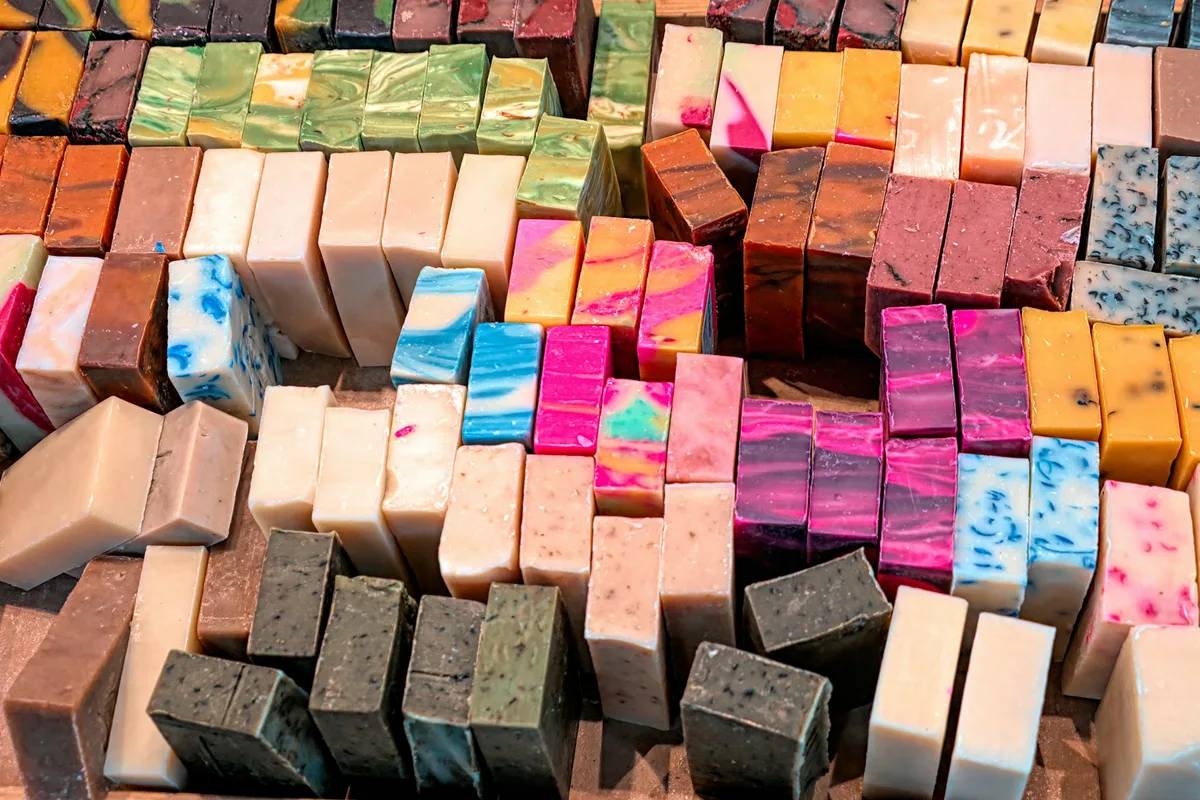
What are you actually waiting for when you set a fresh batch on the rack?
Ask around and the usual answer is "the lye" — and that answer is wrong, which is why bars get sold two weeks early and why makers who switch to hot process are surprised that the wait does not simply vanish.
The short answer: cold-process soap needs four to six weeks. The Handcrafted Soap & Cosmetic Guild's cold-process guide puts it plainly — set the cut bars "aside in a cool area with good circulation for 4 - 6 weeks until the bars are fully hard" (HSCG, The Beginner's Guide to Making CP Soap (opens in new tab)). Hot process is usable much sooner. Melt and pour needs no cure at all. And none of those three numbers is really about lye.
Two clocks, and only one of them takes weeks
There are two separate processes happening to a bar of soap after you pour it, and confusing them is what produces most of the bad advice on this subject.
The first is saponification — the reaction that turns oils and lye into soap. It is fast. Cold-process batter finishes it in roughly one to two days; hot process, where you drive the reaction with heat in the pot, finishes it in hours (Soapy Stuff, "Curing soap" (opens in new tab) — a technical reference maintained by a soapmaker rather than a primary standards body, so read the timings as well-informed practice rather than published research). By the time you cut the loaf, that clock has essentially stopped.
The second is the cure — water evaporating out of the bar, the bar hardening as it goes, and the soap's crystalline structure reorganizing as the water leaves. That is the clock that takes weeks, and it keeps running long after the last of the lye is gone.
1-2 days — how long cold-process saponification takes. 4-6 weeks — how long the cure takes. These are not the same wait, and the long one is not a safety wait.
That distinction has a practical edge to it. A correctly formulated bar that passes a zap test — touch it to your tongue, and a sharp battery-like tingle means free lye is still present — is not a caustic hazard at week two; it is a bad bar. It is soft, it turns to mush in a soap dish, it dissolves in a fraction of the showers a cured bar would survive, and it weighs less than the label says by the time your customer unwraps it. Those are refunds and one-star reviews rather than a safety incident — but they are entirely avoidable, and they come from selling against the wrong clock.
What the number is for your method
Cold process — four to six weeks. The Guild's guide also sets the earlier milestones: the poured mold rests covered for 12-24 hours, and the loaf firms up enough to cut somewhere in the first one to three days. Cutting early is a texture decision; selling early is not.
Hot process — a week is the floor, and the sources diverge sharply above it. The Guild's hot process guide notes that "many soaps can be used the following day (although a longer cure time is recommended for a harder bar)," and that "letting it sit for at least a week will really make a difference in the overall quality of your bar" (HSCG, Hot Process for Beginners (opens in new tab)). Soapy Stuff goes considerably further: it treats "hot process (HP) soap is ready to use and sell right after it is made" as a myth, and reports that some makers cure hot process for a minimum of six weeks against cold process's four — because the hardening carries on long after saponification stops (Soapy Stuff, "Curing soap" (opens in new tab)). Across two named sources, then, the guidance runs from one day to six weeks. If you sell hot process, treat a week as the floor rather than the target.
Melt and pour — no cure. The base arrives already saponified, so neither clock applies: "once the bar hardens, it's ready to go-no curing, no waiting" (HSCG, Beginner's Guide to Melt & Pour (opens in new tab)). This is the real reason a melt and pour maker can take a custom order on Monday and ship it Wednesday while a cold-process maker is quoting six weeks out.
How to tell when this batch is done
Four to six weeks is a typical range for a typical recipe in a typical room. Your recipe, your water discount — how much you cut the water in your lye solution — and the humidity where the rack lives all move the real number. The way to find yours is to weigh it.
Set one bar aside from each new recipe as a witness bar. Weigh it immediately after cutting, then every few days for the next six to eight weeks. The weight falls quickly at first and then flattens; when it stops meaningfully dropping, evaporation has run its course for that recipe in your space. Do this once per recipe and you replace a rule of thumb with a number you own.
One thing weighing does not tell you is whether the lye is spent — that is the zap test's job, and it answers the other clock's question. Two different tests, two different questions, and neither substitutes for the other.
Then write the answer down where it can do some work: date made, cure days for that recipe, cure-ready date. That third field is the one that matters on a busy Saturday, because it turns was the lavender mid-July? into a date you can sort by. If you already track batches in Ardent Seller, it is the same idea as any other production record — the batch exists the day you pour it, and it becomes sellable stock on a date you set rather than on a hunch.
Six weeks is a long time to hold your own money on a shelf. It is a much longer time to hold it and then not be sure which bars are ready.
Start tracking your batches and cure dates free — no card required.
Related reading
- How to Calculate Lye for Soap Making — the SAP math behind the bar, including why a loaf poured at exactly its label weight will be under that weight by the time the cure finishes.
- Soap Making Inventory Guide — what those six weeks of shelf time cost you in tied-up capital, and how to work the cure window into a real cost per bar.
- Best Soap Molds for a Small Soap Business — the bar's cured weight starts with how evenly the loaf was cut: which molds make consistent bars, and how to set a label weight they will all meet.
- Shelf Life, Spoilage, and Shrinkage — the clock that starts after the cure ends: bars that crack, discolor, or lose their scent while waiting for a buyer.
Free resources
If you'd like to take this off the screen and onto the rack:
- Soap Batch & Cure Log — a printable batch record plus a cure-rack log with a cure-ready date column, so a bar reaches a customer because the date arrived and not because you needed stock.
This article is provided for educational purposes only and does not constitute legal, regulatory, or product-safety advice. Soap formulation, handling, labeling, and compliance requirements vary by jurisdiction and product, and change frequently. Consult your state agriculture or health department, a qualified compliance consultant, or an attorney before making compliance or safety decisions.