Etsy Seller's Inventory & Fee Survival Guide
A 18-page narrative companion to the Etsy Fee & True-Profit Calculator. Etsy charges six separate fees on a typical US order; pricing as if it charged a single flat percentage is one of the costliest mistakes makers make on the platform. This guide walks every fee, the pricing math that survives them, the two-bucket inventory model for Etsy + in-person sellers, the returns workflow that does not break reconciliation, and the signal that says it is time to add a second channel.
A 18-page PDF guide for Etsy sellers who want to understand the platform before they try to optimize it. Walks every Etsy fee that lands on a typical US order — listing, transaction, payment processing, Offsite Ads, regulatory operating, and the optional Etsy Ads spend most sellers misread — and shows how each one compounds against the others. Then turns the math the other direction: how to factor fees into a listing price so a target margin survives Etsy's cut, how to run Etsy inventory alongside craft-show and in-person stock without overselling, how to handle returns and restocking so a refunded order doesn't silently destroy a month's margin, and the three signals that say a single-channel Etsy shop has outgrown the spreadsheet. Pairs with the Etsy Fee & True-Profit Calculator (Excel) for sellers who want to run the numbers, and with the Multi-Channel Sales Reconciliation Worksheet for sellers already on more than one channel.
- A plain-English breakdown of all six Etsy fees (listing, transaction, processing, Offsite Ads, regulatory operating, currency conversion) with the exact rate, what it applies to, and when it triggers
- A fee-aware pricing framework that walks listing price → buyer total → Etsy cut → seller take-home → margin, so you stop pricing as if Etsy charged a flat 13%
- A two-bucket inventory model for sellers running Etsy + in-person at the same time: which channel is the source of truth, how often to push counts, and how to ringfence craft-show stock without breaking sync
- A returns-and-restocking playbook covering refund timing, restock decisions, the proportional fee credits Etsy applies on most seller-issued refunds (and the two exceptions where fees are retained), and how to log a return so reconciliation doesn't silently break
- Three signals that say it is time to consider a second sales channel — and three that say staying single-channel is the right call right now
- A pre-flight checklist before you switch from manual reconciliation to a connector — what to migrate, what to archive, and what to rebuild from scratch
Educational guide only — not financial, tax, legal, or business advice. Etsy fee structures, IRS reporting thresholds, and state sales-tax rules change frequently; verify current rates and rules against the linked primary sources (Etsy fee schedule, IRS guidance, your state Department of Revenue) before relying on specific numbers. Consult a qualified accountant or attorney before making financial or compliance decisions based on this content.
Why Etsy take-home is six fees, not one percentage
A common Etsy pricing mistake is treating the platform's cut as a single flat percentage — usually somewhere around 13%. That figure is roughly right on average and almost always wrong on a given order. Etsy charges six separate fees: a $0.20 listing fee that landed when you posted the listing, a 6.5% transaction fee on the item price plus shipping, a payment processing fee that is 3% + $0.25 for US sellers (different rates in other countries), an Offsite Ads commission of 12% (mandatory for shops at or above $10,000 in trailing 12-month gross sales) or 15% (opt-in below that threshold) on ad-attributed orders, a country-specific regulatory operating fee on orders shipped to certain destinations, and a 2.5% currency conversion fee on cross-currency sales. All rates verified against the published Etsy fee schedule at etsy.com/legal/fees as of the publish date.
A flat-percentage mental model misses three of those fees on every order and the Offsite Ads compounding entirely. The survival guide walks each one in plain English so the take-home percentage you target when you set a price is the take-home percentage that actually lands in your bank account.
The two-bucket inventory model for Etsy plus in-person
Overselling at a craft show is one of the most expensive recoverable mistakes an Etsy seller can make. The fix is a two-bucket inventory model: one channel is the source of truth, the other is a ringfenced bucket. The guide walks both choices — software-as-source-of-truth (push counts to Etsy on every stock movement) and Etsy-as-source-of-truth (allocate a fixed craft-show set, sell down to zero, then sync) — and explains when each one breaks.
It also covers the case most guides skip: returns and restocking. Two rules surprise sellers the first time they process a refund. First, for cash-basis bookkeeping a refund posts in the period it is issued, not the period of the original sale. Second, for seller-issued refunds via Etsy Payments within 180 days, Etsy credits the transaction fee and the percentage portion of the processing fee back to the seller proportionally — the inverse of what many sellers expect. The exceptions where Etsy retains the fees are Purchase Protection Program refunds (Etsy is paying the buyer) and refunds processed more than 180 days after the original sale. See the Etsy Fees & Payments Policy at etsy.com/legal/fees.
When to add a second channel — and when not to
Three signals say it is time to consider a second sales channel: effective Etsy fees consistently exceeding your target margin threshold (typically driven by mandatory Offsite Ads after a shop crosses the $10,000 trailing 12-month threshold combined with a low average order value), a category restriction that blocks a product line you want to sell, or a customer base that is buying through DMs and asking for a non-Etsy checkout. Three patterns suggest staying single-channel is the right call for now: roughly fewer than 50 orders a month (below that threshold, the overhead of managing a second channel typically outweighs the revenue upside), a product line that depends on Etsy SEO, or a workflow with active cottage-food or labeling compliance work in progress.
The guide is opinionated on this point: "should I leave Etsy" is the wrong question. The right question is "what is the second channel adding that Etsy is not." The Multi-Channel Sales Reconciliation Worksheet — also free, available at /resources/multi-channel-sales-reconciliation-worksheet in the same library — is the next step once that question has an answer.
How to use this resource
Identify every Etsy fee on a typical order
Walk the six Etsy fees that land on a typical US order (listing, transaction, processing, Offsite Ads, regulatory operating, currency conversion), note each rate and what it applies to, and identify which of the six apply to your shop type and country.
Build a fee-aware listing price
Start from the post-fee margin you want to clear, work backward through transaction (6.5%), processing (3% + $0.25 in the US), and Offsite Ads (12% or 15% if applicable) to the listing price that delivers that margin after Etsy takes its cut.
Choose your inventory source of truth
Pick between the two-bucket inventory models — software-as-source-of-truth (push counts to Etsy on every stock movement) or Etsy-as-source-of-truth with a ringfenced craft-show bucket — and document the choice so you stop reconciling against three places.
Log returns with the correct fee credits
Record the refund as a negative-revenue line in the period it is issued, capture the proportional fee credit Etsy applies on seller-issued refunds via Etsy Payments within 180 days, treat Purchase Protection refunds and 180-day-plus refunds as fee-retained exceptions, and increment inventory only when the item comes back saleable.
Check the channel-expansion signals
Audit your last 90 days against the three signals that say a second sales channel is worth considering (fee pressure, category restriction, off-Etsy buyer demand) and the three patterns that say staying single-channel is right (volume, SEO dependence, compliance work in progress).
Run the connector pre-flight checklist
Before switching from manual reconciliation to a connector, close the prior month manually, set a clean inventory cutover date, decide fee categorization in advance, re-allocate any ringfenced stock buckets, and verify the OAuth scope and disconnect path.
Or skip the spreadsheet entirely
A guide explains what is happening; a connector handles it for you. Ardent Seller's native Etsy connector imports every order automatically with each fee captured as a separate ledger entry, pushes inventory back to Etsy on every stock movement, and makes the fee-aware reports the guide describes update continuously instead of one paste-and-categorize session a month.
Native Etsy connector
OAuth-secured sync. Orders, fees, refunds, and shipping import as separate ledger entries; inventory pushes back automatically.
True-profit reports
Profit & Loss, Sales, and Schedule C reports subtract Etsy fees automatically — the margin you see is the margin that hits your bank account.
Etsy shop owners — full workflow
How Etsy sellers combine the connector, true-profit reports, and the per-event ledger end-to-end. Mirrors the workflow the survival guide describes.
Frequently asked questions
How is this different from the Etsy Fee & True-Profit Calculator?
The calculator is an Excel workbook that does the fee math on your specific orders. The survival guide is a 18-page PDF that explains the fee structure itself, walks the pricing logic that flows from it, and covers the two non-fee topics the calculator does not (multi-channel inventory and returns). Most sellers benefit from reading the guide first and then using the calculator on their own data.
Does the guide cover non-US sellers?
Partially. The fee anatomy section flags the rates that change by country (payment processing, regulatory operating fee, currency conversion) and points at the Etsy fee schedule for current numbers. The pricing math is country-agnostic — substitute your local processing rate for the US 3% + $0.25 default. The inventory and returns sections are country-agnostic.
How current are the Etsy fee numbers in the guide?
Numbers are current as of the publish date stamped on the cover page. Etsy has raised the transaction fee twice since 2022, so verify against the live fee schedule before relying on edge cases. The guide is structured so the fee-anatomy section is the only place numbers appear — if Etsy changes a rate, the rest of the guide stays valid and only the cover-page rate table needs updating.
Will reading this replace working with an accountant?
No. The guide is educational — it explains the platform mechanics so the conversation with your accountant is shorter and the questions you ask are sharper. Sales tax, 1099-K reconciliation, and Schedule C categorization decisions all benefit from a qualified preparer who knows your full tax situation.
Related resources
Etsy Fee & True-Profit Calculator
A working Excel calculator for Etsy sellers — every fee broken out, bulk reconciliation across 60 orders, and a listing-price solver that targets a margin AFTER Etsy takes its cut.
Multi-Channel Sales Reconciliation Worksheet
A working Excel worksheet for sellers reconciling Etsy + Shopify + in-person sales against bank deposits — surfaces fee shortfalls, refund mis-postings, and a per-channel monthly P&L.
Product Pricing Calculator
A working Excel pricing calculator — materials, labor, packaging, and platform fees in, a defensible retail price out. Plus a batch tab that shows what 50 vs. 10 actually costs.
Should I Raise My Prices? Decision Tool
A live web tool that runs the +10% / +20% / +30% price-hike math for one product — including the volume drop that comes with each — and tells you which scenario clears the most monthly profit.
End-of-Month Closeout Checklist
Seven steps to a clean monthly close — sales reconciliation, inventory counts, expense review, P&L, planning, reordering, and backup. Print one each month.
Schedule C Tax Expense Tracker
A working Excel expense tracker organized by IRS Schedule C category. Drop-down picker on every row, a Monthly Summary that builds itself, a year-end Schedule C view, and a mileage log with the deduction calculated for you.
Spreadsheet vs Inventory Software: The Decision Guide
When a spreadsheet is enough, when it stops working, and how to tell the difference before it costs you.
From the blog
Articles that dig deeper into the topics this tool covers.

Best Inventory App for Etsy Sellers in 2026: A Buyer's Guide
A buyer's guide to the inventory apps Etsy sellers actually evaluate in 2026 — Ardent Seller, Craftybase, Inventora, Sortly, and Zoho Inventory — with the five questions that decide which one is right for your shop, a side-by-side comparison, and the case where the right answer is "none of these."

42 Questions Etsy Sellers Ask About Fees, Inventory, and Bookkeeping
Direct answers to the 42 questions Etsy sellers Google most — fee math, inventory tracking, monthly reconciliation, sales tax, 1099-K thresholds, and bookkeeping setup. Most-asked first; edge cases at the bottom.

Craftybase vs. Ardent Seller: Which Inventory Software Earns Its Keep for Makers in 2026
A head-to-head comparison of Craftybase and Ardent Seller for handmade sellers — pricing, recipe costing, batch tracking, equipment depreciation, food and cosmetic compliance, multi-channel sync, and which buyer each tool quietly punishes.
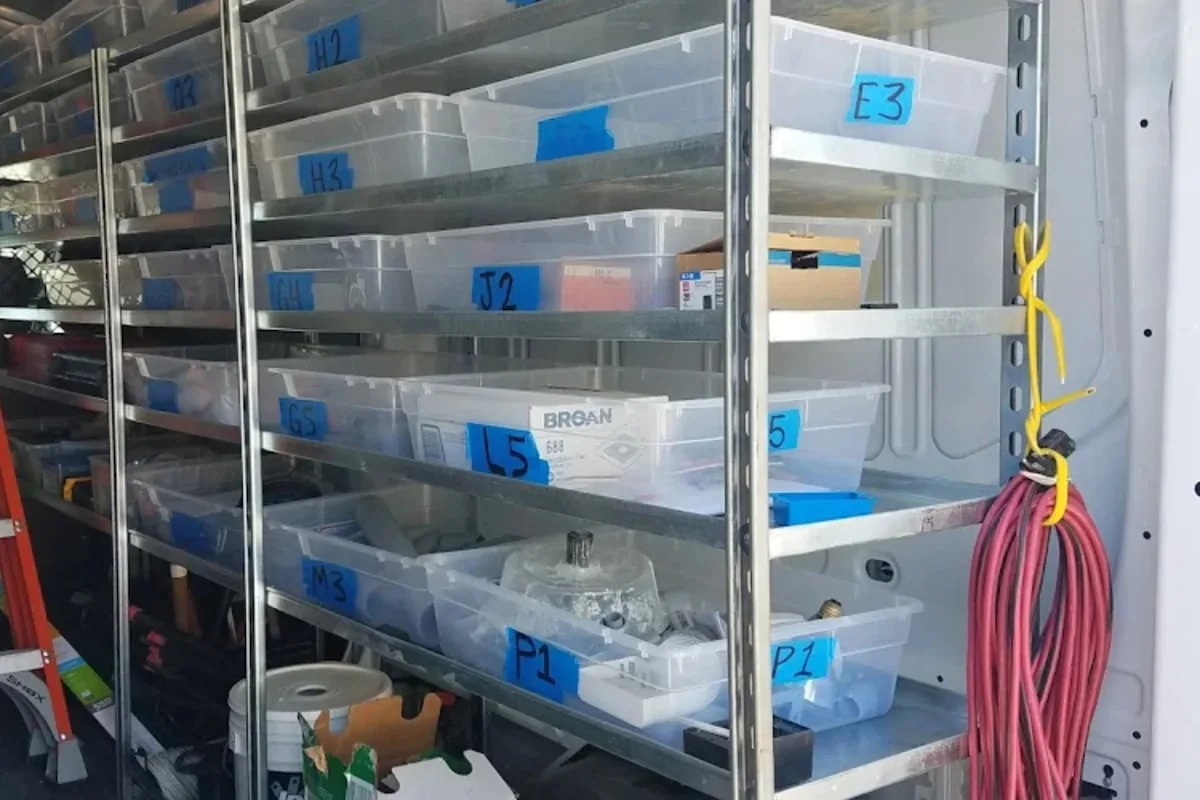
SKU Design for Small Sellers: How to Name, Number, and Track Every Product Without Losing Your Mind
Most small sellers build their first SKU system on a Tuesday afternoon in a hurry and regret it for the next three years. Here is how to name, number, and organize your products so you can find anything in seconds — and how to fix the mess if you already built one.