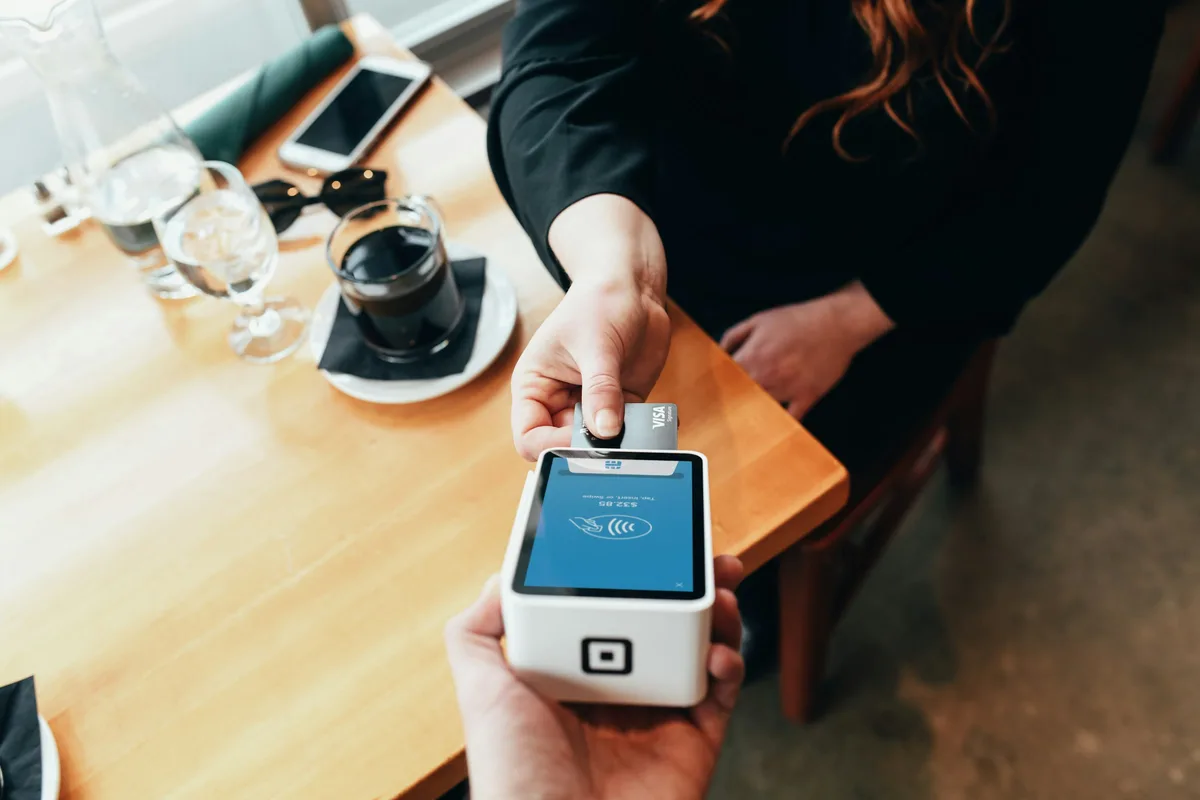
You already use Square. The card reader lives in the market bag, the app is on your phone, and when someone hands you a card at a craft fair it just works. Nobody needs to sell you on that.
So the honest version of this question is not "should I switch off Square." It is the quieter thing you noticed the third or fourth time you opened the dashboard looking for a number that was not there: Square can tell you that you sold eleven candles, and it cannot tell you what those eleven candles cost you to make. That is not a settings problem. It is a category problem, and it is worth understanding precisely — because the answer decides whether you upgrade your Square plan or add something beside it.
The short version: Square is a payments and point-of-sale system that counts finished goods. It is genuinely good at the register. It does not model the materials, recipes, production runs, or batches behind those finished goods — its own inventory pages never mention them. Upgrading your Square plan buys you deeper retail inventory (purchase orders, vendors, cost-of-goods reports), not maker inventory. We recommend keeping Square for checkout, running a maker's system alongside it, and connecting the two.
What is Square actually good at?
Start here, because a comparison that pretends the other tool is useless is not worth your time.
Square takes money extremely well. Tap, dip, swipe, invoice, online store, all reconciled into one dashboard, with a free software tier so you can start with nothing but a reader. It handles the messy realities of selling in person — refunds, discounts, split payments, receipts — without much friction. For a market vendor, that is a real and continuing advantage.
It also counts stock competently. Square's inventory management page (opens in new tab) advertises real-time stock levels, daily low-stock alerts, downloadable reports, barcode label printing, vendor profiles, and cost-of-goods, sell-through, and aging-inventory reports. If you resell finished products — you buy twelve mugs, you sell twelve mugs — that list is close to everything you need.
The trouble starts the moment the thing you sell is not the thing you bought.
Where exactly does Square's inventory stop?
Read that feature list again and notice what is absent. Square's own inventory marketing never mentions raw materials, ingredients, bills of materials, recipes, production runs, or batch and lot traceability. That is not an oversight in the copy. It reflects what the product is: a retail and food-service platform, built for merchants who buy finished goods and sell finished goods.
Here is the seam in practice. Say you make candles, and one sells. The figures below are illustrative.
What Square recorded: 1 × 8 oz Amber candle sold.
What actually happened:
- 6.2 oz soy wax consumed
- 1 × 8 oz amber jar consumed
- 1 × CD-12 wick consumed
- 0.5 oz fragrance oil consumed
- 1 × label consumed
- 22 minutes of your time spent
What Square recorded is correct and complete for its purpose. It decremented one finished unit and booked the revenue. But everything under what actually happened — the wax, the jar, the wick, the fragrance oil, the label, and the 22 minutes — is invisible to it. Your wax does not decrement. Your jar count does not decrement. Nothing rolls those six lines up into "this candle cost $5.68 to make," and nothing re-does that math when your wax supplier raises prices in September.
You can, on a paid tier, type a unit cost against the item. That is a real feature and it powers Square's cost-of-goods reports. But it is a number you asserted, not one the system computed. The difference shows up on the day your fragrance price changes and you have to remember which forty items contain that fragrance and retype every one of them.
Does upgrading my Square plan fix it?
This is the expensive question, so it is worth being exact. Square's tiers are Square Free, Square Plus at $49/month, and Square Premium at $149/month — and per Square's own support documentation, "the new Square Plus and Square Premium subscription plans are priced per-location, based on your number of active locations" (Square's subscription-plan support article (opens in new tab)). If you sell at a shop and a studio, that is two subscriptions.
Payment processing sits on top of all of it, and the rate is tied to your plan (Square's fee schedule (opens in new tab)): in person, 2.6% + 15¢ on Free, 2.5% + 15¢ on Plus, 2.4% + 15¢ on Premium. Online and invoices run 3.3% + 30¢ on Free and 2.9% + 30¢ on the paid tiers. Manually keyed and card-on-file transactions are 3.5% + 15¢ on every plan.
What the money buys, according to Square's retail plan comparison (opens in new tab):
- Free — item and SKU creation, stock counts, discounts and refunds, sales reporting.
- Plus ($49/mo/location) — inventory management and stock intake, vendor and purchase order management, cost of goods sold and inventory reporting.
- Premium ($149/mo/location) — cross-location returns and fulfillment, and transfer orders between locations.
Read that ladder carefully and the pattern is unmistakable: every rung is deeper retail inventory, and none of them is maker inventory. Purchase orders track what you bought. Vendor profiles track who you bought it from. COGS reports total up costs you keyed in. At $149 a month per location you can move finished stock between two shops — and you still cannot tell the system that six ounces of wax become one candle.
That is the whole decision, really. If the number you are missing is a materials number, no Square tier contains it, so upgrading is not the fix.
But doesn't Square have recipes now?
It does, with enough asterisks that it is worth reading the fine print before you plan around it.
Square Recipes adds ingredient costing, unit conversions, and automatic ingredient decrement on sale. Square's Square Recipes support documentation (opens in new tab) describes it as available to "Square for Restaurants Plus or Premium subscribers only" and notes that "ingredient cost tracking is a beta feature and may change over time."
Three of its stated limitations matter enormously for makers, and they are quoted directly from that page:
- "No batch prep or recipes of recipes. You can't create a recipe for an ingredient that itself has a recipe." This blocks a pattern many makers rely on: costing a component once and reusing it across products. You cannot cost a soap base and then use that base in four soap recipes. You cannot make a ganache and then use it in three cakes. You cannot mix a fragrance blend and then pour it into six candles.
- "Items must use the Prepared Food & Bev item type." A candle, a bar of soap, a leather wallet, and a set of earrings are not prepared food and beverage.
- "No recipes on items with multiple variations. Items with multiple variations (for example, Small, Medium, Large) can't have recipes." If your catalog is built out of sizes, scents, or colorways, that is every item in it.
Square Recipes is a sincere feature aimed at restaurant kitchens costing a plated dish. It was not built for a workshop, and the restrictions say so plainly.
In fairness, Square does have a deeper option: Square Restaurant Inventory by MarketMan (opens in new tab), an add-on for Square Plus and Premium at $99/month per location, which does handle batch recipe tracking. That is a real answer to the batch-prep gap — but it is a restaurant-inventory product bolted onto a restaurant plan, priced per location, and it still does not bring cottage food labels, nutrition facts panels, equipment depreciation, or non-food product categories with it.
So which tool should own which job?
Rather than a winner, here is the split we recommend.
Keep Square for the register, and connect it.
- ✅ Taking payments in person, online, and by invoice
- ✅ Market stalls, pop-ups, and retail counters
- ✅ Selling finished goods you already have on the shelf
- ✅ A free software tier to start on
- ➖ But: per-location subscription pricing on the paid tiers
- ➖ And: processing fees on every single sale
Add a maker's system for the workshop.
- ✅ Recipes and bills of materials, including recipes built from other recipes
- ✅ True per-unit cost of goods — materials, labor, packaging, overhead
- ✅ Production runs that decrement materials and create finished stock
- ✅ Batch and lot traceability for recalls and customer complaints
- ✅ Unit conversions (buy by the pound, use by the ounce, sell by the each)
- ✅ Cottage food and allergen labels, plus a nutrition facts panel
- ➖ But: it is not a card reader and will not take payments for you
That second list is exactly what Ardent Seller is built for, and every item on it is included on every plan, starting at $0/month — priced per account, not per location. So the realistic comparison is not "$49 versus something else." It is "keep paying Square what you already pay it, and add the layer it does not have."
The two also connect. Ardent Seller's Square integration signs in from Settings → Integrations and syncs about every 15 minutes: completed Square orders, in person and online, import as sales; Square catalog items sync as listings you link to your inventory; and Square's processing fees import for Schedule C. Ardent Seller never edits your Square catalog. A sale rung up as a custom amount imports its revenue without deducting stock and is flagged for attention, so ringing items up from the Square catalog keeps counts accurate.
If you want the exhaustive row-by-row version rather than the highlights, there is a running Square vs. Ardent Seller comparison that lists every feature and where each product stands.
How do I know which side of the line I'm on?
Four questions. One yes is worth a second look; two or more settles it.
- Do you buy in one unit and sell in another? Wax by the slab, soap by the bar. Fabric by the yard, bags by the each. Square counts the each; it never saw the yard.
- Do you use a component in more than one product? The moment one fragrance appears in six SKUs, keeping costs current by hand becomes a recurring chore that quietly stops getting done.
- Could you be asked to trace a batch? Food, cosmetics, skincare, pet treats — if a customer reports a problem, you need to know which lot went where. Square has no lot.
- Do you sell in variations? Sizes, scents, colorways. This is where Square Recipes explicitly stops, by its own documentation.
If all four are no — you resell finished goods, one SKU each, nothing perishable — Square alone is a perfectly sound stack, and you can stop reading. Exactly one yes is a maybe: workable by hand today, worth revisiting the moment that one thing grows. If two or more are yes, the missing number is a materials number, and no amount of Square plan will produce it.
Square answers "did the sale go through?" It answers that reliably. The question it was never built to answer — "what did that thing cost me to make, and should I make more of it?" — is the one that decides what goes on your bench next month.
Start free with Ardent Seller, keep Square exactly where it is and connect it, and find out what each of your products actually costs you.
Related reading
- How to Sync Inventory Between Square and Etsy — If you keep Square at the register and also sell on Etsy, this is how to stop the two counts drifting apart, starting with Etsy's free one-way connection.
- QuickBooks vs. Ardent Seller for Makers — The same do-I-need-both question applied to your accounting software, for makers deciding what QuickBooks should and should not own.
- Best Inventory App for Etsy Sellers — If you are still shopping rather than comparing two named tools, this buyer's guide sizes up the whole field for handmade sellers.
- Recipe Costing 101 — The actual math behind per-unit cost of goods, which is the number this entire comparison turns on.
Free resources
Two free downloads from the Ardent Workshop library that pair well with this post:
- Spreadsheet vs Inventory Software: The Decision Guide — Covers the same fork from the spreadsheet side: ten warning signs you have outgrown manual tracking, plus a migration checklist.
- Product Pricing Calculator — Work out the true per-unit cost Square cannot compute for you, one product at a time.
This article is provided for educational purposes only and does not constitute financial or business advice. Software prices, plan tiers, processing rates, and feature availability were verified against Square's published pricing and support documentation as of July 2026 and change frequently — confirm current details with Square before making a purchasing decision.