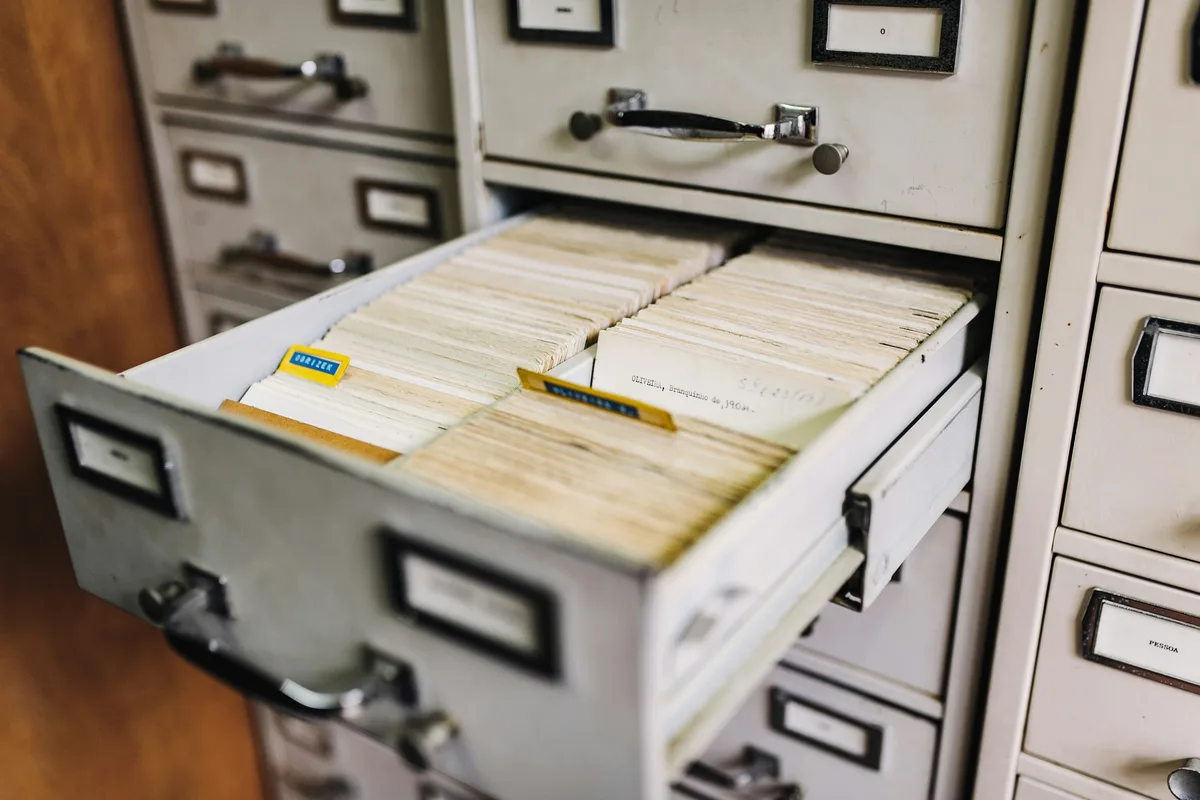
For most receipts, three years after you file the return they support is what the IRS asks for. Seven is not the rule. The IRS's own retention table names seven years for exactly one situation, a claim for worthless securities or a bad debt deduction (IRS: How long should I keep records? (opens in new tab)). Everything else runs on a different clock, and for a maker two kinds of receipt may need to be kept longer than three years: equipment, and inventory that is still on the shelf.
The clock starts when you file, not when you bought the thing. A receipt for a market booth fee paid in March 2026 supports the 2026 return. If you file that return in April 2027, three years takes you to April 2030. File early and nothing changes: the IRS treats a return filed before its due date as filed on the due date.
What does the IRS actually require?
These are the periods from the IRS's record retention page (opens in new tab), including the one for payroll. Unless a row says otherwise, the years count from when you filed the return.
| Your situation | Keep the records |
|---|---|
| Ordinary year: none of the other situations in this table applies | 3 years |
| You claimed a credit or refund after filing | 3 years from filing, or 2 years from paying the tax, whichever is later |
| You left out income worth more than 25% of the gross income on the return | 6 years |
| You claimed a bad debt deduction or a loss on worthless securities | 7 years |
| You did not file, or filed a fraudulent return | Indefinitely |
| Employment tax records (you have staff) | At least 4 years after the tax is due or paid, whichever is later |
The six-year row is the one worth thinking about. You can land in it without meaning to: if cash sales at markets never make it onto your return, and they add up to more than a quarter of the gross income you did report, the period is six years, not three. If that might be you, three years is not a safe margin.
The IRS also notes that an insurer or a creditor may want records kept longer than it does. If you plan to apply for a loan or renew a policy, ask what they need before you shred anything.
Which receipts run on a longer clock?
Equipment. The IRS says to keep records relating to property "until the period of limitations expires for the year in which you dispose of the property," because you need them to work out depreciation and the gain or loss when you sell it. Say you buy a heat press in 2026, depreciate it and sell it in 2033. You keep that receipt until the period for the 2033 return runs out: April 2037 if you file that return by its April due date and the ordinary three-year period applies, more than a decade after the purchase.
Inventory still on the shelf. The IRS has no separate inventory clock. Its general rule is to keep a record until the period of limitations runs out for the return it supports (IRS: How long should I keep records? (opens in new tab)), and inventory stretches that. Fabric bought in November and unsold on December 31 is in that year's ending inventory, which is also next year's opening inventory, and stock that stays unsold keeps carrying forward. Applying the general rule, keep those receipts until the period runs out for the return of the year the item is finally sold or used up. If you do a year-end inventory count, the receipts behind it stay in the pile at least a year longer.
Sales tax. States set their own rules, and sales tax is an easy one to overlook. California tells seller's permit holders to keep required records for at least four years, and longer while an audit or dispute is open (CDTFA Publication 116 (opens in new tab)). It also warns that if your point-of-sale system overwrites data in less than four years, you should move that data out and keep it. Your card reader's sales history is not automatically your archive. Look up your own state's revenue department for its period.
Put together, a simple rule: keep a year's receipts for three years after you file that year's return. Keep equipment receipts until three years after the return for the year you get rid of the item, and receipts for unsold stock until three years after the return for the year it sells or is used up. Keep payroll records for four years. Check your state's sales tax period, and keep more if any of the longer rows in the table could apply to you.
Do photos of receipts count?
Yes, if they can still be read when someone asks for them. IRS Publication 583 (opens in new tab) allows electronic records but holds them to the same standard as paper. The system has to index, store, preserve, retrieve and reproduce them "in legible format," and the same retention periods apply. If you replace paper with scans, you must keep the electronic system going for as long as the records matter. A camera roll of faded thermal-paper photos, with no dates and no vendor names, fails the "retrieve" part well before it fails the "legible" part.
What each receipt has to show matters as much as how long you keep it. The IRS's record-keeping guidance (opens in new tab) says a purchase record should identify the payee, the amount, proof of payment, the date and a description of what you bought. A card statement alone shows the payee, the date and the amount. It doesn't show that the $84 was for wicks rather than a dinner out.
The easiest receipt to find in three years is the one filed with the purchase it belongs to. In Ardent Seller, each saved purchase has an Attachments section for the receipt or invoice, so the record of what you bought, from whom, at what cost, and the proof all sit in one place. If you'd rather not type it in, Scan a purchase reads a photo of the receipt into a draft purchase and keeps the original attached (Scan an expense does the same for costs that aren't stock). One honest caveat: no app should be your only copy. Free accounts are deleted after 75 days of inactivity, so keep your own copy of anything you are required to hold for years, whatever tool you use.
Related reading
- Hobby vs. Business: Taxes and Record-Keeping — The records you need from day one to show the IRS your shop is a business at all.
- Equipment Depreciation for Makers — Why the receipt for a kiln or press has to outlive the machine's working life.
- Year-End Inventory Count for Taxes — The December count that decides which receipts carry over into next year's return.
- Best Bookkeeping Apps for Craft Sellers — Where your receipts end up once they are categorized for Schedule C.
Free resources
One free download to put this into practice:
- Schedule C Tax Expense Tracker — A place to log each expense by Schedule C line as you go, so every receipt you keep already has a home when the three-year clock starts.
This article is provided for educational purposes only and does not constitute legal, tax, or accounting advice. Record retention rules vary by situation and by state, and change over time. Consult a qualified CPA, tax preparer, or attorney before deciding which records to destroy.