Your work is protected by copyright from the moment you make it. That part is true, it requires no paperwork, and it is the reason so many makers believe they can do something about a copycat on Monday morning.
Here is the number that never makes it into the group thread: for claims the US Copyright Office closed between October 1, 2025 and March 31, 2026, the average processing time was 4.1 months (Copyright Office registration processing times (opens in new tab)) — and under Fourth Estate Public Benefit Corp. v. Wall-Street.com, LLC (opens in new tab), 586 U.S. 296 (2019), you cannot file a US infringement suit until the Office has acted on your claim. Automatic protection is real. Automatic enforcement is not a thing that exists.
Most of what circulates about copycats is like that: a true sentence with the expensive half sawn off. Here are the six versions that circulate most, and what the law and the platforms actually do.
In a hurry? If you found the copy this morning and want the short version, skip to what to actually do in the first week — seven steps, ordered cheapest first.
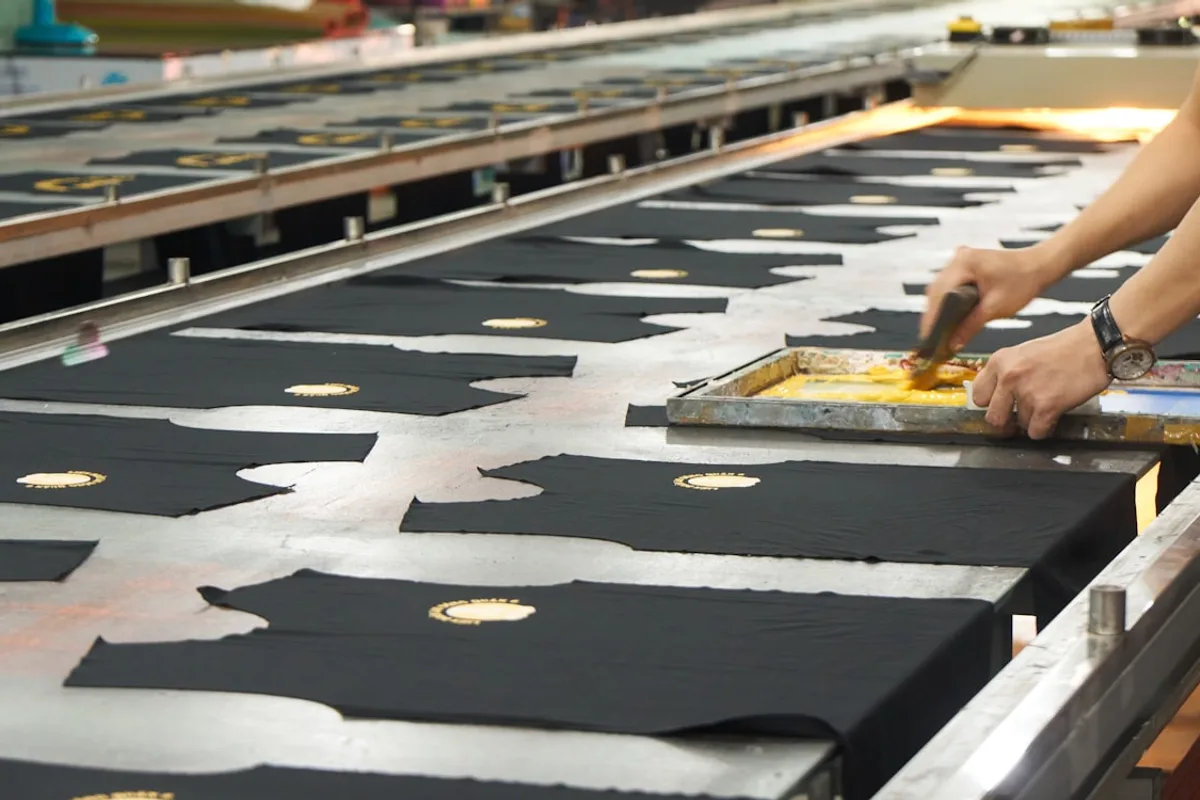
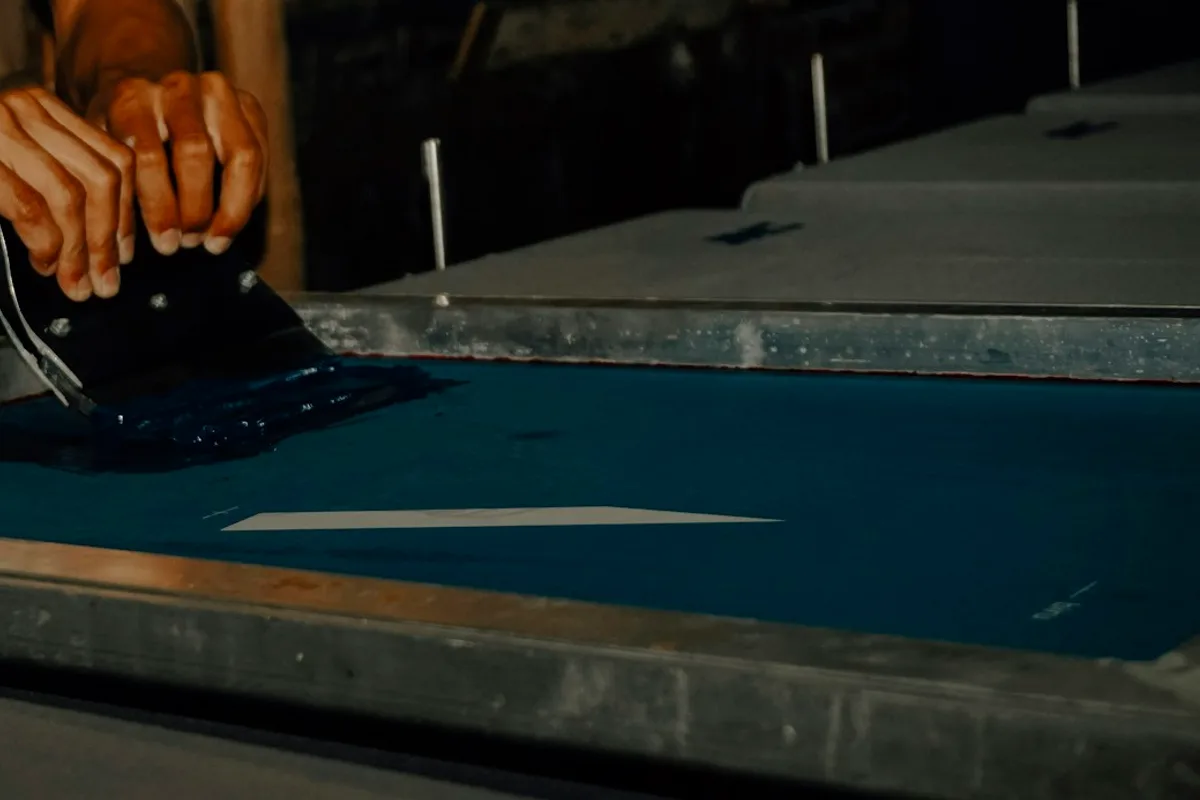
Throughout, there is a composite maker — call her Sadie. She is assembled from common situations rather than drawn from a real customer. She screen-prints tea towels, sells the fern print for $28, and found it last Tuesday on a print-on-demand storefront for $9.
Myth 1: "I'll send a cease and desist and they'll stop"
The belief: a firmly worded letter, ideally on letterhead, ends this.
What actually happens: a cease and desist is a letter. Not an order, not a filing, not a finding. It carries precisely as much weight as the recipient thinks you are willing to back up, which is why the ones that work are usually the ones sent by people who are visibly ready to escalate — and why the ones sent by a maker at 1 a.m. on a phone can end up screenshotted and posted instead.
There are two costs nobody mentions.
The first is that a letter asserting a right you do not have can be turned around on you. If your letter is paired with a takedown notice, 17 U.S.C. § 512(f) (opens in new tab) makes anyone who "knowingly materially misrepresents" that material is infringing liable for damages, including costs and attorney's fees.
The second is jurisdictional and genuinely nasty. The Declaratory Judgment Act, 28 U.S.C. § 2201 (opens in new tab), lets a court declare the rights of the parties in "a case of actual controversy" — and in ordinary IP practice, a demand letter is one of the things that can push a dispute into that posture, at which point the person you wrote to may be able to sue you before you sue them. They pick the court. They pick the timing. You are now a defendant in a lawsuit you started by sending an email you thought was free.
So if Sadie opens with a letter, the best realistic outcome is that the copier quietly delists — and the worst is that she has handed a stranger the choice of courtroom. None of that means never send one. It means the letter is the third move, not the first.
Myth 2: "My work is copyrighted automatically, so I can sue"
The belief: copyright attaches at creation, therefore the courthouse is open.
What actually happens: the first half is correct — protection subsists in an original work "fixed in any tangible medium of expression" (17 U.S.C. § 102(a) (opens in new tab)) with no registration required. The second half runs into § 411(a) (opens in new tab): "no civil action for infringement of the copyright in any United States work shall be instituted until preregistration or registration of the copyright claim has been made."
For years people argued that filing the application was enough. In Fourth Estate, a unanimous Court closed that door, holding that registration occurs — and suit becomes available — when the Copyright Office registers the claim, not when the claimant applies. So Sadie's realistic timeline, starting from the Tuesday she found the $9 towel, is: register now, wait out an average 4.1 months, then talk about suing. There is an $800 special handling fee that buys expedited treatment (fee schedule (opens in new tab)), which is worth knowing about and almost never worth paying for a $28 tea towel.
This is the single most useful thing to internalize: registration is not the thing you do after you get copied. It is the thing that determines what you can do when you get copied.
Myth 3: "They copied my product, so it's copyright infringement"
The belief: it's my design, they made the same thing, that's infringement.
What actually happens: copyright protects expression, not objects, and specifically "in no case" extends to "any idea, procedure, process, system, method of operation, concept, principle, or discovery" (17 U.S.C. § 102(b) (opens in new tab)). A style is an idea. A technique is a method. A product category is neither.
Then the useful-article rule takes another bite. A useful article is anything with a real job to do beyond looking like itself — the statute calls it "an intrinsic utilitarian function." Artwork sitting on top of one is protectable, but only the part you could lift off: features "that can be identified separately from, and are capable of existing independently of, the utilitarian aspects of the article" (17 U.S.C. § 101 (opens in new tab)). The Supreme Court applied that in Star Athletica, L.L.C. v. Varsity Brands, Inc. (opens in new tab) (2017): the chevrons and stripes on the cheerleading uniforms were eligible for protection; the shape, cut, and dimensions of the uniforms were not.
So Sadie's fern drawing — an original pictorial work that happens to be printed on cloth — is on the right side of that line. The towel is not. Neither is the size, the hem, or the idea of botanical prints on kitchen linens.
The Copyright Office's Circular 33 (opens in new tab) (rev. March 2021) is the cheapest half hour in this whole subject, because it lists what gets refused:
- Recipes. "A mere listing of ingredients or contents, or a simple set of directions, is uncopyrightable." A cookbook's photographs and expressive text can be registered; the ingredient list, the process, and the resulting dish cannot.
- Names, titles, and short phrases — including the name of a business, a product, a domain, or a slogan. Your shop name is a trademark question, never a copyright one.
- Typeface, fonts, and lettering, including calligraphy, as such.
- Familiar symbols and designs, and simple combinations of them — the circular's own examples include hearts, stars, arrows, and "common patterns, such as standard chevron, polka dot, checkerboard, or houndstooth."
Read that list before you spend anything. It is worth checking, because "they stole my design" sometimes turns out to be a polka dot.
Myth 4: "The platform will take it down if I report it"
The belief: report the listing, the marketplace removes it, done.
What actually happens: they very likely will remove it, faster than any court would, and that is genuinely the best first move. Just understand what you are getting. US marketplaces run notice-and-takedown processes built on 17 U.S.C. § 512 (opens in new tab), and three features of that statute shape the whole experience.
Your notice has to carry a statement that you have a good-faith belief the use is unauthorized, plus a statement made "under penalty of perjury" that you are authorized to act for the owner. That is not boilerplate; it is the part that makes a careless report expensive.
The removal is reversible. On a counter notification, the provider must tell you it will restore the material, and then restore it "not less than 10, nor more than 14, business days" after receiving the counter notice — unless you have filed an action seeking a court order. Which loops you straight back to the registration problem in myth two.
And you owe a fair-use look before you send. In Lenz v. Universal Music Corp. (opens in new tab), the Ninth Circuit held "that the statute requires copyright holders to consider fair use before sending a takedown notification," adding that a holder who "pays lip service to the consideration of fair use" is still exposed under § 512(f).
The practical read: report it, write the notice carefully, and treat a removal as leverage rather than a verdict. If Sadie files on Tuesday and the listing is gone by Thursday, what she has bought is a copier who now has to decide whether to counter — not a ruling that the fern is hers.
Myth 5: "Registering copyright costs too much to bother"
The belief: registration is lawyer territory and hundreds of dollars a design.
What actually happens: as of August 2026 the Copyright Office fee schedule (opens in new tab) reads $45 for a single application — one work, one author, same claimant, not made for hire — $65 for a standard application, $85 to group-register up to ten unpublished works, and $55 for a group of published photographs.
The money argument is not really about the $45 anyway. It is about § 412 (opens in new tab), which withholds statutory damages and attorney's fees for infringement that began before registration, unless registration happens within three months of first publication. Without those, you are suing for actual damages — the profit you can prove you lost — which on a $28 towel is a rounding error against filing fees. With them, § 504(c) (opens in new tab) puts statutory damages on the table and, just as importantly, makes it plausible that the other side pays your lawyer.
That three-month window is the whole game, and it closes quietly. Sadie's fern print went up eighteen months ago. Registering it today still lets her sue eventually; it does not retroactively give her the leverage she would have had for $45 and twenty minutes in year one.
Rule of thumb: register the two or three designs that actually carry your revenue, at launch, in a group filing. Not all forty. The tail is not worth the paperwork and the top of the catalog is what gets copied.
Myth 6: "If the law won't help, there's nothing left to do"
The belief: no copyright claim, no options.
What actually happens: the copyright question is one of four levers, and it is frequently the weakest.
Trademark protects what a copycat can never lawfully take: your name, and the branding customers search for. It is why the shop name is worth more defensive attention than the product photo. A maker whose designs are borderline-useful-articles may still have a rock-solid claim against anyone trading under a confusingly similar name.
Design patents protect appearance rather than function — "the visual ornamental characteristics embodied in, or applied to, an article of manufacture" (USPTO (opens in new tab)) — and run for a term of 15 years from grant on applications filed on or after May 13, 2015 (35 U.S.C. § 173 (opens in new tab)). Slower and more expensive than copyright, and gated by how long you have been selling, but real for a product whose shape is the thing being copied.
Platform brand programs are worth asking about: some marketplaces run brand-protection tiers gated on having a registered trademark, which is a second reason the trademark lever tends to outrank the copyright one. Terms differ by platform and change often, so check the policy of the marketplace you actually sell on rather than trusting a forum summary.
Knowing your numbers is the lever nobody frames as one: finding out whether the copy actually cost you anything. This is often where the real cost sits, because the honest answer is frequently "no," and the weeks spent in a rage spiral can cost more than the copycat did. A $9 print-on-demand towel and a $28 hand-pulled one are frequently not competing for the same buyer at all. Sadie's fern print is the case in point — she has been assuming a lost sale for every copy sold, and she has never once checked.
That question is answerable with your own records, if you keep them at the product level rather than in a monthly revenue lump. Pull unit sales for the specific design for the six months before the copy appeared and the months since, against a comparable design that was not copied. If both dipped, you found a season, not a thief.
That is also the case for keeping production records you can actually query. Ardent Seller keeps per-product sales history alongside your production records, which makes that comparison a five-minute look instead of an afternoon of spreadsheet archaeology — and the same production and batch history is what timestamps when you first made the thing, which is exactly the evidence a registration or a takedown notice leans on.
What to actually do in the first week
Ordered by cost, cheapest first — and written so it stands on its own if you jumped straight here.
- Screenshot everything — the listing, the shop, the dates, the price. Copycats delete.
- Find your own first-use date and the records that prove it: dated production entries, original files with their metadata, the first listing, the first sale.
- Run the useful-article test honestly. Is the copied element artwork you could lift off the object — a drawing, a print, a pattern you invented — or is it the shape of a functional thing, a technique, or a common motif? Only the first kind is reliably yours.
- Check your numbers before you check your feelings. Did this cost you sales?
- File the platform report if there is a real claim, written carefully. Weigh fair use first — a four-factor test, not a list of safe categories: purpose, nature of the work, amount taken, market effect (17 U.S.C. § 107 (opens in new tab)). Myth 4 covers why weighing it is not optional.
- Register the design — and its two or three siblings — so that next time this conversation starts from a different place.
- Talk to an IP attorney before sending a cease and desist or filing anything. Steps 1 through 6 make that consultation dramatically cheaper.
Sources and methodology
Every legal claim above is linked at the point it is made. Consolidated, with what each supports:
- 17 U.S.C. § 101 (opens in new tab) — definitions of "useful article" and the separability requirement for pictorial, graphic, and sculptural works.
- 17 U.S.C. § 102 (opens in new tab) — automatic protection on fixation (a); exclusion of ideas, procedures, processes, systems, and methods (b).
- 17 U.S.C. § 411 (opens in new tab) — registration as a precondition to filing an infringement action.
- 17 U.S.C. § 412 (opens in new tab) — registration timing as the gate on statutory damages and attorney's fees, including the three-month post-publication window.
- 17 U.S.C. § 504(c) (opens in new tab) — statutory damages.
- 17 U.S.C. § 107 (opens in new tab) — the four fair use factors you are required to weigh before sending a takedown notice.
- 17 U.S.C. § 512 (opens in new tab) — notice elements including the penalty-of-perjury statement (c)(3); misrepresentation liability (f); counter notification and the 10-to-14-business-day restoration window (g).
- 28 U.S.C. § 2201 (opens in new tab) — the Declaratory Judgment Act.
- Fourth Estate Public Benefit Corp. v. Wall-Street.com, LLC (opens in new tab), 586 U.S. 296 (2019) — registration, not application, opens the courthouse.
- Star Athletica, L.L.C. v. Varsity Brands, Inc. (opens in new tab) (2017) — the separability test for designs on useful articles.
- Lenz v. Universal Music Corp. (opens in new tab) (9th Cir.) — fair use must be considered before a takedown notice.
- US Copyright Office, Circular 33: Works Not Protected by Copyright (opens in new tab) (rev. March 2021) — recipes, names and short phrases, typeface, familiar symbols and designs.
- US Copyright Office fee schedule (opens in new tab) — registration and special handling fees, read August 2026.
- US Copyright Office registration processing times (opens in new tab) — 4.1-month average, for claims closed October 1, 2025 through March 31, 2026.
- USPTO, Design patent application guide (opens in new tab) — what a design patent covers (the ornamental-characteristics definition).
- 35 U.S.C. § 173 (opens in new tab) — the 15-year design patent term, and the May 13, 2015 effective date that governs which applications get it.
On data freshness: fees, processing times, and USPTO figures are as of August 2026 and change. Court holdings are current as of the same date. Processing times in particular moved during the October–November 2025 lapse in appropriations, and the Copyright Office notes the increase should be temporary — check the current figure before relying on it. This article describes US law only.
What this is really about
Copying is a compliment delivered in the worst possible format, and the makers who come out of it best are the ones who spent their energy on the two or three designs worth defending and the records that make defending them possible. Sadie's fern print is still hers. What she did not have on the Tuesday she found the $9 version was a registration certificate, a clean set of first-use records, or a straight answer about whether it had cost her anything.
All three of those are fixable this month, and only one of them costs $45.
If you want the production and sales history that answers when you first made a thing — and whether the copy actually moved your numbers — start a free Ardent Seller account and set it up on the designs that carry your revenue.
Related reading
- Can You Legally Sell Fan Art? — the mirror image of this post: what happens when you are the one using someone else's protected work, and why the "change it 30%" rule does not exist.
- How to Stop Digital Download Piracy — if the thing copied was a file rather than a design: which of four doors it left through, why reporting on Etsy is not anonymous, and the group-registration timing that only exists before you list.
- Trademark a Handmade Business Name — the clearance search, class selection, and real USPTO fees behind the strongest lever in myth six.
- Do You Need a Patent for Your Handmade Product? — the design patent from myth six, walked as five gates you can fail before you spend anything: the one-year clock starts at your first listing, not at the copy.
- Product Liability Insurance for Handmade Sellers — the other legal expense makers postpone until the week they need it.
Free resources
Free companion downloads if you want to put any of this into practice:
- Legal Documents Checklist for Handmade Businesses — the paperwork that makes an IP claim defensible, gathered in one place before you need it.
- Craft Seller Startup Checklist — where name clearance and registration belong in the launch sequence, so the three-month window does not close unnoticed.
This article is provided for educational purposes only and does not constitute legal, intellectual-property, or business advice. Copyright, trademark, and design patent requirements vary by jurisdiction and change frequently, and the application of these rules to any specific design is fact-dependent. Consult a qualified intellectual property attorney before sending a demand letter, filing a takedown notice, or making enforcement decisions that affect your business.