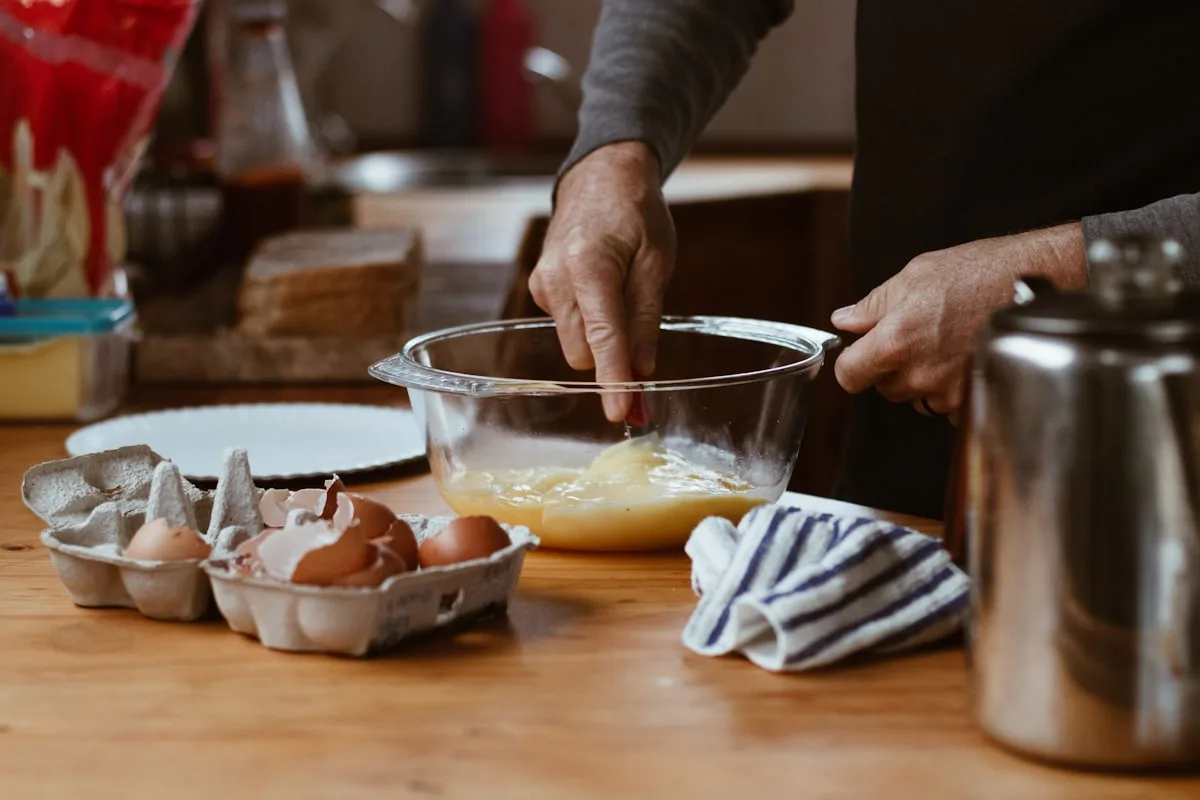
You are in your kitchen on a Saturday morning with three trays of shortbread cooling on the counter. The application deadline for the Davis Square farmers market is Tuesday. A friend in New York sent the state a one-page home processor registration form, with no fee, and is waiting on approval from the state agriculture department. You have spent the last hour searching for the equivalent Massachusetts form and you have not found one. You have found a state regulation called 105 CMR 590, which is long and does not appear to contain the words "cottage food" in a way that resembles your friend's New York process. You are starting to wonder whether you are reading the wrong document.
You are not reading the wrong document. There is no equivalent Massachusetts form. Massachusetts is one of the few states in the country without a standalone cottage food statute, and the rule you actually have to comply with is set by the board of health in your specific city or town. Take a breath. The path forward is real; it just looks different than your friend's.
The short version
What Massachusetts's cottage food framework actually does: The framework lives inside the state Retail Food Code at 105 CMR 590 (opens in new tab). The Cottage Food Operation and Residential Kitchen definitions are at 105 CMR 590.001(C)(2) (opens in new tab); operating guidance at 105 CMR 590.010 (opens in new tab). The MDPH Food Protection Program (opens in new tab) sets the statewide minimum standards. Permitting is delegated to the local board of health in each of the 351 cities and towns under M.G.L. c. 111 (opens in new tab). No statewide revenue cap — boards may attach conditions to a permit, but the Department of Public Health sets no statewide number. Kitchen inspection is required before the permit is issued, and most boards re-inspect annually. Allowed foods: shelf-stable non-TCS baked goods, jams, jellies, hard candies, dried herbs and spices, dry mixes, granola, popcorn, honey, maple syrup, roasted coffee. Excluded: cream-filled pastries, cheesecake, custard pies, fresh dairy, meat, fish, poultry, acidified foods (hot sauce, pickles, salsa), fermented foods, low-acid canned foods, tomato sauce, garlic-in-oil. Prohibited processes: acidification, hot fill, thermal processing in sealed containers (except jams and jellies), vacuum packaging, and curing or smoking. Sales channels: the retail permit covers direct-to-consumer sales, which the Department of Public Health says include farmers markets, craft fairs, and sales by internet or mail. Wholesale to a grocery store or restaurant needs a separate Wholesale Residential Kitchen license from the Department of Public Health under 105 CMR 500.015 — still from the home kitchen, no commercial kitchen required. Out-of-state sales: the department tells producers to confirm compliance with federal law and the destination state's laws. Labor: only the permittee and people working under the permittee's supervision may prepare, package, or handle the food. Training: not state-required, but many boards (Boston, Cambridge, Lexington, Concord, Tewksbury) require Certified Food Protection Manager certification (ServSafe) and ANAB-accredited Allergen Awareness Training before issuing the permit.
There is no single Massachusetts cottage food law
This is the part of Massachusetts that surprises every new cottage food producer. Massachusetts has no standalone cottage food statute. There is no enabling act with a defined revenue cap, no state-level registry, no single application form, no statewide list of allowed foods drafted as a coherent piece of legislation. The cottage food framework is built into the broader Retail Food Code at 105 CMR 590 as a special category of permitted retail food establishment called a Residential Kitchen.
The framework sits on top of two structural facts about how Massachusetts regulates food:
Authority is delegated to the local board of health. Under M.G.L. c. 111, §§ 27, 30, 31 (opens in new tab), every Massachusetts city and town has a local board of health with the statutory authority to inspect, license, and regulate food establishments within its jurisdiction. The board of health is a municipal body, often staffed by a public health director or sanitarian, and its decisions on residential kitchen permits sit alongside its decisions on restaurant inspections, septic system approvals, and well water testing. There are 351 such boards across Massachusetts — one for every city and town — and each one applies the statewide minimum standards from 105 CMR 590 with discretion to add local requirements on top.
The state code sets a floor, not a ceiling. 105 CMR 590.001(C)(2) (opens in new tab) defines a Cottage Food Operation as "a person who produces cottage food products only in the home kitchen of that person's primary domestic residence and only for sale directly to the consumer," and defines Cottage Food Products as "non-time/temperature control for safety baked goods, jams, jellies, and other non-time/temperature control for food safety foods produced at a cottage food operation." That language is the statewide minimum. A local board of health may not authorize foods or sales channels beyond what the state code allows — but the board can layer additional requirements on top: training certificates, inspection protocols, permit fees, plan review, and other permit conditions.
The practical effect is that the rule you actually have to comply with is the combined product of 105 CMR 590 (the floor) and your local board's specific requirements (the layer). A baker in Boston and a baker in a small town in the Berkshires can both be operating as cottage food producers under the same state code while filing different paperwork, paying different fees, and completing different training.
This is unusual. Most cottage food states have a single statute, a single set of allowed foods, a single fee schedule, and a single application form that applies uniformly to every producer in the state. Massachusetts is operating closer to how it regulates restaurants — a state code defining the floor, with local boards of health doing the actual permitting on top — than to how Texas, California, Florida, or any of the other large cottage food states operate. None of Massachusetts's New England neighbors hands cottage food permitting to local boards in the same way — each runs a statewide program, as the comparison table below shows.
Three Massachusetts bakers, three different rules
The most useful way to see how the framework actually operates is to walk through three composite Massachusetts producers, each operating in a different town. All three are baking cottage-food-eligible products. All three are direct-to-consumer only. All three are working from a primary residence, with help only from people they supervise. The three towns apply 105 CMR 590 differently enough that the three bakers end up with three substantially different compliance frameworks.
Maya in Boston: the full-permit regime
Maya bakes shortbread, chocolate chip cookies, and seasonal hand pies (apple in fall, blueberry in summer) in her South End apartment. She does about $18,000 a year in gross sales, almost all of it through the Boston Public Market (opens in new tab) booth her cooperative shares on Saturdays plus a small online ordering channel for in-Boston pickup on Thursdays.
When Maya applied for her permit, the Boston Inspectional Services Department's Retail Residential Kitchen program (opens in new tab) required her to assemble a substantial application package before scheduling the first inspection:
- A signed letter from her property owner authorizing food production in the residence (Boston is a heavily renter-occupied city and the owner authorization is non-negotiable).
- Two sets of plans, minimum 11-inch by 17-inch, showing the kitchen layout, the dry and cold storage locations, the dishwashing setup, the handwashing sink, and the location of the trash and recycling.
- A completed Plan Review application worksheet covering the menu, the production schedule, the source of ingredients, the packaging materials, and the labeling.
- A Certified Food Protection Manager certificate — Maya took the ServSafe Food Protection Manager (opens in new tab) course, which runs $125 and is valid for five years.
- An ANAB-accredited Allergen Awareness Training (opens in new tab) certificate — Maya took ServSafe Allergens, which runs $25 and is valid for five years.
- A Workers Compensation Affidavit (Boston requires this even for sole-proprietor operations).
- The $100 Health Division fee.
The inspector visited her apartment, walked through the kitchen, checked the cold storage and the dry storage, verified that her cat could be confined to a separate room during preparation hours, confirmed that the dishwasher reached the required final-rinse temperature, and signed off. The permit was issued about three weeks after the inspection. Maya renews it annually.
What Maya gets, in exchange for the upfront work: she can sell her shortbread at Boston Public Market, she can take orders through her own website and ship in-Massachusetts by USPS or courier, and she can take direct orders from individual customers for pickup. What the retail permit does not cover: wholesale to a grocery store (that would need a separate Wholesale Residential Kitchen license from the Department of Public Health), sales into other states without first checking federal law and the destination state's rules, and cream-filled pastries or cheesecakes, which require a fully licensed commercial food establishment.
If you are reading this from Boston, Cambridge, or one of the larger Massachusetts cities, expect roughly Maya's regime: a structured plan review, mandatory ServSafe and Allergen Awareness training, an annual permit fee in the $75 to $150 range, and an inspection before the permit is issued. The upfront cost is real — about $250 in training plus the $100 permit fee plus the time to assemble the plans — but the framework is workable and well-trodden.
Priya in Lexington: the moderate-permit regime
Priya makes small-batch jams, fruit preserves, and a line of dry tea blends in her Lexington home. She does about $9,000 a year through the Lexington Farmers Market (opens in new tab) on Tuesday afternoons plus online orders to in-state customers.
When Priya applied to the Lexington Health Department (opens in new tab), the permit application was simpler than Boston's but not trivial. The requirements:
- A completed residential kitchen permit application listing every item she intended to sell.
- A copy of her ServSafe Food Protection Manager certificate.
- A copy of her ANAB-accredited Allergen Awareness training certificate.
- A Workers Compensation Affidavit.
- The $50 annual permit fee.
No 11-by-17 plan drawings. No multi-set plan review. The Lexington sanitarian visited her kitchen, looked at the storage and the dishwashing setup, confirmed that only Priya and helpers under her supervision handle the food, and issued the permit on the spot. The whole process took about ten days from application to permit. Priya renews annually, and the renewal inspection is briefer than the initial one.
Priya is paying the same training cost as Maya — about $150 in ServSafe and Allergen Awareness combined — because Lexington is one of the many Massachusetts towns that adopted the same training requirements as Boston even though it did not adopt the same plan review burden. The labor of getting permitted in Lexington is meaningfully lower than in Boston, but the upfront training investment is essentially the same.
If you are in a mid-sized Massachusetts town — Newton, Brookline, Arlington, Belmont, Concord, Wellesley, Sudbury, Acton, the towns along Route 2 and around the I-95 belt — expect roughly Priya's regime. A simpler application than Boston, the same training requirements, an annual fee in the $25 to $75 range, and a single inspection visit before the permit is issued.
David in Easthampton: the light-permit regime
David bakes sourdough, country breads, and a small line of granola in his Easthampton home in the Pioneer Valley. He does about $6,500 a year, almost entirely through the Easthampton Farmers' Market (opens in new tab) on Saturdays and through direct delivery to a handful of neighbors and friends-of-friends who order through Instagram.
When David approached the Easthampton Board of Health, the requirements were minimal. There was an application form (one page). The board asked him to describe his menu and his production schedule. The board's sanitarian — who also handles septic inspections, beach water quality testing, and the town's restaurant inspections — visited his kitchen during a Tuesday afternoon, walked through, asked a few questions about how he stored his flour and salt, confirmed his dog stayed outside during baking hours, and issued the permit. The annual fee was $35. The board did not require him to hold a Food Protection Manager certificate, did not require Allergen Awareness training, and did not require him to file plans. The board did require him to follow the Department of Public Health's residential kitchen label standards — name and address of the operation, product name, ingredients in descending order by weight, net weight, and allergen information, all in English.
David is not in violation of any state rule. The Easthampton Board of Health has authority under M.G.L. c. 111 to issue or withhold the residential kitchen permit on terms it determines reasonable, and the board's judgment is that the additional ServSafe and Allergen Awareness layer is not a useful protective measure for the local maker community at the scale they typically operate. Other Massachusetts towns — particularly in the western and central regions of the state, in smaller hill towns, and in farm-belt municipalities — apply 105 CMR 590 with a similarly light touch.
If you are in a smaller Massachusetts town — Easthampton, Greenfield, Northampton, Amherst-adjacent municipalities, Cape Cod outside the major towns, North Shore farm communities, the western Berkshires — there is a reasonable chance you will end up closer to David's regime. The application is simpler, the fee is lower, and the training requirements are negotiable. The trade-off is that the board's local knowledge is the entirety of the support system; there is no plan-review template you can pull off the city website, and the rules are transmitted in conversation rather than in a published checklist.
What the three regimes have in common
Across all three towns, the bones of 105 CMR 590 hold:
- Direct-to-consumer under the retail permit. Maya, Priya, and David all sell directly to the consumer. None of them holds the separate wholesale license, so none of them wholesale. None of them ship out of state.
- Only the permittee and supervised helpers handle the food. The Department of Public Health standards limit processing, preparing, packaging, and handling to the permittee and individuals under the permittee's supervision. Maya's partner can help label packages on a Saturday under her supervision; Priya's adult daughter can help with the Tuesday market booth; David's wife handles the Instagram orders.
- Pets out of the kitchen during preparation. All three keep their pets out of the kitchen area during production hours, as the state standards require.
- Non-TCS foods only. None of them produces cream-filled pastries, cheesecake, custards, acidified foods, fermented foods, or anything containing meat or fresh dairy as a primary ingredient.
- Kitchen inspection required. All three were inspected by their local board before the permit was issued. The inspection depth varies; the requirement itself does not.
The differences are layered on top: the fee, the training certificates, the plan review, the renewal cadence, any extra permit conditions, and the volume of paperwork. The state code defines the structure; the local board fills in the details.
What the state requires on the label
This is one area where the local-variation pattern thins out. The Department of Public Health's Retail Food Code Standards for Permitted Residential Kitchens (opens in new tab), issued under 105 CMR 590 to promote uniform application of the code, sets the label contents for every cottage food operation. A cottage food operation may only sell products that are prepackaged with an ingredient label, and the label must be printed in English and contain:
- The name and address of the cottage food operation. Address rules for P.O. boxes are not spelled out in the state standards, so ask your board of health before printing a box number instead of a street address.
- The name of the cottage food product. The product name as a reasonable consumer would recognize it ("Strawberry Jam", "Lemon Shortbread Cookies", "Sourdough Country Loaf").
- The ingredients, in descending order of predominance by weight. No laboratory analysis is needed, but every ingredient must be listed — and if a prepared item is used in the recipe, its sub-ingredients must be listed too. The department's own example: "soy sauce" alone is not acceptable; "soy sauce (wheat, soybeans, salt)" is.
- The net weight or net volume. Federal labeling rules at 21 CFR Part 101 (opens in new tab) add conventions on units and placement on the principal display panel.
- Allergen information as specified by federal labeling requirements. Under FALCPA and the FASTER Act (opens in new tab), that means identifying any of the nine major U.S. allergens (milk, eggs, fish, crustacean shellfish, tree nuts, peanuts, wheat, soybeans, sesame), typically with a "Contains:" statement.
- Nutrition labeling, only if the label makes a claim. Nutrition labeling as specified by federal requirements is required if any nutrient content claim, health claim, or other nutritional information is provided.
Two things producers often expect are not on the Department of Public Health's list. There is no required home-kitchen disclaimer statement — no "Made in a Home Kitchen" sentence mandated statewide. And there is no required production date or batch code on the label. Your local board of health issues the permit and may attach its own conditions, so ask whether it adds anything to the state list before you print a large run.
Beyond the label, keeping a simple production log — date, recipe, batch size, lot identifier, and the market or customer where the batch was sold — is good practice. It is not on the state label list, but it turns a customer complaint or a recall into a quick lookup instead of a reconstruction.
For producers who want to keep the label, the batch record, and the gross-sales total in one place rather than across three spreadsheets, the Ardent Seller batch tracking and recipe management features generate compliant label templates from the recipe data and tag every sale to the production batch — which means the "Contains:" allergen line, the ingredient order, and the batch record all come out of the same workflow rather than getting re-typed every time you print labels.
How Ardent Seller helps with the Massachusetts label
Ardent Seller assembles this label. Pick a finished product, choose Massachusetts, and the cottage food label generator pulls together the product name, the ingredient statement in descending order by weight with sub-ingredients in parentheses, the net weight or volume, the "Contains:" allergen line, and the name and address of the operation. Because the Department of Public Health's label list includes no disclaimer statement, the generator does not print one for Massachusetts, and a production date or lot code is optional rather than required. A validation checklist shows every element the state standards require, flags anything missing before you print, and reminds you to confirm any added conditions with your board of health. Output is a PDF sheet (Avery 5163, 4″×6″, or full page) or a direct print.
Generate your Massachusetts cottage food label with Ardent Seller free — the label generator is included on every plan, including the free tier.
How Massachusetts compares with neighboring states
Producers near a state border — particularly along the New York, Connecticut, Rhode Island, New Hampshire, and Vermont lines — often look at what their out-of-state neighbors are doing and try to apply the same model. The frameworks diverge in important ways.
| State | Legal basis | Revenue cap | Kitchen inspection | Wholesale | Interstate |
|---|---|---|---|---|---|
| Massachusetts | No standalone statute (105 CMR 590; wholesale under 105 CMR 500.015) | None statewide | Yes — local board | Separate state Wholesale Residential Kitchen license | Not authorized by the permit; check federal and destination-state law |
| New York | Home processor exemption (1 NYCRR 276.4) | None | No (complaint basis only) | Yes, in-state | No |
| Connecticut | Conn. Gen. Stat. § 21a-62g | $50,000 | No | No | No |
| Rhode Island | R.I. Gen. Laws § 21-27-6.2 | $50,000 | No (notarized affidavit; RIDOH may inspect at any time) | No | No |
| New Hampshire | RSA 143-A:12 | None | No for exempt sales; yes for the Class H license | Retail food stores exempt; restaurants and resellers need the Class H license | No |
| Vermont | Vermont Manufactured Food Rule § 6.2.1 | $30,000 | No | No | No |
| Maine | Home Food License (Title 22) | None | Yes | No | No |
The single feature that makes Massachusetts structurally distinct: local-board permitting with a kitchen inspection and no statewide cap. Maine and New York are the nearby no-cap states, but both run statewide programs — Maine with a state Home Food Processor license and inspection, New York with a state registration and no routine inspection. Rhode Island and New Hampshire pair a revenue cap with an inspection; Connecticut and Vermont cap sales and skip the inspection. New York is also the only neighbor in the table that lets home producers wholesale in-state without a separate license — Massachusetts routes wholesale through its separate Department of Public Health license.
A producer who lives near the New York border and looks across to a neighbor who sent a one-page Home Processor Registration to the state Department of Agriculture and Markets is seeing a structurally different framework. The same producer who lives in Boston and tries to figure out which Massachusetts office to mail their cottage food paperwork to will discover that the office in question is the city hall in their own town and the paperwork is the local residential kitchen permit application — not a state-level registration.
Five questions to ask your local board of health
Because so much of the Massachusetts framework lives at the local level, the single most useful piece of preparation a new producer can do is to spend twenty minutes on the phone with the local board of health before submitting anything. These are the five questions that surface the difference between Maya's regime, Priya's regime, and David's regime — and that determine the upfront cost and effort:
- "What is your permit fee for a residential kitchen, and what is the renewal cadence?" Fees range from $0 (a small number of rural towns) to $200+ (Boston and a few other dense cities). Most fall in the $35 to $100 band. Annual renewal is standard.
- "Do you require a Certified Food Protection Manager (CFPM) credential, and which courses do you accept?" This is the largest single training cost ($75 to $150 for ServSafe Food Protection Manager, valid five years). Some boards require it; some do not. Asking up front prevents the embarrassing scenario of submitting the application and being told to come back when you have the certificate.
- "Do you require Allergen Awareness training, and which providers do you accept?" Boards generally accept any ANAB-accredited program; common ones are ServSafe Allergens ($25), Always Food Safe Allergen (opens in new tab), and StateFoodSafety Allergen (opens in new tab). Five-year certifications are typical.
- "What does the kitchen inspection involve, and how soon after application can you schedule it?" The depth varies — Boston runs a structured plan review process with engineered drawings; Easthampton runs a single Tuesday afternoon visit. The timing matters because it affects how soon you can take your first order. Most boards can schedule the inspection within two to four weeks of a complete application.
- "Do you add any label conditions beyond the Department of Public Health list, and do you have a label template?" The state standards require the operation's name and address, product name, ingredients by weight, net weight or volume, and allergen information, in English — with no disclaimer statement and no production date. A board may still attach its own conditions to a permit, so ask before you print a large run — a reprinted batch is an avoidable cost.
A producer who walks into the local board of health office with the five answers in hand can usually complete the application within a single visit and schedule the inspection on the way out the door. A producer who shows up cold often spends a return trip getting the missing piece.
When the residential kitchen permit is and isn't the right home
For most Massachusetts home producers working with cottage-food-eligible items, the residential kitchen permit is the right framework — and it stays the right framework as the business grows, because there is no statewide cap to push out of. The permit is renewed annually; the fee and training cost are predictable; the inspection process is repeatable; and the framework accommodates a producer doing $5,000 a year as readily as one doing $50,000 a year.
The framework is not the right home for three specific situations:
Acidified foods, fermented foods, or any TCS production. Hot sauce, salsa, pickled vegetables, fermented sauces, kombucha, sauerkraut, dairy-frosted cakes, cream-filled pastries, cheesecakes, custard pies, and meat-containing baked goods all fall outside the cottage food list. The Department of Public Health prohibits acidification, hot fill, thermal processing in hermetically sealed containers (except jams and jellies), vacuum packaging, and curing or smoking in both retail and wholesale residential kitchens, so neither home-kitchen path covers these products. A producer who wants to make them needs a licensed commercial facility — for wholesale sale, that means a food processor license under M.G.L. c. 94, § 305C (opens in new tab). The next legal step is typically a commissary kitchen rental (about $20 to $35 per hour in most Massachusetts metros) plus the licensing process.
Wholesale to retail food establishments. If the producer wants to place product on a grocery store shelf, supply a restaurant, or sell to a coffee shop that resells it, the retail residential kitchen permit does not authorize the channel. The Department of Public Health's Residential Kitchen Questions and Answers (opens in new tab) calls this a Wholesale Residential Kitchen, licensed and inspected by the department's Food Protection Program under 105 CMR 500.015 (opens in new tab). The license applies Good Manufacturing Practice standards to the same home kitchen — no commercial kitchen is required — and it covers foods that can be safely held at room temperature. A producer can hold the local retail permit and the state wholesale license at the same time.
Sales into other states. If the producer's customer base is national — Etsy orders shipping to all 50 states, Amazon Handmade, mail-order to out-of-state family or gift recipients — the Massachusetts permit does not settle whether those sales are legal. The Department of Public Health tells residential kitchen operators who want to sell in another state to confirm that they comply with both federal law and the laws of the state where they are doing business. Check the destination state's cottage food rules and the federal requirements before building a business around out-of-state shipping.
For producers in the first situation, the cleanest path is usually to start under the residential kitchen permit with eligible products (because it lets you build a customer base and prove demand at low cost) and then transition to a commercial license once the volume justifies the investment. The transition is non-trivial — typically $1,500 to $4,000 in front-end costs plus ongoing kitchen rent — but it is a known path that hundreds of Massachusetts producers have walked.
Quick reference: the things to track if you operate under the rule
For a producer operating under a Massachusetts residential kitchen permit, four things are worth tracking from day one:
- Permit renewal date and board-of-health relationship. Renewals are annual in nearly every Massachusetts town. Mark the renewal date sixty days in advance so you have time to schedule the re-inspection. Keep the contact information for your sanitarian — boards turn over and the right person to talk to is the one you have spoken with before.
- Training certificate expirations. If your town requires ServSafe Food Protection Manager (typically five years) and ANAB-accredited Allergen Awareness Training (typically three to five years), mark both expirations. A lapsed certificate during the permit period is a violation in most towns even though the permit itself may not have lapsed.
- Batch and lot records. Batch records are not on the state label list, but a simple per-batch log — date, recipe, batch size, lot identifier, and where the batch was sold — makes a complaint or recall manageable. The record does not have to be elaborate; it does have to exist and be retrievable.
- In-state gross sales totals. While Massachusetts imposes no statewide cap, the federal 1099-K threshold (opens in new tab) and Schedule C reporting requirements still apply. Track gross sales by month so the year-end conversation with your tax preparer is a number you already have rather than one you have to reconstruct.
If you are building out the recordkeeping system from scratch, the Ardent Seller batch tracking and sales pipeline handles the lot identifier, the per-batch ingredient cost, the sale-to-batch tagging, and the year-to-date gross sales total in one place — which means the inspection-day batch trace and the year-end tax conversation are reading from the same data instead of from separate spreadsheets.
Related reading
- New York Cottage Food Law — New York's Home Processor Exemption is structurally similar in one way (no statewide cap) and different in others (a statewide registration with no routine inspection, a narrower food list, and in-state wholesale allowed without a separate license). A useful comparison for producers near the Massachusetts–New York border.
- Cottage Baker's Glossary — 32 terms every cottage baker should know, organized by the four "rooms" of the business (kitchen, regulator, books, platform). Pairs naturally with this guide for a baker just starting to work through the vocabulary.
- Custom Cake Pricing for Cottage Bakers — three composite scenarios showing how cottage bakers handle tiered cake pricing, test bakes, and rush jobs. The most-asked-about pricing problem in the cottage food world.
Free resources
A few free downloads from the Ardent Workshop library that pair well with this post:
- Cottage Food Laws by State: The 50-State + DC Quick Reference — the reference PDF covering every US state plus DC. Useful for comparing Massachusetts's framework against neighboring states or for confirming the rule in any other state where a customer relationship crosses a border.
- Cottage Food Revenue Cap Tracker — an interactive tracker that runs year-to-date gross sales against the cap for the producer's state. For Massachusetts producers it confirms the "no statewide cap" framing; for producers near the New England state lines, it surfaces how tightly Connecticut, Rhode Island, and Vermont cap by comparison.
- Home Bakers' Order and Delivery Tracker — a spreadsheet that tracks custom orders, deposits, delivery dates, and ingredient costs in one place. Built for the cottage food producer who is taking orders through Instagram, email, and a website all at once.
This article is provided for educational purposes only and does not constitute legal, regulatory, food-safety, or health advice. Cottage food laws, labeling rules, residential kitchen permit requirements, and the Massachusetts State Sanitary Code provisions vary by municipality and change periodically. Consult your local board of health, the Massachusetts Department of Public Health Food Protection Program, a qualified compliance consultant, or an attorney before making compliance, safety, or business decisions based on this content.