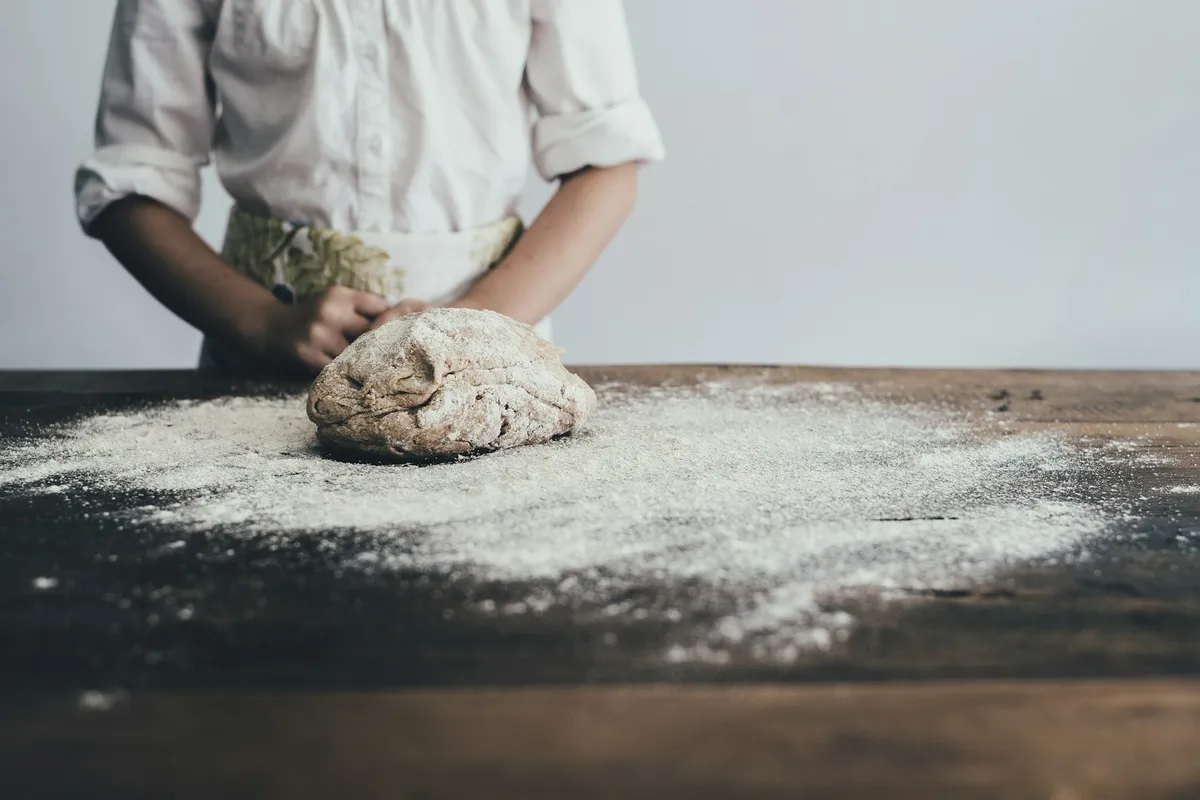
A producer in Brooklyn opens her kitchen window on a Saturday morning. The neighbor downstairs has filed a complaint about the smell of jam cooking three days a week. By Tuesday a letter arrives from the New York State Department of Agriculture and Markets asking for her Home Processor Registration, a list of the products she has been selling, and the labels she has been using. She has none of those things. She has been selling strawberry jam at her stoop and to coworkers for six months — in-state, high-acid fruit, on the approved list — and her actual compliance is roughly fine. What she does not have is the paperwork that converts "roughly fine" into "answered the inspector in fifteen minutes."
New York's cottage food regime is one of the most generous in the country in the way that matters most to a producer scaling a real business: there is no revenue cap. A Home Processor in Buffalo can clear $50,000 a year selling sourdough at a farmers market, and the law does not require a transition to a different licensure once they cross a ceiling — because there is no ceiling.
The regime is also one of the most quietly demanding in two specific places: the food list is narrower than producers expect, and New York City adds a separate permit conversation that does not exist anywhere else in the state. Producers who skip the registration step, leave a required element off the label, or assume the rules they read for Texas apply on a different coast end up with a Tuesday letter and a weekend of paperwork.
This is the long version of New York cottage food law as it stands in 2026. It walks through what the Home Processor Exemption actually permits, why the no-cap design has practical limits anyway, the food list and the acidified-foods conversation that catches makers trained on the Texas rule, the label specifications the state actually checks, the retail and wholesale channels available to in-state producers, the New York City layer for producers in the five boroughs, and the route from cottage food to a full Article 20-C license when a business outgrows the exemption.
The short version: New York's cottage food regime is the home processor licensing exemption in 1 NYCRR 276.4 (opens in new tab), which excuses registered home processors from the licensing requirements of New York Agriculture and Markets Law Article 20-C (opens in new tab). Producers file a one-page Home Processor Registration Request (form FSI-898c) with the New York State Department of Agriculture and Markets (opens in new tab) before selling; there is currently no fee. There is no annual revenue cap. The approved list is limited to non-hazardous shelf-stable items — baked goods, sugar confections, high-acid fruit jams and jellies, repacked commercially dried spices and herbs, dry mixes, granola — and excludes pickles, sauces and other acidified products, fermented vegetables, refrigerated items, and roasting or grinding coffee beans. Sales may be wholesale or retail, but only within New York: in-state wholesale to restaurants, cafes, and grocery stores is allowed; shipping out of state is not. Every product must be pre-packaged and labeled in the home. NYC operators face an additional New York City Department of Health and Mental Hygiene (DOHMH) layer for selling at certain venues.
Why New York is different from Texas, California, and Florida
Cottage food regimes exist in all 50 states, but they cluster into a few archetypes. New York is its own. Four features distinguish it from the other large states:
- There is no revenue cap. Florida's cap is $250,000 (HB 663 of 2021 (opens in new tab)). Texas's cap is $150,000 (post-SB 541 of 2025 (opens in new tab)). California's Class B cap is $177,756 in 2026 — a $150,000 base set by AB 1144 of 2021 (opens in new tab) and adjusted each year for inflation. New York's cap does not exist. The Home Processor Exemption is a food-safety carve-out tied to the product list and the production environment, not a revenue ceiling. A producer can scale until they hit a different constraint — distribution, kitchen capacity, customer demand, the food list itself — without crossing a statutory line that forces them out of the exemption.
- The exemption is registered, not licensed. Florida requires no registration at all. Texas requires a food handler course. California requires county registration plus a food processor course within three months. New York sits in between: there is no license, currently no fee, and no required training course — but you do file a one-page registration request with the state listing the products you intend to make, and the department approves those products before you sell. The kitchen is reviewed on a complaint basis only.
- The food list is narrower than Texas and closer to California. Pickles, sauces, salsas, and other acidified products, fermented vegetables, and anything that requires refrigeration are out. Baked goods, high-acid fruit jams and jellies, sugar confections, granola, and dry mixes are in. Roasting or grinding coffee beans is prohibited, and the department lists no case-by-case approval path for pickles or sauces.
- There is a New York City layer. No other large cottage food state has anything quite like the NYC dimension. The state exemption applies the same way inside the five boroughs as it does upstate, but New York City's Department of Health and Mental Hygiene operates a parallel regulatory regime for street vending, temporary food service, and certain city-managed markets. A Brooklyn Home Processor selling to neighbors and at a state-licensed GreenMarket handles only the state rules; the same Home Processor selling at a one-day pop-up on a Manhattan sidewalk handles state plus city rules.
Together those features make New York an unusually good state for a producer who wants to scale within New York — including wholesale placements with in-state cafes and grocers — but a difficult state for a producer who wants to ship nationally or build a product line around acidified foods.
What the Home Processor Exemption actually permits
The legal authority is New York Agriculture and Markets Law Article 20-C (opens in new tab), the statute that requires food processors to be licensed by the New York State Department of Agriculture and Markets. The specific carve-out is 1 NYCRR 276.4(b) (opens in new tab), which exempts processors of home-processed foods from Article 20-C licensing as long as their containers are clean, sanitary, and labeled, and their foods are neither adulterated nor misbranded. The broader regulations sit in 1 NYCRR Part 276 (opens in new tab), and the program is administered through the department's home processing page (opens in new tab) by the Division of Food Safety and Inspection.
The exemption applies to a person who, in their own home kitchen, produces approved non-hazardous foods for sale within New York State. The defining elements:
- In a private home kitchen. Production happens in the home's own kitchen — not a rented commercial space, not a separate building licensed as a food facility. The kitchen is reviewed on a complaint basis only, and the registration is location specific: if you move, you reapply.
- Non-hazardous foods only. Foods that are shelf-stable at room temperature and do not require refrigeration. See the food list below.
- Wholesale or retail, within New York. Agriculture and Markets allows marketing "at wholesale and/or retail" — farms, farm stands, farmers markets, green markets, craft fairs, flea markets, home delivery, the internet, and wholesale to local restaurants, cafes, and grocery stores. Nothing may be shipped out of state.
- Pre-packaged and labeled in the home. Every item must leave the kitchen packaged and properly labeled. Packaging food at an agricultural event such as a craft fair or farmers market is not permitted.
- With a registration on file. The department approves the specific products listed on the registration request. Producing outside the approved list — or producing without a registration at all — falls outside the protection of the exemption.
The application is the one-page Home Processor Registration Request (form FSI-898c). The producer lists their name, trade name, address, and the common or usual names of the products they intend to make, initials an acknowledgment that their labels will carry the required information, and signs an agreement to the provisions and limitations of the exemption. A home on a private well must attach certified lab results showing negative Total Coliform and E. coli. There is currently no fee and no expiration date, but the department is reporting a high volume of requests and asks applicants to allow up to 16 weeks for review — build that wait into any launch date.
Sidebar — The registration is product-specific. A Home Processor approved to sell sourdough bread and chocolate chip cookies is not automatically approved to sell granola. Adding a new product means submitting the registration form again, marked as a supplemental registration, with the products you want to add — and approval is required before those products are sold. The slow part is the producer who assumes the original approval covers anything they want to make. It does not.
The food list
The Home Processor Exemption permits a defined list of non-hazardous foods. The current list, as published on the Agriculture and Markets home processing page:
| Category | Examples | Notes |
|---|---|---|
| Breads and breakfast baked goods | Breads, rolls, cinnamon rolls, biscuits, bagels, muffins, scones | May include high-acid fruits, commercially dried fruits, or commercially dried herbs. Vegetable breads are prohibited. |
| Cakes and cupcakes | Cakes, cupcakes, cake pops | No homemade buttercream or cream cheese frosting containing dairy or eggs. No chocolate or candy melts as a topping on cake pops. |
| Cookies, bars, and pastries | Cookies, brownies, baklava, biscotti, pizzelle, waffle cones, doughnuts | Cream-filled pastries, cream pies, meringue pies, cheesecake, and "no-bake" products are prohibited — the department says all products must be baked to ensure stability. |
| Pies | Double-crust fruit pies | Single-crust, custard, nut, meat, and refrigeration-required pies are all out — fruit pies must have a top crust. |
| Jams, jellies, and marmalades | Strawberry jam, raspberry jelly, orange marmalade | Made with high-acid/low-pH fruits only. Pepper, wine, vegetable, and flower jellies, chutneys, fruit syrups, spreads, and compotes are prohibited. |
| Sugar confections | Sugar confections, fudge, toffee and caramel apples, peanut brittle, Rice Krispies treats | Nuts must be commercially roasted — any product containing raw nuts is prohibited. Tempered chocolate, candy melts, and almond bark for dipping, coating, or drizzling are prohibited, as are fudge and caramel sauces. |
| Snack items | Granola, granola bars, trail mix, popcorn, caramel corn, crackers, pretzels, vegetable chips | Granola, granola bars, and trail mix must use commercially roasted nuts. |
| Repackaged and blended dry goods | Baking mixes, dried soup mixes, dried or dehydrated vegetables, dried fruit, seasoning salt, spice and herb blends | Repackaging or blending of commercially dried products. Freeze-dried foods are prohibited. |
The list excludes any finished food product that requires refrigeration: no meat, fish, or poultry products, no cheese, yogurt, fluid dairy, or butters, no cheesecake, no quiche, no cream-filled pastries. It also excludes pickles, relishes, jalapenos, and sauerkraut; sauces, salsas, marinades, mustards, ketchups, and vinegars; cooked or canned fruits and vegetables; vegetable oils, blended oils, and salad dressings; nut butters; beverages; products containing alcohol; and roasting or grinding coffee beans. Anything that would be regulated federally as a dietary supplement — herbal tinctures, CBD products, "wellness" formulations — falls outside the Home Processor Exemption entirely and into FDA territory.
Sidebar — Pet treats are not New York cottage food. Dog cookies, horse treats, and similar pet products are regulated as commercial feed under New York Agriculture and Markets Law Article 7 and require separate feed registration. Even a "human-grade" dog biscuit baked in a home kitchen is feed, not cottage food. If you make pet products, treat them as a separate regulatory track and look at pet treat packaging and labeling rules before you start.
The acidified-and-fermented conversation
This is the section that catches the most experienced producers off guard, especially producers who learned cottage food in Texas. New York's prohibited list is explicit on acidified and fermented products:
- Hot sauce, salsa, marinades, mustards, ketchups — prohibited ("sauces, salsas, marinades, mustards, ketchups, vinegars"). Most NY hot-sauce makers produce in licensed commercial facilities under the federal acidified-foods rules. See the hot sauce compliance guide for the commercial-kitchen path.
- Pickles, relishes, jalapenos, sauerkraut — prohibited, along with other fermented vegetables.
- Pepper jellies, wine jellies, vegetable jellies, chutneys — prohibited, even though high-acid fruit jams are allowed.
- Beverages — prohibited, which rules out kombucha, water kefir, and fermented sodas.
- Vinegars — prohibited, including herb-infused vinegars.
There is no published case-by-case pathway. The Agriculture and Markets home processing page lists these products as prohibited without an approval route based on pH testing or recipe review, and the regulation's definition of home processed food at 1 NYCRR 276.3(b)(3) (opens in new tab) excludes potentially hazardous foods and acidified foods packed in closed containers, including pickles and relishes. A producer who submits a pickle or hot sauce on a registration request should expect it to be refused.
If your business plan depends on a product New York excludes, the three legal paths are the same as in any state:
- Move production to a permitted commercial kitchen. Rented commercial kitchens (sometimes called "commissaries" or "shared-use kitchens") are widely available across New York metros and many smaller cities. Hourly rates vary by region; the kitchen handles facility licensing while the producer still needs product-level FDA registration for acidified foods.
- Contract with a co-packer. New York has a robust co-packing industry, particularly upstate and on Long Island. Co-packers will produce small batches under their own facility license; the economics typically work above a few hundred units per run.
- Reformulate into an approved category. A pepper-forward product will not get there — pepper and vegetable jellies are on the prohibited list — but a producer whose customers want a sweet condiment may find a high-acid fruit jam or marmalade that fits the approved list. The reformulation is a real product change, not a relabeling exercise, and a product labeled outside its actual category invites a misbranding complaint that is worse than the underlying acidified-food issue.
The "no cap" advantage is real, but has practical limits
A no-cap regime sounds like a license to grow without watching the books. In practice, the cap is replaced by other ceilings that limit how big a Home Processor can get before they need to leave the exemption:
| Ceiling | What it does | When you hit it |
|---|---|---|
| The food list | Caps what you can make at home — acidified products, refrigerated items, and TCS foods are out | Day one, if your plan depends on excluded products |
| The packaged-at-home rule | Caps how you can sell — every item leaves the kitchen pre-packaged and labeled, and nothing is packaged at an event | When a buyer wants bulk product to portion, or you want to package at a market stall |
| The in-state rule | Caps where you can sell — no interstate shipping | When customers outside New York start ordering |
| The kitchen itself | Caps how much you can physically produce in a residential kitchen | When demand outruns equipment, storage, and household tolerance |
| NYC-specific rules | Caps where you can vend inside the five boroughs without a city permit | When you want to sell at NYC events outside organized markets |
Producers without a revenue ceiling sometimes assume they can scale indefinitely inside the exemption. They cannot. The exemption ceases to fit a business the moment the business needs to launch a salsa, ship cookies to a sister in Pennsylvania, or supply a cafe with unlabeled bulk granola to portion behind the counter. The actual question for a Home Processor is not "am I under the cap?" but "do my products, channels, and geography all still fit the exemption?"
A few examples of how this plays out across realistic scales:
| Producer | Annual gross | Fits exemption? | Notes |
|---|---|---|---|
| Albany sourdough baker, two farmers markets | $22,000 | Yes | Direct sales, in-state, allowed product. No ceiling concerns. |
| Hudson Valley jam maker, online + farmers markets | $68,000 | Yes | All sales within NY, jam category, direct-to-consumer. |
| Buffalo cookie baker, weekly subscription box, in-state | $94,000 | Yes | Subscription model, in-state delivery, allowed products. |
| Brooklyn granola maker, wholesales to coffee shops in NY | $48,000 | Yes | In-state wholesale to local cafes is allowed. Bags must be packaged and fully labeled in the home kitchen, and granola must use commercially roasted nuts. |
| Long Island hot-sauce maker, $35K | $35,000 | No | Hot sauce is excluded; product is outside the exemption regardless of revenue. |
| Catskills baker, wants to ship to in-laws in New Jersey | $14,000 | No | Out-of-state shipping is outside the exemption regardless of revenue. |
| Rochester baker, $310,000 in-state direct sales | $310,000 | Yes | No revenue ceiling; in-state direct-to-consumer with allowed products is still within the exemption. |
The bottom row is the one that surprises producers used to thinking about cottage food in cap terms. New York will let a Home Processor sell $310,000 worth of bread to in-state customers from a residential kitchen, provided the products and channels stay inside the exemption. The state's regulatory interest is in the food-safety profile of the product and the production environment, not in the producer's revenue.
Sidebar — "No cap" does not mean "no taxes." The Home Processor Exemption is silent on income tax, sales tax, and federal tax obligations. Income from the business is taxable. Sales tax may or may not apply depending on the product and venue. The New York Department of Taxation and Finance (opens in new tab) is the agency to consult — they are more aggressive on tax enforcement than Ag and Markets is on cottage food enforcement, and a $310,000-revenue Home Processor is on a different tax footing than a $20,000 one.
Sales venues: where the exemption works and where it doesn't
The Home Processor Exemption is broad on venues and strict on geography. Agriculture and Markets allows marketing "at wholesale and/or retail," with one hard boundary: every item must be sold within New York State. The full picture in 2026:
| Venue | Allowed? | Notes |
|---|---|---|
| Producer's home | Yes | Direct pickup. Local zoning may add traffic, parking, or signage restrictions. |
| Farmers markets, green markets, craft fairs, flea markets (in NY) | Yes | The most common venue. Products must arrive packaged and labeled — packaging at an agricultural event is not permitted. |
| Farms and farm stands | Yes | Named in the department's list of venues. Local permits may apply for stands on public-facing rights of way. |
| Online sales (delivered within NY) | Yes | Internet sales are allowed within New York State only. |
| Home delivery (in-state) | Yes | Named in the department's list of venues. |
| Restaurants and cafes in NY | Yes | Wholesale to local facilities that wish to carry your items is allowed. The products must be ones on your registration, pre-packaged and labeled in your home. |
| Grocery stores and other retail shelves in NY | Yes | Same wholesale allowance and the same packaging and labeling duties. |
| Resellers or distributors outside the local wholesale examples | Confirm first | The department's wholesale answer names local facilities such as restaurants, cafes, and grocery stores; ask Agriculture and Markets before relying on a distributor arrangement. |
| NYC GreenMarkets and organized city markets | Yes | The market handles the NYC permit layer; the producer brings the state registration. |
| NYC street vending, sidewalk pop-ups, non-market events | Conditional | Requires an additional NYC DOHMH permit on top of the state registration — see "The NYC layer" below. |
| Out-of-state shipping | No | Shipping products out of state is not permitted. |
| Out-of-state markets, fairs, or retailers | No | All home processed foods must be sold within New York State. |
| Etsy, Amazon, Shopify with national reach | No | The exemption requires in-state sales; nationally-routed platforms are incompatible unless restricted to New York. |
The hardest line to hold is the platform line. A Home Processor who lists cookies on Etsy with no shipping geofence will eventually accept an order from Massachusetts, ship it, and create a record on the platform that contradicts the in-state-only rule. The platform does not police state cottage food rules — compliance is on the producer. The fix is a geofence: set "ship to New York only" on the store before the first listing goes live.
The second line to get right is the wholesale placement. A specialty coffee shop in SoHo asks if they can stock six bags of your granola near the register. That placement is allowed: Agriculture and Markets lets home processors sell wholesale to local restaurants, cafes, and grocery stores within New York. What the placement does not change is your labeling and packaging duty. Each bag leaves your kitchen sealed and carrying the full label — product name, ingredients by weight with allergens identified, net quantity, and your name and full address — because home processed foods must be pre-packaged in the home and properly labeled, not portioned into a jar at the counter. Granola must be one of the products on your registration and must use commercially roasted nuts. Keep a simple invoice for each drop-off so the wholesale sale shows up in your records alongside your market sales.
Sidebar — Online listings should mirror the label. Agriculture and Markets does not publish a checkout-disclosure rule for home processors, but a buyer who orders online cannot read the package before paying. Showing the ingredient list, allergens, and the home-kitchen phrase on the product page is a simple way to give online customers the same information the label gives market shoppers — and it keeps the listing consistent with what arrives at the door.
The label every New York cottage food package needs
The label is non-negotiable. A producer can be otherwise perfectly compliant — registered, on the food list, selling in-state — and still receive a notice for a missing label element. The registration form has every applicant initial that their labels will carry the required information. The components in 2026:
| Element | Specification |
|---|---|
| Product name | The common or usual name of the product (e.g., "Sourdough Bread," "Strawberry Jam," "Vanilla Bean Granola"). |
| Processor name and full address | Agriculture and Markets says the place of business shall include the street address or P.O. box, city, state, and ZIP code — so a P.O. box is an option for producers who would rather not print a residential street address. |
| Ingredient statement | All ingredients in order of predominance by weight. List sub-ingredients for compound ingredients (e.g., "chocolate chips (sugar, cocoa, soy lecithin)") so hidden allergens are identified. |
| Allergens | All allergens — eggs, milk, fish, shellfish, soybeans, peanuts, tree nuts, wheat, and sesame — must be clearly identified in the ingredient statement. A federal-style "Contains:" line is also a clear way to do it. Sesame became the ninth major allergen under the FASTER Act of 2021 (opens in new tab) — see the FDA allergen guidance (opens in new tab). |
| Net quantity of contents | Under 1 NYCRR 276.4 (opens in new tab), the net weight, standard measure, or numerical count. The department's sample label shows both units ("NET WT 1 lbs (453g)"), and under 1 NYCRR 221.5(a) (opens in new tab) a metric size must also show its US customary equivalent. |
| Home-kitchen phrase (agency guidance) | New York mandates no exact wording. Agriculture and Markets says home processors should add a phrase like "Made at Home by XYZ," "Made in the Home Kitchen of XYZ," or "Made in a Home Kitchen," in type 1/16 inch or larger. |
| English-language requirement | Required label information must be in English (21 CFR 101.15(c) (opens in new tab), adopted by 1 NYCRR 259.1 (opens in new tab)). Producers may add other languages; if they do, all required information must appear in that language too. |
The home-kitchen statement is the label element with the most variance across cottage food regimes. Texas requires one specific sentence. Florida requires another. California requires a third. New York takes a lighter approach: the regulation's label list does not include a statement at all, and the department's guidance offers three example phrasings rather than one mandated sentence. Pick one of the department's examples, fill in your name where the example says XYZ, and print it at 1/16 inch or larger.
Sidebar — Allergen statements are where most enforcement actions start. A label missing a "Contains: wheat, eggs" statement is the most common reason a state inspector contacts a producer. The complaint chain is fast and unambiguous: a customer with a wheat allergy reacts to an unlabeled cookie, contacts the producer, the producer cannot prove they disclosed the allergen, and the producer hears from the department within days. Treat allergen statements as the first thing you double-check on every label, not the last.
How Ardent Seller helps with the New York label
Ardent Seller assembles this label. Pick a finished product, choose New York, and the cottage food label generator pulls together the producer's name and address, the product name, the ingredient statement in descending order by weight with sub-ingredients in parentheses, the "Contains:" allergen line, and the net quantity. Because New York offers example phrasings rather than one mandated sentence, the generator gives you an editable statement field, lists the three phrases Agriculture and Markets suggests ("Made at Home by XYZ," "Made in the Home Kitchen of XYZ," "Made in a Home Kitchen") in its New York notes, and prints only what you enter — it never invents wording on your behalf. A validation checklist shows every element New York requires and holds generation until the statement and every required element are filled in, so the allergen statement and the home-kitchen phrase are never the thing a label ships without. Output is a PDF sheet (Avery 5163, 4″×6″, or full page) or a direct print.
Generate your New York cottage food label with Ardent Seller free — the label generator is included on every plan, including the free tier.
The NYC layer: when state rules are not the whole picture
For producers inside the five boroughs of New York City, the state Home Processor Exemption is the first layer. The New York City Department of Health and Mental Hygiene runs a parallel regime that operates on top of the state rules for certain venues. The most common scenarios:
| Scenario | State exemption needed? | NYC permit needed? | Typical answer |
|---|---|---|---|
| Selling at your own home or apartment (direct pickup) | Yes | No | State registration covers it. |
| Selling at a NYC GreenMarket or other organized farmers market | Yes | Handled by the market | The market secures the NYC permits for vendor operations on its venue. Bring your state registration and pre-labeled packages. |
| Selling at a one-day NYC street fair or community event | Yes | Yes — Temporary Food Service Establishment Permit | The event organizer may handle the umbrella permit; confirm before showing up. |
| Selling on a NYC sidewalk as a vendor | Yes | Yes — General Vendor License + Mobile Food Vendor (where applicable) | A separate, more involved permit conversation. Most cottage food producers avoid this route. |
| Selling online with delivery in NYC | Yes | No | State exemption covers it; delivery operates like any other in-state delivery. |
| Sub-letting kitchen space in a commercial commissary | N/A (you've left cottage food) | Yes — commissary handles licensing | Once you produce in a commercial kitchen, you are outside cottage food entirely; you operate under a 20-C license. |
The practical implication: most NYC Home Processors who want to sell at city venues route through organized markets. GreenMarkets, in particular, handle the city-permit layer at the venue level — a Brooklyn baker brings the state registration, pre-labeled packages, and a stall fee, and the market handles everything else. The producer who tries to set up a folding table on a Manhattan sidewalk independently is in a different regulatory conversation, and the NYC DOHMH guidance on food vendor permits (opens in new tab) is the right place to start that conversation before the table goes up.
Sidebar — Catering and prepared-food sales in NYC are not cottage food. A baker who is asked to bring dessert to a friend's wedding venue and sell slices to the guests is moving outside cottage food and into prepared-food vending. NYC treats prepared food at events differently from packaged shelf-stable food, and the answer is often "this is a catered event and you need a separate permit." The Home Processor Exemption is for packaged, shelf-stable products taken home by the buyer — not for portioned-and-served-on-site food at NYC venues.
What state law does not cover
The Home Processor Exemption is the state layer. Three other layers operate on top of it, and producers are responsible for finding them.
Local zoning and HOA restrictions
The state exemption does not preempt municipal zoning. A residential zone that prohibits commercial activity can — depending on the city, town, or village — limit cottage food production even when state law permits it. Most New York jurisdictions interpret cottage food as a permitted home occupation, but co-op boards and condo boards (particularly in NYC and on Long Island) sometimes carry explicit anti-commerce language in their bylaws. Read the bylaws before you scale. A Home Processor who attracts heavy customer pickup traffic can trigger neighbor complaints that escalate to board enforcement quickly.
Sales tax (when it applies)
Most New York cottage food sales fall within the grocery-food exemption under Tax Law §1115(a)(1) (opens in new tab). The exemption fails when food is sold for immediate consumption with utensils provided, sold at a venue serving prepared food, or otherwise prepared for on-site eating. A custom cake delivered to a wedding venue with a serving knife, for example, can be taxable. The cottage food exemption is a food-safety carve-out, not a tax determination — confirm the sales-tax treatment of your specific products with the New York Department of Taxation and Finance (opens in new tab) before assuming exemption. To collect tax legally on the sales that are taxable, you need a New York Certificate of Authority for sales tax; failing to collect on taxable sales is a separate violation from any cottage food question.
Federal labeling for interstate shipping (which you cannot do anyway, but)
The moment a producer leaves the Home Processor Exemption and starts shipping interstate from a commercial kitchen, federal labeling rules add nutrition facts panels (with exemptions for small businesses under 21 CFR §101.9(j)(1) (opens in new tab)), country-of-origin labeling for imported ingredients, and FDA facility registration (opens in new tab) under the Bioterrorism Act. None of that applies under cottage food, but the moment a producer crosses into commercial production, the federal floor lifts.
Common mistakes New York Home Processors make in year one
Patterns repeat. The seven most common compliance failures, in rough order of frequency:
- Selling before the registration is approved. The form is one page, but the department currently asks applicants to allow up to 16 weeks for review — and producers who treat New York like Florida (no registration required) end up selling months before they file. The cure is to apply first, sell second, and attach well-water test results up front if the home is on a private well so the request is not held up.
- Allergens not identified. An ingredient statement that lists "chocolate chips" or "butter" without identifying milk, soy, or wheat. The cure is mechanical — every label, every batch, every time.
- Adding products without a supplemental registration. A producer approved for cookies starts selling granola bars at the same market. Approval must be obtained for any products added after the initial registration. The cure is to file the supplemental registration and wait for approval before the new product goes on the table.
- Packaging at the market. A producer brings bulk cookies to a craft fair and bags them at the stall, or drops an unlabeled tub of granola at a cafe to portion. Products must be pre-packaged and labeled in the home, and packaging at an agricultural event is not permitted. The cure is to package and label everything in the kitchen before it leaves — including wholesale drop-offs.
- Selling acidified or fermented products. A producer reads a Texas-focused guide, starts producing hot sauce, and lists it on Etsy. Sauces and pickles are on New York's prohibited list, with no approval path. Pull it before a complaint pulls it for you.
- Out-of-state shipping by accident. A Shopify store with no geofence accepts an order from Pennsylvania. The producer ships it. The order is technically outside the exemption — and the platform retains the record. Set the geofence before the first sale, not after the first complaint.
- NYC street vending without the city permit. A Brooklyn baker sets up a folding table on a sidewalk during a street fair, with no NYC permit, on the assumption that the state exemption covers everything. It does not. The cure is to route through organized markets (which handle the NYC layer) or pull the right city permit before vending independently.
An eighth, less common but potentially career-ending: mass-market platform listing without a state filter. A producer lists cottage food on Etsy or Amazon Handmade and accepts orders nationally. Same problem as #6, scaled up to dozens of out-of-state sales per month. There is no quiet way to undo the record once a platform has logged the shipments — and there is no New York mechanism to retroactively cure the violation.
A simple records system that satisfies an inspector
New York does not require routine recordkeeping under the Home Processor Exemption. It does, however, give the Department of Agriculture and Markets authority to inspect on a documented complaint — and when the inspector arrives, the producer who can produce records in fifteen minutes spends fifteen minutes on the inspection, while the producer who cannot spends weeks reconstructing what they should have saved.
The minimum file set for a New York Home Processor:
| File | Contents | Retention |
|---|---|---|
| Registration records | Your FSI-898c registration request, any supplemental registrations, the department's approval of your products, and well-water test results if applicable | Indefinitely; update when products are added or you move |
| Wholesale invoices | Date, business, product, quantity, and price for each in-state cafe, restaurant, or grocery placement | 3 years |
| Gross sales log | Every sale, every venue, by date — gross dollars and approximate volume by product | 3 years (matches NY Department of Taxation and Finance retention for sales tax) |
| Sales tax filings (where applicable) | Returns and payment confirmations from the NY Department of Taxation and Finance | 3 years |
| Ingredient sourcing records | Receipts and lot numbers for ingredients used in allergen-flagged or recipe-approved products | 2 years past shelf life |
| Label samples | At least one sample of each label version used during the year | 2 years |
| Customer complaints, if any | Date, customer, product, complaint, resolution | Indefinitely |
| Recipe and process notes | Recipe version, ingredient ratios, batch yield, hold times for jams and reductions | 2 years past shelf life |
| NYC permit copies (NYC operators only) | Any city-issued permits for street vending or temporary food service | Per the permit's own retention requirement |
A spreadsheet works. A binder works. Software made for inventory and recipe-tracking works better, especially when the same ingredient lot, batch number, and label flow into a sales record automatically — that integration is the difference between fifteen minutes of inspector time and three frantic hours.
This is where Ardent Seller fits for New York Home Processors: ingredient lots flow into batches, batches into finished items, finished items into sales — and the labels, allergen flags, and net-weight outputs are produced from the same recipe data that calculates costs. For producers approaching the kitchen-capacity ceiling, the same data also tells you when scaling out of the exemption into a commercial kitchen starts to pay off. See features or pricing — the free tier covers most cottage food producers, and the recipe and batch tools are not premium-gated.
When to graduate from the exemption to a full 20-C license
The no-cap design means the moment to leave the exemption is not triggered by revenue. It is triggered by one or more of the constraints failing:
- The product list fails. You want to launch a hot sauce, a fermented vegetable line, a refrigerated dip, or a TCS food. The exemption cannot stretch to cover these; a 20-C license in a commercial kitchen is the path.
- The packaging rule fails. A regional distributor wants product packed in its format, or a co-packer would take over packaging. Home processed foods must be pre-packaged and labeled in the home, so any arrangement that moves packaging out of your kitchen moves you out of the exemption. (In-state wholesale to local cafes and grocers, by contrast, fits the exemption as long as you package and label at home.)
- The in-state rule fails. Customers in Connecticut and New Jersey want to order from you. Interstate shipping requires a 20-C license, federal labeling, and FDA facility registration.
- The kitchen fails. Demand has outrun what a residential kitchen can produce safely — ingredients are stored in three rooms, the dishwasher cannot keep up, and the household has been displaced by the business. The exemption does not require an inspection, but the practical limits of a residential kitchen are real.
The transition path for a New York Home Processor is well-trodden: apply for a full 20-C license, move production to a rented commercial kitchen or a commissary, update labels with the new license number and any added federal elements, set up sales tax collection on the channels that need it, and consider FDA facility registration if interstate shipping is part of the plan. The application for a 20-C license is more involved than the Home Processor Registration — it requires a kitchen inspection, a fee (typically a few hundred dollars depending on the operation), and renewal — but it unlocks the products and out-of-state channels the exemption blocks.
The producers who manage this transition cleanly tend to be the ones whose records are already in shape under the exemption. They know their cost per unit, their batch yields, their sales by channel, and their allergen flags before the move. The move becomes a paperwork exercise instead of a discovery exercise.
Stay close to the source
New York cottage food law is more stable than most. The Home Processor Exemption framework has been steady for years; the food list and labeling rules have evolved incrementally rather than through major rewrites. That said, "stable" is not "static" — the legislature can act in any session, and the department's guidance evolves. The primary sources every producer should bookmark:
- New York Agriculture and Markets Law Article 20-C (opens in new tab) — the underlying statute on the New York Senate's online laws portal.
- 1 NYCRR Part 276 (opens in new tab) — implementing regulations.
- 1 NYCRR 276.4 (opens in new tab) — the home processor licensing exemption and its label requirements.
- NYS Department of Agriculture and Markets — Home Processing page (opens in new tab) — current approved and prohibited foods, sales venues, labeling guidance, and FAQ.
- Home Processor Registration Request (FSI-898c) (opens in new tab) — the one-page registration form, also used for supplemental registrations.
- NY Department of Taxation and Finance — Sales Tax (opens in new tab) — for the tax determination on the sales that are not exempt.
- NYC DOHMH — Food Service Establishment Permits (opens in new tab) — for the city layer.
Anything you read on a blog (this one included) is a snapshot of the rule on a specific date. Before you commit to a production decision that depends on a specific number or boundary, verify against those sources.
If your goal is a side income from sourdough or a meaningful business from jam, New York's rule is more workable than producers assume. The no-cap design rewards businesses that grow within the channel and product limits; the in-state wholesale allowance gives growing producers room to place product with local cafes and grocers; and the registration step gives the state — and the producer — a paper trail that turns a complaint inspection into a short conversation. Build the records as you build the product, and the day the inspector ever knocks is a quick one.
Get started with Ardent Seller free and bring your gross-sales tracking, batch records, ingredient logs, and label generation into one place — without giving up the Home Processor Exemption that makes the New York math work.
Related reading
- New York cottage food law — quick reference — The structured one-page summary of the no-cap Home Processor Exemption, approved food list, label elements, in-state wholesale, the NYC permit layer, and acidified-foods exclusion. Useful as a take-with-you card while you prepare your registration request.
- Texas Cottage Food Law — The companion state guide for the country's largest cottage food state by population in this category. Useful contrast because Texas permits acidified products that New York prohibits, and Texas routes wholesale through a registered cottage food vendor while New York lets home processors wholesale to local businesses directly.
- California Cottage Food Operations — The two-tier (Class A vs. Class B) regime, the MEHKO alternative for hot food, and county-by-county administration. The closest peer to New York on the food list and on the registered-but-not-fully-licensed structure.
- Florida Cottage Food Law — The $250,000 cap, the no-license regime, and the acidified-foods exclusion. Useful contrast for the cap question — Florida runs a high cap, New York runs no cap, and the regimes still feel different in practice.
- Hot Sauce Compliance, pH Testing, and Acidified Foods — The deep dive on FDA acidified-food rules and the commercial-kitchen path for New York producers whose product list does not fit cottage food.
- Cottage Baker's Glossary — A 32-term glossary covering scheduled process, water activity, food handler, AAFCO, and the rest of the vocabulary that shows up around cottage food rules.
Free resources
If you'd like to take this off-screen, these free downloads pair well:
- Cottage Food Revenue Cap Tracker — Live web tool with state-by-state caps for all 50 states + DC. New York is a no-cap Home Processor state, so the tracker shows the no-cap status — but the same tool covers every other state if you plan to expand or move.
- Cottage Food Laws by State: The 50-State + DC Quick Reference — A PDF reference with revenue caps, sales venues, registration rules, and the most common restrictions for every state. Use it to compare the New York rules above to any other state you may sell into when you scale beyond cottage food.
- Home Baker's Order & Delivery Tracker — A spreadsheet for tracking custom orders, delivery windows, and cumulative gross sales — especially useful in a no-cap state where the discipline question shifts from "am I under the cap?" to "do I know which channels my revenue is coming through?"
- Recipe Scaling & Batch Calculator — Scale a recipe up or down, hold ratios, and compute per-batch cost — useful for any cottage food producer who runs more than one batch size or needs reproducible recipes before filing a supplemental registration for a new product.
Sources & methodology
New York statutes and regulations:
- New York Agriculture and Markets Law Article 20-C (opens in new tab) — licensing of food processors and the framework for the Home Processor Exemption
- 1 NYCRR Part 276 (opens in new tab) — implementing regulations for food processors including home processor provisions
- 1 NYCRR 276.3 (opens in new tab) — definition of home processed food, excluding potentially hazardous and acidified foods
- 1 NYCRR 276.4 (opens in new tab) — home processor licensing exemption and container label requirements
- 1 NYCRR 221.5 (opens in new tab) — declaration of quantity on consumer packages
- 1 NYCRR 259.1 (opens in new tab) — adoption of federal food labeling rules (21 CFR Part 101)
- New York Tax Law §1115(a)(1) (opens in new tab) — sales tax exemption for general grocery food sales
Agency pages:
- NYS Department of Agriculture and Markets — Home Processing (opens in new tab) — approved and prohibited foods, sales venues including wholesale, labeling guidance, and current FAQ
- Home Processor Registration Request (FSI-898c) (opens in new tab) — registration and supplemental registration form
- NY Department of Taxation and Finance — Sales Tax for Businesses (opens in new tab) — sales tax determination, Certificate of Authority application, and filing schedules
- NYC Department of Health and Mental Hygiene — Food Service Establishment Permits (opens in new tab) — NYC permit layer for vendor and temporary food service operations
Comparison state references:
- Texas SB 541 (2025) (opens in new tab) — Texas cottage food cap and vendor classification
- Florida HB 663 (2021) (opens in new tab) — Florida cottage food cap raise to $250,000
- California AB 1144 (2021) (opens in new tab) — California Class B cottage food base cap of $150,000, adjusted annually for inflation ($177,756 in 2026)
Federal:
- FASTER Act of 2021 (H.R. 1202) (opens in new tab) — added sesame as the ninth major food allergen
- FDA — Food Allergies (major allergen guidance) (opens in new tab) — sesame labeling effective January 1, 2023
- 21 CFR §101.9(j)(1) (opens in new tab) — small-business exemption from federal nutrition facts panel requirements
- FDA Food Facility Registration (opens in new tab) — required for commercial facilities that manufacture, process, pack, or hold food in interstate commerce
Note on data freshness: New York's Home Processor Exemption framework reflects Article 20-C and 1 NYCRR 276.4 as administered by the Division of Food Safety and Inspection, checked against the Agriculture and Markets home processing page and the FSI-898c registration form in September 2026. The state has not imposed a statutory revenue cap on home processors, and the food list, venue, and labeling rules described here reflect current departmental guidance. Verify against the NYS Ag and Markets Home Processing page (opens in new tab) before relying on any specific element. Producer scenarios and revenue examples in this guide are illustrative composites, not real businesses.
This article is provided for educational purposes only and does not constitute legal, regulatory, food-safety, or tax advice. New York cottage food rules, the Home Processor Exemption product list, labeling requirements, sales tax obligations, and local zoning vary by jurisdiction and change with new legislation or departmental guidance. Consult the New York State Department of Agriculture and Markets, the New York Department of Taxation and Finance, the New York City Department of Health and Mental Hygiene (for NYC operators), your local government, a qualified food regulatory consultant, or an attorney before making compliance, financial, or production decisions based on this content.