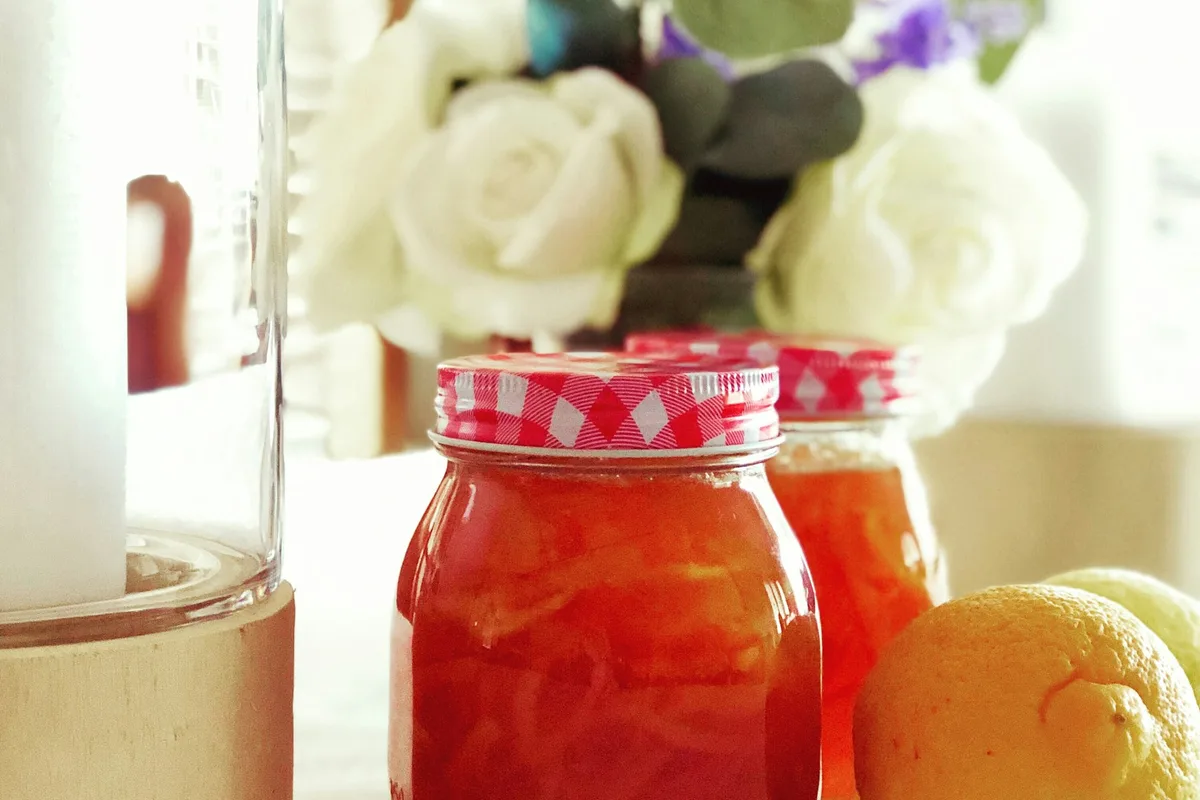
Plenty of cottage food guides still tell you Maryland caps home-kitchen sales at $25,000, that you can only sell straight to the person eating your cookies, and that stores are off-limits. Operate on that outdated picture and you'll quietly leave sales on the table — and turn down the grocery store or co-op that wanted to stock your jam. Learn the rules that are actually on the books, and a noticeably bigger business opens up.
Here's the good news, and it really is good news: Maryland's cottage food law is more generous than its reputation. From October 1, 2026, the sales ceiling is $100,000 — up from $50,000, which itself replaced the old $25,000 limit. You can sell direct with no state license and no kitchen inspection. And in a move many states haven't made, Maryland lets a cottage food business sell its packaged goods to licensed retail food stores — not just to the customer at your table. There are a few rules to get right, and the food list has some genuine traps, so let's walk through the questions a Maryland home baker actually types into a search bar.
The short version
Maryland's cottage food law (COMAR 10.15.03.02 (opens in new tab) and .27 (opens in new tab)) lets you make shelf-stable food in your home kitchen and sell it — with no state license — up to $100,000 a year from October 1, 2026 ($50,000 through September 30, 2026), and, unusually, allows sales to licensed retail food stores. The essentials:
- Cap: $100,000/year in cottage food sales from October 1, 2026 (HB 535, Chapter 320 of 2026); $50,000 through September 30, 2026 (raised from $25,000 in 2022).
- License / inspection: None for direct sales — no registration, no routine kitchen inspection. County and municipal rules still apply.
- Where you can sell: Home, farmers markets, events, in-state mail and delivery, online orders within Maryland, and — unusually — licensed retail food stores.
- What's allowed: Shelf-stable foods only — baked goods without perishable icings or fillings, high-acid full-sugar jams, non-perishable candy (brittles, gummies, lollipops, toffee, marshmallows), chocolate from commercial chocolate, dry tea/spice mixes, snack mixes, popcorn, nuts, whole roasted coffee beans.
- What's banned: Refrigerated foods, butter-based buttercream and other perishable icings (without lab testing), dehydrated produce, fermented/acidified foods, honey, syrups, nut and seed butters, soft candy, sugar-free products.
- Retail-store channel adds: Extra label elements, an ANSI-approved food safety course, and MDH label review with written approval before your first store sale.
- Out of state: Not allowed — every sale stays inside Maryland.
- Label: The verbatim MDH disclaimer (below), in at least 10-point type and a color that clearly contrasts with the label background.
Does Maryland have a cottage food law — and what changed recently?
Yes, and the recent change is the whole reason so much advice about Maryland is stale.
Maryland defines a cottage food business in Md. Code, Health-General § 21-301 and COMAR 10.15.03 as a business that produces or packages cottage food products in a residential kitchen and keeps its annual cottage food revenue at or under a set cap. For years that cap was $25,000. Effective October 1, 2022, Maryland raised it to $50,000. Then HB 535 (2026), Chapter 320, approved April 28, 2026, raised it again to $100,000, effective October 1, 2026 — doubling the room a home producer has before they're pushed out of the cottage tier and into a licensed commercial operation. Through September 30, 2026, the $50,000 cap still applies.
That single number changes the math for a lot of makers. At $25,000, the cottage tier was a side-hustle allowance. At $50,000, it became enough to run a serious seasonal bakery or a market-and-online jam business without ever renting a commercial kitchen — and at $100,000, that room doubles. If you've been holding your sales down because you thought you were near a ceiling, check the ceiling again — it moved.
The cap counts cottage food revenue specifically. Cross the cap ($50,000 through September 30, 2026; $100,000 from October 1, 2026) in cottage food sales and you're no longer eligible for the exemption; that's the moment to talk to your local health department or MDH about a food license. Keeping a clean running total of cottage sales isn't just tidy — it's how you know you're still inside the law.
What foods can you sell as a Maryland cottage food business?
Only non-potentially-hazardous foods — the shelf-stable ones that don't need refrigeration to stay safe. Maryland's allowed list is broader than a plain bakery list, and it includes a few items that surprise people. Here's what's on it:
- Non-perishable baked goods — breads, bagels, rolls, pastries, brownies, cookies, cakes, and pies, as long as they carry no cream, custard, or other perishable filling, icing, or topping. Sourdough, yes. A cake finished with a shortening- or oil-based icing or a shelf-stable commercial icing, yes. A butter-based buttercream layer cake, no — unless lab testing shows the frosting's pH or water activity makes it non-potentially hazardous (the same goes for royal icing made with meringue powder and any icing with perishable ingredients). A cream-cheese-frosted cake that has to stay cold, no. Pumpkin, meringue, pecan, and sweet potato pies, meringue cookies, macarons, waffles, and fried doughnuts are not allowed, and moist quick breads such as banana, pumpkin, and zucchini bread need a water-activity lab test first.
- Acid fruit jams, jellies, preserves, and fruit butters — hot-filled. Jams, jellies, and preserves can be made from the fruits COMAR lists (apples, apricots, grapes, peaches, plums, prunes, quince, oranges, nectarines, tangerines, cherries, and specific berries — blackberries, raspberries, blueberries, boysenberries, cranberries, strawberries, and red currants) or from another fruit or fruit mixture that will produce an acid canned food. Fruit butters are narrower: MDH allows them only from apples, apricots, grapes, peaches, plums, prunes, and quince — no other fruit butter qualifies. The FDA's pH 4.6 acid-food line is the science behind these lists, but check COMAR 10.15.03.27 §B and MDH's guidance rather than relying on a pH reading alone. That acidity is what makes these shelf-stable. Full-sugar recipes qualify; sugar-free and low-acid-fruit versions don't.
- Non-potentially hazardous candy. Brittles, gummies, lollipops, toffee, and marshmallows are in; homemade caramels, fudge, and other soft candies are not.
- Chocolate confections made from commercially manufactured chocolate. You can dip, mold, and decorate using commercial couverture.
- Repackaged commercial dry ingredients — tea blends and spice blends assembled from commercially sourced components.
- Snack mixes from commercial sources — built from cereal, granola, and trail-mix components.
- Popcorn and similar snacks — popcorn, kettle corn, popcorn balls, and nuts.
- Whole roasted coffee beans. (Note the word whole — see the next section.)
The throughline is simple: if it's dry, baked, a full-sugar high-acid fruit spread, or shelf-stable candy, it's probably allowed. The next section covers the foods that feel like they should qualify but don't — read it before you bank on a product.
What can't you sell — and which "obvious" foods are the traps?
This is where good makers get tripped up, because several foods that feel shelf-stable are specifically excluded. Maryland keeps these off the cottage food list:
- Anything needing refrigeration (potentially hazardous foods) — cheesecakes, cream pies, custard-filled pastries, pumpkin and pecan pies, anything with a perishable filling, icing, or topping (including butter-based buttercream, unless lab testing shows it's safe at room temperature).
- Beverages of any kind.
- Fermented and acidified foods — pickles, salsa, hot sauce, relish, kombucha. (MDH notes that fermentation has to be monitored to ensure a safe product — the kind of process control the cottage tier isn't set up for.)
- Dehydrated fruits, herbs, and vegetables. Dried produce is out even though it's dry — a genuine surprise for a lot of gardeners.
- Chocolate-covered fresh fruit — the fresh fruit makes it perishable.
- Nut butters and seed butters, homemade caramels, fudge, and other soft candies, pasta and raw dough, and sugar-free products.
- Syrups and honey. Here's the big one: honey and maple syrup are not cottage foods in Maryland. They fall outside the COMAR 10.15.03 cottage tier and need a different pathway. Don't put a jar of your own honey on the same table under the same exemption without checking the correct pathway first.
- Flavored or ground coffee. Whole roasted beans are allowed; the moment you grind or flavor them, they drop off the list.
Rule of thumb: If a food is shelf-stable because it's dry, baked, sugar-preserved, or naturally high-acid, it's probably allowed. If it's shelf-stable because someone dehydrated it, acidified it, or canned a low-acid food — or if it needs a fridge — it's probably excluded.
When you're unsure about a specific product, the safe move is to check with MDH or your county health department before you make a batch you can't legally sell. A product that isn't on the allowed list can still be sold as a cottage food if laboratory testing shows it's safe to store at room temperature — but you must have the lab results available at public events.
Where can you sell — and can you really sell to stores?
Yes, you really can sell to stores, and that's the most distinctive thing about Maryland's law. Many states limit cottage food sales to direct-to-consumer only — the person who buys it has to be the person who eats it. Maryland goes further and allows sales to licensed retail food stores as well. For a maker with a wholesale dream, that's a meaningful head start.
Here's the full picture of where you're allowed to sell:
| Channel | Permitted? | Notes |
|---|---|---|
| Direct from your home | Yes | Including customer pickup |
| Farmers markets | Yes | The classic venue |
| Public events, fairs, festivals | Yes | Craft shows, holiday markets |
| In-state mail order and delivery | Yes | Must stay within Maryland |
| Online sales (within Maryland) | Yes | You may advertise online, but sales are restricted to Maryland |
| Licensed retail food stores | Yes — see requirements* | Grocery stores, convenience stores, retail markets, retail bakeries, food co-ops; product in its original packaging. Adds three things: extra label elements (phone, email, date made), an approved food safety course, and MDH label review with written approval |
| Restaurants, coffee shops, cafeterias, and similar businesses | No | Not a "retail food store" under COMAR 10.15.03.02 |
| Out-of-state / interstate sales | No | Sales are restricted to Maryland |
*Read the retail-store "Yes" as "Yes, once you've done three things." A maker who stocks a shelf without the food safety course, the added label elements, and MDH's written approval is out of compliance — see the requirements spelled out below.
Two boundaries are worth saying plainly:
In-state only. Every cottage food sale — direct, online, or shipped — has to stay inside Maryland. A baker in Hagerstown can mail cookies to Annapolis, but not to a customer fifteen minutes away in Pennsylvania or across the river in West Virginia. Maryland's exemption covers in-state sales only, and the instant a food package crosses a state line, it enters interstate commerce, where federal food law applies.
The retail-store channel asks more of you. Selling to a grocery store or food co-op is a real, legal option, but it isn't a free upgrade. The store has to be a licensed retail food store — a grocery store, convenience store, retail market, retail bakery, or food co-op that sells food in its original packaging. A restaurant, mobile food service facility, coffee shop, cafeteria, short order café, luncheonette, tavern, sandwich shop, produce stand selling only whole uncut produce, or an establishment that offers only pre-packaged non-potentially hazardous foods doesn't qualify. Before your first store sale, COMAR 10.15.03.27 C(6)–(7) requires you to submit to MDH the label you'll use — with the additional label elements (a business phone number the Department can reach within 24 hours, an email address it can reach within 48 hours, and the date the product was made) — and proof that you completed an approved food safety course (approved by the Department and the American National Standards Institute) within the past three years. You may not sell to a store until MDH notifies you in writing that the requirements are met. MDH charges no fee for the review, and later changes to your products, labels, or sales locations need approval too. If your plan is to get into local stores, build those steps into your timeline — and confirm the current requirements directly with MDH, since the retail channel is exactly the kind of detail that gets updated.
Do you need a license, registration, or food handler's card?
For direct sales, here's the genuinely refreshing answer: no, no, and no. Selling from your home, at farmers markets, at public events, and by in-state mail or delivery requires no state license, no registration, and no routine kitchen inspection — and no food handler's card. Maryland trusts the shelf-stable food list and the label disclaimer to do the safety work.
The one place that changes is the retail-store channel. Selling to stores adds a basic food safety training course approved by the American National Standards Institute (completed within the past three years) and the MDH label review noted above. So the mental model is: direct sales are paperwork-free at the state level; selling into stores trades a little paperwork for a much bigger shelf.
Local rules still apply. A cottage food business must follow all applicable county and municipal laws and ordinances on preparing, processing, storing, and selling cottage food (COMAR 10.15.03.27 C(3)), and MDH notes that a local government may not allow home food production at all. Farmers markets and local health departments may add their own requirements, so check with them before you sign up for a market. There's no routine inspection, but the local health department may inspect your home kitchen after a complaint or an illness report.
A note that catches people: if you sell non-cottage or potentially hazardous foods alongside your cottage products, the exemption doesn't cover those, and you'll need the appropriate license for them. The exemption protects your cookies and jam — not the refrigerated dip you were thinking of adding.
What has to go on the label?
Maryland's label rules are specific but not onerous. Every package your cottage food business sells must carry:
- The business name and address — a physical address (a P.O. box is not accepted, per MDH and county guidance) — or, if you'd rather not print your home address, your business name, a contact phone number, and the unique identification number MDH assigns you. (COMAR 10.15.03.27 requires the phone number alongside the ID number — the ID alone isn't enough.)
- The product name. "Sourdough Boule," "Strawberry Preserves," "Sea-Salt Toffee."
- The ingredient list, in descending order by weight (with sub-ingredients in parentheses).
- The net quantity — weight, volume, or count.
- Allergen information. Federal allergen rules apply to all packaged food regardless of cottage status; disclose the nine major allergens — milk, eggs, fish, crustacean shellfish, tree nuts, peanuts, wheat, soybeans, and sesame — in the ingredient list or a "Contains:" line. If every ingredient and sub-ingredient is listed, MDH treats a separate "Contains:" statement as optional. (The first eight come from FALCPA; sesame was added by the FASTER Act of 2021, Pub. L. 117-11, effective January 1, 2023.)
- The verbatim MDH disclaimer, in at least 10-point type and in a color that clearly contrasts with the label background:
"Made by a cottage food business that is not subject to Maryland's food safety regulations."
That wording is set by regulation — copy it exactly. Paraphrasing, shortening, or "improving" it is a labeling violation under COMAR 10.15.03.27.
Nutrition information is required only if you make a nutritional claim ("low sugar," "high fiber"); skip the claims and you can skip the nutrition panel. All labels must be in English. And remember the retail-store additions — a phone number (reachable within 24 hours), an email address (reachable within 48 hours), and the date the product was made — if you're stocking a shelf rather than handing a bag across a market table.
How does Maryland compare to its neighbors?
Maryland sits in an interesting middle. It's not the wide-open "food freedom" model of Virginia and West Virginia, and it's not the registration-and-inspection model of Pennsylvania — it carves its own path, with the retail-store allowance as the standout.
| State | Revenue cap | Registration / inspection | Sell to retail stores | Ship out of state |
|---|---|---|---|---|
| Maryland | $100,000 from Oct. 1, 2026 ($50,000 before) | None for direct sales | Yes (extra steps) | No |
| Virginia | None* | None (home-kitchen exemption) | No | No |
| Pennsylvania | None | Registration + inspection required | Yes | Yes |
| West Virginia | Not confirmed — consult WVDA | None | Unclear — consult WVDA | No |
Maryland reviewed as of September 2026; neighbor rows reflect publicly available information as of June 2026. West Virginia's revenue cap is not listed because it could not be confirmed from W. Va. Code § 19-35 or the West Virginia Department of Agriculture; cottage food laws change frequently — verify each state with its official agency before making business decisions. *Virginia: the home-kitchen processing exemption (Va. Code § 3.2-5130 (opens in new tab); VDACS home-kitchen exemption FAQ (opens in new tab)) carries no general revenue cap, but adds a separate $9,000 cap on acidified vegetables and pickles, and does not permit sales to retail stores under the exemption. Pennsylvania (Dept. of Agriculture, Limited Food Establishment) and West Virginia (Dept. of Agriculture) details are drawn from secondary summaries — StandScout PA (opens in new tab) and StandScout WV (opens in new tab) — and should be confirmed with each state agency. West Virginia's retail-store permissibility is a legal grey area (the cited summary describes sales "almost anywhere" so long as the final sale is to a consumer), so confirm directly with the West Virginia Department of Agriculture before selling to stores.
If you sell across the Maryland line — or you're comparing where to base — the Cottage Food Laws by State reference keeps every neighbor's current rules side by side so you're not stitching the picture together from a dozen tabs.
The practical read: Pennsylvania trades more paperwork (a Limited Food Establishment registration plus a one-time inspection) for more reach — including the ability to ship across state lines. Maryland asks for no registration or inspection to sell direct, and lets you into retail stores, but keeps you inside the state. If your growth plan is local stores and Maryland customers, Maryland's framework is excellent. If your plan depends on shipping nationwide, the cottage tier isn't the tool in any of these states — you'd step up to a licensed operation.
Keeping the records and labels straight (and how Ardent Seller helps)
Apart from keeping lab results on hand for any lab-tested product, Maryland doesn't require cottage food businesses to keep production records or register batches. But "not required" and "not worth doing" are different things — and two parts of this law quietly reward good records: the revenue cap you have to stay under, and the label you have to get exactly right.
This is where Ardent Seller earns its keep. It's an inventory and production tool built for small makers and home food businesses, and it handles the two pieces of Maryland's law that benefit from a system:
- The label. The cottage food label generator produces a print-ready Maryland label with the verbatim COMAR disclaimer included and the 10-point type minimum enforced in the output — so you're not eyeballing font size or hoping you remembered the allergen line. Under the hood: pick a finished product, choose Maryland, and it assembles the product name, your business name and address (or MDH-assigned ID number), the ingredient statement in descending order by weight, the federal "Contains:" allergen line, and net quantity — then blocks printing while any required element is missing.
- The cap. Channel-by-channel sales tracking gives you a live running total of cottage food revenue, so you can see how much room is left under the cap ($100,000 from October 1, 2026) before the number sneaks up on you at tax time.
Start free on the Maker Plan — the label generator and the records side are included on every plan, including the free tier. For a Maryland baker, that's the right price for paperwork that protects you.
Related reading
- Virginia Cottage Food Law: What You Can Sell and the Rules That Catch Producers — Maryland's southern neighbor takes the no-cap route, with its own trap around acidified foods. A useful contrast if you're near the state line and weighing where to base.
- Pennsylvania Cottage Food Law: Registration, Allowed Foods, and Labeling — The registration-and-inspection model, and the one neighbor that lets you ship out of state. Worth reading if interstate sales are on your horizon.
- Batch Tracking for Food Sellers — The light records habit above, expanded into a full lot-tracking guide for when your orders and store accounts outgrow memory.
Sell more than you thought you could
The best thing about Maryland's cottage food law is that the truth is better than the rumor. From October 1, 2026, the cap is four times the $25,000 figure a lot of guides still claim. There's no license or inspection standing between you and your first market table. And the door to local store shelves is open in a way it simply isn't in most states.
The discipline that remains is small and specific: keep your products on the shelf-stable allowed list, watch the honey-and-dehydrated-produce traps, stay inside Maryland, label every package with the verbatim disclaimer, and — if stores are the goal — complete the ANSI-approved food safety course and get the MDH label review and written approval the retail channel asks for. Get those right, keep a light set of records the state mostly doesn't require, and Maryland gives you a lot of room to build something real.
If you're a Maryland maker figuring out what to track and how to keep your labels clean as you grow, Ardent Seller handles the inventory, batch, cost, and sales side so compliance never becomes the reason you stop. Start free and keep the records that turn a good-faith law into a protected business.
Free resources
Free companion downloads if you want to put any of this into practice:
- Cottage Food Laws by State — The full 50-state-plus-DC quick reference PDF, with Maryland's revenue-cap, retail-store-allowed framework captured alongside every other state's rules.
- Cottage Food Revenue Cap Tracker — Built for exactly Maryland's situation: a running tally that warns you as your cottage food sales approach Maryland's ceiling ($100,000 from October 1, 2026), before you accidentally sell your way out of the exemption.
- Home Bakers Order and Delivery Tracker — Keeps order, pickup, and in-state delivery details in one place once your online and market orders start stacking up.
Sources & methodology
This guide is based on Maryland's cottage food statute (Md. Code, Health-General §§ 21-301 and 21-330.1), its cottage food regulation (COMAR 10.15.03), and Maryland Department of Health and county health department guidance, reviewed as of September 2026.
- Md. Code, Health-General §§ 21-301 and 21-330.1 and COMAR 10.15.03 (the controlling primary sources) — Health-General § 21-301 defines a cottage food business and sets the revenue cap; COMAR § .02 Definitions (opens in new tab) defines a cottage food business and a retail food store; § .27 (opens in new tab) covers allowed products, sales channels (including retail stores), the approved food safety course and written MDH approval required for the retail channel, local-law compliance, and the verbatim label statement.
- Maryland HB 535 (2026), Chapter 320 (opens in new tab) — approved April 28, 2026; raises the cottage food cap from $50,000 to $100,000, effective October 1, 2026.
- Maryland HB 178 (2022), Chapter 406 (opens in new tab) — the enacted bill that raised the cottage food cap from $25,000 to $50,000, effective October 1, 2022.
- Maryland Department of Health — Guidelines for Cottage Food Businesses (opens in new tab) (last updated 11/2025; accessed September 2026) — the state's plain-language guidance on allowable foods, sales venues, retail-store submissions, and the label statement. Where this guidance and the statute or COMAR 10.15.03 differ, the law controls.
- Maryland Department of Health — Cottage Food Frequently Asked Questions (opens in new tab) (last updated 11/2025) — MDH's answers on icings and buttercream, pies, quick breads, fruit butters, candy, online sales, the food safety course, labels, and complaint-driven inspections.
- Frederick County Health Department — Cottage Food Business (opens in new tab) — a Maryland county health department summary used to confirm the allowable-food list (including whole roasted coffee beans, snack mixes, and the dehydrated-produce exclusion) and the retail-store channel's added requirements.
- University of Maryland Extension — Cottage Food Business Law (opens in new tab) — a general overview. Outdated on the cap: as of June 2026 this page still shows the pre-2022 $25,000 figure. Do not rely on it for the cap — Health-General § 21-301, HB 535, and HB 178 (above) are controlling. Listed here only to flag the discrepancy readers will encounter.
- FDA — Food Allergen Labeling and Consumer Protection Act (FALCPA) (opens in new tab) — the federal allergen-labeling rules that apply to all packaged food regardless of cottage food status.
Neighbor-state comparison figures: Virginia is sourced to Va. Code § 3.2-5130 (opens in new tab) and the VDACS home-kitchen exemption FAQ (opens in new tab) (no general cap; a separate $9,000 acidified-vegetable cap; no retail-store sales under the exemption). Pennsylvania and West Virginia lean on secondary summaries — StandScout PA (opens in new tab) and StandScout WV (opens in new tab) — and should be confirmed with each state's department of agriculture before you rely on a figure (West Virginia's retail-sale rules in particular are legally unsettled, and its revenue cap is not listed because it could not be confirmed from W. Va. Code § 19-35 or WVDA).
Data freshness: Maryland raised its cottage food cap from $25,000 to $50,000 effective October 1, 2022, and HB 535 (2026) raises it to $100,000 effective October 1, 2026. This guide reflects Health-General § 21-301, COMAR 10.15.03, and MDH guidance as of September 2026. Cottage food rules change; confirm current requirements with the Maryland Department of Health before making product or labeling decisions.
This article is provided for educational purposes only and does not constitute legal, regulatory, food-safety, or health advice. Cottage food laws, revenue caps, allowed food categories, labeling requirements, and retail-channel rules vary by jurisdiction and change frequently. Consult the Maryland Department of Health, your local county health department, or a qualified compliance attorney before making compliance, labeling, or product decisions based on this content.