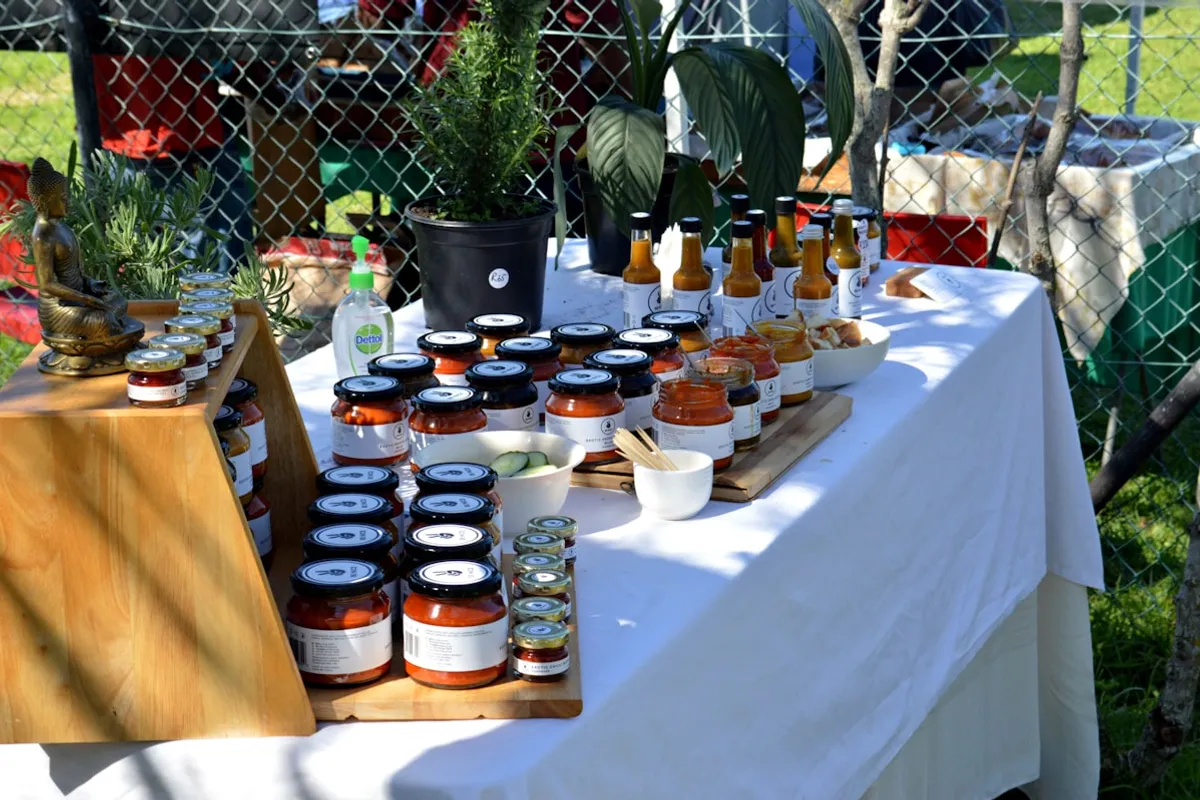
A home baker in Lancaster County weighs her year. She made $48,000 selling sourdough at two farmers markets, took a small wholesale account at a coffee shop on Queen Street, and just had a Cleveland restaurant ask if she would ship them six loaves a week. Three months ago a friend in Texas told her none of that was possible — the markets yes, but the coffee shop placement and the Ohio shipment were "obviously" outside cottage food. She is about to write back and explain why "obviously" depends on the state. In Pennsylvania, the wholesale account and the interstate shipment are routine. She just had to register first.
Pennsylvania does not have a cottage food law in the shape that Texas, Florida, or New York have one. There is no separate exempt category, no statutory revenue ceiling tied to a home-kitchen carve-out, no "you are below this threshold so we leave you alone" arrangement. What Pennsylvania has instead is the Limited Food Establishment program — a $35-per-year registration administered by the Pennsylvania Department of Agriculture (opens in new tab) that allows non-hazardous foods to be produced in a residential kitchen for sale through almost any channel a commercial food facility uses.
It is more permissive than most cottage food laws on what you can make and where you can sell it. It is also more demanding on the kitchen — Pennsylvania inspects, registers, and renews where other states only register or only ignore.
This is the long version of Pennsylvania's home-kitchen food rule as it stands in 2026. It walks through why the state's regime is structurally different from cottage food, what the LFE program actually allows on the food list, the inspection and zoning steps that other states skip, the wholesale and interstate channels that are open, the acidified-foods and pH-testing conversation, the labeling rules, and the transition from LFE to a full retail food facility license when the business outgrows the residential kitchen.
The short version: Pennsylvania regulates home food production through the Limited Food Establishment (LFE) program (opens in new tab) at the Pennsylvania Department of Agriculture, under the Food Safety Act (3 Pa.C.S. §§ 5721–5737), not a cottage food exemption. Registration costs $35 per year and requires an on-site inspection before you operate, routine inspections after that, and annual renewal. The registration is not permitted in Philadelphia County. There is no revenue cap. Acidified foods, fermented foods, and most shelf-stable items are allowed; time-temperature-control-for-safety foods (dairy, meat except certain dried products such as jerky, fresh cream fillings, cut produce) and low-acid canned foods are never allowed. Producers can sell direct, at farmers markets, online, wholesale to retailers and restaurants, and across state lines — sales channels that are closed under cottage food laws in most other states — though a Retail Food Facility License may also be required at events and farmers markets, and FDA registration may apply to interstate sales. The trade-offs are a real inspection regime, a no-pets rule for the home kitchen, confirmation from the municipality that zoning allows the business, private-well water testing where applicable, product lab testing, and ongoing pH documentation for acidified products.
Why Pennsylvania does not look like Texas, Florida, or New York
Cottage food laws across the United States cluster into a handful of archetypes. Pennsylvania is in a category of one. The four features that set the LFE program apart from the regimes most home bakers learn first:
- It is a registration program, not an exemption. Florida exempts producers below $250,000 (HB 663 of 2021 (opens in new tab)) from licensing entirely — no registration, no inspection, no fee. Texas exempts cottage food producers below $150,000 (post-SB 541 of 2025 (opens in new tab)) with a one-time food handler course as the only state contact. California requires county registration for Class A producers with no inspection. New York issues a free Home Processor Registration without inspection. Pennsylvania, by contrast, registers the kitchen — submits a business plan, reviews recipes, inspects the production space, and asks for annual renewal. The LFE is closer in structure to a small commercial food facility license than to a cottage food exemption.
- There is no revenue cap. Pennsylvania imposes no income ceiling on LFE production. This puts the state in a small group (alongside New York) where the cap is replaced by other constraints — the food list, the production environment, and the inspection regime — rather than a dollar figure.
- The food list is broader than every major cottage food state. Acidified foods (hot sauce, salsa, pickles) are allowed with pH testing. Fermented foods (sauerkraut, kimchi, kombucha) are allowed. Pennsylvania even permits certain dried meat products like jerky in a registered home kitchen, a category most states close entirely. The exclusions are narrower, but absolute: any food that requires time/temperature control for safety (including cream fillings, fresh dairy, and fresh meat), and all low-acid canned foods, which can only be made in a commercial food establishment.
- The sales channels are wide open. Wholesale to retailers, restaurants, and food-service operations is permitted. Interstate shipping is permitted. Online sales nationwide are permitted (with the acidified-food caveats noted below). Most cottage food states close every one of those channels. Pennsylvania closes none.
The accumulated effect is that Pennsylvania looks like the friendliest state to a producer who reads the four features in isolation. The catch — and there is one — is that the registration, inspection, zoning, and water-testing apparatus is also more involved than anything Texas, Florida, or even New York asks of a home baker. The state's logic is that a producer who can wholesale to a restaurant and ship to Ohio should be inspected; a producer who only sells two loaves a week to direct neighbors arguably does not need that infrastructure, but the Pennsylvania framework does not have a "small enough that we don't care" tier. Everyone registers, or no one registers.
What the Limited Food Establishment program actually permits
The statutory authority is the Food Safety Act (3 Pa.C.S. §§ 5721–5737) (opens in new tab), which requires every person operating a food establishment in Pennsylvania to register and brings in the federal food regulations in Title 21 of the Code of Federal Regulations. It is administered by the Pennsylvania Department of Agriculture's Bureau of Food Safety and Laboratory Services. An LFE that also retails directly to consumers may additionally fall under 7 Pa. Code Chapter 46 (Food Code) (opens in new tab). The agency's Limited Food Establishment program page (opens in new tab) is the operative resource for current application forms, fee schedules, food categories, and inspection procedures.
The LFE designation applies to food produced or stored in a home or home-style kitchen — PDA uses "residential-style kitchen" for any kitchen meant for home use, whether it sits in a house or in a church, fire hall, or out-building — that makes only non-time-temperature-control-for-safety foods for sale. A Limited Food Establishment registration is not permitted in Philadelphia County. The defining elements:
- A registered residential kitchen. Production happens in a private home kitchen that has been inspected and registered. The household kitchen and the LFE production cannot operate simultaneously — separation is operational (different times, separately stored ingredients), not necessarily structural.
- Non-hazardous foods only. Foods that are shelf-stable at room temperature, or that have been processed (acidified, fermented, dried) to meet shelf-stability requirements documented by recipe and pH or water-activity testing.
- Sales through any legal channel. Direct-to-consumer at the home, at farmers markets, online, by mail order, wholesale to retail stores and restaurants, and into interstate commerce — subject to product-specific federal rules layered on top.
- An active registration on file. The PDA reviews the application, inspects the kitchen, issues a registration certificate, and renews annually. Producing without an active registration is operating outside the program.
The application is more substantive than the one-page form that satisfies New York. Pennsylvania typically requires:
| Item | What the PDA looks for |
|---|---|
| Business plan | A description of the products, the production process, the sales channels, and the food safety practices that govern handling, storage, and sanitation. |
| Recipe submissions for boundary products | Acidified foods need written recipes and a process flow approved by your food inspector before registration. |
| Product lab testing | Acid, acidified, or fermented foods and beverages: pH. Dressings, sauces, and salsa: pH and water activity. Moist breads, cakes, and some pies: water activity and pH. Dehydrated foods: pH and water activity. Results are submitted with the application. |
| Municipal zoning confirmation | The application asks you to certify the date you contacted your municipality and confirmed you can use the property for the business. PDA approval does not imply compliance with local zoning. |
| Water supply proof | A copy of the water bill for a public supply, or, for a private well, test results for total coliform and nitrate / nitrite from a DEP-approved laboratory. |
| Product labels and pet policy | Labels for packaged products (except exempt baked goods), and a signed statement that no animals are on or in the active food establishment premises. |
| $35 registration fee | Collected at the inspection; annual renewals are also $35. |
The PDA's published guidance asks applicants to submit at least 60 days before they intend to operate. PDA reviews the plans and notifies the applicant within 15 business days; the on-site inspection follows approval, and the fee is collected when the inspection is compliant. A producer who submits in May with a July opening date is on a reasonable timeline. A producer who applies the week before a farmers market season starts is not.
Sidebar — Apply before you advertise. A producer who sets up an Instagram account, lists products, takes preorders, and then realizes they need a registration has created a paper trail of pre-registration sales that the PDA can ask about during the inspection. The fix is to schedule outreach against the registration timeline, not the other way around. The registration is fast enough that there is no reward for racing it.
The food list
The LFE food list is among the most expansive among home-kitchen programs in the United States. The current categories, paraphrased from current PDA guidance and Penn State Extension's Food for Profit (opens in new tab) materials:
| Category | Examples | Notes |
|---|---|---|
| Baked goods | Breads, rolls, biscuits, bagels, muffins, scones, cookies, brownies, bars, cakes, cupcakes, pies (fruit-only), pastries without cream or custard fillings | Fillings, frostings, and toppings must be shelf-stable; cream cheese frosting, fresh whipped cream, and custard fillings are out. |
| Candies and confections | Chocolate, fudge, hard candy, peanut brittle, toffee, taffy, lollipops, no-cook fondants, caramels | Cream-filled and refrigerated-filling centers are out. Chocolate-covered fruit is allowed only if the fruit is whole and uncut with a pH of 4.6 or below, such as most apples and strawberries. |
| Jams, jellies, marmalades, preserves, fruit butters | Strawberry jam, fig preserves, marmalade, apple butter | Written recipes required. No testing for standard recipes from the Ball Blue Book, the USDA Complete Guide to Home Canning, or a university extension; altered or new recipes need soluble-solids (Brix) testing. |
| Acidified canned goods | Hot sauce, salsa, chow-chow, relishes, acidified vegetables, pickled peppers | Requires written recipe + process flow + initial commercial-lab pH testing + per-batch pH records. A final pH between 4.2 and 4.6 also requires process authority approval. |
| Pickled and fermented products | Pickles, sauerkraut, kimchi, fermented vegetables, kombucha | Same testing and recipe-approval framework as acidified goods. Lacto-fermented products often submit additional process documentation. |
| Honey and maple products | Honey, infused honey, maple syrup products | PDA publishes separate guidelines for honey and maple syrup processors. |
| Snack items | Granola, granola bars, kettle corn, caramel corn, popcorn, trail mix | |
| Roasted nuts and nut mixes | Roasted almonds, spiced pecans, candied nuts | |
| Dried fruits and vegetables | Raisins, dried apricots, dried tomatoes, fruit leather, dried herbs | Dehydrated foods need pH and water activity testing. Freeze-drying may be permitted with water activity testing. |
| Dried baking and soup mixes | Cookie mixes, brownie mixes, soup mixes, bread mixes | Packaged dry; no shelf-stability questions provided the dry-state is documented. |
| Roasted coffee beans and dried tea leaves | Whole bean, ground coffee, loose-leaf tea, tea blends (non-medicinal) | Medicinal or supplement claims push the product into FDA dietary-supplement territory and out of LFE eligibility. |
| Dried pasta | Egg or eggless pasta, fully dried | Fresh or refrigerated pasta is excluded. |
| Dried meat products | Jerky, dried sausages with documented process | Permitted with substantial process documentation; one of the categories where Pennsylvania is more permissive than nearly every other state. Verify the current requirements with the PDA before producing — this is the highest-scrutiny category on the list. |
What the program excludes — the LFE rule is essentially the inverse of "anything that requires refrigeration for safety":
- Fresh dairy products (milk, cream, soft cheeses, fresh yogurt).
- Fresh meat and poultry (excluding the dried-meat exception above).
- Fresh fish and shellfish.
- Cream-filled or custard-filled baked goods.
- Cheesecakes, pumpkin pies, and cream, custard, or meringue pastries and pies.
- Cut or prepared fresh fruits and vegetables, garlic-in-oil products, and tofu and soy-protein foods.
- Juice with a pH above 4.6, and juice sold wholesale (juice HACCP rules make it impractical in a residential-style kitchen).
- Low-acid canned foods (corn, beans, most soups and gravies) — these can only be processed in a commercial establishment with a steam retort, never in an LFE.
- Any other food that requires time/temperature control for safety. No amount of documentation makes a TCS food eligible.
- Any product making medicinal, supplement, or therapeutic claims.
Sidebar — Pet treats are not LFE food. Pennsylvania regulates pet treats and animal feed under a separate framework — the state's commercial feed law. Even a "human-grade" dog biscuit baked in a registered LFE kitchen is feed, not food, and requires its own registration. If pet products are part of the plan, look at pet treat packaging and labeling rules before starting; the regulatory track is parallel, not overlapping.
The acidified-foods conversation
The acidified-and-fermented category is where Pennsylvania pulls furthest ahead of most cottage food states. New York excludes most acidified products by default. Florida excludes them. California excludes them. Pennsylvania allows them, conditional on the testing and documentation discipline catching up with the permissiveness.
The protocol, in compressed form:
- Submit the recipe and process flow. Detailed enough that an inspector reading it can reproduce the product. Ingredients in proportions, cook times, hold temperatures, acid type and amount, fill temperature, headspace, jar type, lid type, processing time, cooling protocol.
- Initial commercial-lab pH analysis. An independent commercial food laboratory tests each unique recipe for equilibrium pH. PDA approves acidified and fermented products only at pH 4.6 or below, and recommends aiming for pH 4.2 or below as an extra precaution.
- Process authority review between pH 4.2 and 4.6. If the final equilibrium pH falls between 4.2 and 4.6, the product flow, recipe, and process must be evaluated and approved by a process authority — a qualified expert in acidification and processing of acidified foods.
- Per-batch pH testing. Every batch needs a documented pH reading. At a final pH of 4.0 or below, a properly calibrated pH meter or pH test strips may be used; between 4.0 and 4.6, a properly calibrated pH meter is required. Logs show production date, batch number, pH, and any corrective action, plus meter calibration records.
- Thermal process and records. Acidified recipes need a heat step — for example, hot-fill-hold at 180°F or above, or a water bath until the coldest spot reaches 180°F for at least 25 seconds — with time and temperature records for each batch.
- Jar and lid discipline. New lids for every batch; re-used jars only if thoroughly washed and sanitized.
The pH-testing apparatus is the part producers underestimate: a meter with the right accuracy for the product's pH range, buffer solutions, and calibration records. The discipline is small but daily, and a single missed batch creates a hole in the record that an inspector will notice. For producers shipping acidified products interstate, PDA warns that FDA may require a process authority review, process filing, and batch testing regardless of pH level — see the hot sauce compliance guide for the federal layer.
The benefit, in exchange for that discipline: Pennsylvania producers can run a hot sauce business, a pickle business, or a kombucha business from a registered home kitchen — and ship those products to customers in other states, subject to federal rules — without leaving the LFE framework. That is a category of business that simply does not fit cottage food in most of the country.
The inspection regime: what an LFE applicant signs up for
This is the part that diverges most sharply from cottage food expectations. Pennsylvania treats the home kitchen as a registered production environment, which means the producer has obligations a true cottage food regime would not impose.
| Requirement | What it means in practice |
|---|---|
| Zoning confirmation | The application asks you to certify the date you contacted your township, borough, or city office and confirmed you can use the property or home kitchen for the business. PDA's approval does not imply compliance with local zoning or ordinances, so get the municipality's answer before applying. If you operate in a county health department jurisdiction, county licenses come first. |
| Philadelphia County | A Limited Food Establishment registration is not permitted in Philadelphia County. Food businesses there need NSF/ANSI equipment in a commercially zoned property. |
| Opening inspection | After plan approval, a PDA food inspector inspects the production site before you operate and collects the registration fee once the inspection is compliant. |
| Ongoing inspections | Registration involves inspection of the food production site on a routine basis by PDA. |
| Annual renewal | A $35 renewal fee each year; PDA sends notice about 45 days before expiration, and renewals can be processed online. |
| Water supply | Public water: a copy of the water bill. Private well: initial tests for coliform and nitrate / nitrite from a DEP-approved laboratory, then coliform testing every year; follow-up nitrate / nitrite testing depends on the initial results. |
| Dual-use rules | The household cannot prepare family meals simultaneously with LFE production. Separation is operational — different times, different storage zones for production ingredients, distinct food-grade containers. Some producers run LFE production on dedicated days; others use early-morning or late-evening windows. |
| Pet restrictions | No animals or pets are permitted in the home at any time if the personal home kitchen is used. The only exception is a home designed so the processing and storage area is never accessible to a pet — physically separated by a fully closing door (baby gates and removable barriers do not count) and with its own separate entrance and exit. Fish and caged animals kept away from the LFE areas are not counted as pets. |
| Children | Not permitted in the kitchen during LFE production windows. Same logic as pets — the production zone is a regulated food facility during operating hours. |
| Sanitation and storage | Good personal hygiene and sanitary conditions in the kitchen and storage areas; business ingredients kept separate from personal-use food, labeled, and stored in food-grade containers. |
A practical comparison: a Texas cottage food baker can wake up, make pancakes for the kids, clean the counter, and start the day's LFE production on the same equipment fifteen minutes later, with the children at the table. The Texas regime does not police that overlap. The Pennsylvania regime does. An LFE producer who plans to bake five batches of bread on a Saturday morning is committing to a four- or six-hour window during which the kitchen is closed to the household.
Sidebar — Check location before anything else. The application asks you to certify that you contacted your municipality and confirmed you can run the business from the property, and PDA's approval does not override local zoning. A township with a permissive home-occupation ordinance is straightforward; a homeowner's association that prohibits "commercial activity" is a different conversation that needs to happen before the PDA application is filed. And a home in Philadelphia County cannot be registered as a Limited Food Establishment at all. Start with a phone call to your township or borough zoning office.
The sales channels are wide open — but the channels themselves have rules
The LFE rule is uncomplicated on venues. Wholesale is permitted, interstate is permitted, online is permitted, retail placement is permitted. What changes from venue to venue is the layered regulation on top of the LFE registration:
| Venue | Allowed under LFE? | Layered requirements |
|---|---|---|
| Producer's home (direct pickup) | Yes | Local zoning; the LFE registration covers the rest. |
| Farmers markets and fairs in PA | Yes | A Retail Food Facility License may also be required for sales at certain organized markets; confirm with the market manager and PDA. |
| Online sales (delivered in PA) | Yes | LFE registration plus standard sales tax if the product is taxable. |
| Online sales (delivered nationally) | Yes | PDA notes that businesses selling across state lines might also need FDA registration; FDA may add requirements for acidified foods. |
| Mail order (in-state) | Yes | USPS or commercial carrier. |
| Mail order (interstate) | Yes | Nutrition labeling applies to products sold interstate unless an FDA small business exemption is obtained; FDA may add requirements for acidified foods. |
| Wholesale to retail stores | Yes | The retailer typically asks for product liability insurance, label samples, and a copy of the LFE registration. |
| Wholesale to restaurants, cafes, food service | Yes | Same — the buyer's requirements matter more than the state's at this stage. |
| Wholesale to distributors | Yes | Distributors may impose their own facility-inspection or audit requirements (SQF, GFSI), separate from anything the state asks. |
| Out-of-state shipping (non-acidified products) | Yes | Federal labeling rules apply; FDA facility registration is required for commercial food facilities — verify whether your specific operation meets the registration threshold under 21 CFR Part 1, Subpart H (opens in new tab). |
| Out-of-state shipping (acidified products) | Yes | FDA may require a process authority review, process filing, and batch testing on top of the state registration. |
| Direct shipping to consumers via national platforms (Etsy, Shopify) | Yes | Subject to platform-specific rules; the LFE registration plus standard commercial-shipping practices cover the regulatory side. |
The federal layer for interstate shipping is the most common cause of confusion. A Pennsylvania LFE producing dry-pasta, granola, or baked goods can ship a box of cookies to a customer in Ohio without any federal acidified-foods step — the FDA does not regulate dry baked goods in interstate commerce the same way it regulates acidified canned goods. A producer shipping a four-pack of hot sauce to that same Ohio customer is in a different regulatory layer entirely, and that layer is federal, not state. Pennsylvania's LFE registration opens the door; FDA decides what walks through it for the higher-risk categories.
Sidebar — Wholesale buyers may ask for more than the state requires. A specialty grocer placing six SKUs of jam on a shelf will often ask for a Certificate of Insurance (product liability), a UPC/GTIN for each SKU, a label sample meeting the retailer's house standards, and sometimes an audit (third-party kitchen audit, SQF, or similar) that exceeds Pennsylvania's. The LFE registration unlocks the legal right to wholesale; the wholesale buyer's terms decide the practical bar. Producers approaching the wholesale stage should review the wholesale pricing guide and the wholesale account profitability case study before signing terms.
Labels for Pennsylvania LFE products
Pennsylvania does not currently require a specific "made in a home kitchen" disclaimer of the kind Texas, New York, and Florida mandate. The state's logic: the registration and inspection regime is the consumer-protection mechanism, and a disclaimer added on top creates noise without adding clarity. That said, every other federal and state labeling element still applies — and a PA LFE label often ends up looking similar to a fully commercial label.
The required elements as of 2026:
| Element | Specification |
|---|---|
| Product name | The common name of the food (e.g., "Sourdough Bread," "Strawberry Jam," "Spicy Pickled Peppers"). Fanciful names are fine in larger type if the common name appears nearby. |
| Producer's name and business address | Name and address of the manufacturer, processor, or distributor. |
| Ingredient statement | All ingredients in descending order by weight. Sub-ingredients listed for compound ingredients (e.g., "chocolate chips (sugar, cocoa, soy lecithin, vanilla)"). |
| Allergen statement | A "Contains:" statement for any of the major nine allergens (milk, egg, fish, shellfish, tree nuts, peanuts, wheat, soybeans, sesame). Sesame was added as the ninth major allergen by the FASTER Act of 2021 (opens in new tab) and is required on labeled food in interstate commerce on or after January 1, 2023 — see the FDA allergen guidance (opens in new tab). |
| Net weight or count | Net weight or unit count, placed in the bottom third of the principal display panel in type no smaller than 8 point. |
| Allergen cross-contact disclosure | Where appropriate: "Produced in a kitchen that also handles wheat, eggs, tree nuts, and dairy." Optional but commonly used when a single LFE produces multiple product lines. |
| Product-specific warnings | Packaged juice that has not been processed to reduce pathogens needs the federal warning statement required by 21 CFR 101.17(g). |
| Nutrition facts panel | Required on products sold in interstate commerce. PDA says most LFEs qualify for FDA's small business nutrition labeling exemption but must apply with FDA (see 21 CFR §101.9(j) (opens in new tab)). Claims such as Low Fat, Sugar Free, or Gluten Free must be substantiated and can trigger nutrition labeling. |
| Baked goods sold direct | Bakery items the baker (or an employee) sells directly to a Pennsylvania consumer at the production site or a satellite such as a farmers market need no label, but ingredient information must be available on request. Baked goods sold through a retailer the baker does not own need full labeling. |
| Language | English required; additional languages permitted as long as every mandatory element appears in English. |
The allergen statement is an easy element to miss. A "Contains: wheat, eggs" line is mechanical but easy to forget on a small label. Build it into a label template the first time — every product, every batch, every revision — and it stops being something to remember.
Sidebar — UPC/GTIN codes are not optional for retail placement. The LFE registration does not require a UPC, but every retailer placing the product on a shelf does. A producer planning to wholesale should budget for a GS1 US (opens in new tab) company prefix (annual fee scaled to the number of SKUs) and the time to assign a unique GTIN per SKU. Retailers will not pull product through a register without one.
How Ardent Seller helps with the Pennsylvania label
Ardent Seller assembles this label. Pick a finished product, choose Pennsylvania, and the cottage food label generator pulls together the product name, the producer's name and business address, the ingredient statement in descending order by weight with sub-ingredients in parentheses, the federal "Contains:" allergen line, and the net weight or count. Pennsylvania is one of the few states that requires no "made in a home kitchen" disclaimer — so the generator correctly leaves it off rather than printing wording the state does not ask for, and instead reminds you to add any product-specific warning (unpasteurized juice, allergen cross-contact) your product actually needs, and to place the net quantity in the bottom third of the front panel at 8 point or larger. A validation checklist shows every element Pennsylvania requires and blocks printing while any of them is missing. Output is a PDF sheet (Avery 5163, 4″×6″, or full page) or a direct print.
Generate your Pennsylvania cottage food label with Ardent Seller free — the label generator is included on every plan, including the free tier.
Where state law does not cover the producer
The LFE registration is the state's food-safety layer. Three other regulatory layers operate on top of it and the producer is responsible for finding each one.
Local zoning and HOA rules
Pennsylvania's municipal layer is more variable than most. A producer in a township with a permissive home-occupation ordinance may get a quick answer from the zoning officer. A producer in a neighborhood with an HOA that prohibits any commercial activity may need to negotiate (or relocate the business) before the LFE registration can move. The PDA does not preempt municipal zoning — its approval does not imply the business complies with local zoning or ordinances. Philadelphia County is off the table entirely: the LFE registration is not permitted there. If the property uses an on-lot sewage system, PDA also asks you to confirm with the municipal Sewage Enforcement Officer that it is adequate. The first phone call in the LFE process should be the township or borough zoning office, before the PDA.
Sales tax
Pennsylvania exempts most food sales for off-premises consumption from sales tax under the state's general grocery food rules — see 61 Pa. Code §60.7 (opens in new tab) and Pennsylvania Department of Revenue sales tax guidance (opens in new tab). The exemption can fail when food is sold at a venue that serves prepared food (concession-style sales at a fair), when it is sold with utensils or for immediate consumption, or when the producer also operates a separate prepared-food line that is taxable. An LFE selling jars of jam from a farm stand falls within the exemption; the same LFE selling slices of cake at a Sunday-morning event with forks provided is in a tax conversation. Verify with the Department of Revenue before assuming exemption, and apply for a Pennsylvania sales tax license if any portion of the business is taxable.
Federal layers for interstate shipping and acidified foods
The federal floor lifts the moment a product moves in interstate commerce, regardless of whether the producer is registered as an LFE in Pennsylvania. The most common federal touch points:
- FDA Food Facility Registration (opens in new tab) under the FDA Food Safety Modernization Act (FSMA) (opens in new tab) for facilities that manufacture, process, pack, or hold food for interstate consumption (subject to the small-business exemptions in the rule).
- FDA acidified-foods requirements under 21 CFR Part 114 (opens in new tab) — PDA warns that FDA may require a process authority review, process filing, and batch testing for acidified products under federal jurisdiction.
- FSMA preventive controls. PDA adopts the federal Preventive Controls for Human Food rule under the Food Safety Act (3 Pa.C.S. § 5733(f)) and expects registered firms to comply with applicable portions regardless of FDA registration status. Most LFEs qualify for the modified requirements for very small businesses.
- Federal nutrition labeling under 21 CFR Part 101 (opens in new tab), with small-business exemptions noted above.
- Country-of-origin labeling for imported ingredients and for finished products made for export.
A Pennsylvania LFE shipping a box of cookies to a customer in Ohio may still need an FDA small business nutrition labeling exemption, and FDA facility registration has exemptions for businesses operated from a private residence. The same LFE shipping a six-pack of hot sauce to that customer is in a different regulatory frame and should confirm FDA's acidified-food requirements before shipping.
Common mistakes Pennsylvania LFEs make in year one
Patterns repeat across producers and across counties. The most common compliance gaps, in rough order of frequency:
- Skipping the zoning step. The application asks the producer to certify contact with the municipality, and PDA approval does not cure a zoning violation. The cure is to call the township first — and a Philadelphia County producer cannot register an LFE at all.
- Pre-registration sales. Selling at a market or online before the registration certificate is issued. The PDA registration timeline is reasonable — apply 60 days in advance and the season opens on time. Selling early creates a paper trail that surfaces at the first inspection.
- Acidified-food production without per-batch pH logs or a process authority review. The recipe is approved and the initial lab pH test cleared, but per-batch documentation is patchy — or the final pH landed between 4.2 and 4.6 and no process authority reviewed it. The cure is mechanical — a process authority review where required, plus a calibration log and a batch log stored together.
- Dual-use kitchen overlap. Family dinner prep and LFE production happening on the same equipment within the same two-hour window. The state's expectation is operational separation; a producer who runs LFE production on dedicated days has an easier inspection than one who tries to interleave.
- Allergen statement missing. A "Contains: wheat, eggs, milk" line absent from a label that should carry it. The PDA flags this on every inspection where it appears.
- Pets in the home. PDA does not permit animals or pets in the home at any time if the personal home kitchen is used. A closed kitchen door during production is not enough — the only exception is a processing and storage area pets can never reach, behind a fully closing door, with its own separate entrance.
- Wholesale without a Certificate of Insurance. The state allows wholesale, but the retailer typically asks for product liability insurance the producer has not yet bought. The cure is to budget for COI ($300–$700/year for typical small-producer policies, varying by product category and revenue) before approaching wholesale buyers.
- Interstate hot sauce shipped without checking FDA requirements. A producer with an approved LFE recipe assumes the state registration covers federal acidified-foods shipping. PDA warns that FDA may require process authority review, process filing, and batch testing for acidified foods under its jurisdiction. Confirm with FDA before the first out-of-state order.
A simple records system that satisfies a PA inspector
The LFE inspection regime rewards producers with clean records. A producer who can answer a Tuesday inspection in fifteen minutes spends fifteen minutes on it; a producer who is reconstructing batch logs from memory spends weeks on the same inspection.
The minimum file set for a Pennsylvania LFE:
| File | Contents | Retention |
|---|---|---|
| LFE registration certificate | The current-year certificate issued by the PDA | Indefinitely; current-year copy in active file |
| Annual renewal + zoning confirmation + well-water coliform test | The records that support the registration each year | Indefinitely |
| Approved recipes and process flows | Especially for acidified, fermented, and dried-meat products | Indefinitely; replace when amended |
| Initial commercial-lab pH analysis (acidified products) | The original lab report establishing the recipe meets the pH threshold | Indefinitely |
| Per-batch pH logs (acidified products) | Date, batch number, pH reading, meter calibration confirmation, operator initials | 3 years minimum |
| Cook and fill temperature logs (acidified products) | Time-temperature records for the cook stage of each batch | 3 years minimum |
| Ingredient sourcing records | Supplier, lot numbers, dates, especially for allergen-flagged ingredients | 2 years past shelf life |
| Label samples | At least one sample of each label version produced during the year | 2 years |
| Gross sales log by channel | Direct, wholesale, online, interstate — separated by channel for tax purposes | 3 years (matches PA sales tax retention) |
| Sales tax filings (where applicable) | PA Department of Revenue filings and confirmations | 3 years |
| Wholesale account file | Buyer contact, COI on file with each retailer, label approvals, invoices | Indefinitely |
| Customer complaints, if any | Date, customer, product, complaint, resolution | Indefinitely |
| Pet policy and household separation plan | The signed no-animals statement from the application, plus a short description of how household activity is scheduled around production | Indefinitely |
A spreadsheet handles most of this. A binder handles the rest. Software that pulls ingredient lots, batch numbers, pH readings, finished-product labels, and per-channel sales into one connected record makes the difference between an inspection that closes in fifteen minutes and one that becomes a three-week reconstruction exercise.
This is where Ardent Seller fits for Pennsylvania LFEs: ingredient lots flow into batch records, batches into finished items with their labels, finished items into sales by channel, and the same data structure that produces a per-batch pH log also produces a cost-per-unit number that tells the producer when the wholesale margin is too thin. Recipe and batch tools are included in the free tier, with multi-location and audit-trail features available on paid plans for producers operating from more than one site or running wholesale at scale. See features or pricing for the full picture.
When to leave the LFE for a full retail food facility license
Pennsylvania's lack of a revenue cap means the moment to leave the LFE is not triggered by a dollar figure. It is triggered by the production environment or product list failing the LFE framework:
- The product list fails. The producer wants to make fresh-filled pastries, cheesecakes, cream sauces, fresh juices, or any refrigeration-dependent product. The LFE does not stretch; a fully licensed kitchen does.
- The kitchen capacity fails. Demand outruns what a residential kitchen can handle. The fridge cannot hold a week's ingredient prep; the oven cannot run enough cycles to meet wholesale commitments; the household has been displaced.
- The wholesale relationship fails. A major retailer requires SQF or GFSI certification, which is incompatible with a residential setup. A distributor wants quarterly audits the LFE program does not produce.
- The business outgrows the FSMA small-business provisions. PDA already applies the federal Preventive Controls rule to registered firms, and most LFEs qualify for the modified requirements for very small businesses (under $1,000,000 in annual sales). A business that grows past those thresholds faces the full preventive controls requirements.
The transition is well-trodden in Pennsylvania, which has a robust commissary, shared-use kitchen, and food-business-incubator ecosystem (particularly in Philadelphia, Pittsburgh, and the Lehigh Valley). The producer moves into a rented commercial kitchen (a shared kitchen still needs its own registration and a Shared Facility Agreement), registers the commercial kitchen with PDA or obtains a Retail Food Facility License under 7 Pa. Code Chapter 46 (opens in new tab) for retail sales, updates labels with the new license number, layers in federal registrations where applicable, and continues to ship the same products under a different production environment.
Producers who manage this transition cleanly tend to be the ones whose LFE records were already in shape. They know their cost per unit, their batch yields, their per-channel revenue, and their allergen flags before the move. The transition becomes a paperwork exercise instead of a discovery exercise.
Primary sources to bookmark
Pennsylvania's LFE program is administered by a small bureau and the operative documents are not always front-and-center on the agency site. Bookmark these and check them before relying on anything you read in a blog post (this one included) for a production decision:
- Pennsylvania Department of Agriculture — Limited Food Establishment program page (opens in new tab) — the current application form, fee schedule, food category guidance, and contact information for the Bureau of Food Safety regional offices.
- PDA — Limited Food Establishment Application Packet (Rev 10-2024) (opens in new tab) — the application, the Requirements for Home Processors, and the commodity rules for baked goods, jams, acidified foods, candy, and labeling.
- Food Safety Act — 3 Pa.C.S. Chapter 57 (opens in new tab) — the statute (§§ 5721–5737) that requires food establishments, including LFEs, to register.
- 7 Pa. Code Chapter 46 — Food Code (opens in new tab) — the retail food code, which may also apply when a business retails directly to consumers.
- Penn State Extension — Food for Profit: Home-Style Kitchen Food Processing (Limited Food Establishments) (opens in new tab) — practitioner-facing guidance from Penn State that walks producers through registration, kitchen requirements, acidified-foods process, and labeling.
- Penn State Extension — State and Federal Regulations for Food Processors (opens in new tab) — the cross-walk between Pennsylvania's rules and the federal layer for interstate shipping.
- Pennsylvania Department of Revenue — Sales and Use Tax (opens in new tab) — sales tax determinations and the Pennsylvania Certificate of Authority application.
- FDA Food Facility Registration (opens in new tab) — federal registration for facilities engaged in interstate food commerce.
- 21 CFR Part 114 — Acidified Foods (opens in new tab) — federal acidified-foods rule for hot sauce, salsa, pickles, and similar products in interstate commerce.
Verify any state-specific fee, food list, or threshold against the PDA's current page before relying on it for a business decision. Pennsylvania's rules are stable but not static; the legislature can adjust the framework, and the bureau can publish updated guidance, in any given year.
If the plan is to build a real food business from a Pennsylvania home kitchen — one that wholesales to a coffee shop, ships to customers in three states, and produces a hot sauce line under the same roof as the baked goods — the LFE program is a more workable foundation than the cottage food regimes most home bakers learn first. The trade-off is genuine inspection discipline, but in exchange for a registration regime, the producer gets every channel a commercial food facility opens. Build the records as you build the product, and the day the inspector knocks is a fifteen-minute conversation.
Get started with Ardent Seller free and bring your recipe approvals, batch logs, pH records, label generation, and per-channel sales tracking into one place — without giving up the LFE registration that makes Pennsylvania's expansive food list and wholesale path actually workable.
Related reading
- Pennsylvania cottage food law — quick reference — The structured one-page summary of the Limited Food Establishment program, allowed food list (including acidified foods with pH testing), label rules, and the interstate-shipping path covered in this guide. Useful as a take-with-you card while you set up.
- New York Cottage Food Law — The closest peer to Pennsylvania on the no-cap dimension, but a sharp contrast on the food list (NY excludes most acidified products, PA allows them) and on inspection (NY does not inspect, PA does).
- Texas Cottage Food Law — The other side of the trade-off — Texas runs a $150,000 cap but no inspection, and permits a wholesale-via-vendor path that is narrower than Pennsylvania's full wholesale channel.
- Hot Sauce Compliance, pH Testing, and Acidified Foods — The deep dive on FDA acidified-food rules and the federal layer that sits on top of a Pennsylvania LFE registration for any acidified product shipped interstate.
- Batch Tracking for Food Sellers — Lot tracking system setup for cottage food / jam / sauce / baked goods; particularly useful in an LFE where per-batch pH logs and ingredient lot traceability are inspection requirements.
- Cottage Baker's Glossary — A 32-term glossary covering scheduled process, water activity, food handler, AAFCO, and the rest of the vocabulary that shows up around cottage food and limited food establishment rules.
Free resources
A few free downloads from the Ardent Workshop library that pair well with this post:
- Cottage Food Laws by State: The 50-State + DC Quick Reference — A PDF reference with revenue caps, sales venues, registration rules, and the most common restrictions for every state. Use it to see how Pennsylvania's no-cap-but-inspected regime compares to neighboring states like New York, Ohio, and Maryland when planning interstate sales.
- Home Baker's Order & Delivery Tracker — A spreadsheet for tracking custom orders, delivery windows, and per-channel revenue — especially useful in a state where direct, wholesale, and interstate channels are all open and need to be separated for tax and audit purposes.
- Recipe Scaling & Batch Calculator — Scale a recipe up or down, hold ratios, and compute per-batch cost — useful for any Pennsylvania LFE that needs reproducible recipes to support PDA recipe approval and per-batch records.
Sources & methodology
Pennsylvania statutes, regulations, and agency guidance:
- Pennsylvania Department of Agriculture — Limited Food Establishment program (opens in new tab) — current application form, fee schedule, food list, and inspection procedures
- PDA — Limited Food Establishment Application Packet (Rev 10-2024) (opens in new tab) — requirements for home processors, Philadelphia County exclusion, pet policy, product testing, pH and process authority rules, and labeling
- Food Safety Act, 3 Pa.C.S. §§ 5721–5737 (opens in new tab) — registration authority for limited food establishments
- 7 Pa. Code Chapter 46 — Food Code (opens in new tab) — Pennsylvania's retail food code, applicable when retailing directly to consumers
- Penn State Extension — Food for Profit: Home-Style Kitchen Food Processing (Limited Food Establishments) (opens in new tab) — practitioner-facing guidance
- Penn State Extension — State and Federal Regulations for Food Processors (opens in new tab) — state-federal cross-walk for interstate sales
- 61 Pa. Code §60.7 and Pennsylvania Department of Revenue sales tax guidance (opens in new tab) — sales tax treatment of grocery food
Comparison-state references:
- Texas SB 541 (2025) (opens in new tab) — Texas cottage food cap and vendor classification
- Florida HB 663 (2021) (opens in new tab) — Florida cottage food cap raised to $250,000
- California AB 1144 (2021) (opens in new tab) — California Class B cottage food cap raised to $150,000
- New York Agriculture and Markets Law Article 20-C (opens in new tab) — New York Home Processor Exemption authority
Federal:
- FDA Food Facility Registration (opens in new tab) — required for commercial facilities engaged in interstate food commerce (subject to small-business carve-outs)
- 21 CFR Part 114 — Acidified Foods (opens in new tab) — federal acidified-foods rule
- 21 CFR §101.9(j)(1) (opens in new tab) — small-business exemption from federal nutrition facts panel requirements
- FASTER Act of 2021 (H.R. 1202) (opens in new tab) — added sesame as the ninth major food allergen
- FDA — Food Allergies (major allergen guidance) (opens in new tab) — sesame labeling requirements effective January 1, 2023
- FDA Food Safety Modernization Act (FSMA) (opens in new tab) — federal facility-registration framework
- GS1 US (opens in new tab) — UPC / GTIN issuing authority for retail-bound products
Note on data freshness: Pennsylvania LFE fees, food list, and inspection procedures reflect the PDA Limited Food Establishment page and application packet (Rev 10-2024), re-verified September 15, 2026, and Penn State Extension publications. The $35 application and renewal fee is current as of this writing; the food list, including the acidified-foods and dried-meat categories, is administered by the Bureau of Food Safety with case-by-case recipe approvals on boundary items. Verify the current state of any specific rule against the PDA Limited Food Establishment page (opens in new tab) before relying on it. Producer scenarios and revenue examples in this guide are illustrative composites, not real businesses.
This article is provided for educational purposes only and does not constitute legal, regulatory, food-safety, or tax advice. Pennsylvania Limited Food Establishment requirements — food categories, fees, inspection procedures, zoning, well-water testing, labeling, acidified-foods pH and process documentation, sales tax treatment, and federal interstate-commerce rules — vary by jurisdiction and product and change with new legislation or departmental guidance. Consult the Pennsylvania Department of Agriculture, the Pennsylvania Department of Revenue, your municipal zoning office, a qualified food regulatory consultant, or an attorney before making compliance, financial, or production decisions based on this content.