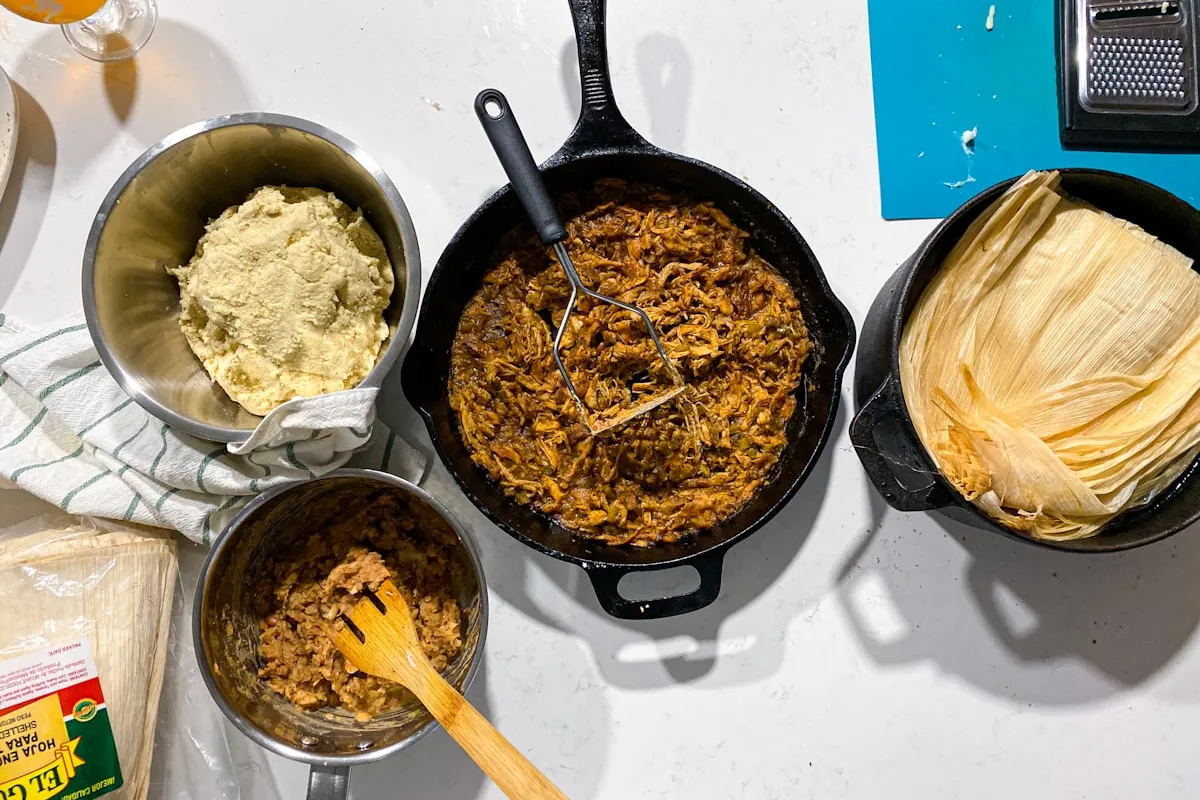
If you make tamales in a Denver kitchen and want to sell them at the Saturday market, the Colorado Cottage Foods Act as it stands today does not cover you. Through December 31, 2026, the Act caps each eligible food product at $10,000 of net revenue per year and limits the list to foods that do not require refrigeration for safety — which excludes meat products, refrigerated foods, and perishable masa-based foods like tamales. Home cooks who want to sell those foods have to work outside the cottage food framework, for example out of a licensed commercial kitchen at a rental cost that eats the margin.
Starting January 1, 2027, those same makers can operate inside the Cottage Foods Act with a $150,000 annual gross revenue cap adjusted for inflation, an annual CDPHE registration number, a food safety credential that covers time and temperature control, and an explicit legal authorization to sell one type of food that requires time and temperature control for safety (TCS) — tamales, burritos, tortas, cheesecakes, or another single TCS food type, with up to five variations — to Colorado consumers. The change comes from a single piece of legislation — HB26-1033, the "Tamale Act" (opens in new tab) — signed by Governor Jared Polis on June 4, 2026. The Act took effect on passage, but its changes to the cottage food statute begin January 1, 2027.
This guide walks through the rules in effect now, what the Tamale Act changes on January 1, 2027, how the new CDPHE registration works, what the food safety course requirement looks like in practice, the verbatim label disclaimer and point-of-sale placard, the new TCS and meat allowances and the structural counterweights that came with them, and what three composite Colorado producers — a Denver tamale maker, a Pueblo pickled-chile producer, a Boulder cheesecake baker — can actually do now and in 2027.
The short version
Now, through December 31, 2026: C.R.S. § 25-4-1614 (opens in new tab) — the Colorado Cottage Foods Act — caps each eligible food product at $10,000 of net revenue per calendar year (CDPHE counts each flavor separately). Only nonpotentially hazardous foods are allowed — no TCS foods, no meat. Sales go directly to informed end consumers in Colorado, including online. There is no state registration, but a food safety course is required. What HB26-1033 changes on January 1, 2027: Revenue cap: A single $150,000 gross revenue cap per calendar year, adjusted annually for inflation by CDPHE. Food list: A producer may sell one type of TCS food (tamales, burritos, tortas, and similar), with up to five variations. The food must not be cooled and reheated before sale, and it may be transported no more than once and for no longer than two hours. Meat must be federally inspected and bear the mark of inspection, or satisfy an exemption from inspection, such as a federal or state exemption for a poultry producer. Registration: Every producer must register with CDPHE annually before selling and receives a registration number. Training: Producers of TCS foods must complete an additional food safety course covering time and temperature control. Enforcement: Inspection when a product is misbranded, draws a consumer complaint, or is suspected in an illness; fines up to $100 per violation, cost recovery up to $1,000, and three TCS violations within 12 months end a producer's TCS sales. Cash fund: A Cottage Foods Cash Fund, with $300,000 transferred in on July 1, 2026, supports administration. What does not change: Sales remain direct to informed end consumers inside Colorado — no sales through retail food establishments, no catered events, no out-of-state sales. The verbatim label disclaimer "This product was produced in a home kitchen that is not subject to state licensure or inspection and that may also process common food allergens such as tree nuts, peanuts, eggs, soy, wheat, milk, fish, and crustacean shellfish. This product is not intended for resale." and the production date remain required on every label.
How Colorado got here
The Colorado Cottage Foods Act was enacted in 2012 with a narrow shelf-stable food list. Its $10,000-per-product net revenue cap is structurally unusual — it allows a producer to sell any number of products in aggregate (strawberry jam and grape jam are two separate caps), but caps each individual product at a level that works for hobbyist preserves and works poorly for a baker whose best seller has steady weekend sales.
The Act's exclusion of refrigerated foods and meat products leaves many home-cooked foods outside the legal framework — tamales, green chile with pork, cheesecakes, and cream-filled pastries among them. The Governor's office and the bill's sponsors framed the Tamale Act as a way to let home cooks, and Latino entrepreneurs in particular, legally sell foods like these.
An earlier tamale-focused bill, HB25-1190 (opens in new tab) ("Expanding Colorado Cottage Foods Act"), was postponed indefinitely on March 3, 2025. The idea returned in the 2026 session as HB26-1033 with broader bipartisan sponsorship.
The 2026 vehicle was introduced January 14, 2026 (opens in new tab) by Rep. Ryan Gonzalez (R-Greeley) and House Majority Leader Monica Duran (D-Wheat Ridge), with Sens. Robert Rodriguez (D) and Byron Pelton (R) as Senate prime sponsors. Twenty additional senators co-sponsored the bill in the upper chamber alone. The House passed it on April 30, 2026, the Senate on May 12, the bill was sent to Governor Polis on May 18, and Polis — who had publicly highlighted the legislation at a February 24, 2026 press event with the sponsors (opens in new tab) — signed it into law on June 4, 2026. The Act carries a safety clause and took effect on passage, except that its amendments to the cottage food statute take effect January 1, 2027.
The resulting law is a set of trade-offs. It pairs a broader food list and a much higher cap with annual registration, TCS-specific training, a limit of one TCS food type, transport limits for TCS foods, and fines with cost recovery. It is not a no-rules food-freedom framework, but it is a meaningful expansion of who can legally operate a cottage food business in Colorado.
What HB26-1033 actually changes
The Act amends C.R.S. § 25-4-1614 on three primary axes plus several secondary ones, all taking effect January 1, 2027. Until then, current law applies. Producers operating under the current framework will find some things very different and other things identical.
Axis 1 — Revenue cap. The most quantifiable change. The current cap is $10,000 of net revenue per eligible food product per year. The new cap is $150,000 of gross revenue per year from all food permitted under the section, adjusted annually by CDPHE for inflation. Three things change in that single sentence. The measure changes from net to gross — meaning expenses no longer reduce the count toward the cap, and a producer at $150,000 of gross with $120,000 of costs is at the ceiling. The unit changes from per-product to a single total — meaning the SKU-splitting workaround (sell six different flavors at up to $10K each) is no longer the right strategy. And the magnitude changes by 15× — meaning the cap is no longer the binding constraint for almost any small home producer.
Axis 2 — Food list expansion. The current list — nonpotentially hazardous foods only, no meat — stays, and the Act adds foods that require time and temperature control for safety (TCS), including tamales, burritos, and tortas. The allowance is narrow in one important way: a producer may sell only one type of TCS food product, with up to five variations of that one type. A tamale maker can offer pork, chicken, and cheese tamales; a tamale maker who also wants to sell cheesecakes has picked two types. TCS foods must not be cooled and reheated before sale, and a producer may transport a TCS food no more than once and for no longer than two hours before final delivery. Meat and meat products are allowed when the meat is federally inspected and bears the mark of inspection, or satisfies an exemption from inspection, such as a federal or state exemption for a poultry producer. The meat rule is the structural counterweight that admits tamales, burritos, tortas, and green chile with pork while keeping uninspected, non-exempt meat out of the framework.
Axis 3 — Registration and training. Under current law, Colorado producers have no state registration requirement — only a food safety course (per CDPHE, the Colorado State University Extension cottage food course, a food handlers card, or a local public health agency course) and the label and placard rules. Starting January 1, 2027, every producer must register with CDPHE annually before selling, indicating the types of food they anticipate selling. CDPHE issues each producer a registration number and maintains an electronic registry. Producers of TCS foods must additionally complete a food safety course that includes time-and-temperature-control training, and keep proof of completion. The registration, the registration number, and the TCS-specific training are the structural price of the food-list expansion.
Secondary changes worth knowing:
- Enforcement. A cottage food product is subject to sampling and inspection by CDPHE or a local health agency when it is misbranded, a consumer complaint is received, or it is suspected in an injury or food-borne illness outbreak. From 2027, a fine may not exceed $100 for a violation, and recovery of investigation or inspection costs is capped at $1,000. A producer found on three separate occasions within 12 months to have misbranded TCS food or broken the TCS rules may no longer sell TCS foods.
- Corrective action plans. After a food-borne illness complaint or a suspected outbreak, CDPHE or a local health agency may use local response procedures, including corrective action plans, additional food sampling, and additional training requirements for the producer.
- Cottage Foods Cash Fund. A new state cash fund, with $300,000 transferred in from two other state cash funds on July 1, 2026, supports the program.
- Appropriation. The Act includes a $119,354 appropriation to CDPHE for the 2026-27 fiscal year.
- No sunset date. The Act sets no sunset review for the cottage food changes; only the two one-time cash-fund transfer provisions repeal, on July 1, 2028.
- Label address. From January 1, 2027, the label shows the CDPHE registration number and the county in which the food was prepared, instead of the address at which it was prepared.
What did NOT change:
- Direct-to-consumer only. Retail food establishments — restaurants, mobile units, grocery stores — still cannot sell cottage foods, and catered events are still out. A store front such as a gift shop can carry cottage foods only by acting as the producer's designated representative.
- In-state only. Sales remain limited to within Colorado.
- Verbatim disclaimer and production date. The statutory label disclaimer remains required: "This product was produced in a home kitchen that is not subject to state licensure or inspection and that may also process common food allergens such as tree nuts, peanuts, eggs, soy, wheat, milk, fish, and crustacean shellfish. This product is not intended for resale." The date on which the food was produced stays on the label too.
- Excluded categories. The 2027 law does not apply to raw milk, low-acid canned foods, fermented or acidified foods that require time and temperature control for safety, alcohol beverages, foods containing cannabinoids, or foods produced with smoking used as a preservation method, reduced oxygen processing, or curing — and meat must still meet the inspection-or-exemption rule.
What you can actually make and sell
What you can sell depends on the date. Through December 31, 2026, only the shelf-stable list applies. From January 1, 2027, a producer may add one TCS food type on top of it.
Shelf-stable foods (current list, retained from January 1, 2027):
- Baked goods. Such as breads, cookies, muffins, brownies, cakes, fruit pies, and tortillas — without cream, custard, or meringue fillings or toppings.
- Candies and confections. Such as fudge and cotton candy.
- Jams, jellies, preserves, and fruit butters.
- Pickled fruits and vegetables at a finished equilibrium pH of 4.6 or below. Pickles, sauerkraut, kimchi, and other pickled fruits and vegetables. Sauces, condiments (including hot sauce), and salsa are not eligible.
- Honey.
- Dry spices and teas.
- Dehydrated and freeze-dried produce.
- Nuts and seeds.
- Roasted coffee beans.
- Flour and fruit empanadas.
- Other similar shelf-stable foods. Foods that do not require refrigeration for safety may qualify; CDPHE will confirm by email whether a specific product is eligible.
- Whole eggs. Up to 250 dozen per month. Hardboiled eggs are not on the eligible list.
Refrigerated and TCS foods (from January 1, 2027 — one type only, up to five variations):
- Refrigerated baked goods. Cheesecakes, custards, cream pies, cream-filled pastries.
- Quiches and similar egg-based bakes. With meat that meets the inspection-or-exemption rule where applicable.
- Items with cream or custard fillings. Such as cream-filled donuts or ricotta-stuffed cannoli.
Meat and meat-product foods (from January 1, 2027 — these count toward the same one TCS type):
- Tamales. With pork, beef, chicken, or other fillings made from meat that meets the inspection-or-exemption rule.
- Burritos and stuffed tortillas.
- Tortas and sandwiches.
- Green chile with pork. And other prepared stews and dishes.
- Chiles rellenos and similar prepared dishes.
- Empanadas with meat. And other filled pastries.
- Prepared poultry products. Where the poultry is federally inspected or satisfies an exemption from inspection, such as a federal or state exemption for a poultry producer.
Excluded from January 1, 2027, regardless of preparation:
- Raw milk.
- Alcohol beverages.
- Low-acid canned foods.
- Fermented or acidified foods that require time and temperature control for safety.
- Foods produced with smoking used as a preservation method (not for flavor), reduced oxygen processing, or curing.
- Meat that is neither federally inspected with the mark of inspection nor covered by an exemption from inspection.
- Foods containing cannabinoids. CDPHE already lists CBD- and THC-containing products as ineligible under current law.
- A second TCS food type. One type, up to five variations, at any given time.
Until January 1, 2027, every TCS food and every meat product — including fish and shellfish — stays off the list. From 2027, the list covers far more of what a small Colorado producer would reasonably want to sell — with the meaningful gaps being sales through retail food establishments and the one-TCS-type limit, and the structural counterweights being annual CDPHE registration and TCS training.
Where you can sell
Sales channels under the Cottage Foods Act are unchanged by the Tamale Act. The framework is direct-to-informed-end-consumer and in-state-only.
| Channel | Permitted? | Notes |
|---|---|---|
| Direct sale from home | Yes | Including pickup orders from your residence |
| Farmers markets | Yes | Sold directly to the informed end consumer |
| Events and pop-ups | Yes | Craft shows, festivals, holiday markets, community events; CDPHE allows multiple locations at the same time through a designated representative |
| Online sales to Colorado consumers | Yes | Delivery method is up to the producer and the buyer, as long as it stays within Colorado |
| Roadside stands | Yes | A direct sale; local rules may also apply |
| Phone and text orders | Yes | The buyer must still be an informed end consumer |
| Delivery within Colorado | Yes | Method up to producer and buyer; from January 1, 2027, a TCS food may be transported no more than once and for no longer than two hours |
| Catered events | No | CDPHE: cottage foods may not be made for a catered event |
| Store front or consignment (such as a gift shop) | Only as designated representative | The store and its employees must act as the producer's designated representative |
| Retail food establishments (restaurants, mobile units, grocery stores) | No | Not approved sources under CDPHE guidance |
| Wholesale to restaurants for resale | No | Products cannot be resold |
| Out-of-state sales (any channel) | No | Only sales within Colorado are authorized |
The most consequential restriction is the retail prohibition. Retail food establishments cannot sell cottage foods, and a gift shop or other store front can carry them only by acting as the producer's designated representative. A producer who wants to supply a Denver grocery, a Pueblo coffee shop, or a Boulder gourmet market for resale has to work outside the cottage food framework. The Tamale Act expanded the food list and raised the cap — it did not open the retail channel.
What the label has to say
Colorado's label list is short but exact in its wording. The Act requires a specific set of elements and a verbatim disclaimer that cannot be paraphrased.
Required label elements (current law, through December 31, 2026):
- Identification of the product. The product name.
- Producer's name. Either personal name or business name.
- Address at which the food was prepared.
- Producer's current telephone number OR email address. At least one direct contact channel.
- Date on which the food was produced.
- Complete list of ingredients.
- Verbatim statutory disclaimer. "This product was produced in a home kitchen that is not subject to state licensure or inspection and that may also process common food allergens such as tree nuts, peanuts, eggs, soy, wheat, milk, fish, and crustacean shellfish. This product is not intended for resale." Both sentences must appear in the exact statutory wording.
Colorado's statute does not list a net weight or a separate allergen statement among its label elements — the disclaimer itself names common allergens. A "Contains:" line or a net weight can be added, but neither replaces anything the statute requires.
Label changes starting January 1, 2027:
- Elements 2–4 become the producer's name, the CDPHE-issued registration number, the county in which the food was prepared (in place of the address), and the producer's telephone number or email address.
- A new element: a website address provided by CDPHE.
- The disclaimer and the production date do not change. The Act adds no refrigeration statement to the label.
Point-of-sale placard. At every point of sale — in person or online, per CDPHE — display a placard, sign, or card reading: "This product was produced in a home kitchen that is not subject to state licensure or inspection. This product is not intended for resale." The placard wording is shorter than the label disclaimer; each belongs in its own place.
An easy label mistake is paraphrasing the disclaimer. "Made in a home kitchen" is shorter and feels equivalent — but the statute prescribes exact wording, including the allergen list and the resale sentence. The Tamale Act did not change this requirement. Print the full text.
How Ardent Seller helps with the Colorado label
Ardent Seller assembles this label. Pick a finished product, choose Colorado, and the cottage food label generator pulls together the product name, the producer's name, the address where the food was prepared, a direct contact channel, the production date, the complete ingredient list with sub-ingredients in parentheses, an optional "Contains:" allergen line and net weight, and the verbatim statutory disclaimer — both sentences, rendered exactly as the statute words them — and shows the point-of-sale placard wording alongside. A validation checklist shows every element Colorado requires and blocks printing while any of them is missing. The generator follows the label rules in effect today; the January 1, 2027 changes (registration number, county, and CDPHE website address) apply from that date. Output is a PDF sheet (Avery 5163, 4″×6″, or full page) or a direct print.
Generate your Colorado cottage food label with Ardent Seller free — the label generator is included on every plan, including the free tier.
Three Colorado producers and how the Tamale Act fits each one
Three composite Colorado cottage food producers — none real, all constructed from common patterns — make the framework concrete. Each one is limited by a different part of current law and gets a different kind of relief from HB26-1033 on January 1, 2027.
Rosa, a Denver tamale maker who cannot sell tamales under current law
Rosa makes pork and chicken tamales in her Denver kitchen and wants to sell them at a Saturday festival circuit in northwest Denver, plus pickup orders from her Instagram DMs. Under the current Cottage Foods Act, tamales are not eligible — they contain meat and require time and temperature control for safety, and both are excluded regardless of revenue. Her projected sales are about $18,000 per year. Her alternative today is to work outside cottage food under Colorado's licensed food rules — for her, renting a commercial kitchen one weekend a month at about $180 per session, roughly $2,200 a year out of her margin.
Starting January 1, 2027, Rosa registers with CDPHE, completes the TCS-specific food safety course (her existing food handlers card is not enough for TCS foods), and buys pork and chicken that are federally inspected and bear the mark of inspection. Tamales become her one TCS food type: pork and chicken are two of her five allowed variations, with room for three more. Because the tamales cannot be cooled and reheated before sale, she makes each batch on the day she sells it and transports it once, for no more than two hours. Her $18,000 of gross revenue sits well below the $150,000 cap, and the commercial-kitchen rental can go away — $2,200 returns to the margin. Her labels carry the product name, her business name, her CDPHE registration number and county, her contact info, the production date, the ingredients, the verbatim disclaimer, and the CDPHE website address. The Tamale Act is, for Rosa, the difference between a rented-kitchen workaround and a legal home-kitchen business.
Ben, a Pueblo pickled-chile producer with two product lines and the old per-product cap
Ben makes pickled green chiles and pickled jalapeños in Pueblo — pickled vegetables with a finished equilibrium pH of 4.6 or below, which are eligible cottage foods under current law. He would also like to sell a green chile sauce, but sauces and salsa are not eligible under the Cottage Foods Act, so that product stays off his table. The constraint he hits is the per-product $10,000 net cap. Each of his two pickled products nets about $9,500 a year — and the moment he crossed $10,000 on either, he would have to slow production, raise prices, or move that product out of cottage food. Because CDPHE counts each flavor separately, the cap nudges him toward adding a third pickled variety for headroom — SKU proliferation driven by the cap structure, not by actual demand.
Starting January 1, 2027, Ben's combined gross revenue of about $30,000 sits inside a single $150,000 cap, so he can stop adding varieties just for headroom. He adds green chile with pork as his one TCS food type — newly permitted under the TCS and meat expansion — lists it on his annual CDPHE registration, and buys pork that is federally inspected and bears the mark of inspection. The green chile with pork is a TCS food, so Ben completes the TCS-specific food safety course in addition to his existing food safety training, makes it the day he sells it, and transports it no more than once and for no more than two hours. His pickled chiles keep moving through the channels open to shelf-stable cottage food — farmers markets, pickup, and delivery to Colorado customers. Whether a green chile sauce could qualify from 2027 is a question to put to CDPHE before making it. The Tamale Act is, for Ben, both an expansion (a new product) and a simplification (one cap, not one per product).
Lena, a Boulder cheesecake baker who can't legally operate under current law
Lena makes New York-style and flavored cheesecakes, tiramisu, and cream-filled pastries in Boulder and wants to sell them to neighbors and at a Sunday farmers market. Under current law, every one of those products is excluded — CDPHE lists baked goods with cream, custard, or meringue fillings or toppings as ineligible, and cheesecakes require refrigeration for safety. Her options today sit outside cottage food: licensed commercial kitchen time ($200–$400 per session in Boulder), switching to shelf-stable products (which would lose what makes her business hers), or not selling. She rents commercial kitchen time twice a month and absorbs about $5,000 of annual rental cost against $24,000 in revenue — a roughly 20% margin hit that constrains her ability to grow.
Starting January 1, 2027, Lena registers with CDPHE, completes the TCS food safety course, and can move production home — but the one-TCS-type limit forces a choice. She picks cheesecake as her one TCS food type and offers five variations: New York-style, chocolate, lemon, and two seasonal flavors. Tiramisu and cream-filled pastries are different food types, so they stay off her cottage food menu. Her gross revenue at $24,000 sits comfortably under the $150,000 cap, and the commercial-kitchen rental can go away for the cheesecakes. She takes the cheesecakes to the Sunday market in a single trip of under two hours. Her labels carry her name, CDPHE registration number, county, contact info, production date, ingredients, the verbatim disclaimer, and the CDPHE website address. The Tamale Act is, for Lena, the difference between a margin-constrained side business and a focused home cheesecake business with room to grow.
The three producers illustrate the structural geometry of the Tamale Act. Rosa is outside the law today because of the food list (meat and TCS). Ben is inside the law but constrained by the per-product cap. Lena is outside the law today because of the food list (TCS). From January 1, 2027, all three can operate inside the framework, paying for the access with annual CDPHE registration and TCS training — and, for Rosa and Lena, with a menu limited to one TCS food type.
How Colorado after the Tamale Act compares to other Western states
Governor Polis's office framed the Tamale Act as aligning Colorado with fellow Western states like Arizona and Wyoming that allow home cooks to sell foods such as tamales, burritos, and tortas. The clearest way to see what Colorado adopted is side by side with its own current law:
| Rule | Colorado now (through December 31, 2026) | Colorado from January 1, 2027 |
|---|---|---|
| Revenue cap | $10,000 net per eligible food product (each flavor counts separately) | $150,000 gross total, adjusted annually for inflation |
| Registration | None | Annual CDPHE registration and registration number |
| Training | Food safety course | Food safety course, plus a TCS course for TCS producers |
| TCS / refrigerated foods | Not allowed | One type, up to five variations |
| Meat | Not allowed | Federally inspected with the mark of inspection, or exempt from inspection |
| Pickled fruits and vegetables | Yes (pH ≤ 4.6) | Yes; fermented or acidified foods requiring TCS are excluded |
| Inspection | When misbranded, on a complaint, or on a suspected illness | Same triggers; fines up to $100 per violation, cost recovery up to $1,000 |
| Label | Name, address, contact, production date, ingredients, disclaimer | Registration number and county replace the address; CDPHE website address added |
| Retail food establishments | No | No |
| Interstate | No | No |
For how Arizona, Wyoming, and other states handle caps, registration, TCS foods, and sales channels, compare their pages in the state-by-state cottage food hub. The structural takeaway for Colorado: from 2027 the food list opens to one TCS food type and inspected or exempt meat, but the framework keeps a cap, annual registration, TCS training, and a direct-to-consumer-only channel.
Four mistakes new Colorado producers will make in year one
The framework that starts January 1, 2027 is broader and more permissive than current law, but it has corners. Four mistakes are predictable.
Mistake 1: Treating the revenue cap as the only relevant ceiling. Today the cottage food cap is $10,000 of net revenue per product; from January 1, 2027, it is $150,000 of gross revenue. Either way, it is a state cottage food cap — not the only number that matters for a growing business. Federal platform reporting (Form 1099-K) and self-employment tax filing can apply well below the $150,000 cap. CDPHE notes that a cottage food business is subject to income and sales tax, and that some locations require additional licenses or taxes. Producers who are growing should plan for sales tax registration, self-employment tax quarterly estimated payments, and potentially a business entity formation. The cap is moving up; the rest of the small-business compliance stack is not.
Mistake 2: Assuming the food list expansion includes interstate shipping. It does not. Tamales, cheesecakes, and other TCS items allowed from 2027 stay subject to the same in-state-only restriction as every other Colorado cottage food. A Denver producer who ships a refrigerated cheesecake to a wedding in Cheyenne has made a sale the Act does not authorize, and the package becomes subject to federal food law and Wyoming's rules. The expanded food list amplifies the temptation to ship — refrigerated foods have stronger gift appeal than dry mixes — and TCS foods also carry their own transport limit: no more than once, and no longer than two hours. In-state only.
Mistake 3: Skipping the TCS-specific training. Current law requires a food safety course (CDPHE accepts the CSU Extension cottage food course, a food handlers card, or a local public health agency course). From January 1, 2027, the Tamale Act keeps that requirement and adds a food safety course covering time and temperature control for producers selling TCS foods, with proof of completion. Producers who assume their existing food handlers card covers the new categories risk a violation — and three TCS violations within 12 months end a producer's TCS sales. The TCS-specific course is the structural counterweight to the food-list expansion; completing it is non-negotiable for TCS foods.
Mistake 4: Not budgeting for the inflation index. The $150,000 cap that starts January 1, 2027 is adjusted annually for inflation by CDPHE. That sounds like protection — and it is, at the cap ceiling. But the adjustment also means the cap changes every year, and a producer scaling toward the ceiling needs to track the current year's adjusted cap, not the static $150K figure. Most producers will not hit the ceiling in year one. Some will hit it in year three or four. The producers most likely to be caught off-guard are the ones who memorized the headline number and didn't track the annual adjustment.
A simple records system for registration and inspections
A cottage food product can be sampled and inspected when it is misbranded, draws a consumer complaint, or is suspected in an illness — and from January 1, 2027, the Tamale Act adds fines, cost recovery, and, after an illness complaint, possible corrective action plans. A simple records system gets a producer through an inspection without scrambling.
- A production log. Date, product, batch identifier, quantity, ingredients (and which supplier each came from), meat-source receipts for meat products, pH readings for pickled products, refrigeration temperature logs for TCS foods. A simple notebook, a spreadsheet, or an inventory and batch-tracking tool.
- A meat-sourcing file. For producers making meat-containing products from 2027, receipts and supplier documentation showing the meat was federally inspected and bears the mark of inspection, or satisfies an exemption from inspection. It is the kind of evidence that answers an investigator's question quickly.
- A CDPHE registration record. Your registration number, the date you registered, and each annual renewal.
- A food safety course certificate. Your food safety course certificate and, for TCS foods, the TCS course completion certificate, dated.
- A sales log. Date, channel, quantity sold, revenue per product, and a running total against the cap — per product today, and against the $150,000 gross cap from 2027.
- Label drafts and a label change log. One copy of every label you have ever used, dated, so an investigator can verify what the label said on a specific date — useful when the label changes on January 1, 2027.
- An incident log. Customer complaints, batch discards, supplier returns, oven malfunctions. Most of these will never come up again. The one that does will be the one you want documented.
The Tamale Act does not require this full records system — but complaint-driven inspections and the fine and cost-recovery framework make it the cheap version of insurance.
Related reading
- Arizona Cottage Food Law After HB 2042 — The closest structural analog: a Western state that authorized TCS foods at the cottage tier with a registration framework. Colorado's Tamale Act made different choices, including a $150,000 cap (Arizona has none) and a one-TCS-type limit, but shares the TCS authorization.
- Tennessee Food Freedom Act: A Cottage Food Maker's Guide — The other major TCS-permitted state. Tennessee chose simplicity (no cap, no registration, no routine inspection, no training) over Colorado's channelized framework — a useful contrast for understanding what trade-offs Colorado made.
- Batch Tracking for Food Sellers — The lot-tracking and records system above, expanded into a full production-tracking guide. Useful for the new TCS categories where temperature logs and meat-source documentation matter.
Stay close to the source
Colorado's framework changes on January 1, 2027, and CDPHE has said it will post more information about HB26-1033 before then. The canonical sources are short enough to read directly:
- C.R.S. § 25-4-1614 — Home Kitchens (Colorado Cottage Foods Act) (opens in new tab). The statute as currently in effect; HB26-1033's amendments to it take effect January 1, 2027.
- HB26-1033 session law — 2026 Colorado Session Laws, Chapter 375 (opens in new tab). The enacted text of the Tamale Act, including the January 1, 2027 effective date.
- CDPHE — Cottage Foods Act program page (opens in new tab). The state agency's published guidance: eligible and ineligible foods, training options, sales rules, and the placard wording.
- HB26-1033 — Expanding the Colorado Cottage Foods Act (opens in new tab). Bill history, fiscal note, and sponsor list.
- Governor's office press release on the Tamale Act (opens in new tab). The February 24, 2026 press event where Governor Polis and the sponsors highlighted the bill.
- 9 CFR § 381.10 (opens in new tab) and 9 CFR § 303.1 (opens in new tab) — Federal poultry and meat inspection exemptions, background for the Act's exemption-from-inspection clause.
If you are a Colorado producer trying to set up the records side of the framework — production logs, meat-sourcing documentation, TCS temperature records, label revisions, and a running total against the cap — Ardent Seller is a multi-tenant inventory and production tool built for small makers and home food businesses. The free Maker Plan handles batch tracking, ingredient sourcing, cost-per-unit math, and a simple sales log with a running total against the cap. The Tamale Act makes more of Colorado's home-kitchen economy legal starting January 1, 2027; the records system below it is what keeps an inspector visit from becoming a multi-day reconstruction project.
Free resources
A few free downloads from the Ardent Workshop library that pair well with this post:
- Cottage Food Laws by State — The full 50-state-plus-DC quick reference PDF, with Colorado's framework captured alongside every other state's.
- Cottage Food Revenue Cap Tracker — Tracks sales against your state's cap (for Colorado, the current $10,000-per-product net cap); visual progress bar warns at 60%, 80%, and 100% of the ceiling.
- Home Bakers Order and Delivery Tracker — Captures the pickup, delivery, and refrigeration handoff for TCS foods — the categories the Tamale Act admits to the cottage food list starting January 1, 2027.
Sources & methodology
This guide is based on the text of HB26-1033 as enacted (2026 Colorado Session Laws, Chapter 375), the Colorado Cottage Foods Act at C.R.S. § 25-4-1614 as currently in effect, and CDPHE published guidance as of September 2026.
- HB26-1033 — Expanding the Colorado Cottage Foods Act (opens in new tab) — bill history, sponsor list, vote history, fiscal note.
- HB26-1033 session law, 2026 Colorado Session Laws, Chapter 375 (opens in new tab) — enacted text, including the January 1, 2027 effective date for the cottage food amendments.
- C.R.S. § 25-4-1614 — Home Kitchens (Colorado Cottage Foods Act) (opens in new tab) — the underlying statute the Act amends.
- CDPHE — Cottage Foods Act program page (opens in new tab) — the state agency's published guidance on eligible foods, training, sales, and labeling.
- HB25-1190 — Expanding Colorado Cottage Foods Act (opens in new tab) — the 2025 predecessor bill, postponed indefinitely.
- Governor Polis press release — Making Colorado a Food Freedom State (opens in new tab) — February 24, 2026 press event on the Tamale Act.
- Colorado Newsline — "Tamale Act" coverage (opens in new tab) — secondary coverage of the bill as introduced and its sponsors.
- 9 CFR § 381.10 (opens in new tab) and 9 CFR § 303.1 (opens in new tab) — federal poultry and meat inspection exemptions, background for the Act's exemption-from-inspection clause.
Data freshness: HB26-1033 was signed on June 4, 2026. The Act took effect on passage, but its amendments to C.R.S. § 25-4-1614 take effect January 1, 2027, and CDPHE has said more information is coming. This guide reflects the law and published guidance as of September 15, 2026. Producers should verify against CDPHE before relying on any specific provision.
This article is provided for educational purposes only and does not constitute legal, regulatory, food-safety, or health advice. Cottage food laws, labeling requirements, allowed food categories, and TCS food handling rules vary by jurisdiction and change frequently. Consult the Colorado Department of Public Health and Environment, your local health department, or a qualified compliance attorney before making compliance, labeling, or product decisions based on this content.