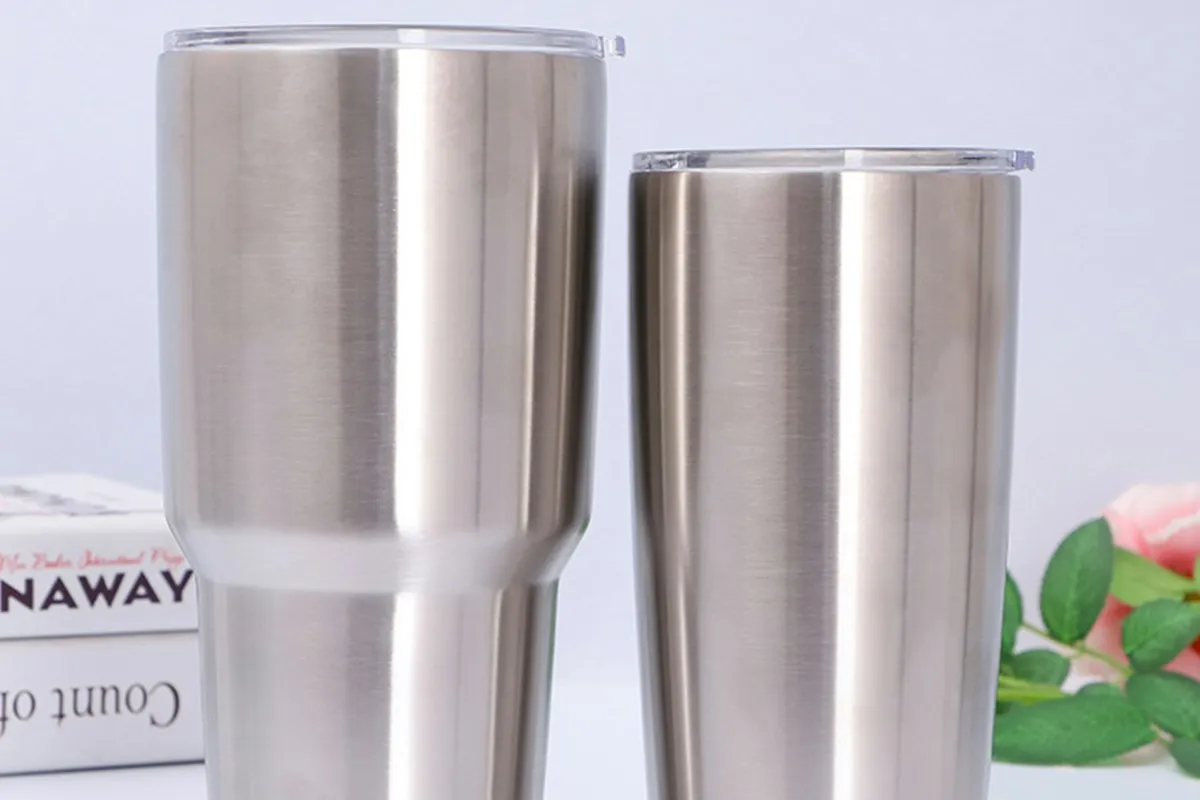
The blank cost you $5. You sold the tumbler for $28. That looks like $23 of profit before Etsy takes its cut.
The real number is closer to $14. And the biggest cost nobody counts is not the blank, the ink, or any single marketplace fee. It is the twelve minutes your hands were on it.
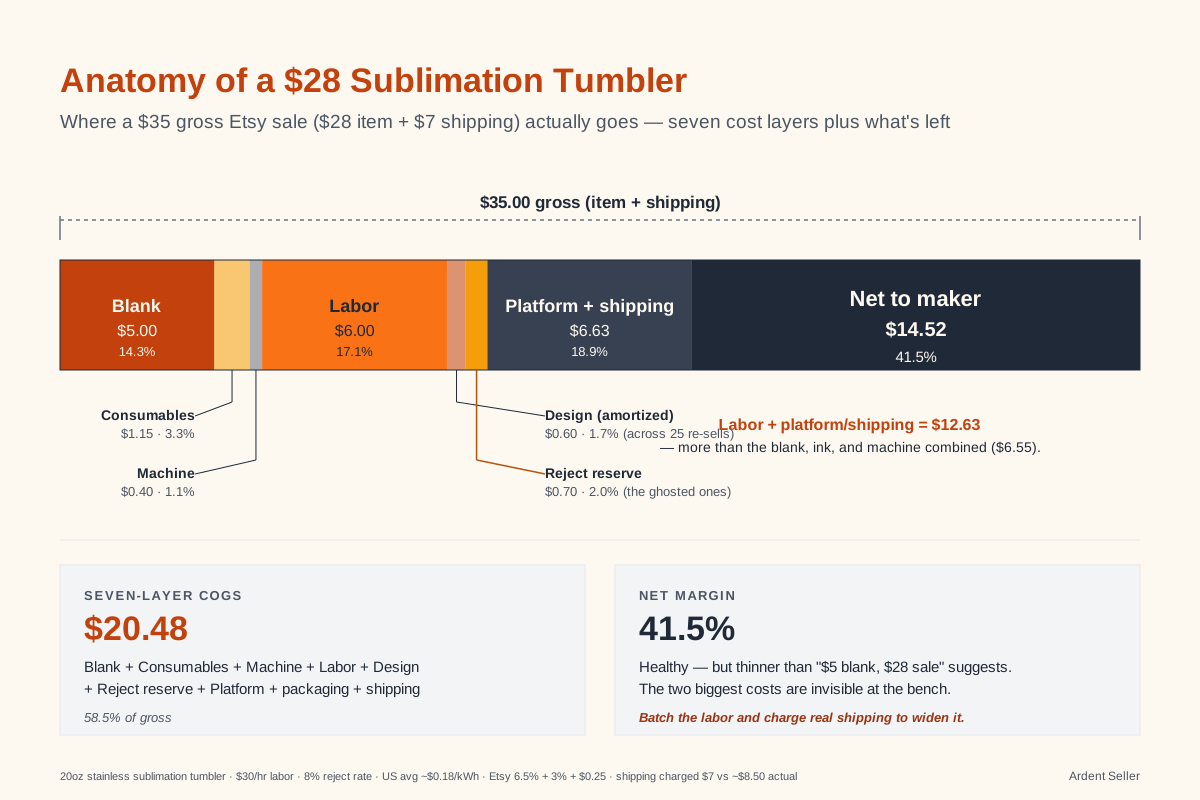
Add every layer up and a 20oz sublimation tumbler sold on Etsy costs roughly $20–$21 to make and ship — about $5.00 for the blank, $1.15 in sublimation consumables, $0.40 of machine cost, $6.00 of labor, $0.60 of amortized design, a $0.70 reject reserve, and about $6.60 in platform, packaging, and shipping. On a $28 listing with $7 shipping ($35 gross), that leaves roughly $14.50 net — a 41.5% margin, and proof that the blank is nowhere near the biggest cost.
This is the part of sublimation that the blank-supplier pricing tables and the "start a tumbler business for under $300" videos quietly skip. The cost of a sublimated tumbler is not the cost of its inputs. It is the cost of its inputs plus the labor to apply them, plus a reserve for the ones that come out ghosted, plus the slice the marketplace and the carrier take before the rest reaches your bank.
Count only the inputs and you will price a $28 tumbler that earns you less per hour than you think — and far less than the listing suggests.
What follows is a layer-by-layer walkthrough of what a 20oz stainless skinny tumbler actually costs to make and ship, ending in an annotated job sheet with numbered callouts. The figures are rounded toward typical home-studio numbers; substitute your own where they differ, because they will.
The seven layers of a tumbler's cost
A complete per-tumbler cost has seven layers, not the two most makers track:
- The blank — the tumbler, lid, and straw.
- Sublimation consumables — transfer paper, ink, heat tape, protective paper.
- Machine cost — press or oven electricity, plus depreciation on the printer, press, and oven.
- Labor — hands-on minutes only, from cutting the transfer to boxing the finished cup.
- Design amortization — the one-time art cost, spread across the number of times the design will sell.
- Reject reserve — the cost of the units that fail, spread across the ones that don't.
- Platform, packaging, and shipping — what Etsy and the carrier take before the rest is yours.
Of these, layers four, six, and seven are the ones most quotes leave out entirely. Two of them — labor and platform-plus-shipping — are the two largest lines on the whole sheet; the blank that most makers fixate on comes only third. The reject reserve is small in dollars, but it is the line spreadsheets miss most completely.
Layer 1: The blank
The blank is the easiest layer because the invoice tells you the answer. A 20oz stainless steel sublimation tumbler with a lid and straw, bought in a case from a wholesale blank supplier, typically lands between $3.50 and $7.00 depending on quantity and quality. Buy singles at a craft store and you will pay double. Buy a pallet and you will pay less, but you will also be holding inventory cash you may need elsewhere.
For this teardown, the blank is $5.00 — a reasonable mid-volume number for a maker buying cases of 25 to 50.
The thing to watch in this layer is not the price; it is the coating. Sublimation only bonds to a polymer-coated surface, and not all "sublimation blanks" are coated equally. A bad batch with thin or uneven coating raises your reject rate, which means the blank cost doesn't just sit in layer one — it leaks into layer six. The cheapest blank is not the cheapest blank if one in six of them ghosts.
Layer 2: Sublimation consumables
These are the per-tumbler materials that get consumed turning the blank into a product:
- Transfer paper — a full 20oz wrap uses roughly one sheet of sublimation paper, about $0.15 to $0.30 per sheet bought in bulk.
- Sublimation ink — a full wrap is ink-hungry. Converted-Epson ink runs cheaper per milliliter than genuine cartridge ink; a full-wrap design costs somewhere between $0.40 and $1.00 in ink depending on coverage and your ink source. Call it $0.60.
- Heat tape — a few strips to hold the transfer flat against the curve, about $0.15–$0.20 per tumbler.
- Protective paper / butcher paper — wraps the tumbler in the press or oven, roughly $0.08–$0.12 amortized across many uses.
All in, sublimation consumables for one tumbler land around $1.15. Small per cup. Real per year — a maker doing 1,000 tumblers spends over $1,100 on paper, ink, and tape that never shows up in a "blank cost $5" mental model.
Layer 3: Machine cost
Two things hide in this layer: electricity and depreciation.
Electricity is genuinely small. A typical tumbler heat press draws 900–1,600 watts (check the nameplate on your unit); at 1,400 watts for a 90-second cycle that is about 0.035 kWh. A countertop convection oven running 1,500 watts for a six-minute bake uses about 0.15 kWh. At the U.S. average residential electricity rate — roughly $0.18–$0.19 per kWh as of mid-2026, per the EIA's residential electricity rate table (opens in new tab), and varying widely by state — that is between a fraction of a cent and three cents per tumbler. The printer adds a rounding error.
Depreciation is the part makers forget. A sublimation setup represents real capital. A modest one — a converted Epson EcoTank ($300), a tumbler press or convection oven ($250), and jigs, a heat-resistant glove, and accessories (~$350) — runs around $900; spread over three years and, say, 2,700 tumblers, that is about $0.33 per unit. A heavier setup (a genuine Sawgrass printer, a multi-station press) amortizes differently, but the principle holds: the machine was not free just because you already paid for it.
Combined, machine cost for one tumbler is about $0.40. The number is small. The reason to track it anyway is that the printer's print head will eventually clog and need replacing, and the press platen will wear, and that money has to come from a reserve that only exists if you charged for it.
Layer 4: Labor — the big line nobody bills
Here is where the math stops being intuitive. A flat sublimation print — a shirt, a mousepad — is fast. A tumbler is not. It is a wrap-and-tension job on a curved surface, and the steps add up:
- Cut and trim the transfer to the wrap size (about 1 minute, less when batched).
- Wrap the blank, pulling the paper tight and even to avoid ghosting, then tape it down (4 to 5 minutes — this is the fiddly part).
- Load the press or oven, set time and temperature (about 1 minute).
- Unwrap it hot, set it to cool without smudging (about 2 minutes of handling).
- Inspect for lines, moisture spots, and seam scorch; lint-roll; box it (2 to 3 minutes).
Made one at a time, that is realistically 10 to 14 hands-on minutes. The press or oven cycle itself runs unattended, so it is not labor — only the minutes your hands are on the work count. Twelve hands-on minutes at a $30/hour target rate is $6.00 per tumbler. That rate is a defensible floor for skilled solo craft work: the BLS median for production occupations (opens in new tab) sits lower, but a sole proprietor also has to cover the 15.3% self-employment tax (opens in new tab) and the unpaid administrative time around every billable hour.
That is one of the two largest lines in the entire build — neck and neck with platform-and-shipping, and bigger than the blank or any single Etsy fee. And it is the line every "it only costs $6 in materials" calculation ignores entirely.
Rule of thumb: If labor is not the largest or second-largest line in your tumbler cost, you are either not counting it or you are batching brilliantly. Either way, it is worth knowing which.
The lever here is batching. A press that holds one tumbler forces single-unit labor. Pressing four tumblers per oven cycle, or running a multi-station press, spreads the setup and the cycle-tending across several units and can cut per-unit hands-on time by a third or more. The wrap-and-tape minutes don't shrink — but everything around them does.
Layer 5: Design amortization
If the design is a one-off — a custom photo collage for a single customer who will never reorder — the entire design time belongs to that one tumbler. Thirty minutes of layout at $30/hour is $15 on one cup, and a $28 listing does not cover it. Custom work has to be priced as custom work.
If the design is a catalog item — a "Stay Wild" floral wrap that will sell again and again — the design cost spreads across the realistic re-sell count. Thirty minutes of design at $30/hour is $15; across 25 expected sales, that is $0.60 per tumbler. Across 100 sales, it is $0.15.
Conflating the two is the most expensive design mistake in sublimation. The maker who prices every catalog tumbler as if the design were free leaves money on the table; the one who prices a true one-off as if it were a catalog item works the design hours for nothing.
Layer 6: The reject reserve
This is the layer the title promised, and the one almost no spreadsheet has a row for.
Sublimation tumblers fail in ways flat prints don't. The transfer shifts mid-wrap and ghosts. The wrap pressure is uneven and leaves a faint double image. Moisture trapped in the blank flashes to steam and spots the print. The seam scorches. A 5% to 10% reject rate is a reasonable planning assumption while you are still dialing in time, temperature, and pressure — experienced makers run lower, but few hit zero. The only reject rate you should fully trust is your own measured number (more on that below).
Every reject burns the blank ($5.00), the consumables ($1.15), the machine cost, and — this is the painful part — the labor already spent before the flaw was visible. A ghosted tumbler ate its twelve minutes whether or not it sells.
At an 8% reject rate, you scrap roughly one tumbler for every twelve good ones. Spreading the lost blank, consumables, and a portion of the sunk labor across the sellable units lands around $0.70 per good tumbler. Lower your reject rate and that number falls; ignore it and it doesn't disappear — it just comes out of a profit you thought you had.
Pro tip: Track your actual reject rate for one month before trusting a reserve number. Most makers guess low. The blanks in the scrap bin are the most honest data you have.
Layer 7: Platform, packaging, and shipping
The final layer is the best-known and the worst-positioned. Most makers know Etsy takes a cut and shipping costs something. Where the math goes wrong is the order of subtraction — and the fact that a tumbler is bulky.
For a $28 tumbler with $7 charged shipping ($35 gross), the layer breaks down roughly as follows — Etsy's fees are per its published fee schedule (opens in new tab):
- Etsy transaction fee — 6.5% of the item plus shipping. On $35, that is $2.28.
- Payment processing — roughly 3% + $0.25 in the U.S. (Etsy Payments fees (opens in new tab)). On $35, about $1.30.
- Listing fee — $0.20 per listing, amortized across renewals and sales to about $0.05 per sale.
- Packaging — a box sized for a 20oz tumbler, void fill, a sticker: about $1.50.
- Shipping reality — a packaged 20oz tumbler is light but bulky, and real postage often runs $8.50–$11 depending on carrier, zone, and box size (check the USPS Ground Advantage (opens in new tab) page or a carrier rate calculator for your zone). If you charged $7 against ~$8.50 actual, the listing eats the $1.50 difference.
(Sellers in the UK, France, and some other markets may also pay an Etsy regulatory operating fee that US sellers currently do not — check your seller dashboard or Etsy's fee schedule for the fees that apply to you.)
All in, the platform-and-fulfillment slice on this order lands near $6.63 — the largest single line on the sheet, neck and neck with labor at $6.00.
Shipping reality: The gap between what you charge for shipping and what it actually costs never shows up as a "fee," so it is easy to miss — and on bulky-but-light items like tumblers it widens fast. Charge shipping at cost, or fold it into the item price and offer "free shipping," before you reach for the item price itself.
The annotated job sheet
Here is one tumbler, line by line, with numbered callouts. The job is a single 20oz stainless skinny tumbler with a full-wrap catalog design, listed on Etsy at $28 with $7 charged shipping — made on a converted Epson plus a tumbler press (or convection oven), with a ~90-second cycle and ~12 hands-on minutes.
| Item | Cost layer | Amount |
|---|---|---|
| (1) | Blank | $5.00 |
| (2) | Sublimation consumables | $1.15 |
| (3) | Machine (electricity + depreciation) | $0.40 |
| (4) | Labor (12 hands-on min) | $6.00 |
| (5) | Design amortization | $0.60 |
| (6) | Reject reserve (8%) | $0.70 |
| (7) | Platform + packaging + shipping | $6.63 |
| COGS | $20.48 | |
| Listing revenue (item + shipping) | $35.00 | |
| Net | $14.52 | |
| (8) | Net margin | 41.5% margin |
(1) Blank — $5.00. A mid-volume case price for a coated 20oz stainless skinny with lid and straw. Single-unit craft-store pricing would roughly double this; pallet pricing would shave it.
(2) Sublimation consumables — $1.15. Transfer paper ($0.25), ink for a full wrap ($0.60), heat tape and protective paper ($0.30 combined and amortized). Higher-coverage designs and genuine cartridge ink push this up.
(3) Machine — $0.40. A few cents of press or oven electricity plus roughly $0.33 of depreciation on a $900 setup spread over three years and ~2,700 units. A heavier or newer setup changes the depreciation, not the principle.
(4) Labor — $6.00. Twelve hands-on minutes at $30/hour ($0.50/minute) — cutting, wrapping, taping, loading, unwrapping, inspecting, packaging. The unattended press cycle contributes zero to labor. Batching four tumblers per cycle can pull this toward $4.00.
(5) Design amortization — $0.60. A catalog design: 30 minutes at $30/hour ($15) across 25 expected sales. A true one-off custom design would instead load $10–$15 onto this single tumbler, and the listing would need to be priced as a custom order.
(6) Reject reserve — $0.70. At an 8% reject rate, the scrapped blank, consumables, and sunk labor spread across the sellable units. Drive the reject rate to 3% and this falls below $0.30; ignore it and it comes out of net.
(7) Platform + packaging + shipping — $6.63. Etsy transaction ($2.28) + payment processing ($1.30) + amortized listing fee ($0.05) + packaging ($1.50) + the shipping deficit from charging $7 against ~$8.50 actual postage ($1.50). The shipping line is the one most worth fixing.
(8) Net margin 41.5%. Healthy by handmade standards, but thinner than the "$5 blank, $28 sale" mental model suggests. The teardown's real lesson is not that $28 is too low — it's that the two largest costs (labor and platform-plus-shipping) are invisible at the bench, and the fastest way to widen the margin is to batch the labor and stop undercharging shipping, not to bump the headline price.
What to do with the number
A cost stack is not a price; it is the floor under a price. The market sets what a tumbler sells for — what comparable wraps go for on Etsy, what a local boutique will pay wholesale, what a corporate-gift buyer says yes to for 50 units. The stack tells you what you keep when the market sets the price.
Three things tend to change once a maker has run this math:
- Batch the labor. Labor is one of the two biggest lines — and the one you can actually control. The cheapest improvement on the whole sheet is pressing four tumblers per cycle instead of one: no new equipment, no price change, just a third off it.
- Reprice shipping honestly. Charging $7 against ~$8.50 actual postage is a $1.50 loss on every order in the example above — and a maker charging only $5 loses $3.50. Charging actual shipping, or folding it into a "free shipping" item price, recovers real dollars the buyer never compares against a competitor.
- Use the floor for wholesale. A maker who knows a tumbler costs $20.48 to make and ship stops saying yes to a $15 wholesale order and starts negotiating from a floor that leaves room to breathe.
If you'd rather not rebuild this spreadsheet every time a blank supplier raises prices or you launch a new wrap, Ardent Seller's recipe costing and equipment tracking carries the seven layers into your day-to-day: each blank, sheet of paper, and milliliter of ink logs as a tracked material, your press and printer accrue depreciation on the schedule you set, and the per-tumbler cost — including a reject allowance and your real labor rate — flows into the product automatically. When the blank price moves, every product built on it reprices itself. For makers in the sublimation and print niche specifically, that means the cost stack lives continuously instead of being something you rebuild in a spreadsheet twice a year.
The $28 tumbler is fine. The $28 tumbler priced without knowing it nets $14, not $23, is a guess that has been working out so far.
Related reading
If the math in layers three or four left you wanting a worked example from a different craft, these go deeper on the same machine-and-labor thinking:
- Laser & CNC Job Costing: A Cost-Stack Teardown — The same layer-by-layer method applied to a different machine class, with a deeper look at machine-hour depreciation if layer three left you wanting more.
- 3D Printing: True Cost Per Part — Another print-and-finish craft where the failures and the machine time hide the real cost, useful as a sanity check on whether your tumbler stack feels complete.
- The True Hourly Wage of a Handmade Business — Pairs with layer four: how to back-solve the hourly rate your shop actually needs to charge to clear a target take-home after fees and self-employment tax.
Free resources
Free companion downloads if you want to put any of this into practice:
- Product Pricing Calculator (Live) — Plug your blank, consumables, labor minutes, and reject rate into a live tool and get a defensible per-tumbler cost and margin without rebuilding the spreadsheet each time.
- Maker Hourly-Rate Pricing Calculator — Pairs with the labor layer; solves for the hourly rate you should be charging given your target take-home and channel mix.
This article is provided for educational purposes only and does not constitute financial, tax, or business advice. Blank prices, ink and consumable costs, electricity rates, equipment useful-life assumptions, labor rates, reject rates, and platform fee structures vary by jurisdiction and supplier and change frequently; substitute your specific figures before pricing actual work. Consult a qualified accountant or small-business advisor before making financial decisions based on this content.