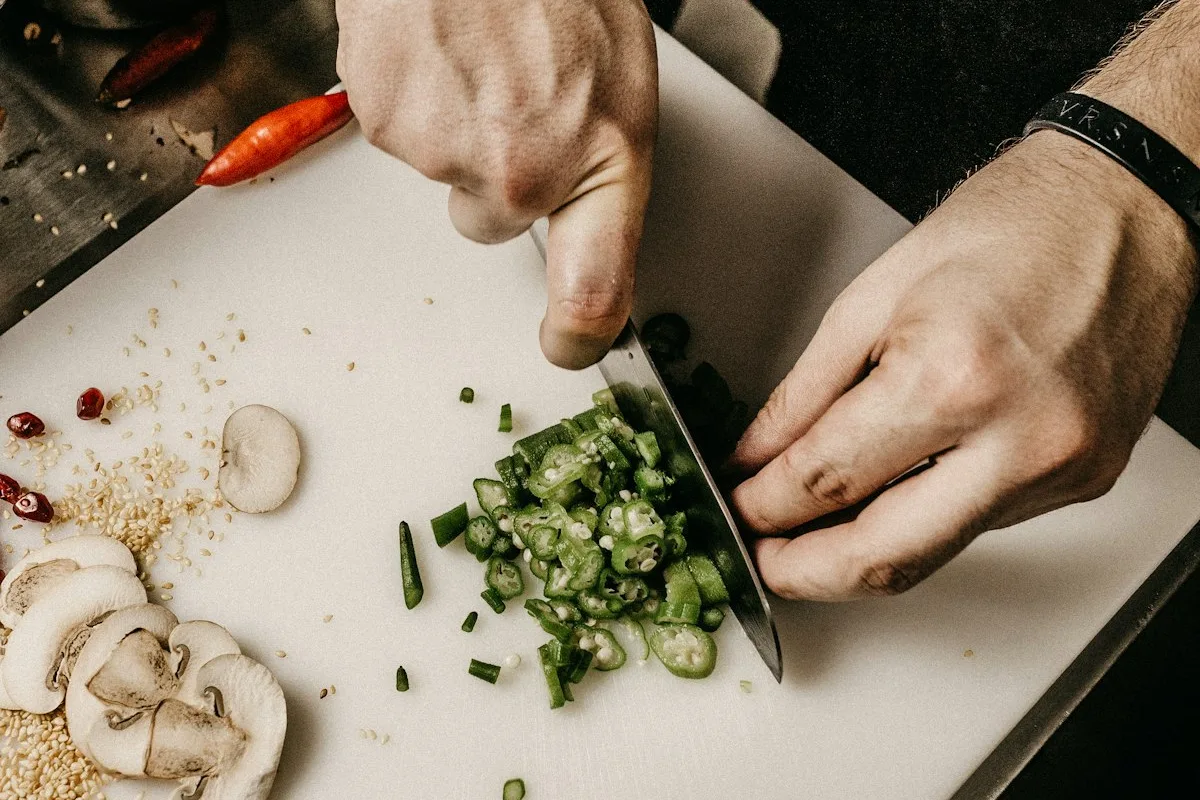
What's the most expensive ingredient in a meal-prep business? It isn't the salmon. It's the eight portions of chicken-and-rice you cooked on Sunday, packed beautifully, and threw out on Thursday because two customers cancelled and the food doesn't keep.
Meal prep looks like one of the friendliest food businesses to start. You can already cook. You already own pots and a fridge. Friends keep telling you they'd pay for what you make. And then the questions start arriving in an order nobody warns you about. First the legal ones, then the money ones, then the operational ones — the ones that decide whether you're running a business or an expensive hobby that feeds the neighborhood.
What follows are the questions home-based meal-prep sellers tend to ask in their first year, grouped roughly in the order they come up. Where an answer rests on a federal rule, the source is linked. Where it rests on how a small operation actually runs, that's labeled too — and the numbers in the examples are illustrative, drawn from a composite seller we'll call Dana, who preps single-serve dinners out of a shared commissary two evenings a week.
The short version: Most meal-prep menus are built on TCS (perishable) foods, which sit outside cottage food law (the home-kitchen exemption) — so plan for a licensed or commissary kitchen, not a home kitchen. Then price for perishable waste, and count packaging and delivery as real per-meal costs rather than afterthoughts. Those three moves separate a business from an expensive hobby.
Can I run a meal-prep business from my home kitchen?
Usually not — at least not for the meals most people mean when they say "meal prep."
Here's the distinction that governs everything else. Cooked chicken, rice bowls, prepared salads, cut melon, anything with dairy, and anything that has to stay refrigerated are what the FDA Food Code (opens in new tab) calls time/temperature control for safety (TCS) foods — foods that grow dangerous bacteria if they sit too long in the temperature danger zone. TCS foods carry real risk, and that risk is why home kitchens are treated differently from licensed ones.
Almost every state's home-kitchen exemption — the "cottage food" law — is written for shelf-stable foods and excludes exactly these higher-risk TCS foods. That exclusion is the whole reason a home kitchen generally can't legally produce meal-prep meals for sale (the state-by-state breakdown linked in the next section shows where each state draws the line). The common legal paths are a licensed commercial kitchen, a shared-use commissary kitchen you rent by the hour, or in some states a home-kitchen license that goes beyond cottage food (a few states have begun licensing limited home restaurants, but the rules are narrow and local).
What tends to happen: the seller who skips this question is the one who gets a call from the county. Confirm your specific path with your local health department before you cook for a paying customer. Licensing, inspection, and home-kitchen rules are set at the state and county level, and they vary more than almost any other part of this business.
Does cottage food law cover meal prep?
Only for the corners of your menu that are shelf-stable.
Cottage food laws were written for foods that don't need refrigeration and don't support bacterial growth — baked goods, candies, granola, dry spice blends, some high-sugar jams. If you sell those alongside your meals, those specific items may qualify under your state's cottage food rules. The hot, cold, and refrigerated meals themselves almost never do.
This matters because a lot of new meal-prep sellers read a cottage-food guide, see "you can sell food from home," and assume they're covered. They're reading the right document for the wrong products. If you want to see exactly where the line sits in your state, pull up the Cottage Food Laws by State reference — but treat it as the boundary of what you can't sell from home unlicensed, not a green light for the menu.
What's a commissary kitchen, and do I actually need one?
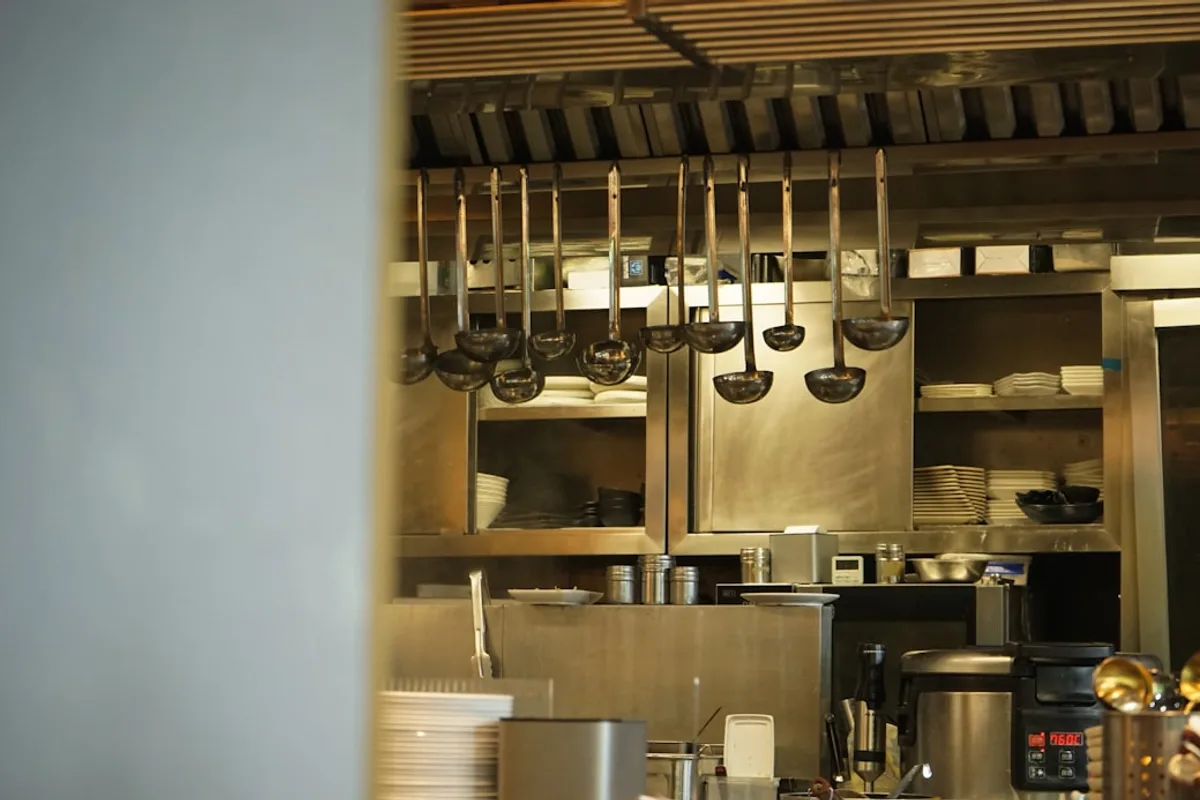
Probably, yes — if your home kitchen is off the table (and for most meal-prep menus it is), a rented commissary is usually how you operate legally without a big build-out. A commissary is a licensed commercial kitchen you rent by the hour or month: a shared space that already meets code, so you don't have to build one.
You bring your ingredients and containers, cook during your booked block, store what the facility allows, and clean up for the next renter. Rates vary widely by region, but renting time is almost always cheaper than the tens of thousands it costs to build and license a private commercial kitchen.
The catch is that commissary time is a real, recurring cost that belongs in your pricing. If Dana pays for a four-hour block and produces 40 meals in it, that rent divides across 40 meals whether she sells 40 or 28. Booked-but-unused capacity is one of the quieter ways a meal-prep margin leaks, which is why production planning and pre-orders matter so much here.
What food-safety rules apply once I'm cooking for customers?
The same core principles a restaurant follows, scaled to your operation: cook to safe internal temperatures, cool cooked food quickly through the danger zone, hold cold food cold and hot food hot, label with dates, and avoid cross-contamination between raw and ready-to-eat.
The two that catch meal-prep sellers specifically are cooling and cold-chain delivery. Cooked food that's portioned warm into sealed containers and stacked in a home fridge can stay in the danger zone for hours — long enough to be unsafe even though it "looks fine." And once a meal leaves your kitchen, it has to stay cold until the customer's fridge. Insulated bags and ice packs aren't a nicety; they're part of the food-safety chain you're responsible for.
A food-handler or food-protection-manager certification — ServSafe (opens in new tab), run by the National Restaurant Association, is a widely used one — is required in many jurisdictions and is worth getting even where it isn't, because it teaches exactly these failure points. Your local health department sets the specifics for where you operate.
Do I need a business license, insurance, or permits beyond the kitchen?
In most places, yes — and they're separate from the kitchen question. You'll typically register the business, may need a state sales-tax permit depending on what you sell and where, and should carry product-liability insurance because you're putting food into people's bodies. Some commissaries require proof of insurance before they'll rent to you.
None of this is exotic, but it's easy to defer until it becomes urgent. The seller who lines up the license, the permit, and a basic liability policy before the first sale sleeps better than the one who improvises after a customer asks for an invoice with a tax line on it.
How do I calculate my true cost per meal?
Add four buckets, every time. Miss one and your cost is fiction.
- Ingredients — protein, starch, vegetables, sauce, oil, seasoning. Cost it from your actual invoices, not the grocery-store price you remember.
- Packaging — container, lid, label, and any bag, sleeve, or utensil set.
- Labor — your cook-and-portion time for the batch, divided across the meals, paid at a real hourly rate. Your time is not free, and pricing as if it were quietly turns your labor into a subsidy the business can't sustain.
- Overhead and loss — a per-meal share of commissary rent, delivery fuel and time, card-processing fees, and the food you prepped but didn't sell.
Here's Dana's single-serve chicken bowl, illustratively:
| Cost bucket | Per meal |
|---|---|
| Chicken thigh (6 oz, cooked yield) | $2.10 |
| Rice + roasted vegetables | $1.15 |
| Sauce + seasoning | $0.35 |
| Container, lid, label | $0.58 |
| Labor (5 hrs ÷ 40 meals @ $20/hr placeholder rate) | $2.50 |
| Commissary, delivery, fees, waste share | $1.05 |
| True cost per meal | $7.73 |
Every figure here is illustrative — swap in your own invoice costs and your own target hourly rate ($20/hr is only a placeholder).
The plate of food was about $3.60. The meal — the thing she actually has to price — is $7.73. A seller who anchors on the $3.60 and prices at $9 feels like they're making $5.40 and is actually clearing well under $1.50 before any unsold meals are counted.
How should I price a meal-prep meal?
Start from the true cost above, not from what the grocery store charges for the raw chicken.
Once you know your loaded cost per meal, set a price that leaves a margin you can survive a bad week on. If Dana's true cost is $7.73, a $12 meal leaves roughly $4.27 before unsold-meal losses — a workable spread, not a generous one. The instinct to price at $9 or $10 "to be competitive" is exactly how meal-prep sellers end up working full weekends for a few hundred dollars.
Three sanity checks before you publish a price:
- Does it cover a realistic waste rate? If you typically sell 85% of what you prep, the 15% you don't sell has to be paid for by the meals you do.
- Does it pay you for your time twice over? Once as labor inside the cost, and again as profit on top. If the only "wage" in your price is the labor line, you've built yourself a minimum-wage job, not a business.
- Does it leave room for a delivery or a discount without going underwater? Promotions and free delivery come out of that margin, so the margin has to be real before you offer them.
What's a realistic profit margin for meal prep?
Thinner than shelf-stable craft food, and that's structural, not a failure on your part.
A candle maker's inputs sit on a shelf until they sell. A meal-prep seller's inputs spoil. That single difference — perishability — is why meal-prep margins tend to run thin. There's no published industry benchmark worth quoting, so treat any figure as a planning anchor, not a fact: many small operations model something in the low double digits up to the mid-20s in percent net per meal, with their own costs and market setting the real number. The spread between the low end and the high end is almost entirely about waste. Two sellers with identical recipes and prices can post very different bottom lines purely because one prepped to actual orders and the other prepped on hope.
Volume helps, because labor and commissary time spread across more meals. But volume also raises the absolute dollars at risk if a week goes soft. Growing carefully beats growing fast here.
What eats my margin the fastest?
Perishable waste, packaging, and delivery — usually in that order.
Waste is the big one and the one new sellers most underestimate. Eight unsold meals at loaded cost is roughly $62 gone, every week, with nothing to show for it. Over a year that's the difference between a profitable side business and a break-even one.
Packaging is the quiet one. Dana's containers and labels run $0.58 a meal (yours will differ with material and order volume), which doesn't feel like much — until you multiply by 40 meals a week across a year and find you've spent four figures on plastic. It's a real input, and it belongs in the price.
Delivery is the sneaky one, because the cost is mostly your time and fuel, which don't show up on an invoice. An hour of driving to drop off six meals is an hour you didn't get paid for unless you priced it in.
Underpricing rarely sinks a meal-prep business on its own. Uncounted waste, packaging, and delivery do.
How much should I prep when I don't know how many orders are coming?
Whenever possible, don't guess — take orders first.
A pre-order window or an order-by deadline (say, orders close Friday night for Sunday pickup) turns a guess into a count, and it's one of the most effective waste-control tools a small meal-prep seller has. You buy ingredients for what's been ordered, prep for what's been ordered, and throw away almost nothing.
When you do have to prep on spec — a market stall, a walk-up cooler, a standing menu — let history set your batch sizes. Track what you actually sold against what you prepped every single week. After a month, the pattern is usually clear enough that you can prep to it instead of to optimism. The seller who writes down "prepped 40, sold 31" four weeks running and then preps 32 is the one who stops bleeding margin.
This is also where keeping real records pays for itself. When your prepped-versus-sold numbers, your per-meal costs, and your ingredient turnover all live in one place instead of your memory, the waste pattern becomes obvious — and fixable.
How do I handle perishable ingredients and spoilage?
Buy close to your orders, rotate first-in-first-out, and treat spoilage as a number you measure rather than a surprise you absorb.
Meal prep runs on rapid turnover: ingredients arrive, get cooked within days, and ship out as finished meals on a weekly cycle. The discipline that keeps that profitable is dating everything (ingredients and finished meals both), using the oldest stock first, and logging what you throw away so you can see whether a particular ingredient or menu item is a chronic loss-maker.
If your roasted-vegetable bowl consistently leaves you with unsold portions while your chili sells out, that's not bad luck — it's data telling you to adjust the menu. You can only act on it if you're tracking it.
How do I track allergens and label my meals?
Every meal that leaves your kitchen should carry, at minimum, what's in it, an allergen statement, a prepared-on or use-by date, and your business name. Allergen disclosure isn't optional — the FDA recognizes nine major allergens (opens in new tab) (milk, eggs, fish, crustacean shellfish, tree nuts, peanuts, wheat, soybeans, and sesame), and a customer with a shellfish allergy is trusting your label with their safety. Get this part right before anything else in this section — it's the part that protects someone.
Once the labels are accurate, the practical problem is keeping them current when the menu turns over every week, and re-typing a sticker every Sunday is where mistakes creep in. Ardent Seller's meal-prep tools store each recipe's ingredients, calculate the per-meal cost and nutrition, and produce the label for the items that need one, so the labeling keeps pace with the menu.
How do I scale recipes as orders grow?
Carefully, and never by eyeballing it past a certain size.
A recipe that's perfect at 8 portions doesn't always multiply cleanly to 40 — seasoning in particular rarely scales linearly, and cook times shift with batch size. The sellers who scale well write recipes as true per-portion formulas (so much protein, starch, and sauce per meal) and let the math produce the batch quantities, then taste-test at the new size before committing a paying week to it.
This is also a costing checkpoint. When you scale a recipe, your ingredient order scales with it, and so does the dollar amount at risk if the week underperforms. Knowing your per-meal cost at each batch size keeps the growth from outrunning the margin. Recipe-scaling and cost rollups are exactly the kind of repetitive math worth handing to software. Ardent Seller's recipe costing and scaling scales a recipe to your weekly order count and recalculates the per-meal cost as ingredient prices move, which keeps the price honest as you grow.
Is a meal-prep business actually worth it?
It can be — but go in clear-eyed about which business you're starting.
Meal prep is a real, repeat-purchase business with loyal customers and predictable demand once it's established. It is also a perishable, labor-heavy, thin-margin food operation with genuine food-safety responsibility and a licensing question you have to answer before you cook. The sellers who make it work are the ones who priced for waste from week one, took pre-orders to control spoilage, and counted their own time as a cost.
The ones who struggle are usually the ones who treated it as "just cooking, but for money" and discovered the gap between a $3.60 plate of food and a $7.73 meal the hard way. Now that you've seen the four buckets and where the margin leaks, you're starting from the other side of that gap.
If you're ready to build the cost-and-recipe spine before the first order rather than after the first painful week, start a free Ardent Seller account and set up your meals, packaging, and per-meal costs in one place.
Related reading
- Shelf Life, Spoilage, and Shrinkage — The waste that quietly erased your meal-prep margin, treated as a category you can measure and control rather than a Thursday surprise.
- Recipe Costing 101 — The step-by-step costing method for any food product, including how to handle ingredients shared across several recipes on the same prep day.
- Batch Tracking for Food Sellers — How to stamp a lot on every batch you cook, so a recall or a customer question is a quick lookup instead of a panic.
Free resources
A few free downloads from the Ardent Workshop library that pair well with this post:
- Recipe Scaling & Batch Calculator — Turn a per-portion recipe into the exact ingredient quantities for this week's order count without the multiplication errors.
- Home Baker's Order & Delivery Tracker — Despite the name, it's built for any pre-order food business, meal prep included: track who ordered what, prepped-versus-sold counts, and delivery runs so waste stops hiding.
- Cottage Food Laws by State — Confirm exactly which shelf-stable items on your menu qualify from home and which need a licensed kitchen.
This article is provided for educational purposes only and does not constitute legal, regulatory, financial, or food-safety advice. The costs and pricing examples here are illustrative. Food-safety and licensing requirements vary by jurisdiction and product and change frequently. Consult your local health department, a qualified food-safety or compliance consultant, an accountant, or an attorney before making compliance, safety, or financial decisions based on this content.