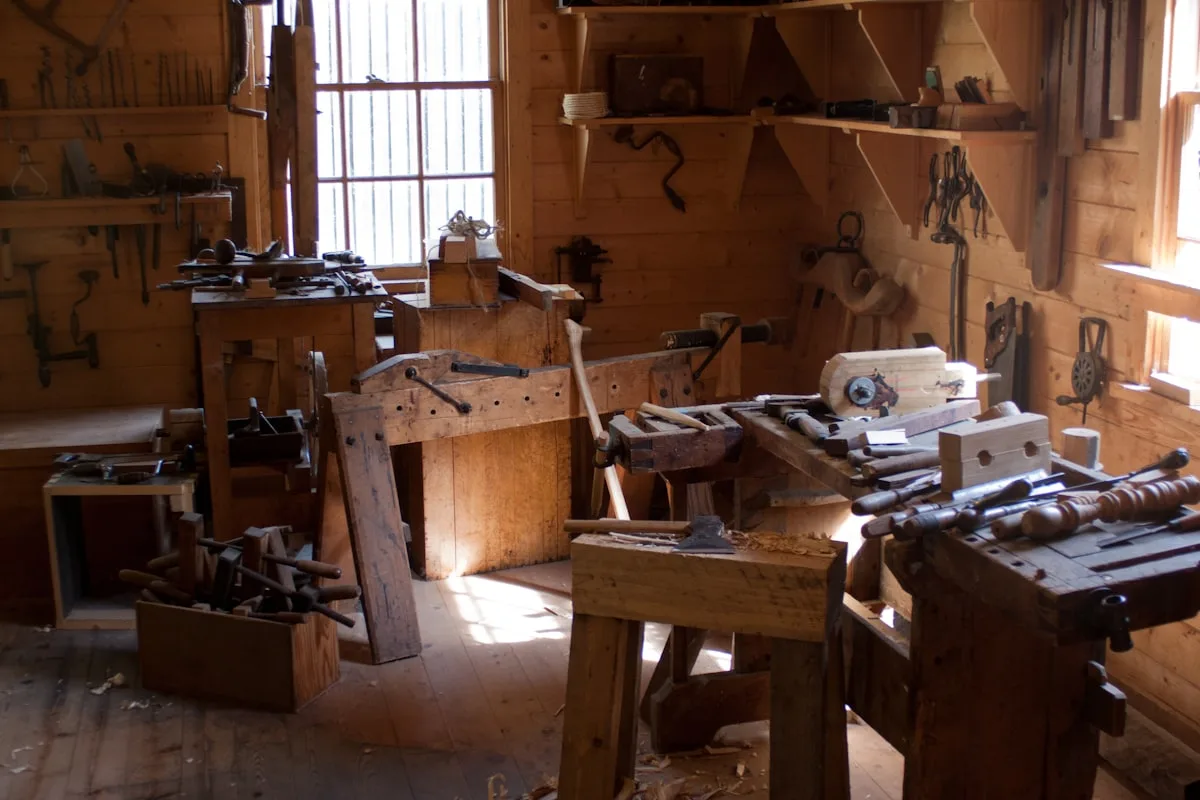
What does a soap maker pouring 96 bars on a Saturday have in common with a 150-person furniture factory? According to the software both might shortlist — Katana — quite a lot. According to the way they actually work, almost nothing.
Katana is a real manufacturing ERP, and a good one. Its free plan even includes every feature, which makes it tempting to try. That is precisely why this comparison is different from the usual "our tool has more features" pitch. The question here is not whether Katana is capable — it plainly is — but what happens when a growing maker's catalog meets its free-plan cap, and whether the tool fits the shape of a workshop at all. This post walks through where Katana and Ardent Seller actually diverge, what each one is genuinely best at, and how to tell which side of the line your business sits on.
The short version:
- What Katana is: a manufacturing ERP for small-to-mid-sized manufacturers — teams, stations, and physical sites. Strong at manufacturing, work orders, and traceability.
- The cap: its free plan includes every feature (opens in new tab) but stops at 30 SKUs (product and material variants count) and 3 locations. Past that, the only paid plan is Advantage, a custom-quoted annual contract with no published price.
- What Ardent Seller is: built for solo and small-team makers — recipe costing, production runs, cottage food and nutrition tooling, and equipment tracking on every plan, with no inventory cap on any plan and every price published.
- Bottom line: choose Katana when you run like a factory (or your whole catalog will stay under 30 SKUs); choose Ardent Seller when you make what you sell and want a tool, and a price, you can see before you commit.
What Katana actually is — and who it's built for
Katana describes itself as cloud manufacturing software, and the description is accurate. It is organized around the vocabulary of a production plant: bills of materials, manufacturing orders, work-in-progress, shop-floor operators, and warehouse operations. Katana positions itself as small-business manufacturing software — built for the kind of operation with a building, a team, and stations that hand work to one another.
That design shows up everywhere in the product, and it is genuinely good at what it does. Manufacturing orders consume materials and produce finished goods. The Shop Floor App lets operators clock work without touching the main platform. Role-based access control is backed by SOC 2 Type II compliance (opens in new tab). Users are unlimited on both the free plan and the paid one. These are the table stakes of selling software to a company with a procurement department — and Katana clears them.
The friction for a maker is not quality. It is catalog size and fit. Katana's pricing is built around two doors: a free plan with every feature but a hard ceiling, and a paid plan sized for an established manufacturer. Most makers start at the first door. The question worth asking before you load your products is what the second door looks like.
The 30-SKU ceiling, and what sits behind it
Katana's free plan (opens in new tab) is limited to 30 SKUs, and the count covers product and material variants, archived items included. That number goes further for a factory with a short product line than it does for a maker. Consider a hypothetical candle maker with three scents in three sizes: that is nine product variants before a single wax, wick, fragrance oil, jar, or label is entered. Add those materials and a second product line, and the ceiling arrives quickly.
Going over it is not a soft warning. An account over the SKU cap is blocked after a 15-day grace period until it deletes items or upgrades. And the upgrade is Katana Advantage (opens in new tab), its only paid plan: a custom annual contract with no published price, scoped around your setup and quoted as one price that covers unlimited users and SKUs, manufacturing, traceability, warehouse management, integrations, and implementation. Katana's older month-to-month plans are no longer listed on its pricing page.
For a manufacturer with a procurement process, that is a sensible package: guided implementation and a scoped contract are what a plant rollout needs. For a maker, it means the step after "free" is a sales conversation and a year-long commitment, at a price you learn only after the call.
Ardent Seller limits different things. No plan caps how many items, materials, or variants you track. Plans are sized by monthly transactions, users, and locations instead, and every one is published:
- Free: $0, 50 transactions a month, 2 users, 2 locations.
- Maker: $19/month, 150 transactions a month.
- Artisan: $49/month, 500 transactions a month.
- Workshop: $89/month, 1,500 transactions a month, 5 users, 5 locations.
- Pay As You Go: no monthly fee and no fixed transaction cap, for seasonal sellers.
Every feature is on every plan, billed monthly with no contract (annual billing is optional). To be fair to Katana, its free plan is more generous on two axes: unlimited users and 3 locations against Ardent Seller's 2 and 2. If you have a large team and a tiny catalog, that matters. If you have a growing catalog and a small team, the cap that binds is Katana's.
Rule of thumb: count your SKUs the way Katana does — every product variant plus every material variant — before you start. If the total is near 30 and still growing, the real comparison is not Katana Free vs. Ardent Seller Free; it is a custom-quoted annual contract vs. a plan you can pick off a page.
Five questions to ask before you pick
Before any feature breakdown, answer these. They sort the decision faster than any spec sheet:
- How many SKUs will you have in a year, materials included? Under 30 and staying there, Katana's free plan covers you. Over it, the only path is the Advantage contract.
- How many people touch production? If it is you, or you plus a helper or two, you do not need shop-floor operator roles and work-order routing. If it is a team across stations, you might.
- Do you sell food, cosmetics, or anything that needs a compliant label? Katana has no nutrition, allergen, or cottage food tooling. That gap is structural, not a plan away.
- Do you want to see the price before you talk to sales? Katana publishes no price for its paid plan; Ardent Seller publishes all of its prices.
- Do you need enterprise security certifications on paper? If a buyer or partner sends you a security questionnaire, Katana's SOC 2 Type II certification clears it more easily today.
If your honest answers cluster around "my catalog keeps growing," "it's mostly me," and "I sell food or body care," the cards below confirm what you already suspect. If they cluster around "I have a team and a building," Katana may be exactly right — and the "Where Katana actually wins" section makes that case without flinching. If you are genuinely unsure whether you have outgrown your current setup at all, the Spreadsheet vs. Inventory Software decision guide is a calmer first step than committing to either platform.
The core tradeoff, stated plainly
Most tool comparisons pit a tool that has a feature against one that lacks it. This one is subtler. Katana does not lack manufacturing power — it has more of it than almost any maker will use. The tradeoff runs the other way: Katana is factory-grade machinery whose free plan suits a tiny catalog and whose paid plan is scoped for a manufacturer. Ardent Seller asks you to accept that it is not a factory ERP in exchange for fitting the way a small maker actually works, with limits and prices you can read before you start.
That framing is why a flat "more features wins" verdict would be dishonest. The right question is fit. The two cards below lay out each tool's pros and cons from a small maker's chair — not in the abstract.
Katana — pros and cons for a small maker
Pros:
- A true manufacturing engine: bills of materials, manufacturing orders, and cost rollups handled properly, not faked with bundles.
- Every feature on the free plan, so a maker with a small catalog can use the full engine at no cost.
- Recall-grade traceability with batch, serial, and expiry tracking — strong if you genuinely need batch genealogy across a complex line.
- Mature multi-location and warehouse management for businesses operating across real physical sites.
- Enterprise security posture: role-based access control with SOC 2 Type II certification, plus operator roles that limit shop-floor staff to the Shop Floor App.
- Unlimited users on the free plan and on Advantage — useful once you have a team.
Cons:
- The free plan caps you at 30 SKUs (product and material variants, archived items included) and 3 locations, and an account over the SKU cap is blocked after a 15-day grace period.
- The only paid plan is Advantage, a custom-quoted annual contract (opens in new tab) with no published price; as of October 2026 its older Standard, Professional, Professional Plus, and Core plans are no longer listed.
- No cottage food, nutrition facts, or allergen tooling — a hard wall for food and body-care makers.
- No dedicated categories for packaging, equipment, labor, or MRO supplies; inventory is modeled as raw materials, WIP, finished goods, and services.
- Full profit-and-loss reporting leans on a QuickBooks or Xero integration rather than living natively in the tool.
Best for: a growing manufacturer with staff and multiple sites that wants a scoped implementation, or a maker whose entire catalog will stay under 30 SKUs.
Ardent Seller — pros and cons for a small maker
Pros:
- Built around the maker's actual nouns: recipes with automatic cost rollup, production runs, lot tracking, packaging, equipment, and labor — all on every plan, including free.
- No inventory cap on any plan: add every material, product, and variant without counting.
- Cottage food and FDA-format nutrition tooling (see features): auto-calculated nutrition facts panels, tracking for the nine major allergens defined by the FDA under FALCPA (opens in new tab) inherited from ingredients to finished goods, and a built-in food database.
- Published, flat pricing from $0 to $89/month with no feature tiers and no contract, plus a pay-as-you-go plan with no fixed transaction cap for seasonal sellers.
- Equipment tracking with straight-line depreciation and replacement-planning reports, so a $1,400 kiln spreads across its useful life instead of landing in one month.
- Per-method payment-processing and marketplace fee tracking, with an Etsy integration that imports fees as separate ledger lines so margins reflect take-home.
Cons:
- Not a manufacturing ERP: no multi-station work-order routing, no MRP demand planning, no dedicated shop-floor operator app.
- Flat plans cap monthly transactions, users, and locations (Free: 50 transactions, 2 users, 2 locations); a busy month on a small plan means upgrading or moving to pay-as-you-go.
- No published enterprise security certifications, though it encrypts data in transit (TLS) and at rest (AES-256) — Katana carries SOC 2 Type II, which clears procurement reviews more easily.
- Responsive web rather than native iOS/Android apps.
- Marketplace integrations are Etsy, Shopify, and Square today, with more on the roadmap — not the broad connector library a general ERP carries.
Best for: a solo maker or small team that produces goods from raw materials, has a catalog that keeps growing, and wants the tool to match a workshop's scale.
Where the two tools diverge most
Three dimensions decide this comparison more often than the rest. Consider each as its own tradeoff.
Pricing you can read before you commit
Katana's free plan is genuinely free and genuinely full-featured; the question is predictability past it. Advantage has no published floor or ceiling, is quoted per business after Katana scopes your setup, and runs on an annual contract. That is a normal way to buy an ERP with implementation included, and many manufacturers prefer it. It also means a maker cannot know what growth will cost until after a sales conversation.
Ardent Seller's model is the opposite: five published plans, every feature on each, monthly billing with no contract, and limits that scale with how much you sell rather than how many things you stock. You can see today what the plan after the next one costs.
Manufacturing depth vs. the maker workflow
Here the honest answer surprises people: Katana can out-manufacture Ardent Seller. Its bill-of-materials engine, manufacturing orders, and shop-floor tracking are built for genuine production complexity. If you route work across cutting, assembly, and finishing stations with operators clocking each step, Katana models that natively and Ardent Seller does not try to.
But notice what a one-person candle or soap operation actually does: mix a recipe, run a batch, stamp a lot, deduct ingredients, cost the output, and move on. Ardent Seller's production runs and recipe cost rollup cover that loop end to end on every plan, in language built for it. The same work in Katana means operating a factory ERP's machinery to do a workshop's job. Power you will not use is not a feature; it is overhead.
Compliance and craft-specific inventory
For food and body-care makers, this dimension often ends the conversation. Katana has no FDA nutrition panels, no allergen inheritance, no food database, and no cottage food workflow — it is a general manufacturing tool, and food safety is simply outside its scope. Ardent Seller builds those in because home bakers and cottage food producers are a core audience: allergens flow automatically from each ingredient through the recipe to the finished label, so a recipe change cannot quietly leave an allergen off your packaging.
The same craft-specificity shows up in inventory structure. Katana organizes stock as raw materials, work-in-progress, finished goods, and services. Ardent Seller adds dedicated categories a maker reaches for daily — packaging, equipment, labor, and MRO supplies — so the things that quietly eat margin are tracked rather than guessed.
The side-by-side recap
Legend: Yes = included · No = not available · Partial = limited, gated behind a paid add-on, or not yet shipped (the cell says which). The symbols (✅ ❌ ⚠️) mirror the words so the table scans quickly either way.
| Capability | Katana | Ardent Seller |
|---|---|---|
| Recipe / BOM costing with rollup | ✅ Yes — strong, BOM-based | ✅ Yes — all plans |
| Production / manufacturing orders | ✅ Yes — strong | ✅ Yes — all plans |
| Batch / lot traceability | ✅ Yes — batch, serial, and expiry | ✅ Yes — all plans |
| Inventory / SKU limit | ⚠️ Partial — 30 SKUs on Free; unlimited only on the custom-quoted Advantage plan | ✅ Yes — unlimited on every plan |
| Nutrition labels & allergen tracking | ❌ No | ✅ Yes — all plans |
| Cottage food support | ❌ No | ✅ Yes — recipe/allergen/nutrition plus a state disclosure label generator for all 50 states + DC, all plans |
| Equipment & depreciation | ❌ No native asset depreciation | ✅ Yes — straight-line, all plans |
| Craft inventory categories (packaging, labor, MRO) | ❌ No | ✅ Yes |
| Multi-location / warehouse management | ✅ Yes — mature; 3 locations on Free | ✅ Yes — 2 to 5 locations by flat plan, unlimited on pay-as-you-go |
| Users | ✅ Yes — unlimited on every plan | ✅ Yes — 2 to 5 by flat plan, unlimited on pay-as-you-go |
| Role-based access & enterprise security | ✅ Yes — RBAC, SOC 2 Type II certification | ❌ No published certs (encrypts with TLS + AES-256) |
| Native iOS/Android apps | ✅ Yes — Shop Floor & Warehouse apps | ❌ No — responsive web |
| Paid pricing | Custom-quoted Advantage plan, no published price | $19, $49, or $89/mo published, all features |
| Pricing model | Free plan, then one custom-quoted annual contract | Free, flat monthly plans with no contract, or pay-as-you-go with no fixed cap |
Where Katana actually wins
A comparison that only flatters one side is not worth your time. Katana is the better choice in several real situations, and pretending otherwise would be dishonest:
- You run like a manufacturer. A team across production stations, work orders that route between them, and a building to manage — that is Katana's home turf, and Ardent Seller does not pretend to cover it.
- Your catalog is small and will stay small. If every product and material variant fits under 30 SKUs, Katana's free plan gives you its full feature set, unlimited users, and 3 locations at no cost.
- You operate multiple warehouses at scale. Katana's warehouse and multi-location management is mature and built for real physical complexity.
- You need enterprise security on paper. SOC 2 Type II and role-based access with an operator-only shop-floor role clear procurement and partner security reviews that a small-maker tool may not.
- You want a guided rollout. Advantage bundles implementation into the contract, which suits a business replacing several systems at once.
- You live in an accounting ecosystem. If your books already run through QuickBooks or Xero, Katana slots into that world deliberately.
Two of those points are worth separating. Ardent Seller's missing security certifications are a roadmap gap, not a permanent position — that may close. The manufacturing-floor machinery, by contrast, is a deliberate scope choice Ardent Seller has no plans to chase, because most makers do not need it. Weight each accordingly for your own timeline.
A short decision tree
Run down this list and stop at the first line that fits:
- You sell food, cosmetics, or anything that needs a compliance label? → Ardent Seller. Katana has no nutrition, allergen, or cottage food tooling.
- Your catalog, materials included, is over 30 SKUs or headed there, and you want a published monthly price? → Ardent Seller. Katana's only plan past 30 SKUs is a custom-quoted annual contract.
- It's mostly you — or you plus a helper or two? → Ardent Seller. You won't use operator roles, work-order routing, or a shop-floor app.
- You run multiple warehouses with staff routing work across stations? → Katana. That's its home turf.
- A buyer or partner requires SOC 2 or other enterprise security certifications today? → Katana (Ardent Seller's certifications are on the roadmap).
- Your whole catalog fits under 30 SKUs for good and you want manufacturing-order depth? → Katana's free plan is worth a look.
- None of the factory lines fit and you make what you sell? → Ardent Seller.
If you landed on that last line, you're in good company — it's where most solo and small-team makers end up. The free tier is the cheapest way to confirm it: load a real recipe and see whether the workflow fits before you spend anything.
So which should you choose?
Strip away the cards and the table, and it reduces to one distinction:
If you run a factory, buy factory software. A team, multiple sites, routed work orders, and a business that expects to scope an implementation and sign an annual contract all point to Katana. It is a serious tool doing serious manufacturing, and forcing a small-maker app to imitate it would be its own kind of mistake.
If you make what you sell at a workshop's scale, buy the tool built for that. Recipe costing, production runs, lot tracking, food labels, and equipment depreciation are a maker's daily workflow, not enterprise extras — and Ardent Seller puts all of them on every plan, including the free one, with no cap on how many items you track and a price for every plan on the page. See the full feature list or compare the plans; the free tier is enough to test your real recipes before you spend a dollar.
The error is not choosing one over the other. The error is building a growing catalog on a free plan whose next step you cannot see, or, less commonly, straining a small-maker tool against a real factory's complexity. Match the tool to the size and shape of the business, and the rest gets easier.
Ready to see whether a workshop-sized tool fits your workflow? Start free with Ardent Seller, add one of your real recipes, and watch the per-unit cost roll up automatically — no card required, no SKU cap, and every feature (lot tracking, nutrition labels, equipment depreciation) unlocked from the first batch.
For a shorter, table-driven snapshot of this same matchup, see the Ardent Seller vs. Katana comparison page — it carries its own dated review of the feature data.
Related reading
- When You've Outgrown Your Systems: Scaling a Handmade Business — The stage-by-stage guide to what actually breaks as you grow, so you can tell whether you need a bigger tool or a better-fit one.
- Craftybase vs. Ardent Seller for Makers — The maker-tool head-to-head most often shortlisted in the same session, if you're comparing more than just Katana.
- Best Inventory App for Etsy Sellers (2026) — The five-app roundup, if you want to weigh several options at once before committing.
- Recipe Costing 101 — The per-unit costing math that separates a maker tool from a manufacturing one, explained from scratch with a worked example.
Free resources
A few free downloads from the Ardent Workshop library that pair well with this post:
- Spreadsheet vs Inventory Software: The Decision Guide — A structured way to decide whether you've outgrown your current setup at all, before you weigh any specific tool.
- Product Pricing Calculator — Run the exact per-unit cost rollup this post describes on one of your own products before migrating any data.
- Inventory Tracker Starter Kit — A structured starting point if you're moving off a spreadsheet and want to organize materials and products first.
Pricing and feature details for Katana reflect publicly available information verified in October 2026, from Katana's pricing page (opens in new tab) and its free plan help article (opens in new tab), and may change — verify current terms with Katana before deciding. Katana is a trademark of its respective owner; Ardent Workshop is not affiliated with, endorsed by, or sponsored by Katana.