The most repeated number in beekeeping is the one packers pay: in 2024, the average U.S. producer price for honey was $2.69 a pound, according to the USDA's annual Honey report (opens in new tab) (2024 crop, released March 2025). That figure gets quoted at club meetings, printed in trade magazines, and lodged quietly in the back of every new beekeeper's head as a sort of reference point for what honey is "worth."
It's also a trap. That price is what a commercial operator gets for a barrel of bulk honey sold by the thousand pounds. It has almost nothing to do with what it costs you — a sideliner with a few yards and a day job — to put one labeled jar on a farmers market table. And the gap between those two numbers is where most small honey operations quietly lose money without ever noticing.
The reason is simple, and it's the same reason nobody costs their honey properly: the bees make it. You didn't buy the honey the way a soapmaker buys oils or a baker buys flour. It arrived, golden and free, in the supers. So when it's time to price a jar, the honey itself gets counted as $0, and everything that actually cost money — the jar, the years of swarm calls, the colonies that didn't make it through winter — gets waved off as "part of the hobby."
Let's put a real number on it instead. We'll build the cost of one one-pound jar from the bottom up.
Meet the example apiary
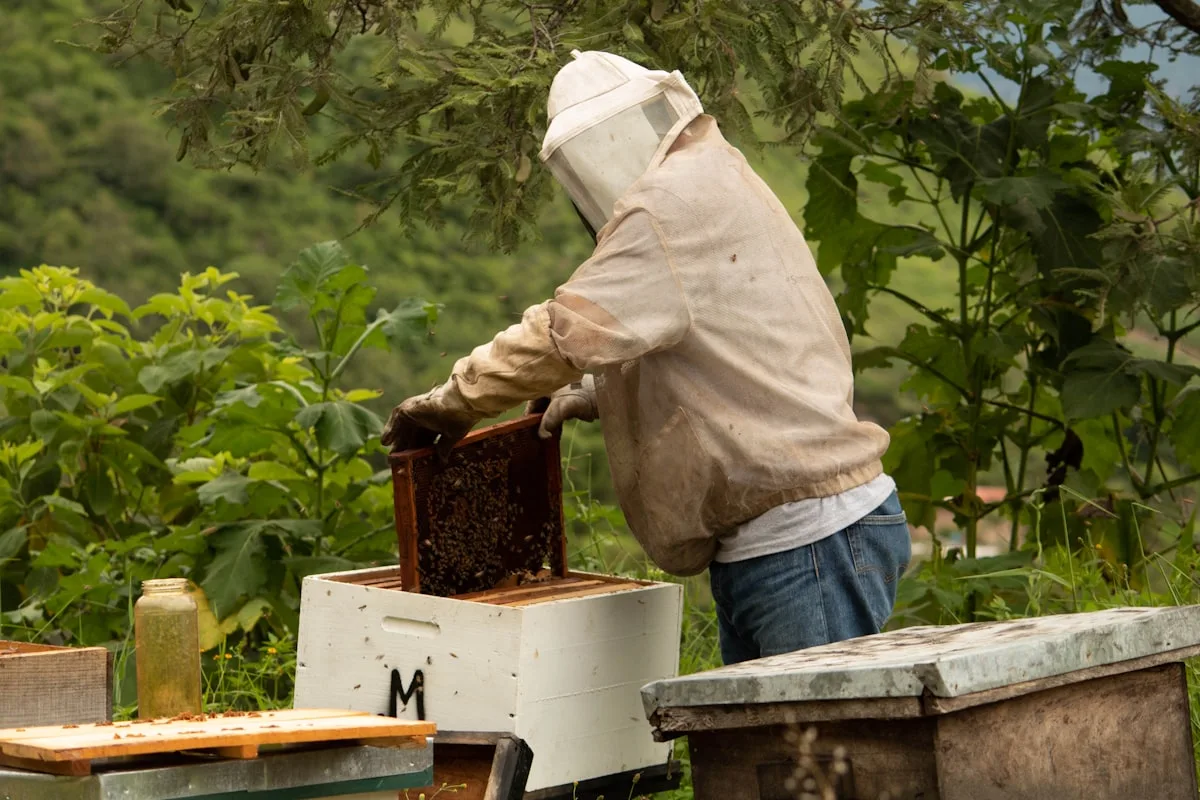
To keep the math concrete, here's a composite operation — illustrative, not a real beekeeper, though the numbers are in the right neighborhood for a careful sideliner. Call her Renata. She runs twelve hives across three yards, harvests in late summer, and bottles in her garage over a couple of weekends.
In a decent year, Renata pulls about 40 pounds of surplus honey per hive — comfortably below the 51.7-pound national average yield per colony (opens in new tab) the USDA reported for 2024, because she leaves more for the bees and isn't running commercial migratory operations. That's roughly 480 pounds, or 480 one-pound jars, off the whole operation.
Now we cost what those 480 jars actually took.
Layer 1: The honey itself isn't free — the colony is
The honey is free. The colony that made it is not. A hive is a small livestock operation, and like any livestock it eats, gets sick, and needs gear. Renata's annual running costs across twelve hives look something like this:
| Annual operating cost (12 hives) | Amount |
|---|---|
| Varroa treatments (multiple rounds per hive) | $290 |
| Feed — sugar, syrup, pollen substitute | $190 |
| Replacement frames, foundation, small parts | $180 |
| Fuel and mileage to three yards | $0 (folded into your time below) |
| Total operating cost | $660 |
Spread across 480 pounds of honey, that's $1.38 per pound before you've touched a jar. But operating cost is the easy part. The expensive part is the one beekeepers are most tempted to leave out.
Layer 2: The colony you lose every winter is a cost per jar
Here is the number that should change how you price. In the 2024–2025 season, U.S. beekeepers lost an estimated 55.6% of their managed colonies — the highest annual loss since the survey began tracking in 2010–2011, according to preliminary results from the Apiary Inspectors of America national survey (opens in new tab). Backyard and sideline keepers often do better than that average, but "better than catastrophic" still means rebuilding every spring.
Say Renata loses four of her twelve hives over the year — a third, well under the national figure. To stay at twelve hives she buys four nucleus colonies at about $180 each (nuc prices vary by region and year — commonly $150–$250): $720 a year, just to stand still.
The rule of thumb that matters: if you are not funding colony replacement out of honey sales, you are slowly liquidating your apiary to subsidize cheap jars. A replacement reserve isn't pessimism. It's the cost of being in business next year — and we'll fold it into the label price by the end.
That $720 is a genuine cost of this year's honey, every bit as real as the jars. Across 480 pounds, it adds $1.50 per pound — more than the operating cost itself.
Layer 3: Equipment wears out, one harvest at a time
The extractor, the hive bodies and supers, the suit, the smoker, the uncapping tank — none of it lasts forever, and all of it gets used up in service of those jars. You don't expense a $450 extractor in one year; you spread it across the decade it'll serve. Done across all the gear, Renata's annual depreciation lands around $150 a year, or about $0.31 per pound.
It's a small layer. It's also the one that, left out, makes your "profit" look healthier than it is right up until the extractor dies and you wonder where the replacement money was supposed to come from.
Layer 4: Packaging — the part you actually buy
Now the honey leaves the hive and meets the things you paid retail for. A glass one-pound jar with a lid, a printed label, and a tamper-evident band runs about:
| Per-jar packaging | Cost |
|---|---|
| Glass jar + lid | $1.20 |
| Printed label | $0.22 |
| Tamper band / shrink seal | $0.10 |
| Total packaging per jar | $1.52 |
These are illustrative small-case-order prices from U.S. jar suppliers; buy by the pallet and the jar cost drops, choose specialty hex jars and it climbs. Nothing here is surprising — but notice it's already more than half the commodity price of the honey inside it. Either way, packaging is a line you can't round to zero.
Layer 5: Your time at the bottling bench
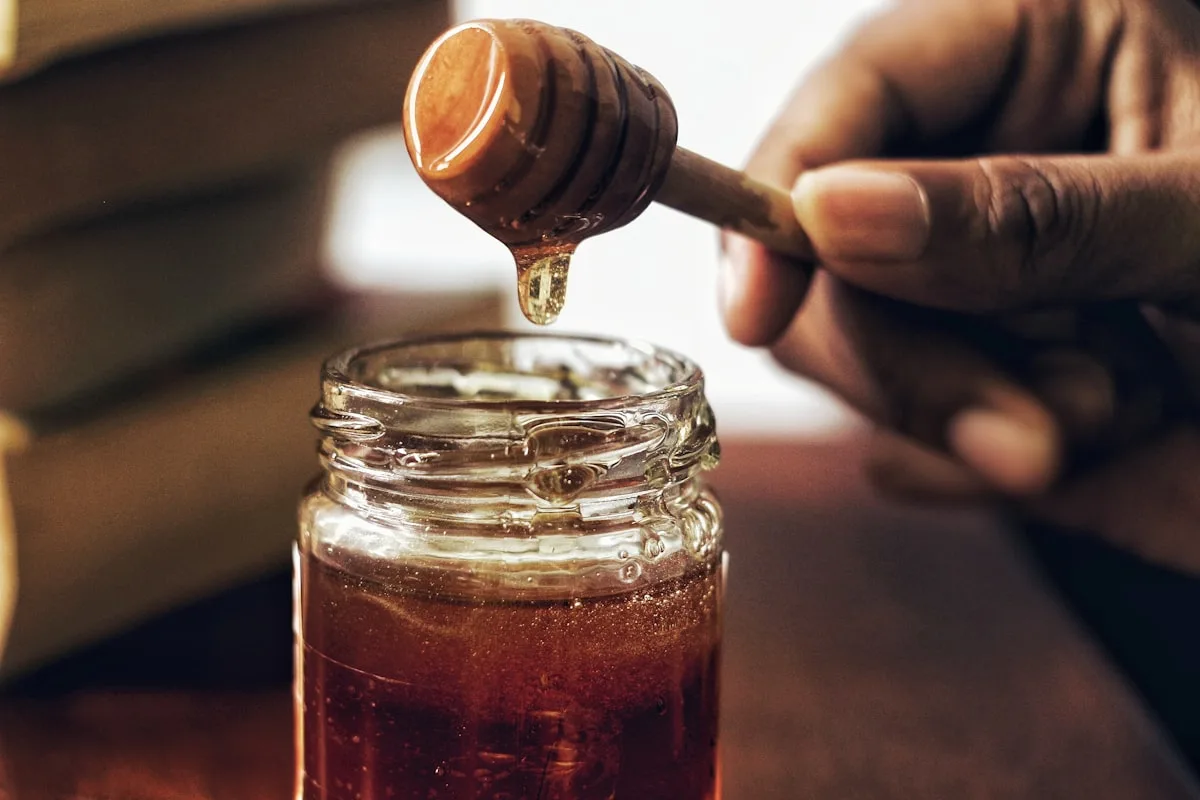
This is the layer that separates a hobby from a business. Extracting, uncapping, filtering, letting the honey settle, bottling, wiping jars, applying labels — it's slow, sticky work, and it's labor whether or not you pay yourself for it.
Renata's harvest-and-bottling weekends come to roughly 28 hours. At a modest $20 an hour, that's $560 of work, or about $1.17 per jar.
A fair objection: this only counts bottling time. It leaves out the year of inspections, swarm chasing, feeding, mite checks, and 6 a.m. drives to the far yard.
That labor is real too. It's just so large that folding all of it into a per-jar cost would push the number past what any market will bear. So we leave the beekeeping hours out of the cost floor and treat them as what your profit margin is supposed to reward.
Hold that thought — it's the whole pricing argument.
Layer 6: The channel takes its cut
A jar doesn't sell itself. At a farmers market, a $45 booth fee spread across the ~30 jars you sell that day works out to $1.50 a jar, though your booth fee and your sales per day will vary widely by market. Online, the platform fee plus the genuinely painful cost of shipping a heavy, breakable glass jar can be worse. Some of Renata's honey goes to repeat neighbors at near-zero selling cost; some goes through a market booth. Blended out, call it $0.85 per jar.
Adding it up: the jar that "felt free"
Stack the layers and the picture changes completely.
| Cost layer | Per one-pound jar |
|---|---|
| Honey production — operating cost | $1.38 |
| Honey production — colony replacement reserve | $1.50 |
| Honey production — equipment depreciation | $0.31 |
| Packaging | $1.52 |
| Bottling labor | $1.17 |
| Channel / selling cost | $0.85 |
| True cost per jar | ≈ $6.73 |
The jar that arrived free from the hive costs about $6.73 before Renata makes a cent — and that's in a good year, with only her bottling hours paid.
Now look back at that famous commodity price. Renata's honey costs roughly $3.19 a pound just to produce (the first three layers, $1,530 across 480 pounds) — already 19% more than the $2.69 packers pay nationally. If she ever benchmarks her jar against bulk honey, she's guaranteed to lose. Pricing direct, local, and premium isn't greed. For a small operation, it's the only math that survives.
What a bad year does to this number
Drop the harvest to 20 pounds a hive — a poor season, a rough mite year — and production splits across 240 jars instead of 480. The production cost per jar roughly doubles, and the true cost clears $10 a jar. The colony-replacement reserve you built in good years is what keeps a bad one from ending the whole operation.
So what should the jar cost?
Remember the beekeeping hours we set aside back in Layer 5 — the inspections, the drives, the swarm calls? Here is where they finally get paid. Set the floor at the true cost — about $6.73 here — and remember what's not in it: every beekeeping hour outside the bottling bench. That's what the price above the floor has to pay for.
- Price a one-pound jar at $8, and you clear about $1.27 — barely above packaging, with a full year of inspections and drives effectively donated.
- Price it at $12 — a price many small-scale beekeepers ask for genuine local raw honey at farmers markets, though you should check what your own market actually supports — and you clear about $5.27 a jar. That's the number that finally pays you for keeping bees, funds next spring's nucs without flinching, and lets a bad year be a setback instead of an ending.
The honey was never the product. The product is local, traceable, single-source honey from hives you tend — and that's worth a multiple of what a barrel of blended commodity honey fetches. You just have to know your floor well enough to price above it on purpose.
Knowing your floor without a spreadsheet meltdown
The reason most beekeepers never run this math isn't laziness — it's that the inputs are scattered across a feed-store receipt, a half-remembered nuc purchase, a harvest weight scrawled on a whiteboard, and a vague sense of how many weekends bottling ate. Pulling it together once a year by hand is miserable, so it doesn't happen. The fix starts small: keep one running Hive Inspection & Harvest Log so the per-hive weights this whole breakdown depends on are written down somewhere other than your memory.
This is the kind of bookkeeping Ardent Seller is built to absorb. For a honey operation, four things do the work:
- Harvest lots — record each harvest as a production lot, so every jar traces back to the hives, the date, and the apiary it came from: the record that proves "genuine local honey" to a skeptical buyer.
- Inventory — your jars, lids, labels, and treatments draw down automatically as you bottle and sell.
- Equipment with depreciation — your hives, supers, and extractor are tracked as depreciating equipment, so the gear lands in your real cost instead of ambushing you when the extractor dies.
- Cost per jar — a full year of hive costs, packaging, and your bottling time roll into one honest number, so the price on the label is a decision, not a guess.
It's all on the free plan — about the right price for a sideline that's still figuring out whether it's a business.
You don't have to track it in software. But you do have to track it somewhere. The beekeepers who stay in business are the ones who can answer "what does a jar cost me?" without changing the subject.
The short version
The bees give you the honey for free. Everything after that costs real money — and it adds up to far more than the commodity price everyone anchors to:
- Cost a jar honestly — count the colony, the losses, the gear, the packaging, the bottling hours, and the channel, not just the things you bought.
- Set your floor at that true cost, then price above it on purpose to pay for every beekeeping hour the floor leaves out.
- Stop letting the bulk price set your value — a jar of your honey is local, traceable, and single-source, worth a multiple of what a barrel of blended commodity honey fetches.
Want to know what your jar actually costs? Start a free Ardent Seller account, log one harvest as a production lot, and let the cost-per-jar do the arithmetic you've been avoiding.
Related reading
- The True Hourly Wage of a Handmade Business — The bottling hours in your cost stack are easy to undercount; this walks through putting a defensible number on every hour you work.
- Margin vs. Markup: The Pricing Math Mistake — Once you know a jar's true cost, this is the math that turns it into a retail price without the classic margin-markup mix-up.
- Against "Just Charge More" — Why "raise your prices" is incomplete advice, and how knowing your floor — like the per-jar cost here — is what actually makes a price increase stick.
Free resources
A few free downloads from the Ardent Workshop library that pair well with this post:
- Hive Inspection & Harvest Log — Capture the per-hive harvest weights this whole breakdown depends on, so your cost-per-jar starts from real numbers instead of a guess.
- Product Pricing Calculator — Plug your own jar costs into the same layer-by-layer math and find the floor for your label price.
- Maker Hourly-Rate Pricing Calculator — Put a defensible number on your bottling-bench hours instead of donating them.
This article is provided for educational purposes only and does not constitute financial, tax, or business advice. Cost structures, pricing examples, and margin figures are illustrative and will vary by your specific circumstances. Consult a qualified accountant or small-business advisor before making financial decisions based on this content.