The kitchen table in January smells like coffee and seed catalogs. Three of them are open — Johnny's, Fedco, High Mowing — to crops Mara has grown before and crops she has not. The cat is on the page with the lettuce mix. Outside the window, the field is under six inches of snow and a half-melted layer of last year's straw mulch. The propane bill came in on Monday and the deposit for next year's CSA arrived this morning. Both numbers are sitting on the table, next to the coffee, waiting to be added to the spreadsheet.
This is what year five looks like.
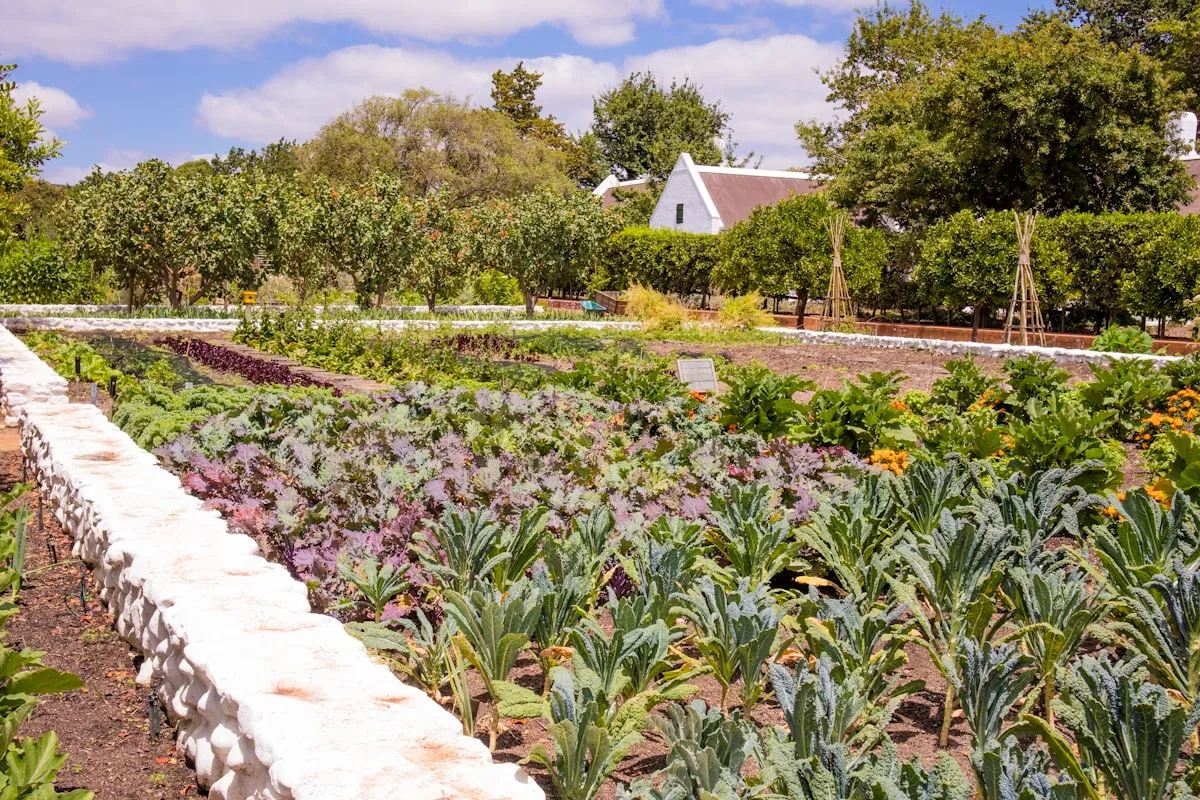
Mara runs Halfway Field, a two-acre market garden in a transitional climate — late enough that tomatoes finish in late September, early enough that the first peas can go in before tax day. She sells through a 65-member CSA, three farmers markets a week from June through October, and standing orders to two restaurants. She is one person plus seasonal labor (a 20-hour-a-week helper from May through October). She is profitable, modestly — the gross sits north of $95,000, the take-home covers her share of the household, and she sleeps fine in February.
Two-acre operations like Mara's account for a meaningful slice of direct-to-consumer agriculture. The USDA's 2022 Census of Agriculture (USDA NASS 2022 Census of Agriculture (opens in new tab)) classifies farms selling under $350,000 a year as small family farms; the great majority of intensive market gardens live well inside that bracket.
What follows is twelve months of Mara's year. Not a how-to for starting one. A rhythm. The work has a season. The money has a season. Most of what goes wrong in a small market garden goes wrong because the operator misread which season they were in.
(Mara and Halfway Field are composite — drawn from how a two-acre market garden tends to settle into its year, not from one named farm. The numbers below are illustrative for an operation of this size; specifics in any real garden will move with climate, soil, market mix, and the particular set of crops the operator commits to in January.)
If you run something like this, the value of the calendar is less in the to-do list and more in the what tends to happen this month. The list of crops you'll grow is yours. The patterns are not.
January — Books closure and seed planning
January is mostly indoors. Last year's books get closed, this year's gets started. Mara works through her per-bed profit numbers — the same exercise covered in the seed-to-sale crop costs post — and the results are usually quieter than the catalogs suggest. The Sungold tomatoes she loved growing earned $18 per bed-foot. The fingerling potatoes she grew because the market manager asked her to earned $4.10 per bed-foot. She is not going to stop growing the potatoes — they fill a slot the rest of the plan needs filled — but she is going to grow about 30 percent less of them this year, and use the bed-space for an additional planting of bunched salad turnips.
The seed catalog math takes about three afternoons. It is not optional and it is not a planning ritual; it is the difference between a year that ends in November with cash and a year that ends in November with debt and a story. The cost of the seeds themselves is roughly $1,800 for a two-acre operation — small relative to the rest of the budget — but the decision of what to plant is the largest single financial commitment of the year. Once the seeds are ordered, the plan is locked.
What tends to compound this month is the absence of last year's per-crop profit data. If the operator does not know which crops paid and which crops only kept them busy, they will plant the same balance again, and the year will look the same. The seed bill arrives whether or not the numbers were run.
February — Seed starting and infrastructure repair
By the second week of February, the basement under-light setup is on a timer and the greenhouse — a 14-by-30 unheated hoophouse with a propane heater Mara fires only when nights drop below 28°F — has its first trays of onions and leeks. Lettuce, cabbage, broccoli, and the early cut-flower lines (snapdragons, calendula, statice) follow over the next three weeks. The propane bill in February is usually $180 to $240. The seed-starting mix is $420 in bulk; the plug trays and inserts another $160. Cumulative outgo for February typically lands between $950 and $1,300.
Infrastructure repair is the other February job. The deer fence wire that stretched in the August heat needs re-tensioning. One of the drip irrigation manifolds froze and split. Two row cover hoops from last spring are bent past repair. The rototiller's tines are dull. Mara walks the field, makes a list, prices the parts, and either fixes things now while there is time or accepts that they will become April emergencies.
What tends to compound this month is treating infrastructure as a thing that gets fixed when it breaks rather than as a thing that has a depreciation schedule. The drip tape lasts about three years before it splits along the seams. The row cover lasts two seasons. The rototiller tines wear at a predictable rate. Operators who do not put these line items into a replacement-reserve budget end up paying for them out of June revenue when the cash is also covering everything else.
March — Soil tests and first transplants
March is when the door of the year opens. The first soil tests go out — a basic NPK and pH panel per zone runs about $22 through the state extension service, and Mara tests three zones. Cover crops planted last fall (rye and vetch in the warm-season beds, oats and peas in the cool-season ones) get mowed and incorporated. The first peas, spinach, arugula, and overwintered onion sets go in the ground.
Inside, the propagation greenhouse fills up. By March 20 there are roughly 3,200 plug-cells live, with a mix of brassicas, lettuce, herbs, alliums, and the first round of tomatoes and peppers on heat mats with supplemental lights. Mara records seeding dates in a notebook she carries; the same dates feed the harvest plan four months later. The math is simple — a 65-day lettuce variety seeded March 8 will start cutting around May 12 — but it only works if the dates were written down accurately.
There is still no income worth speaking of. Storage onions and a small stock of cured garlic are sold at the year-round indoor farmers market, but the totals are modest — $300 to $500 for the month. The bank balance is at its lowest point of the year.
What tends to compound this month is skipping the soil test. A $66 spend in March prevents $1,400 in unnecessary fertilizer in May. The test is also the only objective record of soil-organic-matter trend year over year — the number that, more than any other, tells the operator whether the farming is improving the land or quietly depleting it.
April — Spring market opens, transplants accelerate
The first outdoor farmers market opens in mid-April. Mara brings what she has: salad mix, spinach, scallions, herbs, the last storage potatoes, a small table of cut tulips from the propagation house. The gross for the first three Saturdays is between $380 and $540 — not much, but it is the first outdoor income of the season, and the regular customers see that the booth is open again.
Field work accelerates. The bed-prep crew is Mara plus the helper, who is back two mornings a week now. Drip irrigation lines get laid in the brassica and onion beds. The first wave of transplants — onions, brassicas, lettuce, kale, chard — goes out. By April 25, roughly 35 percent of the two acres is under crop. The walk-in cooler comes out of winter mode (it was holding storage crops at 34°F all winter; it gets bumped to 38°F for the salad market and the door seals get checked).
April expenses include the seasonal labor restart, the cooler servicing, market stall fees for the season, and the first liability insurance installment. Outgo lands around $2,800. Income lands around $1,500. Net April is negative, but the curve has turned.
What tends to compound this month is the absence of a sell-out log at the farmers market. Operators who do not record what sold out by what time on which Saturday cannot tell next April whether the salad mix was undersupplied (it sold out at 9:30) or oversupplied (it took until 11:45). One season of weekly sell-out times is the cheapest market-research investment a small operation will ever make.
May — CSA signups close, full sprint
May is the month that decides the cash year. Final CSA signups close in the first week. Mara's 65-member roster is full by April 28 in a typical year — about 40 percent returning members (the retention rate has held at 38 to 42 percent for three seasons running, which she only knows because she tracks it), 40 percent returning members who bought a half-share last year and are upgrading, and 20 percent new. Pre-pay deposits hit the bank between April 20 and May 5: roughly $18,500 of contracted-but-not-yet-delivered income. The pre-pay is the difference between a soft May and a hard May.
The field hits full speed. Tomatoes, peppers, eggplant, summer squash, cucumbers, beans, basil — all of it goes in by Memorial Day. The 20-hour-a-week helper starts. Direct-seed succession plantings of lettuce, carrots, beets, and arugula stack on a 10-day cycle. The greenhouse empties and gets a cleanout; the next planting is scheduled for fall transplants in mid-July.
What tends to compound this month is the absence of a CSA member retention number. Operators who do not separately track returning members, upgraded members, new members, and lost members from last year cannot tell whether the membership is genuinely growing or being held flat by a marketing push that has to repeat every spring. A 38 percent retention number is honest. A 42 percent retention number is the same operation a year later, with no extra spend. The trend line is the actual marketing report.
June — First CSA week, market in full swing
The first CSA pickup is the second Tuesday of June. The box is light — salad mix, the first peas, scallions, kale, herbs, a small bouquet of flowers — and Mara worries about it the whole week before. The members don't. They are happy to see her, they are happy to see anything, and the second pickup is heavier.
Markets are full now. Two Saturdays, one Wednesday afternoon, one Thursday evening. The gross for the first full week of June lands around $4,200; by the third week of June it is closer to $6,800. The first restaurant order — 18 pounds of mixed salad, 12 pounds of radishes, three flats of strawberries — goes out on the 12th, invoiced at wholesale margin. The cash account is finally net positive on a rolling 30-day basis.
This is also the month when the books get sloppy. The pace is the highest it will be all year, and the temptation is to defer the bookkeeping to later. Operators who track each CSA box's actual contents against the projected list, each restaurant invoice against its delivery date, and each market day's totals against the cash drawer at the end of the day will close the books on December 31 in three days. Operators who don't will spend most of January reconstructing June from receipts. A connected system — even one as simple as the per-channel tracking in Ardent Seller — turns the reconstruction job into a daily five-minute habit.
What tends to compound this month is the gap between what the CSA box was supposed to contain and what it actually contained. The CSA member doesn't notice the swap. The bookkeeping does — the cost of goods inside each box drifts, and by year-end the per-share profitability number is wrong by enough to matter.
July — Heat, tomatoes, irrigation panic
July is the month when the field weather becomes the dominant constraint. A heat wave in the second week pushed Mara's early lettuce to bolt three weeks ahead of plan. The succession planting that was supposed to bridge the gap had germinated unevenly because the soil temperature at quarter-inch depth was 94°F on the morning of the third day. Both losses were avoidable in retrospect; both were predictable in advance only if she had logged the previous July's heat-wave failures.
The tomatoes start, first slowly and then all at once. Basil overflows. The third weekly bed of beans comes in. The CSA box is heavy from mid-July through Labor Day — this is the visual high point of the year, and it is also the point at which operators most often run out of cash for unanticipated repairs.
One of the drip manifolds fails on a Tuesday afternoon. The replacement, the fittings, and the four hours to swap it cost around $340. The previous year's drip-tape pinhole survey was not done. Operators who walk the lines once a week in May and June catch the failures before they become irrigation emergencies in July.
What tends to compound this month is the absence of a crop-loss log. Heat-related lettuce bolt, hail damage on a flowering bean bed, a deer breach through a fence section that was on the list to fix in February — each is a small cost in isolation, and a large pattern in aggregate. Three seasons of crop-loss logs will tell an operator more about which fences, row covers, and varieties earn their keep than any seed catalog will.
August — Peak abundance and the burnout watch
August is the loudest month. The tomato harvest peaks. The flower production is at its annual high. The third restaurant has called twice asking for standing orders. The CSA boxes are bursting. The wholesale account that demanded $1.85 per pound on the heirloom tomatoes is now at 90 pounds a week and Mara is doing the margin math at the kitchen table at 11pm.
The decision in August is allocation. Mara has roughly 280 pounds of premium tomatoes a week. The CSA gets 110 pounds, committed. The Saturday markets together absorb about 140 pounds at retail, at an average of $5.50 per pound. The wholesale account wants 90 pounds at $1.85. The market revenue on those 90 pounds at retail would be $495; the wholesale revenue is $167.
The wholesale account is being subsidized by every other channel. Mara has had this conversation with herself before, and she will have it again. The wholesale account is filling a slot — predictability, low-friction delivery, a buyer who pays on net-15 terms — that the markets don't fill. The number is still the number.
The other August reality is labor. Mara and the helper are at the end of week 14 of the season. Neither has had a day off in six weeks. Operators who do not track hours-on-task by week (not by month — the month-level number hides the spikes) cannot tell that they are running 64-hour weeks instead of the 48-hour weeks they think they are.
What tends to compound this month is the unnamed wholesale margin floor. Operators who do not write down — before the order is accepted — the per-pound, per-bunch, or per-case price below which they will not sell tend to find themselves selling below that floor by August. By the time they notice, the season's wholesale revenue has been quietly cheap. The fix is one sentence on a sticky note above the desk: Below $[number], the answer is no.
September — Shoulder season, fall transplants in
September is the breath. The tomato wave winds down. The cool nights start. Fall transplants — kale, chard, fall radishes, brassicas — go out in the first two weeks. Apples ripen in the orchard at the edge of the field (Mara's neighbor's, but she barters and resells at the market). The first storage harvest — early potatoes, the first winter squash — begins at the end of the month.
The customer base shifts. The summer tourist trade is gone; the regulars are still there. Sales soften in the first half of the month and then climb again as the fall produce starts coming in. CSA boxes get heavier with storage crops — leeks, fall carrots, the first beets stored from August. The mid-September box is one of the better boxes of the year, and operators who don't tell their members so in the weekly email leave a renewal opportunity on the table.
The bookkeeping that fell behind in July gets caught up in September. The accountant calls; the mid-year tax check happens. Mara's quarterly estimated payment goes out on the 15th. A small Section 179 conversation — the new walk-behind tractor she has been pricing for two years — gets put on the agenda for the December review (the equipment depreciation guide walks through the trade-offs in detail).
What tends to compound this month is the underestimation of shoulder-season demand. Customers who want specialty crops — celeriac, sunchokes, late kohlrabi, fall raspberries, dry beans — pay more per pound and don't comparison-shop. Operators who plant the same balance every year miss the September-only window when the dollar-per-bed-foot math is at its annual best.
October — Storage harvest, CSA wind-down, mid-year check
The last CSA pickup is the third week of October. The box is dense — storage potatoes, winter squash, the last of the tomatoes (held in the basement to ripen slowly), garlic, onions, fall greens. The market season ends with the last outdoor Saturday on the 31st.
Storage harvest is the dominant October job. The potato bed gets dug, sorted, and cured for two weeks before going into the root cellar. Winter squash gets cut, cured for ten days in the greenhouse, and stacked. Carrots get pulled and topped. Garlic gets a final cleaning. Onions get one more cure week. The walk-in cooler is full by Halloween.
Labor in October is paid differently. The helper is back to 12 hours a week now — half her summer rate. Operators who do not categorize storage-crop labor (which is largely sorting, curing, and packing) separately from in-season labor (which is harvest, market prep, and delivery) cannot accurately price the storage crops. The all-in cost of a 50-pound box of curated storage potatoes includes the 4.5 hours that went into the curing, and the 2.3 hours that will go into the December pull-and-pack.
Income in October is still strong — final markets, restaurant orders, the last CSA payment from the late-pay members — but the slope is downward. The bank balance peaks somewhere between October 12 and October 22 in most years; from there it drains slowly through the winter.
What tends to compound this month is the conflation of storage-crop labor with growing-season labor. A 50-pound box of stored carrots, priced in December at $1.85 per pound, looks profitable on the revenue line. If the 4 hours of October sorting time and the 1.5 hours of December pack time are counted, the margin is thinner than it looks. Storage crops earn their keep in the calendar — they put income in February — but only if the operator knows what they actually cost.
November — Cover crops, equipment winterization
The cover crop seed goes down in the first ten days of November — winter rye and vetch on the warm-season beds, oats and field peas on the cool-season ones. The cover crop is the only thing growing on the field by Thanksgiving. Irrigation lines get drained, manifolds get pulled, hoses go into the heated shop. The walk-in cooler shifts to winter mode (storage at 34°F again). The greenhouse polythene gets a wash and an inspection for tears.
Tool maintenance is a five-day project. Pruners, harvest knives, scissors all get cleaned, sharpened, and oiled. The rototiller gets a fresh oil change and a new air filter. The walk-behind tractor gets winterized. The deer fence wire gets a final walk-through and a tension test. The list of things that will need to be repaired or replaced before April goes on a separate page in the notebook.
The CSA renewal letter goes out in the second week of November. Operators who time the renewal letter for November — when the harvest year is fresh and the members still have a basil scent in their kitchens — tend to close more renewals than operators who wait until January, when the members have forgotten. A 65-member CSA at a $625 share is roughly $40,600 of contracted income. Mara's November mailings close at a noticeably higher rate than the years she let the letter slip to January — in her own records, the difference has run six to nine percentage points.
What tends to compound this month is the absence of a maintenance-and-replacement reserve. Operators who do not transfer 4 to 6 percent of gross revenue into a separate equipment-reserve account each November find themselves choosing between an irrigation repair and a market booth deposit in March. The reserve is a small habit and an enormous structural difference.
December — Books, the slow weeks, the decision-making
December is the quietest month of the year and the most important. The books get closed. The accountant gets the year's records by December 20. The Section 179 conversation happens — the walk-behind tractor, the new propagation lights, the cooler upgrade — each priced against the year's profit and next year's depreciation schedule, with reference to the same Schedule F rules that apply to most fresh-produce operations.
The crop plan gets revisited for the third time this year. The fall numbers — per-bed-foot profit by crop — get added to the spreadsheet. The crops that did not pay get a hard look. The crops that overperformed get more bed space. Mara walks the empty field in her boots and a heavy coat, with the spreadsheet in her head, and decides what next year will be.
The last week of December is for rest. The fridge is full of canned and frozen food. The freezer has soup stock and roasted tomatoes from August. The CSA renewal letters have come back at a 76 percent close rate (the November mailing did its work). The next year's seed orders go in between Christmas and New Year, before the early-bird discount window closes.
What tends to compound this month is the absence of a separate farm operating cushion. Operators who do not end the year with at least eight to ten weeks of operating expenses in a separate account spend January reacting to the propane bill instead of planning. The cushion does not need to be large. It needs to exist.
The five logs the year depends on
A two-acre market garden runs on five things: a crop plan that reflects last year's numbers, a calendar that respects the work each month requires, a bookkeeping habit that doesn't fall behind in July, a maintenance reserve that gets funded in November, and an honest conversation each December about what to keep and what to drop.
Most of what goes wrong does not go wrong in a single moment. It goes wrong over the course of a season, in the gap between what the operator thinks is happening and what the spreadsheet would say if it were up to date. The calendar above is a year-long answer to a one-line question: what is quietly compounding right now, while I'm not looking?
For an operation Mara's size, the answer is usually in one of five places — the per-bed profit log, the sell-out time log, the crop-loss log, the labor-by-week log, or the reserve account. None of these are exotic. None require software. All of them require the small discipline of writing the number down on the day the number happens, which is the discipline a working farm depends on.
A tool like Ardent Seller is one way to consolidate the five logs into a single system, with the per-channel sales tracking and equipment depreciation already built in. The point is not the tool. The point is that the numbers exist somewhere a year from now, when March arrives and the seed catalogs come out again, the kitchen table smells like coffee, and a decision has to be made about what to grow.
If you run a small market garden or are planning one, the most useful thing you can do this week is to write down — on paper, in a spreadsheet, anywhere durable — last year's version of those five numbers. The per-bed profit. The sell-out time. The crop losses. The labor hours by week. The end-of-year cash cushion. They do not have to be precise. They have to exist. Try Ardent Seller free for 14 days if you'd like a single place to track all five, or start with a notebook. Either works. The discipline is what matters.
Related reading
- Seed to Sale: Cost-per-Bed and Profit-per-Bed Tracking for Small Farms — The per-bed-foot math behind the January crop plan, with worked examples for a six-bed comparison.
- Cash Flow for Seasonal Sellers: Surviving the Slow Months — How to think about the November-through-March cash valley that every market garden lives with.
- Q4 Holiday Runway for Farmers Market Vendors — The other calendar-based post in the catalog: a month-by-month October-through-January runway for vendors who do indoor winter markets.
Free resources
A few free downloads from the Ardent Workshop library that pair well with this post:
- Vendor & Supplier Contact Organizer — A clean place to keep the seed houses, soil-amendment suppliers, irrigation parts contacts, and equipment dealers that get rotated through every January order cycle.
- Quarterly Estimated Tax Worksheet — Walks the September and January estimated-tax payments through the math, with farm income (Schedule F) handled the same way as Schedule C self-employment income.
This article is provided for educational purposes only and does not constitute financial, tax, or business advice. Cost structures, crop economics, labor rates, and margin figures are illustrative of a composite two-acre operation and will vary by climate, soil, market mix, and season. Federal tax forms (Schedule F, Section 179) and state agricultural rules change frequently. Consult a qualified accountant or small-farm advisor before making financial decisions based on this content.