
You've been asked to teach. Maybe a regular at the market mentioned her daughter would love a candle-pouring night for her birthday. Maybe three different people this month asked whether you "do classes." You said "maybe!" and you meant it — teaching sounds fun, it fills a slow weeknight, and it puts money in the till without you making one more thing to sell.
Then you sat down to figure out what to charge, and the cursor just blinked at you. Forty dollars a head? Sixty? Should the kit be included? What if only four people sign up? If you've been circling this question for a while without committing, you're in good company — pricing a class is genuinely different from pricing a product, and almost nobody gets handed the math. So here it is, as a checklist you can run before you ever publish the listing.
The good news: a well-priced workshop can carry strong margins, because you're selling your expertise and a couple of hours of your time instead of materials you'll never see again. The trap is that it looks simple, so people price it on vibes — and a room full of happy students can still send you home with less money than a quiet night at the bench.
The short version: price the event, not the ticket. Total up everything the class costs you — the take-home kit and in-class consumables (which scale with each seat) plus your venue and every working hour (which don't) — find the break-even seat count that covers your fixed costs, set your minimum headcount there, and only then add profit on top. Everything that follows walks that path in order, point by point.
Why a full room can still lose money
Meet Renee — a composite stand-in for a first-time teacher, not a real customer. She makes soy candles, she's good at it, and a local studio offered her their space for a Thursday-evening pouring class. She figured $45 a ticket sounded right, posted it, and filled nine of her twelve seats. Sold out-ish. Felt great.
Three people didn't show. She'd already cut nine kits, bought wax for nine, and spent an afternoon prepping. The six who came had a lovely time. Renee went home, did the math for the first time, and realized she'd worked a full day to lose about sixty-five dollars.
Nothing about Renee's class was sloppy except the pricing process. She priced the ticket before she priced the event — and the event is where the money actually lives. Everything below is the order she wishes she'd done it in.
Start with what the class actually costs you
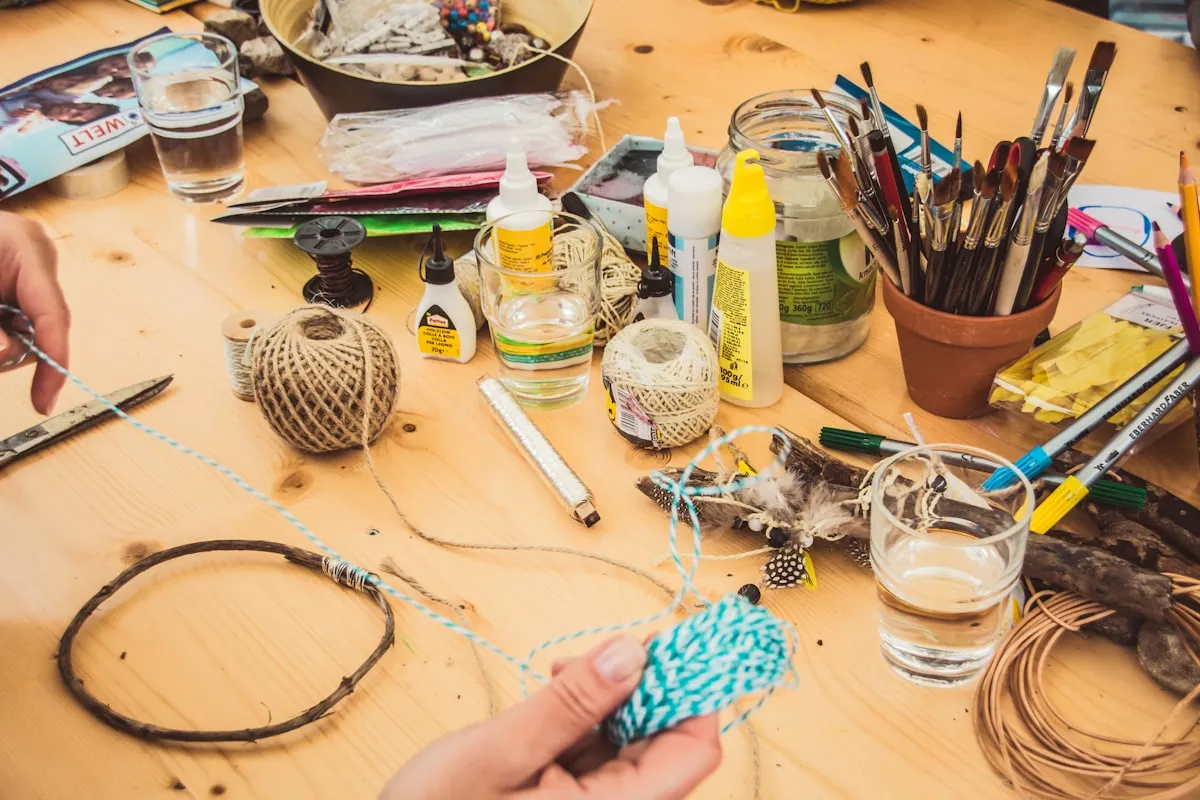
You can't price a thing you haven't costed. Workshops hide their costs in two buckets: the stuff that scales with each student (variable) and the stuff you pay once no matter how many show up (fixed). Keep them separate — the whole break-even calculation later depends on it.
1. Your true per-seat materials cost (the kit and the spillage)
Cost the take-home kit like any product recipe: vessel, wax, fragrance, wick, packaging, the printed care card. For Renee that's about $8.80 in parts. But a class kit isn't just the product — it's the product plus everything beginners burn through getting there. Extra wax for the inevitable spill, gloves, stirrers, a wick that gets set crooked and redone, the demo candle you pour live. Fold in a per-head share of those shared consumables and Renee's real number lands closer to $10 a seat.
Sidebar — beginners waste more than you do. Your own material yield is dialed in after a thousand pours. Your students' yield is not. That gap is exactly what takes Renee's kit from $8.80 in parts to about $10 a seat — roughly a 14% cushion. Build a similar allowance into your own kit cost (the right percentage depends on your medium and your students) or the waste comes straight out of your margin, one tipped pitcher at a time.
This is exactly the kind of thing inventory software is built for. If you already keep your products as recipes in something like Ardent Seller, a class kit is just another bill of materials: define it once and it tells you the true per-seat cost, then re-checks that number the moment your wax or fragrance supplier nudges prices up. Log the teaching supplies as their own inventory line, too, so the thirty vessels you bought to teach with don't quietly disappear into your retail product costs.
2. Every hour the class eats, not just the two in the room
The two hours of teaching are the part everyone counts. They're also the smallest part. Renee's "two-hour class" actually cost her: 1.5 hours of kit assembly and prep, 1 hour of hauling and setup and teardown, the 2 hours teaching, and roughly 1 hour of writing the listing, answering DMs, and chasing payments. That's 5.5 hours. At a modest $25/hour, her time is worth $137.50 before a single candle is poured.
Pay yourself for all of it. This is a fixed cost of running the event — it doesn't change whether four people come or twelve — so it goes in the fixed bucket. If putting a real number on your hours makes the class look expensive, that's not a reason to skip the step. That's the step doing its job.
3. The space — even if the space is your kitchen
Renee's studio rental is $90 for the evening: easy, that's a fixed cost. But if you host in your own space, it is not free. There's cleaning, the wear on your equipment, and — the one makers forget — the liability question. Inviting paying strangers to handle hot wax or sharp tools in your home is a different insurance conversation than selling them a finished jar. Before you host anywhere, ask your insurer what's covered.
Sidebar — "my kitchen is free" is the most expensive sentence in teaching. Even if you don't pay rent, put a placeholder number on your space ($25–$50 a session is reasonable) so that when you eventually move to a paid venue, your pricing doesn't lurch overnight.
4. The line items makers forget
These are small individually and brutal in aggregate:
- Card processing on every ticket. Card processors generally take a percentage plus a small fixed fee; in this example we'll use about 3% plus 30¢, which comes to about $1.65 on a $45 ticket. Rates vary by processor and plan, so check your own — and note it scales per seat, so it belongs in the variable bucket.
- Ticketing platform fees if you sell through an events site rather than your own checkout.
- Sales tax on the ticket — which may or may not apply, and which is genuinely state-by-state (more on that in the FAQ). Find out before you price, not at tax time.
- Refreshments, name tags, printed handouts, the parking you validated.
Add it up and Renee's per-seat variable cost is materials ($10) + processing ($1.65) = $11.65. Her fixed cost for the night is venue ($90) + her time ($137.50) + demo unit and handouts (~$7.50) = about $235.
Find your break-even seat count
Now the two costed buckets earn their keep. The single most useful number in workshop pricing isn't a price — it's a seat count. It tells you the moment the night turns profitable.
5. Set a minimum, target, and maximum headcount
Three numbers, not one:
- Maximum is set by your space and your hands. How many beginners can you actually keep safe and supported at once? For a hot-wax class that might be 10–12; for fine jewelry soldering, maybe 4.
- Minimum is your break-even seat count (next step). Below it, you lose money — so it's also your "cancel or reschedule" line.
- Target sits comfortably between them and is the number your pricing should assume.
6. Run the break-even-seats formula
Here's the whole thing:
Break-even seats = event fixed costs ÷ (ticket price − per-seat variable cost)
Renee's class: $235 ÷ ($45 − $11.65) = $235 ÷ $33.35 ≈ 7.05 seats.
That $33.35 is the contribution each seat makes toward covering the fixed $235. Seven seats brings in $233.45 — just shy. So her real floor is 8 seats, because you always round break-even up; you can't sell a seventh-of-a-person. Suddenly her sold-out-ish nine-seat night with three no-shows (six paying) looks very different: six seats was below her floor of eight, which is precisely why she lost money in a room that felt full.
Run it forward and the picture brightens fast. Fill 10 seats and Renee clears (10 × $33.35) − $235 = $98.50 in profit — and that's on top of the $25/hour she already paid herself. Teaching, priced right, pays your wage and a bonus. The formula is just there to make sure you're above the floor before you ever unlock the doors.
Protect the math from no-shows
Your break-even assumed everyone who buys a seat actually fills it. Real life disagrees. The fix isn't a higher price — it's two policies you write before you need them.
7. Take a deposit (or full prepay)
You commit money and hours before anyone arrives, so collect before anyone arrives. She had already cut and assembled nine kits before the doors opened, so those three wasted kits are a sunk cost no matter who shows up. Watch what prepay does to Renee's disaster night — same nine tickets, same three no-shows:
- No prepay: the three no-shows pay nothing. She cut nine kits regardless, so that's $90 in materials; processing only runs on the six payments collected, about $10. Six paying seats bring in $270, minus that $100 of variable cost = $170 contribution, minus $235 fixed = −$65. A loss.
- Full prepay: all nine paid up front = $405, minus the same $90 in materials and ~$15 processing on nine payments = $300 contribution, minus $235 fixed = +$65. A profit.
Identical class, identical attendance. The only variable is whether the empty chairs paid. Full prepay turned what would have been a $65 loss into a $65 profit — a $130 swing on one policy.
8. Write the no-show and cancellation policy before you need it
State it plainly on the listing: refund window (say, full refund up to 72 hours out, none after), what happens if you have to cancel for low enrollment, and whether tickets are transferable. You're not being harsh — you're protecting a thin margin and signaling that this is a real commitment, which tends to reduce no-shows in the first place, since a financial commitment raises the cost of skipping.
Now add a price, not just a number that covers costs
Break-even is the floor. A floor is not a price. This is where makers undercharge, because once the costs are covered they feel greedy reaching for more. Reach anyway.
9. Build in profit on top of your paid time
Remember: your hourly wage is already in the fixed costs. So profit here is profit beyond fair pay for your hours — the reward for the expertise, the risk, and the years it took to be worth learning from. As a rule of thumb, aim for the class to clear a real margin on top of your total costs at your target headcount, not your maximum. Renee's full ten-seat room, for example, clears about $98 over her ~$351 in total costs — roughly 28%, and because her wage is already inside those costs, that margin is profit on top of fair pay. Somewhere in the 20–40% range is a reasonable place to aim, but the right number is whatever your market and your costs actually support. Price for a comfortably-full room, and a packed one becomes a great night instead of the only night that works.
10. Sanity-check against the market and your own hourly wage
Two final gut checks before you publish:
- The market. What do comparable local classes charge? You don't have to match them, but if you're sitting noticeably below the going rate, you're either leaving money on the table or signaling "beginner hobbyist" when you meant "expert worth booking."
- Your own bench rate. Divide your projected profit by the hours the class ate. If teaching pays meaningfully less per hour than just making and selling product, either raise the price, raise the headcount, or decide the class is buying you something else — list growth, retail customers, sheer joy. Any of those can be a fine reason. "I didn't do the math" is not. (If you've never pinned down your bench rate, the true hourly wage of your business is the number to find first.)
The 10-point pre-launch checklist
Run this top to bottom before the listing goes live. If you can't answer one, you're not ready to publish — you're ready to do five more minutes of math.
- Per-seat materials cost — kit components plus a beginner-waste allowance. Done once you have a dollar figure.
- All your hours — prep, assembly, setup, teaching, teardown, promo — at a real hourly rate, parked in fixed costs.
- The space — rent, or an honest placeholder for your own space, plus the insurance/liability check.
- Forgotten line items — card processing, platform fees, sales tax status, refreshments, handouts.
- Maximum headcount — what your space and hands can safely support.
- Break-even seats — fixed costs ÷ (ticket price − per-seat variable cost), rounded up. (Start with a candidate ticket price; you'll pressure-test it in steps 9–10.)
- Minimum headcount — set at or above break-even; this is your cancel line.
- Deposit or full prepay — decided and stated, so empty chairs still pay.
- No-show / cancellation / refund policy — written on the listing before you need it.
- Profit + sanity check — margin on top of your wage, checked against the local market and your bench rate.
Before you publish that listing
Teaching is one of the few ways to earn from your craft without depleting your inventory, and when you price it well, there's every reason to keep going — the math works and so does the payoff. The difference between Renee's first night and her fifth wasn't talent or charisma. It was a costed event, a break-even seat count, and a prepay policy — three numbers and one rule, run before the listing went live instead of after the loss.
So before you publish: cost the event, find your floor, protect it with a deposit, and price for a comfortably-full room. Then go have fun, because the math already did the worrying for you.
Want the costing and break-even math to take care of itself? Ardent Seller lets you build each class kit as a recipe, track your teaching supplies as inventory, and see your true per-seat cost before you set a single ticket price. Start free and price your first workshop with numbers instead of nerves.
Related reading
- Selling at Juried Craft Shows — The other side of the in-person-event coin: how booth fees, application costs, and foot traffic decide whether a show is worth the weekend. Same break-even instinct, a different venue.
- Recipe Costing 101 — Build your class kit as a proper recipe so "about ten bucks a seat" becomes a number you can actually defend.
- The True Hourly Wage of a Handmade Business — The bench rate your workshop price has to beat, and how to calculate what an hour of your time is really worth.
Free resources
If you'd like to take this off-screen, a couple of free downloads from the Ardent Workshop library pair well:
- Product Pricing Calculator — Cost your class kit and price the ticket with the same bottom-up math this post walks through, instead of guessing at what "feels fair."
- Should I Raise My Prices? Decision Tool — Run the steps 9 and 10 sanity check: it walks you through whether your price clears real profit on top of your hourly rate, not just covers costs.
This article is provided for educational purposes only and does not constitute legal, regulatory, financial, or tax advice. Costs, pricing examples, and figures are illustrative and will vary by your specific circumstances, and sales-tax treatment of classes, liability and insurance requirements, and local permitting rules vary by jurisdiction and change frequently. Consult a qualified accountant, your insurance provider, or an attorney before making financial or compliance decisions based on this content.