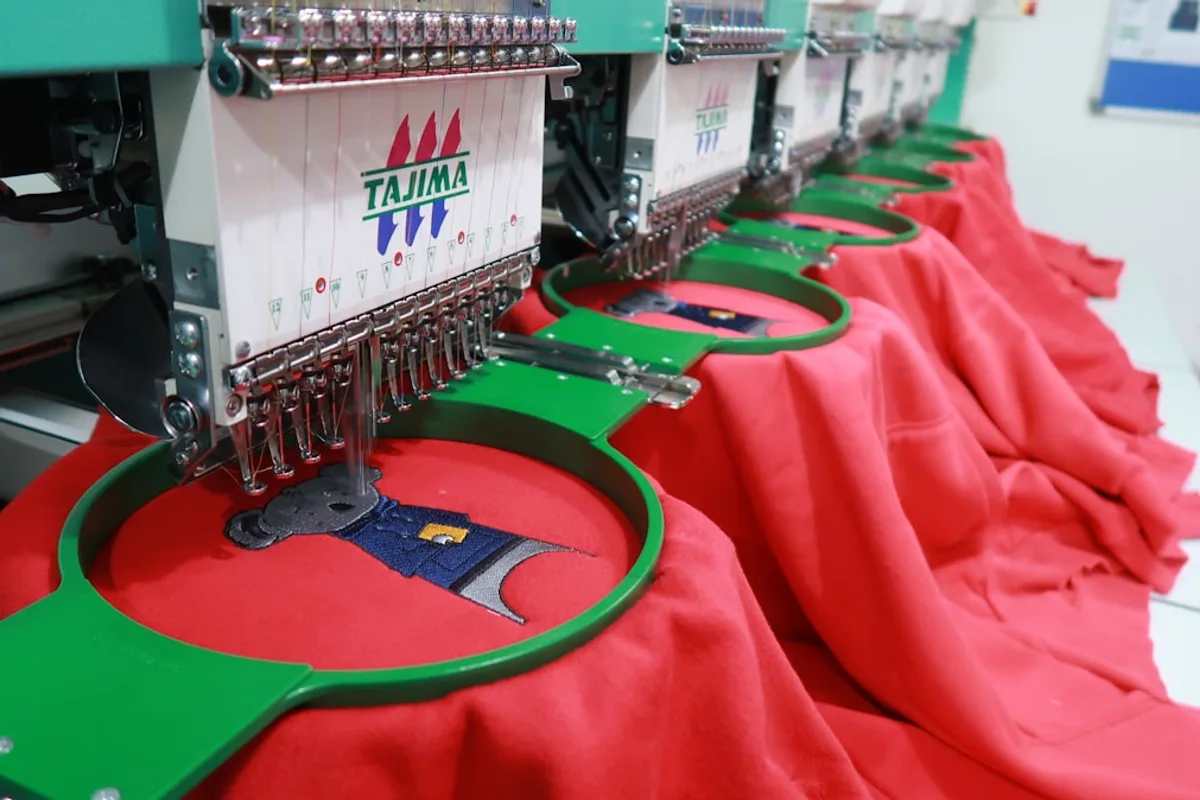
A customer wants 24 polo shirts with a left-chest logo. You do quick math in your head — a few dollars of thread, the shirts are cheap, you'll charge $9 a piece for the embroidery. You send the quote, they say yes, and you feel like you just won something.
Then you actually run the job. The logo is 11,000 stitches. The machine babysits itself for about fourteen minutes per shirt, except it doesn't, because thread breaks twice and one cap shifts in the hoop and you re-stitch it. You burn through stabilizer you forgot you were paying for. By the time you've hooped, trimmed jump stitches, and pressed all 24, you've spent the better part of a day on a job that paid you, after the cost of the blanks, somewhere south of minimum wage.
The short version: Floss and thread are a rounding error. Your real costs are stitch time, hooping and finishing labor, digitizing, stabilizer per hooping, and the blanks you mark up (and occasionally ruin). Price by stitch count and minutes, not by gut feel — and never quote a one-off without a minimum.
Nobody quotes embroidery wrong on purpose. They quote it wrong because the cost that matters — your time on a slow, supervised machine — is invisible at the moment you're typing a number into a text message. Here are the seven mistakes that show up over and over in a maker's first year, in the order worth fixing them, plus a checklist you can pull up while you quote.
1. Pricing the floss instead of the stitch time
This is the big one, and it's the root of most of the others. The thread on a left-chest logo costs cents. The time costs real money.
How long a design takes is worth measuring rather than guessing. A commercial multi-needle machine runs far faster than a single-needle home machine, and every machine runs slower in real production than its rated top speed once you account for thread breaks, color changes, and re-hooping — and none of it runs unattended, because you're nearby to catch breaks, trim, and re-hoop. Take a design you've already stitched, divide its stitch count by the minutes it actually took, and you've got your real production rate. A 10,000-stitch design can easily eat fifteen-plus supervised minutes before you've touched the hooping or the finishing. Price the design and you'll under-charge; price the minutes and the number starts telling the truth.
The fix is to anchor every quote to stitch count and a per-thousand-stitch rate, then add your fixed handling time. A structure that scales cleanly is a per-1,000-stitch number plus a per-piece hooping charge — the exact figures are yours to set, but the structure is what saves you. Once a design's stitch count drives the price, a logo that's secretly enormous stops sneaking through as "just a logo."
Rule of thumb: If your quote didn't start with a stitch count, you guessed.
2. Treating digitizing as free — or charging a flat $20 for it
Digitizing — turning customer artwork into a stitch file — is skilled work whether you do it yourself or send it out. New sellers tend to do one of two things: eat it entirely ("I'll just digitize it, no big deal") or slap a flat fee on it that doesn't match the actual effort. A clean left-chest logo and a detailed full-back design are not the same job, and pricing them the same means one of them is subsidizing the other.
It's also a one-time cost that should be amortized, not swallowed. If digitizing a design took you ninety minutes (or cost you a sourced fee), that cost is spread across the run. One shirt? The whole digitizing cost rides on that order. Two hundred shirts over the next year? It's pennies each. The mistake is charging the same digitizing line on a 200-piece order as on a single hoop, or — worse — never charging for it and wondering why your custom orders feel like volunteer work.
3. Not counting stabilizer, backing, and toppings per hooping
Stabilizer is the supply that hides. Cut-away, tear-away, wash-away topping for terry and knits, adhesive backing for caps and patches — each piece costs a little, and you use it on every single hooping, including the ones you scrap.
The trap is that you buy stabilizer in big rolls, so it feels free in the moment, the same way a 50-pound bag of flour feels free to a baker until they cost a loaf properly. It isn't free. Work out your stabilizer cost per hooping once — roll price divided by how many hoopings it yields — and add it as a line. It's small per piece and significant per year, and the only way it ever shows up in your pricing is if you put it there on purpose.
4. One flat price, regardless of stitch count
"Embroidered shirts: $12 each." It's clean, it's easy to put on a sign, and it will bleed you on every complex design while overcharging on every simple one.
A 5,000-stitch monogram and a 55,000-stitch jacket back are different products that happen to share a machine. Flat pricing means the simple jobs quietly fund the complex ones, your easy customers overpay (and may walk), and your detailed customers get a bargain you can't afford. The whole point of pricing by stitch count (mistake #1) is that it scales automatically — a tiered or per-1,000-stitch structure does the sorting for you, so you're never manually deciding whether this design is a "big one."
Rule of thumb: If two designs take wildly different times to stitch, they should not cost the same.
5. Forgetting the machine itself costs money to run
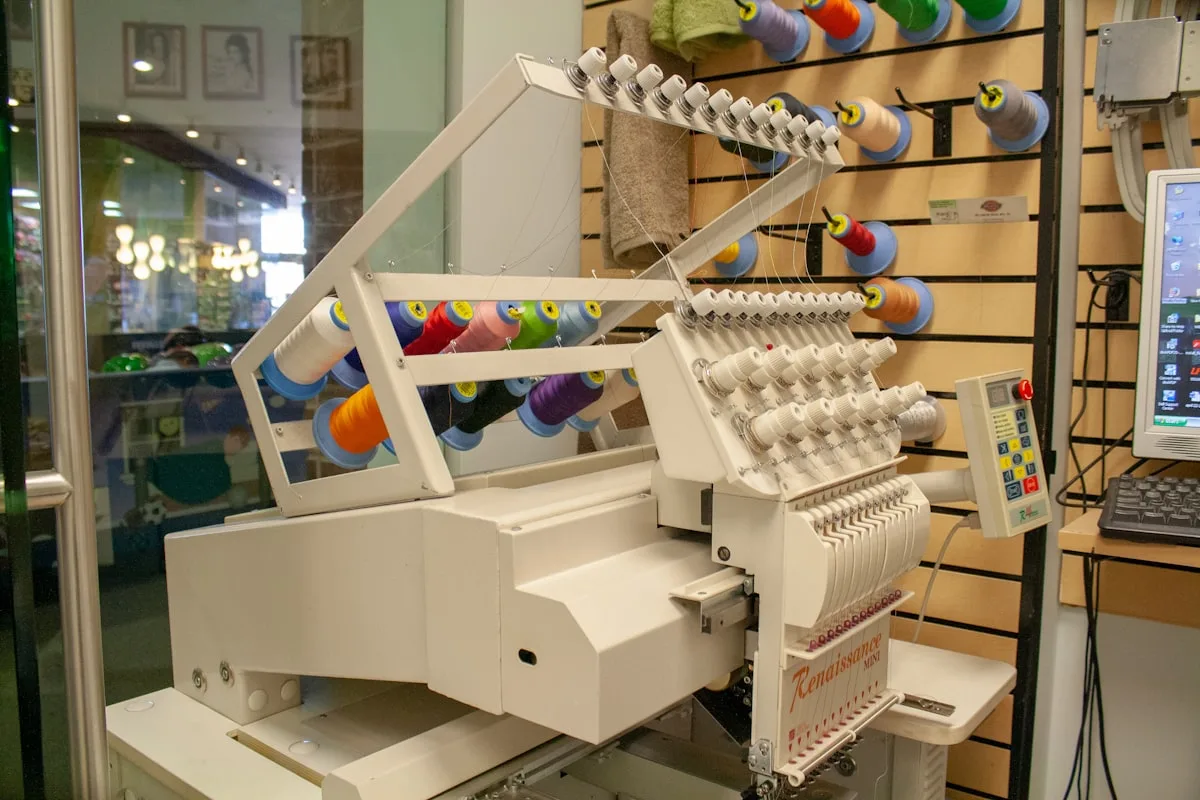
A multi-needle embroidery machine is a capital asset that wears with every run. Needles dull and break, bobbins and rotary hooks need attention, you replace parts, and the machine itself loses value over its life. None of that shows up in a spool of thread, so new sellers act like machine time is free once the machine is paid for.
It isn't. Spread the machine's cost and upkeep across the hours you expect it to run and you get a modest machine-hour rate that belongs in every quote — the same way a potter folds kiln wear into a firing or a woodworker folds the table saw into a build. You don't need to be precise to the penny. You need it to be a non-zero number, because the alternative is pricing as if your equipment is immortal and maintenance is a hobby.
6. Not marking up blanks — and not reserving for the ones you ruin
Two blank mistakes travel together. The first: buying caps, shirts, or patch blanks and passing them through at cost, as a "favor." You're tying up cash, handling, storing, and reordering them — that deserves a markup, even a modest one. The second is quieter and meaner: spoilage. You will mis-hoop a cap, catch a snag, or have a design reject on a finished garment. When that blank is ruined, the cost doesn't vanish — it lands on the rest of the run unless you've built in a small spoilage reserve.
Plan for a low single-digit percentage of blanks to die in production and fold it into the price. The day you stitch a logo crooked into a customer-supplied $40 jacket, you'll understand why a separate policy for customer-supplied blanks matters too — because now the ruined item is one you can't simply reorder at your cost.
7. Saying yes to the single 4-inch patch with no minimum and no setup fee
Setup is where embroidery time goes to hide. Loading the design, threading the right colors, hooping, running a test stitch-out, color changes — that overhead is roughly the same whether you're making one patch or fifty. So the single-piece custom order, priced "per piece," is almost always a loser.
The fix is two policies you decide once and stop re-litigating per order: a minimum order charge (or a flat setup fee on small runs) and a real per-piece floor underneath it. This isn't about turning work away. It's about making sure the work you take pays for the setup it actually requires. A setup fee also does something subtle and useful — it nudges the one-off shopper toward a quantity that's worth your while, or filters out the order that was never going to be profitable.
The pre-quote checklist
Keep this list open where you quote from — on your phone, or bookmark this page to pull it up. Before any quote leaves your hands, every line should have a number, not a vibe.
- Stitch count pulled — the quote starts from the design's actual stitches, not "it's just a logo."
- Stitch-time priced — per-1,000-stitch rate (or tier) applied, plus your fixed handling minutes.
- Digitizing accounted for — charged and amortized across the run, sized to the design's complexity.
- Stabilizer + backing costed — per-hooping cost added, including toppings and adhesives.
- Machine-hour rate included — a non-zero number for wear, needles, and depreciation.
- Blanks marked up + spoilage reserved — a margin on supplied blanks and a small allowance for ruined ones.
- Minimum + setup enforced — no single-piece custom order priced as if setup were free.
If you can't fill in all seven, you're not quoting — you're hoping.
How to stop rebuilding the math on every quote
Most of these mistakes come from the same source: the costs that matter are scattered across thread cones, stabilizer rolls, blanks, your time, and the machine, and none of them are sitting in front of you when a customer asks "how much?" Pricing well means assembling those pieces before the order, not discovering them after.
That's the gap Ardent Seller's pricing and inventory tools are built to close for makers like embroidery sellers. On its embroidery use-case workspace, you can build each design as a bill of materials — floss, stabilizer, backing, the blank — so finishing a piece deducts the right supplies and the supply cost is already in the number. Capture stitch and finishing time as labor so the hours land in the price instead of in your evenings. The result is a true per-piece cost you can quote from, across blank types and colorways, without rebuilding the math in your head every time someone wants 24 polos.
You don't need software to price embroidery correctly — you need to stop pricing the floss and start pricing the time. But once your catalog grows past a handful of designs, having the costs assembled for you is the difference between quoting in seconds and quoting in dread.
Pick one mistake from this list — probably #1 — and fix it on your very next quote. Then work down the rest. Your year-two self, looking at a margin that finally makes sense, will be glad you did. Start free with Ardent Seller and put a real cost behind every stitch.
Related reading
- The True Hourly Wage of a Maker Business — Embroidery is mostly labor, so the per-1,000-stitch rate in mistake #1 only works once you know the hourly wage it has to earn. This shows you how to find that number.
- What Is a Bill of Materials for Makers? — Building each design from its floss, stabilizer, backing, and blank is how the supply cost lands in your price automatically instead of getting forgotten.
- Margin vs Markup — The pricing-math mix-up that quietly compounds every flat-rate quote, and the two-minute fix.
Free resources
A few free downloads from the Ardent Workshop library that pair well with this post:
- Maker Hourly-Rate Pricing Calculator — Solve for the per-hour rate your embroidery time needs to earn, then work backward into a per-1,000-stitch number that actually pays you.
- Product Pricing Calculator — Stack materials, labor, and overhead into a defensible per-piece price so the next polo order doesn't run below margin.
- Should I Raise My Prices? — A quick gut-check for when last year's flat $12 stopped covering the work.
This article is provided for educational purposes only and does not constitute financial, tax, or business advice. Cost structures, pricing examples, and margin figures are illustrative and will vary by your specific circumstances. Consult a qualified accountant or small-business advisor before making financial decisions based on this content.