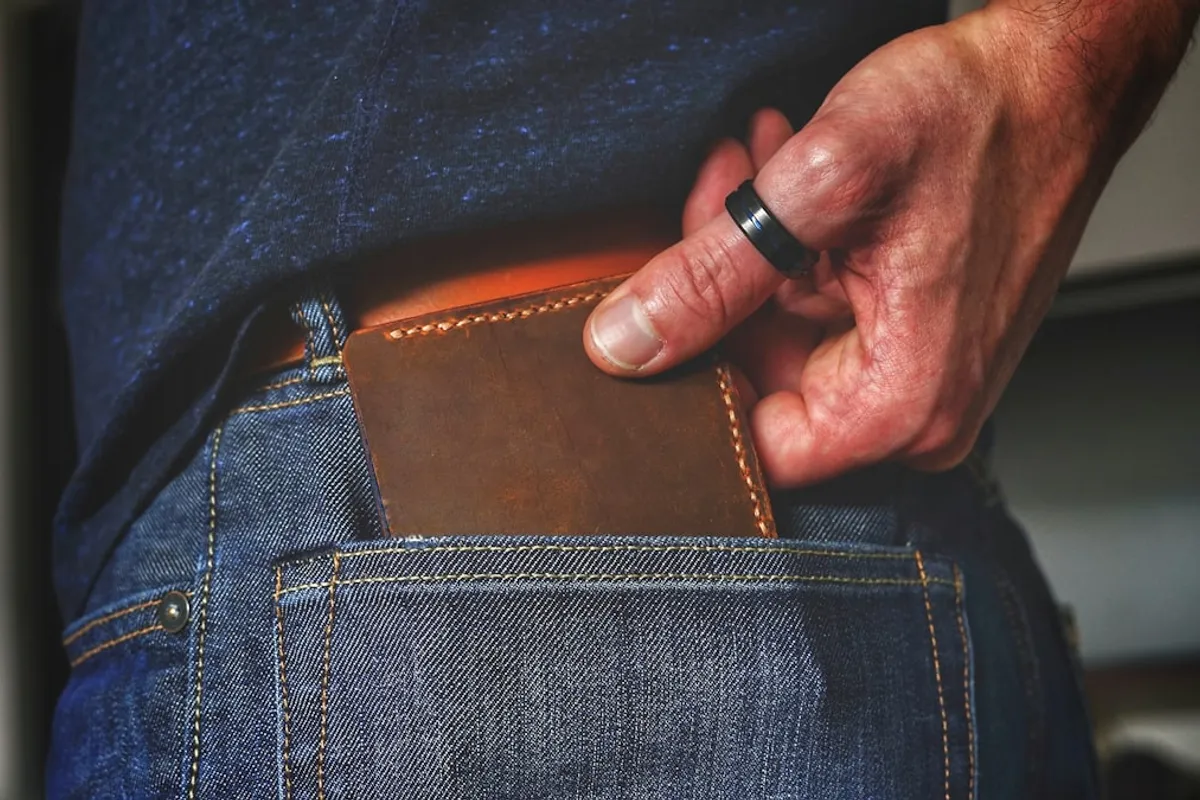
You're standing at your booth on a Saturday afternoon, and someone has just handed you cash for the bifold wallet — the one you priced at $45 because that felt about right next to the other booths. You feel good about it for roughly the length of time it takes to make change.
Then you do the thing you shouldn't do mid-market: you actually add it up. The leather. The thread. The four rivets and the snap. The two and a half hours you spent saddle-stitching it on the couch while a movie played. And the half of the shoulder you trimmed off because it had a brand and a fly-bite scar running right through your panel. By the time you've finished the arithmetic, the wallet that "felt about right" at $45 paid you somewhere south of minimum wage, and you're trying to look pleased while a stranger walks away with your afternoon.
Leather is one of the few crafts where the raw material lies to you. The price tag on the hide says one thing; the cost of the leather you can actually cut says another. Below are the seven places where that gap — call it the hide tax — quietly shows up, plus what to do about each. None of them require you to become a spreadsheet person. They just require you to stop pricing the wallet you wish you'd made and start pricing the one you did.
The short version: Leatherworkers underprice because they base their cost on the sticker price of a hide instead of the usable square footage they can actually cut from it — then leave out hardware, stitching hours, tool wear, channel fees, and a reserve for the occasional ruined piece. The seven mistakes below close that gap, one missing cost at a time.
Mistake 1: Pricing off the sticker price of the hide instead of the leather you actually cut
Here's the trap, and it's an easy one to fall into early on — one of the most common first-pass pricing mistakes in leatherwork. You buy a side of veg-tan for, say, $140. It's listed at 22 square feet. So you do the obvious thing — $140 ÷ 22 — and decide your leather costs about $6.36 a square foot. A wallet uses maybe a square foot of material, so your leather cost is about six bucks. Clean. Wrong.
You will never cut 22 usable square feet out of a 22-square-foot side. The belly is loose and stretchy, the edges are irregular, and somewhere on that hide is a brand, a healed scratch, a bit of bug damage, or a range scar you have to cut around. Experienced leatherworkers plan for this. A common rule of thumb is to budget 15–20% waste on quality sides and shoulders, and 25–35% when you're working with belly leather or cutting around brands and scars — figures echoed by leather-supply project calculators (Complete Calculators (opens in new tab), accessed June 2026). Some leather retailers go further and bake a roughly 30% waste factor into their yardage math by default (Leather Hide Store (opens in new tab), accessed June 2026).
So that 22-square-foot side is really 15 or 16 square feet of leather you can put in a product. Your true cost isn't $6.36 a square foot — it's closer to $140 ÷ 15.5, or about $9.03 a square foot. That's a 42% jump, and it's sitting silently inside every piece you sell.
Rule of thumb: Divide the hide's price by the usable square footage, not the rated square footage. Multiply rated footage by 0.70 as a starting point, then adjust based on how much of your scrap bin is actually unusable versus saved for small goods.
The fix isn't to stop buying bellies. Belly leather is cheap for a reason and it's fine for liners, keychains, and test cuts. The fix is to know your real per-square-foot number and use that in your pricing — and to actually use your offcuts for card holders and luggage tags so the scrap earns its keep instead of becoming a guilt pile in the corner.
Mistake 2: Treating hardware and consumables as rounding errors
A wallet is "just leather and thread," right up until you empty your pockets onto the bench. Then it's leather, thread, four rivets, a snap, a magnetic clasp, a Chicago screw, the edge paint you burned through, the contact cement, the strip of sandpaper, the beeswax, a needle that's now slightly bent, and a fraction of a cutting blade that's a little duller than it was this morning.
Individually, every one of these costs pennies, which is exactly why they get waved off. Collectively, they add up fast — on a structured bag or a belt, hardware and consumables can easily run several dollars a piece, and a solid-brass buckle or a quality magnetic snap alone is often a dollar or two. The exact figure depends on your suppliers and the design, but a maker who prices "leather plus labor" and mentally files hardware under miscellaneous is donating all of it to every customer.
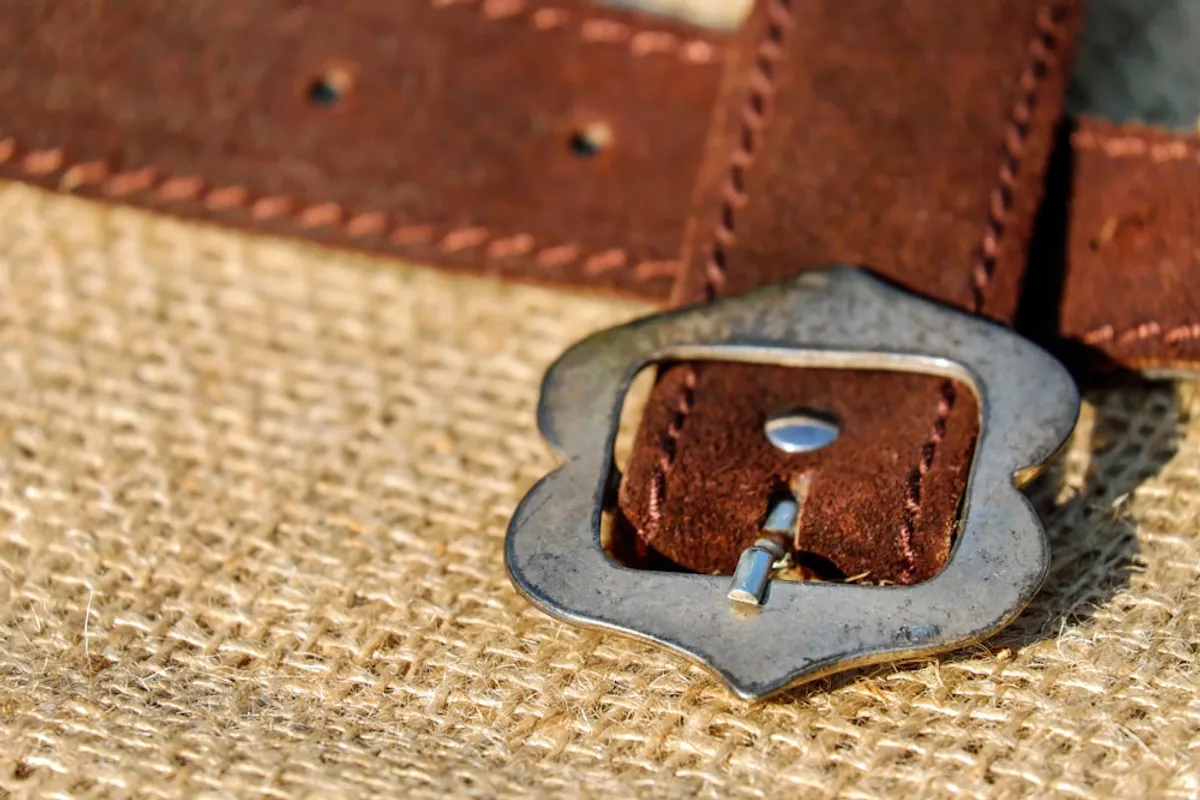
Rule of thumb: If a part touches the finished product or gets consumed making it, it has a line on your cost sheet. Edge paint, thread, and cement count even though no single piece "uses much."
The cleanest way to handle this is to treat each design like a recipe — a bill of materials where every component, down to the rivet, has a quantity and a unit cost. A belt isn't "leather + a buckle." It's a strip of a known length, one buckle, two rivets or a Chicago screw, a keeper, thread by the meter, and edge finish. When you've costed it that way once, you never have to guess again, and you can update the whole catalog in minutes when your hardware supplier raises prices. This is exactly the kind of per-component cost rollup that inventory tools like Ardent Seller are built to keep straight, so your "leather plus a vague handful of hardware" turns into an actual number.
Mistake 3: Not billing the hours your hands are actually on the bench
Saddle-stitching is meditative, satisfying, and brutally slow, and labor is one of the most routinely undervalued line items in leatherwork. A hand-stitched bifold can be two to three hours of stitching alone, never mind cutting, beveling, sanding, burnishing, dyeing, and assembly. Ask a leatherworker how long a piece took and the honest answer is usually "I stopped counting."
That's the problem. "I stopped counting" is a pricing strategy, and it's a bad one. If you spent four hours on a wallet and priced it so that — after materials, hardware, and fees — you cleared $30, you didn't make a $45 wallet. You made $7.50 an hour and called it a hobby with extra steps.
Consider Marcus — a composite of patterns common among early leatherworkers, not a specific person — who makes belts and wallets on the side. He prices his signature bifold at $45 and sells a respectable number of them. When he finally timed himself, the wallet was 3 hours and 40 minutes of hands-on work. His leather and hardware ran about $11. After Etsy and shipping took their bite on his online sales, he was netting roughly $26 on the piece — which works out to about $7 an hour for skilled handwork he'd spent two years getting good at. Marcus didn't have a sales problem. He had a "the price was set before anyone counted the hours" problem.
Rule of thumb: Decide what your hands-on hour is worth — a real number, not "whatever's left over" — and make sure every piece pays it after materials and fees. If it doesn't, the price is too low or the design takes too long. Both are fixable; pretending isn't.
The fix is to time your top three sellers, just once, with a stopwatch running only while you're actually working. Multiply by a target hourly rate you'd accept from anyone else, add your true material and hardware cost, then add your channel costs — marketplace fees, payment processing, and shipping, covered in full in Mistake 7. The number that comes out is your floor. You can charge above it; you should never charge below it.
Mistake 4: Charging one price across leathers that cost wildly different amounts
Not all leather costs the same, and your pricing shouldn't pretend it does. A basic chrome-tanned side and a side of a premium pull-up like Horween Chromexcel or an English bridle leather can differ by a factor of two or three per square foot. Exotics and specialty veg-tans go higher still. Yet plenty of makers set one "wallet price" and apply it whether they're cutting budget leather or the good stuff.
When you do that, one of two things is true: your premium-leather pieces are quietly unprofitable, or your budget-leather pieces are overpriced and not selling. Usually it's the first, because the pieces you're proudest of are the ones you made from the expensive hide.
Rule of thumb: Price by line, not by silhouette. The same wallet pattern in three leathers is three products at three prices, because it's three different material costs.
This is also a marketing gift, not just a cost-control move. "Standard," "premium," and "heritage" versions of the same design give customers a reason to trade up and give you a clean way to charge what the premium leather actually costs you. The customer who wants the Chromexcel wallet expects to pay more for it. Let them.
Mistake 5: Eating the cost of custom sizing, monograms, and the dreaded "small change"
Custom work is where leatherworkers go to lose money politely. The request sounds tiny — "Could you make it an inch longer?" or "Can you add my initials?" or "I just want it in green instead." Each one feels too small to charge for, so you don't, and then the piece takes 40% longer because you cut a one-off pattern, ran a test stamp on scrap to check the monogram spacing, and re-dyed twice to nail the green.
A single un-billed customization is a favor. A habit of un-billed customizations is a business model that pays you to do harder work for the same money. The personalization is often the reason the customer chose handmade over a factory wallet — which means it has real value to them, which means it's allowed to have a price.
Rule of thumb: Set a threshold. Standard options (your existing colors, your existing sizes) are free; anything that requires a new pattern, a new tool, a test piece, or extra back-and-forth has a named add-on fee quoted before you start cutting.
The friction this removes is mostly emotional. Quoting a monogram fee feels awkward exactly once. After that, it's just a line item, and the customers who balk at $8 for personalization were never going to be your good customers anyway.
Mistake 6: Forgetting that your tools wear out and your big machines have to pay for themselves
Most leatherworkers happily count the leather and forget the bench. But your strap cutter dulls, your pricking irons eventually need replacing, your edge bevelers get sharpened down, and that clicker press, skiving machine, or stitching machine you saved up for represents real money that has to come back out of the products it makes.
A $1,800 skiving machine isn't a one-time hit you absorb and forget. If it produces 1,500 pieces over its working life before it needs serious service, it's adding about $1.20 of cost to every single piece — quietly, whether you account for it or not. Hand tools are smaller but real: blades, irons, sandpaper, and burnishing supplies all wear, and replacing them is a cost of making product, not a personal expense.
Rule of thumb: Spread the cost of any tool over $100 across the pieces it will realistically make before it's replaced or rebuilt, and fold that per-piece amount into your cost. Small consumable tools just go in your overhead.
You don't need to obsess over this — a few cents here, a dollar there — but you do need it in the number. Tracking equipment as a depreciating asset rather than a forgotten one-time purchase is one of the less glamorous things a proper inventory and costing system does for you — there's a fuller walk-through in Equipment Depreciation for Small Makers — and it's the difference between "the machine paid for itself" being a feeling and being a fact.
Mistake 7: Pricing for materials and time, then forgetting the channel bite and the ruined-piece reserve
You've now costed the leather honestly, counted the hardware, billed your hours, priced by line, charged for custom work, and folded in your tools. You're close. Two things still stand between your price and your actual take-home.
The first is the channel bite. If you sell on a marketplace, the platform's transaction fee, payment processing, listing cost, and any offsite-ads commission come off the top, and shipping a heavy leather bag is not free. On Etsy, the transaction fee (6.5%), payment processing (roughly 3% plus a fixed per-order amount), and an Offsite Ads commission (12–15%, charged only on the sales Etsy refers from off-site) can together run 15–25% of the sale price as of mid-2026, so a $90 bag can give back $14 to $22 in fees alone before shipping even enters the picture — and rates change, so run your own numbers against Etsy's current fee schedule (opens in new tab). Pricing as if the sticker price is what lands in your account is how online leather sellers end up busier and no richer.
The second is the ruined-piece reserve, the one nobody wants to talk about. Sometimes you cut wrong. Sometimes the dye blotches on the final coat. Sometimes a rivet sets crooked on the last step of a finished bag and there's no saving it. That leather, hardware, and time are gone, and they're a normal, predictable cost of working in an unforgiving material — not a personal failing to be absorbed in silence.
Rule of thumb: Build a small loss reserve into every price — even 3–5% — so the occasional ruined piece is funded by the line instead of eating a good day's pay. The makers who survive aren't the ones who never waste a hide. They're the ones whose pricing already assumed they would.
Add the channel costs and the reserve on top of your materials-plus-labor floor, and the number you get is a price that actually pays you. It will probably be higher than what "felt about right" at the booth. That's not greed. That's the hide tax, finally showing up on the invoice instead of in your bank balance.
The wallet, repriced
Go back to Marcus, the belt-and-wallet maker from Mistake 3, and his $45 bifold (his numbers are illustrative, but the shape of the math is real). Real leather and hardware: about $11. Hands-on time: 3 hours 40 minutes, which at a target of $25 an hour (use whatever rate you've set for yourself) is roughly $92. Tool wear: about $1. A 4% loss reserve and the online channel bite on his Etsy sales: call it another $10 to $14 depending on where it sells. Even compressing his labor expectation hard, that wallet needs to clear well north of $45 to pay him like a craftsman instead of a volunteer.
That's an uncomfortable jump, and Marcus can't double his price overnight without losing customers. But now he can see the gap, which means he has real choices: raise the price in steps, build a faster version of the pattern, offer a premium line that carries better margin, or shift his market mix toward channels that don't take a bite. What he can't keep doing is pricing in the dark and wondering why skilled work keeps leaving him broke.
If you want to stop guessing, the move is to cost one design properly — leather at its true per-square-foot rate, every piece of hardware, your honest hours, your tools, your fees, your reserve — and let that one number recalibrate everything else. Tracking material lots, per-piece costs, and equipment in one place instead of in your head makes that recalibration something you do once and update as prices move, not a dreaded annual reckoning.
Start a free Ardent Seller account and cost your best seller this week. Worst case, you confirm you were charging enough all along. Best case, you find the afternoon's pay you've been handing out for free.
Related reading
- How to Calculate Leather Cost per Item — Mistake 1's 70% rule is the estimate; this replaces it with a count of the pattern sets your own sides actually yield, offcuts included.
- True Hourly Wage in a Handmade Business — The deeper version of Mistake 3: how to set an hourly rate that survives contact with materials, fees, and reality.
- Margin vs. Markup: The Pricing Math Mistake — The conversion error that makes a "healthy markup" quietly turn into a thin margin once the hide tax is counted.
- Equipment Depreciation for Small Makers — How to spread the cost of a clicker press or skiving machine across the pieces it makes, instead of pretending it was free.
Free resources
Two free downloads from the Ardent Workshop library that pair well with this post:
- Maker Hourly-Rate Pricing Calculator — Set your target hourly wage and your honest minutes per piece to find the labor cost your price needs to cover.
- Product Pricing Calculator — Build a per-piece cost from the ground up — leather, components, labor, and fees — so your floor price stops being a guess.
This article is for general educational purposes and reflects common leatherworking and pricing practices, not financial advice. Costs, hide yields, and fees vary by supplier, leather type, and sales channel — run the numbers for your own materials and market before setting prices.