
The first genuinely hot Saturday arrives without warning. By eleven the air smells like waffle cones and warm pavement, the chest freezer is humming at a pitch you only hear in July, and there is a line out the door that wasn't there last week. Somebody orders a triple scoop of the pistachio you only made two tubs of. You smile, you scoop, and a small voice in the back of your head says: we are not ready for this.
If you've run an ice cream or gelato business through even one summer, you know that the season doesn't ease in. It lands. And the difference between a summer that funds your whole year and a summer that just exhausts you is almost never the recipes — it's whether the work behind the counter was planned in the quiet weeks before the line showed up.
This is that plan. Not a vague "get ready for summer" pep talk, but a calendar: what to do in late May, what the first heat wave will demand, how to hold the line through the 90-day grind of June, July, and August, and how to close the season in September with money left over instead of just relief. You don't have to do all of it. But if you walk the next four months with even half of this in hand, the hot Saturdays will feel like a business running well instead of a fire you're barely keeping ahead of.
Meet Renata — a composite character, not one real shop. She runs a gelato cart and a tiny three-stool shop in a beach town, the kind of place where the vast majority of the year's revenue arrives between Memorial Day and Labor Day. We'll follow her through the season, because the calendar is easier to feel when there's someone walking it with you.
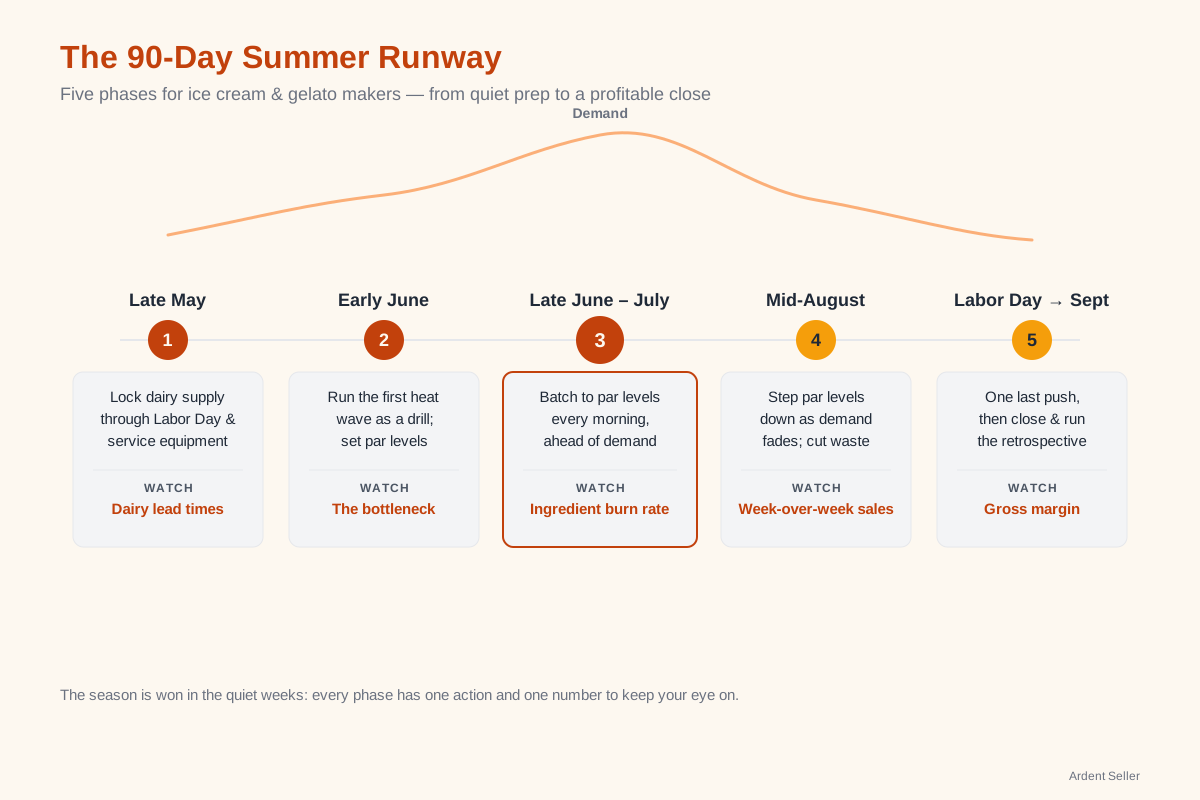
The five phases below, at a glance — we'll walk each one in turn, starting with the quiet weeks you're in right now.
Late May: the ten quiet days before it gets loud
Right now — this week — is the most valuable stretch of your entire summer, and it's the one that feels the least urgent. Nothing is on fire. The line is short. It is tempting to coast.
Don't. The work you do in these ten days is the work you will not have time to do once the season lands. Renata calls late May her "boring gold" week, because every boring thing she sets up now buys her a calmer July.
Start with supply, because dairy is both your biggest cost and your least controllable one. Cream and milk are exactly the inputs that summer demand can push up, and the makers who get hurt are the ones who find out at the worst possible moment — mid-July, mid-batch, with a line forming. Call your dairy supplier now. Ask two questions: can you lock a price or a standing weekly volume through Labor Day, and what's the realistic lead time when you need to bump an order up fast? A supplier who knows your peak is coming will hold cream for you. A supplier hearing about it for the first time on a Friday in July will not.
Then look backward before you look forward. Your single best forecasting tool is last summer's own numbers — how many gallons of mix you actually went through, which flavors sold out and which sat, what your worst stockout cost you in walk-aways. If those numbers live only in your memory, this is the summer to change that, because memory rounds everything toward "it was fine."
If you only do one thing this week: call your dairy supplier and have the lock-in conversation. Everything else on this list can slip a few days. That one can't.
The late-May lock-in checklist:
- Confirm dairy supply through Labor Day. Lock a price or standing volume if you can; at minimum, confirm peak-season lead times in writing.
- Line up a backup dairy source. One phone number you can call when your primary can't deliver. You may never use it. The summer you need it, it's worth a season's profit.
- Pull last year's flush-month numbers. Gallons of mix used, top five flavors by volume, any stockouts. If you don't have them, start logging this week so next May is easier.
- Inventory your packaging now. Cups, cones, spoons, pint containers, lids. Count what you have, estimate your weekly burn at peak, and order the long-lead items before everyone else does.
- Service the equipment while it's slow. Batch freezer, dipping cabinet, blast chiller. A compressor that dies in July dies on your busiest day. Get the maintenance call in now.
- Decide your peak-season menu. Lock your core flavors. Every flavor you carry is a SKU — a separately tracked product — you have to forecast, batch, and store, and summer is when a bloated menu quietly costs you.
Early June: the first heat wave is a fire drill — treat it like one
The first real heat wave of June is a gift disguised as chaos. It will stress-test everything, and it will do it before the stakes are at their highest. The makers who pay attention in early June stop guessing; the makers who just survive it learn nothing and repeat it in July.
When that first hot stretch hits, watch the things that break. Did you run out of a flavor by 2 p.m.? Did the dipping cabinet struggle to keep temperature when the door kept opening? Did one person spend the whole rush doing nothing but washing scoops? Each of those is a data point, and June is cheap to learn in.
Renata's first June heat wave taught her something she'd never have caught in a spreadsheet: her bottleneck wasn't production, it was hands. She had enough gelato. What she didn't have was a second person to ring up customers while she scooped, so the line crawled and three people walked. Her fix cost her almost nothing — she shifted one shift so a helper overlapped the lunch rush — but she'd never have seen the problem without a hot day to reveal it.
This is also the month to build your batch rhythm. Peak production isn't about making more in one heroic session; it's about making the right amount, consistently, ahead of demand. Figure out your lead time — how many days between "I decide to make pistachio" and "pistachio is hard-frozen and ready to scoop" — and start batching to a par level instead of to panic. A simple par level is just a floor: never let mint chip drop below four tubs. When it hits the floor, you batch. No drama, no 11 p.m. emergency runs.
Rule of thumb: if you're making a flavor because you just ran out of it, you're already a day behind. Batch to the floor, not to the empty freezer.
The early-June stress-test checklist:
- Run the first heat wave as a live drill. Note every stockout, every bottleneck, every customer who left. Write it down the same day, while it's fresh.
- Find your real bottleneck. Production, freezer capacity, or hands at the counter? It's usually not the one you assumed. Fix the cheapest one first.
- Set par levels for your core flavors. A minimum tub count per flavor that triggers a batch. This single habit prevents most peak-season stockouts.
- Measure your batch-to-scoop lead time. Know how many days "decide" to "ready" actually takes, including hardening. You can't batch ahead if you don't know how far ahead is far enough.
- Test your storage ceiling. How many tubs can you actually hold at proper temperature? If peak demand needs more than your freezer holds, you need to know in June, not August.

Late June into July: peak, and the honest grind of the 90 days
Here's the part nobody puts on the cheerful summer-business Instagram post: the peak is a grind. July is National Ice Cream Month — a label that traces back to President Reagan's 1984 proclamation (opens in new tab) naming July 1984 National Ice Cream Month, and one the public still takes seriously every summer. Demand will be the highest it gets all year, every week, for weeks. That's wonderful for the bank account and brutal on the body.
So the goal in peak season is not heroics. It's sustainability. The makers who burn out in July are almost always the ones who tried to white-knuckle it — making every batch reactively, working every shift, holding the whole operation in their head. The makers who make it through are the ones who, back in May and June, turned the operation into a system that doesn't depend on them being superhuman.
Production during peak is about staying ahead, not catching up. If you set par levels in June, this is where they earn their keep: you walk in, you check what's below the floor, you batch that, you're done thinking. No agonizing over what to make. The system tells you. Renata batches every morning before the cart opens — a calm 90 minutes against par levels — and by the time the cart rolls out, the day's already won. The afternoon rush can't surprise her because she made tomorrow's inventory this morning.
Keep one eye on ingredients, especially the volatile ones. Peak season is exactly when a dairy delivery slips, a fruit supplier runs short on the strawberries your best seller needs, or you blow through cups faster than you planned. This is where tracking earns its keep: knowing your real usage rate means you reorder before you're empty, not after. This is the season Renata finally moved her batches and ingredient counts out of a notebook and into Ardent Seller, so that "how much cream do I have and how fast am I going through it" stopped being a question she had to walk to the freezer to answer. When every batch you pour draws its ingredients down automatically, the reorder point comes to you instead of catching you out.
And protect the person running it all — usually you. A peak season that wrecks your health or your relationships isn't a win, no matter what the revenue says. Build one real day off into each week and defend it. Cross-train at least one other person so the business can run a shift without you. These aren't soft suggestions; they're what keeps you standing in August.
If you only do one thing this month: batch to par levels every morning before you open, not reactively when you run out. It's the single habit that turns peak season from chaos into rhythm.
The peak-season operating checklist:
- Batch to par levels daily. Same time every day, against your floors. Make it boring. Boring is the goal.
- Track ingredient usage in real time. Cream, milk, sugar, signature mix-ins, and packaging. Reorder against your actual burn rate, not a guess.
- Watch your highest-volatility input. Whichever ingredient is most likely to slip — usually dairy or a seasonal fruit. Keep a slightly deeper buffer on that one alone.
- Hold a flavor in reserve. When a core flavor sells out mid-day, having one pre-batched backup tub turns a stockout into a non-event.
- Defend one day off a week. Put it on the calendar and treat it as unmovable as a wholesale deadline.
- Cross-train one person. The business should survive a shift without you. If it can't, that's the most urgent fix you have.
Mid-August: the line gets shorter, and that's a trap
Somewhere in mid-to-late August, the line starts thinning. The first cool evening arrives. School-supply ads creep onto the radio. And this is where a surprising number of ice cream makers lose the profit they spent all summer earning — by failing to notice the season is turning and over-producing into a falling market.
The instinct after ten weeks of "make more, make more" is hard to switch off. You're in the rhythm. You batch the same volumes you batched in mid-July. But demand is sliding now, and ice cream you make in late August that doesn't sell isn't an asset — it's cream and sugar and labor sitting in a freezer, slowly losing quality, that you will eventually scoop into a markdown bin or throw away. Every tub you over-make in the fade is margin you're handing back.
So mid-August is when you trust your numbers over your habits. Pull your week-over-week sales. If volume is sliding, slide your par levels down with it. It feels wrong — like you're giving up on the summer — but you're not. You're protecting the money. Renata, for instance, cuts her par levels by roughly a fifth — an illustrative number, not a benchmark; yours depends on how fast your own sales are sliding — around the third week of August, and tightens her menu back toward her reliable sellers, letting the experimental flavors retire until next year. She'd rather sell out of a flavor at 6 p.m. on a cooling evening than dump two tubs of it on Sunday.
Rule of thumb: in the fade, a small, controlled stockout late in the day is cheaper than a tub you throw out. Aim to just run dry, not to never run dry.
The mid-August transition checklist:
- Read your week-over-week sales honestly. When volume slides two weeks running, the fade has started. Believe the numbers, not the habit.
- Step par levels down. Lower your floors as demand drops so you stop batching summer volumes into a falling market.
- Tighten the menu back to reliable sellers. Retire the experimental flavors. Fewer SKUs means tighter forecasting exactly when waste gets expensive.
- Track waste deliberately. What you throw out or mark down in the fade is the clearest signal of how well you read the turn — and the number that tells you how to do better next year.
- Start the supply taper. Wind your standing dairy and packaging orders down in step with demand so you're not left with a walk-in full of cream in September.
Labor Day weekend: the last big push
Labor Day weekend is the season's encore — one final surge before the long quiet. Treat it like the peak it is. Staff it like July, stock it like July, and then, the moment it's over, stop. The makers who keep one foot in summer mode through mid-September are the ones who end up composting cream.
This is a great weekend to clear inventory deliberately. If you've got flavors you don't intend to carry into fall, this is the time to feature them, bundle them, run the end-of-summer special. Better to move that pistachio at a slim margin over Labor Day than to store it into a season where nobody's buying it. Renata runs a "last call" board all weekend — the experimental scoops she retired back in August, out one final time — and by Tuesday her freezer is down to the core flavors she actually wants to carry into the quiet season.
The Labor Day checklist:
- Staff and stock for one more peak. It's the last big revenue weekend — don't under-resource it out of late-season fatigue.
- Plan a clearance push. Feature or bundle the flavors you won't carry into fall. Move inventory while there's still demand to move it.
- Place your final summer supply order — small. Just enough to clear the weekend. Anything left over after Monday is a cost, not a cushion.
Mid-September: the retrospective that funds next summer
When the cart's parked and the freezer's calm again, you'll be tempted to collapse. Earn one quiet afternoon first — because the single most valuable thing you can do for next summer happens in the two weeks right after this one ends, while it's all still fresh.
Sit down with the season's numbers and write the honest after-action review. Not "it was busy and tiring," but the specifics: which flavors sold out and which you over-made, what your dairy actually cost versus what you'd budgeted, how many gallons of mix you ran through total, which week was the true peak, what your worst stockout day cost you, and how much you threw away in the August fade. Renata keeps a single running document she calls "Notes to Next-May-Renata," and every entry is a gift to the version of herself who'll be standing in those quiet late-May days again, wondering what to lock in.
This is also where the season's real number lives — the one worth more than total revenue. Gross margin on your flush-season sales tells you whether all that volume actually paid. It's entirely possible to have your busiest summer ever and barely clear more than a slower, tighter one, because rising dairy costs and August waste quietly ate the difference. If your batches and costs were tracked through the season, that number is sitting there waiting for you. If they weren't, the discipline you wished you'd had all summer starts now, with next year in mind.
If you only do one thing in September: write down the three things that broke this summer and the three flavors you over-made. Next May, that single note will be worth more than any forecast.
The end-of-season closeout checklist:
- Write the after-action review within two weeks. While it's fresh. Specifics, not feelings.
- Calculate your true peak-season gross margin. Revenue minus the real cost of what you sold. This is the number that tells you whether the summer worked.
- Tally your fade-season waste. What you threw out or marked down. It's your scorecard for how well you read the turn.
- Save next year's forecast inputs. Total mix used, top flavors, peak week, worst stockout. Drop them somewhere you'll find them next May.
- Note your equipment's summer. Anything that struggled under load is a winter repair or replacement — not a next-July emergency.
The season is won in the quiet weeks
Here's the thing it took Renata three summers to believe: a good peak season doesn't feel heroic. It feels almost calm. The line is still out the door and your feet still ache by closing, but the panic is gone — because the cream is locked in, the par levels are doing the thinking, and you made tomorrow's inventory this morning. That calm isn't a personality trait. It's the payoff of decisions made in the quiet weeks, when nothing was on fire and it would have been so easy to coast.
You're standing in those quiet weeks right now. The first hot Saturday is coming whether you're ready or not. The only question is whether it lands on a business that planned for it or one that's improvising. Pick three things off the late-May list and do them this week. Future-you, scooping pistachio at noon in July, will be grateful.
Track your batches, ingredient counts, and per-flavor costs through the grind instead of in a notebook you never have time to update: start a free Ardent Seller account before the season lands, and walk into your 90 busiest days knowing your numbers are keeping up with you.
Related reading
- Ice Cream Production Costs & Batch Tracking — The cost-and-batch foundation beneath this calendar: dairy volatility, overrun, and what a tub actually costs to make.
- Cash Flow for Seasonal Sellers: Surviving the Slow Months — How to make a summer-heavy business carry you through a quiet winter without panic.
- Reorder Points & Par Levels for Makers — The usage-rate and safety-stock math behind the par levels this playbook leans on so heavily.
Free resources
Three free tools to put this playbook to work:
- Small-Batch Production Planning Playbook — Turn the par-level and batch-rhythm habits in this post into a repeatable weekly production plan for peak season.
- Monthly Inventory Count Sheet — A printable count sheet to walk your freezer and dry storage before the season lands and again during the August taper.
- End-of-Month Closeout Checklist — A structured way to run the September after-action review and capture next year's forecast inputs while they're fresh.
This article is provided for educational purposes only and does not constitute financial, tax, or business advice. Cost structures, pricing examples, and margin figures are illustrative and will vary by your specific circumstances. Consult a qualified accountant or small-business advisor before making financial decisions based on this content.