Mushroom Substrate & Biological Efficiency Calculator
Biological efficiency (BE) is the commercial mushroom industry's standard yield metric: fresh mushroom weight ÷ dry substrate weight × 100. This calculator runs the BE math, the cost math, and the flush-distribution math in one place.
Pick a species (oyster, shiitake, lion's mane, etc.), a substrate (master's mix, straw, supplemented sawdust), and a block weight. The tool returns expected yield, flush distribution, total cost per block, and (with your wholesale + retail prices) profit per block and per cycle.
Educational tool. BE ranges are published commercial averages (Stamets 2000; FreshCap; PMC10456065). Real yields vary by strain, hydration, sterility, and pinning trigger. Measure your own BE per crop and use the override.
Mushroom Substrate & BE Calculator
Your block
Pick species, substrate, and block weight. Yield + cost + revenue compute on the right.
Longer incubation (60–90 days).
Industry standard for shiitake, king oyster, lion's mane. Requires sterilization.
5–10% spawn rate × $4–8/lb commercial grain spawn = typically $2–5/block.
Steam, electricity, room rent, depreciation per block.
Pricing (optional)
How many blocks you fruit per cycle (typically monthly for oyster, 6-week for shiitake).
Block economics
Yield, cost, and revenue for one block at the configured BE.
Cost per block
- Substrate (5.00 lb × $0.50/lb)
- $2.50
- Spawn
- $3.00
- Bag + supplies
- $0.50
- Labor (8 min × $22.00/hr)
- $2.93
- Overhead (steam, electricity, room)
- $0.75
- Total cost
- $9.68
Revenue scenarios per block
- Wholesale (3.25 lb × $8.00/lb)
- $26.00
- Retail (3.25 lb × $16.00/lb)
- $52.00
- Wholesale profit
- $16.32
- Retail profit
- $42.32
Flush distribution
| Flush | % of total | Yield |
|---|---|---|
| Flush 1 | 45% | 1.46 lb |
| Flush 2 | 28% | 14.6 oz |
| Flush 3 | 17% | 8.8 oz |
| Flush 4 | 10% | 5.2 oz |
Flush distribution is a planning heuristic, not a published benchmark — nobody publishes authoritative flush splits, and the sources that quantify it disagree. Real numbers vary by species, hydration, and pinning trigger, so log your own.
Biological efficiency — what the number means
BE = (fresh mushroom weight / dry substrate weight) × 100. This is the standard yield metric in commercial mushroom cultivation, first formalized by Paul Stamets in The Mushroom Cultivator (1983) and Growing Gourmet and Medicinal Mushrooms (2000).
A 5 lb (2.27 kg) dry block of master's mix that produces 5 lb of fresh shiitake has a BE of 100% — meaning the mushrooms weighed as much as the dry substrate. Oyster mushrooms routinely hit 80–120% BE because they're aggressive colonizers and efficient at converting cellulose. Shiitake hovers around 50–75% BE because it's a slower, more deliberate fruiter that needs sterility and longer incubation. Reishi sits at 25–40% BE because it's grown for medicinal compounds, not gross weight.
The number you publish on a marketing page should be your verified average across at least 20 blocks, not your best single flush. Hobby calculators often quote first-flush yield, which inflates BE by ~2× compared to lifetime BE across all flushes.
Flush distribution — when the yield arrives
Most species produce yield in 3–4 distinct flushes. FreshCap's commercial-grower averages (which match Stamets's earlier published data):
- Flush 1: 45% of total yield — strongest, healthiest pins
- Flush 2: 28% — drops off, especially in oyster
- Flush 3: 17% — often the last one most commercial growers harvest
- Flush 4+: ~10% combined — diminishing returns; most operations toss the block here
Shiitake distribution is flatter (40/30/20/10) and lion's mane often produces just two strong flushes with negligible tails. Oyster mushrooms can produce 5+ flushes from a single block in ideal conditions, but the labor of monitoring + spraying + harvesting flush 4 and 5 rarely pays back.
Substrate economics
The four common formulas and their economic trade-offs:
- Master's Mix (50/50 hardwood + soy hulls), ~$0.50/lb dry: Industry standard for shiitake, king oyster, lion's mane. Requires sterilization (pressure cooker or autoclave). Best yields. Used by 80%+ of commercial gourmet operations.
- Pasteurized straw, ~$0.20/lb dry: Cheapest substrate. Pasteurization (cooking at 160–180°F) is sufficient — no sterilization. Best for oyster mushrooms. Lower BE than master's mix but the cost saving more than compensates.
- Supplemented hardwood sawdust, ~$0.35/lb dry: Bran-supplemented (5–20% wheat bran). Sterilization required. Used for shiitake and lion's mane when soy hulls aren't available.
- Coco coir + vermiculite + gypsum (CVG), ~$0.75/lb dry: Common hobby mix. Holds water well. Expensive vs. dedicated commercial substrates.
Frequently asked questions
What is biological efficiency in mushroom growing?
Biological efficiency (BE) is the ratio of fresh mushroom weight to dry substrate weight, expressed as a percentage. BE = (fresh weight ÷ dry weight) × 100. A 5 lb dry block yielding 5 lb of fresh mushrooms has a 100% BE. Industry-typical ranges: oyster 80–120%, shiitake 50–75%, lion's mane 40–80%, reishi 25–40%.
How much yield can I expect from a 5 lb shiitake block?
A 5 lb dry shiitake block on master's mix at typical 65% BE yields about 3.25 lb of fresh shiitake across all flushes. First flush ~1.5 lb, second ~0.9 lb, third ~0.5 lb, tail ~0.3 lb. Yields vary by strain (Wide Range vs. Cold Weather strain) and pinning protocol.
What's a typical wholesale price for shiitake mushrooms?
US wholesale shiitake to restaurants and farmers' markets: $8–$14 per pound. Retail farmers' market: $14–$20/lb. Specialty grocery (Whole Foods etc.): $10–$16/lb wholesale. Lion's mane and king oyster command premiums of $15–$25/lb wholesale due to scarcity.
Is master's mix worth it over plain straw for oyster?
For oyster mushrooms specifically, straw is usually the right call — oyster aggressively colonizes pasteurized straw at ~$0.20/lb dry, and the BE difference (perhaps 90% on straw vs. 105% on master's mix) doesn't justify the 2.5× cost premium. Master's mix wins for shiitake, lion's mane, and king oyster where straw won't fruit well.
What's the labor breakdown per block?
Mixing + bagging + sterilizing: ~5–10 minutes per block at scale (batch sterilization in a large pressure cooker covers 20–30 blocks per cycle). Inoculation: 2–3 minutes per block. Harvesting + packing: 5–10 minutes per flush. Total handling time across the full lifecycle: 20–30 minutes per block at small scale, 8–15 minutes at scale with proper equipment.
Track real BE across every block, every flush
The calculator estimates yield from published BE averages. Ardent Seller tracks every real block — input weight, strain, substrate batch, sterilization run, fruiting room — and computes your actual BE per crop. Anomalies (a low-BE batch from contaminated grain spawn, a high-BE block from a new strain) surface before they cost you a month of cycles.
Sources & verification
- Stamets, P. (2000). Growing Gourmet and Medicinal Mushrooms. Ten Speed Press. (Foundational reference for BE methodology and species ranges.)
- FreshCap Mushrooms — Mushroom Yield and Biological Efficiency (opens in new tab)
- PMC10456065 — Substrate Optimization for Shiitake Mushroom Production (peer-reviewed) (opens in new tab)
- Czech Mycology — Evaluation of Yield, Biological Efficiency and Proximate Composition (peer-reviewed) (opens in new tab)
- North Spore — Commercial grain spawn supplier (spawn cost reference) (opens in new tab)
- Field & Forest Products — Commercial substrate supplier (cost reference) (opens in new tab)
BE ranges and flush distributions are published commercial-grower averages. Individual strains and growing conditions cause significant variance. Always measure your own crop-by-crop BE for accurate per-block economics. Data current as of 2026-05-18.
Related resources
Product Pricing Calculator (Live)
Live web version of our Excel pricing calculator. Materials + labor + packaging + platform fees → defensible retail at your target margin, with batch-pricing tiers.
Recipe Scaling & Batch Calculator
A working Excel recipe scaler — enter a base recipe, set a target yield, and every ingredient auto-scales with unit conversions (oz/g/lb/ml/cups). Plus a batch-cost tab and a unit-conversion reference.
Inventory Tracker Starter Kit
A working Excel inventory tracker for makers — raw materials, finished goods, packaging, and a purchase log. Reorder thresholds and a status column do the math; conditional formatting flashes red when you are below the line.
Small-Batch Production Planning Playbook
A printable six-page playbook for handmade-goods producers — five planning principles, the demand-driven batch-sizing formula, and four worksheets for sizing, run logging, weekly WIP, and post-run audit.
From the blog
Articles that dig deeper into the topics this tool covers.
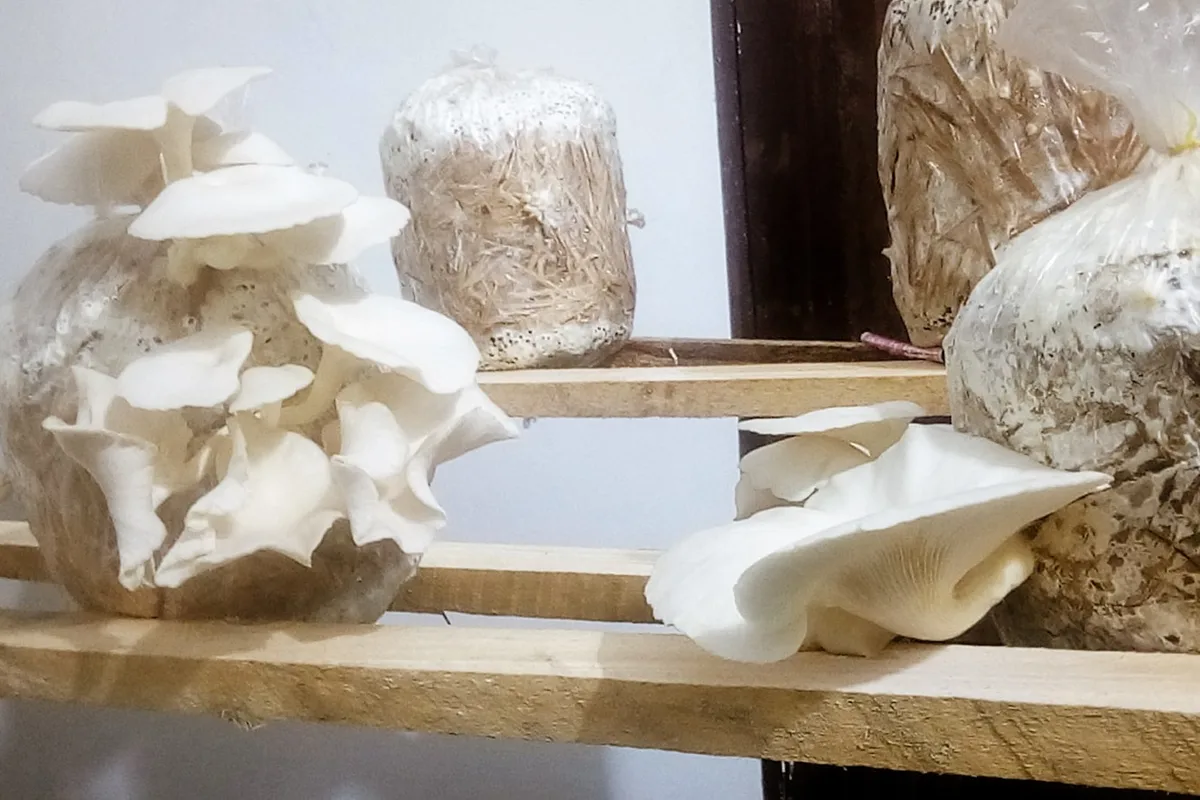
Mushroom Grower's Biological Efficiency: The Percentage That Decides Whether You Make Money
Biological efficiency (BE) is the single number that determines whether your mushroom farm is profitable. Here's what the percentage actually measures, what 'good' looks like by species, the three levers that move it, and how to compute your own — with worked examples across oyster, lion's mane, shiitake, king oyster, wine cap, and reishi.
Batch Tracking for Food Sellers: Why Every Jar, Bag, and Box Needs a Paper Trail
Batch tracking protects your food business from recall disasters, builds customer trust, and keeps you ahead of tightening regulations. Learn how to set up a simple lot tracking system that works.
Recipe Costing 101: How to Calculate the True Cost of Every Product You Make
Learn how to calculate the real cost of every product you make — from raw ingredients to labor and overhead — so you can price with confidence and protect your profit margins.
Seed to Sale: How Small Farms and Homesteads Can Track Crop Costs, Harvest Yields, and True Profit Per Bed
Most market gardeners price their produce by looking at what the farm down the road charges. That is not pricing — that is guessing with extra steps. This guide breaks down how to track every cost from seed to sale, calculate what each bed actually earns you, and stop subsidizing your least profitable crops with your best ones.