Laser & CNC Job Cost Calculator
Industrial calculators (LaserCalcPro, A-Laser) target fab shops with $1,000+ jobs. This one targets the Etsy laser hobbyist running a Glowforge or xTool on $15–$60 personalized goods.
Enter your machine, materials, runtime, setup, and post-processing time. The tool computes machine-hour cost (depreciation + electricity), labor, design amortization across expected re-sells, and platform fees — then solves for a defensible quote at your target margin.
Educational tool only. Machine presets are typical capital costs and power draws for the named class; substitute your actual machine specs for accurate output.
Laser/CNC Job Cost Calculator
Your job
Enter materials, time, and your machine. The right-hand panel shows a defensible quote.
Picking a preset fills in typical wattage, capital cost, and life-years below — adjust if yours differs.
Used to amortize the machine cost into a per-hour depreciation charge. Estimate honestly — overstating hours undersells depreciation.
Stock used, with offcut allowance. 1/8" basswood: ~$0.05/in². Anodized aluminum: ~$0.30/in². Leatherette: ~$0.10/in².
Setup = file prep + jig alignment. Run = machine actually cutting. Finishing = sanding, masking removal, paint, packaging.
One-time design time amortized across the units you expect to sell of this SKU. 1 = custom one-off; 50+ = catalog product.
Etsy ~9.5%. Own site ~2.9%.
Quote breakdown
Below is what to charge to clear your target margin after all costs and fees.
Per-job cost stack
- Material
- $2.50
- Machine time (20m × $0.65/hr)
- $0.22
- Labor (13m × $28.00/hr)
- $6.07
- Design amortization (2h ÷ 20)
- $2.80
- Platform fee (9.5%)
- $2.72
- True cost / job
- $14.30
Machine hour cost
- Depreciation ($2,500.00 ÷ 5yr ÷ 1000hr)
- $0.50/hr
- Electricity (800W × $0.19/kWh)
- $0.15/hr
- Total per machine-hour
- $0.65/hr
How experienced laser shops actually price jobs
The most-cited industry rule for craft laser engraving is $1–$3 per minute of run time for diode and CO2 lasers, with established shops charging $60–$120 per hour. That's a useful sanity check but it hides the math behind machine-hour cost: depreciation + electricity + maintenance.
This calculator unpacks the per-minute / per-hour rate into its real components so you can defend it to a customer who pushes back. A $2,500 CO2 laser running 1,000 hours/year over 5 years carries $0.50/hour of straight-line depreciation. Add 0.8 kW × $0.19/kWh = $0.15/hour electricity, and your true machine-hour cost is $0.65 — before labor, before design, before profit.
The line item most hobbyists skip is design amortization. Hours of CAD work that go into a new SKU should divide across how many you expect to sell. A 2-hour design for a custom one-off carries the full $40 (at $20/hour). The same 2-hour design for an SKU you'll sell 50 times carries $0.80 per unit — a different conversation entirely.
Frequently asked questions
How much should I charge per minute for laser engraving?
$1–$3 per minute is the maker-shop standard, with $60–$120/hour for established shops doing custom commissioned work. The number depends on machine class (diode < CO2 < fiber), region, and customer segment. The calculator's machine-hour cost gives you the floor (depreciation + electricity); add labor and target margin on top.
Should I include electricity in the price?
Yes, but it's a small line item. A 20W-class diode drawing ~0.2 kW at full cut costs 0.2 × $0.19 = $0.038/hour. A 100W CO2 pulling 1.5 kW costs $0.285/hour. Most laser-shop pricing math under-counts depreciation (because it feels free until the tube fails) and over-emphasizes electricity (because it's visible on the utility bill).
How do I handle setup time versus run time?
Charge labor rate (your hourly) for setup and post-processing, not machine-hour cost. The machine isn't running, so depreciation isn't accruing. The calculator separates them so the math is correct: machine time = depreciation + electricity, labor time = hourly rate.
What's the typical margin for an Etsy laser shop?
40–60% is healthy for catalog products. 60–70% is achievable for custom commissioned one-offs (where you can't compete on price anyway). Below 30% means you're working for free after Etsy takes its 9.5% + $0.45.
How should I amortize a 1-time design fee across multiple units?
Divide design hours × hourly rate by your honest expected re-sell count. For evergreen catalog SKUs, 20–50 is realistic. For seasonal one-offs, use 1–5. The calculator surfaces this as "Design amortization" so you can see how aggressive your assumption is — and adjust if you're not actually re-selling that many.
Track machine wear across every job, automatically
Ardent Seller's equipment tracker logs every laser hour against the machine that ran it, computes straight-line depreciation continuously, and rolls per-job machine cost into your product recipes. The calculator's math, but always live across the catalog.
Sources & verification
- OneLaser — Laser Engraving Pricing: Smart Guide to Profitable Quotes (opens in new tab)
- OMTech — How Much Should You Charge for Laser Engraving? (opens in new tab)
- The Maker's Chest — Laser Engraving Service Pricing (opens in new tab)
- Creality Falcon — Laser Engraving Cost Breakdown 2026 (opens in new tab)
- U.S. EIA — Average Retail Electricity Prices (opens in new tab)
Sources current as of 2026-05-18. Electricity rates vary 2× between US states and 10× internationally — replace the default with your actual utility rate for accuracy.
Related resources
Product Pricing Calculator (Live)
Live web version of our Excel pricing calculator. Materials + labor + packaging + platform fees → defensible retail at your target margin, with batch-pricing tiers.
Maker Hourly-Rate Pricing Calculator
Pick a target hourly rate, enter your materials, hands-on minutes per unit, and platform fees — the calculator returns the minimum price that actually pays you that rate after fees and costs. Maker-business specific, not a "freelance day rate" tool.
Should I Raise My Prices? Decision Tool
A live web tool that runs the +10% / +20% / +30% price-hike math for one product — including the volume drop that comes with each — and tells you which scenario clears the most monthly profit.
Inventory Tracker Starter Kit
A working Excel inventory tracker for makers — raw materials, finished goods, packaging, and a purchase log. Reorder thresholds and a status column do the math; conditional formatting flashes red when you are below the line.
From the blog
Articles that dig deeper into the topics this tool covers.
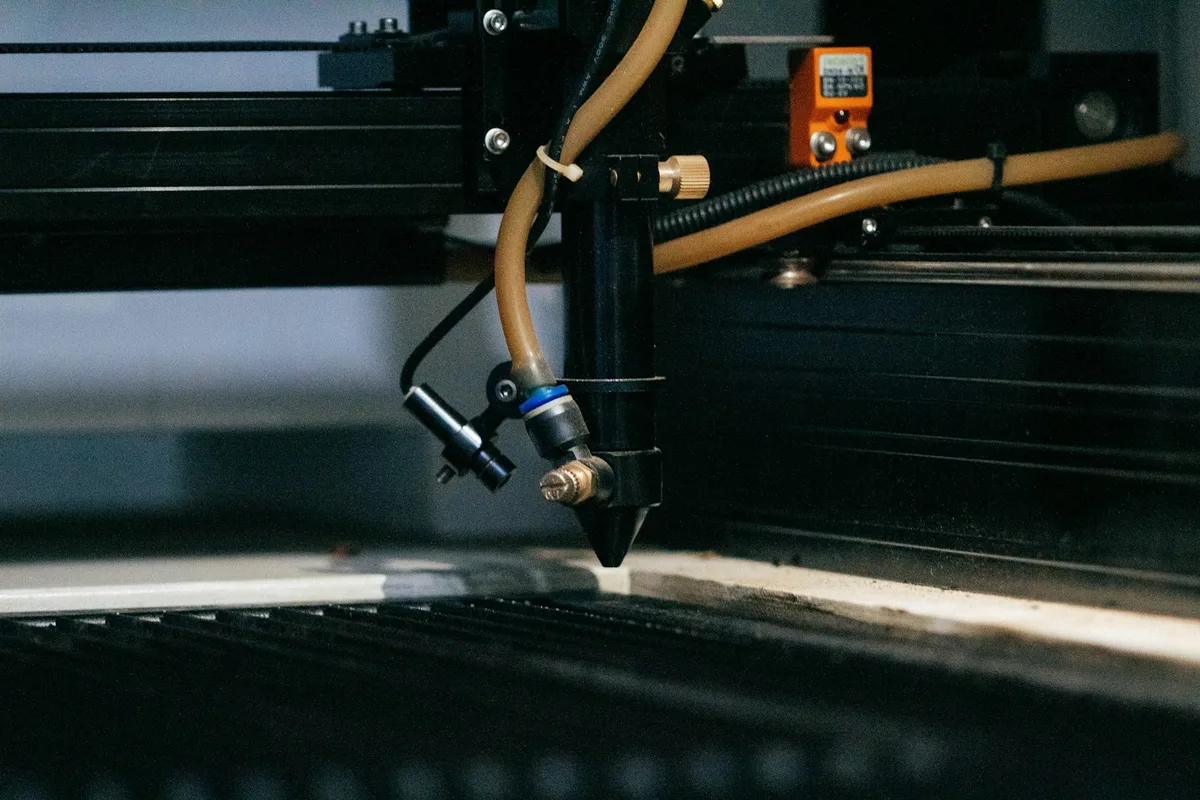
Laser & CNC Job Costing: A Cost-Stack Teardown for the Hidden Per-Part Math
A line-by-line walkthrough of what it actually costs to make a single laser-engraved or CNC-cut product — material, machine-hour cost, labor, design amortization, consumables, packaging, and platform fees — built around an annotated walnut-sign quote with numbered callouts.
How to Track Blank Inventory for a Laser Engraving Business
A step-by-step system for tracking tumblers, coasters, cutting boards and acrylic sheets in a laser engraving shop: one record per blank you can run out of, sheet stock by area, blanks tied to finished products, ruined blanks logged at cost, and reorder points set per size and color.
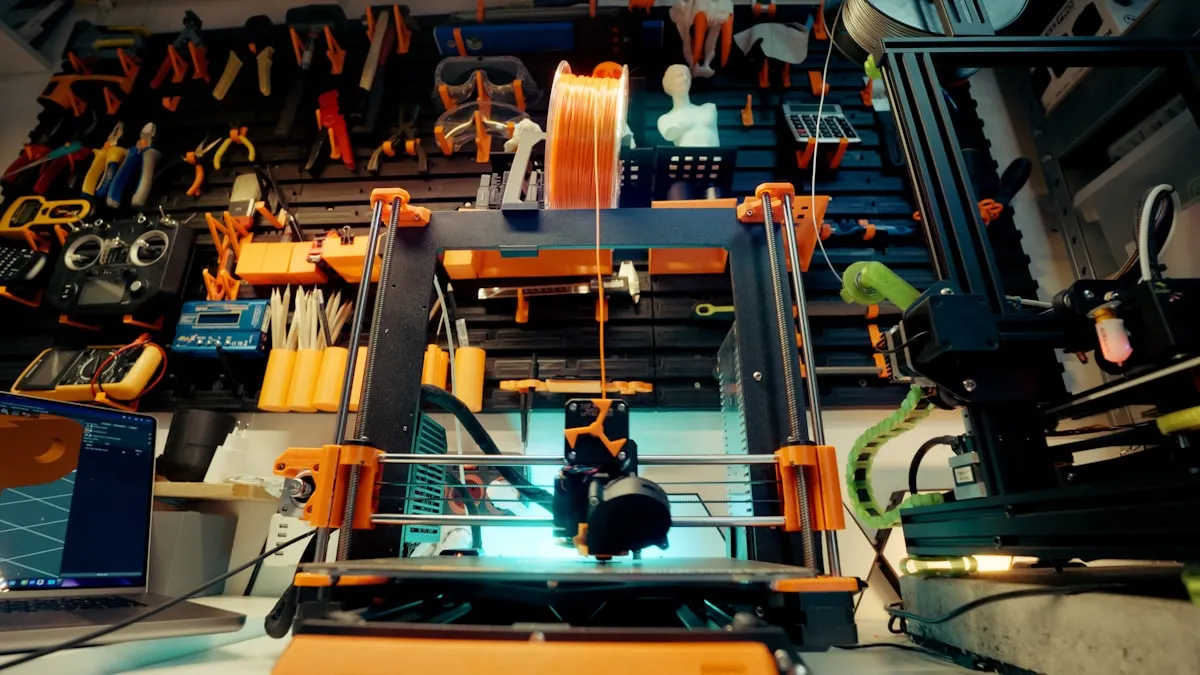
3D Printing Cost Per Part: Filament, Electricity, Failures, and the Math Most Makers Skip
Most 3D printing sellers calculate cost per part by weighing their print and multiplying by the filament price per gram. That often covers less than half of the actual cost — sometimes far less if post-processing labor is involved. Here is how to account for the rest — electricity, wear parts, failed prints, post-processing time, and machine depreciation — so you can price for real profit.

Equipment Depreciation for Small Makers: Stop Ignoring Your Biggest Hidden Cost
Your oven, kiln, mixer, or 3D printer loses value every year — and if you are not accounting for it, you are underpricing your products and overpaying on taxes. Learn how depreciation works and how to use it.