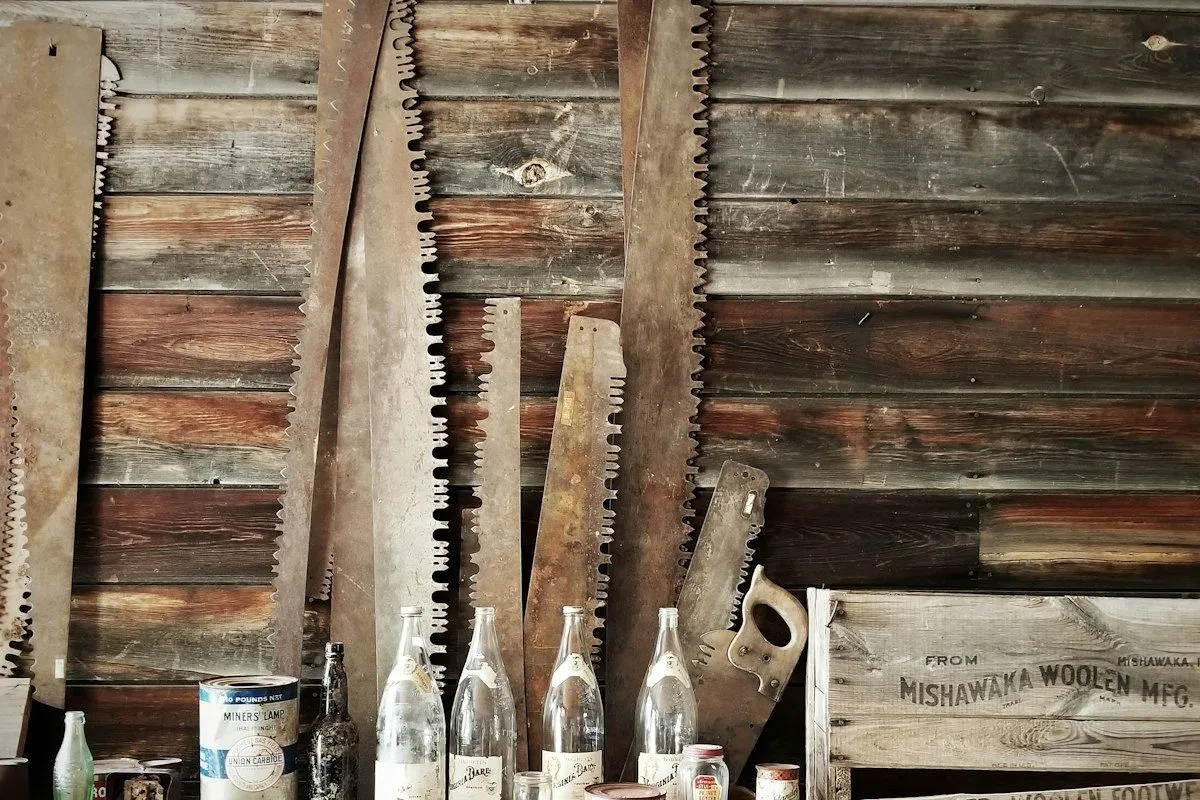
In 2005, a Brooklyn art-school graduate named Rob Kalin launched a website to help his mother sell wooden boxes. Twenty years later, 30.4 million Americans run nonemployer businesses (U.S. Census Bureau, 2023 Nonemployer Statistics (opens in new tab)) — sole proprietorships, the bucket that contains nearly every handmade and small-batch seller — and the federal government is still figuring out how to issue them tax forms.
The maker movement of 2026 is not what anyone in 2005 had in mind. It is bigger, weirder, and considerably more regulated. It also runs on five legible inflection points — five moments when something cracked open and a lot of people rushed through. This is a brief tour through those five moments, what each one demanded of small sellers, and what each one quietly left behind.
The short version:
- 2005 — Etsy launches in Brooklyn. The modern handmade marketplace is invented and the word "indie" stops being a music genre.
- 2012 — California's Homemade Food Act caps a state-by-state wave. By the time it passes, roughly 45 states already have cottage food laws. Home kitchens become legal commerce.
- 2018 — South Dakota v. Wayfair overturns the physical-presence rule for sales tax. Within five years, all 46 sales-tax states have marketplace facilitator laws.
- 2020 — Etsy GMS grows 146% year-over-year in Q2 (Etsy investor relations (opens in new tab)). The pandemic delivers millions of new sellers and the worst onboarding experience in the platform's history.
- 2021–2026 — The 1099-K threshold is lowered to $600 by ARPA, partially phased in by the IRS, then retroactively restored to $20,000 in July 2025 by the One Big Beautiful Bill Act. USPS launches a ten-year price-hike plan. Etsy rewrites its AI listing policies twice in fifteen months. Compliance becomes the dominant operational concern.
2005: A Brooklyn Art Project Becomes a Marketplace
The pre-Etsy landscape for handmade sellers was a patchwork of inadequate options. There were craft fairs, which required a vehicle and a weekend. There was eBay, which treated a hand-bound journal and a used golf club as fundamentally the same kind of inventory problem. There was LiveJournal, which was not a marketplace so much as a place to post photos of your work and hope. And there was the personal website with a PayPal button, which worked if you were already known.
Etsy launched in June 2005 with a thesis that has held up remarkably well: there is a real economy in things that are not mass-produced, and it deserves its own infrastructure. The early Etsy team was a handful of Brooklyn art-school graduates writing code in apartments. By the company's own telling, the first listings were Rob Kalin's wooden boxes and a few experimental items from friends. Within a few years the site had grown from a Brooklyn project into a national marketplace.
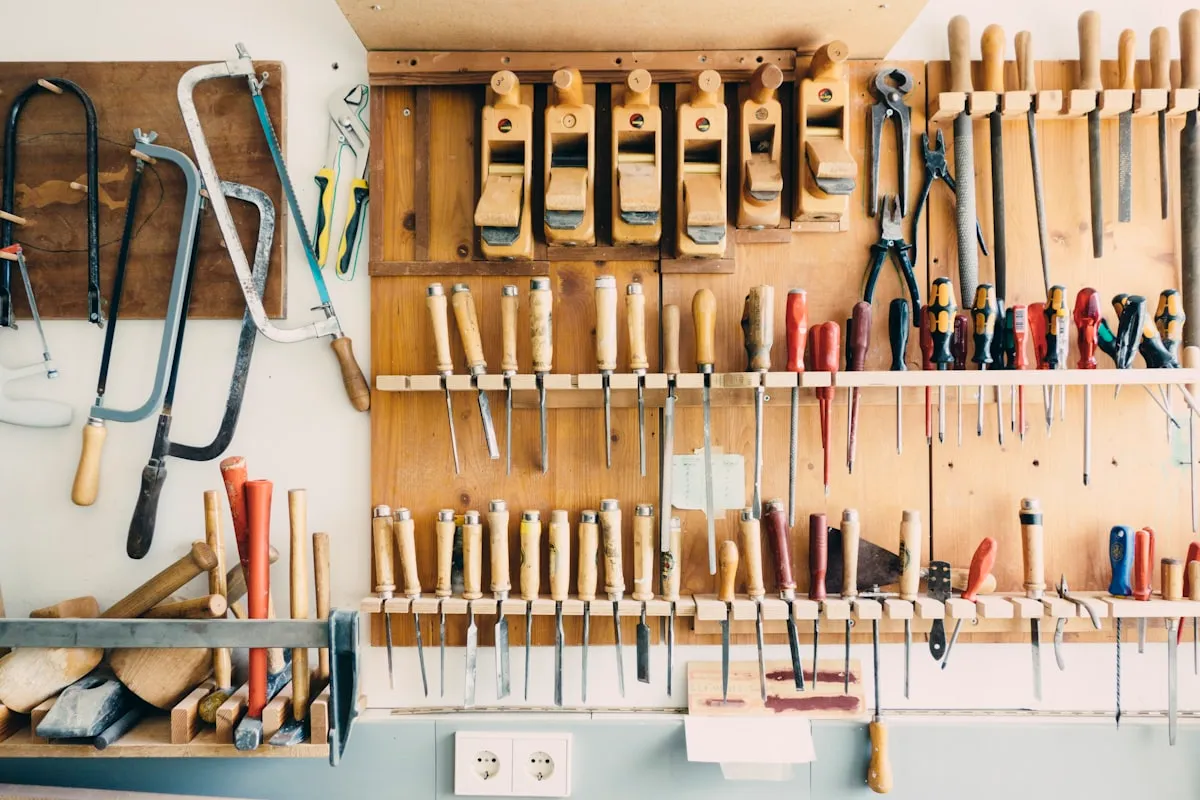
Etsy went public on April 16, 2015 (SEC final prospectus (opens in new tab)), pricing at $16 per share and a roughly $1.78 billion valuation. The IPO is worth pausing on, not because Wall Street's opinion of a marketplace matters very much to the maker selling tea light holders out of her garage, but because of what it signaled. A platform built around home-based, hand-finished, low-volume production was suddenly a public company with quarterly earnings calls. The maker economy had stopped being a craft fair and started being a sector.
By fiscal year 2024 — the most recent full year on file as of this writing — Etsy reported $12.6 billion in consolidated GMS across its three marketplaces (Etsy, Reverb, and Depop), with 8.1 million active sellers and 95.5 million active buyers (Etsy 2024 Annual Report, SEC EDGAR (opens in new tab)). The Etsy marketplace alone accounted for $10.9 billion of that.
It is worth noting, with the gentle understatement the moment requires, that the platform Rob Kalin built to help his mom sell boxes now produces more annual GMS than the entire US craft industry produced when his mom was selling boxes.
What 2005 left behind
A vocabulary. "Handmade." "Indie." "Small batch." "Slow-made." These are now marketing categories you can filter for on at least four major retail platforms. None of them were search terms in 2004. Etsy is, among other things, the company that taught Google what to do with the word "handmade."
2012: Cottage Food Laws Move from Patchwork to Default
For most of the 20th century, selling a cake from your home kitchen was, in the technical legal sense, a misdemeanor in most US states. Health codes were written for restaurants and grocery stores and did not contemplate a person with a stand mixer trying to sell six dozen cookies at a church bake sale, except to make that activity illegal as a matter of routine.
This was not a problem anyone in particular was solving for, until people with stand mixers started solving it themselves.
The cottage food legalization wave is harder to pin to a single founding date than the Etsy story, because it happened state by state, slowly, with each statehouse responding to its own constituency of home bakers, sauce makers, and farmers market vendors. Pennsylvania has run its Limited Food Establishment program since the late 2000s (Pennsylvania Department of Agriculture (opens in new tab)), and is unusual in still imposing no statewide revenue cap. Other states followed at their own pace, with their own carve-outs and their own arguments about whether sauerkraut counts.
The symbolic capstone — the moment when "cottage food legalization" stopped being a regional curiosity and started being the default — was California's Homemade Food Act, AB 1616, signed by Governor Brown in September 2012 and effective January 1, 2013 (California Legislative Information (opens in new tab)). The bill's preamble itself noted that 45 states already had some form of cottage food law on the books. California was not pioneering; California was joining.
Today, all 50 states plus the District of Columbia have a cottage food or home processor program of some kind (Institute for Justice, state-by-state report (opens in new tab)). The rules vary enormously — Florida allows up to $250,000 in annual cottage food sales under HB 663, California's two-tier system caps Class B at an inflation-adjusted figure around $172,000 for 2025, Texas raised its cap to $150,000 under SB 541 (opens in new tab) in 2025, and New York and Pennsylvania impose no revenue cap at all — but the underlying principle is the same: a home kitchen, properly labeled, is now a legal place of commerce in every state in the Union.
What 2012 left behind
A generation of bakers, jam makers, and sauce producers who learned to read a labeling statute. The cottage food laws are, in their own way, the first chapter of small-business compliance training for an entire demographic of sellers. Most cottage food makers learned what "acidified foods" meant before they learned what a Schedule C was, and that ordering has shaped how they think about their businesses ever since.
2018: South Dakota v. Wayfair Changes the Tax Map
For 26 years, US state sales tax was governed by a 1992 Supreme Court ruling called Quill Corp. v. North Dakota. The Quill rule was elegant in its simplicity and increasingly absurd in its application. It said: a state can only require an out-of-state seller to collect sales tax if the seller has a physical presence in the state. A warehouse, a salesperson, an office.
This rule made a lot of sense in 1992, when the seller in question was almost always a mail-order catalog company. It made less sense by 2017, when the seller in question was sometimes Amazon and sometimes a person selling earrings out of a spare bedroom in Toledo to a buyer in Phoenix.
South Dakota, which has no personal income tax and relies on sales tax for most of its general fund, picked the fight. They passed a law saying out-of-state sellers had to collect South Dakota sales tax if they made $100,000 in sales or 200 transactions into the state per year, and dared the Supreme Court to stop them. On June 21, 2018, by a 5–4 vote, the Court declined (SCOTUS slip opinion (opens in new tab)). Justice Kennedy's majority opinion overturned Quill outright.
This was, briefly, terrifying for small sellers. The nightmare scenario was every state passing its own version of South Dakota's law, with its own thresholds and its own filing requirements, and every Etsy seller suddenly having to register with 46 state departments of revenue.
That nightmare did not arrive, because the states moved on to a different solution: marketplace facilitator laws. These statutes say, in effect, that if you sell through a marketplace (Etsy, Amazon, eBay, Walmart Marketplace), the marketplace itself is responsible for collecting and remitting sales tax on your behalf. By January 1, 2023, all 46 sales-tax states plus DC had passed marketplace facilitator laws — Missouri was the last to adopt one (Streamlined Sales Tax Governing Board (opens in new tab)). Only the no-sales-tax states (NH, OR, MT, DE) and Alaska's local-only regime sit outside this framework.
What 2018 left behind
For makers who sell exclusively through Etsy or another marketplace, an enormous gift: most sales tax compliance is now handled at the platform level, automatically and invisibly. For makers who sell anywhere else — their own Shopify store, in person at a craft show, wholesale to a boutique in a different state — the patchwork is still there, just better-organized. Wayfair did not abolish the complexity. It moved most of it from the seller to the platform, and left the seller with a smaller, sharper problem: figure out which of your channels the platform is not covering.
2020: The Pandemic Surge (And the Hangover)
The pandemic was, by Etsy's own reporting, the single largest growth event in the platform's history. In the second quarter of 2020, consolidated GMS grew 146% year-over-year and consolidated revenue grew 137% (Etsy Q2 2020 results (opens in new tab)). Face masks were a major driver, but only a part of the story. People stuck at home were buying handmade everything, from doormats to baking kits to candles, and people stuck at home were also opening Etsy shops.
The number of new sellers who arrived during 2020 is the part of this story that doesn't get told often enough. Many of them stayed. Many of them did not. Etsy's active seller count continued to grow through 2022 and then began declining — by FY2024, active sellers on the Etsy marketplace specifically had fallen roughly 20% from the 2022 peak (Etsy 2024 10-K (opens in new tab)). The pandemic produced a generation of accidental sellers; the years after it produced a quieter exit.
The other thing 2020 quietly initiated was the shipping cost crisis. The US Postal Service, which moves a disproportionate share of small-maker packages, announced its ten-year "Delivering for America" plan in March 2021 (USPS press release (opens in new tab)). The plan called for a series of price increases that have continued at a roughly twice-yearly cadence ever since. In July 2023 USPS launched Ground Advantage (USPS launch announcement (opens in new tab)), consolidating three previous ground products into one and, in the process, raising prices for many small parcels. Forever stamp prices, which had been 55¢ in early 2021, reached 78¢ by July 2025 (USPS 2025 price adjustment (opens in new tab)) — a 42% increase over four years.
What 2020 left behind
A more crowded marketplace, a meaningfully more expensive postal service, and a population of sellers who learned to run a business in pandemic conditions and then had to relearn it for the everything-after. The 2020 cohort is also the first cohort of sellers for whom "tax forms" and "1099-K" became central concerns, because the federal government was about to change the rules on them.
2021–2026: The Compliance Era
The American Rescue Plan Act, signed in March 2021, included a provision that surprised approximately every maker in the country once they found out about it. It lowered the 1099-K reporting threshold from $20,000 in payments and 200 transactions to a flat $600 with no transaction minimum (IRS announcement on the threshold transition (opens in new tab)). Anyone selling more than $600 worth of anything through a third-party platform — Etsy, PayPal, Venmo for business, Shopify — would, under the new statute, receive a 1099-K from that platform and the IRS would receive a copy.
The transition was, in technical regulatory language, a mess. The IRS issued multiple notices delaying full implementation. Under IRS Notice 2024-85 (opens in new tab), the threshold for tax year 2024 was $5,000, then $2,500 for tax year 2025, with the full $600 floor scheduled to take effect for tax year 2026.
It did not. On July 4, 2025, the One Big Beautiful Bill Act was signed into law, and among its provisions was a retroactive repeal of ARPA's 1099-K amendment (Avalara's analysis (opens in new tab); see also IRS Fact Sheet 2025-08 (opens in new tab)). The federal threshold returned to the original $20,000-in-payments and 200-transactions rule that had governed 1099-K reporting before 2021. For tax year 2026, that older, higher floor is the one in effect — the phase-down to $600 never activated.
This matters less than the political theater around it suggests and more than the casual seller might guess. The federal threshold determines whose income shows up on an IRS computer, not whose income is taxable. All business income is already taxable, regardless of whether anyone files a form. A maker making $2,000 a year on Etsy is, and always was, supposed to report that on a Schedule C. The 2025 reversal returns the visibility bar to where it sat in 2020, after four years of pre-emptive panic that ended without the rule it was about.
The other compliance development of this period is Etsy's recurring fight with AI-generated listings. In mid-2024, Etsy updated its Seller Policy to more clearly define what counts as "made by the seller" (Etsy Creativity Standards (opens in new tab); the prior version of the seller policy (opens in new tab) remained in effect through September 14, 2024). The policy has been revised more than once since then. The drumbeat behind every revision is the same: the platform is trying to draw a line between human-made products with AI assistance and AI-generated products with human supervision, and the line is, by everyone's admission, hard to draw. The current language is unlikely to be the last word on the subject.
What the compliance era is leaving behind
A maker who has been in business since the 2010s has lived through a fundamentally different operational picture than a maker who started in 2005. The 2005 maker had to know how to take a good product photo and write a listing. The 2026 maker has to know about cottage food labeling, marketplace facilitator carve-outs for their off-platform channels, the 1099-K threshold, Schedule C deductions, USPS Ground Advantage versus Priority Mail dimensional pricing, and Etsy's evolving definition of "made by the seller." None of these are optional. None of them existed twenty years ago in a form that small sellers had to engage with.
This is, depending on your temperament, either an enormous burden or an enormous validation. It is hard to imagine the IRS bothering to lower a reporting threshold for a sector that did not matter. The fact that the compliance machine has spent fifteen years catching up to the maker economy is, in its own backhanded way, a confirmation that the maker economy is now too big to ignore.
Five Lessons From Twenty Years
A few things the timeline keeps proving:
- The infrastructure for handmade commerce is always lagging the commerce itself. Etsy showed up in 2005 because nobody else was building it. Cottage food laws showed up because home bakers were already selling. Marketplace facilitator laws showed up because Wayfair had to come first. The pattern repeats.
- Compliance follows scale. The 1099-K threshold did not drop when the maker economy was small. It dropped after $12 billion in GMS made it visible. Expect the next wave of regulation to follow the next wave of growth — not lead it.
- Most of the wins in this story are wins by accumulation, not by breakthrough. Cottage food laws were 50 small wins, not one big one. Marketplace facilitator coverage was 46 separate statutes. The maker movement does not have a march on Washington. It has a lot of people writing to their state representatives.
- The early-2020s "easy era" was the anomaly, not the trajectory. Sellers who started in 2020 with low USPS rates, a $20,000 1099-K threshold, and pre-Wayfair tax complexity in their rearview were operating in a uniquely permissive environment that nobody promised them would last.
- The platforms are not the movement. Etsy is the most visible single artifact of the modern maker economy and accounts for a relatively small share of total maker commerce. The 30.4 million nonemployer businesses the Census Bureau counts are mostly selling somewhere other than Etsy, somewhere other than Amazon, somewhere other than any platform with a public ticker symbol. The marketplace matters; the marketplace is not the whole story.
Twenty years from now, this list will be five different items. Probably most of them will be about things nobody on either side of the maker/regulator conversation is talking about yet. That's the actual lesson of the last twenty years — the inflection points are obvious in retrospect and invisible in advance.
The makers who survived each inflection point did the same two things every time: they kept making their work, and they kept their records in good enough shape that they could prove what they had been doing. The records are how you tell a regulator, a marketplace, a tax preparer, or a customer that you are the kind of business you say you are. If the next decade looks anything like the last two, the records are going to keep mattering. Probably more, not less.
The good news is that the tools for keeping those records have caught up. Ardent Seller was built specifically for the maker who has lived through some part of this timeline — the cottage food baker who needs labels and batch lots, the Etsy seller who needs to reconcile 1099-K against actual deposits, the soap maker who needs a recipe-costing engine that survives an FDA cosmetic-labeling question, the woodworker who needs equipment depreciation that doesn't require a CPA to interpret. If your business is going to spend the next ten years adapting to whatever comes next, pick the spine that adapts with it.
Frequently asked questions
Q: When did Etsy launch?
A: Etsy launched in June 2005 in Brooklyn, New York. The founders were Rob Kalin, Chris Maguire, and Haim Schoppik; Jared Tarbell joined shortly after. The company went public on April 16, 2015, on Nasdaq under the ticker ETSY at an opening price of $16 per share and a valuation near $1.78 billion.
Q: When did cottage food laws become widespread in the United States?
A: By the time California passed its Homemade Food Act (AB 1616) in September 2012, roughly 45 states already had some form of cottage food law on the books. The wave accelerated through the late 2000s and early 2010s. Today, all 50 states plus the District of Columbia have a cottage food or home processor program, though the rules — revenue caps, allowed foods, and where sales can happen — vary widely.
Q: What changed with South Dakota v. Wayfair?
A: On June 21, 2018, the Supreme Court ruled 5–4 in South Dakota v. Wayfair that states could require out-of-state sellers to collect sales tax even without a physical presence in the state. The decision overturned the 1992 Quill v. North Dakota rule. By January 1, 2023, all 46 sales-tax states (plus DC) had passed marketplace facilitator laws making platforms like Etsy responsible for collecting and remitting sales tax on behalf of their sellers.
Q: What is the 1099-K reporting threshold in 2026?
A: The federal 1099-K threshold for tax year 2026 is $20,000 in payments and 200 transactions. The American Rescue Plan Act of 2021 had lowered it to $600 with no transaction minimum, and IRS Notice 2024-85 (opens in new tab) was phasing the new threshold in ($5,000 for 2024, $2,500 for 2025). On July 4, 2025, the One Big Beautiful Bill Act retroactively repealed the ARPA amendment and restored the original $20,000-and-200-transactions rule (Avalara analysis (opens in new tab); IRS Fact Sheet 2025-08 (opens in new tab)). The phase-down to $600 never activated.
Q: How big is the maker economy today?
A: The Census Bureau reported 30.4 million nonemployer businesses (opens in new tab) in the United States in 2023 — sole proprietorships, partnerships, and corporations with no paid employees, the bucket that contains most handmade and small-batch sellers. Those businesses reported $1.8 trillion in receipts. Etsy alone reported $12.6 billion in consolidated GMS in fiscal year 2024 across its marketplace, Reverb, and Depop.
Sources & methodology
Every statistic, threshold, ruling, and date in this post is sourced from a primary publication — SEC filings, IRS notices, Supreme Court opinions, state legislative bill text, the U.S. Census Bureau, USPS press releases, or the regulator-administered sources cited inline. The historical claims (Etsy's 2005 launch, the cottage food legalization wave timeline, Etsy's first listings being Rob Kalin's boxes) draw on Etsy's own corporate communications and SEC S-1 disclosures.
A few notes on data freshness:
- Census nonemployer statistics carry a two-year lag. The 30.4 million figure reflects 2023 data, released by the Census Bureau in May 2025 (opens in new tab). The 2024 release is expected in mid-2026.
- Etsy fiscal-year results are pulled from the 2024 Annual Report on SEC EDGAR (opens in new tab). Confirm against the most recent 10-Q before citing in time-sensitive contexts.
- Cottage food revenue caps are jurisdiction-specific and change frequently; the figures cited here reflect 2025 state law as of this writing and should be verified against the relevant state agency before relying on them for compliance decisions.
- The 1099-K threshold is governed, as of tax year 2026, by the One Big Beautiful Bill Act (signed July 4, 2025), which retroactively repealed the American Rescue Plan Act's amendment and restored the pre-2021 $20,000-and-200-transactions rule. See Avalara's analysis of the OBBBA reversal (opens in new tab) and IRS Fact Sheet 2025-08 (opens in new tab). IRS Notice 2024-85 (opens in new tab) describes the phase-down that was repealed before its $600 floor activated.
Related reading
- Small-Maker Economy: 47 Statistics for 2026 — A current-year companion to this historical piece, with sourced figures on marketplace GMS, postage, cottage food adoption, and the 1099-K phase-down.
- Etsy Sellers' FAQ: Fees, Inventory, and Bookkeeping — Forty-two questions on the operational reality of selling on Etsy in 2026, including the full fee anatomy and the 1099-K transition timeline.
- Sales Tax Nexus for Handmade Sellers — A practical post-Wayfair explainer covering economic nexus, marketplace facilitator coverage, and the off-platform sales channels that still require seller-side compliance.
Free resources
A few free downloads from the Ardent Workshop library that pair well with this history:
- Cottage Food Laws by State: The 50-State + DC Quick Reference — The current cottage food regulations in every state, the practical legacy of the 2008–2014 legalization wave.
- Schedule C Tax Expense Tracker — A spreadsheet for the 1099-K era — reconciles marketplace 1099-Ks against actual deductible business expenses so the IRS computer's view of your year matches yours.
This article is provided for educational purposes only and does not constitute legal, tax, or accounting advice. Cottage food laws, sales tax nexus rules, 1099-K reporting thresholds, and marketplace facilitator coverage vary by jurisdiction and change frequently. Consult a qualified CPA, tax preparer, or attorney before making decisions that affect your business.