What's Your Pricing Personality?
Nine questions. Eight maker archetypes. One shareable result that tells you exactly where your pricing strategy is helping you — and where it's quietly hurting you.
Are you Cost-Plus Cathy (reliable but underpriced)? Charm-Price Charlie (optimizing the close, ignoring the math)? Reluctant Raiser Rita (overdue for an increase, knows it)? Spreadsheet Sienna (running the discipline that actually wins)? Take the quiz — the result names the pattern and gives you the one move that fixes it.
For-fun categorization — most makers see themselves across 2–3 archetypes. The "next move" suggestion points to a real tool that addresses the dominant pattern.
Pricing Personality Quiz
When you set the price for a new product, what do you usually do first?
Why a pricing personality quiz?
Most pricing advice for makers reads like accounting tutorials: SKU costing, margin formulas, fee deconstruction. Important, but they assume the maker already knows why they price the way they do. They don't.
The 8 personality types in this quiz were built from patterns observed across hundreds of Etsy / Instagram / Reddit threads about pricing struggles. Each archetype represents a recognizable decision-making style — what the maker is optimizing for, what they're avoiding, what they're missing. Putting a name to the pattern makes it easier to see, easier to share, and easier to change.
Most makers see themselves in 2–3 of the 8. The dominant one gets the result card. The "next move" suggestion is a real tool we ship — typically the Product Pricing Calculator, the Hourly-Rate Calculator, or the "Should I Raise My Prices?" tool, depending on which pattern is most actionable.
The 8 archetypes at a glance
Cost-Plus Cathy
Multiplies materials by 2 or 3. Reliable but skips labor.
Gut-Feel Greg
Prices what feels right. Brave. Probably exhausted.
Match-the-Market Megan
Copies competitor prices. Trapped in the average.
Charm-Price Charlie
Every price ends in .99. Optimizes the close, not the unit economics.
Premium Pat
Values craft, prices high, picks customers carefully.
Volume Hunter Vee
Low prices, high volume. Burned out within 24 months.
Spreadsheet Sienna
Cost + labor + fees + margin + scenarios. The way it's done.
Reluctant Raiser Rita
Knows she needs to raise prices. Hasn't yet. Stuck.
Frequently asked questions
Is this quiz validated psychometrically?
No — it's a for-fun categorization built from observed patterns in the maker community, not a peer-reviewed instrument. The archetypes are useful because they're recognizable, not because they're statistically rigorous.
What if I see myself in multiple types?
Most people do. The quiz returns your dominant archetype based on which got the most answer matches; ties break toward higher-discipline patterns (Spreadsheet Sienna and Premium Pat over Volume Hunter Vee) to nudge you toward better practice. Read the all-8 strip at the bottom of the result — you'll likely recognize 2–3.
Can I retake the quiz?
Yes — there's a "Retake quiz" button on the result card. Your answers aren't stored anywhere; the quiz runs entirely in your browser.
Can I share my result?
Yes — the result card has a share button. On mobile, it uses your device's native share sheet. On desktop, it copies a shareable link to your clipboard. Tag @ardentseller if you share publicly — we'd love to see which archetype you got.
Stop guessing. Start running the math.
Whatever archetype you got, Spreadsheet Sienna's discipline is the destination. Ardent Seller is the operations system that makes Sienna's math automatic across your whole catalog — every recipe, every product, every channel.
Related resources
Product Pricing Calculator (Live)
Live web version of our Excel pricing calculator. Materials + labor + packaging + platform fees → defensible retail at your target margin, with batch-pricing tiers.
Maker Hourly-Rate Pricing Calculator
Pick a target hourly rate, enter your materials, hands-on minutes per unit, and platform fees — the calculator returns the minimum price that actually pays you that rate after fees and costs. Maker-business specific, not a "freelance day rate" tool.
Should I Raise My Prices? Decision Tool
A live web tool that runs the +10% / +20% / +30% price-hike math for one product — including the volume drop that comes with each — and tells you which scenario clears the most monthly profit.
Product Pricing Calculator
A working Excel pricing calculator — materials, labor, packaging, and platform fees in, a defensible retail price out. Plus a batch tab that shows what 50 vs. 10 actually costs.
Discount Strategy Simulator (Margin-Aware)
Compare BOGO, % off, $ off, and free-shipping promos side by side with your real margin. See the volume lift each promo needs just to break even — the counter-intuitive math most sellers get wrong.
From the blog
Articles that dig deeper into the topics this tool covers.
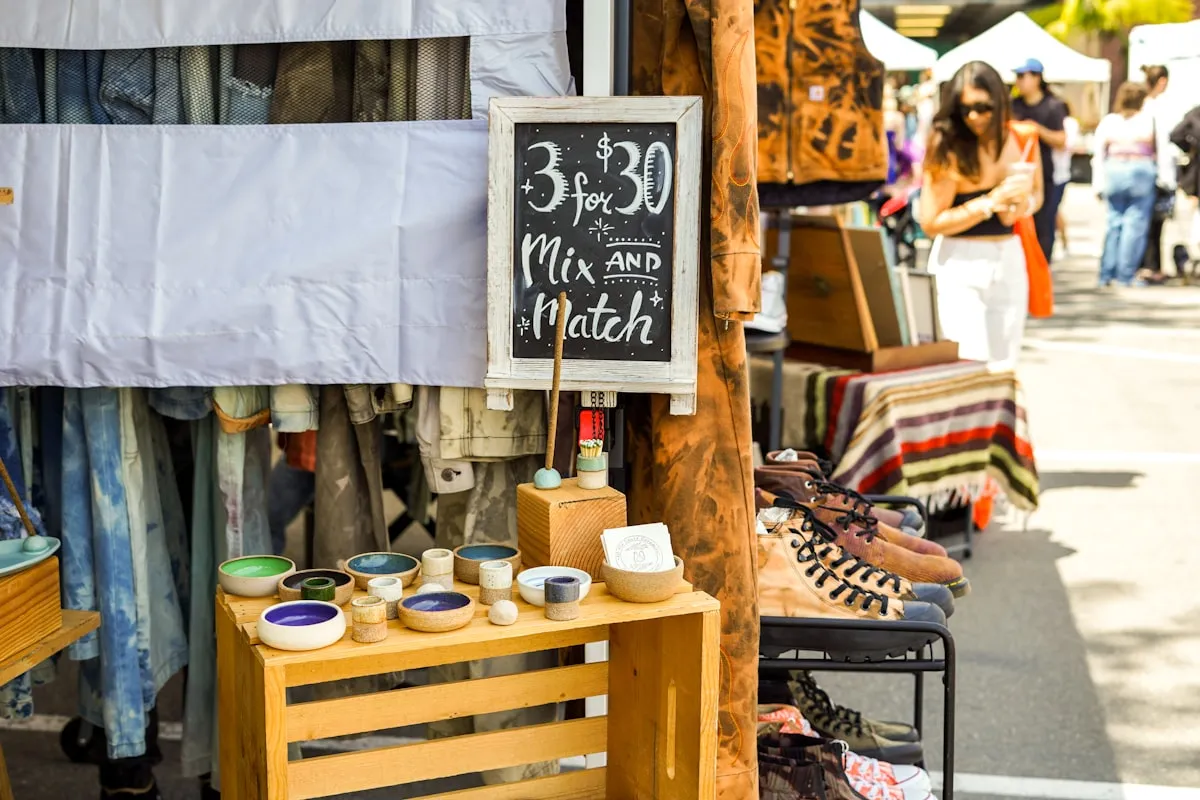
The 8 Pricing Personalities of Handmade Sellers (and the One That's Quietly Bleeding Your Profit)
Most makers fall into one of eight pricing personalities — eight different ways of arriving at a number on a price tag. Some of them are loud, profit-leaking disasters. The most dangerous one looks the most disciplined.

Handmade Pricing Advice: What Six Craft-Business Experts Actually Teach
Line up the most-cited handmade-pricing teachers and they hand you different formulas — some say multiply by 2.2, some say 4, and one says throw the multiplier out entirely. Here is what Megan Auman, Mei Pak, Janet LeBlanc, Erin Mooney, Etsy, and Tara McMullin actually teach — where they flatly disagree, and the four things they all agree on.
Against the "Just Charge More" School of Pricing Advice
"Just charge more" is the most common pricing advice on the internet, and the most useless. Raising prices is sometimes the right move, but the line skips every step that decides whether the hike works. Three places it goes wrong, three things to check first, and what to actually do this week.

Margin vs Markup: The Pricing Math Mistake That's Quietly Ruining Your Profit
Half the sellers who say they run a "50% margin" are actually running a 33% margin and subsidizing their own business. Here is the difference between margin and markup, why the confusion costs real money, and the pricing math that separates the sellers who stay open from the ones who quietly close up shop.